


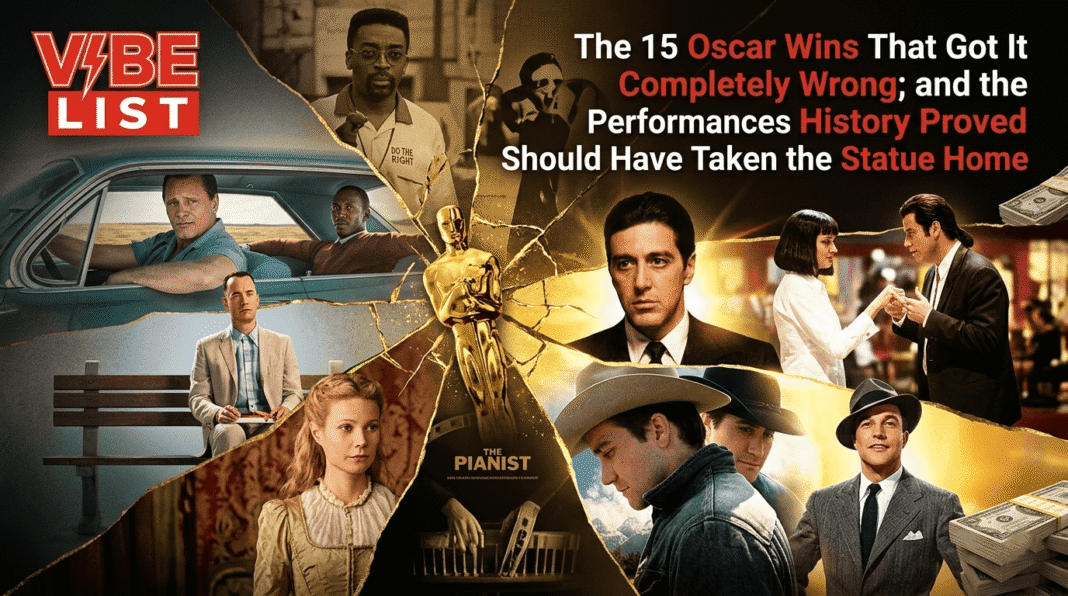
A 73% on Rotten Tomatoes for the film that beat Brokeback Mountain. A 71% for the film that beat both Pulp Fiction and The Shawshank Redemption. A $15 million campaign that bought Shakespeare in Love a statue over Saving Private Ryan. A 25-year-old director whose masterpiece lost to a film almost no one under 50 has seen. Eighty-four years of evidence, and the Academy still hasn’t apologized. These aren’t close calls. They’re the 15 times the Oscar got it objectively, provably, irrefutably wrong.
This list was created by evaluating each entry across multiple factors, including historical critical acclaim, cultural relevance, and the gap between what won and what was snubbed; with those factors weighted to reflect what matters most for a ranking of this kind. The result is a list that reflects both the Vibe List’s data-driven methodology and its editorial perspective.
The Academy Awards have honored winners for almost a hundred years. That span has produced hundreds of award recipients across dozens of categories. In most cases, the winning entries are forgotten within months. However, there are select instances; disastrous choices by the academy. These are the moments where the academy got it so wrong that generations of critics, audiences, and academy members have asked the same question for decades: what were you thinking?
This is not a listing of the typical type of snub. A snub means someone was left out of the conversation entirely. Below are 15 times the academy selected the inferior winner over a clearly superior entry, and time has validated each choice as wrong. Each entry pairs the winner with the film or performance that should have taken the statue home. Each pairing is followed by an analysis of how both have stood the test of time, measured through retrospective critical acclaim, cultural impact, box office performance, and lasting significance in film history.
In some instances, these choices were contentious from the moment the envelope was opened. Other choices were lauded at the time and only revealed their wrongness gradually, like a photograph slowly fading in reverse. Regardless of timing, all of these choices reveal something uncomfortable about the institution that claims to represent the pinnacle of cinematic achievement.
#15 — Chicago vs. The Pianist (2003)
Category: Best Picture | 75th Annual Academy Awards
Who Won: Chicago (directed by Rob Marshall)
Who Should Have Won: The Pianist (directed by Roman Polanski)
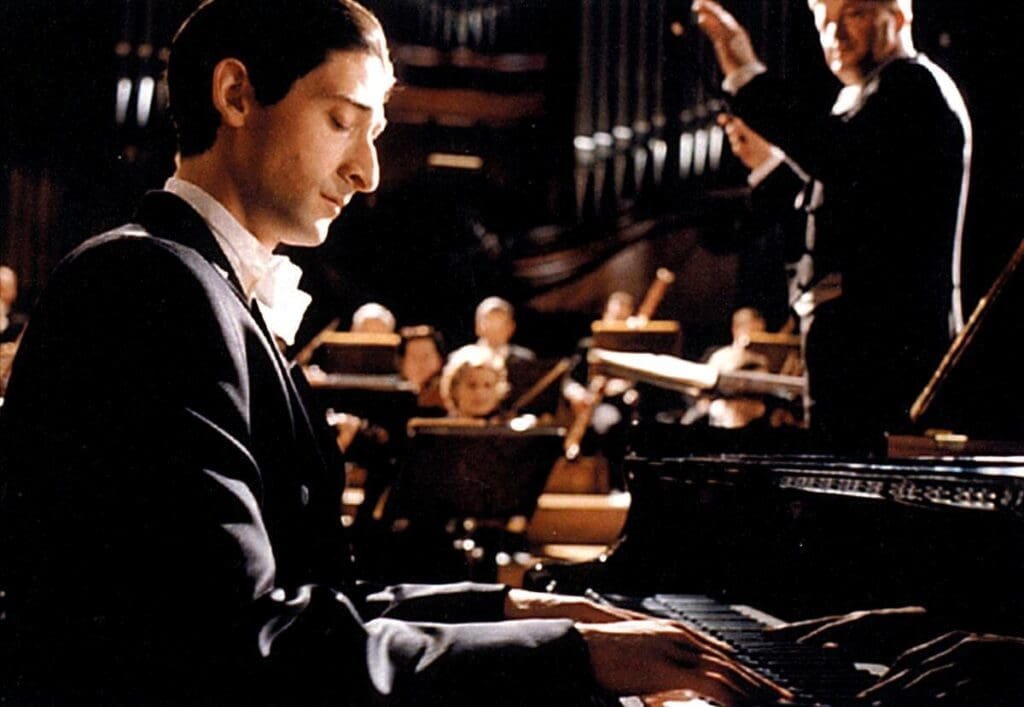
The 75th Annual Academy Awards produced one of the most unusual Best Picture contests in recent memory. Chicago, a highly stylized musical remake, won six awards, including Best Picture. Although technically a legitimate choice, it brought back the movie musical genre and offered undeniable entertainment value. Chicago defeated The Pianist, Gangs of New York, The Lord of the Rings: The Two Towers and The Hours.
Roman Polanski won Best Director for The Pianist. Polanski’s Best Director win is a telltale sign of what happens when voters believe the best film lies elsewhere. Adrien Brody won Best Actor, defeating perceived favorites Daniel Day-Lewis and Jack Nicholson. At just 29 years old, Brody became the youngest actor to win Best Actor at the time. In total, the 75th Annual Awards produced a paradoxical result: the film voters believed to be the best acted and best directed was not selected as Best Picture.
Time has only widened this disparity. Chicago is a fun movie to watch today, but it has not achieved cult status nor become part of cinema’s pantheon. The Pianist continues to appear on retrospective “best of decade” lists and is often referenced as one of the quintessential Holocaust films. The Pianist holds a 95% on Rotten Tomatoes compared to Chicago’s 86%.
Although not as egregious as many of the errors ranked higher on this list, Chicago taking Best Picture over The Pianist was still a clear mistake. The other awards handed out that night helped ensure The Pianist received the recognition it deserved.
The Vibe List’s Verdict: Borderline error, therefore ranked last on our list. While Chicago was a crowd-pleasing film and a genre-defining achievement, the disparity between Best Picture and Best Director demonstrated a lack of confidence on the part of the academy in its own Best Picture selection.
#14 — Cher over Glenn Close (1988)
Category: Best Actress | 60th Annual Academy Awards
Who Won: Cher for Moonstruck
Who Should Have Won: Glenn Close for Fatal Attraction
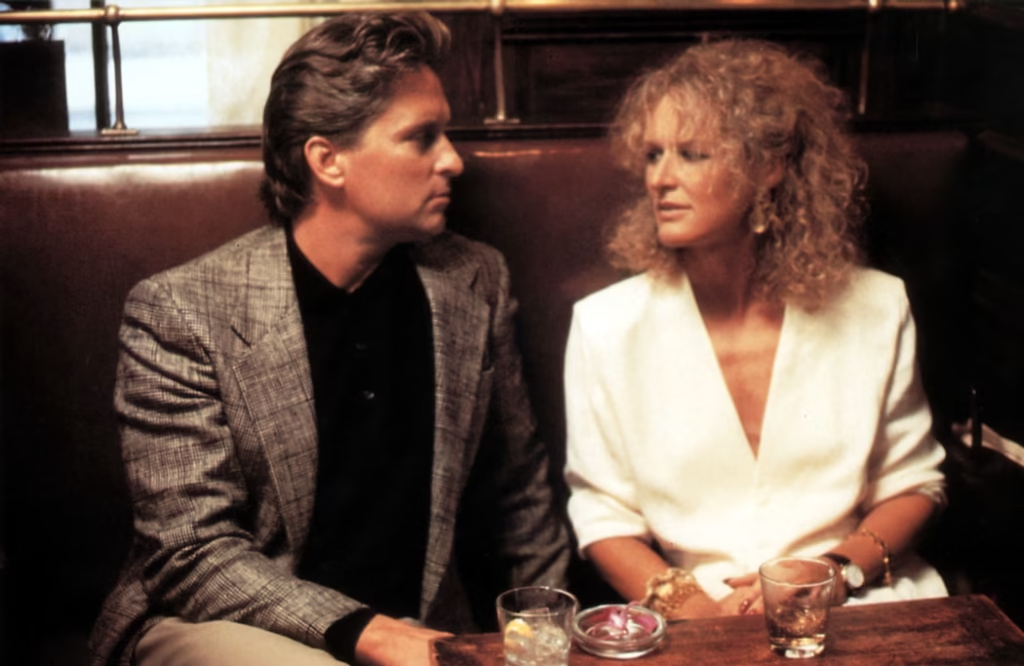
Glenn Close holds the record for the most Oscar nominations in an acting category without a win, with eight nominations and no competitive victories. 1988 was arguably her most difficult loss. Glenn Close’s portrayal of Alex Forrest in Fatal Attraction was a seismic event in popular culture; she became one of those actresses whose name has resonated with audiences for decades.
Cher won Best Actress for Moonstruck, a lighthearted romantic comedy which received generally favorable reviews. No one questions whether Cher performed well in the role. Rather, it comes down to degree. Fatal Attraction grossed over $320 million worldwide on a $14 million budget; one of the highest grossing films of 1987. Additionally, Glenn Close established one of cinema’s most indelible characters in her portrayal of Alex Forrest. The phrase “bunny boiler” entered the Oxford English Dictionary because of Glenn Close’s performance.
Close lost again in subsequent years, earning additional nominations including for The Wife in 2019 and Hillbilly Elegy in 2021. She ultimately received an honorary Oscar in 2024; an acknowledgment that seemed more like a concession than a celebration.
The Vibe List’s Verdict: First step in what would become a recurring embarrassment for the academy. As such, it represents a starting point for understanding why this particular mistake has continued to occur.
#13 — Art Carney over Al Pacino (1975)
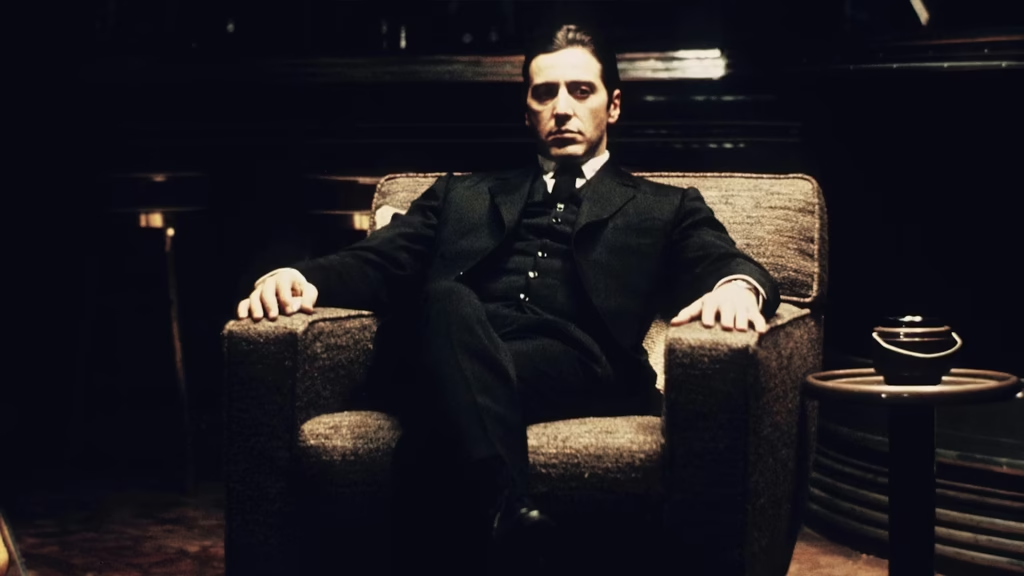
Category: Best Actor | 47th Annual Academy Awards
Who Won: Art Carney for Harry and Tonto
Who Should Have Won: Al Pacino for The Godfather Part II
The Best Actor category for 1975 was arguably the most talented field ever assembled in academy history. Nominees included Al Pacino for The Godfather Part II, Jack Nicholson for Chinatown, Dustin Hoffman for Lenny and Albert Finney for Murder on the Orient Express. Any of these four individuals could have won in a normal year. Instead, the academy chose Art Carney for Harry and Tonto; an enjoyable cross-country trip with his cat.
Art Carney was primarily a television personality before entering feature films. He was probably best known for playing Ed Norton on The Honeymooners. Art Carney won his Oscar through a combination of sentimental industry appreciation and a vote-splitting effect among the four heavy-hitters.
Al Pacino’s portrayal of Michael Corleone in The Godfather Part II is commonly regarded as one of the greatest performances in American cinema history; so precise, so masterfully calculated that it transcends the gangster genre completely.
The Godfather Part II itself won six awards at the 47th Annual Awards; including Best Picture and Best Director for Francis Ford Coppola. It set precedent as the first sequel in history to win Best Picture.
Therefore, although the academy declared The Godfather Part II the best film of 1975, it did not include the best performance from that year. When four superstars split the vote and a sentimental favorite slips through, the result is exactly what happened at the 47th Annual Awards.
The Vibe List’s Verdict: Classic vote-split casualty. Carney provided a warm performance; however, he was running against four of the greatest acting talents of the twentieth century at or near their peak level.
#12 — Green Book vs. Roma (2019)

Category: Best Picture | 91st Annual Academy Awards
Who Won: Green Book (directed by Peter Farrelly)
Who Should Have Won: Roma (directed by Alfonso Cuarón)
The Green Book victory at the 91st Annual Academy Awards was one of the most polarizing outcomes in recent academy history. Green Book tells the tale of a white man (played by Viggo Mortensen) driving a Black pianist (played by Mahershala Ali) through the Jim Crow-era Deep South. Critics and cultural observers were sharply divided; detractors claimed it reduced structural racism to a comedic-buddy formula while Don Shirley‘s family publicly disputed factual aspects of the film.
On the opposing end of Green Book was Roma, director Alfonso Cuarón’s intimate, black-and-white love letter to life working for a middle-class Mexican family living in Mexico City in 1970. Roma earned a 96% on Rotten Tomatoes, took home three Oscars (Best Director, Best Cinematography and Best Foreign Language Film) and has been named one of the best films of its decade by many reviewers. Additionally, Roma had one major distinction going into this year’s contest: it was poised to make history; had it taken Best Picture, Roma would have been the first non-English-language film to win the industry’s highest award; a record that would be broken one year later when Parasite captured this award.
According to an article published by The Hollywood Reporter; Green Book’s victory may have been influenced by anti-Netflix sentiment among older members of the academy (Roma was released by Netflix); and an assumption by many older members that a streaming-first film should never earn their industry’s biggest award. If true, this means the academy penalized a masterpiece simply because it was funded by Netflix.
The Vibe List’s Verdict: A decision made based on industry politics rather than artistic quality. Green Book is an acceptable film; Roma is landmark filmmaking around the world.
#11 — Tom Jones vs. America, America (1964)
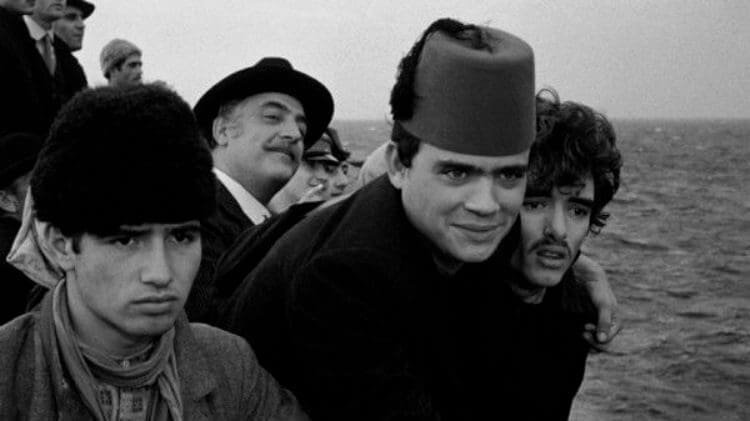
Category: Best Picture | 36th Annual Academy Awards
Who Won: Tom Jones (directed by Tony Richardson)
Who Should Have Won: America, America (directed by Elia Kazan)
America, America is another deep cut on our list, likely omitted from most competitors’ rankings altogether. Tom Jones is a rambunctious, irreverent comedy loosely adapted from Henry Fielding‘s eighteenth-century novel. The film proved extremely successful financially, earning four academy awards. It defeated America, America; Elia Kazan’s deeply personal film about a Greek immigrant’s arduous journey to come to America; based on Kazan’s experiences with his uncle.
Tom Jones has not aged particularly well. Its use of the fourth-wall-breaking technique was innovative when it debuted in 1963; however, the film seems dated today and rarely appears on contemporary retrospectively compiled lists. America, America has gained support from scholars studying immigration, film historians, and cinéphile communities as one of the most compelling portrayals of immigration ever put to screen. Martin Scorsese has publicly stated that America, America is one of his favorite films.
The Vibe List’s Verdict: Commercial success at its best can overpower a film with inherent historical and emotional importance.
#10 — Forrest Gump vs. Pulp Fiction / The Shawshank Redemption (1995)
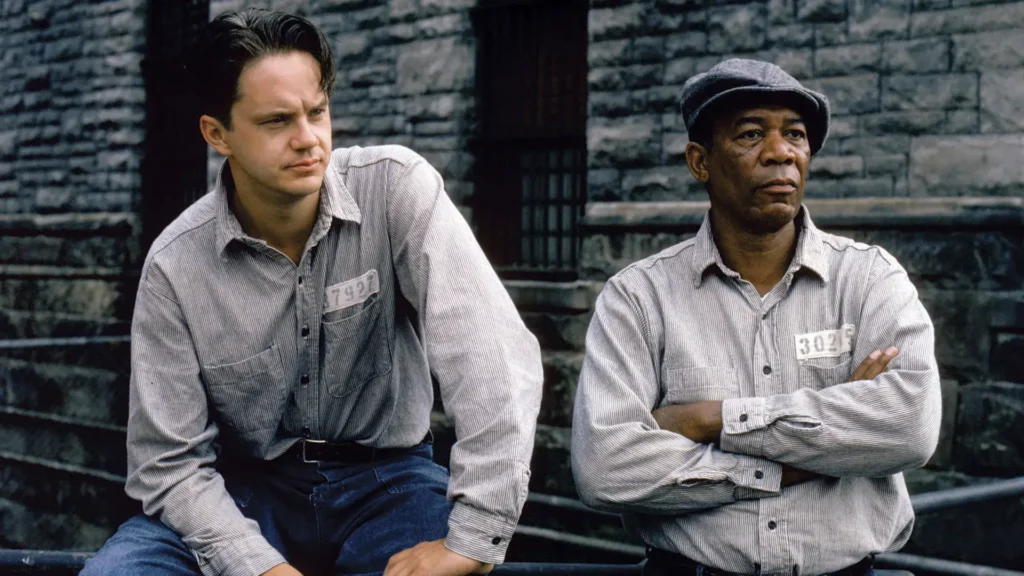
Category: Best Picture | 67th Annual Academy Awards
Who Won: Forrest Gump (directed by Robert Zemeckis)
Who Should Have Won: Both Pulp Fiction & The Shawshank Redemption (directed by Quentin Tarantino & Frank Darabont respectively)
The 67th Annual Academy Awards featured what was possibly the densest Best Picture lineup ever assembled. Forrest Gump swept six awards including Best Picture, Best Director for Robert Zemeckis and Best Actor for Tom Hanks. The telecast attracted more than forty-eight million viewers at its conclusion. In its moment; Forrest Gump’s victory felt inevitable. Forrest Gump dominated domestically ($330 million domestic / $678 million worldwide); grossing more than five times its production costs ($55 million).
However, 1994 also produced Pulp Fiction & The Shawshank Redemption; two films that have not only endured but continue to grow in stature with each passing year. Pulp Fiction carries an impressive 92% rating on Rotten Tomatoes; credited with reviving independent cinema & inspiring new waves of filmmakers using non-linear storytelling techniques. The Shawshank Redemption carries the number one ranking on IMDb’s Top 250 films list; holding onto this ranking for more than twenty years; the longest-running number one ranked film in the world’s largest movie database.
Forrest Gump carries only a 71% on Rotten Tomatoes; significantly lower than its contemporaries. Retrospective reevaluation has been harsher towards Forrest Gump; what was praised as sentimental patriotic Americana at its release has been reassessed as sanitized political fantasy; a film that reduced the turbulence of American history to wallpaper for one man’s good fortune.
The Vibe List’s Verdict: Whether Pulp Fiction or The Shawshank Redemption loses Best Picture is bad enough; but when both lose to Forrest Gump it demonstrates complete ineptitude on the part of academy voters.
#9 — Driving Miss Daisy over Do the Right Thing (1990)
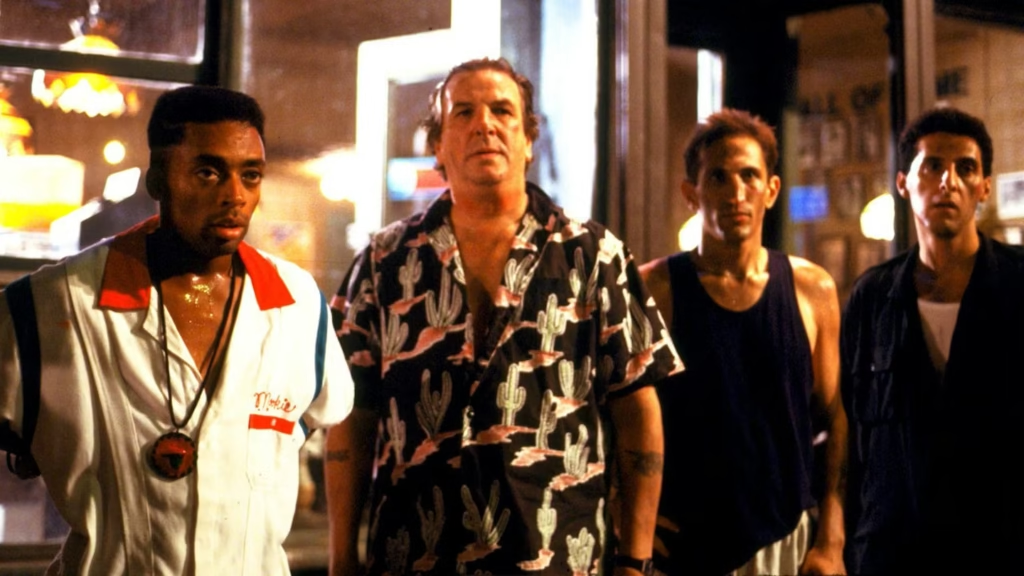
Category: Best Picture | 62nd Academy Awards
Who Won: Driving Miss Daisy, directed by Bruce Beresford
Who Should Have Won: Do the Right Thing, directed by Spike Lee
Not only did Driving Miss Daisy win, but Do the Right Thing wasn’t even a nominee for Best Picture. At a time when the nation was grappling with racism and racial violence, the Academy decided to give its highest award to a relatively innocuous PG rated film about a wealthy white woman gradually becoming more accepting of her black driver, while disregarding Spike Lee’s film that dealt with the very same issue of racial tension; a film that challenged audiences to confront violence and discomfort rather than settle for comforting slow progress.
Driving Miss Daisy won four Oscars including Best Actress for 80-year-old Jessica Tandy. It was the last PG rated film to win Best Picture. It didn’t even receive a nod for Best Director, a split that suggested voters themselves viewed the film as somewhat mediocre.
Do the Right Thing got two nominations: Best Supporting Actor for Danny Aiello and Best Original Screenplay for Lee. Neither were successful. Spike Lee wouldn’t get a competitive Oscar until 2019 for Best Adapted Screenplay for BlacKkKlansman; thirty years after Do the Right Thing.
In retrospect, Do the Right Thing is generally accepted as among the most influential American films ever created. It was named to the National Film Registry by the Library of Congress in 1999. As for Driving Miss Daisy, its reputation has suffered significantly since 1991.
The Vibe List’s Verdict: The Academy didn’t just vote against Do the Right Thing. It voted against acknowledging that there even was a movie worthy of such consideration.
#8 — Al Pacino vs. Denzel Washington (1993)
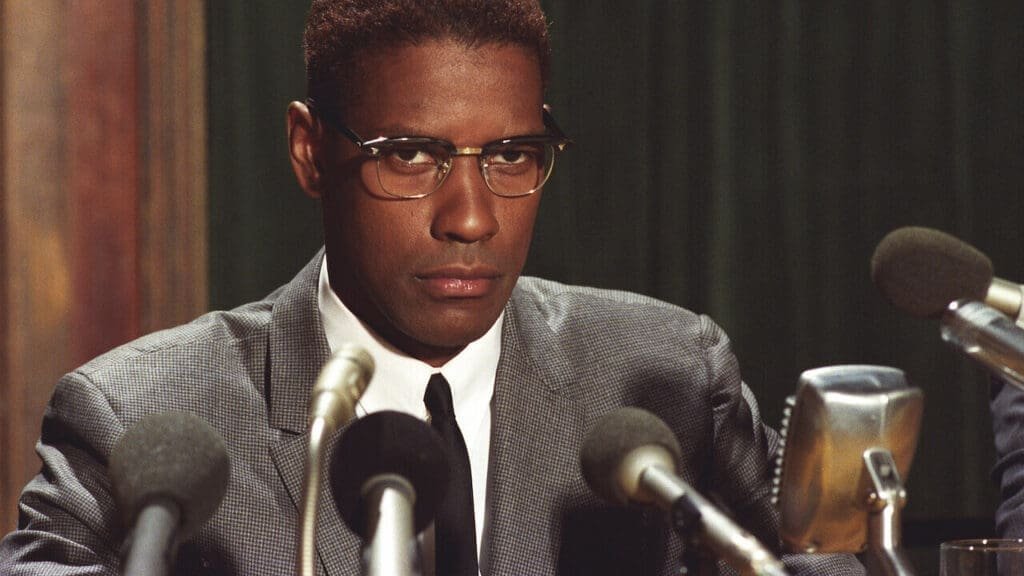
Category: Best Actor | 65th Academy Awards
Who Won: Al Pacino for Scent of a Woman
Who Should Have Won: Denzel Washington for Malcolm X
One thing is certain. Al Pacino is one of the greatest actors in the history of film. No arguments exist here. Whether his over-the-top performance in Scent of a Woman; best remembered for the iconic “Hoo-ah” line; was the best acting of 1992 is not up for debate. There exists almost unanimous agreement today that it was not.
Spike Lee‘s biopic about Malcolm X starring Denzel Washington was a career-defining performance; and possibly a defining moment for an entire generation. Washington fully embodied Malcolm from street hustler to militant activist to spiritual traveler. He performed each phase with incredible accuracy, depth, and emotional authority that defies superlatives.
At the time, many saw Pacino’s win as nothing more than a consolation prize; an Oscar to compensate for nearly three decades of previous losses. Prior to this, Pacino had been nominated seven times for Oscars. The Academy apparently wanted to rectify one injustice, and therefore created another. Washington would finally win Best Actor for Training Day in 2002, however, many have pointed out that Training Day was itself an Oscar given as compensation for the loss he incurred for Malcolm X.
The irony is circular; a closed loop of institutional failures. The Academy granted Pacino a makeup Oscar that stole from Washington, and later gave Washington a makeup Oscar for stealing from Pacino; both for performances widely deemed less impressive than those in Malcolm X.
The Vibe List’s Verdict: Having two makeup Oscars doesn’t equate to having done right. Washington’s performance as Malcolm X is a monumental achievement; Pacino’s work in Scent of a Woman is a charming performance in a relatively inconsequential film.
#7 — Dances with Wolves over Goodfellas (1991)
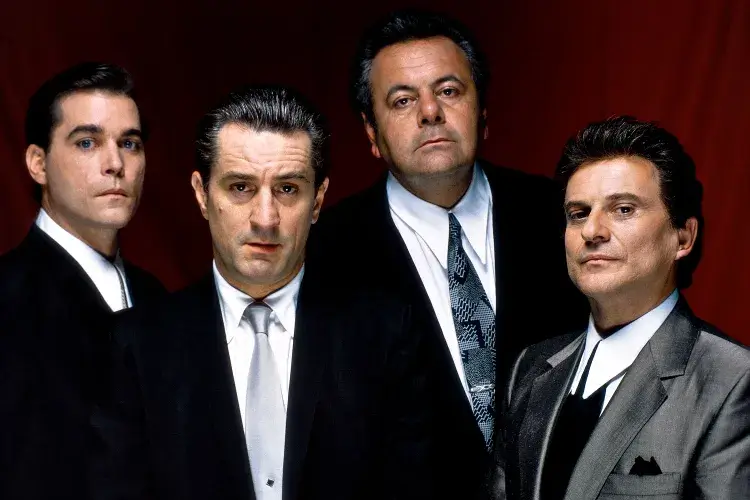
Category: Best Picture | 63rd Academy Awards
Who Won: Dances with Wolves; directed by Kevin Costner
Who Should Have Won: Goodfellas; directed by Martin Scorsese
Kevin Costner’s Dances with Wolves took home seven Oscars at the 63rd Academy Awards; including Best Picture and Best Director. It was an expansive, ambitious Western; a three-hour historical epic about a Civil War veteran who forms a bond with a group of Lakota Sioux. In 1991, it seemed as if it achieved something truly remarkable.
Meanwhile, Martin Scorsese’s Goodfellas took home only one Oscar that night; Best Supporting Actor for Joe Pesci. Only one. For what is now universally accepted as one of the greatest American films ever created. Goodfellas currently boasts a 96% rating on Rotten Tomatoes and an 89 rating on Metacritic. Virtually every major poll lists it within the top ten films of all time. Its impact upon cinema, TV (primarily The Sopranos), and pop culture is incalculable.
Dances with Wolves, meanwhile, has undergone considerable critical reassessment. While its cinematography will continue to awe viewers for years to come, the film has been criticized by indigenous scholars and filmmakers for creating a white savior mythology by portraying Native American life through the eyes of a colonialist.
Its reputation has decreased dramatically since 1991.
This was Martin Scorsese’s longest running losing streak with the Academy at that point. Scorsese had been nominated for Best Director for Raging Bull (1981), then again in 1989 for The Last Temptation of Christ, and now again for Goodfellas (1991). He wouldn’t receive his first Oscar until The Departed in 2007; twenty-six years after his first nomination.
The Vibe List’s Verdict: A decision that appears progressively worse with each passing year. Goodfellas has increased in stature, while Dances with Wolves has shrunk.
#6 — Ordinary People over Raging Bull (1981)
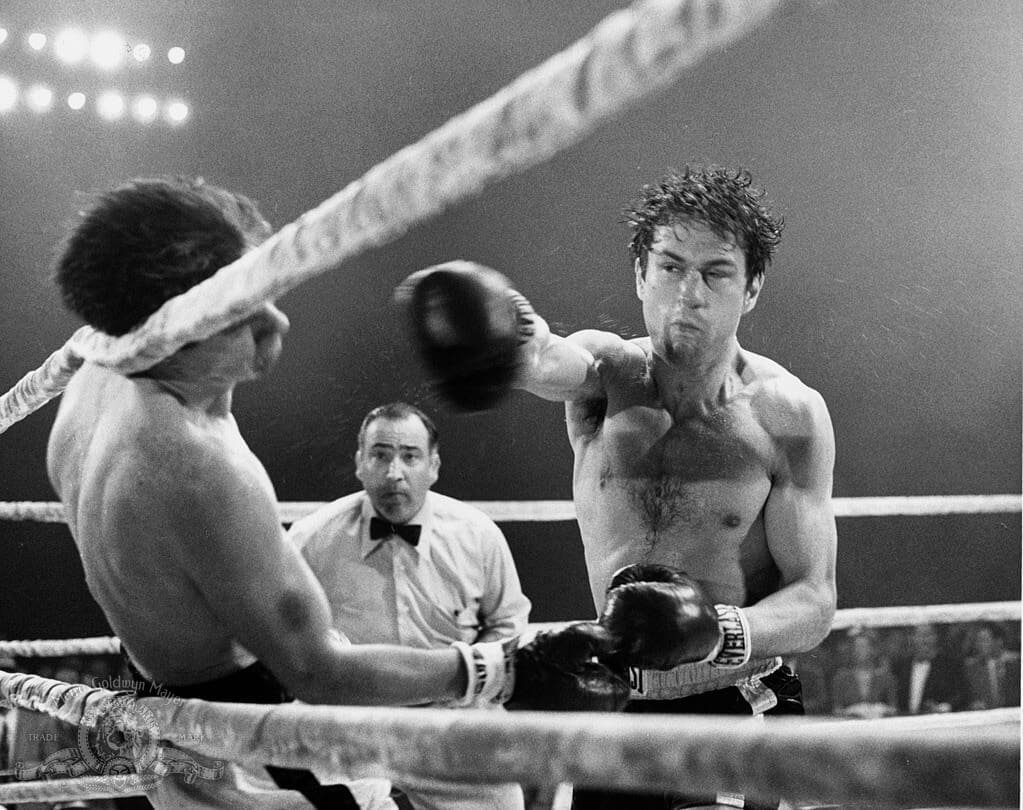
Category: Best Picture | 53rd Academy Awards
Who Won: Ordinary People; directed by Robert Redford
Who Should Have Won: Raging Bull; directed by Martin Scorsese
Robert Redford’s directorial debut, Ordinary People, was an introspective and well-acted domestic drama centered on an upper-middle-class family torn apart by tragedy. It won four Oscars including Best Picture and Best Director. Timothy Hutton won Best Supporting Actor at age 20, thereby setting the record for being the youngest person to do so in that category.
On the other hand, Martin Scorsese’s Raging Bull won only two; Best Actor for Robert De Niro and Best Editing. Raging Bull is ranked number four on the American Film Institute’s 100 Years… 100 Movies list (2007 edition); above The Godfather Part II, Schindler’s List, and Lawrence of Arabia. Ordinary People does not show up on the list at all.
Raging Bull is an unflinching and formally innovative biopic of boxer Jake LaMotta; a severely flawed individual whose viciousness inside the ring parallels his own personal destruction outside it. De Niro’s performance remains one of the most physically and emotionally demanding in cinema history. To portray LaMotta during his older age, De Niro reportedly added roughly sixty pounds; an image that has become inseparable from the mythology of method acting.
Ordinary People is certainly an excellent film. This opinion has not altered since its release. However, good does not surpass masterful, and this is clearly a wrong decision; and the distance between these two films has stretched into a chasm over forty years.
The Vibe List’s Verdict: First of Scorsese’s great losses. The Academy awarded prestige and satisfaction over creative boldness, a trend it would follow in disastrous fashion.
#5 — Rocky Beats Out Taxi Driver & Network (1977)
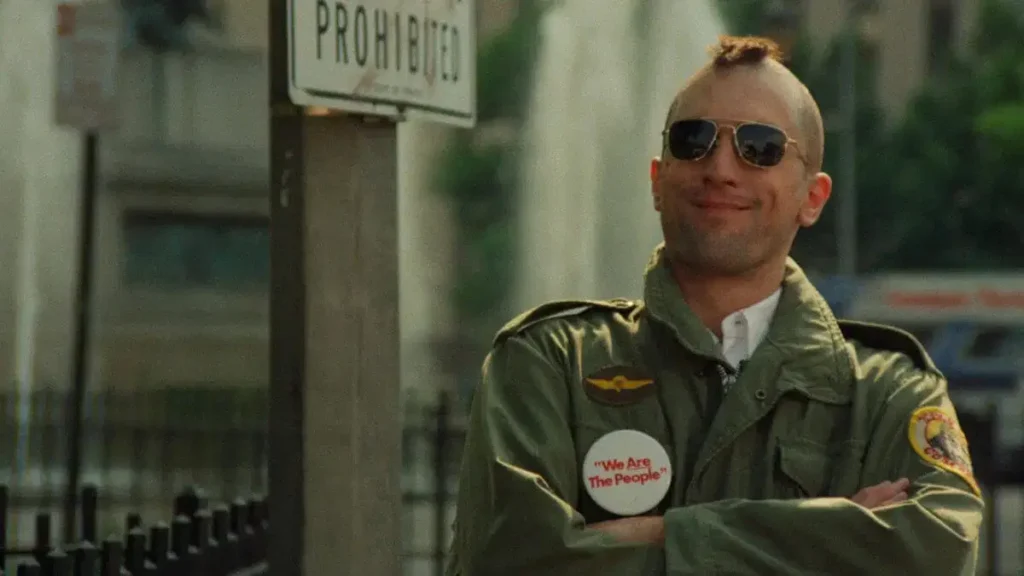
Category: Best Picture | 49th Academy Awards
Who Won: Rocky; directed by John G. Avildsen
Who Should Have Won: Either Taxi Driver or Network; directed by Martin Scorsese & Sidney Lumet respectively
The 1977 Best Picture field was staggeringly competitive; it is certainly one of the strongest groups ever assembled by the Academy. Rocky took home the gold medal, and it was impossible to resist its underdog storyline; Sylvester Stallone wrote the screenplay himself, stipulated he would play the lead role himself, and ultimately earned approximately $225 million at the box office worldwide. It is indeed a film that can energize you. Yet its competition consisted of Taxi Driver, Network, All the President’s Men & Bound for Glory.
Taxi Driver is Martin Scorsese’s surreal representation of urban alienation via De Niro’s portrayal of an extremely disturbed character. Network is Sidney Lumet & Paddy Chayefsky‘s scathing critique of television; so prescient that its central monologue “I’m as mad as hell, and I’m not going to take this anymore!” has become equally applicable today due to cable news & social media.
Rocky spawned nine total sequels and spin-offs (including a possible tenth); whereas Taxi Driver & Network remain part of our national cinematic legacy. They are studied, taught, referenced & analyzed in ways that Rocky isn’t. The Academy chose the most enjoyable film. Not the best.
The Vibe List’s Verdict: Rocky is a wonderful underdog story. Unfortunately, it found itself competing with two of America’s greatest films of the twentieth century, and no amount of heart can close that gap in quality.
#4 — Shakespeare in Love vs. Saving Private Ryan (1999)
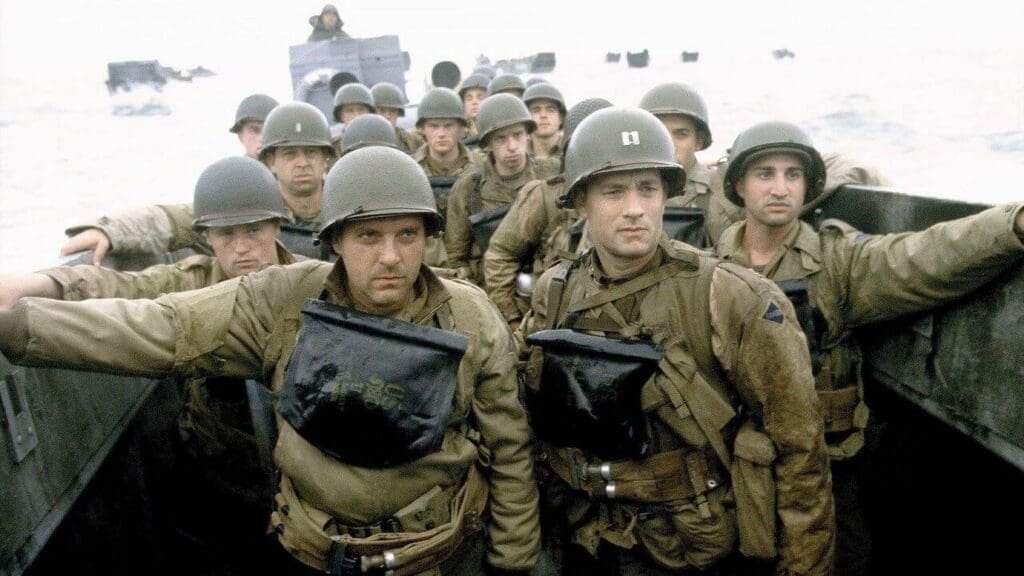
Category: Best Picture | 71st Academy Awards
Who Won: Shakespeare in Love; directed by John Madden
Who Should Have Won: Saving Private Ryan; directed by Steven Spielberg
This was the upset that showed everyone how easy it was to buy an Oscar. Harvey Weinstein ran an aggressively new campaign to promote Shakespeare in Love on behalf of Miramax Films. It completely rewrote the rules regarding campaigning in awards season and likely transformed Hollywood forever. Saving Private Ryan was generally viewed as the odds-on favorite prior to this night. Steven Spielberg received his second Oscar for Best Director for his film. Saving Private Ryan had swept much of the preliminary awards circuit before receiving this Best Picture nomination.
When the envelope opened revealing that Shakespeare in Love was declared Best Picture, the audience fell silent.
Shakespeare in Love is a cleverly constructed romantic comedy with superior acting talent. It garnered seven Oscars that night. However, its victories over Saving Private Ryan; a film that reinvented war films, started with probably the most graphic twenty-four minutes ever depicted in film history, grossed $217 million domestically and over $481 million internationally; continues to be referred to in public discourse as one of the greatest examples of Oscar injustice.
Gwyneth Paltrow has publicly acknowledged why so many people felt so strongly about this result. The Weinstein campaign machine spent approximately fifteen million dollars on awards season promotion; a sum that was staggering by end-of-the-nineties standards; and it irrevocably changed how studios approach awards seasons.
Few would argue against Saving Private Ryan’s enduring cultural presence. Many veterans, military historians & filmmakers cite Saving Private Ryan as probably the most accurate depiction of warfare ever captured on film. So vivid was its opening sequence depicting Omaha Beach during World War II that the U.S. Department of Veterans Affairs established counseling hotlines for veterans adversely impacted by it.
Meanwhile, many younger viewers today have never even seen Shakespeare in Love.
The Vibe List’s Verdict: The night that solidified that campaigns & money count more than artistry & quality filmmaking, & which forever changed how Hollywood approaches award seasons.
#3 — Crash over Brokeback Mountain (2006)
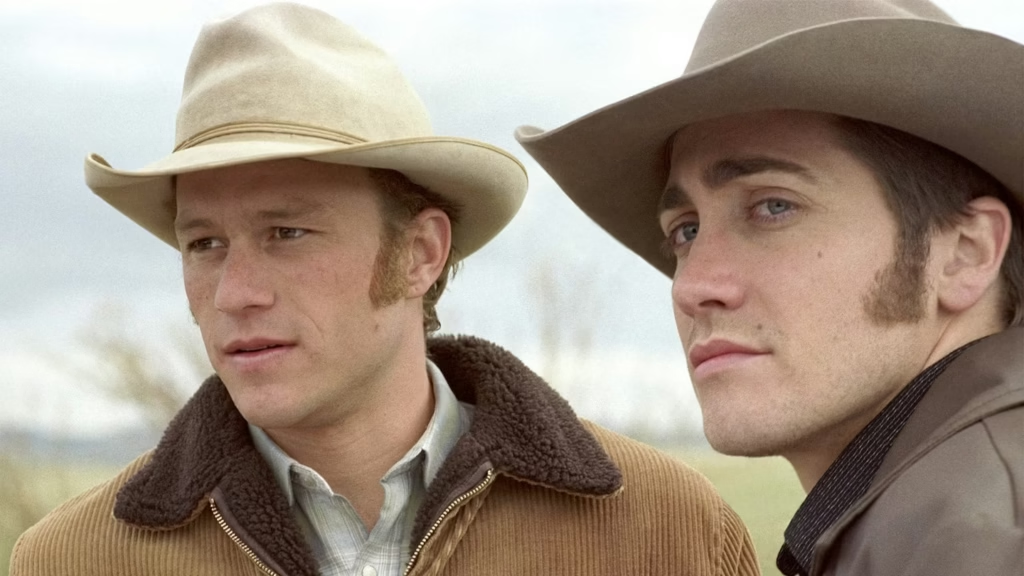
Category: Best Picture | 78th Academy Awards
What Won: Crash, directed by Paul Haggis
What Should Have Won: Brokeback Mountain, directed by Ang Lee
As of today, no Best Picture winner in the 21st century has aged as poorly as Crash. The film received a 73% rating on Rotten Tomatoes. This is the lowest rating for any Best Picture winner in the modern era. Crash also grossed only $54.6 million domestically. By comparison, Brokeback Mountain received an 87% rating on Rotten Tomatoes. Brokeback Mountain also generated $83 million domestically and $178 million internationally off a $14 million production budget. The film won the Golden Lion at the Venice Film Festival, earned Ang Lee the Best Director Oscar, and took home the BAFTA for Best Film.
Brokeback Mountain was heavily favored prior to the Oscars. Virtually every major critic group and film organization awarded it their top honor. The upset is largely attributed to homophobia among the Academy’s older, more traditional voting base. Many current Academy members have come forward over the years claiming they were pressured not to vote for Brokeback Mountain due to its subject matter. The BBC noted in its 2026 coverage of the 20th anniversary of the upset that the selection of Crash remains one of the most controversial choices in Academy history.
Critics have systematically eviscerated Crash’s core premise; that nearly every person in Los Angeles is a little racist, and that people can learn to empathize with others through a series of coincidental events. The New York Times described the film as “crudely manipulative” shortly after its release. Today, Crash frequently appears on “Worst Best Picture Winners” lists.
Meanwhile, Brokeback Mountain opened doors for LGBTQ+ representation in mainstream cinema. The performances of Heath Ledger and Jake Gyllenhaal will likely be remembered forever as benchmarks. As such, Moonlight took home the Best Picture award in 2017; a result that many interpreted as a nod from the Academy that it realized its error in choosing Crash over Brokeback Mountain.
The Vibe List’s Verdict: The most overtly political choice for Best Picture of the modern era. The Academy chose a film that pats itself on the back for being accepting of societal prejudices rather than challenging them. History has treated this decision harshly.
#2 — The Greatest Show on Earth over High Noon and Singin’ in the Rain (1953)
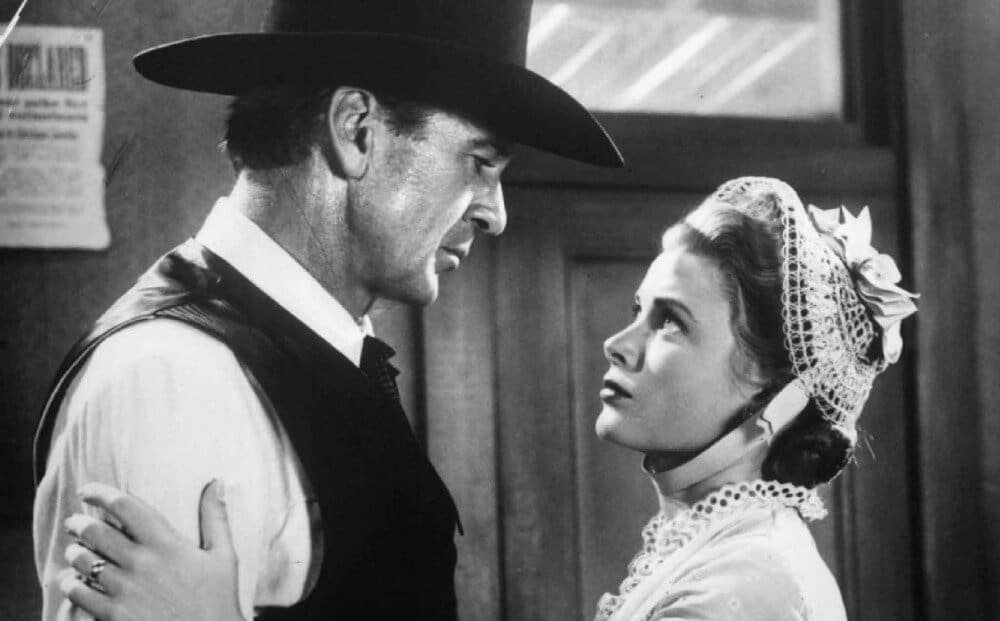
Category: Best Picture | 25th Academy Awards
What Won: The Greatest Show on Earth, directed by Cecil B. DeMille
What Should Have Won: High Noon, directed by Fred Zinnemann / Singin’ in the Rain, directed by Stanley Donen / Gene Kelly
The Greatest Show on Earth is, by almost universal critical agreement, the worst film to have taken home the Academy Award for Best Picture. The film is a 152-minute epic circus melodrama starring Charlton Heston and Betty Hutton and although it was successful at the box office upon its initial release in 1952, it has largely disappeared from public memory. Currently, The Greatest Show on Earth carries a low score on Rotten Tomatoes reflecting its reputation as a relic of some of Hollywood’s most inconsistent eras.
In contrast, High Noon is universally viewed as an allegorical Western and a landmark in cinematic history. Although High Noon was released in June 1952 and thus competed for Best Picture at the 25th Annual Oscars in 1953, it lost to The Greatest Show on Earth. High Noon is also notable for having been written by Carl Foreman, who was blacklisted by Hollywood during the McCarthy era. Consequently, High Noon has historically been widely perceived as an anti-Hollywood critique specifically focused on the industry’s failure to stand up to the House Un-American Activities Committee (HUAC). A High Noon victory would have represented a strong statement of support for Foreman’s courageous writing, while The Greatest Show on Earth was the safer choice for voters.
Additionally, Singin’ in the Rain is widely regarded as the greatest movie musical of all time and is ranked #5 on AFI’s 100 Years…100 Movies list. Notably, Singin’ in the Rain was overlooked in favor of The Greatest Show on Earth as a nominee for Best Picture in 1953. Therefore, The Greatest Show on Earth represents a slap in the face to those who believe that movies should challenge audiences rather than provide them with something comfortable.
The Vibe List’s Verdict: There is no clear-cut case of an Academy Award-winning film that has been abandoned by history like this. No one has defended this choice in decades.
#1 — How Green Was My Valley over Citizen Kane (1942)
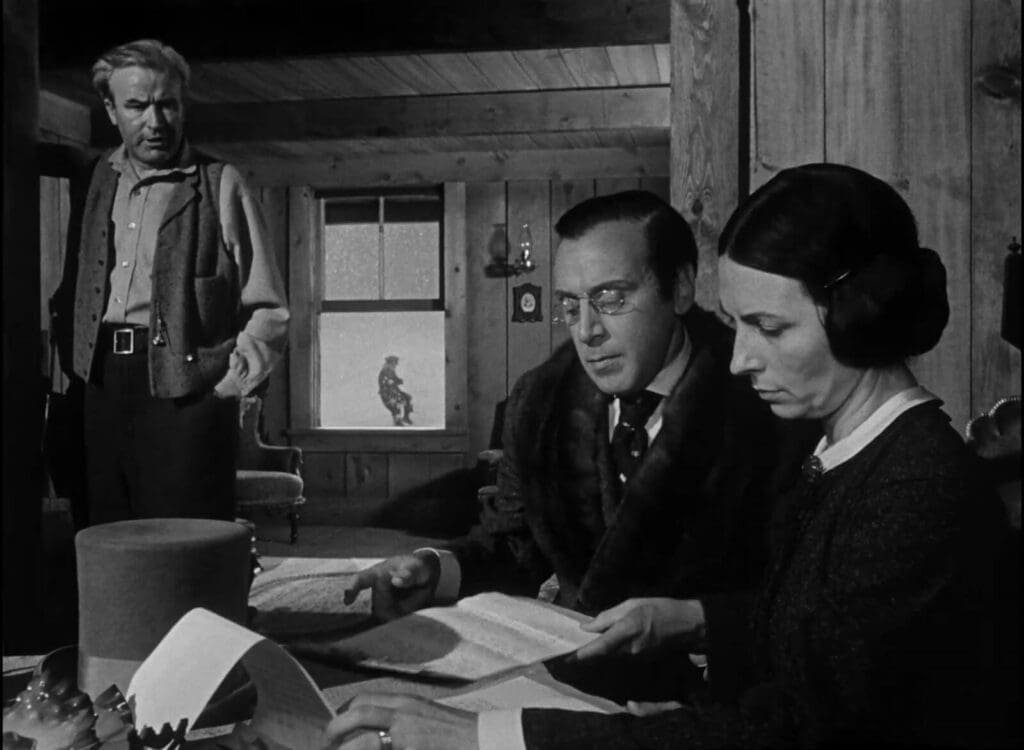
Category: Best Picture | 14th Annual Academy Awards
What Won: How Green Was My Valley, directed by John Ford
What Should Have Won: Citizen Kane, directed by Orson Welles
This is it. This is the first big mistake of Oscar history. More than anything else, this one decision highlights the difference between what the Academy rewards and what cinema creates as its finest works.
For decades, Citizen Kane held a perfect 100% score on Rotten Tomatoes. When a resurfaced 80-year-old review from the Chicago Tribune dropped it to 99%, the film’s reputation remained undiminished. Citizen Kane topped Britain’s Sight & Sound magazine’s poll of the greatest films ever made five consecutive times between 1962 and 2002. Additionally, Citizen Kane ranked number one on the AFI’s 100 Years…100 Movies list twice; once in 1998 and again in 2007. Without question, Citizen Kane stands as the most critically acclaimed film ever created.
When he co-wrote, directed, produced, and starred in Citizen Kane, Orson Welles was only 25 years old. Citizen Kane may be directly responsible for inventing or popularizing more fundamental filmmaking techniques than any other single film; including deep focus photography; non-linear narrative structures; ceilinged sets; overlapping dialogue; and story architecture. As such, virtually every prestige drama created since owes Citizen Kane a debt of gratitude.
How Green Was My Valley is a fine film directed by one of America’s most highly respected directors; John Ford. It won five Oscars, and it is not a bad film. It was released just months after Pearl Harbor and offered a comforting wartime tale to an anxious American audience looking for reassurance; while Citizen Kane offered a scathing portrayal of a corrupt isolated man that reportedly was subject to sabotage by newspaper magnate William Randolph Hearst; presumably because the film was a thinly veiled portrayal of Hearst’s own life.
How Green Was My Valley has become almost completely forgotten and very few people under 50 have seen it. Meanwhile, Citizen Kane is shown in virtually every film program around the world. The disparity between these two films is not a matter of opinion; it is established by historical record, critical consensus, and enduring cultural significance so monumental that it is recognized as objective truth.
The Vibe List’s Verdict: The biggest mistake that the Oscars have ever made. If there were any way possible to delete any single Academy Award decision from history and replace it with what we know should have happened; then this is it. Today, eighty-four years after the fact, the evidence is irrefutable: the Academy got it wrong.
Oscar Wins That Got It Wrong; At a Glance
| Rank | What Won | What Should Have Won | Category | Year | Winner RT Score | Snubbed RT Score | Why It Was Wrong |
|---|---|---|---|---|---|---|---|
| #15 | Chicago | The Pianist | Best Picture | 2003 | 86% | 95% | Best Director and Best Actor went to The Pianist; voters lacked confidence in their own Best Picture pick |
| #14 | Cher (Moonstruck) | Glenn Close (Fatal Attraction) | Best Actress | 1988 | — | — | Close created an iconic cultural character; began her record 8-nomination losing streak |
| #13 | Art Carney (Harry and Tonto) | Al Pacino (The Godfather Part II) | Best Actor | 1975 | — | — | Classic vote-split among four all-time-great nominees; sentimental favorite slipped through |
| #12 | Green Book | Roma | Best Picture | 2019 | — | 96% | Anti-Netflix bias among older voters may have cost Roma the industry’s highest honor |
| #11 | Tom Jones | America, America | Best Picture | 1964 | — | — | Commercial spectacle beat Elia Kazan’s deeply personal immigration epic; Scorsese calls it one of his favorites |
| #10 | Forrest Gump | Pulp Fiction / The Shawshank Redemption | Best Picture | 1995 | 71% | 92% / #1 IMDb | Both losing films surpassed Forrest Gump in every legacy metric; Shawshank holds IMDb’s #1 spot for 20+ years |
| #9 | Driving Miss Daisy | Do the Right Thing | Best Picture | 1990 | — | — | Lee’s film wasn’t even nominated; Academy chose comfort over confrontation on race |
| #8 | Al Pacino (Scent of a Woman) | Denzel Washington (Malcolm X) | Best Actor | 1993 | — | — | Pacino’s makeup Oscar stole from Washington; a circular loop of institutional failure |
| #7 | Dances with Wolves | Goodfellas | Best Picture | 1991 | — | 96% / 89 MC | Goodfellas now ranks in virtually every top-ten-of-all-time list; Dances with Wolves has shrunk dramatically |
| #6 | Ordinary People | Raging Bull | Best Picture | 1981 | — | AFI #4 | Raging Bull is AFI’s #4 film of all time; Ordinary People doesn’t appear on the list at all |
| #5 | Rocky | Taxi Driver / Network | Best Picture | 1977 | — | — | Academy chose the most enjoyable film over two of the greatest American films of the century |
| #4 | Shakespeare in Love | Saving Private Ryan | Best Picture | 1999 | — | — | Weinstein’s $15M campaign proved you could buy an Oscar; forever changed awards season |
| #3 | Crash | Brokeback Mountain | Best Picture | 2006 | 73% | 87% | Lowest RT score for any modern Best Picture winner; homophobia among voters widely blamed |
| #2 | The Greatest Show on Earth | High Noon / Singin’ in the Rain | Best Picture | 1953 | Low | AFI #5 (Singin’) | Universally regarded as the worst Best Picture winner ever; no one has defended it in decades |
| #1 | How Green Was My Valley | Citizen Kane | Best Picture | 1942 | — | 99% / AFI #1 | The most critically acclaimed film ever made lost to a film almost no one under 50 has seen |
Frequently Asked Questions
What was the most disputed Best Picture Oscar win? Many consider Crash (2005) defeating Brokeback Mountain at the 78th Academy Awards in 2006 to be the most contentious Best Picture win.
Who has acknowledged their regret over giving an Oscar to the wrong film? Although the Academy has never officially admitted to giving Oscars to either incorrect actors/actresses or incorrect films; several Academy members have stated publicly that they regretted casting their ballots for certain films or actors/actresses.
What is the lowest rated Best Picture Oscar winner by Rotten Tomatoes? Of course, opinions vary; however, Crash (2005) has been assigned a Tomatometer rating of only 73%. While this is certainly one of the lowest ratings for any Best Picture Oscar winner in modern history; another film; The Greatest Show on Earth (1952); holds an even lower score and is generally thought to be the worst film to ever receive this honor.
Why didn’t Citizen Kane win Best Picture? Citizen Kane lost out to How Green Was My Valley for Best Picture at the 14th Academy Awards in 1942. Historians point to numerous reasons behind Citizen Kane’s defeat; including Hearst’s campaign against Welles using rumors and lies surrounding his alleged affair with Marion Davies as well as a general dislike of Welles’ style.
Do “make-up Oscars” affect voting? Yes; make-up Oscars refer to awards given to compensate for previous snubs. The most cited example of this phenomenon includes actor Al Pacino receiving Best Actor for Scent of a Woman (1993) after losing seven other acting nomination attempts. This type of thinking undermines the legitimacy of the award system because voters end up rewarding lesser performances to correct earlier oversights, creating additional mistakes along the way.
Did Harvey Weinstein change how campaigns operate? Yes; Harvey Weinstein changed how Oscar campaigns functioned when he spent millions promoting Shakespeare in Love (1999). Weinstein’s success demonstrated that strategic marketing efforts can overcome critical acclaim, ultimately changing how studios interact with awards season.
This content is for entertainment and informational purposes only. All ranking placements reflect the Vibe List’s editorial judgment informed by the data and evidence cited within each entry.