
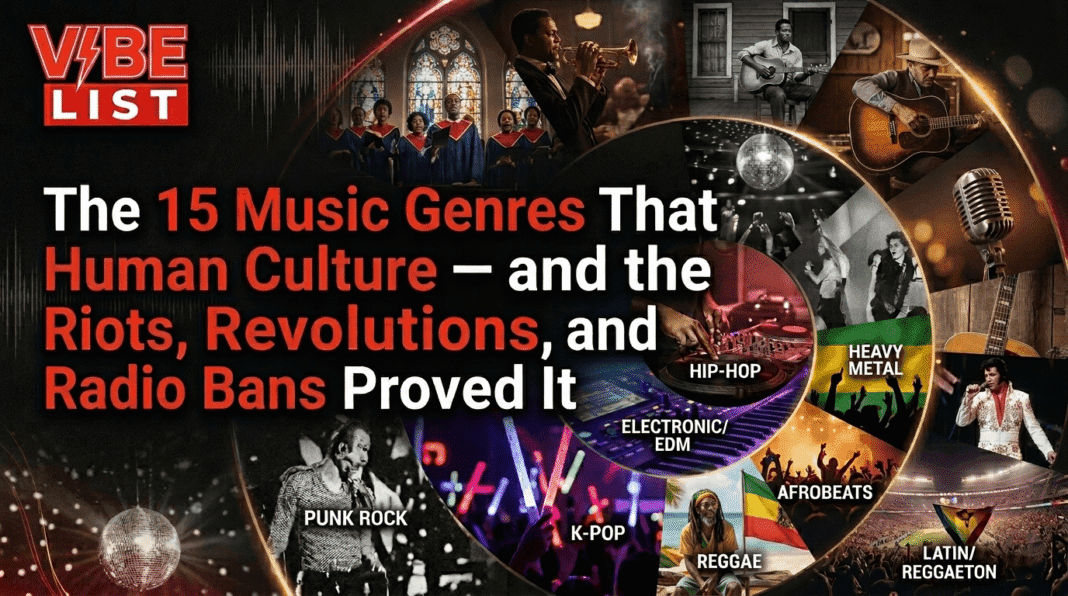
A $31.7 billion industry built on 5.1 trillion streams in a single year. 349.9 billion of those streams belonging to a genre born in a Bronx rec room with a 50-cent cover charge. An 18-year-old Jamaican immigrant isolating drum breaks on two turntables while his borough burned. A compilation album selling 18 million copies for an artist assassinated at 36. A gospel choir’s 18.5% streaming surge outpacing every genre in America. Fifteen genres did not just soundtrack human civilization; they rewired it, and the receipts are still compounding.
This content is for informational and entertainment purposes only and reflects the Vibe List’s editorial perspective. Where data is cited, sources are linked directly.
How we ranked this: Each entry was evaluated across multiple criteria — including commercial reach, cultural influence, innovation, political impact, and enduring relevance — weighted to reflect what matters most for measuring a genre’s total imprint on human civilization. The result is a ranking that respects the data but is ultimately shaped by the Vibe List’s editorial judgment. This is our list, built on evidence, driven by perspective.
Why Genres Are Important (More Than You Know)
In 2025, global recorded-music revenue reached $31.7 billion, marking the eleventh consecutive year of growth. Of that total, paid streaming accounted for $16.6 billion. Over 837 million people now subscribe to music streaming services worldwide. On-demand audio streams exceeded 5.1 trillion in 2025 alone. That number would have been unimaginable to the Delta sharecroppers who first bent guitar strings into a sound the world would come to know as the blues.
But those numbers only tell us how many people listened to music. What music does to people is harder to quantify. Genres are not Spotify categories. They are cultural operating systems; frameworks that change how entire populations think, speak, wear clothes, vote, revolt, and love. A genre does not simply create music. It creates identity. It brings down governments. It desegregates dance floors. Radio stations ban it. Church pulpits condemn it. Congress investigates it. Nobel committees award it.
Our ranking measures something greater than popularity or chart performance. Instead, our ranking assesses a genre’s total impact on human culture — specifically, whether a genre altered the trajectory of civilization in ways still visible decades or centuries later.
We are measuring commerce. Politics. Innovation. Influence across genres. Geography. Devotion — often irrational — of the people who built each genre from nothing.
You may disagree with some of the rankings below. That is our point.
15. Disco
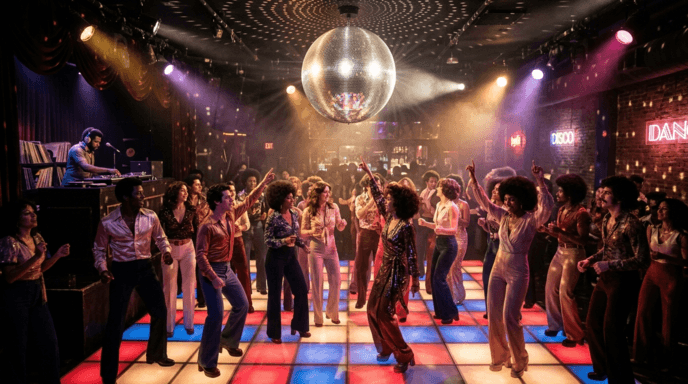
A genre that America attempted to kill off in front of 50,000 baseball fans refused to die.
Disco emerged during the early 1970s from a combination of funk, soul, and European electronic experimentation. Disco found its spiritual home in the nightclubs of New York City that served as sanctuaries for Black, Latino, and queer communities. The sound of disco — four-on-the-floor kick drums, lush string arrangements, and pulsing bass lines — was engineered for one purpose: to keep people moving. By mid-decade, disco had entered the mainstream enough that the Saturday Night Fever soundtrack became one of the best-selling albums in U.S. history.
And then came the backlash. On July 12, 1979, Chicago disc jockey Steve Dahl organized Disco Demolition Night at Comiskey Park. Between games of a White Sox doubleheader, Dahl detonated a crate of disco records on the field; thousands of fans stormed the diamond, causing a riot. The White Sox forfeited the second game, and disco’s mainstream popularity collapsed virtually overnight. Scholars and PBS have since documented how much of the anti-disco backlash targeted the genre’s roots in Black, Latino, and queer communities.
The Vibe List’s take: We rank disco at 15 not to dismiss its importance but to acknowledge that its greatest legacy is invisible. Not only did disco create a new sound; it established the foundation for contemporary dance music. The DJ as artist, remixes as art forms, twelve-inch singles, club culture as cultural institution; all forms of electronic music that followed owe a structural debt to what happened on those dance floors before America tried to destroy them.
14. K-Pop
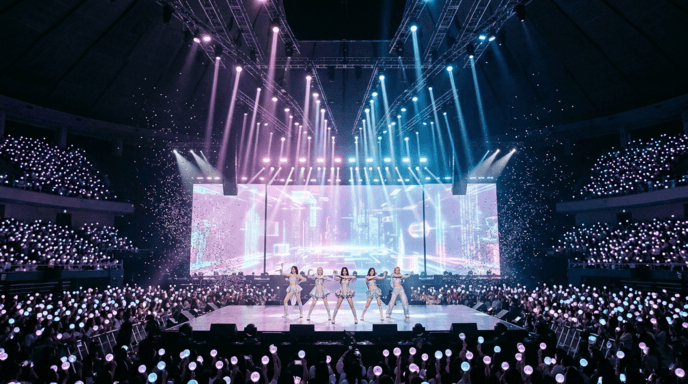
No other 21st-century genre has built a more replicable formula for global cultural dominance than K-Pop.
The K-Pop industry generated approximately $9.3 billion in global market value in 2023; by 2025, the K-Pop events market alone was estimated at $14.27 billion. Those numbers reflect a machine built over decades by South Korea — combining government-funded cultural policy, conglomerate investment, and an idol training system engineered for technical perfection. Groups like BTS and BLACKPINK did not merely find global audiences. Labels built the infrastructure to reach those audiences before either group debuted.
What sets K-Pop apart culturally is the depth of its fan ecosystems. Fans of BTS, referred to as ARMY, have organized charitable drives, influenced Billboard chart methodology, and wielded purchasing power rivaling Fortune 500 marketing departments. K-Pop’s influence extends far beyond music into fashion standards, beauty norms, language learning, and South Korea’s global soft-power strategy. Morgan Stanley identified K-Pop as a significant investment opportunity within the $130 billion global music industry, illustrating how a genre can become an economic engine for a nation.
The Vibe List’s take: K-Pop’s ranking reflects a tension between its extraordinary commercial reach and its relatively contained sonic influence on other genres. Unlike blues or hip-hop, K-Pop has not yet spawned a global family of derivative genres. However, K-Pop’s model — engineering a genre, exporting it, and scaling it like a technology product — has already begun redefining how the rest of the music industry thinks about artist development and global expansion.
13. Afrobeats
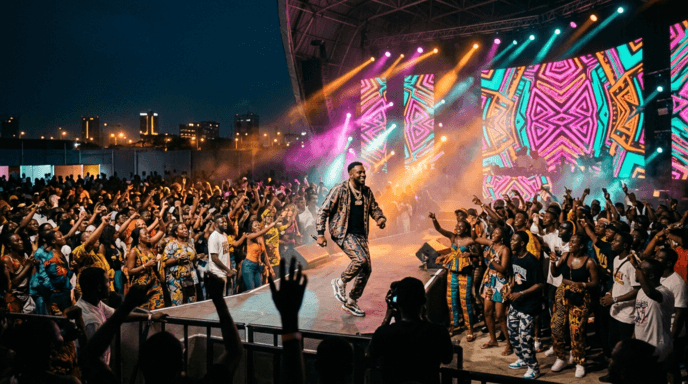
The fastest-growing genre on earth is not emerging from a Western metropolis; it is pouring out of Lagos, Accra, and Johannesburg.
Afrobeats — the modern, pop-inflected descendant of Fela Kuti’s politically charged Afrobeat — generated over 13 billion streams on Spotify alone in 2022, and the number of international listeners streaming Afrobeats increased 28% in 2024. Afrobeats streaming in Latin America surged over 400% since 2020, with Brazil emerging as one of the genre’s largest markets. Afrobeats’ biggest commercial star, Burna Boy, topped Spotify’s global Afrobeats ranking for 2025, cementing Nigeria as one of the world’s most powerful exporters of music.
Alongside Afrobeats, Amapiano — a log-drum-based sub-genre originating from South African township parties — has exploded onto playlists globally. Collectively, Afrobeats and Amapiano represent the greatest cultural export from Africa since its musical traditions were carried across the Atlantic centuries ago and seeded virtually every genre on this list.
The Vibe List’s take: Afrobeats earned its place not just for its commercial trajectory but for what it represents historically. For centuries, African musical DNA has traveled outward, shaping the blues, jazz, rock and roll, R&B, hip-hop, and electronic music; almost always without compensation or credit flowing back to the continent. Afrobeats is the first major global genre where the economic and creative center of gravity remains in Africa. That reversal alone is culturally seismic.
12. Punk Rock
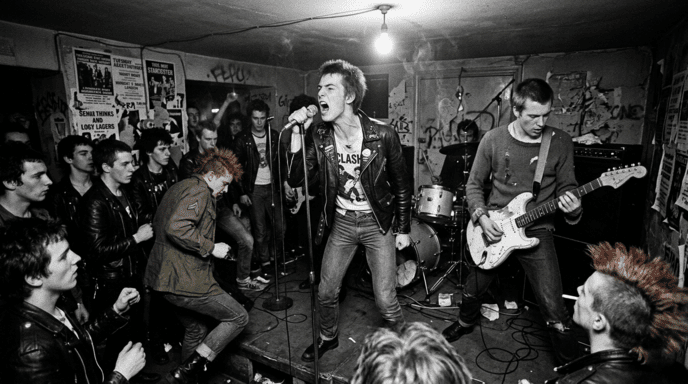
Punk’s commercial presence has always been small. Its cultural reach has been massive.
In the mid-1970s, punk developed simultaneously on both sides of the Atlantic. In New York, bands such as Television, Patti Smith, and the Ramones played at CBGB, which would become the epicenter of American punk. In London, the Sex Pistols and The Clash channeled working-class anger into a sonic assault on the British establishment. Although the BBC banned “God Save the Queen,” the single reached number two on the UK charts in 1977.
Punk’s core principle was radical: anyone could form a band, regardless of musical skill. Punk democratized music creation. The DIY ethos of punk — self-released records, hand-stapled zines, all-ages shows in basements and community halls — would serve as a template for independent music culture worldwide. Without punk, we have no indie rock, no hardcore, no riot grrrl, no emo, and most likely no independent record label ecosystem.
The Vibe List’s take: Punk showed us that you do not measure how important a genre is by how many units are sold. You measure it by how many doors it opened. Punk gave millions of people a way to express themselves when they were told they did not have what it takes to be musicians. Every bedroom producer uploading tracks today works in a creative space punk built.
11. Gospel
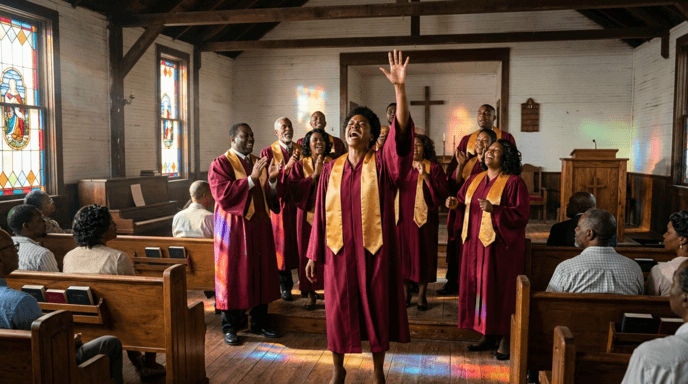
Every American-born genre on this list carries gospel’s fingerprints.
Gospel evolved in the late 1800s from African-American church traditions, blending hymns, spirituals, and the call-and-response patterns rooted in West Africa. From gospel came the vocal techniques that would define soul, R&B, rock and roll, and pop: melisma, improvisation, emotional intensity, and the slow build to crescendo.
In the 1930s, Thomas A. Dorsey (often referred to as “the Father of Gospel Music”) merged sacred lyrics with blues and jazz harmonies, creating a template that Mahalia Jackson, Sister Rosetta Tharpe, and later Aretha Franklin would carry into the secular world. Tharpe was particularly important to the development of rock and roll; she had been playing electric guitar since the 1940s and directly influenced artists such as Chuck Berry and Little Richard. As recently as 2025, Christian and gospel streaming rose 18.5% in U.S. on-demand audio, the largest percentage gain of any genre.
The Vibe List’s take: Gospel’s ranking at 11 may appear surprisingly low considering its pivotal role in shaping the vocal structure of modern popular music. The ranking reflects gospel’s far smaller commercial footprint relative to the genres it helped create; its influence-to-popularity ratio may be the highest on this list. Gospel serves as the root system supporting the entire forest.
10. Reggae
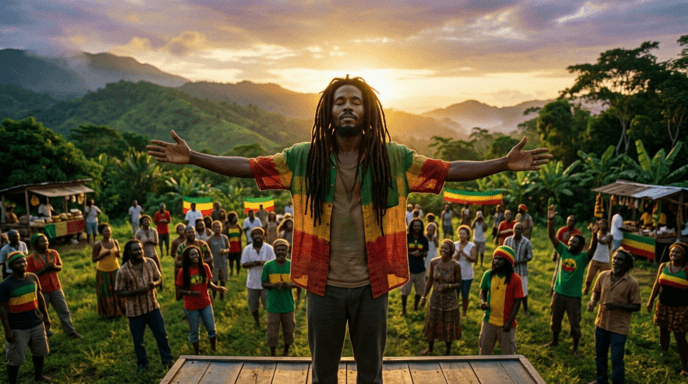
Reggae is the only genre UNESCO has designated an Intangible Cultural Heritage of Humanity, a distinction it received in 2018.
Developing in Jamaica from the mid-1960s through the evolution of ska and rocksteady, reggae created a unique sonic landscape with heavy, syncopated bass lines, off-beat guitar rhythms, and slow-burning drums. But what elevated reggae beyond a local style into a global phenomenon was its connection to Rastafari spirituality, anticolonial politics, and one transcendent figure: Bob Marley.
Marley’s influence in Jamaican politics was significant enough that both major parties courted him, and a 1976 assassination attempt did nothing to silence his advocacy. Marley’s compilation album Legend is the best-selling reggae album in history, certified 18× Platinum by the RIAA with over 18 million copies sold in the U.S. Reggae’s sonic DNA flows directly into dub, dancehall, and the entire hip-hop tradition; DJ Kool Herc, hip-hop’s founding figure, emigrated from Jamaica and brought Jamaican sound system culture with him to the Bronx.
The Vibe List’s take: Reggae proves that a genre does not need commercial dominance to achieve civilizational impact. It needs a message, a rhythm, and a prophet. Marley gave the developing world an anthem and gave the established world a conscience. Reggae’s placement at number 10 reflects its outsized influence relative to its market share; a genre that punches so far above its commercial weight that the disparity itself tells the story.
9. Heavy Metal
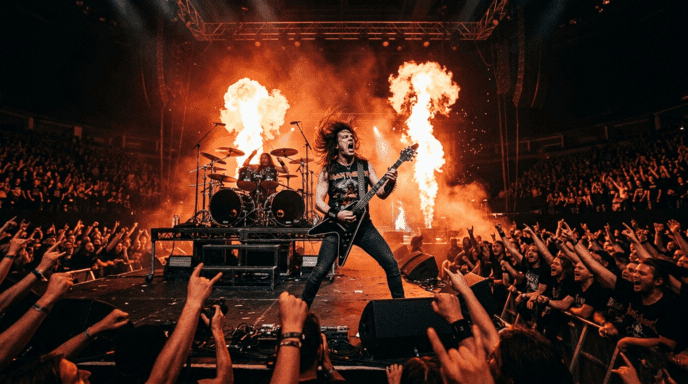
Heavily criticized by moral authorities and staunchly defended by its followers, heavy metal has endured for over five decades.
The genre was born in 1970 with Black Sabbath’s self-titled debut, built on guitarist Tony Iommi’s detuned, doom-laden riffs, and the critical establishment recoiled. At a time when audiences expected rock to be countercultural but optimistic, Black Sabbath adopted a darker, more paranoid approach to songwriting centered on war, the occult, and existential dread. That sonic template — distorted guitars, thunderous drumming, and operatic vocals — became the foundation for a genre that would spawn more subgenres than virtually any other form of rock.
Metal survived the U.S. Senate hearings of the Parents Music Resource Center in 1985, which targeted metal for explicit content and led to the creation of the “Parental Advisory” sticker. It survived the “Satanic Panic” of the 1980s and 1990s. In 2025, rock and metal tours ranked among the highest-grossing worldwide, and the genre’s TikTok resurgence — with nu-metal bands like Deftones, Limp Bizkit, and Korn finding entirely new audiences — confirmed that metal’s appeal is not nostalgic. It is perpetual.
The Vibe List’s take: We place metal at number 9 because its fans’ commitment transcends casual listening. Metal fans do not simply listen to music. They build identities around it. They tattoo band logos on their bodies. They travel across continents to attend festivals. That intensity of devotion, sustained across five decades and dozens of subgenres, is a form of cultural power that no algorithm can replicate.
8. Country
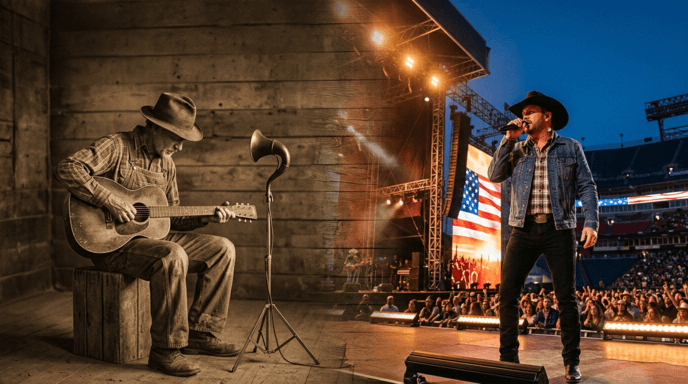
In 1927, Victor Records producer Ralph Peer set up recording equipment in Bristol, Tennessee, and captured the first commercial recordings of Jimmie Rodgers and the Carter Family — sessions Johnny Cash later called the “Big Bang of country music.” Since those Bristol Sessions, country has consistently told America’s story back to itself.
But country’s roots stretch much further back than 1927. Its roots include Appalachian folk, Scotch-Irish balladry, African-American string band music, and gospel — a blend of immigrant and enslaved-community traditions mirroring America’s complicated origins.
Country accounted for 122.5 billion on-demand audio streams in the U.S. during 2025, up from 117.58 billion the previous year. Morgan Wallen’s I’m the Problem became Spotify’s most-streamed country album within hours of its release, and Wallen topped Billboard’s year-end country charts for 2025.
The Vibe List’s take: We rank country at number 8 due to its ability to evolve over nearly a century while continuing to express an identifiable emotional core: storytelling, heartbreak, place, and identity. Country maintains this core while absorbing pop, rock, hip-hop, and electronic elements — expanding its audience without sacrificing its essence. While country may not be the most innovative genre in America, it is arguably the most resilient.
7. Latin (Reggaeton & Regional Mexican)
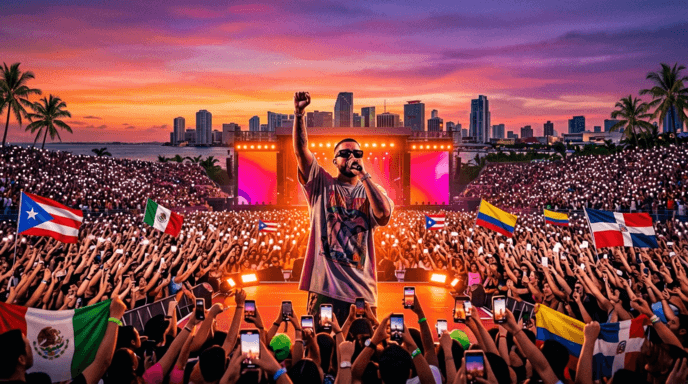
Latin music is not a single genre; it encompasses a continent’s worth of traditions. Latin music is the fastest-growing segment in global recorded-music revenue.
Latin American recorded-music revenue grew 17.1% year-over-year in 2025, marking the region’s sixteenth consecutive year of growth. In the U.S., Latin music accounted for 120.9 billion on-demand audio streams in 2025.
One key driver behind this surge is reggaeton — a genre that emerged in Puerto Rico in the 1990s from a fusion of Jamaican dancehall, Latin American hip-hop, and bomba y plena rhythms. Bad Bunny generated 5.3 billion on-demand audio streams in the U.S. alone in 2025; 4.38% of all Latin streaming in the country. The Harvard Gazette reported that Bad Bunny’s music was streamed nearly 20 billion times on Spotify in 2025 — a figure that underscores the global appetite for reggaeton and Latin music.
Latin encompasses reggaeton, regional Mexican (including corridos tumbados, banda, and norteño), bachata, salsa, cumbia, bossa nova, and numerous other traditions. Regional Mexican has surged in parallel, driven by artists like Peso Pluma, who brought corridos tumbados to global streaming platforms and challenged reggaeton’s dominance within the broader Latin umbrella.
The Vibe List’s take: We rank Latin at number 7 in recognition of a seismic shift still accelerating. For decades, the global music industry primarily viewed English-language pop, rock, and hip-hop as the default. Latin music’s explosion into mainstream consciousness via streaming platforms has permanently altered that assumption. The reality that a Spanish-language artist from Puerto Rico can accumulate more annual streams than nearly any English-language superstar is not a trend; it represents a structural realignment of the global music economy.
6. Electronic/EDM
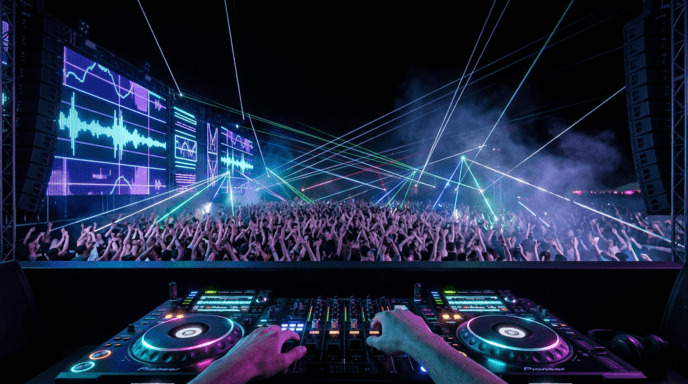
The genre that replaced the guitarist with the laptop and the concert hall with the warehouse.
Kraftwerk laid the conceptual foundations for electronic music in the early 1970s; the Düsseldorf duo’s machine-driven experiments with synthesizers and drum machines established the blueprint for everything that followed. Detroit techno producers Juan Atkins, Derrick May, and Carl Craig have each credited Kraftwerk for inspiring the birth of techno — a genre that combined Kraftwerk’s German futurism with funk and soul from Black Detroit to create one of the world’s most widely distributed forms of dance music.
From those roots, electronic music fractured into hundreds of subgenres: house, techno, trance, drum and bass, dubstep, ambient, garage, and beyond. The global EDM market reached approximately $11.2 billion in 2026, with projections of $19.6 billion by 2033. According to SoundCloud’s 2026 Music Intelligence Report, electronic remained the most-streamed genre in the UK and the fastest-growing in the U.S. for the third consecutive year.
The Vibe List’s take: We rate electronic music at number 6 based on its unique position as simultaneously a genre and a technology platform. No other genre has so fundamentally changed the tools of music creation. The digital audio workstation, the sampler, the synthesizer, MIDI, the loop — these are electronic music’s inventions, and they now undergird virtually every genre of popular music. When a country artist uses Auto-Tune or a hip-hop producer chops samples on an MPC, they are working within electronic music’s technological ecosystem. EDM is not just a genre. It is the operating system that other genres run on.
5. Soul & R&B
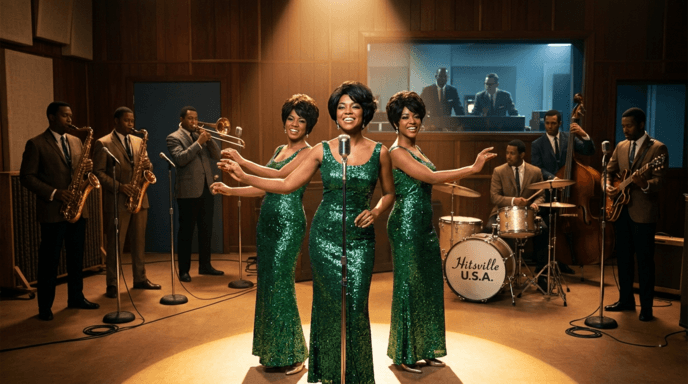
The genre that desegregated American radio did it not with protest signs but with three-minute songs so irresistible that white teenagers could not help but buy them.
Soul music emerged in the late 1950s when gospel’s strong vocals, R&B’s rhythmic drive, and the increasing crossover of Black music into the U.S. mainstream merged. When Berry Gordy founded Motown Records in Detroit in 1959, he built a production line for perfect pop-soul — placing Black voices and faces in white households via television and radio at the height of the civil rights movement.
There has never been a break in the sonic lineage from soul and R&B to modern music. R&B/hip-hop was the most-streamed core genre in the U.S. in 2025 — with 349.9 billion on-demand audio streams — and represented roughly one in every four streams in the country. Modern R&B artists like SZA, The Weeknd, and Daniel Caesar carry forward a lineage stretching back to Stevie Wonder, Marvin Gaye, and Aretha Franklin — artists who drew on the traditions of gospel choirs and juke joints where the genre was born.
The Vibe List’s take: This ranking acknowledges a genre that accomplished something no legislation could; it made integration feel good. While politicians debated civil rights in Congress, Motown had already made it happen on the radio dial. The Supremes did not march on Washington. They charted on it. The cultural integration their music facilitated — white and Black audiences sharing a listening experience, sharing a dance floor, sharing an emotional vocabulary — was arguably as consequential as any court ruling.
4. Rock and Roll
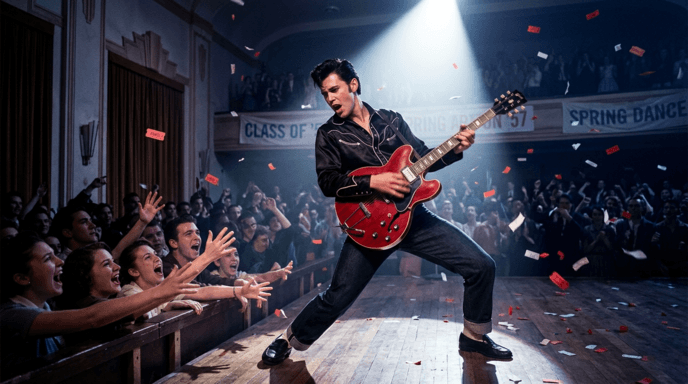
In the 1950s, hundreds of schools and radio stations banned rock and roll records because the genre made teenagers feel something their parents could not control.
Rock and roll exploded in the early-to-mid 1950s, combining blues, rhythm and blues, country, and gospel into a sound that was faster, louder, and more physically provocative than anything mainstream America had ever heard. Chuck Berry, Little Richard, Fats Domino, and Elvis Presley did not merely play music; they performed with a kinetic, sexually charged energy that triggered moral panics, radio bans, and parental outrage throughout America and Europe.
The diversity of rock’s evolutionary tree is staggering. From the British Invasion of the 1960s through psychedelia, progressive rock, glam, punk, new wave, grunge, and alternative, rock became the most prolific generator of subgenres in popular music history. Nirvana’s Nevermind, released in September 1991, earned Diamond certification in the United States and spent over 700 weeks on the Billboard 200, demonstrating rock’s capacity for seismic cultural resets. In 2025, rock streaming grew 6.4% year-over-year and generated 260.5 billion on-demand audio streams in the U.S.; the largest growth in streaming share of any genre that year.
The Vibe List’s take: Rock and roll taught popular music how to be dangerous. Before rock, popular music was entertainment. After rock, it was identity. Its placement at number 4 reflects our conviction that rock’s foundational ingredients were borrowed from genres ranked higher on this list. Its cultural influence, while enormous, has narrowed in the 21st century relative to hip-hop’s omnipresence and the blues’ foundational role. Rock changed the world. But it changed the world using tools that the blues and gospel invented.
3. Blues
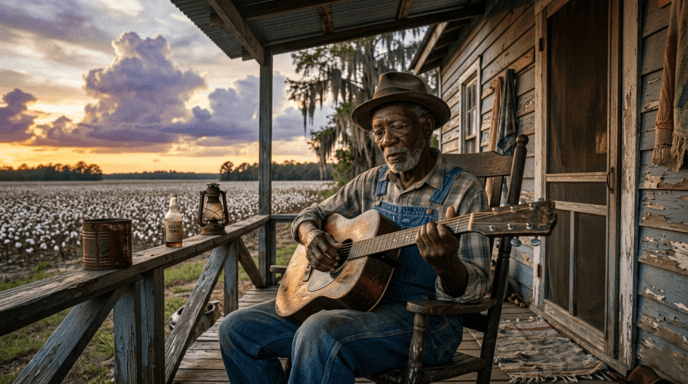
The most influential genre in Western popular music came from the people with the least power in American society.
Blues originated in the Mississippi Delta in the late 19th century, resulting from the convergence of African musical traditions — call-and-response patterns, pentatonic scales, bent notes — with field hollers, spirituals, and work songs sung by enslaved and formerly enslaved Black Americans. Delta blues infused the polyrhythms and tonalities of West African musical traditions with the folk traditions and instruments of predominantly white music, creating a hybrid that was neither strictly African nor European, but entirely new.
The extent of the blues’ influence upon subsequent genres is not a matter of debate; it is a matter of structural musicology. The twelve-bar blues progression forms the harmonic backbone of rock and roll, early R&B, much of country music, and significant portions of jazz. Robert Johnson, Muddy Waters, B.B. King, Howlin’ Wolf, and Lead Belly created the musical vocabulary that the Rolling Stones, Led Zeppelin, Eric Clapton, and Jimi Hendrix adapted into the language of rock. Without the blues, there is no rock and roll. Without rock and roll, there is no punk, no metal, no grunge, no alternative. The entire family tree collapses.
The Vibe List’s take: Ranking the blues third is an argument about foundational architecture. Virtually every genre born in the Americas after 1900 contains blues DNA in its harmonic structure, vocal approach, or thematic preoccupation with suffering, resilience, and transcendence. The blues did not simply influence other genres; it provided the musical grammar that other genres used to speak. It ranks below jazz and hip-hop because those genres ultimately achieved broader global reach and more radical transformations of what music could be; but the blues gave both of them the language to begin.
2. Jazz
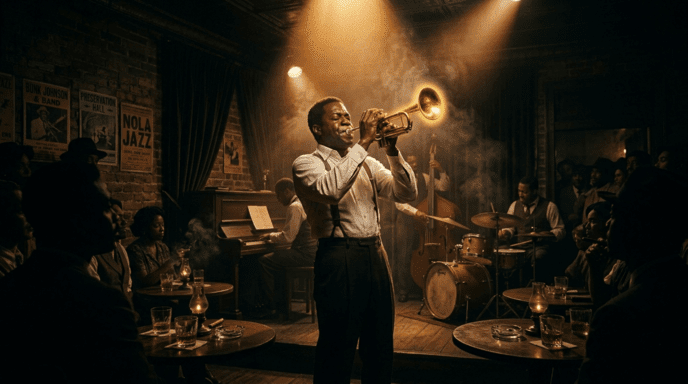
America’s first original art form emerged in New Orleans at the turn of the 20th century from a cultural collision that could only have occurred in that specific city — the intersection of French, Spanish, West African, Caribbean, and Anglo-American cultures layered atop one another in a port city devoted to dancing and celebration.
According to the National Park Service, this colonial history made New Orleans an ideal incubator for musical experimentation. Enslaved and free Black musicians combined African rhythmic traditions, European harmonic structures, brass band instrumentation, ragtime syncopation, and blues tonality to create something unprecedented: music that was simultaneously composed and improvised, structured and free.
Louis Armstrong’s Hot Five and Hot Seven recordings (1925–1928) revolutionized jazz by introducing a concept so fundamental that virtually every popular music genre since has organized itself around it: the primacy of the individual soloist. Duke Ellington, Charlie Parker, Miles Davis, John Coltrane, and Thelonious Monk led successive revolutions within jazz — swing, bebop, cool jazz, hard bop, free jazz, fusion — each expanding the expressive boundaries of what music could accomplish.
Jazz did more than influence listeners; it transformed the public perception of musicians from entertainers into artists. It pioneered improvisation as a legitimate creative methodology. And it desegregated American performance spaces decades before civil rights legislation mandated integration elsewhere.
The Vibe List’s take: We rank jazz second because no other genre has contributed as much to the conceptual vocabulary of music itself. Jazz introduced improvisation, swing, the solo, modal harmony, and fusion as methodology — concepts that virtually every genre in existence has since adopted. Jazz taught music how to think. Our decision to rank hip-hop at number 1 does not reflect a judgment that hip-hop is more artistically significant than jazz. It reflects the recognition that hip-hop’s total cultural footprint — its reach into fashion, language, politics, technology, and global identity formation — now exceeds that of any single genre in history.
1. Hip-Hop
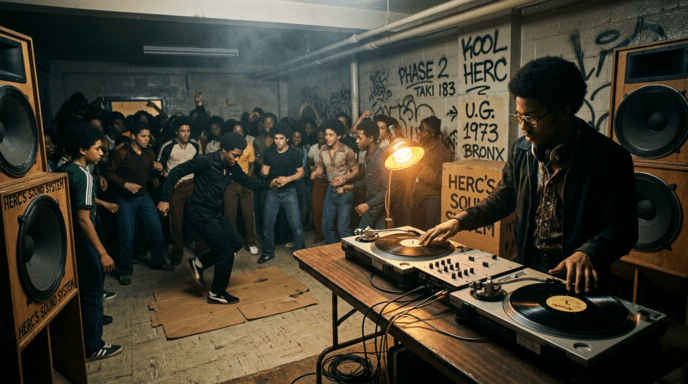
On August 11, 1973, an 18-year-old DJ played his sister’s back-to-school party in the rec room of an apartment building at 1520 Sedgwick Avenue in the Bronx. Admission was 25 cents for girls, 50 cents for boys. That DJ was Clive Campbell, better known as DJ Kool Herc, and that party is now widely recognized as the birth of hip-hop.
Herc, who had emigrated from Jamaica at age 12, brought Jamaican sound system culture to a community in economic collapse. He developed a technique he called the “merry-go-round,” isolating the percussive breakdowns of funk and soul records and extending them by switching between two turntables. Dancers developed styles to these extended breaks; they became known as b-boys and b-girls. Herc and his collaborator Coke La Rock spoke over the beats in rhythmic patterns that eventually became rapping. The culture that coalesced around DJing, MCing, breaking, and graffiti art became hip-hop.
From that Bronx rec room, hip-hop has evolved into the most commercially dominant genre on Earth. According to Luminate data, R&B/hip-hop generated 349.9 billion on-demand audio streams in the United States in 2025; more than any other genre. Across all markets, hip-hop and phonk account for approximately 30% of streams, more than any other genre category. The culture’s influence on fashion, language, film, advertising, sports, and political discourse is so pervasive that isolating hip-hop’s footprint from contemporary culture itself has become nearly impossible.
“My sister gave a party to go back to school. We rented the [community room] and it caught on,” Herc told NPR in 2023, reflecting on that 1973 gathering with characteristic understatement.
Hip-hop has also proven to be the most adaptable genre in music history. It has absorbed and transformed elements of virtually every other genre on this list — jazz samples, blues structures, rock energy, electronic production, reggae rhythms, Latin percussion, gospel vocal intensity — and exported the results globally. From Afrobeats to K-Pop, genres that might seem unrelated to a Bronx block party are saturated with hip-hop’s production techniques, lyrical cadences, and cultural attitude. The songs that owned TikTok in 2026 carried hip-hop’s DNA into virality — and the lineage is unmistakable.
The Vibe List’s take: Hip-hop is number one not because it generates the most revenue (though it does), not because it produces the most stream volume (though it does), and not because it has inspired more subsequent genres than any other (though it has). Hip-hop is number one because it did all of this after starting with less than any genre in history. The blues emerged from oppression, but the blues had instruments. Jazz emerged from cultural collision, but jazz had trained musicians. Hip-hop emerged from a turntable, a sound system, and the creative desperation of teenagers in a borough where, as hip-hop historian Jay Quan told NPR, “poor, urban people [were] kind of making lemonade out of lemons.” That a global, multi-billion-dollar cultural force emerged from those conditions is the most extraordinary origin story in the history of music. The journey from that Bronx party to the genre’s dominance of global streaming echoes the trajectories of those albums turning 20 in 2026 that rewrote the rules of music forever — proof that the most enduring cultural forces often begin in the most unlikely places.
Comparison Table
| Rank | Genre | Era of Origin | Key Metric (2025) | Primary Cultural Impact | Subgenre Proliferation |
|---|---|---|---|---|---|
| 1 | Hip-Hop | 1973, Bronx, NY | 349.9 B U.S. on-demand streams (R&B/hip-hop combined); ~30% global stream share | Reshaped fashion, language, politics, film, advertising, and global identity; most commercially dominant genre on Earth | High — trap, drill, boom bap, lo-fi, phonk, cloud rap, conscious rap |
| 2 | Jazz | 1890s–1910s, New Orleans | Legacy genre; foundational influence across all modern music | Invented improvisation, the solo, modal harmony; desegregated performance spaces | Very High — swing, bebop, cool, hard bop, free jazz, fusion, nu-jazz |
| 3 | Blues | Late 1800s, Mississippi Delta | Legacy genre; twelve-bar progression underpins rock, R&B, country, jazz | Created the harmonic and thematic grammar for virtually all American-born genres | Moderate — Delta, Chicago, Texas, piedmont, electric, country blues |
| 4 | Rock and Roll | Early 1950s, U.S. | 260.5 B U.S. on-demand streams; 6.4% YoY growth | Invented youth culture as market force; most prolific subgenre generator in pop history | Highest — psychedelia, prog, punk, new wave, grunge, alt, indie, post-rock |
| 5 | Soul & R&B | Late 1950s, Detroit / U.S. South | 349.9 B U.S. streams (combined with hip-hop); ~25% U.S. stream share | Desegregated American radio and television via cultural rather than legislative means | Moderate — Motown, Philly soul, neo-soul, new jack swing, alternative R&B |
| 6 | Electronic/EDM | Early 1970s, Germany / Detroit | ~$11.2 B global market (2026); fastest-growing U.S. genre (3 consecutive years) | Revolutionized the tools of music creation (DAW, sampler, synth, MIDI); DJ as artist | Highest — house, techno, trance, D&B, dubstep, ambient, garage, IDM |
| 7 | Latin (Reggaeton & Regional Mexican) | 1990s, Puerto Rico / Mexico | 120.9 B U.S. on-demand streams; 17.1% regional revenue growth | Proved non-English music can dominate global streaming; structural realignment of music economy | High — reggaeton, corridos tumbados, banda, norteño, bachata, salsa, cumbia |
| 8 | Country | 1927 Bristol Sessions, Tennessee | 122.5 B U.S. on-demand streams | Narrated American identity for nearly a century; most resilient genre through industry shifts | Moderate — honky-tonk, outlaw, Bakersfield, bro-country, Americana, alt-country |
| 9 | Heavy Metal | 1970, Birmingham, UK | Tours among highest-grossing globally; TikTok-driven nu-metal revival | Built one of music’s most devoted fan cultures; survived moral panics across five decades | Very High — thrash, death, black, doom, power, symphonic, nu-metal, prog metal |
| 10 | Reggae | Mid-1960s, Jamaica | Bob Marley’s Legend: 18× Platinum U.S. (18 M copies) | UNESCO Intangible Cultural Heritage; gave the developing world an anthem and anticolonial voice | Moderate — roots, dub, dancehall, lovers rock, ragga, reggae fusion |
| 11 | Gospel | Late 1800s, U.S. churches | +18.5% U.S. on-demand streaming growth (2025) — largest % gain of any genre | Created the vocal techniques (melisma, call-and-response, crescendo builds) underlying soul, R&B, rock, pop | Low — traditional, contemporary, Southern, urban contemporary gospel, praise & worship |
| 12 | Punk Rock | Mid-1970s, NYC / London | Commercially small; culturally outsized | Democratized music creation; DIY ethos birthed indie ecosystem, zine culture, all-ages venues | Moderate — hardcore, post-punk, pop punk, riot grrrl, emo, crust, skate punk |
| 13 | Afrobeats | 2000s–2010s, Lagos / Accra | 13 B+ Spotify streams (2022); +400% Latin America growth; +28% global listenership (2024) | First major global genre with economic center of gravity in Africa; reversal of centuries-long cultural extraction | Growing — Afro-pop, Afro-fusion, Amapiano, Afro-house |
| 14 | K-Pop | 1990s–2000s, Seoul | ~$9.3 B global market (2023); $14.27 B events market (2025) | Engineered a replicable global export model; fan economies rival corporate marketing departments | Low — K-hip-hop, K-R&B, K-ballad, K-indie |
| 15 | Disco | Early 1970s, NYC | Legacy genre; influence lives through house, techno, and EDM | Created DJ culture, the 12-inch single, the remix as art form; pioneered inclusive nightlife spaces | Low — Italo disco, nu-disco, space disco; absorbed into house and techno |
Frequently Asked Questions
What is the most popular music genre in the world right now?
Hip-hop and R&B combined hold the largest share of streaming in the United States, accounting for 349.9 billion on-demand audio streams in 2025, according to Luminate data. Globally, hip-hop and phonk account for about 30% of all streams. Pop remains the second-largest genre by streaming volume.
What is the oldest music genre still actively listened to today?
Blues originated in the late 1800s. Jazz emerged between 1890 and 1910. And gospel’s roots reach back to the spiritual traditions of the 18th and 19th centuries. Gospel experienced an 18.5% increase in on-demand audio streams in 2025, making it one of the fastest-growing genres in the U.S.
Why does hip-hop rank above rock and roll?
While rock and roll was foundational to 20th-century youth culture, hip-hop has achieved a broader cultural footprint in the 21st century, dominating streaming, fashion, language, film, and global identity formation. Hip-hop also began with virtually no resources, making its trajectory from a Bronx apartment party to global dominance historically unique.
Which music genre is experiencing the fastest growth?
In the U.S., Christian/gospel had the largest percentage increase in on-demand audio streams in 2025 at 18.5%. Rock posted the largest absolute growth in streaming share. Globally, Afrobeats continues its explosive expansion, with Latin American consumption surging over 400% since 2020.
How big is the global music industry?
The global recorded music industry generated $31.7 billion in revenue in 2025, according to IFPI. This represents the eleventh consecutive year of growth. There are currently over 837 million paid subscribers to music streaming services worldwide, and total global streams hit 5.1 trillion in a single year.
Which music genre has the most subgenres?
Electronic music and rock are the most prolific generators of subgenres, each spawning hundreds of recognized subgenres. Metal alone has produced dozens of distinct subgenres, from thrash and death metal to black metal and doom.