



A 160-decibel gunshot reduced to a polite ‘pfft.’ A car that detonates like a grenade because the script said so. A flatline shocked back to life by a machine that doesn’t treat flatlines. Five minutes of chloroform compressed into two seconds. An 800-dollar Manhattan apartment that costs ten thousand. Seventy percent CPR survival on screen; single digits in real life. You didn’t question any of it. Hollywood didn’t need to fool you; your brain did the work for free.
Hollywood has built an alternative world for more than a hundred years that is so believable that most of us stopped thinking critically about it years ago.
Bullets are silent. Cars are bombs. CPR works miracles. And a 25-year-old waitress can somehow afford a 1,500-square-foot apartment in Manhattan.
Apply a little common sense and research, and nearly all of these assumptions fall apart. Hollywood is not entirely responsible; most of the blame falls on you. Or rather, your brain.
Cognitive psychologists have demonstrated that the idea of “suspension of disbelief” when watching movies is false. In fact, we naturally accept the story as true and then reject only the parts that contradict our own experiences. A 2008 study published in the Annals of the New York Academy of Sciences confirmed this; the brain’s default mode is to believe, and skepticism takes effort.
Hollywood is aware of this. And it uses it against you.
The following are twenty of the most persistent lies movies tell you about real life. This article is not just listing complaints. For each lie, we break down what actually happens in reality, why Hollywood tells it, and what happens in your brain that lets it slide. If you enjoy the relatable moments everyone pretends don’t happen, you will love discovering that the cinematic universe has been lying to you on an entirely different level.
Consider this a complete fact-check of the fictional universe you’ve been living in without realizing it.
1. Silencers That Muffle All Sound {#Suppressors}
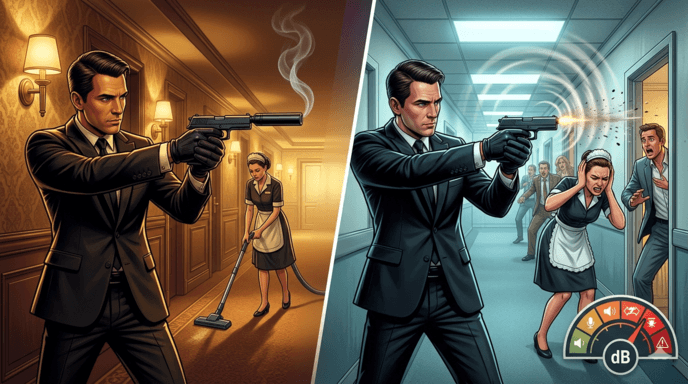
The Movie Version: The villain screws a silencer onto a pistol, fires it in a hotel hallway full of people, and everybody remains silent. The target falls to the ground. The villain leaves. The maid keeps vacuuming.
The Reality: A standard 9mm pistol produces approximately 160 decibels without a suppressor; louder than a commercial jet at takeoff. A good suppressor reduces that by roughly 20 to 35 decibels, bringing the shot down to approximately 125–140 decibels; still louder than a rock concert and enough to immediately damage the hearing of everyone in range without ear protection. Locating the shooter would not be difficult.
The firearms industry calls them “suppressors” for a reason; they suppress noise, but they don’t eliminate it.
The idea that a suppressed firearm produces a quiet “pfft” that goes unnoticed is pure fiction.
Why Hollywood Tells These Lies: Stealth looks good on camera. It gives filmmakers a clean way to eliminate characters without triggering alarm systems, witnesses, or police responses. If every suppressed shot sounded the way it actually does, half the spy genre would end in a foot chase before the mission was finished.
Why Your Brain Allows Them To Be Told: You’ve probably heard the “pfft” sound effects thousands of times since you were a child. Those associations are wired into your auditory memory. So whenever you hear a “pfft” sound in a movie, your brain files it under “suppressed gunshot” and never compares it to anything you’ve actually heard in real life.
2. Cars That Explode Upon Impact {#Cars_Explode}

The Movie Version: A car goes off a cliff, rolls twice, and explodes into flames before hitting the ground. Or, a single bullet strikes a car’s gas tank and it detonates like a small grenade.
The Reality: Cars rarely explode. Ever. As a professor at the University of Brighton explained on HowStuffWorks, liquid fuel such as gasoline is not explosive under normal conditions. For gasoline to explode rather than simply burn, it must be in vapor form, under pressure, at around 495°F, and exposed to a spark; all four conditions simultaneously. Car crashes do not meet these criteria.
When Formula 1 driver Romain Grosjean crashed at 140 mph during the 2020 Bahrain Grand Prix, splitting his car in two and igniting a prolonged fire, his car did not explode. His car burned. There is a distinction here. Modern fuel tanks are built to withstand impacts. Current safety regulations make car explosions even less likely than they were in the 1970s, when the Ford Pinto’s rear-mounted fuel tank turned rear-end collisions into potential fireballs.
Why Hollywood Tells These Lies: A fireball punctuates an action sequence with visceral, sensory impact that a car simply crashing into an embankment cannot match. Franchises like Fast & Furious have trained audiences to expect explosions as standard punctuation for every car chase.
Why Your Brain Accepts Them: Gasoline is flammable. Your brain knows that much. The leap from “flammable” to “explosive” feels like a small one, even though chemically the difference is enormous. Hollywood presents the two as basically the same thing, and your brain fills in the rest.
3. Defibrillators That Restart A Dead Heartbeat {#Defibrillators}
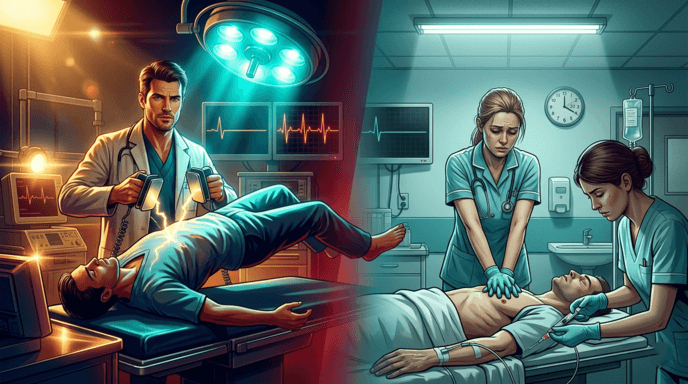
The Movie Version: A patient flatlines. The ECG machine continuously emits a long beep. A doctor grabs the paddles, yells “clear!”, delivers one or two shocks, and the patient’s heart instantly starts beating again.
The Reality: This is arguably the most dangerous medical myth Hollywood keeps alive. A flatline on an ECG represents asystole; total lack of electrical activity in the heart. Defibrillators do not treat asystole; they cannot restart a dead heart. What defibrillators actually do is treat irregular rhythms like ventricular fibrillation, where the heart quivers instead of pumping, by delivering a shock that disrupts the chaotic pattern and lets the heart reset to its normal rhythm.
If your heart has flatlined, meaning all electrical activity has stopped, the treatment is CPR and medications like adrenaline; not defibrillators. Delivering a shock to a flatline accomplishes nothing. As one medical professional explained to Gizmodo, a defibrillator needs some kind of electrical activity to work with. No electrical activity means no rhythm to repair, which means no reason to shock.
Why Hollywood Tells These Lies: The defibrillator scene is one of the most effective dramatic tools in Hollywood’s kit. The flatline sound creates instant tension. The shock creates a visible violent reaction on screen. The gasp of recovery creates emotional release. Showing what actually happens; a nurse injecting adrenaline while another performs chest compressions for 20 minutes with less than 50% survival; would be medically accurate but cinematically unwatchable.
Why Your Brain Accepts Them: The defibrillator scene has embedded itself in the public’s understanding of medicine; wrong as it is. Studies consistently show that patients overestimate both CPR and defibrillator success rates based on what they see on TV.
4. Chloroform That Will Knock Someone Out Instantaneously {#Chloroform}
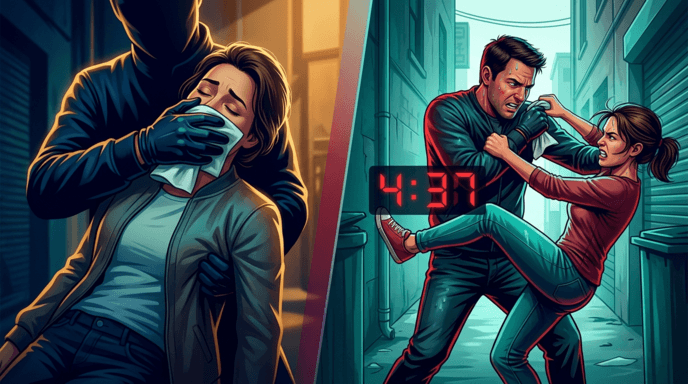
The Movie Version: The bad guy creeps up behind the target, presses a chloroform-soaked cloth over their nose and mouth, and within two seconds the victim goes limp.
The Reality: According to scientific estimates, it would take approximately five minutes of continuous inhalation from a chloroform-soaked cloth to knock out an average adult. Five minutes. Not five seconds. Five minutes is forever when attempting to restrain someone who is fighting back and holding their breath.
The dose required to induce unconsciousness is dangerously close to the lethal threshold for respiratory failure, cardiac arrhythmia, or death. Professional anesthesiologists train for years to master the precise dosages needed to induce unconsciousness safely. Random individuals pressing rags against people’s faces have no such expertise.
Why Hollywood Tells These Lies: The chloroform cloth is a convenient shortcut for knocking characters out without creating extra conflict or injuring anyone else in the scene.
Why Your Brain Accepts Them: You’ve seen it dozens of times throughout generations of film and TV. It has become an unquestioned element of popular culture. Very few people have ever looked into how chloroform actually works, so there’s nothing in their experience to contradict what they see on screen.
5. One Punch, Instant Knockout {#Punch-Out-Knockout}
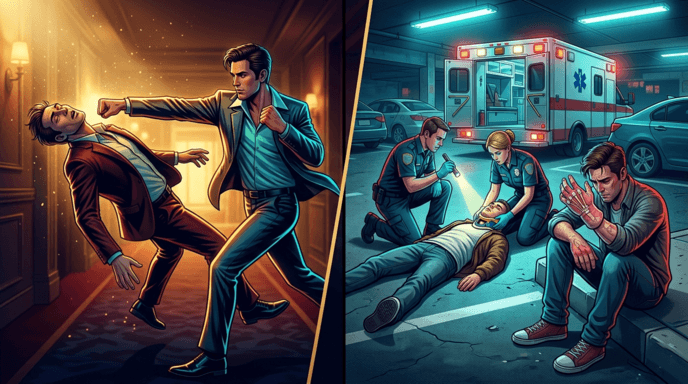
The Movie Version: The hero lands a single punch to the jaw. The opponent slumps to the ground, unconscious but apparently uninjured. The hero steps over them and moves on.
The Reality: If a punch knocks you unconscious, you have suffered a traumatic brain injury. Your brain has been rattled inside your skull hard enough to temporarily shut down. Even a few seconds of unconsciousness means at least one concussion. If you stay unconscious for minutes or longer, the risks escalate to brain hemorrhaging, swelling, and permanent damage. People knocked unconscious by a punch don’t wake up thirty minutes later feeling slightly dizzy; they wake up in emergency rooms.
Research cited by BrainFacts.org confirms that any loss of consciousness from a blow to the head constitutes at least a concussion; repeated concussions increase cumulative risk for chronic traumatic encephalopathy (CTE).
Why Hollywood Tells These Lies: The clean knockout lets heroes neutralize enemies without visible harm, preserving their moral standing while erasing the ugly realities of actual head trauma.
Why Your Brain Accepts Them: Boxing and MMA have desensitized audiences to knockouts. You see the fighter go down, then you see them standing for the post-fight interview. What you don’t see is the ringside medical screening, the neurological evaluation, and the mandatory recovery protocol that happens in between.
6. Hacking Is Just Fast Typing on a Green Screen {#hacking}
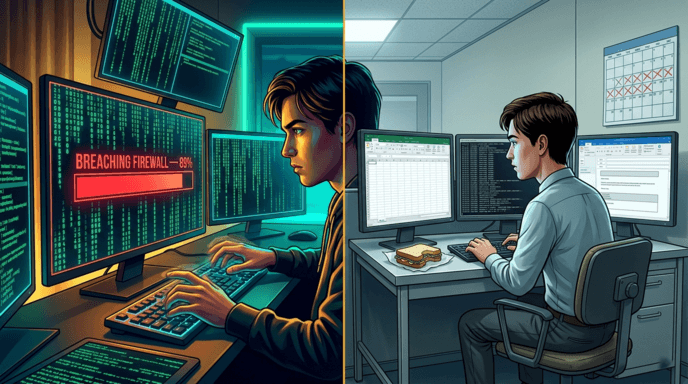
The Movie Version: A young hacker hunches over a keyboard, types furiously while neon green text cascades across the screen, says “I’m in” after about 45 seconds, and a progress bar fills up. The Pentagon’s firewalls crumble.
The Reality: Cybersecurity specialists will tell you that watching a real hack is mind-numbingly boring. Real-world hackers spend weeks or months on reconnaissance: social engineering targets into clicking links, sending phishing emails, hunting for exploitable software bugs, and waiting. Visually, most of it is spreadsheets, terminal windows, and log files. There is no “ACCESS GRANTED” screen, no countdown timer, and no 45-second deadline.
Very few productions get it right. The one exception cybersecurity professionals consistently cite is the TV series Mr. Robot, which earned praise from the security community for its realistic depiction of techniques, timeframes, and tools. The show employed a technical advisor who was also a security researcher, and the accuracy shows. In the real world, the AI tools everyone is using in 2026 have changed some aspects of cybersecurity, but the fundamentals of hacking remain slow, methodical, and deeply unglamorous.
Why Hollywood Does It: Nobody wants to watch someone send phishing emails and stare at a terminal for days. The fast-typing montage is Hollywood’s solution for making the slow, invisible reality of hacking look exciting.
Why Your Brain Accepts It: Most people have no idea how computers actually work at a technical level. So when a movie shows fast typing producing instant results, your brain has no reference point to push back against.
7. How Often CPR Works {#CPR}
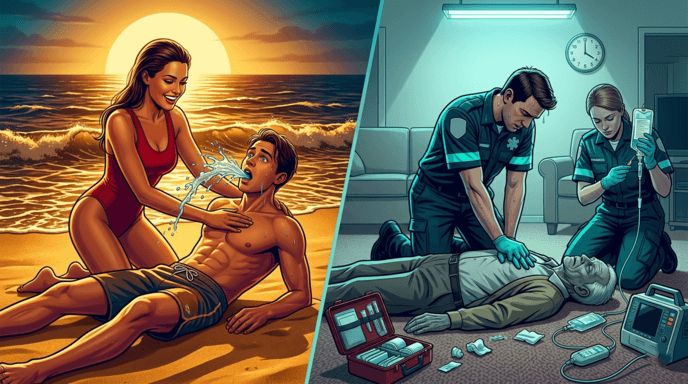
The Movie Version: Someone falls down. A good Samaritan starts CPR. Maybe some chest compressions. Some mouth-to-mouth breathing. The person comes to. They cough. They sit up.
The Reality: In January 2026, a University of Pittsburgh study published in Circulation: Cardiovascular Quality and Outcomes looked at 169 U.S. television episodes depicting bystander CPR since 2008 and determined less than 30% accurately displayed the procedures used. More than 45% of those episodes showed outdated techniques, including mouth-to-mouth resuscitation (48%) and pulse checks (43%). Neither technique is recommended by the American Heart Association for performing CPR by someone other than a trained medical professional.
The real survival statistics are grim. TV dramas generally report CPR success rates of about 70%. In the United States, the actual survival rate for out-of-hospital cardiac arrest is far lower. According to an article published by the American Heart Association in January 2026, out-of-hospital cardiac arrest occurs more than 80% of the time in a patient’s own home, rather than in a public place as depicted on television. The demographic picture is also wrong. The median age for real-world CPR patients is 62, but nearly every on-screen recipient is depicted as being between 21 and 40. If you’re a fan of the most addictive Netflix series to binge right now, you’ve almost certainly watched multiple episodes that got CPR completely wrong.
Why Hollywood Uses This Technique: A death despite CPR is tragic. A life saved by CPR is triumphant. Hollywood picks the version that keeps audiences in their seats.
Why Your Mind Allows It: Researchers call this the “cultivation effect”; the gradual shift in perception that comes from prolonged exposure to media depictions. If you’ve watched hundreds of successful CPR scenes and never witnessed a real cardiac arrest, your brain builds its survival estimates from fiction. The same phenomenon explains many of the psychological facts about everyday life that shape how you perceive the world without realizing it.
8. Laboratory Results in Less Than One Hour {#forensic}
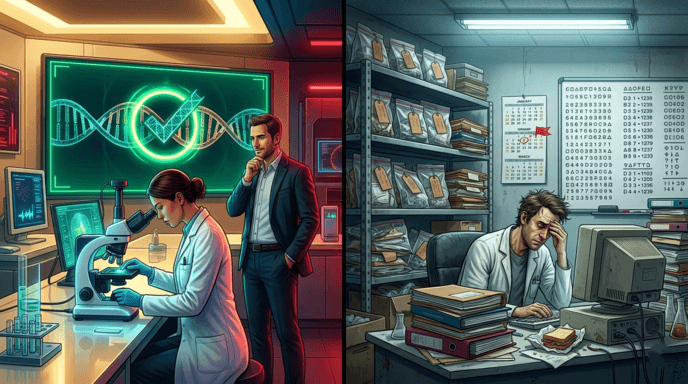
The Movie Version: A detective gives a sample to a laboratory technician. The technician analyzes the sample. Before the end of that scene; and often during the same conversation; the results come back. DNA match. Case solved.
The Reality: DNA testing typically takes several weeks to months to complete. As CrimeSceneInvestigatorEDU.org documented, the Hollywood version of instant DNA results contrasts sharply with the reality: most forensic labs take weeks or months. Factor in evidence backlogs, chain-of-custody paperwork errors, and the reality that a single lab technician juggles hundreds of cases per year, and the timeline stretches even further.
This myth has real legal consequences. The “CSI effect,” documented by legal scholars at Arizona State University and elsewhere, describes a phenomenon in which jurors who watch forensic crime dramas arrive at trial expecting forensic evidence that may not exist. Prosecutors have reported jurors expecting DNA, fingerprints, and digital forensics in cases where such evidence is unavailable, unnecessary, or irrelevant. The fiction has literally reshaped the justice system; a reminder that unrealistic things in movies carry real-world consequences that extend far beyond the movie theater.
Why Hollywood Depicts This Way: Time. A realistic depiction of forensic science would add 44 minutes of detectives refreshing their email.
Why Your Mind Allows It: Lab-results scenes are always presented with the same confidence and authority as real scientific procedures. Your brain doesn’t flag the timeline as improbable because everything else about the scene looks scientifically legitimate.
9. Strolling Away from Blasts {#explosion}
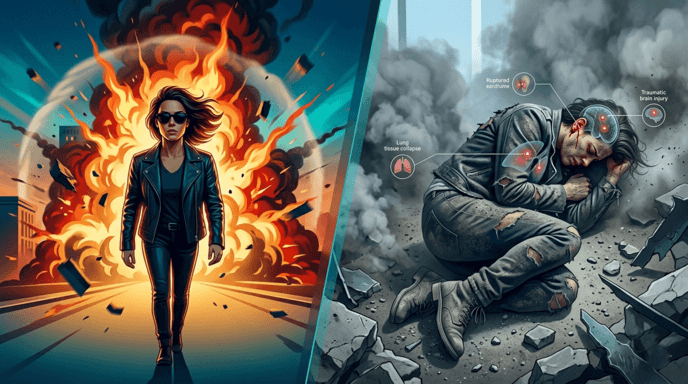
The Movie Version: A character sets off a bomb; or a building blows up behind them; and they stroll slowly away from the blast without looking back. No harm done to them physically. Their ears aren’t ringing. They’re simply wearing sunglasses and exuding coolness.
The Reality: When a bomb goes off, a shockwave is produced; a rapid increase in air pressure that travels faster than the speed of sound. Research funded by the U.S. Department of Defense has shown that blast shockwaves can inflict traumatic brain injury, rupture eardrums, crush lungs, and cause internal bleeding; even at distances where a person might technically still be standing. As WIRED reported in their investigation of blast physics, a shockwave powerful enough to throw a person is powerful enough to kill them through lung damage alone.
Beyond the shockwave itself, the heat from a nearby explosion causes severe burns, and flying debris inflicts lacerations and blunt-force trauma. The cool walk is physically impossible.
Why Hollywood Does It: Because it looks awesome. The cool-walk-away shot is one of cinema’s most iconic tropes. One frame communicates power, control, and total indifference to danger.
Why Your Mind Accepts It: Slow motion overrides your logical brain. The music, the angles, the composure; everything in the frame is designed to make you feel awe, not ask questions.
10. Air Ducts Large Enough for People to Crawl Through {#Air-ducts}
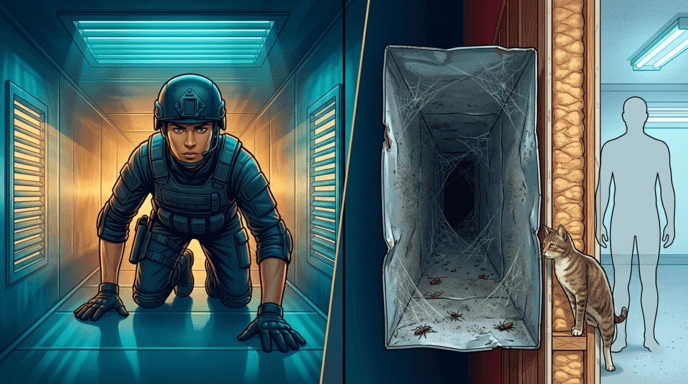
The Movie Version: A character pulls off an air vent cover, climbs into the ductwork overhead, and crawls through the entire system to reach a restricted part of the building. The ducts are spacious enough to move through comfortably and strong enough to hold an adult’s full weight.
The Reality: Residential HVAC ducts are typically 6 to 12 inches wide. Commercial rectangular ducts are larger but rarely exceed 42 inches wide by 12 inches deep. Ducts are made of lightweight sheet metal that would deform severely or collapse if an adult tried to crawl through them. On top of that, residential ducts contain decades of accumulated dust, extreme temperature swings from heating and cooling cycles, and are broken up by sharp turns, size reductions, and internal baffles that would stop anything larger than a housecat.
Why Hollywood Does This: Air vents give Hollywood a great shortcut for storytelling. Literally. They bypass locked doors, security cameras, and armed guards without requiring the audience to sit through a detailed explanation of how building security actually works.
Why Your Brain Accepts It: You’ve probably never seen the inside of an air duct. So when a movie fills that gap with a roomy, well-lit tunnel, you have no frame of reference to challenge it. Hollywood counts on that.
11. The New York Apartment on a Barista’s Salary {#NYC-apartment}

The Movie Version: A main character living in an apartment in Manhattan or Brooklyn earns barely enough money to pay for rent. But she owns a fully decorated, multi-room apartment with high ceilings, exposed brick walls, and natural light pouring through floor-to-ceiling windows.
The Reality: The most famous example is Monica Geller’s apartment from the popular sitcom Friends. After some prodding from fans; and some creative writing; the show’s creators eventually came up with a plausible reason for how Monica could afford such a luxury pad: she was renting it from her grandmother and paying basically nothing ($200 per month).
Today, real estate experts at The Agency estimate that same apartment would rent for $8,000 to $10,000 per month at market rate. The apartment is estimated at 1,125 to 1,500 square feet; generous, considering the average Manhattan two-bedroom runs about 793 square feet. Meanwhile, studios in Manhattan are averaging 250 to 500 square feet; far smaller than Monica’s apartment.
And average rents in Manhattan are among the highest in the world. The dream apartment occupied by every romantic comedy protagonist would require a six-figure income to afford, not a quirky job at a magazine.
Why Hollywood Shows Us This: Small rooms and dark spaces are unattractive on film and hard to shoot. Large rooms with natural light give cinematographers room for sweeping shots, group scenes, and visually rich compositions.
Why Your Brain Accepts This: If you don’t live in New York City, you don’t know what kind of space $2,500 per month buys you in Manhattan. So when Hollywood presents its version of a New York apartment, that image becomes your mental reference point.
12. There Is Always an Open Parking Space Directly Across from Where You Want to Go {#parking}
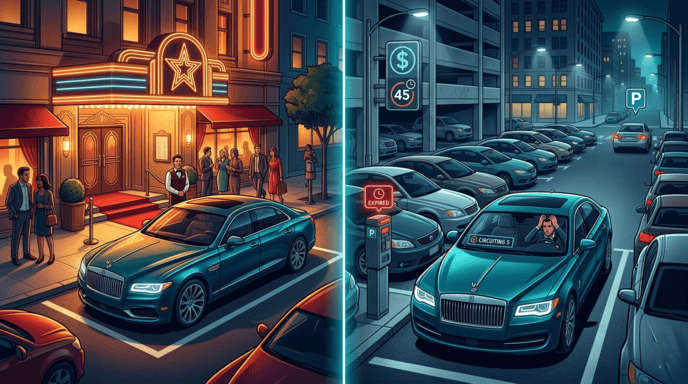
The Movie Version: As soon as the character arrives at their destination, there is always an open parking space directly across from the location they want to go into. They park and then walk right in.
The Reality: This is pure fantasy. Anyone who has ever searched for parking in a major city knows this never happens. According to one of the most frequently referenced studies on traffic congestion by INRIX, the average American loses nearly 17 hours of their life each year looking for parking spots. Finding an available parking space near downtown areas often requires making multiple circles around the same block.
Why Hollywood Does That: Showing a character circling the block for ten minutes doesn’t advance the story. The instant parking spot compresses dead time and keeps the audience’s attention on what matters.
Why Your Mind Allows It: You aren’t paying attention to the parking at all. You’re focused on where the character is going and what happens when they arrive. That’s exactly why the trick works; your brain skips the detail entirely.
13. The Expansive Breakfast Spread That Everyone Walks Past {#breakfast}
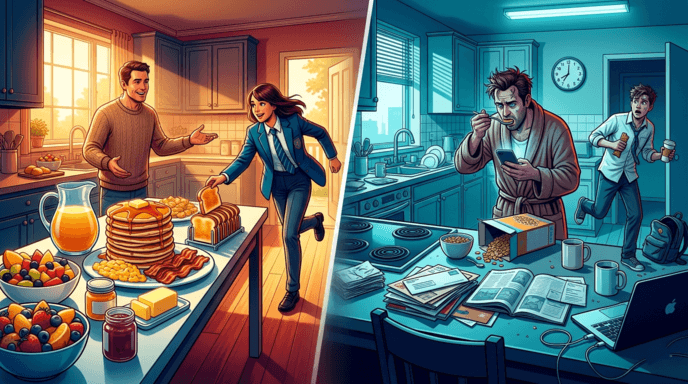
The Movie Version: Before leaving for school or work, a parent prepares a complete breakfast; eggs, bacon, pancakes, toast, orange juice, and more; for everyone. One child will grab a slice of toast and run out the door saying they’re late. The other child or spouse will take a quick drink of coffee and follow.
The Reality: Years of surveys on American breakfast habits tell the same story: most people eat within 10 minutes of waking up, and the meal is usually cereal, toast, or nothing at all. Nobody has time to prepare a sit-down spread on a weekday morning. If they were able to cook something like that, none of the family members would be able to pass it without eating.
Why Hollywood Uses It: The breakfast spread is visual shorthand for “this is a happy, functional family.” It also gives the director one more establishing shot of the kitchen. The fact that nobody eats any of it signals that the characters are too busy, too stressed, or too preoccupied with whatever the plot is about to throw at them.
Why Your Brain Lets It Happen: You are not watching the food. You are watching how the characters react toward one another. The food spread is essentially just background information; it’s established, but you don’t examine it much.
14. Telephone Calls That End Abruptly {#telephone}
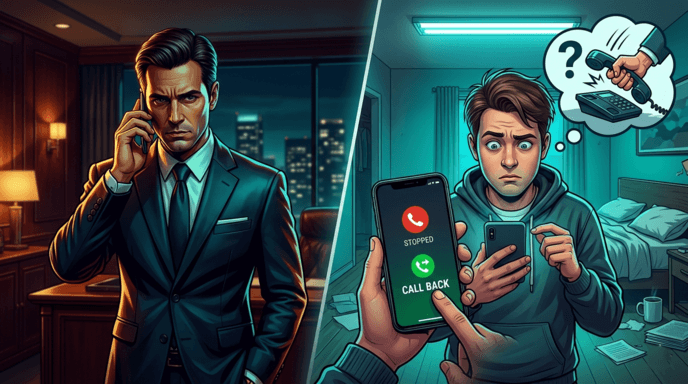
In a movie, two characters will talk on the telephone. When they finish talking, one of them will hang up the phone. No “goodbye,” no “see you later,” no “alright, sounds good.” Just nothing.
In real life, hanging up without a goodbye is rude. The other person assumes the call dropped and calls back.
Hollywood cuts the goodbye to save time. In a 90-minute movie with eight phone calls, those farewells add up. Screenwriters kill them to keep pacing tight.
Your brain accepts this behavior in a movie because you’ve seen it enough times. Your brain has accepted it as part of cinematic grammar. The hang-up equals the end of the scene.
15. Breaking a Lock With One Shot From a Pistol {#breaking-lock}
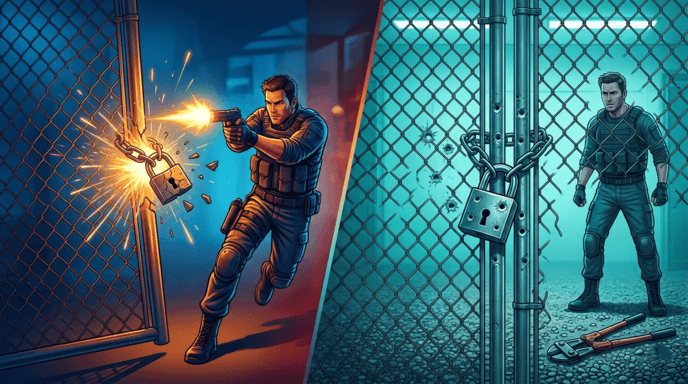
The Movie Version: The hero shoots a gun at a padlock. One shot and the padlock swings open. The door gives way and the mission continues.
The Reality: Most padlocks can absorb multiple rounds from a 9mm pistol. The lock mechanism is encased in hardened steel, and a handgun round simply doesn’t carry enough force to destroy it. Military and law enforcement personnel use specialized breaching rounds; shells packed with compressed metal powder, fired at point-blank range to shatter locks and hinges. The Hollywood image of popping a lock with a single pistol shot is completely inaccurate.
Why Hollywood Depicts This: A single gunshot blasting a lock open is fast, decisive, and requires zero explanation. Having the hero stop to explain the mechanics of forced entry would kill the scene’s momentum.
Why Your Brain Accepts It: Your brain assumes that since bullets are metal and locks are metal, the bullet wins. It’s a simple physics model: harder object beats softer object. What your brain ignores is that locks are specifically engineered to absorb and redistribute force.
16. Hair Looks Perfect After All Those Fights {#hair-perfect-fighting-scenes}
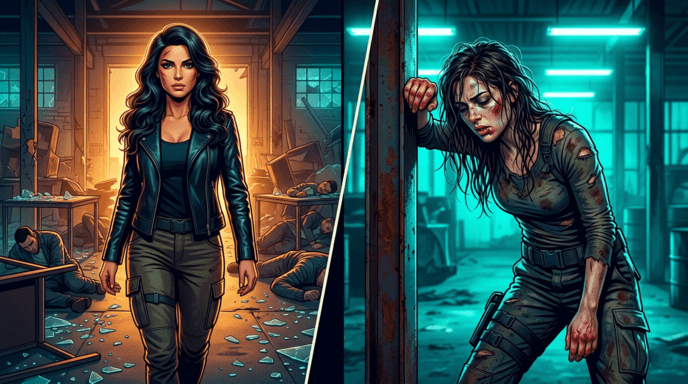
The Movie Version: An action heroine fights off a dozen bad guys. She may throw punches, kick doors in, jump through windows, and even fly through the air. When she finally stops fighting, her hair looks perfect; maybe a little mussed but only in a stylish way.
The Reality: Fighting is dirty. Fighting is physically demanding and leaves you tired, sweaty, bruised, and battered. Even if you style your hair perfectly beforehand, fighting will leave your hair looking messy. And don’t forget about all the dirt and grime that comes with getting knocked around. The male version of this is just as ridiculous; he gets hit and kicked around for hours, gets a tiny little scrape above his eye, and still looks perfect.
Why Hollywood Does This: Beauty sells. Studies show audiences respond better to attractive leads. Studios won’t let their stars look genuinely disheveled for more than a few seconds.
Why Your Brain Accepts It: You’re focused on whether the character survives, not on their hair. By the time the fight ends, you’ve already moved on to the next scene. The pristine styling slides past unexamined.
17. Order a Beer and Get Exactly What You Ordered {#beer-ordering}
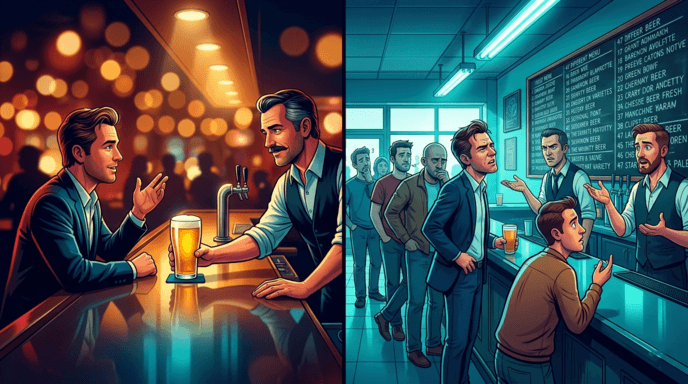
The Movie Version: A character goes to a bar and asks for “a beer.” The bartender gives them exactly what they asked for. No question about what type of beer they want. No offer to help them choose.
The Reality: Walk into any American bar and order “a beer,” and you’ll immediately hear: “What kind?” You’ll either need to specify your brand or start scanning the tap list. Either way, it takes considerably longer than the three seconds movies allow.
Why Hollywood Does This: Naming a specific brand creates product placement complications. A generic “beer” avoids legal headaches and keeps the scene moving.
Why Your Brain Accepts It: Your brain is tracking the conversation, the body language, the subplot developing across the bar. The actual beer order barely registers, which is exactly why nobody notices it makes no sense.
18. Every Time You Turn On the TV, the News Has an Update About Whatever Was Happening {#news-update}
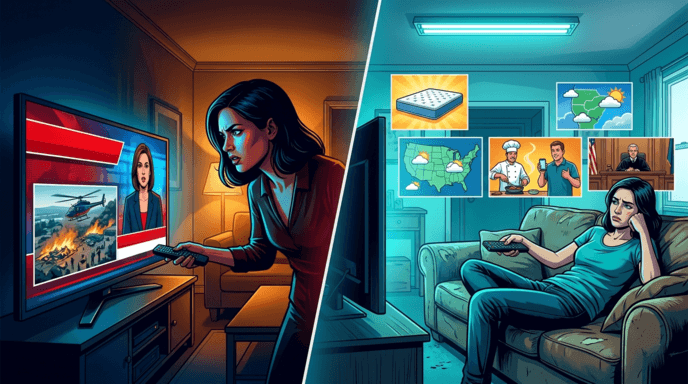
The Movie Version: A character flips on the television to check for updates about something important. They turn it on at exactly the right moment when there is news coverage about that thing. Never before or after; always then.
The Reality: Unless you flip the TV on at precisely the right second, you’re far more likely to catch a pharmaceutical ad, a weather forecast for a city you’ve never visited, or a segment about a local bake sale.
Why Hollywood Includes This: The “turn on the TV” moment is one of screenwriting’s most efficient exposition devices. It delivers information to both the character and the audience simultaneously, from an authoritative source, in under ten seconds. It eliminates the need for a more elaborate setup.
Why Your Brain Processes It Differently: Since this happens in such a short amount of time, your brain processes it solely as delivering information rather than recreating reality.
19. Nobody Ever Goes To The Bathroom {#bathroom-moments}
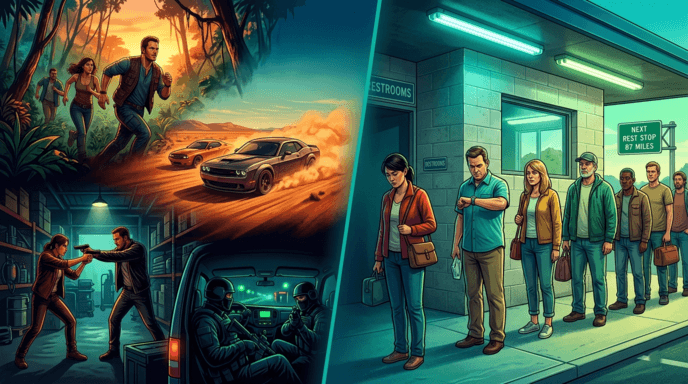
The Movie Version: No matter how long the scenes last, no matter how many times characters eat or drink or scream at each other or fight in cars or run through forests; no one ever goes to the bathroom.
The Reality: Humans go to the bathroom approximately 6 to 8 times per day. During stressful situations such as hostage crises or cross-country chases, we tend to use bathrooms more often due to our bodies’ reaction to stress.
Why Hollywood Avoids This: Going to the bathroom is mundane. It’s not exciting. It doesn’t create conflict. It only makes human beings seem normal; which is rarely desirable in films except as an occasional comedic device.
Why Your Brain Doesn’t Notice: You never think about your own bathroom schedule during a movie, so you never notice the characters don’t have one either. Much like the corporate failures that cost companies billions, the biggest blind spots are the ones hiding in plain sight.
20. The Romantic Stalker Who Wins the Girl {#romantic-stalker}
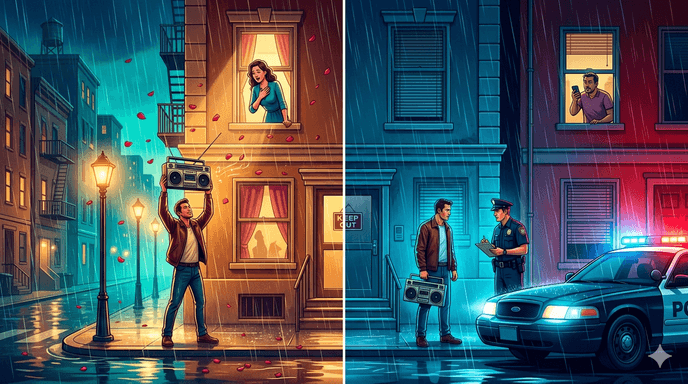
The Movie Version: When a man is turned down by the woman he wants, he will show up at her job, stand outside her apartment building holding a boom box playing a song dedicated to her, follow her across the country, or refuse to believe that she said no. Eventually, she gives in to his “dedication,” and they share a kiss during a rainstorm.
The Reality: Showing up uninvited at the home or workplace of someone who has told you no, depending on the jurisdiction, can be classified as stalking or harassment. Neither is romantic. Neither works. And neither demonstrates an ability to respect personal boundaries.
Why Hollywood Films Portray This: A grand romantic gesture gives screenwriters a clear, audience-friendly path to the climax. When the female character resists, the male character’s refusal to stop can be framed as devotion rather than what it actually resembles; a personality disorder. In the romantic comedy formula, there is always one final obstacle. It is almost always the woman’s resistance.
Why We Think It Is Romantic: Romantic comedies train us to identify with and root for the protagonist. That identification reframes the man’s relentless pursuit as dedication instead of intrusion. The music, lighting, and visual design all build toward one emotional outcome: we want these two people to end up together. By the time the “grand gesture” arrives, we need it to work because the film has spent two hours conditioning us to want exactly that. If you’ve seen any of the memes that escaped the internet and rewrote the rules of real life, you know that fiction has a way of becoming reality when enough people absorb it uncritically.
Why We Keep Falling for It
If you recognized yourself in most of these entries; nodding along to lies you’ve accepted for years without question; there’s a scientific reason for that. Cognitive psychologists call it the “truth bias”: the human tendency to accept information as factual simply because it’s delivered inside a cohesive story. When you’re immersed in a story, your brain’s critical faculties take a back seat to narrative comprehension. You’re not fact-checking the movie because your brain is busy processing the plot, the characters, and the emotions.
Hollywood understands this at a structural level. Every element of every film is designed to maintain “narrative flow”; a state where viewers stop noticing anything that contradicts reality. The unrealistic things in movies are not bugs. They are features, engineered for entertainment. The lies are what make the stories work.
The problems start when fiction bleeds into your real-world expectations; when you genuinely believe CPR works 70% of the time, that DNA results come back in hours, or that refusing to take no for an answer is romantic.
So the next time a character walks away from an explosion without looking back, enjoy the spectacle. Just don’t try it in real life.
20 Movie Myths vs. Reality: Quick Reference Guide
| # | Movie Myth | What Hollywood Shows | What Actually Happens | Key Fact |
|---|---|---|---|---|
| 1 | Silencers Muffle All Sound | A suppressed gun fires with a quiet “pfft”; nobody nearby notices | A suppressed 9mm still registers 125–140 dB; louder than a rock concert | Suppressors reduce noise by 20–35 dB, not to silence |
| 2 | Cars Explode Upon Impact | A car crashes and instantly detonates into a massive fireball | Gasoline requires vapor form, pressure, ~495°F, and a spark to explode; crashes don’t meet those conditions | Grosjean’s 140 mph F1 crash caused fire, not an explosion |
| 3 | Defibrillators Restart a Dead Heart | Doctor shocks a flatlined patient; heart immediately restarts | Defibrillators treat irregular rhythms (v-fib), not flatlines (asystole); shocking a flatline does nothing | Asystole requires CPR and adrenaline, not electrical shocks |
| 4 | Instant Chloroform Knockout | Cloth over face; victim unconscious in 2 seconds | Chloroform requires ~5 minutes of continuous inhalation to induce unconsciousness | The effective dose is dangerously close to the lethal dose |
| 5 | One Punch, Instant Knockout | Hero punches villain once; villain drops unconscious but uninjured | Any loss of consciousness from a blow is a traumatic brain injury and at least one concussion | Repeated knockouts increase cumulative CTE risk |
| 6 | Hacking Is Just Fast Typing | Hacker types for 45 seconds, says “I’m in,” firewalls fall | Real hacking takes weeks or months of reconnaissance, phishing, and waiting | Mr. Robot is one of the few productions praised for realistic hacking |
| 7 | CPR Always Works | CPR revives the patient quickly; they cough and sit up | TV shows ~70% CPR success; real out-of-hospital survival is far lower | Less than 30% of TV episodes show correct CPR technique |
| 8 | Instant Forensic Lab Results | DNA results come back during the same scene; case solved in minutes | Real DNA testing takes weeks to months; labs juggle hundreds of cases | The “CSI effect” causes jurors to expect forensic evidence in every trial |
| 9 | Walking Away from Explosions | Character strolls away from a blast in slow motion, unharmed | Blast shockwaves cause TBI, ruptured eardrums, crushed lungs, and internal bleeding | A shockwave strong enough to throw you can kill you via lung damage alone |
| 10 | Crawling Through Air Ducts | Character crawls through spacious, sturdy ductwork to bypass security | Residential ducts are 6–12 inches wide; sheet metal collapses under adult weight | Even large commercial ducts max out at 42″ x 12″ |
| 11 | NYC Apartment on a Barista’s Salary | Low-income character lives in a huge, sunlit Manhattan apartment | Monica’s Friends apartment would rent for $8,000–$10,000/month today | Manhattan studios average 250–500 sq ft; Monica’s was ~1,125–1,500 sq ft |
| 12 | Instant Parking Out Front | A perfect parking spot waits directly in front of the destination | The average American spends ~17 hours per year searching for parking | Downtown parking often requires circling the block multiple times |
| 13 | Breakfast Spread Nobody Eats | A massive breakfast is prepared; family grabs one toast and leaves | Most Americans eat breakfast in under 10 minutes; usually cereal, toast, or nothing | The spread is visual shorthand for “happy, functional family” |
| 14 | Phone Calls That End Without Goodbye | Characters hang up without any farewell; conversation just ends | In real life, hanging up without a goodbye is rude and confusing | Screenwriters cut goodbyes to maintain pacing across multiple calls |
| 15 | Shooting a Lock Open | One pistol shot shatters a padlock instantly | Padlocks withstand multiple 9mm rounds; military uses specialized breaching rounds | Breaching rounds use compressed metal powder fired at point-blank range |
| 16 | Perfect Hair After Every Fight | Action hero finishes a fight looking salon-ready with one photogenic scratch | Real fights leave you sweaty, bruised, battered, and disheveled | Studios prioritize attractive leads; audiences respond better to them on screen |
| 17 | Ordering “A Beer” and Getting One | Character says “a beer”; bartender instantly slides over a perfect pint | Any real bartender will ask “What kind?” before serving anything | Generic “beer” avoids product placement complications for filmmakers |
| 18 | TV News Always Has the Right Story | Character turns on TV at the exact moment relevant news is airing | You’re far more likely to catch a commercial or an unrelated segment | The TV-news moment is one of screenwriting’s most efficient exposition devices |
| 19 | Nobody Ever Uses the Bathroom | Characters go days without a single bathroom break on screen | Humans use the bathroom 6–8 times per day; more during stress | Bathroom scenes are mundane and don’t create conflict or advance the plot |
| 20 | The Romantic Stalker Wins the Girl | Man refuses to accept rejection; his persistence is rewarded with love | Uninvited pursuit after rejection can be classified as stalking or harassment | Romantic comedies condition audiences to see persistence as devotion, not intrusion |
Frequently Asked Questions
What is the single biggest way that movies misrepresent real life?
Probably the suppressor myth; the idea that silencers make a gun whisper-quiet. A suppressed handgun still registers at 125 to 140 decibels, louder than a rock concert, but decades of spy and action movies have cemented the “pfft” as cinematic gospel. It remains one of the most persistent pieces of movie misinformation.
Why do movies show CPR always saving lives?
TV dramas generally report CPR success rates of about 70%. In reality, the survival rate for out-of-hospital cardiac arrest is far lower. According to the American Heart Association’s 2026 update, out-of-hospital cardiac arrest occurs more than 80% of the time in the patient’s own home, not in public settings as depicted on television. A 2026 University of Pittsburgh study published in Circulation: Cardiovascular Quality and Outcomes examined 169 U.S. television episodes depicting bystander CPR since 2008 and found that fewer than 30% accurately displayed recommended procedures. More than 45% of episodes showed outdated techniques, including mouth-to-mouth resuscitation (48%) and pulse checks (43%), neither of which is recommended by the American Heart Association for untrained bystanders.
Can people really crawl through air vents like in the movies?
No. Most residential HVAC systems use ducts that are 6 to 12 inches wide, made of lightweight sheet metal that would collapse immediately under an adult’s weight. Commercial ducts can reach 42 inches wide by 12 inches tall, but even the largest cannot support an adult’s weight without collapsing. Add decades of dust accumulation, sharp internal baffles, and temperature extremes, and the movie version becomes physically impossible.
Do cars actually explode when they crash?
Almost never. Liquid gasoline is not explosive; it must be in vapor form, under pressure, mixed with oxygen, and exposed to a spark or flame at roughly 495°F for detonation to occur. All four conditions must be met simultaneously, and car crashes virtually never satisfy them. Even when Formula 1 driver Romain Grosjean crashed at 140 mph during the 2020 Bahrain Grand Prix, splitting his car in half and igniting a prolonged fire, the car burned but did not explode. Modern vehicle fuel tanks are engineered to withstand impacts and resist rupture, making cinematic explosions even less plausible than they were decades ago.
What is the “CSI effect” and why should I care about it?
The CSI effect is a documented phenomenon in which jurors who watch forensic crime dramas develop unrealistic expectations about the availability and speed of forensic evidence at trial. Research at Arizona State University and elsewhere has shown that some jurors expect DNA, fingerprints, and digital forensics in every case, regardless of whether such evidence exists or is relevant. Those expectations can influence deliberations and outcomes, potentially letting guilty defendants walk or pressuring prosecutors to produce evidence that has no bearing on the case.
Can defibrillators shock a flatlined heart back to life?
No. A flatline means asystole: zero electrical activity in the heart. Defibrillators treat irregular rhythms like ventricular fibrillation, where the heart quivers chaotically instead of pumping. The shock interrupts the erratic pattern and gives the heart a chance to reset. When there is no electrical activity at all, there is nothing for the defibrillator to act on. Asystole requires CPR and medications like epinephrine, not shocks.