


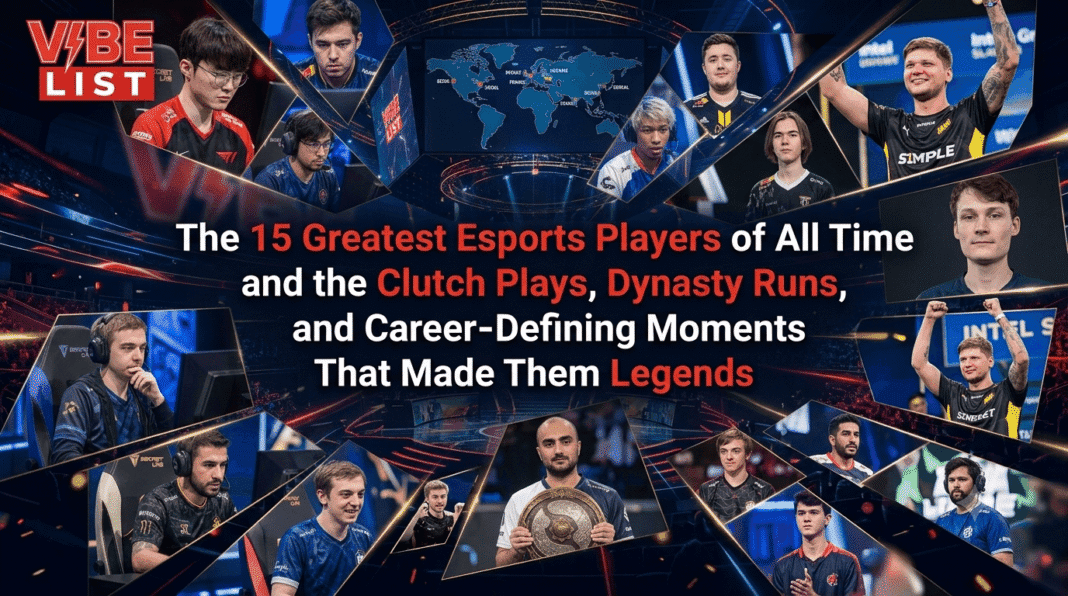
Six World Championships across thirteen years in the most-watched esport on the planet. An eighty percent win rate in a scene so brutal it earned a nickname: God. Thirty-two MVP medals; more than any Counter-Strike player who ever lived. A sixteen-year-old collapsing to the ground in tears after winning EVO with a character his community despised. A mid-laner from Seoul who turned down $20 million to stay loyal. Nine nations, twelve games, three decades. None of them became legends by winning once; they became legends by making it impossible to imagine their game without them.
“In traditional sports, greatness is measured in rings, trophies, and decades of dominance. In esports, the evidence is the same; just compressed into faster timelines, higher mechanical ceilings, and global competition that never sleeps.”
Ranking the greatest players of all time in esports presents a problem that few traditional sports analysts have to contend with; the playing field continually evolves. While a basketball court may remain the same size and shape from 1985 to 2026, a StarCraft: Brood War map from 2008 and a Counter-Strike 2 server from 2025 share virtually nothing other than that both use human reflexes to execute a competitive decision. Each game demands a different mental architecture, skill profile, and competitive environment. A League of Legends mid-laner must make teamfight decisions in less than a second and track a champion pool that evolves with every patch. A Brood War Terran player controls dozens of separate units across a map shrouded in fog with little external assistance. A fighting-game player reads their opponent at near-subliminal speeds, where a single loss can end a tournament run.
While this diversity is the exact reason a cross-title ranking is necessary, each respective community is aware of its own GOAT (greatest of all time) candidates. Those communities rarely ask: measured against the entire breadth of competitive gaming (from the Korean Brood War ProLeague era through the 2026 Esports World Cup with its historic $75 million prize purse), which player truly stands above every other?
This list answers that question through four measurable criteria. Tournament success provides evidence of sustained championship-level performance, not merely winning one tournament bracket through chance. Longevity rewards players who compete at an elite level throughout multiple competitive eras or variations of a particular game. Cultural impact provides an assessment of the extent to which a player reshaped their respective community. Did they draw attention from non-esports audiences, create entirely new competitive strategies, or increase viewership? Cross-era significance assesses whether a player’s legacy remains relevant beyond their competitive window. Does their name continue to surface in discussions years or even decades after they reached their peak?
Together, these four criteria produce a combined assessment spanning the entirety of professional esports from the early days of professionalized StarCraft in South Korea through the present-day dominance of Counter-Strike 2 and League of Legends. Each player listed here earned their spot through some combination of trophies, sustained elite performance, and memorable moments witnessed by fans. Some are currently active. Others retired many years ago yet continue to set standards for competitive gaming today. All are worthy of inclusion in any discussion regarding the greatest competitive gamers produced to date.
How We Ranked the Greatest Esports Players of All Time
How we ranked this: Each entry was evaluated across multiple criteria; including tournament dominance, longevity, cultural impact, and cross-era significance; weighted to reflect what matters most for this particular subject. The result is a ranking that respects the data but is ultimately shaped by the Vibe List’s editorial judgment. This is our list, built on evidence, driven by perspective.
Creating a ranking like this across titles, eras, and formats requires understanding what each criterion represents in practice and how they pull in opposing directions.
The most clear-cut criterion is tournament success. Beyond total championship wins at the highest tier of a player’s game (World Championships, Majors), this criterion accounts for premier-level events comparable to tennis Grand Slams or college football conference championships. Winning one championship demonstrates that a player can peak at the right moment. Winning five or ten spread across several years reveals something more fundamental about sustained competitive ability. Additionally, this criterion considers the comparative depth of the competition. Major championships won against significantly deeper fields carry greater value than those won during years of relatively weak competition.
Longevity separates generational players from those who peaked briefly. Esports careers are typically short-lived. Reaction times diminish mechanically, patches introduce unpredictable metas, and new players emerge annually without bad habits or accumulated losses. Remaining elite across multiple seasons, roster changes, and game iterations; as several StarCraft and Counter-Strike players have done; is one of the strongest indicators of genuine greatness. A player who was the absolute best in 2016 and remains elite today is demonstrating something profoundly different from a player who shone for one brief season.
Cultural impact is harder to quantify but impossible to overlook. Several players transcended their specific scenes, served as ambassadors for their games, and received mainstream media coverage. They attracted broader audiences to competitive gaming or influenced how every player within that game competes. Cultural impact acknowledges that esports greatness is not solely a quantifiable statistic; it also recognizes the degree to which a player shaped their scene.
Cross-era significance serves as the final filter. It examines whether a player’s competitive legacy extends beyond their own era; does a player’s name continue to be referenced today? Was their name invoked in discussions years or even decades after their retirement? Longevity only goes so far. If a player dominated briefly and was largely forgotten afterward, they face a far steeper path toward all-time-great status regardless of how impressive their peak appeared.
A conscious decision was made regarding this ranking: players are assessed across all major esports titles, not confined to a single game. Therefore, Bugha (Fortnite) competes for placement alongside Mang0 (Melee), Flash (StarCraft: Brood War), Serral (StarCraft II), and Daigo (Street Fighter). By their nature, these comparisons are imperfect, but that is precisely the point. If greatness were determined solely by achievements within a single competitive ecosystem, every game would have its own uncontested GOAT and this conversation would end before it began.
The Fifteen Greatest Competitive Gaming Players of All Time
15. Hungrybox — Juan DeBiedma
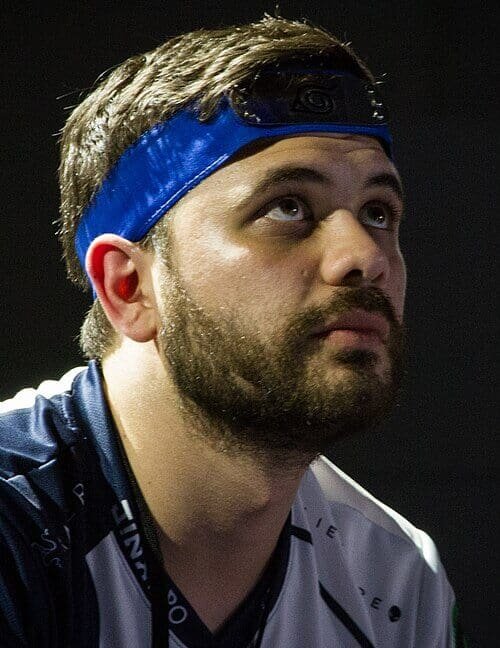
Game: Super Smash Bros. Melee | Country: United States | Years active: 2008–present | Key achievements: EVO 2016 champion; one of the Five Gods of Melee; ranked No. 3 on Melee Stats’ all-time top 100; longest-tenured top-five Melee player
Hungrybox begins this list because maintaining elite competitiveness in a community that actively resented his style of play is one of the least recognized accomplishments in esports history. As the premier Jigglypuff player in Super Smash Bros. Melee; a character most top competitors and fans found dull to watch; Hungrybox proved that effectiveness trumps visual appeal for over a decade. The celebration that followed his EVO 2016 championship, where he collapsed to the ground crying after securing the last stock, was one of the most emotional moments witnessed by Melee fans, creating a moment that resonated well beyond the Jigglypuff community.
Unlike many specialists within their respective games, Hungrybox’s career spanned over a decade as an elite competitor. He is one of only two Five Gods (alongside Mang0) who maintained elite-level performance long after the Five Gods era concluded. Notable successes include multiple major championships and frequent appearances in the top eight at major tournaments spanning into the 2020s. Through his streaming activities, Hungrybox introduced Melee to audiences who had never seen competitive Smash, ensuring his career exceeded expectations by multiples.
Based on these achievements and his longevity within the competitive Melee scene, Hungrybox ranks fifteenth primarily because Melee’s competitive landscape is smaller than the global esports ecosystems represented by the players ahead of him. Nevertheless, Hungrybox has a compelling argument as one of the three greatest Melee competitors to ever pick up a controller; and doing so while using a character the community repeatedly attempted to deem inferior makes it even more deserving.
14. Bugha — Kyle Giersdorf
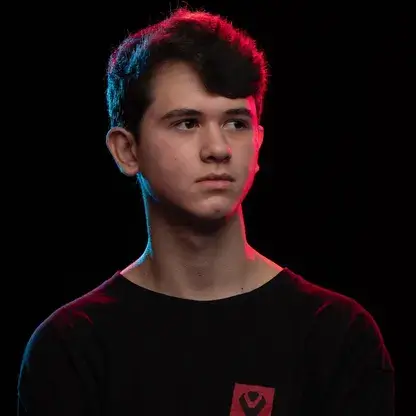
Game: Fortnite | Country: United States | Years active: 2018–present | Key achievements: 2019 Fortnite World Cup Solo champion ($3 million); 3× FNCS champion
Bugha earns his position because the 2019 Fortnite World Cup was not merely an event but arguably one of the most-watched performances in solo esports history; Bugha dominated so dramatically that his margin of victory ceased to appear competitive. At Arthur Ashe Stadium before 23,000 spectators and millions watching online worldwide, Bugha secured 59 points while finishing as solo champion; nearly doubling the second-place total.
In addition to his 2019 World Cup championship, Bugha has demonstrated an ability to transition through Fortnite’s continuously evolving competitive landscape. Three FNCS championships across multiple seasons demonstrate that Bugha’s World Cup victory was not anomalous; it established him as one of the most consistently deadly competitors in Fortnite.
Bugha sits at fourteen instead of climbing higher because Fortnite’s competitive ecosystem is younger and more fluid than the scenes represented by the players positioned above him. Although the World Cup field included the era’s top competitors, no similar format has been replicated since, limiting opportunities to evaluate his peak against comparable benchmarks. Nonetheless, Bugha delivered an unforgettable performance on a global stage, became one of the youngest millionaires in esports history at Arthur Ashe Stadium, and earned a lasting position in any GOAT discussion.
13. KuroKy — Kuro Salehi Takhasomi
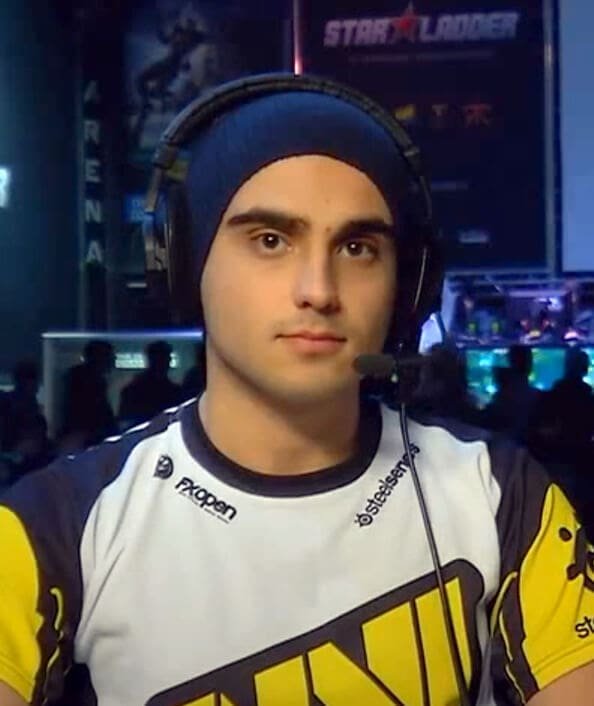
Game: Dota 2 (previously Defense of the Ancients) | Country: Germany | Years active: 2004–present | Key achievements: The International 2017 champion (captain, Team Liquid); first player to achieve 1,000 professional Dota 2 wins; three-time TI finalist with three different organizations; 3× Dota 2 Major titles
KuroKy belongs on this list due to his longevity at the highest level of Dota 2. The constant shifting of metas, the volatility of rosters, and the competitiveness of the annual Dota Pro Circuit calendar make it challenging for players to sustain elite performance. KuroKy has done exactly that. His career spans competitive DotA 1 in the mid-2000s through the TI7 championship with Team Liquid. During that run, KuroKy captained a roster that fell into the lower bracket but dominated their way to the championship, dropping only one game throughout the entire main event.
One of the things that separates KuroKy from other players is the combination of durability and versatility. Not only did he perform at a high level as a carry player, he also excelled as a mid player and later transitioned to a support player and captain. Few players in Dota 2 have attempted this positional change successfully. He reached The International grand finals with three different organizations (Natus Vincere, Team Secret, and Team Liquid). This demonstrates that he is capable of building and elevating rosters rather than benefiting solely from being on a stacked roster. Additionally, he holds the distinction of being the first player to reach 1,000 professional Dota 2 wins and has played 107 unique heroes in professional matches. Both statistics demonstrate his competitive breadth in a manner that no single metric can compare.
KuroKy ranks thirteenth partly because his resume lacks the highlight-reel plays of carry players like Arteezy and SumaiL. Also, since The International 2017, KuroKy’s results have declined significantly. However, given the entirety of his competitive career in both DotA 1 and modern-day Dota 2 (including a TI championship and multiple Major titles), KuroKy arguably holds the most complete resume in Dota 2 history.
12. Caps — Rasmus Borregaard Winther
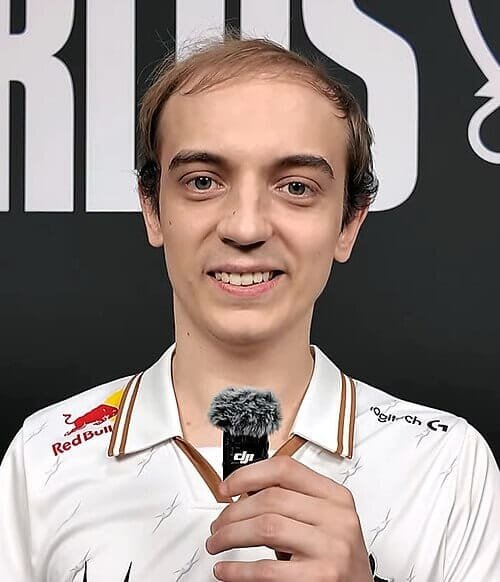
Game: League of Legends | Country: Denmark | Years active: 2016–present | Key achievements: Runner-up at Worlds in both 2018 and 2019; MSI champion (2019); multiple LEC titles
Caps belongs on this list as the first Western League of Legends player to have achieved consistent top-tier play at numerous high-stakes international events. While Caps has had his fair share of spectacular plays (often earning him the nickname “Claps” for taking down entire enemy teams singlehandedly), he has also had plays that did not go according to plan (“Craps”). It is this contrast between consistent playmaking ability and occasional reckless decisions that makes him fascinating. It is also this characteristic that allowed Caps to reach the 2018 Worlds final and then the 2019 Worlds final with two separate rosters, a feat no other non-Korean player has accomplished. Caps’ 2019 G2 Esports roster may still be the most dominant Western team in LoL history. They won both the Spring and Summer LEC splits, claimed MSI, and finished as Worlds runner-up. Caps was the primary creative force behind that roster. His pool of playable champions was incredibly diverse. He consistently forced opponents into uncomfortable drafting positions with his willingness to pick unconventional champions in critical games. At his best, Caps’ mechanics matched anyone outside Korea.
Caps ranks twelfth rather than higher because despite having impressive consistency at the highest level of LoL and being a staple for much of Europe’s competitive aspirations over the past several years, he has yet to win a World Championship. Two Worlds finals appearances without a title reflect Caps’ incredible consistency at the highest level, as well as an unfortunate inability to clear the final hurdle. Given how important championships are in determining rankings, that gap is significant enough to keep him from a higher placement. Nonetheless, as one of Europe’s premier competitors and someone who has been at the forefront of his region’s competitive aspirations for years running, Caps deserves recognition as one of the greatest players LoL has produced.
11. Coldzera — Marcelo David
Game: Counter-Strike: Global Offensive | Country: Brazil | Years active: 2014–present | Key achievements: 2× HLTV Player of the Year (2016, 2017); 2× Major champion (MLG Columbus 2016, ESL One Cologne 2016); 2× Major MVP
Coldzera proved that great Counter-Strike players need not be geographically limited. Before coldzera’s ascension with Luminosity Gaming and SK Gaming, many believed it would be impossible for a South American team to become one of the best globally. Coldzera and his teammates proved them wrong by winning two consecutive Majors in 2016, making SK one of the most feared teams globally during one of CS:GO’s most competitive periods.
Individually, coldzera was equally impressive. In both 2016 and 2017, HLTV named him their top-ranked player in the world. No player before coldzera had received consecutive HLTV Player of the Year awards. In addition to his individual accolades, coldzera had several signature moments, including one particular clip from MLG Columbus 2016 where he hit a falling AWP shot against Team Liquid; a play often referenced as one of the most iconic clips in CS:GO history. Although this clip demonstrates coldzera’s mechanical talent, it does not begin to show how consistently skilled he was during his prime. Coldzera combined excellent aim with superior positioning and game sense. He excelled under pressure during high-stakes matches game after game.
Given that his competitive window was relatively short compared to many other players on this list, coldzera ranks eleventh. Despite dominating at a historic rate from 2015 through late 2017/early 2018, his post-2018 results declined dramatically. After changing rosters multiple times and experiencing increased competition, coldzera struggled to maintain his previous level. Nevertheless, during his peak, coldzera was as individually dominant as any player in CS:GO history, paving the way for future generations from South America.
10. Mang0 — Joseph Marquez
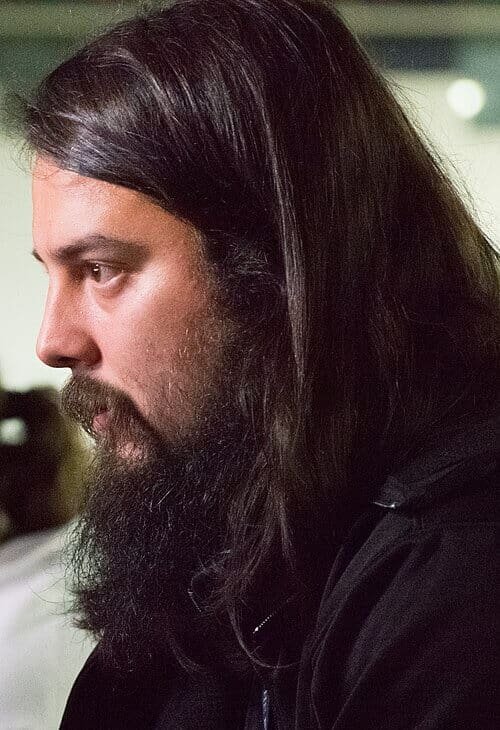
Game: Super Smash Bros. Melee | Country: United States | Years active: 2007–present | Key achievements: Back-to-back EVO champion (2013 and 2014); more than 30 major tournament wins; one of the Five Gods of Melee
There are three key factors contributing to Mang0’s argument for all-time greatness: his longevity, volume, and influence on Melee viewership expectations. Mang0’s competitive career spanned nearly two decades and resulted in more than thirty major tournament wins, two EVO championships, and multiple Genesis and Summit titles. Furthermore, Mang0 has been credited with creating an aggressive playing style focused on reads that drew massive crowds whenever he set foot on stage.
Unlike many other Melee legends who either retired or stepped away from competition after the Five Gods era, Mang0 continued competing and winning tournaments long after that period concluded. Throughout Melee’s transition from its offline roots to its current online-based format, Mang0 remained competitive. Mang0 currently competes in Melee’s Slippi era with results comparable to many other top-level players in their respective primes.
The ongoing debate between Mang0 and Armada regarding Melee’s GOAT will continue to be an essential topic for fans of the fighting games community. Regardless, Mang0 possesses an undeniable advantage in terms of volume and duration; more wins over more years against more generations of opponents. Even though Melee is generally regarded as a niche competitive ecosystem relative to larger global esports competitions like League of Legends or Dota 2, within Melee itself, Mang0’s claim to being its GOAT is stronger than any player’s claim in any game.
9. SonicFox — Dominique McLean
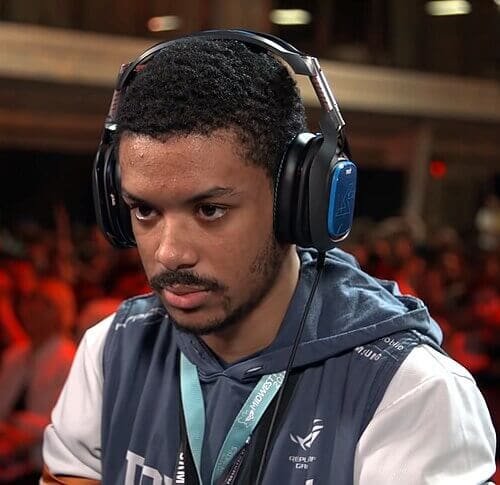
Games: Multiple fighting games (Mortal Kombat, Dragon Ball FighterZ, Injustice, Skullgirls) | Country: United States | Years active: 2014–present | Key achievements: 8× EVO champion across five fighting-game franchises; highest-earning fighting-game competitor in history
Similar to many other players on this list, SonicFox’s greatness lies in their ability to excel across multiple competitive environments simultaneously. Eight EVO championship titles spanning Mortal Kombat X, Mortal Kombat 11, Mortal Kombat 1, Injustice 2, Dragon Ball FighterZ, and Skullgirls demonstrate SonicFox’s unparalleled competitive dominance across multiple game franchises at once. Unlike other esports disciplines where mastery typically requires focus on a single title exclusively for extended periods, SonicFox mastered multiple titles concurrently and won the largest tournament in each franchise they participated in.
SonicFox’s multi-franchise domination culminated in their 2018 season. After winning EVO in Dragon Ball FighterZ, SonicFox went on to finish first at the Dragon Ball FighterZ World Tour Finals. The remainder of SonicFox’s year consisted of additional success in multiple franchises. The Esports Awards recognized SonicFox as Esports Player of the Year, and their acceptance speech; which featured SonicFox appearing in their signature fursuit head declaring themselves a “gay black furry”; became one of the most talked-about moments from an esports award show, increasing SonicFox’s cultural presence far beyond fighting-game competitors.
SonicFox earned their eighth EVO title at EVO 2025, winning Mortal Kombat 1 and continuing their dominance across multiple franchises; setting an unprecedented record for multi-franchise success in FGC history.
However, SonicFox ranks ninth. Like many fighting-game competitors whose careers extend across multiple titles and franchises, SonicFox faces structural limitations inherent to a fighting-games-only resume when compared to players from larger global esports ecosystems like League of Legends or Dota 2.
8. N0tail — Johan Sundstein
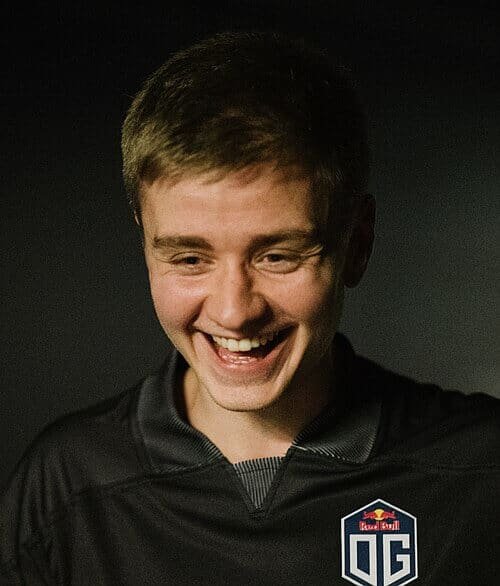
Game: Dota 2 (formerly Heroes of Newerth) | Country: Denmark | Years active: 2009–2022 | Key achievements: 2× The International champion (TI8, TI9) with OG; highest career prize winnings in esports history ($7.2M+); 4× Dota 2 Major champion
N0tail’s career is the embodiment of the convergence of strategic thinking, emotional leadership, and competitive determination at exactly the right moments. As captain and co-founder of OG, he directed a roster that was largely written off prior to TI8; the roster had been assembled late, featured an untested ana returning from hiatus, and entered the tournament seeded lower than most rivals. What occurred next was one of the most unlikely championship runs in esports history, leading to OG’s victory at The International 2018 and solidifying N0tail as the emotional anchor of a story that extended past Dota 2 fandom.
Then they did it again. OG’s back-to-back International championships in 2018 and 2019 are the most dominating stretch in Dota 2 history. No other team has captured back-to-back TIs; the 2019 run was equally convincing; OG suffered only a few losses throughout the entire tournament and ultimately concluded with a grand-finals performance that left opponents appearing helpless. N0tail became the first two-time TI champion and, with overall prize earnings exceeding $7.2 million, the highest earner in esports history by prize money.
N0tail ranks eighth because individual mechanical brilliance was his least defining quality. He was a support player whose greatest asset was building and sustaining championship-caliber teams through charisma, strategic clarity, and force of personality. This is an enormous strength; however, in a ranking that places heavy emphasis on individual dominance, it positions him slightly below players whose personal performance was more visibly influential. There can be no debate regarding the outcome: no captain in Dota 2 history has produced more during peak moments.
7. Daigo Umehara — “The Beast”
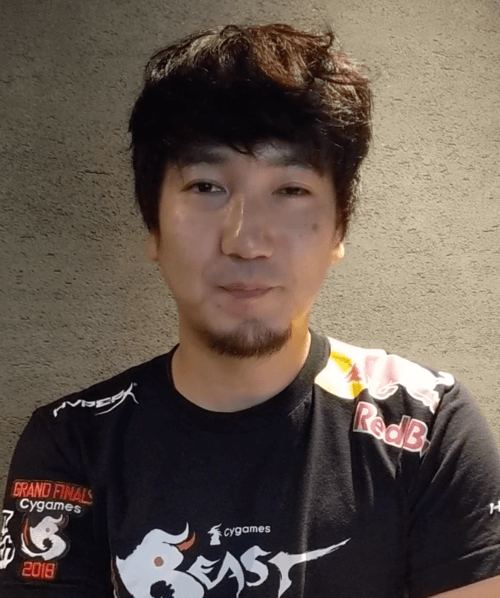
Game: Street Fighter series | Country: Japan | Years active: 1997–present | Key achievements: 6× EVO champion; Guinness World Record holder for most successful Street Fighter major tournament player; creator of EVO Moment 37
Daigo Umehara holds a singular place in esports history because his greatest moment is also arguably the greatest moment in competitive gaming, period. EVO Moment 37; the full-parry sequence against Justin Wong’s Chun-Li super at EVO 2004 in Street Fighter III: 3rd Strike; has been viewed tens of millions of times and is often cited as the clip that introduced an entire generation to the possibility that competitive gaming could create dramatic tension equivalent to that experienced in traditional sports. Each frame-perfect parry required input timed to roughly one-fifteenth of a second, performed under duress, in front of a frenetic crowd that exploded into what remains the most recognizable fan reaction in Fighting Game Community (FGC) history.
However, Daigo’s legacy extends much further than a single viral clip. Six EVO championship titles across multiple versions of Street Fighter (from the arcade era through Street Fighter IV and into Street Fighter V) represent a competitive career spanning decades, not seasons. His ability to maintain elite status through fundamental engine changes, shifting character balance, and successive generations of competitors is virtually without precedent in fighting games. Daigo currently holds a Guinness World Record as the most successful player in major Street Fighter tournaments, and his career path; from teen prodigy in late-1990s Japanese arcades to a competitor still respected at premium events well into his 40s; represents one of the longest periods of sustained excellence in any competitive domain.
Daigo ranks seventh since the FGC, while historically significant, does not possess anywhere near the global audience size and prize structures that comprise the larger esports ecosystems ranked above him. However, within the FGC itself, Daigo’s stature approaches the divine. He did not simply participate in the early days of competitive gaming; he defined what it would look like for outsiders.
6. donk — Danil Kryshkovets
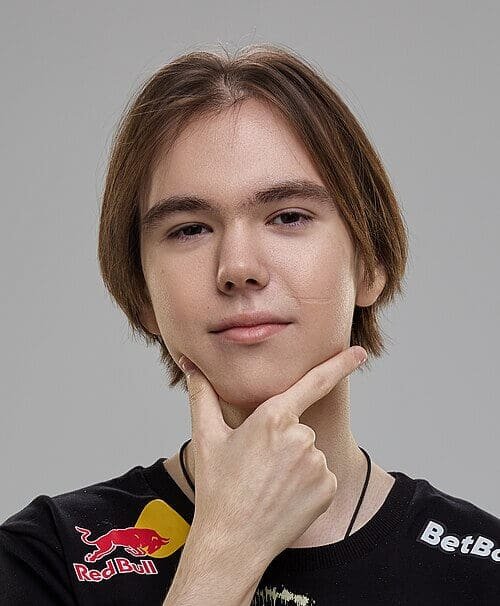
Game: Counter-Strike 2 | Country: Russia | Years active: 2023–present | Key achievements: HLTV No. 1 Player of 2024; youngest Major MVP in CS history (Shanghai Major 2024 at age 17); highest-rated Major MVP performance ever recorded (1.49 rating)
Donk is the youngest player on this list and perhaps the largest gamble on a career still in its infancy. He ranks this high because his earliest seasons have already produced statistical results no player in Counter-Strike history has achieved at such a young age. His Shanghai Major 2024 MVP came with a 1.49 rating; the highest ever recorded for a Major MVP; and he was only seventeen years old when he accomplished this feat. In addition, HLTV designated him as the No. 1 player globally for 2024, joining a select group alongside coldzera and ZywOo as players who earned that designation in their debut years at the highest level.
What makes donk’s placement defensible despite his youth is the sheer enormity of his statistical output relative to established benchmarks. He did not merely enter the top twenty; he leapfrogged established legends to capture the top slot in a year where players like ZywOo, m0NESY, and NiKo were each playing at extremely high levels. His style of play; highly aggressive, fundamentally overpowering both mechanically and mentally, and seemingly impervious to the pressures associated with young competitors; presents a ceiling that even the most cautious analysts struggle to forecast.
There is obvious risk in placing donk this high; long-term viability remains unproven, and numerous examples exist within esports history of talented players bursting onto the scene only to fade quickly. However, similar arguments existed surrounding Faker after his first Worlds title at seventeen and ZywOo after capturing his first HLTV No. 1 at nineteen. If donk continues even a fraction of his present trajectory, this positioning will appear overly conservative retrospectively. If he does not sustain his trajectory, this entry will stand as evidence of how remarkable his emergence was.
5. Serral — Joona Sotala
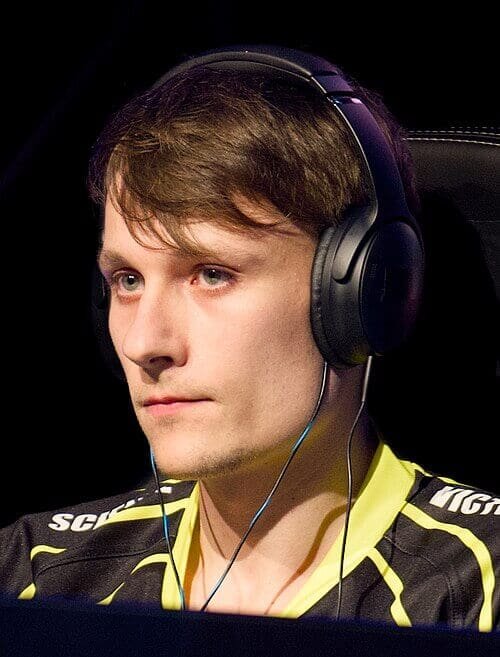
Game: StarCraft II | Country: Finland | Years active: 2012–present | Key achievements: 3× StarCraft II World Champion (2018, 2022, 2025); first non-Korean WCS champion; 2× IEM Katowice champion (2022, 2024)
Serral’s basis for all-time greatness rests on accomplishing something that virtually an entire generation of Western StarCraft players were advised would be impossible: defeating Korean players on the international stage repeatedly and eventually becoming recognized as the best player regardless of location. His WCS Championship in 2018 marked the first time this had ever been achieved by someone outside Korea. Additionally, he dominated every major non-Korean tournament that year and ultimately defeated a plethora of top Korean players at BlizzCon en route to claiming the championship.
What sets Serral apart from a one-hit wonder is that he continued to do so. Serral claimed a second world championship in 2022, a third at the Esports World Cup in 2025, and delivered an IEM Katowice 2024 performance that included a 20–1 combined map record and a 4–0 grand-finals sweep of Maru; a run that many analysts consider the most dominant championship performance in StarCraft II history. Over almost ten years of elite competition, Serral’s positive win-loss ratio against virtually every top player of his era, along with detailed documentation maintained via exhaustive statistics by the StarCraft community, provides a quantifiable foundation to support an argument that Serral is arguably among the top two or three greatest players ever produced by StarCraft; and undoubtedly the greatest non-Korean StarCraft player of all time.
Serral ranks fifth rather than higher because while StarCraft II has produced some of the greatest displays of individual skill expression throughout esports history, it has operated at a smaller audience and institutional scale than the ecosystems represented by the players ranked above him. Nonetheless, within the real-time strategy category; and in discussing what constitutes transcending expectations to achieve greatness; Serral’s legacy is permanently etched.
4. s1mple — Oleksandr Kostyliev
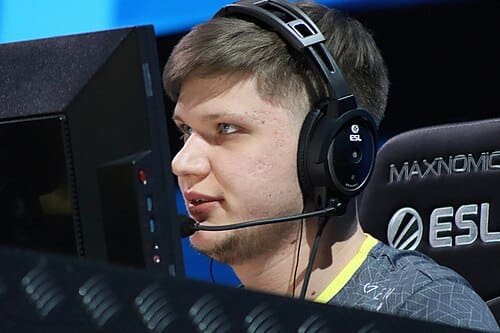
Game: Counter-Strike: Global Offensive / Counter-Strike 2 | Country: Ukraine | Years active: 2014–present | Key achievements: 3× HLTV No. 1 Player of the Year (2018, 2021, 2022); Major champion (PGL Stockholm 2021); 21 HLTV MVP awards; Intel Grand Slam winner
For years, s1mple was the consensus best individual player in Counter-Strike who had yet to capture a Major title; the defining tragedy narrative in competitive gaming. A phenomenal talent competing on teams unable to transform his individual brilliance into ultimate team success. Finally, at PGL Stockholm 2021, Natus Vincere succeeded where they had failed countless times previously and captured the Major with s1mple earning an MVP performance that seemed less surprising than inevitable given how long he had dominated on the world stage.
Within CS:GO, s1mple’s statistical resume is arguably the most impressive individual body of work accumulated in any team-based esports discipline. Three HLTV No. 1 designations, twenty-one MVP awards (since surpassed by ZywOo in 2025), and consistent ratings placing him inside the HLTV top twenty for seven straight years illustrate individual dominance that endured through roster turmoil, regional upheaval (s1mple competed during Russia’s invasion of Ukraine, which disrupted Navi’s operations and his personal life), and the transition from CS:GO to Counter-Strike 2.
s1mple ranks fourth primarily because, despite incredible individual brilliance, he owns fewer Major championships than the players ranked ahead of him. One Major title in an era where top-tier teams regularly secured multiple championships is the gap preventing him from climbing higher. However, s1mple is likely to be credited as one of the most mechanically skilled Counter-Strike players ever; potentially among the very best individually skilled players in esports history; and the emotional weight of his victory at PGL Stockholm in 2021, following nearly nine years of coming close but falling short, will forever rank among the most memorable moments in CS:GO history.
3. ZywOo — Mathieu Herbaut
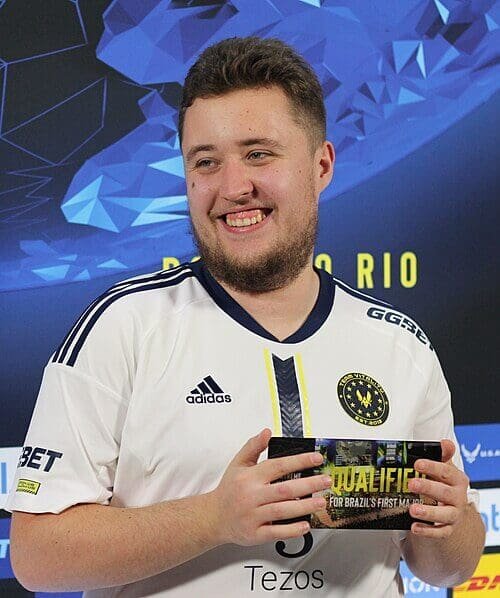
Game: Counter-Strike: Global Offensive / Counter-Strike 2 | Country: France | Years active: 2018–present | Key achievements: 4× HLTV No. 1 Player of the Year (2019, 2020, 2023, 2025; a record); 3× Major champion (Paris 2023, Austin 2025, Budapest 2025); 3× Major MVP (a record); 32 HLTV MVP medals (all-time record); 2× ESL Grand Slam champion; Esports Breakthrough Player of the Decade (2025)
ZywOo’s seven-year journey answers the question of what happens when you combine s1mple’s individual brilliance with consistent team success. The result is a resume that has exceeded every benchmark in Counter-Strike history. Four HLTV No. 1 ratings tell the story. Thirty-two career HLTV MVP medals; surpassing s1mple’s record of twenty-one since 2025; cement his statistical dominance. Then there are three Major championships in less than three years. Each championship included a Major MVP award, making him the only player in history to accomplish such a feat.
The structure of ZywOo’s case is solidly built on domination across both Counter-Strike eras. He was HLTV’s No. 1 player in CS:GO in 2019 and 2020. After the transition to Counter-Strike 2, his production did not decline; it increased. The 2025 season with Team Vitality was the most successful calendar year a player has achieved in any esport: Vitality won eight of nine tournaments entered. He received eight total HLTV MVP awards, equaling s1mple’s single-year record from 2021. All eight came at Big Events, breaking dev1ce’s previous record. A pair of back-to-back Major titles concluded his fourth Player of the Year award. Through 2026, ZywOo’s continued dominance has remained unbroken. IEM Kraków provided a rating of 1.59 (the highest he has received at a Big Event), and he subsequently secured victories at PGL Cluj-Napoca (collecting his thirtieth career MVP; becoming the first player in history to do so) and IEM Rio. He currently sits on thirty-two MVP medals and counting.
ZywOo ranks third not because of any weakness in his profile but because of the extraordinary legacies of the two players ahead of him. Flash played professionally longer and was relatively more dominant within Brood War, while Faker’s championship totals and global influence across the largest esport remain unmatched. Nevertheless, ZywOo’s career is ongoing and continuing upward. Therefore, the ultimate shape of his legacy remains undetermined. Should ZywOo continue on this path through the remainder of 2026 and beyond, he will continue to build upon a case for rising above third position.
As of this writing, the gap between ZywOo and the next closest player in Counter-Strike is larger than at any point in the history of the game.
2. Flash — Lee Young-Ho
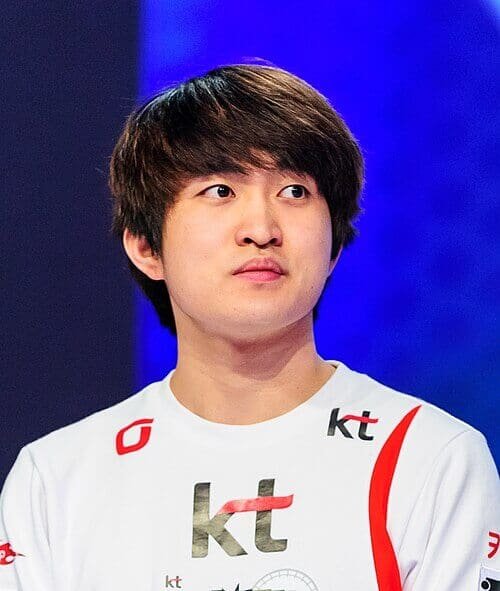
Game: StarCraft: Brood War (and StarCraft II) | Country: South Korea | Years active: 2007–2015 (pro), 2016–present (streaming/ASL) | Key achievements: 3× OSL champion, 3× MSL champion, 4× ASL champion, WCG champion (2010), highest KeSPA rating (4,292.5), ~80% career win rate in Brood War, seventeen major tournament wins by 2012
Flash competed at a tier of dominance that most esports fans can only grasp in the abstract. His prime existed within a competitive ecosystem as difficult as any in the history of sports and simultaneously as geographically isolated. While competing within that ecosystem, Flash was clearly the greatest player. By the conclusion of his Brood War career, Flash was so much better than the competition that his nickname among Korean fans was “God.”
Within that ecosystem, Flash accomplished feats that stand as the basis for a claim that he was the greatest competitor in any sport or esport relative to his contemporaries. He won three OnGameNet Starleague championships, three MBCGame StarCraft League championships, achieved the highest KeSPA rating ever recorded (4,292.5 points, September 2010; no other player has approached this mark), and maintained a career win rate in Brood War hovering near eighty percent. He won seventeen major tournaments by September 2012 and broke the Brood War Elo record six times; each time surpassing a mark he himself had set. He evolved from early-career rush strategies to a cerebral defensive style that opponents described as being ten moves ahead strategically. At fourteen years old he made his debut with KT Rolster against the reigning MSL champion in his rookie OSL appearance. When he retired from professional competition in 2015, he had sat atop KeSPA’s official rankings for multiple years, having established a level of consistency without historical precedent. After returning to Brood War through the Afreeca TV Starleague, he won four additional championships, demonstrating that his greatness did not occur solely during a particular generation.
Flash ranks second because the extent of both the statistical dominance and the competitiveness of the Korean Brood War environment create a case based solely on competitive achievements that is nearly impossible to refute. The only reason he does not rank first is that Brood War’s audience, while passionately dedicated, represents a smaller segment of global esports compared to the player ranked first, whose championship totals and global impact across the largest esport by viewership ultimately eclipse Flash’s exceptional statistics. Based on sheer dominance over their peers, Flash may still have the strongest possible case for being considered the greatest esports competitor of all time.
No. 1. Faker — Lee Sang-hyeok
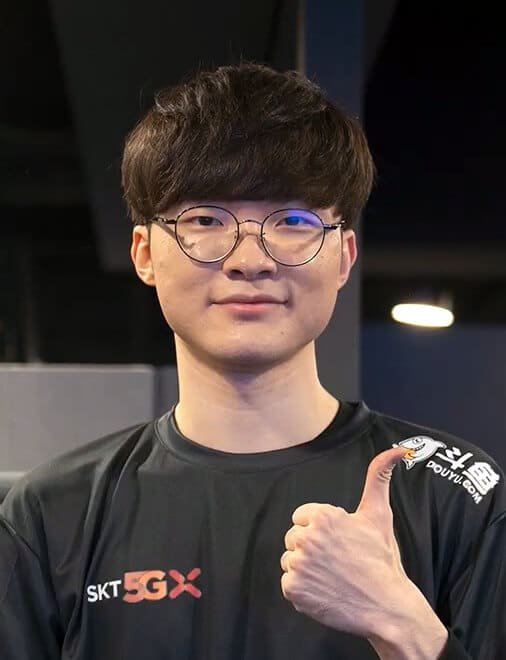
Game: League of Legends | Country: South Korea | Years active: 2013–present | Key achievements: Six World Championships (2013, 2015, 2016, 2023, 2024, 2025); 10× LCK champion; 2× MSI champion; 2× Worlds MVP; gold medal at the 2022 Asian Games; first inductee into the LoL Esports Hall of Legends; 3× Best Esports Athlete at The Game Awards; part-owner of T1
Faker is clearly the greatest professional gamer of all time according to each of the metrics used for this ranking. Faker’s margin of superiority over the rest of the field has grown over the course of his second decade of competition.
A sustained run of six World Championships; with a record-breaking three consecutive titles from 2023 to 2025 after many thought his championship window had passed; is the longest sustained run of dominance in competitive League of Legends history and represents the largest audience in all of esports. League of Legends led all esports in 2025 with 735.5 million hours watched. Peak viewership for the League of Legends World Championship regularly reaches into the tens of millions. A single mid-laner from Gangseo District, Seoul, has been the central figure in competitive League of Legends since the game first expanded internationally in 2013. He left school at seventeen to join SKT T1 and won a World title in his rookie year and went on to prove that winning a World title as a rookie was not a once-in-a-lifetime occurrence for him over the next dozen years.
Statistically, Faker’s evidence for being the greatest professional gamer of all time is so strong that simply listing it will seem repetitive but is required:
Ten LCK titles. Two MSI championships. Two Worlds MVPs. Most kills in the history of World Championship play. First player to exceed 100 World Championship wins. First player to reach 600, 700, and 1,000 LCK games (entering his 1,000th LCK game with a 66.7% win rate). Record holder for most kills, assists, and games played in LCK history. Inducted as the first member of the LoL Esports Hall of Legends in 2024; a recognition system created specifically because no existing framework could capture what he had achieved.
Statistics alone do not tell the whole story of why Faker is regarded as the greatest professional gamer of all time. What sets him apart from all mid-laners past and present mechanically was evident in the 2013 OGN Champions Summer final outplay against Ryu (Zed vs. Zed); commonly referred to as the most iconic play in League of Legends history. His visible emotional response after losing in the 2017 World Championship finals to Samsung Galaxy showed the level of competitiveness that drives everything he does. His ability to carry teams beyond just his own mechanics was demonstrated by his success lifting a roster many analysts felt was weaker than their opponents to a 2023 Worlds title after going six years without a championship.
Faker is not just a great player; he elevates those around him. He did this by providing clutch plays, leading by example, and creating such a large amount of pressure on opposing draft strategies that no other player has ever matched.
Then he did it again in 2024. And again in 2025. The first-ever three-peat gave T1 and Faker a sixth Worlds title, placing him in a class occupied by no one else in any esport.
Faker’s influence extends far beyond the Rift. As part-owner of T1 Entertainment & Sports since 2020; one of the first esports players to hold an ownership stake in the organization he competes for; Faker is a pioneer for how much influence players can have on organizations. His annual salary reportedly exceeds $5 million, placing him among the highest-paid professional gamers in the world. When presented with an estimated $20 million annual contract from a Chinese LPL team, Faker declined and chose to stay with T1. This decision ultimately netted him three more World Championships and reinforced that loyalty and legacy often outweigh maximizing earnings.
Faker was named to Forbes’ 30 Under 30 list for Asia, won three Best Esports Player awards at The Game Awards, won a gold medal competing for South Korea at the 2022 Asian Games, and has become a household name and arguably the face of competitive gaming for generations of fans growing up watching him compete.
While comparing Faker to Michael Jordan is imperfect due to being a cross-disciplinary analogy, there are undeniable similarities in structure. Both maintained sustained dominance in the most prominent competitions in their respective disciplines, both returned stronger than expected after setbacks that could have ended most careers, both established themselves as icons that transcend their sport and create a new reality around it, and both demonstrated an extraordinary capacity to maintain a competitive edge despite biological and structural factors that normally limit athletes to shorter periods of competition. While there may be differences between these comparisons, when measuring tournament performance, longevity, cultural influence, and cross-generational relevance, Faker stands uniquely ahead of every other competitor in League of Legends history.
Faker is unequivocally the greatest professional gamer of all time. The chasm between Faker and every other player on this list is the distance between a very skilled professional athlete and someone who helped shape the concept of greatness itself.
The Patterns Separating Legends from Champions
In reviewing all fifteen entries in this compilation of the greatest professional gamers of all time, distinct patterns emerge that separate these individuals from the approximately ten thousand professional gamers who have peaked and faded throughout their careers.
First, there is the ability to adapt structurally within changing environments. Nearly all of the players listed here competed through changes to versions of their game (patches), meta shifts, and format changes in competition. Faker competed through over a hundred patch updates for League of Legends across thirteen years. ZywOo dominated CS:GO and immediately transitioned that dominance into Counter-Strike 2 without an apparent readjustment period. Flash mastered both StarCraft: Brood War and StarCraft II. Daigo won multiple EVO titles using four different versions of Street Fighter over two decades. SonicFox won titles using five different fighting-game franchises simultaneously. Demonstrating an ability to continue performing at an elite level while the rules of competition change around you is likely the strongest indicator of genuine greatness, and each of the listed competitors has done so.
Second, there is demonstrating high levels of performance under extreme pressure. Competition results are more important than regular-season or online performance because it is at these extremely pressured moments when we see if there are any distinctions between great players and truly legendary ones. Faker’s reverse-sweeps. s1mple’s Major-winning MVP at Stockholm. Serral’s 4–0 sweep over Maru at IEM Katowice 2024. N0tail’s back-to-back TI wins with rosters that were not supposed to win. Donk’s 1.49-rated Major MVP at age seventeen. These are not simply strong performances; they are moments that defined what audiences believed was possible and occurred at exactly the moments when pressures were highest.
Third, there is establishing cultural relevance beyond the scoreboard. Each player on this list changed how their game was perceived, played, or discussed. Daigo’s EVO Moment 37 introduced millions of people to competitive gaming. Faker became the “Michael Jordan of esports,” establishing the mainstream reference point for the entire industry. Mang0’s aggressive play style changed audience expectations regarding what top-level gameplay should look like. Bugha’s victory in the Fortnite World Cup was featured as the front-page news story of multiple newspapers around the world who had never heard the term “esports.” Great players do more than win; they expand the boundaries of their sport’s relevance.
The All-Time Esports GOAT Index: 15 Legends at a Glance
| Rank | Player | Game(s) | Country | Years Active | Major Titles | Signature Achievement |
|---|---|---|---|---|---|---|
| 1 | Faker | League of Legends | South Korea | 2013–present | 6× Worlds, 10× LCK, 2× MSI | Most decorated LoL player; three-peat 2023–2025 |
| 2 | Flash | StarCraft: Brood War / SC II | South Korea | 2007–present | 3× OSL, 3× MSL, 4× ASL, WCG | ~80% win rate; highest KeSPA rating (4,292.5) |
| 3 | ZywOo | CS:GO / Counter-Strike 2 | France | 2018–present | 3× Major, 4× HLTV No. 1, 32 MVPs | Record HLTV Player of the Year and Major MVPs |
| 4 | s1mple | CS:GO / Counter-Strike 2 | Ukraine | 2014–present | 1× Major, 3× HLTV No. 1, 21 MVPs | Consensus top mechanical CS player |
| 5 | Serral | StarCraft II | Finland | 2012–present | 3× World Champion, 2× IEM Katowice | First non-Korean WCS champion |
| 6 | donk | Counter-Strike 2 | Russia | 2023–present | HLTV No. 1 (2024), Shanghai Major MVP | Youngest Major MVP; 1.49 rating |
| 7 | Daigo Umehara | Street Fighter | Japan | 1997–present | 6× EVO | EVO Moment 37; Guinness record |
| 8 | N0tail | Dota 2 | Denmark | 2009–2022 | 2× The International, 4× Major | Highest career prize earnings ($7.2M+) |
| 9 | SonicFox | Multiple FGC | United States | 2014–present | 8× EVO across 5 franchises | Multi-game dominance |
| 10 | Mang0 | Super Smash Bros. Melee | United States | 2007–present | 2× EVO, 30+ majors | Longest elite Melee career |
| 11 | Coldzera | CS:GO | Brazil | 2014–present | 2× Major, 2× HLTV No. 1 | First back-to-back HLTV No. 1 |
| 12 | Caps | League of Legends | Denmark | 2016–present | 2× Worlds finalist, MSI 2019 | Western LoL icon |
| 13 | KuroKy | Dota 2 | Germany | 2004–present | TI 2017 champion, 1,000 pro wins | Most versatile Dota career |
| 14 | Bugha | Fortnite | United States | 2018–present | 2019 World Cup champion ($3M) | Dominant solo performance |
| 15 | Hungrybox | Super Smash Bros. Melee | United States | 2008–present | EVO 2016 champion | Top-three Melee all-time |
Frequently Asked Questions
Why is Faker No. 1 vs. Flash?
Faker’s position atop this list rests on several factors that together outweigh Flash’s incredible statistical superiority in Brood War. Faker has earned six World Championships in the biggest esport by viewership, over a thirteen-year period of elite-level play in an increasingly competitive environment, through more meta-shifts and roster changes than any other player in League of Legends history. While Flash’s peak dominance (his ~80% win rate and record-breaking KeSPA rating) is arguably without peer in relative terms, and there is a valid case for placing him above Faker, Faker’s accomplishments occurred in a larger and more developed global competitive ecosystem, with greater international competition and greater cultural reach; which is why he tops this list. This comparison between the two is perhaps the most compelling debate in all of esports, and reasonable observers may differ.
Why is donk placed so high given he has barely begun his career?
Donk’s inclusion at No. 6 is likely the most aggressive prediction on this list and is acknowledged as such within the entry. Donk’s ranking is based on the sheer scale of his early success: being named the No. 1 player in the world by HLTV in 2024, becoming the youngest-ever Major MVP in CS history, and delivering the highest-rated Major MVP performance ever recorded. These are not merely impressive marks for a young player; they are historic benchmarks regardless of age. If donk’s career stalls or fails, this ranking will appear too bold. If he maintains some fraction of his present pace, then this ranking will appear inadequate. The entry explicitly indicates that both scenarios are possible.
Why are there two Melee players but no Valorant player?
Melee has sustained professional competition since the early 2000s and has generated players with careers comparable to those found in any traditional sport in terms of longevity and sustained elite performance. Both Mang0 and Hungrybox qualify via volume of results, competitiveness, and community recognition within what is widely regarded as one of the most passionate esports communities globally. Valorant has grown quickly, but its top competitors have not yet amassed the consistent body of work required to surpass the players included here. While yay’s 2022 season was exceptional, one dominant year does not equate to the multi-decade résumés that define this list. As Valorant continues to mature, future versions of this list will undoubtedly reflect this growth.
How can you fairly compare players across entirely different games?
This comparison is imperfect by design, and that fact is noted within the methodology portion of this document. There is little similarity in skill sets between a StarCraft player and a fighting-game player; similarly, none of the skills possessed by a team-based MOBA player map directly to either of those categories. However, there are areas that can be compared between players across multiple disciplines; specifically, how much each player dominated their respective competitive ecosystem, how long each player sustained that dominance, how significant each player’s achievements were culturally, and whether each player’s legacy extends into post-competitive seasons. Those four measures; tournament dominance, longevity, cultural relevance, and cross-era significance; create a framework that permits relatively meaningful comparisons even between disciplines that are vastly disparate. Every cross-disciplinary ranking involves subjective judgment; this one is explicit about where those judgments occur.
Where are players such as Ninja, Fatal1ty, or NiKo?
Ninja has had a profound influence on gaming and streaming culture; however, his competitive resume, while solid in Halo, is nowhere near the championship-caliber play exhibited by the players on this list. He is better understood as a major figure in gaming and streaming culture rather than as one of the greatest competitive gamers. Fatal1ty was a trailblazer in professional gaming as part of the Quake scene; however, the competitive environments he dominated were smaller and less formally defined than the ecosystems represented here. NiKo is arguably one of the best riflers in CS history and holds the record for consecutive Top 20 appearances (10 times) on HLTV; however, due to never having won a Major Championship despite years of exceptional individual-level performance, he remains just outside a list that places heavy emphasis on championships. All three are true legends in their own right; they simply did not meet the exact combination of criteria emphasized in this ranking.
Will this listing change after the 2026 Esports World Cup?
Yes. The 2026 Esports World Cup; taking place in Riyadh from July to August with a record $75 million total prize pool; is the largest single esports event in history. Exceptional performance at this event, especially from active players already on this list including Faker, ZywOo, or donk, could add weight to existing arguments or establish new ones. As a “living” sport, greatness will continually evolve; therefore, this listing will potentially change.
The Legacy That Lasts Longer Than a Server
Together, the fifteen players listed above represent roughly three decades of competitive gaming, twelve different video game titles, nine nations, and trophies enough to fill a warehouse. Included within this group are a high school dropout from Seoul who became the most decorated competitor in the world’s largest esport; a Finnish Zerg player who shattered regional barriers that had stood unbroken for over twenty years in StarCraft; a French AWPer who shattered every statistical benchmark available to Counter-Strike players; a Brood War Terran whose win percentage still appears to be an aberration; and a fursuit-wearing competitor from Delaware who won eight EVO titles across five fighting games because no one told them to specialize.
One aspect binds all of them together: their determination to keep winning even when virtually every structural component of competitive gaming; careers lasting less than five years, constant meta-shifting, waves of young talent entering the field continuously, and patch cycles capable of rendering years of muscle memory invalid at any moment; makes sustaining elite-level dominance virtually impossible.
The 2026 Esports World Cup is currently taking place in Riyadh with $75 million up for grabs across nineteen different game titles, and represents clear evidence that competitive gaming has achieved permanence within global entertainment. At some point; in an LCK studio in Seoul, on a Counter-Strike server in Paris, or in a Melee bracket at a supermajor; somebody will begin building an argument that will ultimately cause us to rewrite this list. That is not an inadequacy; it is what this list was designed to do. Competitive greatness in esports is not something that can be recorded once and filed away. Competitive greatness is an ongoing conversation; defined by clutch plays, dynasty runs, and the career-defining moments that separate those who compete well from those who remain forever great.
These fifteen presented their case first. Everyone who follows will be measured against them.