


105.7 million viewers for a show whose fans crashed Netflix searching for an episode that never existed. A $19.99 stuffed orangutan sold out across 12 countries because a baby monkey wouldn’t let go. A $400 pocket watch resold for $9,476 while police deployed pepper spray. 390,000 signatures on a petition for footage that does not exist. None of these were planned. All of them tell you exactly where the internet is headed; and the year is only half over.
The first half of 2026 will forever be remembered as a period of sheer chaos on the internet. More than half of the year has passed, and already we’ve seen enough viral moments in 2026 to fill an entire decade. A fan conspiracy theory crashed Netflix’s servers. People around the world bought $20 stuffed orangutans from IKEA because a Japanese baby monkey named Punch refused to let go of his plushie. A pop star performed at Coachella using his laptop to pull up YouTube videos of himself. Hundreds of people in costume stormed Scientology buildings until the organization removed its door handles entirely. Limited-edition pocket watches priced at $400 incited brawls, pepper spray, and arrests at shopping centers on three continents.
No one predicted any of these events. Few can be reduced to a single explanation. However, they all reveal exactly where internet culture is headed in the latter half of the decade; where irony, sincerity, nostalgia, absurdity, and money collide at a pace that makes last year’s viral cycle look quaint.
What follows is a complete account of the 15 moments that have already broken the internet in 2026. This is not a brief recap. Each entry includes a detailed analysis of how the moment went viral, and what it reveals about the state of being online right now. These are the biggest viral moments 2026 has produced so far. The year is only half over.
1. Conformity Gate: The Stranger Things Fan Theory That Shut Down Netflix
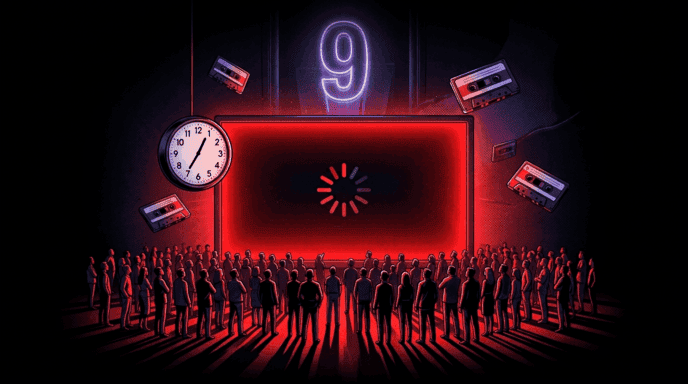
Stranger Things’ final season generated controversy the moment it ended. With 105.7 million viewers within its first 13 weeks, it ranked ninth on Netflix’s most-watched English TV list of all time. But the series finale, airing on New Year’s Eve, provoked enough fan outrage to spawn a massive conspiracy theory. This theory was known as “Conformity Gate.”
The theory held that Vecna had not truly been defeated. Instead, the characters were being controlled by Vecna’s mental powers, forcing them to create false memories. Fans theorized that the real ending would surface in a secret ninth episode set to air January 7, 2026.
Ridiculous as it sounds, the evidence fans assembled was remarkably creative. For example, graduation robes in the series finale were orange, while Hawkins High School’s colors are green and yellow. A doorknob in the Wheelers’ basement was located on the wrong side of the door. Fans claimed that a stack of cassettes in the finale spelled out “U DID NOT STOP ME” in Morse code. A video on the show’s official TikTok page showed Mr. Clarke standing in front of a clock set to 1:07; fans read it as a signal for January 7.
On January 7, hundreds of fans waited for the episode to drop. As of 8 p.m. EST that evening, more than 1,200 users reported Netflix outages on DownDetector as fans attempted to access an episode that did not exist. Netflix had already updated all of its Stranger Things social media accounts to read: “ALL EPISODES OF STRANGER THINGS ARE NOW PLAYING.” Regardless, a Change.org petition calling for the release of “unseen footage” gained well over 390,000 signatures.
As The Guardian noted, the way fans built their theories mirrored QAnon-style pattern recognition; finding hidden meanings in innocuous details, constructing non-falsifiable logic, and reinforcing beliefs through communal repetition. Creators Matt and Ross Duffer addressed Conformity Gate directly. “Online, there’s just so much misinformation. Just tons of it,” Matt Duffer told Variety. “We would be here for hours trying to bat down the stuff that was not true.”
Conformity Gate demonstrated how quickly the conspiracy-theory frameworks that flourished during COVID-19 can migrate into entertainment fandoms.
2. Bieberchella: Justin Bieber’s Laptop-Powered Coachella Performance
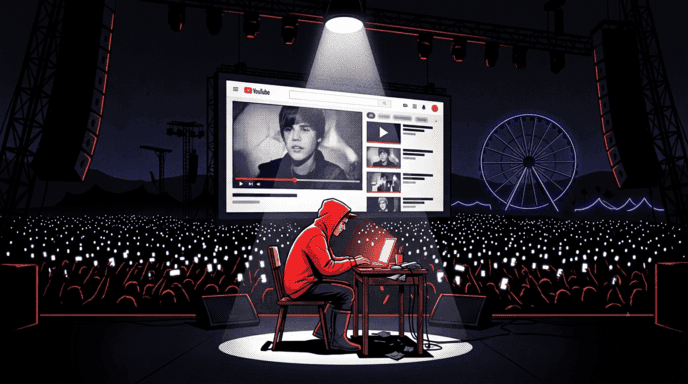
Justin Bieber headlined Coachella 2026. The rumors promised a massive production with elaborate special effects. What 125,000 spectators got instead was a 32-year-old man in a red hoodie and rain boots, sitting at a desk, opening YouTube videos of his own old performances, and singing along like it was a personal karaoke session; one that happened to have an enormous audience.
Bieber delivered a 34-song performance that started with him staring into a camera so close that only his silhouette and the ceiling above him were visible on screen. During long stretches between songs he sat glued to his computer, claiming he was adjusting the set based on real-time feedback from an online chat. At one point Bieber pulled up “Deez Nutz” and “Double Rainbow” on his laptop and played them on the giant screen behind him.
Entertainment Weekly described the performance as“sleepy” and noted it wasn’t until Bieber played his 2010 debut single “Baby”; nearly an hour in; that he finally touched his early catalog. Still, the moments when Bieber harmonized with his younger self on screen; watching footage of the teenager who uploaded covers to YouTube and became one of the biggest pop stars in the world; hit audiences harder than any choreographed routine could have.
Immediately Bieber’s performance became a meme. Thousands of edits riffed on Bieber hunched over his laptop. Then the narrative shifted entirely; the performance was released as a live album. What looked like laziness or arrogance revealed itself as something more deliberate; a performer refusing to perform as expected, choosing instead to be present, nostalgic, and human before an audience expecting spectacle.
Whether this was brilliance or self-indulgence is still the most debated question in music criticism this year.
3. Punch the Monkey and the IKEA Plushie That Sold Out the Planet
Internet virality has a formula. An adorable baby animal doing something heart-wrenching guarantees explosive growth. Even by those standards, Punch exceeded every expectation.
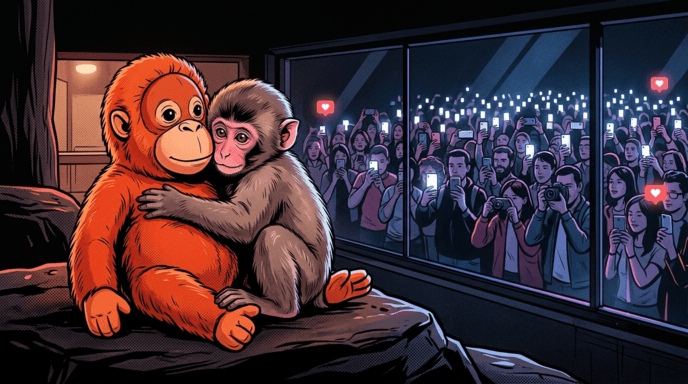
Punch is a seven-month-old Japanese macaque at Ichikawa City Zoo, roughly 15 minutes from central Tokyo. Abandoned shortly after birth and shunned by the other monkeys in his troop, he was hand-raised by zookeepers who gave him a stuffed orangutan from IKEA’s Djungelskog collection as both a comfort item and a surrogate parent.
Videos of Punch went explosively viral in February 2026: dragging his plushie everywhere, sleeping with it, pulling it across the enclosure, cuddling with it when frightened.
IKEA’s $19.99 Djungelskog orangutan sold out at all but five of its 54 U.S. stores. Only one of Japan’s 12 IKEA outlets had any stock remaining. Online auctions appeared at ten times the retail price. IKEA global commercial manager Javier Quiñones stated: “We are making sure that the toy is back in stock as soon as possible,” as reported by The Washington Post via CNN. IKEA also capitalized on the moment, posting an image of the plushie on social media with the caption: “Sometimes, family is who we find along the way.”
Attendance at Ichikawa City Zoo more than doubled in February, reaching approximately 47,000 visitors for the month. On weekends, crowds topped 9,600 people per day. To manage overcrowding, zoo officials limited front-row viewing time to 10 minutes and prohibited selfie sticks.
The story took a darker turn in May when two American nationals were arrested after entering Punch’s enclosure in what was reportedly connected to a cryptocurrency stunt. They were charged with obstructing operations at the zoo.
On a brighter note, recent videos show Punch playing with other monkeys and being groomed by them; leaving his plushie unattended for longer stretches as he gradually integrates into his troop.
4. Scientology Speedrunning: The TikTok Trend That Removed Door Handles
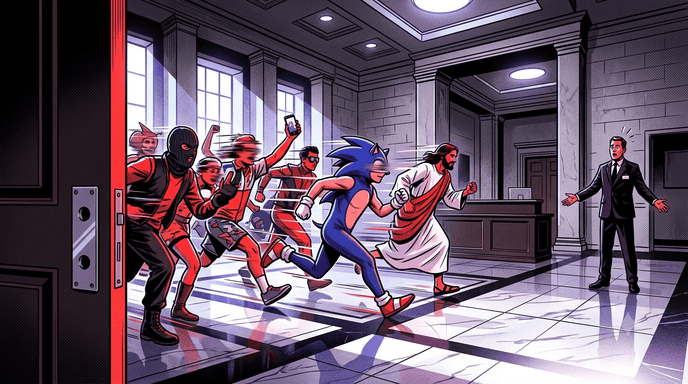
One of the year’s strangest viral trends began on March 31, 2026. Eighteen-year-old TikToker Swhileyy jogged through the lobby of a Church of Scientology building on Hollywood Boulevard while recording it. He framed it as a “speedrun,” borrowing the gaming term for completing a challenge as quickly as possible.
The stunt itself was unremarkable, but it was copied relentlessly. What started as solo jogs through lobbies escalated into costumed mobs; people in Jesus costumes, Sonic the Hedgehog outfits, and ski masks; storming Scientology buildings while staff screamed at them to leave. One video of the chaos amassed over 1.4 million views on Instagram.
The Church of Scientology responded by removing door handles from its Hollywood Boulevard buildings.
In a statement reported by NBC News, the church said the incidents involved “trespassing, harassment and disruption of religious facilities” and that “Turning its spaces into targets for viral stunts is not journalism, protest or civic activity.”
The LAPD acknowledged it was monitoring the situation after receiving multiple calls. Two people were identified as suspects; one for burglary and another for felony vandalism. During one Saturday incident, staff members were knocked to the ground.
Swhileyy told The Hollywood Reporter: “I do not condone what I did, even though I didn’t break any laws. All I did was explore the building.” He added: “I never once in any video or any comment section or anywhere promoted the idea of running through there or beating my record.”
Leah Remini; former Scientologist and actress; urged people to stop, calling the trend counterproductive. “If someone is brainwashed for years into believing the outside world is filled with dangerous lunatics who wish to impede Scientology, a group of people running through a Scientology building is only going to confirm that belief and lead them to dedicate themselves even more to the cause they believe in,” she wrote on X.
The New York Times published extensive coverage framing the trend as a collision between Gen Z’s post-ironic humor culture and real-world legal boundaries that jokes cannot erase.
5. The Swatch x Audemars Piguet Royal Pop Riots
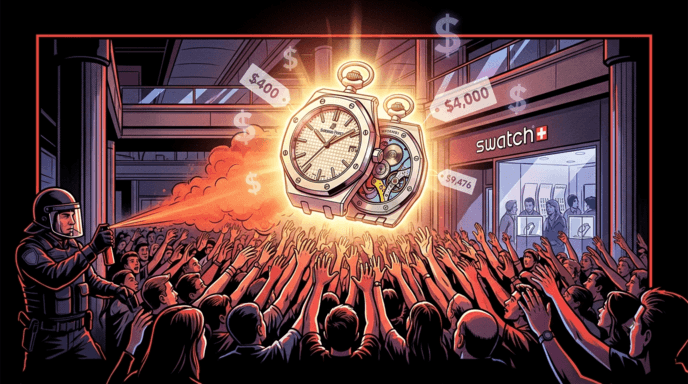
Nothing in 2026 captured the excess of hype culture better than the Swatch x Audemars Piguet Royal Popcollection, released on May 16. The limited-edition collection merged Swatch’s 1980s pop-art aesthetic with the distinctive octagonal bezel of Audemars Piguet’siconic Royal Oak. The result: eight pocket watch designs priced between $400 and $420.
Pocket watches. Not wristwatches. Pocket watches.
Swatch closed retail stores across the United States, United Kingdom, France, and parts of Asia after the launch. Swatch posted on Instagram that “Today’s Bioceramic Royal Pop Collection launch saw extraordinarily high demand” and that “in some countries, queues of more than 50 people cannot be accepted.” At the Roosevelt Field Mall in Long Island, New York, police officers blasted pepper spray into a crowd of shoppers pushing through a parking garage. A shopper in New York’s Times Square described the scene as “a mosh pit,” according to The Guardian.
In South Wales, a 25-year-old man was arrested after he and roughly 300 others tried to enter the St. David’s shopping center around 6:20 a.m. Another buyer, who gave his name as Mac, claimed he had spent five days waiting in line. “It was pretty hectic… it’s nasty, but I was able to get in,” he said. “Retail for them is about $400 — I sold one just now for $4,000.”
WatchPro reported an average resale price reaching $9,476 within days of launch, before market corrections brought prices down. The frenzy echoed the chaotic sneaker drops of the 2010s, except the product was pocket watches; something most people under 40 have never owned. The viral footage of the chaos, more than the product itself, became the cultural artifact. Most people who watched the Royal Pop riots will never buy a pocket watch. But they will remember the pepper spray.
6. Kool-Aid Pineapples: The Summer’s Stickiest Viral Food Trend
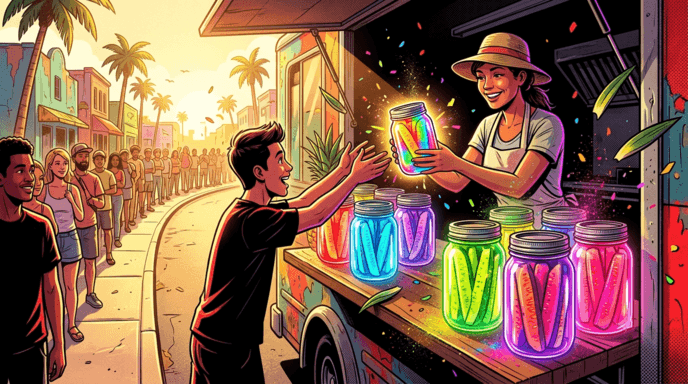
Every summer produces a viral food moment, and 2026’s arrived with Kool-Aid Pineapples. These are pineapple spears soaked in Kool-Aid powder, sugar, and water until they absorb the color and flavor; a trend that exploded onto TikTok and Instagram in June.
The trend has roots in Southern food culture, where Kool-Aid Pickles have been a regional delicacy for years. But the pineapple version went mainstream largely through Silly Willie, a Pompano Beach, Florida-based creator who sells his “Pineapple Dreamz” from a mobile food truck that regularly draws lines down the street.
The trend accelerated after a video of someone taste-testing a freshly opened jar hit social media, propelling Kool-Aid Pineapples from niche food TikTok into the mainstream. The New York Post published a step-by-step guide on how to make them at home. Stores across multiple states reportedly ran out of both Kool-Aid packets and fresh pineapples.
Beyond the recipe itself, Kool-Aid Pineapples fit into a larger pattern. Viral food trends of the 2020s have consistently originated from Black Southern and Caribbean culinary traditions; from Kool-Aid Pickles to birria tacos to jerk-seasoned everything. The internet’s food algorithm has become one of the most effective engines for cross-cultural culinary discovery ever created. Whether the communities who originated these traditions receive credit and compensation when their recipes go viral remains an unanswered and increasingly urgent question.
7. The Great Meme Reset: Gen Z vs. Brain Rot
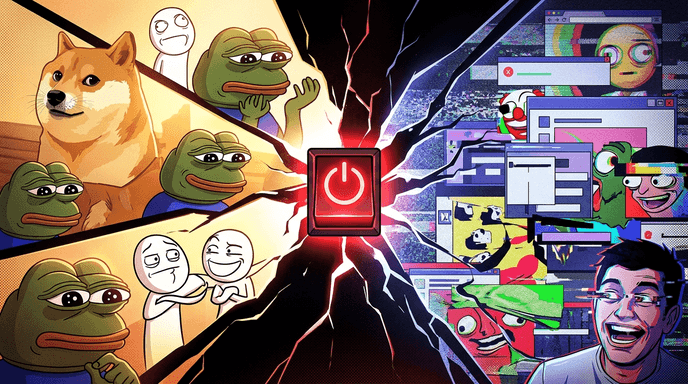
At the beginning of 2026, a movement started across TikTok and Reddit with an audacious goal: reboot all memes back to 2016. Dubbed “The Great Meme Reset,” participants declared that starting January 1, everyone should abandon “brain rot” memes; the meaningless, AI-adjacent content and substanceless absurdism that had taken over feeds; and return to the memes of ten years ago.
The effort traced back to a March 2025 TikTok post from @joebro909 calling for “a whole new generation of memes” to rescue the platform from its drought of quality content. Within months, the movement coalesced around a January 1 reboot date and rallied behind retro formats like Big Chungus, classic Doge, and deep-fried memes.
Know Your Meme editor-in-chief Don Caldwell told Wired: “There’s a desire to return to the memes of the past that had a bit more substance.” Creator Noah Glenn Carter stated in a TikTok video: “The memes we have now are called ‘brain rot’ for a reason.” He continued: “The ones 10+ [years older], most of the time, had a story behind them. Or they at least made sense.”
College of Charleston communication professor Ryan Milner offered Wired a more skeptical take: “Is this an earnest longing to go back to the bygone days of 10 years ago when things were better, or is this just people having fun with that idea? Is it a meme in and of itself to talk about how memes have really gone downhill?”
The meme reset also coincided with a related development: Jack Dorsey, co-founder of Twitter, helped relaunch Vine as diVine, a platform that archives 100,000 classic Vines and lets users create new clips; provided they do not use AI. The platform actively blocks content generated by large language models, positioning itself as a refuge from algorithmic slop.
Did the Great Meme Reset actually happen? Not in any measurable sense. But the cultural signal was unmistakable. The Meme Reset was the first large-scale, cross-generational internet movement to explicitly name AI-generated content as the enemy of authentic online culture. That conversation has only intensified in the months since.
8. “2026 Is the New 2016”: The Nostalgia Trend That Took Over Every Feed

In the first two weeks of January 2026, a single hashtag swept across every major social media platform: #2026IsTheNew2016. Users posted throwback photos from 2016, listed their favorite songs from that year, recreated 2016 fashion looks (choker necklaces, Juicy Couture tracksuits), and declared that pre-pandemic internet optimism was making a comeback.
The #2016 hashtag surpassed one million posts on TikTok and over 37 million on Instagram. Celebrity throwbacks from John Legend and Reese Witherspoon amplified the trend further. People magazine published an explainer tracing how the trend originated on Reddit in late 2025.
Journalist and former Vogue editor Leah Faye Cooper told ABC News: “People are really longing for a time that felt simpler, a time that felt really optimistic.” She continued: “Nostalgia is something that has been trending for a while now. You see it in fashion, you see it with these reboots of TV shows and people remaking movies.”
The “2026 is the new 2016” trend developed alongside The Great Meme Reset, and the two are closely connected. Both reflect the same desire: a return to an internet that feels less algorithmically constructed, less saturated by AI-generated content, and more authentic. That the nostalgia points to 2016; not the 1990s or early 2000s; shows how fast the internet has changed. For Gen Z users who were children in 2016, that year represents the final moment before the platforms they now inhabit became unrecognizable.
9. “You the Birthday”: Hunxho’s Slang That Confused an Entire Generation
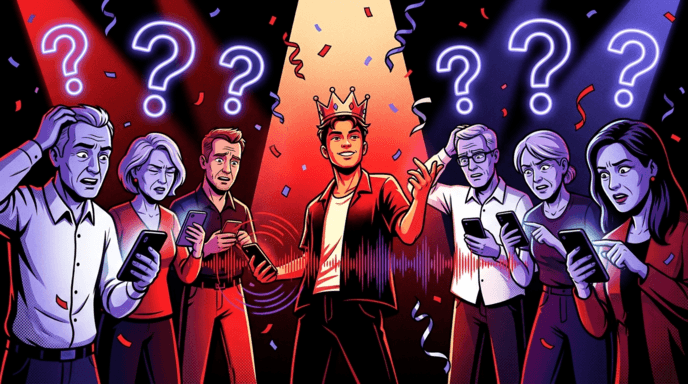
Slang has always traveled through music. But the speed at which Hunxho’s 2025 single “Birthday Girl” generated a phrase that confused nearly every age group was remarkable even by TikTok standards.
The key lyric: “She eat, she the birthday girl.” In context, “the birthday” simply means the center of attention; the person everyone is celebrating. But once the phrase escaped the song, “you the birthday” became an endorsement, a compliment, and a status marker all at once; baffling anyone who hadn’t heard the track.
Videos of millennials and Gen X users trying to decipher the phrase became their own viral subcategory, fueling the trend’s growth.
In linguistic terms, the phrase has a low barrier to entry; simple to say, adaptable to any context; and an unusually high ambiguity factor. What does it actually mean? That combination is viral gold. The confusion itself became the content. People did not share this trend because they understood it; they shared it because explaining it, or failing to explain it, was inherently entertaining.
10. The Boyz n the Hood Saxophone Meme

Stanley Clarke, the jazz fusion bassist and composer, scored John Singleton’s 1991 directorial debut Boyz n the Hood. The saxophone theme plays as young Ricky walks alone before tragedy strikes. The saxophones grow louder as danger approaches; a cinematic device that remains as effective as it is devastating.
In late 2025, TikTok users began overlaying Clarke’s theme onto everyday situations where something was about to go wrong. A person approaching an aggressively charging goose. Someone heating metal in a microwave. A child reaching for something on a high shelf while a parent watches their phone. The format was straightforward: the saxophones begin playing and keep getting louder.
By early 2026, the meme had jumped from TikTok into live sports broadcasting. During an Atlanta Dream–Connecticut Sun WNBA game, the saxophones were played over the arena speakers as Connecticut struggled; a deployment so meta the only valid reaction was, “they’re wrong for that.”
The Boyz n the Hood saxophone meme works because it inverts the tragedy of its source material into comedy without diminishing the original’s emotional power. The meme has also become an unintentional act of cultural preservation; introducing a 35-year-old film to an audience that might never have encountered it otherwise, and leading them to one of the most devastating scenes in 1990s American cinema.
11. Sinners at the Oscars: Ryan Coogler and Michael B. Jordan’s Historic Night
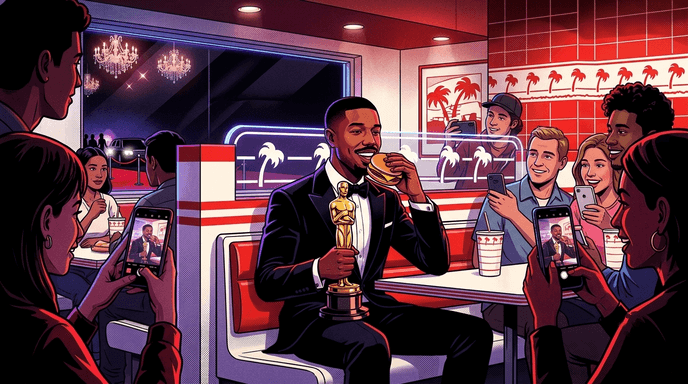
The 98th Academy Awards weren’t just a ceremony; they were a viral event that consumed every timeline for 48 hours. Ryan Coogler’s Sinners won four awards that evening, including Best Original Screenplay for Coogler and Best Actor for Michael B. Jordan.
It was Coogler’s acceptance speech that broke through the noise. “Please sit down, I’m very nervous and they are going to play me off,” he told the audience. “I’m from Oakland, California and we can talk a lot.” The quote was instantly memed, quoted, and printed on T-shirts.
Jordan’s post-Oscar moves generated their own viral cycle. Instead of attending the usual after-parties, he went to In-N-Out Burger. Photographers captured Jordan greeting fans while holding his Oscar and eating a cheeseburger. The image of one of his generation’s most acclaimed actors choosing a fast-food counter over a ballroom landed as a genuinely unpretentious moment in an industry that rarely produces them. Deadline confirmed this was Jordan’s first Academy Award, calling it the culmination of a career that began with Fruitvale Station; also directed by Coogler.
12. John Travolta’s Beret Era at Cannes

Nobody had John Travolta reinventing himself as a beret-wearing auteur at Cannes on their 2026 bingo card. Yet there he was at the Cannes Film Festival, receiving an honorary Palme d’Or and premiering his directorial debut, Propeller One-Way Night Coach, while wearing a different beret every single day of the festival.
“The old school directors wore berets and the glasses,” Travolta told CNN. “And I thought, that’s what I’m doing.” He elaborated: “You’re an actor, play the part of a director. Look like an old school director.”
The berets alone might have been mildly amusing. What made the moment truly viral was the juxtaposition: Travolta’s earnest commitment to his new directorial persona coincided with reviews of his debut that were, charitably, mixed. The Telegraph wrote that watching the film felt like “watching a toddler walk into a lamp post.” The disconnect between Travolta’s self-serious directorial cosplay and the critical reception of his actual work was irresistibly funny. The internet loved him for it. He wasn’t in on the joke; which is exactly why the humor worked.
People reported that Travolta “loves” the reaction to his new look; suggesting he may have been more aware of the dynamic than anyone assumed.
13. Jack Harlow’s Silly Hat Saga

In 2026, Jack Harlow turned headwear into an ongoing internet joke. As he rolled out his newest album, Harlow appeared at event after event wearing increasingly outrageous versions of his signature slouchy caps. With each public outing came its own wave of discussion: Are these caps fashionable? Are they a joke? Can they be both?
Harlow’s hat saga reached peak virality at the 2026 Met Gala on May 4, when he walked the red carpet wearing what appeared to be two hats layered on top of one another. The photo instantly became a meme template. Comments under Harlow’s Instagram posts ranged from genuine admiration to bewildered disgust. For a brief period, the hat debate became the dominant conversation on fashion social media; eclipsing the Met Gala’s actual theme.
Harlow’s hat saga illustrates something about virality in 2026: a musician can generate far more buzz from an accessory than from his actual music. The algorithm doesn’t differentiate between artistic achievement and absurd fashion choices; it only registers engagement. Harlow understood that, and played it accordingly.
14. The Dubai Chocolate Pistachio Shortage That Kept Spiraling

Dubai chocolate; the pistachio-cream-and-kataifi-filled bars created by Fix Dessert Chocolatier in 2022; had been building momentum ever since a single TikTok video of the bar being cracked open went viral in late 2024. But in 2026, the trend’s real-world consequences exceeded all expectations: a global pistachio shortage.
As CBC reported, the surge in demand for pistachio-based products; driven by brands worldwide racing to capitalize on the Dubai chocolate trend; pushed pistachio prices up and strained global supply chains. The bars themselves became scarce, fueling a thriving resale market. A Canadian recall over salmonella contamination added another dimension to the chaos.
Dubai chocolate is a distinctly 2020s phenomenon: a food trend that begins as a visual spectacle on TikTok, scales through mass-produced imitations at every price point, and ultimately warps global commodity markets. The pistachio industry did not consent to become part of the content economy. The content economy does not seek consent.
15. The Stranger Things “Unseen Footage” Petition That Hit 390,000 Signatures

Conformity Gate was the conspiracy theory. The petition was the organized demand. Following the New Year’s Eve 2025 release of Season 5’s final episodes, a subset of Stranger Things fans became convinced that episodes had been altered. A Google Doc detailing allegedly cut scenes circulated widely on social media. A Change.org petition demanding the release of “unseen footage” accumulated over 390,000 signatures.
Ross Duffer directly addressed the Google Doc in an interview with Variety: “I don’t think there’s a single cut scene in the entire season.”
What distinguishes this from Conformity Gate is the form the belief took. Conformity Gate was a narrative theory about what the show’s ending meant. The petition was a procedural demand for content fans believed had been withheld. Together, they illustrate two beliefs driving modern fandom: that audiences have the right not just to consume content but to dictate what it contains; and that when content disappoints, the failure must be institutional rather than creative.
Nearly 400,000 people signed a petition for footage that does not exist. That figure alone makes it one of the defining viral artifacts of 2026.
Comparison Table: The 15 Viral Moments of 2026 at a Glance
| # | Viral Moment | Origin Platform | Category | Peak Metric | Real-World Consequence |
|---|---|---|---|---|---|
| 1 | Conformity Gate | TikTok / Reddit | Fan Theory | 1,200+ Netflix outage reports | Netflix server disruption; 390,000+ petition signatures |
| 2 | Bieberchella | Coachella / TikTok | Music | 34-song headlining set | Performance released as a live album |
| 3 | Punch the Monkey | Instagram / TikTok | Animals | 47,000 zoo visitors (Feb.) | IKEA Djungelskog global sellout; 2 arrests |
| 4 | Scientology Speedrunning | TikTok | Challenge | 1.4M views (single video) | Door handles removed; LAPD hate-crime probes |
| 5 | Royal Pop Riots | Instagram / X | Commerce | $9,476 avg. resale price | Store closures across 4+ countries; pepper spray; arrests |
| 6 | Kool-Aid Pineapples | TikTok / Instagram | Food | Grocery shortages nationwide | Southern food tradition goes mainstream |
| 7 | Great Meme Reset | TikTok / Reddit | Movement | Cross-platform participation | First major anti-AI-content backlash; diVine platform launch |
| 8 | 2026 Is the New 2016 | Instagram / TikTok | Nostalgia | 37M+ Instagram posts (#2016) | Celebrity participation; cultural analysis in major outlets |
| 9 | “You the Birthday” | TikTok | Language | Cross-generational confusion | New slang enters mainstream lexicon |
| 10 | Boyz n the Hood Sax Meme | TikTok | Meme | Live sports broadcast adoption | 1991 film rediscovered by new audience |
| 11 | Sinners at the Oscars | X / Instagram | Entertainment | 4 Academy Award wins | Jordan’s In-N-Out Oscar photo goes viral |
| 12 | Travolta’s Beret Era | Instagram / X | Celebrity | Daily Cannes appearances | Mixed reviews amplify the meme |
| 13 | Harlow’s Silly Hats | Instagram / TikTok | Fashion | Met Gala double-hat moment | Accessory generates more buzz than music |
| 14 | Dubai Chocolate Shortage | TikTok | Food | Global pistachio price surge | Commodity market disruption; Canadian recall |
| 15 | “Unseen Footage” Petition | Change.org / Reddit | Fandom | 390,000+ signatures | Duffer Brothers forced to publicly debunk |
Frequently Asked Questions
What was Conformity Gate? Conformity Gate was a fan conspiracy theory claiming the Stranger Things Season 5 finale was deliberate misdirection, with a secret ninth episode set to drop on January 7, 2026. Over 1,200 Netflix outage reports were recorded on DownDetector as fans searched for the nonexistent episode. Both Netflix and the Duffer Brothers confirmed no additional episode exists.
Why did IKEA sell out of the Djungelskog orangutan plushie? Videos of Punch, a baby Japanese macaque at Ichikawa City Zoo, clinging to the $19.99 IKEA Djungelskog orangutan went viral in February 2026. The toy sold out at nearly all U.S. and Japanese IKEA stores, with eBay resale prices reaching ten times retail.
What happened at the Swatch x Audemars Piguet Royal Pop launch? The May 16 release of pocket watches priced at $400–$420 caused chaos at Swatch stores worldwide. Police deployed pepper spray at a Long Island mall. A man was arrested in Wales. Stores closed across multiple nations, and resale prices briefly averaged $9,476 according to WatchPro.
What is “Scientology speedrunning”? A TikTok trend in which users filmed themselves rushing through Church of Scientology buildings. The trend escalated from one creator’s jog through a Hollywood lobby to costumed mobs forcing entry. The church removed door handles from its buildings, and the LAPD opened hate-crime investigations into certain incidents.
Did the Great Meme Reset actually happen? Not in any literal sense. The movement; which called for all memes to revert to 2016-era formats beginning January 1, 2026; mattered more as a cultural signal than as an executed plan. It marked the first major internet-wide pushback against AI-generated and “brain rot” content, a conversation that has only intensified since.
What does “you the birthday” mean? Derived from Hunxho’s 2025 single “Birthday Girl,” the phrase “you the birthday” means you are the center of attention; the star of whatever event you’re at. The phrase went viral in early 2026 largely because it baffled anyone outside Gen Z, with explanation videos becoming their own viral content.
This content is for informational and entertainment purposes only. All data, statistics, quotes, and claims in this article have been verified against authoritative external sources as cited throughout.


