


Up to 40% of your productive day lost every time you toggle between browser tabs. A 2016 replication across 23 labs and 2,100 participants that quietly killed the willpower-as-fuel myth. 26,000 adults proving evening chronotypes outperform early risers on cognitive tests. Seventy hours at your desk producing the same output as fifty-five. 275 interruptions hitting the average worker before the day ends. Face-to-face conversation dropping 70% the moment the office walls come down. None of these findings made it onto a motivational poster; and that’s exactly why the posters keep failing you.
Many people set their alarms for 5 AM because they believe that is what successful CEOs do. Many also try to multitask during meetings because they equate busyness with career success. Millions download yet another productivity app, believing the right tool will finally unlock the success that hard work alone has not.
While none of this is necessarily anyone’s fault, the gap between what decades of research have demonstrated and what the self-help industry sells today is substantial. Researchers at Stanford, Harvard, the University of Michigan, and UC Berkeley have demonstrated that many of the productivity tips circulating on social media, in best-selling books, and through corporate training programs contradict the actual evidence. There are no gray areas here. According to the American Psychological Association, multitasking can cause a person to lose anywhere from 10 percent to 40 percent of their productive time. The idea that willpower is a muscle was debunked in 2016 when a multi-lab replication study involving over 2,100 participants across 23 labs found no evidence supporting the concept of ego depletion. A 2024BMJ Public Healthstudy of over 26,000 adults found that evening chronotypes performed significantly better on cognitive tests than morning types — so much for everyone needing to wake up at 5 AM.
In this article, we take 15 widely repeated productivity tips and hold them up against the current science. For each one, we identify the relevant research and explain where the advice falls short. This is not about telling you what to do. It is about giving you enough information to stop following untested advice and start building systems that actually produce results. If you have ever suspected that common productivity rules that don’t work keep circulating anyway, the science below will confirm your suspicion.
1. “Waking Up at 5 AM Will Make You More Productive” {#rule-1}

The “5 AM Club” is not a scientifically supported method for increasing productivity. It is a marketing tactic that has evolved into a cultural expectation. Robin Sharma wrote a book about it. Tim Cook wakes up before 4 AM. The underlying message across productivity-related social media is that unless you wake up before dawn, you have already wasted your day.
That is simply not true. Chronobiology tells us that our bodies run on a genetically determined internal clock known as our chronotype. Our chronotype determines when our brains are most alert. Research from the Sleep Foundation shows that once we establish a routine wake-up time, it helps synchronize our circadian rhythms; however, the specific hour matters less than keeping a consistent schedule. Both people who wake at 7 AM and 9 AM every morning are giving their suprachiasmatic nucleus the exact same signal about their desired sleep-wake cycle.
There is also evidence against forcing people into a 5 AM wake-up time. A recent large-scale study in BMJ Public Health involving more than 26,000 adults in the United Kingdom Biobank found that evening and intermediate chronotypes exhibited superior cognitive function than morning types. Therefore, placing an individual with an evening chronotype into a 5 AM wake-up routine does not make them a high performer. Instead, it forces them to perform demanding cognitive activities during periods when their brain is least equipped to handle them.
At the same time, Matthew Walker and his team at UC Berkeley used fMRI imaging to show that sleep-deprived subjects reacted to negative stimuli with nearly 60 percent greater amygdala activity than did rested subjects. If losing just one hour of sleep every night by waking up at 5 AM causes your emotional regulation, decision-making and impulse control to degrade throughout the day, then you’re not getting a head-start on your day; you’re sabotaging yourself.
So what really works? Identify your chronotype and protect your peak performance window. What matters most is that you maintain consistent wake-up and bedtime schedules. It doesn’t matter exactly what time you go to bed or get up as long as you maintain a consistent routine. Your most productive hour is not necessarily 5 AM. It will be whatever hour your brain is functioning at its peak.
2. “Multitasking Improves Efficiency” {#rule-2}

You’re watching a video conference while simultaneously browsing Slack and writing an email. That’s multitasking. Cognitive psychologists have referred to it for decades as rapid task switching — and it comes with a steep cognitive price.
Joshua Rubinstein, Jeffrey Evans, and David Meyer conducted experiments in 2001 demonstrating that participants took significant amounts of time to switch between tasks — and the more complex the tasks, the higher the time penalty. The American Psychological Association described the research succinctly: Meyer said that even brief mental blocks created by rapidly switching between tasks can cost as much as 40 percent of one’s productive time.
It works like this. Anytime you switch between tasks, two distinct cognitive processing components are activated: “goal-shifting” (i.e., deciding to do the new task) and “rule activation” (i.e., turning off the rules for the old task and turning on the rules for the new one). Each switch incurs a small time cost. Individually, these costs appear minor — a couple hundred milliseconds per switch. But collectively, across hundreds of switches per day, the losses are enormous.
Stanford researchers analyzed a decade of data on heavy multitaskers and found they performed poorly on simple memory tasks. A study published in BMC Psychology found that excessive digital multitasking correlated with hyperactive behaviors, poor working memory, decreased cognitive ability, and increased mental fatigue. Multitasking does not increase capacity — it fragments it.
So what actually works? Work singly in blocks focused on single tasks rather than trying to do multiple things at once. Nathaniel Kleitman, the sleep researcher who identified REM sleep, identified the basic rest-activity cycle: roughly 90-to-120 minute ultradian rhythms governing waking cognitive performance. When aligning work blocks with these naturally occurring cycles — i.e., approximately 90 minutes of uninterrupted focus on a given task block followed by a 15-to-20 minute break — you produce better output than you would juggling three tasks simultaneously for eight straight hours. These productivity hacks neuroscience has validated are simple, but they work.
3. “Willpower Is a Muscle — Train It and You’ll Have More” {#rule-3}

One of the most widely accepted theories in recent history is that willpower is a muscle that, if trained properly, will yield more of itself. In 1998, social psychologist Roy Baumeister, along with his colleagues published an experiment in the Journal of Personality and Social Psychology — the study that established the concept of ‘ego depletion.’ Participants were placed in a state of hunger and asked to resist eating freshly baked cookies placed in front of them while they ate radishes instead. Those who resisted eating the cookies gave up faster on an impossible puzzle than those who had not been asked to resist. Baumeister concluded that self-control operates like a finite fuel tank; the more you use it to fight desire (resist cookies), the less you will have left for other difficult decisions (solving puzzles).
The self-help industry ran with it. Cold showers became a form of willpower training. Morning routines became discipline-building machines. Struggles experienced later in the day were often attributed to having exhausted your willpower tank earlier in the day.
However, the model collapsed when a 2016 multi-lab replication effort using over 2,100 participants across 23 laboratories found little to no evidence supporting ego depletion. Even though the original study claimed very large effects, when corrected for publication bias, the effect size was essentially zero. Michael Inzlicht, a University of Toronto psychologist who had previously written about ego depletion, went public saying that the original effects were neither reliable, robust, nor large as previously reported.
Self-control is real; however, the particular version of self-control presented as a depletable fuel tank — the version that filled every motivational podcast and productivity book — now rests on severely weakened empirical evidence. Contemporary research indicates that self-control likely involves combinations of attention, motivation orientation, and environmental design rather than functioning as a finite resource.
What actually works: do not continue trying to build your willpower and begin designing your environment. Approximately 43% of daily behaviors occur automatically based on contextual cues rather than conscious intent, according to Wendy Wood at USC. Individuals who appear disciplined have typically designed their environments so that the desired behavior is easier than the undesired one. These individuals are not fighting against temptation; they eliminated temptation.
4. “Stay Busy Every Second of the Day” {#rule-4}

Making every moment count feels like success-oriented behavior. Behavioral scientists call it a formula for decreasing output.
Anders Ericsson’s seminal 1993 research on elite violinists at the Music Academy of West Berlin produced a finding that is commonly misquoted in discussions of elite achievement. The top performers practiced an average of 3.5 hours per day divided into three separate practice sessions lasting anywhere from 60 to 90 minutes each. Additionally, they slept significantly more than their lower-performing peers, including nearly three hours of napping per week. Elite achievement came from focused practice sessions combined with strategic breaks, not constant grueling effort.
History supports this assertion. Maya Angelou wrote in a bare hotel room each morning until mid-afternoon, and then made certain she would not be thinking about writing for the remainder of the day. She wrote over thirty best-sellers and was awarded the Presidential Medal of Freedom. Charles Darwin divided his workday into short concentrated segments separated by three daily walks; many of his greatest ideas came to him walking on his paths as opposed to at his desk.
According to Forbes’ review of productivity myths in a January 2025 article citing the DHR Global 2026 Workforce Trends Report, 83% of employees experience some level of burnout, and workload is listed as one of the main contributing factors. Harvard Health published an extensive examination of toxic productivity — the obsessive need to be productive at all costs. Clinical psychologist Natalie Dattilo, an instructor at Harvard Medical School, explained how chronic commitment to being productive leads to insomnia, anxiety, and ultimately depression as unending obligations overwhelm motivation.
What actually works: treat rest as part of your performance structure, not as a reward you earn after finishing. Ultradian cycles guiding your work (approximately 90 minutes of focused work followed by a 15- to 20-minute break) correspond with how your brain’s attentional mechanisms operate. Disengaging strategically is not laziness; it is what allows you to flip the switch back on.
5. “Discipline Always Beats Motivation” {#rule-5}

There are many podcasts about productivity. All of them tell you motivation isn’t reliable — discipline is. It seems logical. However, the research is somewhat more complicated.
While what appears to be discipline from the outside is primarily habit functioning in a well-designed environment, research at USC by Wendy Wood shows that nearly 43% of daily behaviors are automatic responses to contextual cues rather than conscious decisions. The man who runs every morning at 6 AM is not necessarily grinding through willpower every morning. He has developed an automatic response to his 20-month history of repetition in the exact same environment; same shoes, same alarm clock, same route home; therefore, the habit requires almost no more willpower than brushing his teeth.
Stanford behavior scientist B.J. Fogg developed the Fogg Behavior Model and used his Tiny Habits methodology to show that you don’t need to rely on willpower once you have created the right environment and the actions you want to take are small enough. In Fogg’s model, ability (the ease with which the behavior can be performed) and prompts (the presence of cues at the right time) are far more reliable predictors of consistent action. Additionally, the “motivation always loses to discipline” mentality also creates an unintended side effect: it turns failure into a moral issue. Since discipline is the answer and you failed to act accordingly, the implication is you lacked character. The research does not support this perspective. When a behavior fails to continue, it is usually because it was too complex, performed too infrequently, or too loosely tied to an existing routine; none of these factors reflect a lack of character.
What actually works: The correct order of priority is environment > habit > discipline > motivation. Create your environment so the behaviors you desire are as easy as possible. Attach new behaviors to your current routines. Make the first commitment ridiculously small. At some point in the doing — not before — motivation will appear.
6. “Work Longer Hours to Get More Done” {#rule-6}

C. Northcote Parkinson wrote his famous observation in The Economist in 1955: “Work expands so as to fill the time available for its completion.” Over seven decades since then, Parkinson’s Law remains one of the most reliably tested principles in organizational behavior. Provide someone with one week to finish a two-hour project and somehow the project will consume the week.
Research on long hours of work paints a clear picture. A Stanford University study conducted by economist John Pencavel discovered that when a worker exceeds 50 hours per week, their productivity per hour rapidly declines. Moreover, according to Pencavel’s data, when workers exceed 70 hours of work per week, their total output is nearly equivalent to their total output when they worked 55 hours per week. The additional 15 hours produced almost nothing measurable — they only created the appearance of work.
According to Microsoft’s 2025 Work Trend Index, employees are interrupted approximately every two minutes during core work hours — an estimated 275 interruptions per day — by meetings, emails, and notifications. Approximately half of employees surveyed reported their work environment was chaotic and disjointed. Therefore, more hours do not equal more concentrated work. Instead, they increase hours of disorganized work, making meaningful focus nearly impossible.
What actually works: Focus your most important tasks in brief periods of time in environments free from distraction. Establish artificial deadlines that are closer than your actual deadline; Parkinson’s Law works backwards. Four hours of uninterrupted deep work will consistently produce more output than eight hours of fragmented task-switching.
7. “Set Huge, Inspiring Goals and Visualize Success” {#rule-7}

Vision boards; dream boards; “if you can visualize yourself achieving it…”. Goal setting is emotionally engaging; but over 40 years of research directly contradicts inspirational posters.
Gary Latham and Edwin Locke, through several hundred experiments across various industries and cultures, found that specific, difficult goals produce higher performance than vague goals urging you to “do your best.” Their effect sizes were among the largest measured in organizational psychology. “Complete a 16-week training plan peaking at 45 miles/week and run a marathon by Oct. 15” is a type of goal their research supports. “Be your best self by 2026” is not a goal their research supports.
However, the popular visualization advice undermines this principle. Researchers have demonstrated through “fantasy realization” that vivid mental imagery of succeeding without considering obstacles can actually reduce effort toward achieving the goal; the brain may treat the fantasy as though it has already occurred.
The empirical research-supported alternative is what NYU psychologist Peter Gollwitzer calls implementation intentions. A meta-analysis of 94 studies containing over 8,000 participants found that specifying “if-then” commitments produced a medium-to-large effect (d = 0.65) on goal attainment; one of the strongest interventions in applied psychology. “At 7 AM every Monday thru Friday, I will wear my running shoes and go outside” will result in more success than any vision board.
What actually works: Use specific, measurable implementation intentions to replace vague inspiration. Develop “if-then” commitments. Wherever your calendar lies is where your work happens; wherever your vision board lies is where your dreams pretend to happen.
8. “You Need a Dopamine Detox to Reset Your Brain” {#rule-8}

Anna Lembke, a Stanford psychiatrist and medical director of Stanford Addiction Medicine, released Dopamine Nation in 2021, receiving widespread cultural attention for her clinical observations regarding how repeating high-stimulation behaviors shift an individual’s brain pain-pleasure balance. While her work has real clinical implications, the problem arose when social media turned her nuanced research into a 24-hour gimmick called the “dopamine detox.”
As soon as social media users posted videos of themselves spending entire days in dark rooms doing nothing, entire courses sprang up around the concept. However, there is limited scientific evidence supporting a 24-hour reboot of an individual’s dopamine levels. One of the biggest misunderstandings in motivational content is that dopamine is simply a “happiness chemical.” Dopamine does not cause happiness; it provides feedback on how rewarding your experiences have been. It is a signaling molecule and cannot be replenished or depleted in the manner implied by proponents of the “detox.”
Andrew Huberman, a Stanford neuroscientist, has explained that what matters is not whether someone has depleted their hypothetical dopamine tank but whether their baseline dopamine levels are normal compared to their peak levels. Consuming large amounts of artificially induced spikes (short-form video, excessive sugar, compulsive phone-checking) lowers an individual’s relative baseline over time. However, the solution is not a single 24-hour period of fasting from artificially stimulated spikes. The solution involves gradually decreasing artificially stimulated spikes and incorporating slower earned rewards (productive work, physical exercise, meaningful conversations, quality sleep).
What actually works: Gradually reduce the frequency and magnitude of artificially stimulated spikes in your daily life. This is a slow process of rebalancing; not a single-day fast. Gradually substitute high-stimulus habits with low-stimulus alternatives and protect opportunities for earned rewards.
9. “The Pomodoro Technique Works for Everyone” {#rule-9}

The Pomodoro Technique — 25 minutes of focused work + 5 minutes rest — is probably one of the most commonly advocated productivity techniques. It is also likely one of the least researched.
A recent study published in Applied Cognitive Psychology examined the impact of systematic (in accordance with Pomodoro-type) breaks vs self-regulated breaks on effort regulation during actual study sessions. Results varied: systematic breaks did not generally produce superior results compared to self-regulation-based approaches. Results varied based on individual attention span, task characteristics, and cognitive workload.
No neurological basis exists for selecting a fixed interval such as 25 minutes. Kleitman’s research on ultradian rhythms indicated humans naturally experience focus/rest cycles approximately every 90–120 minutes — significantly longer than a standard Pomodoro cycle. Consequently, imposing 25-minute cycles on deep, complex work — writing, coding, strategic planning — can disrupt flow states and force a cognitive ramp-up each time the timer resets.
Heather Myers, CEO of Spark No. 9, said in an interview with Forbes she tried multiple Pomodoro-style interval systems and concluded that simpler methods (e.g., short hourly walking breaks) yielded more continuous productivity than any rigid timed system.
What actually works: Try it. Scientifically speaking, there is no evidence of a single optimal work-interval duration that applies to everyone. Some people succeed with 25-minute intervals; other people require larger intervals (90 minutes) for deeper thought processes. Try each method for at least a week, measure your productivity and stick with whatever format produces the most output given your cognitive rhythms. Consistency trumps complexity.
10. “Open Office Environments Promote Both Collaboration and Productivity” {#rule-10}
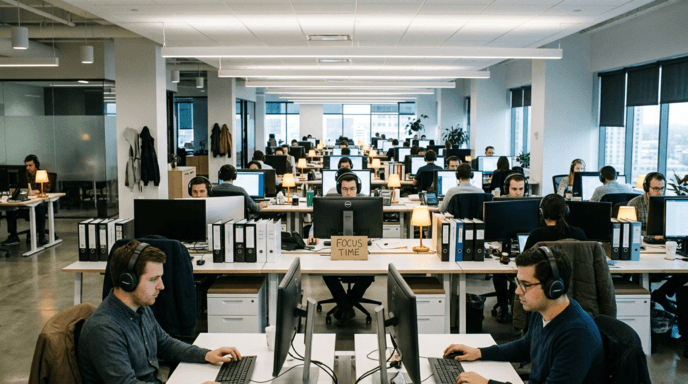
Organizations invested millions transforming their workspaces into open floor plans, assuming that removing barriers between coworkers would enhance both collaboration and productivity. The research evidenced the opposite.
Ethan Bernstein and Stephen Turban at Harvard Business School documented that when companies transitioned from private offices to open offices, face-to-face interactions declined by approximately seventy percent while email and instant messaging surged. Employees did not interact more frequently; instead, they retreated to digital communication to compensate for their lost personal space.
A systematic review published in Occupational & Environmental Medicine determined that employees working in open office spaces experienced higher rates of absenteeism compared to those in private offices. According to reporting by The Hustle, research has shown that employees who work in open offices are roughly 15% less productive and 50% more likely to get sick. Psychology Todayreported that after just eight minutes in an open office, employees’ negative moods rose by 25%.
What actually works: Regardless of whether you are working in an open office space, attempt establishing artificial boundaries. Utilize noise-canceling headphones; communicate with colleagues ahead-of-time about scheduled focus time; and use meeting rooms for deep-focus tasks when possible. Ultimately, the ideal workspace for intense cognitive processing is a private, distraction-free space — a finding researchers have confirmed for decades.
11. “Check Email First Thing to Stay on Top of Everything” {#rule-11}

The morning starts. Before getting out of bed, before coffee, before deciding your priorities, you open your email. In short order, your entire day is going to revolve around the priorities of everyone else.
Gloria Mark has been studying how office workers allocate their attention for over a decade. She conducted her research along with Microsoft Research and found a strong correlation between email-checking frequency and total time consumed by email. A 2012 article referenced in The Atlantic discussed a study where researchers disconnected participants from their email for five days. They noted that these workers demonstrated lower levels of stress and greater focus than baseline.
The reason starting the day with email is so harmful comes down to cognitive load theory, developed by John Sweller. Working memory has limited capacity. Every email you process consumes attention, evaluation, and decision-making resources that could otherwise go toward your most important work. Therefore, when you start the day processing emails, you spend your freshest cognitive resources on other people’s requests instead of your own priorities.
What really works: determine your top 3 most important things you want to accomplish before you open your email inbox. Block 60 to 90 minutes in your calendar for your most important work. Limit your email checking to 2 or 3 designated times throughout the day. Your email inbox is simply a to-do list that anyone can put items onto. Don’t allow it to dictate your day.
12. “We All Have the Same 24 Hours” {#rule-12}

This is likely the most emotionally appealing productivity myth and also one of the least empirically supported. What this myth implies is quite obvious — if Beyoncé built an empire in 24 hours, your inability to complete a project in the same amount of time represents a personal failure.
According to BBC Science Focus in its debunking of common productivity myths, people vary enormously in how productively they can use their hours. Context determines nearly everything. Someone who works at night because they are funding their education cannot be as productive as someone born wealthy with a personal assistant, a chef, and complete control over their schedule. Gender expectations within society, caregiving responsibilities, physical/mental health issues, being neurodiverse, financial instability, and having a suitable location to work without distractions all determine how many of those 24 hours can actually be used productively.
In addition to context determining everything, pushing people to be productive every waking hour is counterproductive. Multiple psychological studies have shown that maintaining a healthy work-life balance is essential for long-term productivity. Treating every available hour as production time is the definition of toxic productivity; a condition documented by Harvard Medical School as leading to insomnia, anxiety and depression.
What actually works: stop comparing yourself to people who operate with entirely different resources, support systems, and constraints. Make the best use of the time you have available by blocking off your peak cognitive times, eliminating non-productive activities and understanding that resting does not equate to wasting time.
13. “You Should Be Passionate About Your Work to Be Productive” {#rule-13}

The “follow your passion” doctrine states that if you perform work that you enjoy, productivity will naturally flow from it. However, research contradicts this notion.
BBC Science Focus reported that studies completed by the University of Warwick indicated that happy employees are approximately 12% more productive. However, this straightforward relationship between happiness and productivity does not account for a significant body of contradicting evidence. Research highlighted in a post by Harvard Business Review demonstrated that perpetual happiness can actually hurt productivity; employees may struggle more during challenging periods, deplete faster (continuous happiness is cognitively exhausting), and in certain instances become more self-absorbed. These are emotional patterns that organizational psychology continues to study.
More provocatively still, research has shown that negative emotions possess productive benefits. Moderate fear, moderate stress and moderate jealousy can all increase productivity under the right conditions. The Yerkes-Dodson Law was introduced more than a century ago and demonstrates that moderate arousal (including moderate stress) maximizes performance on tasks of moderate complexity. The flat-line emotional state implied by “passion-first” advice is neither achievable nor desirable.
What actually works: you don’t necessarily need to be passionate about your job to be productive. Competency, clear objectives, autonomy and measurable progress are all far more reliable determinants of sustained productivity than emotional enthusiasm.
14. “Hard Work Always Pays Off” {#rule-14}
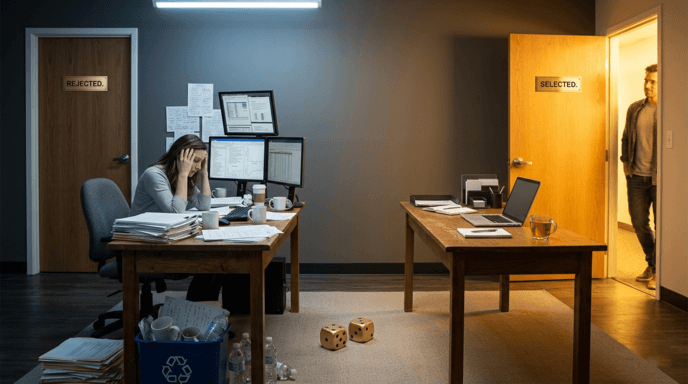
This is the basic myth that supports virtually all productivity advice and one of the hardest to disprove with empirical evidence. According to BBC Science Focus, when many people are working equally hard toward the same goals, Scientific Americanreports that the single biggest determinant of results is luck.
Subconscious processes continuously assess the balance between effort and reward. When efforts are continually unrewarded as anticipated, stress and adverse emotions develop; a pattern widely recognized as a central driver of workplace burnout.
Researchers believe the continued existence of this myth stems from the just-world hypothesis; a cognitive bias that assumes the world is fundamentally fair — that hard work always gets rewarded and failure means you did not work hard enough. This bias helps explain why successful individuals often attribute their successes solely to their own individual contributions; a simplistic narrative that ignores the socioeconomic status, timing, environment, and chance that research consistently identifies as major influences.
What actually works: hard work matters. However, it is one influence among several others (opportunity, timing, setting, social support network and yes, chance). Working harder on the wrong tasks in the wrong environments creates burnout; not achievement. Working strategically — the right tasks, the right environment, adequate support — is what research actually links to sustained performance.
15. “More Tools and Apps Will Fix Your Productivity” {#rule-15}

There is no way to quantify exactly how many applications knowledge workers switch between daily. The average knowledge worker toggles between an estimated 9 to 11 applications daily. Billions of dollars are generated in productivity application sales each year. Yet worker productivity has not grown at the same rate.
Most productivity applications fail to target the actual bottleneck. Studies by MIT’s Human Factors group indicate that tools are only as useful as the habits behind their use. Installing a new task manager does not fix an attention management issue — it adds another app to the growing list you toggle between, further fragmenting your focus.
Studies by Gloria Mark demonstrate that knowledge workers check their email an average of 77 times per day and switch tasks roughly every three minutes. Adding additional applications to this chaotic landscape is like adding more dials to a cockpit that the pilot can barely manage.
The cognitive burden of maintaining multiple productivity apps itself becomes a productivity drain.
What actually works: remove prior to adding. Before buying or installing any new tool, audit every tool you currently use and eliminate anything that does not directly serve a primary workflow. Nearly every high performer we examined — from Ericsson’s elite violinists to Cal Newport’s deep-work practitioners — used fewer tools and devoted more uninterrupted time to their most important work. For a look at which AI-powered tools are actually worth keeping, focus on the ones that consolidate workflows rather than adding another tab to your browser.
Quick Reference Guide {#quick-reference-guide}
| # | Myth | What Science Says | Key Source | What to Do Instead |
|---|---|---|---|---|
| 1 | Wake Up at 5 AM | Chronotype determines peak alertness; evening types outperform morning types cognitively in a study of 26,000+ adults | BMJ Public Health, 2024 | Identify your chronotype; protect your peak window; keep a consistent schedule |
| 2 | Multitasking Is Efficient | Task-switching can cost up to 40% of productive time; heavy multitaskers perform poorly on simple memory tasks | APA / Rubinstein, Evans & Meyer, 2001 | Single-task in 90-minute ultradian blocks followed by 15–20 minute breaks |
| 3 | Willpower Is a Muscle | 2016 multi-lab replication (2,100+ participants, 23 labs) found no evidence for ego depletion; effect size near zero after correcting for publication bias | Hagger et al., 2016 | Design your environment; remove temptation instead of resisting it |
| 4 | Stay Busy All Day | Elite violinists practiced only 3.5 hrs/day in focused blocks; 83% of workers report burnout | Ericsson, 1993; DHR Global 2026 | Use structured rest; follow ultradian cycles of ~90 min work + 15–20 min break |
| 5 | Discipline Beats Motivation | ~43% of daily behaviors are automatic habit responses to contextual cues, not willpower | Wendy Wood, USC | Prioritize environment > habit > discipline > motivation |
| 6 | Work Longer Hours | Productivity per hour drops sharply after 50 hrs/week; output at 70 hrs ≈ output at 55 hrs | Pencavel, Stanford | Use deep-work blocks; set tighter artificial deadlines |
| 7 | Visualize Success | Fantasy realization can reduce effort; implementation intentions (d = 0.65) outperform visualization across 94 studies and 8,000+ participants | Gollwitzer & Sheeran, 2006 | Replace vision boards with specific “if-then” plans tied to your calendar |
| 8 | Dopamine Detox | No evidence supports a 24-hr dopamine “reboot”; dopamine is a signaling molecule, not a happiness chemical | Clinical neuroscience consensus | Gradually reduce high-stimulus habits; build earned rewards over weeks |
| 9 | Pomodoro Works for Everyone | No universal optimal interval; ultradian rhythms suggest 90–120 min cycles; systematic breaks showed no advantage over self-regulated breaks | Kleitman; Applied Cognitive Psychology | Experiment with intervals; stick with what works for your rhythms |
| 10 | Open Offices Boost Collaboration | Face-to-face interaction dropped ~70% after open-office transitions; employees 15% less productive and 50% more likely to get sick | Bernstein & Turban, Harvard, 2018 | Create artificial boundaries; use headphones and focus blocks |
| 11 | Check Email First | Email-checking frequency strongly correlates with total time lost; workers check email ~77 times/day and switch tasks every ~3 minutes | Gloria Mark / Microsoft Research | Set top 3 priorities before opening email; batch-check 2–3× daily |
| 12 | We All Have 24 Hours | Context (health, wealth, caregiving, neurodiversity) determines usable hours; toxic productivity leads to insomnia, anxiety, and depression | BBC Science Focus; Harvard Medical School | Block peak cognitive hours; stop comparing across unequal contexts |
| 13 | Passion = Productivity | Happiness boosts productivity ~12%, but perpetual positivity can backfire; moderate stress maximizes performance (Yerkes-Dodson Law) | Warwick, 2015; Yerkes-Dodson Law | Focus on competency, autonomy, clear objectives, and measurable progress |
| 14 | Hard Work Always Pays Off | Luck is the single largest determinant of results when effort is equal; the just-world hypothesis is a cognitive bias | Scientific American / Pluchino et al. | Work strategically in the right environment with adequate support |
| 15 | More Apps = More Productivity | More tools increase switching costs; knowledge workers already switch tasks every ~3 minutes and toggle between 9–11 apps daily | Gloria Mark; MIT Human Factors | Audit and eliminate tools; consolidate to one primary workflow |
Frequently Asked Questions {#faqs}
Does waking up at 5 AM really have any negative effects?
Not inherently. However, the 5 AM “mandate” ignores chronotype — a person’s biological clock that has genetic underpinnings. According to a 2024 BMJ Public Health study on 26,000+ adults, both evening and intermediate chronotypes showed better cognitive performance than morning types. Therefore, if you are naturally an early riser then 5 AM will likely work for you. On the other hand, if you do not naturally rise early then you will sacrifice sleep quality and cognitive performance by forcing the schedule.
Does multitasking always work?
Yes — when working with automatic (simple) tasks such as folding laundry while listening to a podcast. No — for complex or cognitively challenging tasks. The American Psychological Association clearly states in its studies that switching back-and-forth from one task to another (task-switching) wastes anywhere from 20–40% of productive time depending on switch frequency and task complexity. Single-tasking works best when completing a task that demands concentration. Every study that has been conducted in a controlled environment shows that single-tasking outperforms multitasking.
The “willpower as a muscle” theory has been replaced by what?
Research has shown that discipline is primarily composed of three factors: environment, motivation, and attention. Wendy Wood’s research from her time at USC found that approximately 43% of all daily actions occur by habit because we live in environments that give us cues to act. Most successful individuals create their own environments so that success-supporting behavior is the default, not the exception.
What is the right length of time to work in deep focus sessions?
There is no one right length for deep focus sessions. However, the research indicates that sessions lasting between 60–120 minutes align with the body’s ultradian rhythms. Researcher Nathaniel Kleitman discovered through his work on the basic rest-activity cycle that there were cycles in our bodies corresponding to about 90–120 minutes of activity followed by rest. Experiment with different lengths of time, such as 60 and 120 minutes, and monitor your production rates to determine what works best for you.
Can productivity apps be useful at all?
Productivity apps are definitely useful. It is also likely true that the number of these apps you need are far less than you think. The research clearly indicates that when you add more tools to your workflow, you are increasing the amount of time spent switching back and forth among them. Therefore, before you spend money on another tool, eliminate the ones that add no value first. Top performers are often those who have eliminated unnecessary tools and use the freed cognitive resources to sustain focus. When it comes to the best productivity tips 2026 has surfaced, fewer tools and deeper focus consistently outperform tool-hopping.
Is there anything wrong with the Pomodoro Technique?
The Pomodoro Technique is not wrong. However, it may not work for everyone. Some people benefit from this type of interval. However, a 2023 Applied Cognitive Psychology study found that using a regular (i.e., a set number of) Pomodoro-style breaks performed no better than letting each person regulate their own breaks. This could mean that for prolonged periods of focused thinking (such as writing, designing, etc.) 25 minutes may not provide enough time to reach the deeper cognitive states required for meaningful work.


