



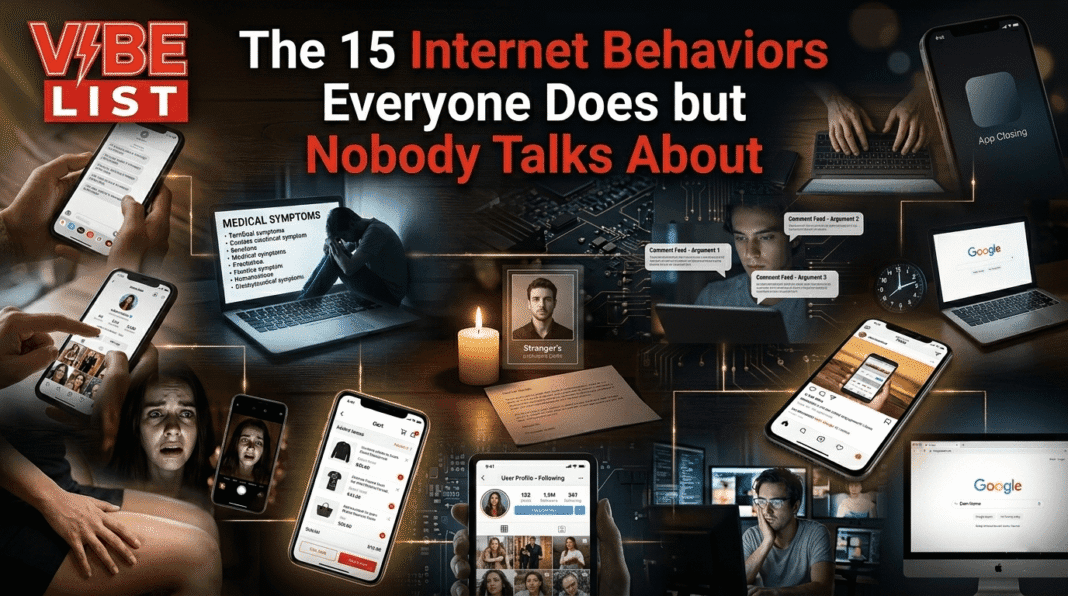
Forty-one percent of adults report being online almost constantly. Seven out of ten digital shopping carts are abandoned just for the anticipatory dopamine. Ninety percent of us feel a phantom buzz against our leg when the device never actually vibrated. You sit with the cursor blinking for ten seconds before sending a text , or close an app only to reopen it eight thousandths of a second later. We didn’t just alter how we communicate; we fundamentally reshaped our nervous systems to ensure we never have to endure a single moment of silence.
41% of U.S. adults report being online almost constantly, according to a 2025 Pew Research Center survey of over 5,000 individuals. Globally, across 24 countries surveyed, 28% of adults reported being online almost constantly, while 40% reported being online multiple times each day. These statistics were hardly shocking. That is part of the issue.
We don’t discuss our unusual actions on the internet. Not the illegal ones nor the embarrassing ones; simply the normal ones. Normal enough that mentioning them feels as unremarkable as describing how we breathe. You wrote a message; you deleted it; you rewrote it four times; you altered punctuation; you deleted one emoji; you inserted a different emoji; and ultimately you sent a version that communicated roughly 60% of what you initially attempted to convey. You’ve done this. We have all done this. No one mentions it during dinner.
This is not a moral lecture about screen time or a well-being guide recommending you get outside and touch some grass. Rather, these are fifteen common internet behaviors, which are so widespread they qualify as a collective human experience. Behaviors researched by behavioral psychologists, neuroscientists, and researchers studying digital culture, yet rarely mentioned in the conversations people actually have about how they use the internet.
Each behavior listed below has peer-reviewed research backing the explanation of why your brain responds the way it does when you go online. Some explanations may provide reassurance. Other explanations may be disturbing. All of them are more interesting than another article telling you to remove your apps from your phone.
1. Rewriting a Text Message Six Times Before Sending It {#1}
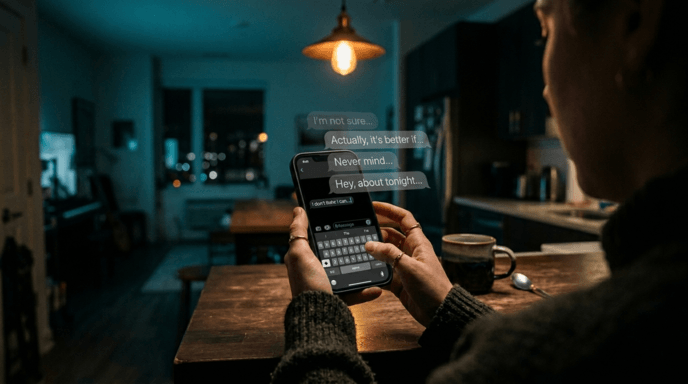
You know the sequence. You type a sentence. You read it back. Something feels off. Maybe the period at the end sounds too aggressive. Maybe the exclamation point sounds too enthusiastic. You delete three words, add two, and sit with the cursor blinking for ten seconds before sending a version that is a negotiated compromise between who you really are and who you think the recipient wants you to be.
Behavioral psychologists call this impression management, a concept popularized by sociologist Erving Goffman in his 1959 book The Presentation of Self in Everyday Life. Impression management refers to how people attempt to control the way others perceive them. Face-to-face interactions rely heavily on non-verbal signals such as tone of voice, facial expressions, body language and timing of pauses, which, according to research by Albert Mehrabian and others, account for an estimated 65–93% of the communication of feelings and attitudes.
Once those signals disappear in digital communication, all that remains is text. And text is frightfully ambiguous. According to a March 2026Psychology Todayarticle titled “Seen, Unseen, and Still Anxious: The Psychology of Texting,” due to the lack of real-time feedback we are forced to create hypothetical scenarios regarding how our messages will be perceived — and those hypotheticals tend to magnify the worst-case scenario.
According to Hirsch et al. (2024), incomplete or interrupted tasks continue to occupy space in working memory, drawing us back even when we try to focus on something else. This exact cognitive mechanism continues to prompt you to edit that message long after the ideal moment to send it would have passed.
It’s also important to recognize the larger pattern here. When speaking face-to-face, you cannot retract a statement once it’s spoken. Text affords you an editing bay. Most people use that editing bay to present a safer, less vulnerable version of what they actually mean. Therefore, your first draft and your final draft mark the distance between authenticity and self-protection.
2. Googling Your Symptoms and Diagnosing Yourself With Something Terrible {#2}

Your throat hurts. Rather than drink some water and wait it out, you enter “scratchy throat left side” into a search engine. By the time you’re finished reading about esophagus disorders and mortality rates, you’ve become convinced that the scratchiness is a harbinger of something much worse than a simple cold.
Researchers refer to this as cyberchondria, or the escalation of health anxiety caused by online symptom searching. A 2022Computers in Human Behaviorstudy investigated how participants moved from casually researching their own health to actively worrying about serious health issues. They discovered that both unclear results and an individual’s predisposition toward intolerance of ambiguity amplified anxiety rather than alleviated it.
These findings are not insignificant. For example, as Pew Research has repeatedly demonstrated, the majority of American adults have engaged in some form of health-related online searching. A 2024 MDPIInternational Journal of Environmental Research and Public Healthstudy revealed that fifty percent of cyberchondriacs had used online resources to diagnose themselves and found correlations between cyberchondria and health anxiety (r = .54) and problematic internet use (r = .50). Separately, a 2025 study in theJournal of Medical Internet Research confirmed these correlations with health anxiety and compulsive online searching patterns.
The issue isn’t a matter of individual pathology — it is fundamentally structural. Algorithms used in search engines are optimized for engagement rather than providing reassurance. An algorithm that quickly narrows to a likely diagnosis generates fewer clicks than one that presents a broad range of possible causes, and thus produces more clicks and longer sessions. Your brain doesn’t spiral out of control — the structure of search results compels you to click and explore.
Harvard Health also notes that compulsively searching for reassurance about anxiety activates similar neural circuits as other types of problematic digital behaviors; the search itself may alleviate uncertainty momentarily, thereby reinforcing the cycle.
Vibe List Says: The authentic description of this behavior is not “I am taking care of my health.” It is “I was feeling anxious, and I needed to do something with my anxiety.” Acknowledging this distinction does not mean that you shouldn’t investigate health-related topics. It means recognizing that while you may be investigating your health, you are often treating your anxiety.
3. Stalking Someone’s Social Media Before (or After) Meeting Them {#3}

Before a first date, job interview, meeting with new coworkers, or any other first encounter, there is an almost universally practiced routine: you check them out online. You scroll through their Instagram page. You scan their LinkedIn profile. You browse their Twitter posts. You don’t look for specifics. You’re assembling a conceptual image of who they are before you ever meet in person.
This is not limited to first encounters. A 2012 study by researchers at Brunel University, published in Cyberpsychology, Behavior, and Social Networking, assessed Facebook surveillance post-breakup among formerly romantically involved partners. The study determined that maintaining access to an ex-partner’s online activity was positively correlated with increased emotional distress, more negative emotions, and decreased overall personal growth after breakups. A study conducted in 2025, also reported by PsyPost, revealed that both active and passive surveillance of an ex-partner via social media predicted poor recovery outcomes across four separate studies.
While humans have historically used observation to assess social compatibility before forming relationships, this current era introduces an inherent imbalance: the person being researched has no knowledge that they are being researched; and the person researching has unlimited access to potentially decades’ worth of carefully curated self-presentation, without the context that face-to-face contact provides.
When you scroll through someone’s social media profiles, you aren’t discovering information about them; you’re studying the version(s) they’ve chosen to display. Furthermore, your brain interprets these curated displays as if they represented the full reality of that person; therefore, when you meet them and realize they’re vastly different from their presentation, your prior expectation creates a disconnect that functions as a form of parasocial familiarity.
4. Scrolling Past Something Horrifying and Then Returning to View It {#4}

You come across something unsettling within your feed. A breaking news headline reporting a disaster. A graphic video depicting something you didn’t want to see. A tragic story of hardship that makes your stomach lurch. You skip over it.
Then you go back to view it again.
Doomscrolling is not merely morbid fascination in general terms. Doomscrolling, defined as the compulsive consumption of negative information online, has been linked to heightened psychological distress and diminished overall well-being by the researchers developing the Doomscrolling Scale inTechnology, Mind, and Behavior(2022). As reported by Harvard Health, doomscrolling triggers activation of your brain’s threat-detecting circuitry, initiating a recursive cycle: the content induces fear, anxiety, and unease; the unease prompts seeking more information in order to better understand or manage that unease.
There exists an identifiable neuroscientific basis for revisiting disturbing content. Due to processing speed differences between your brain’s amygdala (responsible for identifying threats) and prefrontal cortex (evaluating threats), once you identify a potential threat through what you see on screen, your cortisol levels spike. Going back to revisit the content is your brain’s methodical effort to close the loop and collect sufficient information to downgrade your original threat assessment. Unfortunately, the nature of cyberspace allows for no objective limits — there will always be more disturbing content available.
A scoping review published inMental Health and Digital Technologiesin January 2026 analyzing the effects of doomscrolling on mental health found significant correlations between doomscrolling and mental health variables including anxiety, depression, stress, and reduced resilience in most studies reviewed.
5. Feeling Your Phone Vibrating When It Did Not {#5}

You sensed it. A brief buzzing sensation against your leg. You pull out your phone. No missed calls. No unread emails or texts. None. The vibration never occurred.
Phantom vibration syndrome (PVS) is so common it barely registers as unusual. Nearly ninety percent of college students surveyed by researchers at Indiana University–Purdue University Fort Wayne found PVS was an experience they could relate to. Researchers conducting subsequent studies among hospital staff found comparable results. A 2024Telematics and Informatics Reportsstudy confirming PVS still occurs frequently today identified several predictive factors, including device usage frequency, anxiety levels, and whether the phone is stored near high-tension muscle areas.
In September 2024, Forbesreported that a psychologist explained why our brains lower the threshold for what qualifies as a “phone vibration” until mere muscle spasms, fabric rubbing against skin, or anticipation alone can produce misinterpretation resulting in false positives. Our nervous systems have undergone an involuntary training effect; not due to deliberate conditioning but due to sheer repetition of actual vibrations.
6. Adding Items to an Online Shopping Cart You’ll Never Purchase {#6}

There are 14 things in the shopping cart of a website you go back to twice a week. You have not bought a single item in the cart. It has been three months since your last purchase, and once a week you are adding something to the cart, removing something else, and closing the tab. Every few weeks the website sends you an email. Every few weeks you ignore it.
One of the most studied behaviors in e-commerce is this. Based upon data collected from 50 different studies by the Baymard Institute, the average abandon rate of an online shopping cart is 70.22%. Out of ten carts created, seven get abandoned.
The psychological story is a lot more interesting than just statistics. The Cleveland Clinic confirmed in its research that the process of adding items to a shopping cart activates anticipatory dopamine; the same reward circuitry activated by the anticipation of a reward, not by receiving it. The pleasure is derived from selecting, imagining possession, and fantasizing about a purchase. Conversely, completing a transaction typically generates much less dopamine than does the process of searching for those items.
A shopping and dopamine article onPsychology Today describes how the brain’s reward systems respond more forcefully to unpredictable rewards than to predictable ones; which is why looking at products you may want to buy is more neurochemically stimulating than buying them. The shopping cart has become a mood regulation device, not a purchasing device. You’re not shopping. You are using the shopping cart as a way to medicate yourself with anticipation.
Vibe List Takeaway: If you’ve ever spent 45 minutes building a $300 cart and then closed the browser feeling good about it without spending a dime, your brain functioned perfectly. Retailers know this, which is why retailers send you abandoned cart emails. Those aren’t reminders that you still need to shop. They are interruptions to the dopamine cycle at the moment when you’ve shifted focus to another stimulus, and they hope to capture you before the desire dissipates.
7. Reading All Sides of an Argument in a Comment Section Where You Have No Interest {#7}

Two strangers are arguing in the comments section of a social media post about something you don’t care about. You have no connection to either stranger. You have no position on the subject matter. Yet, you are 47 replies down, scanning through insults, counterarguments, passive-aggressive emojis, and third-party interventions from other strangers who also have no interest in the outcome.
A classic piece inThe New Yorkerabout the psychology of online comments noted that while anonymity and lack of real-time social feedback create environments in which aggressive responses escalate rapidly compared to any in-person setting; the question isn’t why people argue in comment sections; it is why you can’t stop reading the argument.
According to Verywell Mind, viewing negative comments online stimulates dopamine production through a mechanism similar to doomscrolling: the variability of each subsequent reply creates a variable-ratio reward schedule; and thus, your brain remains engaged because you cannot predict what the next comment will say. The conflict itself has become a narrative; you are invested in the ‘outcome,’ cheering for a winner despite knowing there will be no victory condition and knowing that whoever loses won’t concede.
Research on online lurking behavior included in the Oxford Handbook of Cyberpsychology verifies that passively consuming others’ conflicts is one of the most common ways individuals use the internet and that far more lurkers exist within any online community than active contributors; therefore, you are more likely to consume an argument than participate in one; and simply consuming the argument is enough to elicit the same level of arousal and stress that keeps propelling you to scroll.
8. Grieving Someone Who Was Just a Stranger on Your Screen {#8}

A musician you never knew existed died. A YouTube personality you’d been subscribed to for years put out their final video. Author of books that defined your teenage years passed away. You weren’t prepared for how much emotion you’d feel about it. You felt it physically. You felt somewhat embarrassed to have cried about someone you didn’t really know. You told yourself it was silly to grieve someone you had no personal relationship with.
You weren’t crazy. Researchers studying bereavement have examined what they call parasocial grief; the genuine emotional suffering experienced when a public figure dies; and have developed some understanding of how people form these bonds. A 2023 study published inDeath Studies contradicted the long-standing idea that parasocial grief is always weaker than grieving for people we know personally; and instead demonstrated that the strength of the parasocial relationship — not type of relationship — determines how intensely one grieves.
As National Geographicwrote in October 2024, forming parasocial connections with media personalities and/or online creators is not inherently damaging. As per a study reported by the BBC in May 2024, approximately 52% of respondents claimed to have a significant parasocial attachment to a YouTube creator; and approximately 36% stated they truly felt emotionally connected to one.
The structure of online platforms has increased the likelihood that individuals will develop these parasocial connections. Streamers who broadcast for five hours a day create many more hours of perceived intimacy in a month than most friends do in a year. We see their real-time reactions to their lives. When they die, our neurological processing of our relationship with them resembles that of grieving someone we actually saw during their lifetime.
If you ever felt an emotional reaction to learning of someone you followed online had died, you weren’t being overly dramatic. You reacted as if you were bonded to them through a bond we don’t yet have adequate social language to describe.
9. Creating and Projecting Versions of Yourself That Don’t Actually Exist {#9}

You post pictures from brunch. You don’t post photos where you appear exhausted and poorly lit. You post articles indicating your intelligence/curiosity. You don’t post videos that actually took 40 minutes to watch. Your profile picture is curated as if it were shot by Vogue magazine. You know this; so does anyone who looks at it.
Again, Goffman’s work regarding impression management surfaces; however, unlike face-to-face interactions where an awkwardness subsides after an interaction occurs, digital versions provide lasting artifacts. These artifacts can be reviewed, screenshotted, viewed out of context months or years after they were posted; increasing the risk associated with each act of self-representation; leading researchers to identify a “chilling effect” on authentic representation.
A meta-analysis published in Media Psychologyin 2023 concluded that most users of social media judge themselves harshly when encountering curated content; comparing their unedited self against the edited presentations of others; and leaving with reduced self-worth. A meta-analysis published in Frontiers in Psychologyin 2025 verified a correlation between social comparison on social media and lower self-esteem, poor body image, and increased depression symptomatology among young adults.
The reason for performing this act is not narcissism. It’s defensive strategy. You edit your profile because you have learned through every platform’s design architecture that you are both consumer and product. The discomfort you feel when someone tags you in an unflattering photo isn’t superficial; it’s your brain reacting to losing control over how your public narrative is represented.
10. Viewing Engagement Numbers on Posts Multiple Times {#10}

You posted something. Five minutes went by and you checked your likes count. Fifteen minutes later you checked again. One hour later you checked again. Each check produced a minuscule amount of emotional response; satisfaction if it grew; anxiety if it remained stagnant; emotional flatline if it leveled off below expectations.
This is a direct example of a variable-ratio reinforcement schedule; identical reward mechanisms responsible for making slot machines the most profitable gaming device available today. This concept was developed extensively by B.F. Skinner in his work on operant conditioning; and social media platforms have built this exact mechanism into their designs according to Mental Health America. You do not know when your next like will come nor if it will come at all; and this unpredictability is specifically what compels you to repeatedly view your engagement numbers.
According to Psychology Today, anticipation of receiving a social reward elicits stronger activation in dopamine circuits than receiving the reward itself. Thus, notifications are more stimulating than the content they deliver — because what drove you was the act of checking, not the likes themselves.
The Vibe List Takeaway: The most compelling example of this behavior is not checking your top-performing post. It is refreshing your least successful post and attempting to determine why it failed. At this point, you are reverse-engineering an algorithm you do not fully comprehend in order to analyze a social failure that wasn’t realized anyway.
11. Watching an Entire Video While Doing Something Else and Retaining Nothing {#11}

Your laptop is playing a 20-minute video. At the same time you’re scrolling your phone. By the time the video finishes, you cannot tell me a single thing it said. You hit play on another. The process repeats itself.
According to psychologists Joshua Rubinstein, Jeffrey Evans, and David Meyer — whose study of task-switching showed that constant switching can cost up to 40 percent of a person’s productive time (as reported by the American Psychological Association) — the way you’ve behaved here isn’t multitasking. It’s fragmented rapid attention. And it doesn’t mean your brain is handling the input very well.
The video isn’t so much about what the video says. What it’s about is the neurological impact of background media on you. Low-level stimulation created by background media is an effective distraction from the discomfort of silence without requiring real cognitive effort. It takes up space in your brain where your thoughts might normally reside. This is similar to experiential avoidance; a term defined in a 2024 review published inPsychiatry and Clinical Psychopharmacology. Experiential avoidance was listed as a key contributor to anxiety, depression, and chronic stress.
You are not watching the video. You are using the video as white noise for a brain that has grown accustomed to finding silence unbearable.
12. Searching for Yourself Online {#12}

You’ve googled your name. You don’t need to confess. Researchers have already done that. The Pew Research Center has tracked online self-searching behavior for many years. All ages were represented.
The purpose behind the activity is to monitor your reputation; a behavior that existed prior to the internet. People monitored each other’s reputations through gossip networks and social observation in small communities. The internet replaced those informal systems with a permanent, publicly accessible and searchable database. You’re searching for yourself because you know others — employers, dates, acquaintances, strangers — are searching for you and you’d like to know what they’ll find first.
When there’s anxiety associated with searching it’s referred to as online reputation anxiety. Online reputation anxiety is a persistent fear about how you appear in search results. This has become an increasing source of stress for some people. If the search returns positive or neutral results, the search brings you peace. However if it produces something negative, out-of-date or incorrect, the inability to control your story can cause instability.
The main difference between this behavior and vanity is why you are doing it. You didn’t search for yourself because you’re fascinated by yourself. You searched for yourself because you know others are searching for you and you wanted to see what they will find first.
13. Getting Lost Down a Research Rabbit Hole at 2 AM About Something That Doesn’t Really Matter {#13}
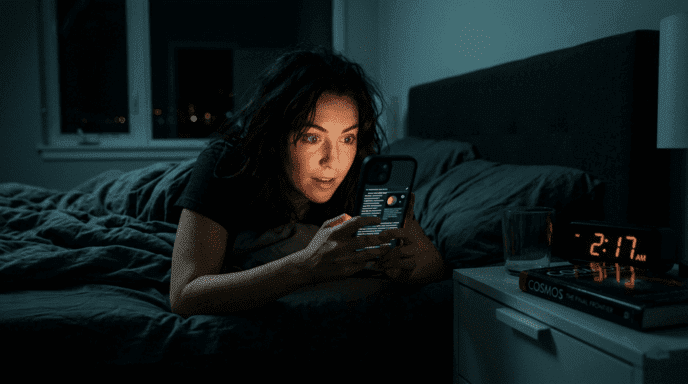
It started innocently enough. You asked yourself how many hearts do octopuses have? Twenty minutes went by and you’re reading about the intelligence of cephalopods. The link took you to an article on Wikipedia about convergent evolution. The Wikipedia article had a link to a YouTube video about deep-sea hydrothermal vents. Now it’s 2:17 AM and you’re reading a research paper from 2019 about whether or not tardigrades can survive in outer space.
This is an example of information foraging theory, developed by researchers Peter Pirolli and Stuart Card. Information foraging theory describes human information-seeking behavior — particularly in digital environments — as akin to animal foraging. An animal keeps foraging as long as the perceived density of food in an area remains high. Likewise, humans continue to click as long as the perceived density of interesting information remains high. The internet, by definition, is an environment with unlimited information density. Therefore, there is no normal stopping point.
The fact that it happened late at night wasn’t coincidental. The prefrontal cortex; which regulates impulse control, plans and weighs long-term consequences against immediate gratification; operates less efficiently under conditions of sleep deprivation, according to the NIH. As such, at 2 AM, the neural mechanisms responsible for telling us “it’s time to stop” are working below capacity while our curiosity-driven reward mechanisms are functioning normally.
Vibe List Takeaway: The rabbit hole is one of the most harmless things we can do online. No one got hurt by your 2 AM education on tardigrades. The only victim is sleep; and sleep was already losing.
14. Writing Up a Reply to Someone’s Post and Then Erasing It Before Posting {#14}

You read someone else’s opinion. It annoyed you. You wrote three paragraphs in reply to them. You reviewed your response and considered possible misinterpretation, the potential for a hostile follow-up exchange, and that it probably wouldn’t matter anyway since arguing rarely changes minds. You erased your response and shut down the application and continued onward with a slight lingering frustration.
This may be one of the most intelligent psychological uses of the internet; yet one of the least studied behaviors on this list, and perhaps one of its least discussed ones as well. Creating a response triggers the exact same cognitive and emotional responses as creating content does — you create an argument, consider opposing arguments, and mentally invest energy into your argumentative position. Successfully erasing that response before publishing demonstrates an effective degree of self-control, i.e., your prefrontal cortex successfully suppressing your emotional urge to respond.
Research from the Oxford Handbook of Cyberpsychology confirms that virtually all users in every online community are passive consumers of content versus contributors, however users that compose a response but delete it before publishing fall into a unique category — you completed the cognitive work of responding but avoided exposing yourself socially.
You experience a somewhat bizarre psychological limbo. You have intellectually processed your encounter. You have articulated your perspective. However, you have withheld yourself from receiving any type of social validation (or confrontation) that posting would provide — and the annoyance persists because you opened the loop but didn’t complete it. This is essentially identical to writing a letter, sealing it, then placing it in the trash instead of sending it — a relatively common pre-internet activity that provided nearly identical emotional comfort.
15. Closing an Application — Then Immediately Reopening It Again {#15}

You close Instagram. Your finger opens Instagram again. The interval between closing Instagram and opening it again is .008 seconds. You didn’t consciously decide to open it again — there was no thinking involved — no intent — no new information that caused you to seek it out again — you just returned to the app because it was the default place for your brain during that fraction of a second without a structured task — and the feed provided instant stimulation.
This is an example of automaticity, a concept within behavioral psychology describing actions taken automatically without conscious intent based upon repetition (and thus habituation). Your behavior has been reinforced repeatedly: Boredom → Open app → Receive stimulation → Boredom momentarily alleviated. Once enough repetitions occur, this boredom-to-app sequence becomes automatic as pulling your hand away from heat.
Pew Research Center studies documenting that 41% of adults in the U.S. identify themselves as being online “almost constantly” may underestimate the true figure because this app-close-reopen sequence occurs outside of conscious awareness. Therefore, you do not perceive this as “going online” because at no point did you feel you had gone offline.
The unsettling implication is what this reveals about your baseline attention state — absent any demands (no assignment — no conversation — no requirement); your default mode is returning to the feed — not because it gives you anything new — but because sitting in quietness for even 1 second has become unacceptable after repeated reinforcement training your brain to always expect continuous input.
What These Behaviors Collectively Reveal {#reveal}
Fifteen different behaviors. Each of those behaviors is legitimate. Every single one of them is very ordinary. Each of these behaviors alone is not abnormal. However, collectively they portray a picture of a species that has fundamentally reorganized its relationship with attention, identity, emotion, and information in under two decades.
Memes that escaped the internet and changed the rules of real life demonstrated that online culture has tangible, measurable effects in the physical world. The 15 behaviors described here demonstrate that the physical world (your nervous system, your concept of yourself, your ability to regulate your emotions, your ability to be silent) has been reshaped by the internet so pervasively that the change itself has become invisible.
Nobody made a decision to create phantom vibration syndrome. Nobody made a decision to be uncomfortable with the absence of silence. Both phantom vibration syndrome and discomfort with silence have developed from the internet’s information environment. This environment was designed for engagement and not well-being.
It is not that any of these behaviors are detrimental. Most are neutral. Some will benefit you. Only a few should draw your attention. Awareness comes before choice. You cannot choose how you would like to interact with the internet unless you can clearly define how you currently interact with it.
This list is a mirror. What you see in this list will depend upon what you see.
15 Internet Behaviors and the Psychology Behind Them
| No. | Internet Behavior | Psychological Concept | Core Driver |
|---|---|---|---|
| 1 | Rewriting a Text Message Six Times Before Sending It | Impression Management | Compensating for text ambiguity and a lack of real-time non-verbal feedback. |
| 2 | Googling Your Symptoms and Diagnosing Yourself With Something Terrible | Cyberchondria | Algorithmic engagement structures that amplify an intolerance of ambiguity. |
| 3 | Stalking Someone’s Social Media Before (or After) Meeting Them | Parasocial Familiarity | Information asymmetry and treating curated presentations as full reality. |
| 4 | Scrolling Past Something Horrifying and Then Returning to View It | Doomscrolling | Cortisol spikes activating threat-detecting circuitry and a drive to collect information. |
| 5 | Feeling Your Phone Vibrating When It Did Not | Phantom Vibration Syndrome (PVS) | Nervous system habituation and lowered sensory thresholds from repetition. |
| 6 | Adding Items to an Online Shopping Cart You’ll Never Purchase | Anticipatory Dopamine Activation | Using the cart as a mood regulation device rather than for transaction completion. |
| 7 | Reading All Sides of an Argument in a Comment Section Where You Have No Interest | Variable-Ratio Reward Schedule | Narrative investment driven by unpredictable stimulation. |
| 8 | Grieving Someone Who Was Just a Stranger on Your Screen | Parasocial Grief | Neurological processing of perceived intimacy built over extended broadcast exposure. |
| 9 | Creating and Projecting Versions of Yourself That Don’t Actually Exist | Social Comparison and Impression Management | Defensive strategy driven by platforms treating users as consumer and product. |
| 10 | Viewing Engagement Numbers on Posts Multiple Times | Operant Conditioning | Unpredictability and anticipation of receiving a social reward. |
| 11 | Watching an Entire Video While Doing Something Else and Retaining Nothing | Fragmented Rapid Attention and Experiential Avoidance | Distraction from the discomfort of silence requiring no cognitive effort. |
| 12 | Searching for Yourself Online | Online Reputation Anxiety | Monitoring your digital representation due to the public accessibility of data. |
| 13 | Getting Lost Down a Research Rabbit Hole at 2 AM About Something That Doesn’t Really Matter | Information Foraging Theory | Reduced prefrontal cortex impulse control due to sleep deprivation amidst unlimited information density. |
| 14 | Writing Up a Reply to Someone’s Post and Then Erasing It Before Posting | Cognitive/Emotional Prefrontal Suppression | Fulfilling intellectual processing while avoiding social confrontation or validation. |
| 15 | Closing an Application — Then Immediately Reopening It Again | Automaticity | Intolerance for unstructured time built through repeated boredom-to-stimulation reinforcement. |
Frequently Asked Questions {#faqs}
Why do I repeatedly write/rewrite my text messages prior to sending them?
Most of the non-verbal cues used in face-to-face communication — tone, facial expressions, body language — are absent in digital communication. Without those cues, text-based messages carry inherent ambiguity. To compensate, our brains push us to over-edit messages in an attempt to reduce miscommunication. Studies confirm that if we do not complete a communicative task our brain continues to process the incomplete task. Therefore, you may continue to edit text once you have determined what you wish to communicate despite having previously determined what to say.
Is it normal to grieve a celebrity or an individual who created online content (creator)?
Yes, completely normal. Researchers refer to this type of grieving as parasocial grief. A 2023 study confirmed that the level of grief experienced due to the loss of a celebrity or creator is dependent on the strength of the one-way (parasocial) relationship formed with the individual(s), rather than whether or not the relationship was mutually beneficial. If you consistently viewed someone’s content for an extended period of time, your brain processed that activity as a form of social interaction. As such, when the individual passes away, your brain responds with an authentic grief response.
Why do I continuously open an application immediately after closing it?
This represents a behavior known as automaticity; an automatic behavior that has occurred frequently enough to be habituated at a subconscious level. Over time, your body responded automatically (below conscious awareness) to the sequence boredom → app → stimulation. The repeated execution of this sequence has conditioned your motor system to perform the action faster than your prefrontal cortex can intervene. Additionally, this demonstrates your brain’s intolerance for periods of unstructured time.
Can phantom vibration syndrome result in harm?
Phantom vibration syndrome typically results in minimal harm. Approximately 90% of individuals who frequently use mobile phones experience phantom vibration syndrome. Phantom vibration syndrome represents your nervous system’s adaptation to the frequent notifications you receive throughout the day. When phantom vibrations cause excessive concern/distress, decreasing the amount of time you spend with your phone on your body, as well as decreasing the frequency of notifications will assist in readjusting your threshold for perceived sensation.
Why am I unable to stop reading responses in comments sections of articles?
Each subsequent reply posted in an article generates unpredictable stimulation; i.e., a variable reward schedule. As such, the activation of your brain’s dopamine-producing regions occurs. Your brain views the ongoing debate/argument as an unresolved narrative, therefore continuing to engage in viewing responses as long as there remains uncertainty regarding the outcome. You don’t need to be personally involved in the argument for your brain’s reward-seeking circuits to activate.
What percent of people are online at least some part of every day?
Pew Research Center states that approximately 41% of all U.S. adults claim to be online “almost constantly” and an additional 40% globally indicate they are online multiple times daily. According to the median usage reported across 24 countries; approximately 28% of adults indicated they are connected almost constantly. Younger adults report substantially greater amounts of constant connectivity.