


170 photons per second leaking from your skin and you cannot see a single one. 243 Earth days to finish a single rotation on a planet where the Sun rises in the west. A copper-blooded creature with nine brains whose severed arm keeps responding for hours. A teaspoon of dead-star material weighing 10 million tons. A color so saturated that only five humans have ever perceived it; and it took a laser fired directly into their retinas to make it happen. A teenager’s ice cream observation that has defeated physics for sixty years. The universe is not stranger than you imagine; it is stranger than you can imagine.
Science has a credibility problem — not because the scientific method is flawed, but because when science gets things right, the answers are frequently so aggressively strange that they sound fabricated. There is a planet where a single day lasts longer than a year. There is a creature whose punch generates temperatures rivaling the surface of the Sun. And there is a parasitic organism that resides in the brains of roughly a third of all humans on Earth, quietly nudging its host’s behavior in ways that favor the parasite.
None of these are fictional premises. Every one is peer-reviewed, independently confirmed, and in several cases directly observable today. The gap between scientific reality and human intuition is one of the most underappreciated features of the universe we inhabit. What seems impossible is often just something we have yet to consider.
This collection presents eighteen of the most counter-intuitive, mind-blowing science facts drawn from peer-reviewed literature across physics, biology, astronomy, neuroscience, and the cutting edge of 2025–2026 research. If you have ever searched for weird science facts or bizarre science discoveries that sound fake but are true, this is the definitive list. Every claim is sourced to original authorities, peer-reviewed studies, or official institutional documents. Nothing here was estimated, approximated, or recalled from memory. If a fact sounds too absurd to be real, click the source link and verify it yourself. For more on how science and technology are reshaping everyday life right now, see our breakdown of the top AI tools everyone is using in 2026 and the 15 technologies already changing your daily life.
1. Your Body Literally Glows Right Now

Your body emits light. Not infrared thermal radiation, which is a different physical phenomenon entirely, but actual photons in the visible spectrum. This means your body emits light that could theoretically be seen with the naked eye if human vision were roughly 1,000 times more sensitive.
In 2009, a team of researchers from Tohoku Institute of Technology and Kyoto University published a study in PLOS ONE using a cryogenically cooled charge-coupled device (CCD) camera. These sensors can detect individual photons and were used to capture images of five healthy male volunteers in complete darkness over three consecutive days. The results showed that the human body emits visible-spectrum light at rates of approximately 170 to 600 photons per second per square centimeter of skin, depending on the anatomical region.
The light is not produced randomly. The study found that photon emission follows a diurnal rhythm — lowest in the morning and rising throughout the day, peaking around 4:00 p.m. The face produces more light than the rest of the body, with the cheeks and mouth exhibiting the highest emission rates. Researchers also found a statistically significant inverse correlation between photon emission and cortisol levels, indicating that the glow is tied to metabolic processes governed by the circadian clock.
2. A Day on Venus Is Longer Than Its Year

A single rotation on Venus takes 243 Earth days, according to NASA. That makes it the slowest-spinning planet in our solar system. Its orbital period, however, is only 225 Earth days. A single Venusian day therefore lasts 18 Earth days longer than a Venusian year.
Venus is also the only planet in our solar system that spins in the opposite direction to most other planets, a phenomenon called retrograde rotation. On Venus, the Sun rises in the west and sets in the east. According to NASA Space Place, if you stood on Venus’ surface, you would experience a sunrise-to-sunrise cycle of approximately 117 Earth days. This results from the combination of Venus’ backward rotation and its forward orbital motion.
According to Space.com, scientists publishing in Nature Astronomy in 2024 proposed that Venus’ thick, rapidly rotating atmosphere — which whips around the planet nearly 60 times faster than the surface rotates — may have gradually slowed the planet’s spin. Atmospheric friction dragging against the surface has decelerated its rotation over millions of years. The Natural History Museum provides additional data on Venus’ rotation and orbital dynamics.
Venus is often called “Earth’s twin” because of their similar mass and size. But with surface temperatures reaching 900°F, a day that outlasts its year, and a Sun that appears to track backward across the sky, the nickname is generous at best.
3. Octopuses Have Three Hearts, Blue Blood, and a Brain in Every Arm

Smithsonian Magazine describes the circulatory system of an octopus as one of the most unusual in nature. Two branchial hearts pump oxygen-poor blood through the gills. Once oxygenated, the blood returns to a third systemic heart, which pumps it to the rest of the body. During physical exertion, the systemic heart actually stops beating, which is why octopuses prefer crawling to swimming — sustained swimming exhausts them.
The blue color of octopus blood is not cosmetic. Octopus blood contains hemocyanin, a copper-based protein that transports oxygen in place of the iron-based hemoglobin found in human blood. When oxygenated, hemocyanin turns blue. According to Smithsonian Magazine, this copper-based system is more efficient than hemoglobin at transporting oxygen in cold, low-oxygen environments — an evolutionary advantage for deep-sea and polar species. It is an adaptation that evolved to solve a problem most land mammals never face.
Then there is the nervous system. A central brain surrounds the esophagus, and each of the eight arms contains an independent cluster of neurons. Approximately two-thirds of an octopus’ neurons reside in its arms, not in its central brain. A severed arm can continue responding to stimuli for hours without any input from the central nervous system.
4. Hot Water Can Freeze Faster Than Cold Water

This phenomenon is known as the Mpemba effect. It is named after Erasto Mpemba, a Tanzanian student who noticed in 1963 that his hot ice cream mixture froze faster than his classmates’ cold ones. Although scientists initially dismissed Mpemba’s observation, numerous labs have since reproduced the effect, extended it into quantum mechanics, and yet still lack a definitive explanation for why it happens.
A 2016 study in Nature by researchers from Imperial College London and the University of Cambridge found that under strictly controlled conditions (controlling for evaporation, dissolved gas content, and thermometer placement), the effect becomes far less reproducible.
However, as Quanta Magazine reported in June 2022, physicists have discovered analogous Mpemba effects in multiple systems including crystalline polymers and magnets. While evidence exists for this effect occurring in nature, its sensitivity to initial conditions complicates efforts to identify a singular cause.
Leading explanations include differences in hydrogen bonding structures between hot and cold water, convection currents, evaporative cooling, and the role of dissolved gases. Research indexed on PubMed Central confirms the effect across a range of experimental conditions, though the dominant mechanism appears to vary from one setup to the next. The Mpemba effect remains one of physics’ most humbling reminders: a teenager’s observation in a Tanzanian classroom has resisted definitive scientific explanation for over sixty years.
5. A Teaspoon of Neutron Star Would Weigh 10 Million Tons

The U.S. Department of Energy states: “The enormous density of a neutron star means a teaspoon of neutron star material would weigh 10 million tons.” NASA’s Imagine the Universe portal describes a neutron star as “the densest object astronomers can observe directly,” packing roughly 500,000 times Earth’s mass into a sphere only about 12 miles across.
NASA’s HEASARC educational archive notes that neutron star densities reach approximately 7 × 10¹⁴ g/cm³. For context, the Sun’s density is 1.41 g/cm³ and lead’s is 11.3 g/cm³. Neutron star material is roughly 50 trillion times denser than lead.
Neutron stars form when massive stars exhaust their nuclear fuel and collapse under their own gravity. The implosion compresses protons and electrons into neutrons, producing an almost pure-neutron core confined to a city-sized sphere that can rotate up to 716 times per second. Surface gravity on a neutron star is approximately 2 × 10¹¹ times stronger than Earth’s. An object dropped from just one meter above the surface would strike at roughly 7.2 million km/h.
6. Scientists Discovered a Brand-New Color in 2025 That Only Five People Have Ever Seen

In April 2025, researchers at the University of California, Berkeley published a study inScience Advances describing a new platform called Oz. Oz uses precisely dosed laser light to individually stimulate up to 1,000 cone cells in the human retina. By targeting only M-cones (medium-wavelength, green-sensitive), Oz bypasses the near-total overlap between M-cones and L-cones (long-wavelength, red-sensitive) that occurs with every natural light source. The result is a blue-green of unprecedented saturation — a color the human visual system is physically incapable of perceiving through any natural light source.
The team named the color olo. Austin Roorda, a professor of optometry and vision science at UC Berkeley, described it: “It was like a profoundly saturated teal … the most saturated natural color was just pale by comparison.” He added: “When I pinned olo up against other monochromatic light, I really had that ‘wow’ experience.”
BBC News reported that olo sits on the spectrum between blue and green at a saturation level beyond what typical human vision can detect. Scientific American confirmed that only five people have ever seen olo. All five were participants in the Berkeley study. BBC Science Focus noted that the closest screen approximation (#00ffcc) displays a far lower saturation than what the participants experienced.
Because M-cone and L-cone sensitivities overlap almost entirely, no single wavelength of natural light can activate M-cones without also triggering L-cones. Seeing olo requires bypassing natural light entirely and using a laser to deliver a signal the brain was never designed to process.
7. The Mantis Shrimp Punches So Fast It Boils the Water Around Its Fist

The peacock mantis shrimp delivers one of the fastest strikes in the animal kingdom.
Its club-shaped appendage accelerates at roughly 10,400 g, reaching speeds of approximately 50 mph underwater. This rapid movement generates cavitation bubbles — near-vacuum pockets that form in the water and then collapse violently, producing temperatures in the thousands of degrees Celsius and flashes of light known as sonoluminescence.
Prey takes a double hit: first from the physical impact of the club, then — a fraction of a second later — from the shockwave of the collapsing cavitation bubble. Even a miss can be lethal: the shockwave alone is sufficient to stun or kill nearby organisms.
PBS Deep Look captured the strike at 40,000 frames per second using high-speed cameras. The footage illustrates in detail how the club’s cavitation mechanics operate. Materials scientists are now studying the club’s layered structure for insights into designing impact-resistant body armor and aerospace components.
8. It Rains Diamonds on Neptune and Uranus
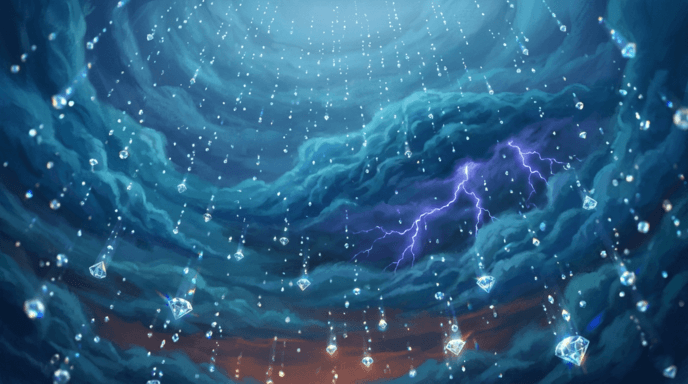
Research teams at SLAC National Accelerator Laboratory recreated the extreme temperatures and pressures found beneath the surfaces of Neptune and Uranus by firing high-powered lasers at polystyrene samples — a material that simulates the chemical composition of the planets’ interiors. The experiments confirmed that under these extreme conditions, carbon atoms crystallize into solid diamonds.
According to Space.com, the conditions involved pressures of approximately 1.5 million atmospheres and temperatures exceeding 5,000°C. Under these conditions, carbon separates from hydrogen and forms crystalline diamond structures that fall through the planetary atmospheres like rain.
A 2024 follow-up study from SLAC found that adding oxygen — a major component of the ice giants’ atmospheres — lowers the pressure threshold required for diamond formation. This suggests that diamond rain may occur at shallower depths than previously estimated, potentially influencing the planets’ magnetic fields as diamond accumulations redistribute mass within their interiors.
Corroborating research from Lawrence Livermore National Laboratory addressed the potential scale of these diamonds on Uranus and Neptune. Their models suggest that diamonds weighing tens of millions of carats could form continuously across thousands of kilometers of atmosphere before eventually settling into the planets’ superheated cores.
9. Your Cat’s Parasite Might Be Altering Your Personality

Toxoplasma gondii is a single-celled parasite whose primary host is the domestic cat. Cats shed T. gondii oocysts in their feces. Humans can become infected through contact with contaminated cat litter, undercooked meat, or unwashed produce.
According to the Centers for Disease Control and Prevention, an estimated 30% to 60% of the global population carries a latent Toxoplasma infection. Rates vary greatly depending upon geographic location and diet.
For decades, researchers have documented how Toxoplasma manipulates rodent behavior. Infected rats lose their innate aversion to cat urine and become attracted to it instead, effectively delivering themselves to the parasite’s preferred host. More recently, scientists have turned their attention to how Toxoplasma may alter behavior in humans.
Researchers at Indiana University found associations between latent toxoplasmosis and increased impulsivity, risk-taking, and aggression. Researchers at the University of Chicago documented a connection between toxoplasmosis and intermittent explosive disorder — a psychiatric condition characterized by disproportionate episodes of rage.
A meta-analysis indexed on PubMed Central reviewed multiple studies linking latent toxoplasmosis to schizophrenia, bipolar disorder, impulsivity, and suicide attempts. A recent preprint on bioRxiv explored whether chronic latent T. gondii infection produces measurable behavioral differences in humans.
None of this means your cat is turning you into an aggressive person. But a growing body of evidence suggests that a microscopic parasite — one that evolved to manipulate rodent brains — may also be nudging certain aspects of human behavior.
10. Tardigrades Can Survive the Vacuum of Space

In 2007, two species of tardigrade — commonly known as water bears — were launched into low Earth orbit aboard the European Space Agency’s FOTON-M3 spacecraft as part of an experiment called TARDIS (Tardigrades in Space). The experiment exposed specimens to unfiltered solar UV radiation and the vacuum of space for ten days in low Earth orbit. Results published in Current Biology showed that both species exhibited no statistically significant difference in mortality between space-exposed specimens and ground controls.
As Science reported at the time: the water bears survived Earth orbit. What enables this extraordinary resilience? Tardigrades enter a state called cryptobiosis, in which they cease all measurable metabolic activity, expel nearly all water from their bodies, and form a protective structure called a tun that shields them from pressures six times greater than those at the deepest ocean floor, temperatures near absolute zero, and radiation doses orders of magnitude beyond what would be lethal to humans.
Researchers are still working to understand the molecular mechanisms behind tardigrade resilience. One key discovery is a protein called Dsup (damage suppressor), found exclusively in tardigrades, which protects DNA from ionizing radiation. When scientists transferred the Dsup gene into cultured human cells, those cells showed increased resistance to X-rays.
11. Toothpaste Made from Human Hair Could Be on Shelves by 2028

Toothpaste made from human hair could reach store shelves by 2028, according to the BBC. Researchers at King’s College London developed a toothpaste formulated with keratin — the primary structural protein in human hair. Keratin is also the main structural component of skin and fingernails. The results were promising: the keratin-based toothpaste formed a thickened, crystalline layer over damaged areas of tooth enamel, creating a protective barrier. Once formed, this barrier protects against further decay and acid erosion. The formulation functions like conventional toothpaste but offers superior enamel protection. Because keratin is abundant in human hair, the researchers are confident that alternative sources such as animal wool could also be used. BBC Science Focus named the study one of the strangest scientific stories of 2025.
According to the British Dental Journal (part of the Nature portfolio), researchers tested lab-created enamel samples treated with keratin-based products against those treated with traditional fluoride products. The keratin-based treatment outperformed fluoride in repairing and reinforcing damaged enamel.
The researchers estimate that the product could be commercially available between 2027 and 2028. No pricing or manufacturing partner has been announced, but development is actively progressing.
12. Your Brain Burns 20% of Your Body’s Energy Despite Being 2% of Your Mass

BrainFacts.org, a public-education initiative from the Kavli Foundation, the Gatsby Charitable Foundation, and the Society for Neuroscience, reports the following. The average adult brain consumes approximately 20% of total daily caloric intake while representing only about 2% of total body weight. A 2019 review of brain metabolism published on ScienceDirect confirmed that continuous neural firing and synaptic maintenance make the brain one of the body’s most energy-hungry organs. Most of that energy powers synaptic transmission — the electrochemical communication between neurons that underlies every thought, sensation, and motor command.
As Bond University explains, oxygen consumption tracing has confirmed that the brain uses 20% of the body’s resting metabolic energy — regardless of whether you are thinking intensely or doing nothing at all.
What makes this remarkable is that “thinking harder” does not measurably increase the brain’s overall metabolic rate. Localized blood flow does increase to active regions, but total oxygen consumption remains essentially flat. The brain operates at near-maximum energy expenditure at all times. Most of that energy goes toward sustaining baseline neural signaling, regulating physiological processes, and processing the constant stream of sensory input that never reaches conscious awareness.
13. Honeybees Can Recognize and Remember Your Face

A study published in the Journal of Experimental Biology found that honeybees (Apis mellifera) can distinguish and remember individual human faces. This is a cognitive feat normally associated with large-brained vertebrates.
According to Scientific American, honeybees use a strategy called configural processing — the same method humans employ to recognize faces by the relative arrangement of features rather than by identifying each feature individually.
Researchers at NC State University confirmed that honeybees can reliably distinguish their beekeeper from unfamiliar human faces.
A honeybee brain contains fewer than one million neurons. A human brain has approximately 86 billion.
The implications extend well beyond entomology. Honeybee facial recognition research has inspired computer vision scientists working on more efficient recognition algorithms. The reason: bees accomplish with fewer than one million neurons what current AI systems require millions of parameters to approximate.
14. Water Can Boil and Freeze at the Same Time

Physicists call this the triple point: a specific combination of temperature and pressure at which a substance can exist simultaneously as a solid, liquid, and gas. For water, the triple point occurs at precisely 0.01°C (32.018°F) and a pressure of 611.657 pascals — roughly 0.006 atmospheres.
Every substance has its own distinct triple point, and only at a triple point can all three phases of matter co-exist in thermodynamic equilibrium.
Countless laboratory demonstrations have captured this phenomenon on video: a beaker of water at low pressure simultaneously boiling (bubbles rising), freezing (ice crystals forming), and remaining liquid — all in the same container at the same moment.
It looks like a special-effects trick. In reality, it is simply what happens when you push a phase diagram — a foundational concept in physics and chemistry — to its logical extreme.
15. Glass Is Neither a Solid Nor a Liquid
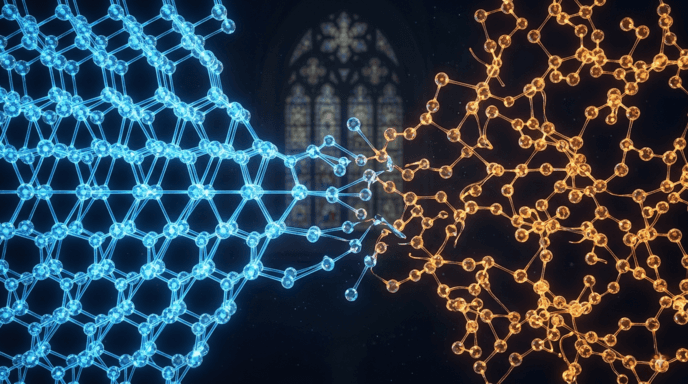
Glass is neither a true liquid nor a conventional solid. The popular notion that “glass is a slow-moving liquid” has been thoroughly debunked. The reality, however, is arguably stranger.
According to Scientific American, glass is an amorphous solid — a material that behaves like a solid but lacks the orderly crystalline structure found in conventional solids. Instead, its atoms are arranged randomly, as if a flowing liquid had been frozen mid-motion.
The Royal Society of Chemistry defines glass as “a non-equilibrium, non-crystalline state of matter that appears solid on a short time scale but continuously relaxes towards the liquid state.” This relaxation occurs over geological timescales and has no practical significance for any human application.
The classic example: medieval cathedral windows with panes that are thicker at the bottom. This has long been cited as proof that glass flows over centuries, but the claim has been thoroughly refuted. Medieval glass was made using crown glass techniques that naturally produced panes of uneven thickness. Glaziers simply installed the thicker edges at the bottom for stability. No measurable flow has ever been detected in any glass sample over any human-relevant timescale.
16. Space Has a Smell, and Astronauts Say It Reeks of Burnt Steak

Astronauts have consistently reported that space has a distinct smell. Since space is essentially a vacuum — with no air to carry odor molecules to a human nose — the claim sounds absurd. Yet space agencies have gathered consistent reports from astronauts who detected a pungent odor clinging to their spacesuits and tools after re-entering the airlock following spacewalks. Business Insider compiled descriptions from multiple astronauts, with burnt steak, seared metal, welding fumes, and gunpowder among the most commonly cited comparisons.
NASA astronaut Don Pettit wrote in his mission blog for Smithsonian Air & Space Magazine: “The best description I can come up with is metallic; a rather pleasant sweet metallic sensation.”
Other astronauts have described it as smelling charred or smoked.
Scientists believe the metallic smell arises when single oxygen atoms, which adhere to spacesuit surfaces in the vacuum of space, react with atmospheric gases upon airlock repressurization — a chemical reaction that occurs not in space itself but at the boundary between vacuum and breathable air.
The exact odor-causing molecules have not been definitively identified, though polycyclic aromatic hydrocarbons — combustion byproducts of dying stars that pervade interstellar space — are a leading candidate.
These are the same compounds that form on grilled meat during high-heat cooking.
From a molecular standpoint, the universe has been running a barbecue for roughly 13.8 billion years.
17. There Are More Possible Chess Games Than Atoms in the Observable Universe

In 1950, mathematician Claude Shannon estimated that there are approximately 10¹²⁰ possible chess games. This figure, now known as the Shannon number, is widely accepted.
By comparison, there are an estimated 10⁸⁰ atoms in the observable universe. The number of possible chess games exceeds the number of atoms in the observable universe by a factor of roughly 10⁴⁰ — that is, ten thousand trillion trillion trillion.
Shannon’s number is actually a conservative estimate. It assumes an average branching factor of about 30 legal moves per position multiplied across a game averaging roughly 80 moves.
For perspective: after just five moves per player (ten ply), there are already approximately 69 billion billion possible game positions.
This is why chess cannot be “solved” by brute-force computation. Even a computer evaluating one trillion positions per second would need longer than the current age of the universe to examine every possible game. The profound lesson: staggering complexity can emerge from deceptively simple rules — sixty-four squares, sixteen pieces per side, six piece types — iterating into a combinatorial explosion that dwarfs the observable universe. And if the idea of simple rules producing unfathomable complexity fascinates you, explore our deep dive into the internet’s most baffling unsolved mysteries for another angle on the same phenomenon.
18. A Company Brought Back the Dire Wolf from Extinction in 2025

In April 2025, Colossal Biosciences announced that it had used CRISPR-based gene-editing technology to produce wolf pups carrying genetic modifications designed to replicate traits of the extinct dire wolf (Aenocyon dirus) — a distinct species that disappeared approximately 10,000 years ago. BBC Science Focus listed the achievement among the strangest science stories of 2025.
Colossal extracted ancient DNA preserved in fossils — including a 13,000-year-old dire wolf tooth — to map the genetic differences between dire wolves and modern grey wolves. They then introduced approximately 20 targeted genetic edits via CRISPR into grey wolf embryos.
As Forbes reported in April 2026, Colossal’s chief science officer Beth Shapiro acknowledged that the pups are “grey wolves with 20 edits” — not identical replicas of the extinct species.
Although the distinction between de-extinction and breeding animals with enhanced traits may be scientifically significant, this achievement constitutes a major step forward in the area of conservation biotechnology.
According to Colossal’s project page, the effort complies with guidelines from the International Union for Conservation of Nature (IUCN) Species Survival Commission.
Beyond the dire wolf, Colossal is pursuing parallel de-extinction projects targeting the woolly mammoth, the thylacine (Tasmanian tiger), and the dodo.
Forbes reported that Colossal reached a $10.2 billion private valuation after a January 2025 funding round, underscoring the growing commercial seriousness of de-extinction science. Whether projects like these constitute true de-extinction or represent a new category of genetically engineered organisms designed to resemble extinct species is a question that evolutionary biologists, ethicists, and regulatory agencies will be debating for years to come.
Quick Comparison: All 18 Science Facts at a Glance
| # | Fact | Domain | Key Figure | Primary Source | Year Verified |
|---|---|---|---|---|---|
| 1 | Your Body Literally Glows | Biology / Biophysics | 170–600 photons/s/cm² | PLOS ONE (Kobayashi et al.) | 2009 |
| 2 | Venus Day Outlasts Its Year | Astronomy | 243-day rotation vs. 225-day orbit | NASA Planetary Fact Sheet | Ongoing |
| 3 | Octopus: 3 Hearts, Blue Blood, 9 Brains | Marine Biology | ⅔ of neurons in arms | Smithsonian Magazine | Ongoing |
| 4 | Hot Water Freezes Faster (Mpemba Effect) | Physics / Thermodynamics | 60+ years without explanation | Nature; Quanta Magazine | 1963–present |
| 5 | Teaspoon of Neutron Star = 10M Tons | Astrophysics | 7 × 10¹⁴ g/cm³ density | U.S. Department of Energy | Ongoing |
| 6 | New Color “Olo” Seen by 5 People | Vision Science / Optics | Beyond-natural saturation | Science Advances (UC Berkeley) | 2025 |
| 7 | Mantis Shrimp Punch Boils Water | Zoology / Physics | 10,400 g acceleration | PBS Deep Look | Ongoing |
| 8 | Diamond Rain on Neptune & Uranus | Planetary Science | 1.5M atmospheres pressure | SLAC National Accelerator Lab | 2024 |
| 9 | Cat Parasite Alters Human Behavior | Parasitology / Neuroscience | 30–60% global infection rate | PubMed Central; CDC | Ongoing |
| 10 | Tardigrades Survive Space Vacuum | Astrobiology | Survived 10 days in LEO | Current Biology (Jönsson et al.) | 2008 |
| 11 | Hair-Based Toothpaste Repairs Enamel | Dental Science | Outperformed fluoride in testing | King’s College London; British Dental Journal | 2025 |
| 12 | Brain Uses 20% Energy at 2% Mass | Neuroscience | 20% resting metabolic energy | BrainFacts.org; Bond University | Ongoing |
| 13 | Honeybees Recognize Human Faces | Entomology / Cognition | <1M neurons vs. 86B human | Journal of Experimental Biology | 2005 |
| 14 | Water Boils & Freezes Simultaneously | Physics / Chemistry | 0.01°C at 611.657 Pa | Phase diagram thermodynamics | Ongoing |
| 15 | Glass: Amorphous Solid, Not Liquid | Materials Science | Relaxes over geological timescales | Scientific American; Royal Society of Chemistry | Ongoing |
| 16 | Space Smells Like Burnt Steak | Space Science | Polycyclic aromatic hydrocarbons | Smithsonian Air & Space (Don Pettit) | 2002–present |
| 17 | Chess Games (~10¹²⁰) Dwarf Atoms (~10⁸⁰) | Mathematics | 10⁴⁰ times more games than atoms | Shannon (1950) | 1950 |
| 18 | Dire Wolf De-Extinction via Gene Editing | Genetics / De-extinction | 20 CRISPR edits; $10.2B valuation | Forbes; Colossal Biosciences | 2025 |
Frequently Asked Questions
Does the human body really glow in the dark?
Yes. The human body emits photons in the visible spectrum, as confirmed by Japanese researchers using an ultra-sensitive CCD camera in 2009. The amount of light emitted is roughly 1,000 times below what the naked eye can detect. It exists. We measure it. And we know that it changes over time with a pattern related to how much energy we expend metabolically.
Will hot water really freeze faster than cold water?
Under certain conditions, yes. However, the Mpemba effect is extremely sensitive to initial conditions — container shape, dissolved gases, evaporation rate — and no single theory has achieved scientific consensus.
Has anyone seen the new color olo?
Only five people have ever seen olo, all of whom were participants in the 2025 UC Berkeley study published in Science Advances. They saw it through a custom laser system called Oz, capable of stimulating individual photoreceptor cells in the retina. Olo cannot be reproduced on any screen, with any light source, or in any paint.
Are tardigrades indestructible?
Tardigrades are extraordinarily resilient, but they are not indestructible. In their cryptobiotic state, they can withstand extreme cold, total vacuum, massive ionizing radiation doses, and complete desiccation. However, when active, they are vulnerable — temperatures above roughly 150°C are lethal. Normal adult tardigrade lifespan ranges from a few months to approximately two years.
Did Colossal Biosciences really bring back the dire wolf?
Colossal produced wolf pups carrying approximately 20 genetic edits designed to replicate dire wolf traits. Chief science officer Beth Shapiro described them as “grey wolves with 20 edits” rather than true dire wolves. Whether this constitutes genuine de-extinction remains an open question among scientists.
Do humans have anything to fear from the Toxoplasma gondii parasite?
For the vast majority of healthy adults, latent Toxoplasma infection produces no symptoms and requires no treatment. The behavioral correlations described in research are population-level statistical findings and do not predict outcomes for any specific individual. For immunocompromised individuals and pregnant women, however, toxoplasmosis can cause serious complications.
This article is for informational and educational purposes only. Please consult qualified healthcare or scientific professionals before applying any information to your personal situation.


