


Sixty-six days to wire a behavior into autopilot. A meta-analysis of ninety-four studies proving that one sentence written on a sticky note doubles your odds. Two-thirds of everything you did today triggered by cues you never consciously chose. A 12-lab replication that shrank willpower’s famous effect size to 0.10. Stale popcorn eaten by habit at a movie theater nobody enjoyed. Eighty percent of New Year’s resolutions dead before autumn. Your habits don’t fail because you lack discipline; they fail because you’re fighting twelve invisible mechanisms nobody told you existed.
You already know what to do. Get up a little earlier. Exercise regularly. Eat more whole food. Meditate. Read more. Scroll less. The issue is not the information. The self-help industry generates billions of dollars annually telling people how to build better habits, and most of that advice is accurate. Habit formation is well researched, and there is no shortage of science on what works.
So why do your habits keep falling apart?
Researchers from the University of Surrey, the University of South Carolina, and Central Queensland University published a 2025 study in Psychology & Health examining the prevalence of habitual behavior in daily life. Approximately 65% of all daily behaviors are initiated automatically, driven by established routine cues rather than conscious decision-making. Your brain already runs habitual routines throughout every waking hour. The problem is not forming habits per se. The problem is that a specific, identifiable failure point in the habit-formation process keeps disrupting the program before it can take hold.
According to Forbes Health, nearly 80 percent of New Year’s resolutions fail to last the entire year. More than 45 percent of people who set New Year’s resolutions give up by the end of February. These are not people who lack motivation. These are people who genuinely want to change, have committed to doing so, yet keep failing to follow through for reasons they cannot identify.
Each of the twelve sections below explains a specific failure mechanism identified in empirical research, along with a science-backed fix. This is not a list of habits you should develop; you already have that list. It is not a guidebook for building habits; it is a diagnostic guide to why the building process keeps breaking.
This content is for informational purposes only and does not constitute professional medical or psychological advice. Consult a qualified professional for personalized guidance.
1. You’re Relying on Motivation Instead of Friction Design {#friction-design}

Perhaps the most widely believed myth about building habits is also the most damaging: that you simply need to want it badly enough. Motivation seems like the force that gets you out of bed, into your running shoes, and out the door. And for the first week, it does. After that, however, motivation dissipates, taking the habit with it.
Wendy Wood, professor emerita of psychology and business at the University of Southern California and one of the world’s leading authorities on habitual behavior, has extensively documented why this happens. In an interview with the American Psychological Association (APA), she stated: “Habits don’t develop through motivation. They’re behaviors that develop over time through repeated experience that yields a reward.” Additionally, Wood stated: “Few people can keep up the motivation to keep fighting old habit memories. Instead, habits change by changing context.”
The science points to a fundamentally different approach: friction design. Rather than trying to muster enough willpower to push through obstacles, eliminate the obstacles. If you want to exercise in the morning, sleep in your workout clothes. If you want to eat more fruits and vegetables, chop them on Sunday and store them at eye level so they are the easiest thing to grab. If you want to stop scrolling before bed, charge your phone in another room.
Wood offered a tangible recommendation: “The goal is to make a new, desired behavior easier and the unwanted one relatively more difficult. That could be as simple as finding a gym close to where you live or keeping your gym shoes by the door.”
Vibe List recommendation: Motivation serves as a spark, not fuel. If your habit depends on maintaining the emotional high you felt when you first set the goal, it will fail within a week.
2. You’re Starting Too Big {#starting-too-big}

Humans have a natural tendency to overhaul every aspect of their lives at once. That tendency is deeply counterproductive. You do not decide to meditate for three minutes at a time. You decide to meditate for 30 minutes. You do not decide to walk around the block. You register for a half-marathon training regimen. The scope of your ambition seems noble. The magnitude of your failure when it occurs seems personal.
Behavioral scientist BJ Fogg from Stanford University developed the Tiny Habits methodology. He argues that the best starting point for any habit is a tiny version of the behavior. His model overturns the assumption that bigger commitments produce bigger results. Fogg’s research shows that behaviors become automatic far more quickly when they are small enough to require almost no motivation to perform. Examples include flossing one tooth. Performing two pushups. Typing one sentence.
Phillippa Lally and Ben Gardner published a 2012 review in theBritish Journal of General Practice demonstrating that simple actions become habitual faster than complex routines. The authors also observed that automaticity peaked more quickly for simple actions like drinking water than for complex routines like doing fifty sit-ups. Furthermore, Lally showed that a habit-based weight-loss intervention built around a simple leaflet listing ten small behaviors led to an average weight loss of 3.8 kg over 32 weeks.
Lauren Alexander, PhD, a Cleveland Clinic psychologist, echoed Lally’s findings in practical terms, stating that it can take anywhere from eighteen to two hundred days to form a habit and that success depends heavily on how difficult the behavior is and whether you enjoy it.
Fogg’s solution is surprisingly simple. Shrink any habit you want to build until it looks ridiculously easy. If your ultimate goal is running, your initial habit should be getting into your running shoes. If your ultimate goal is journaling, your initial habit should be writing one sentence. Once your miniature habit becomes automatic, expand it. You are building the foundation first and then adding the weight.
3. The “What-the-Hell Effect” Is Sabotaging Your Recovery {#what-the-hell-effect}
On day six, you committed to eating clean but had cake at a coworker’s birthday party. Instead of shrugging it off and returning to your plan at the next meal, something shifted inside you. You thought: I already screwed up, so what is the point? You ate three more slices of cake and ordered pizza for dinner. By Monday, you were done with the diet.
Psychologists call this the abstinence violation effect, and behavioral scientists use the colloquial term “what-the-hell effect.” In a 2022 review published inMotivation Science, researchers examined how people respond to self-regulation failures and found that rigid dieters who violated their goals engaged in catastrophic thinking about the initial slip, which led to a total collapse of restraint. The review also noted that the initial slip itself is rarely the problem; it is the psychological response to the slip that escalates a minor lapse into complete abandonment.
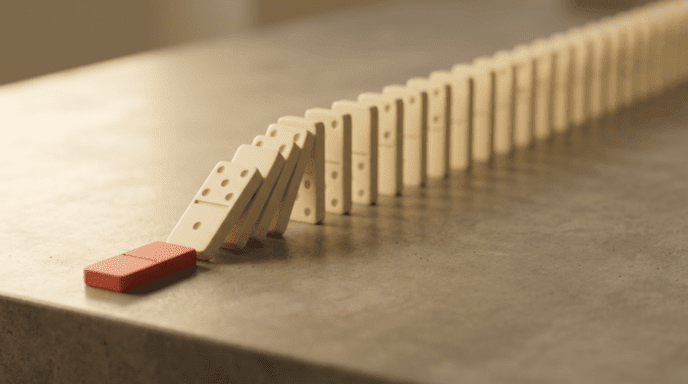
Research on abstinence violation across multiple domains, including diet, alcohol consumption, and exercise adherence, has consistently demonstrated the same pattern. A single slip triggers guilt and shame. Guilt and shame trigger belief that the entire effort was ruined. Belief triggers binge behavior; binge behavior reinforces your worst fears about your ability to change.
The behavioral science solution is a principle popularized by James Clear and widely endorsed by psychologists: “never miss twice.” Missing a single workout or having one unhealthy meal does not significantly impair habit development; Lally’s 2010 UCL study found that automaticity resumes quickly after a single missed performance. The slip itself is not the problem. The story you tell yourself about the slip is.
4. You’re Confusing the Fresh Start Effect With Actual Change {#fresh-start-effect}

Gym memberships increase each January. New diets begin each Monday. Someone makes a promise to finally become a different person on each birthday. Researchers call this the fresh start effect.
In 2014, Hengchen Dai, Katherine Milkman, and Jason Riis published a foundational study at the Wharton School titled “The Fresh Start Effect: Temporal Landmarks Motivate Aspirational Behavior,” providing evidence that temporal landmarks such as new weeks, months, years, and birthdays trigger increased aspirational behavior. Follow-up data provided causal evidence that highlighting temporal landmarks increases people’s motivation to pursue their goals.
The fresh start effect is real; the trap is mistaking an emotional boost for the structural support required to sustain a habit. The motivational high from a Monday or a January 1st might carry you for days, maybe even weeks; nevertheless, it will not carry you to day 66, when Lally et al. observed that automaticity plateaus during habit formation.
Use fresh starts strategically rather than depending on them alone. Temporal landmarks make an excellent cue to begin a new habit, but only when paired with the structural elements that sustain behavior after the emotional high fades: a specific cue, a miniature behavior, environmental design, and an if-then plan. Without those structural components, a fresh start is just another New Year’s resolution waiting to die in February.
5. You Never Wrote an If-Then Plan {#if-then-plan}

Most people set goals as vague intentions: “I am going to be more active.” “I will read before bed.” “I need to drink more water.” These feel like commitments; psychologically, they are almost meaningless.
The implementation intention framework, introduced by Peter Gollwitzer, an NYU professor of psychology, in 1999, has since become one of the most cited models in behavioral science. Implementation intentions take the form of if-then plans: “If [situation X occurs], then I will [perform behavior Y].” For example: “If it is 7:00 a.m. on a weekday and I have finished breakfast, then I will walk for twenty minutes.”
A 2006 meta-analysis of ninety-four independent tests concluded that implementation intentions produced medium-to-large positive effects (d = .65) on goal attainment. People who created specific if-then plans were significantly more likely to achieve their goals than those who merely stated their intentions.
How does this work? Why does it outperform broad intentions? Because if-then plans pre-load the decision of when and where to act; which is exactly how habits operate once they become automatic. The if-then plan bridges the gap between wanting to act and actually acting.
The Vibe List prescription: before starting any new habit, write down a single if-then statement and post it somewhere visible. The specificity of the cue, time, and behavior matters far more than how badly you want the result.
6. Your Environment Is Working Against You {#environment}

You’re not failing; your kitchen counter is winning
Your habits are shaped by your environment. What you leave on your kitchen counter determines whether you’ll snack on healthy foods or indulge in unhealthy treats. According to Wood’s research at USC, habits are “context stable,” forming most reliably when you repeat the same behavior in the same location. She explained it in her APA interview like this: “If you don’t want to eat cookies every night, change the context by not bringing them into your home. This advice sounds too simple, I know. We are used to thinking of ourselves as being in control and changing behavior with decision-making and willpower. But habit memories form slowly and they decay slowly. So, it’s not easy to control them through sheer force of will.”
Neal et al. studied this further in a 2012 experiment. They showed that habitual behaviors were strongly driven by environmental cues like location and time of day, while being far less influenced by a person’s conscious goals. In a separate part of the study, Neal et al. demonstrated that people with strong popcorn-eating habits ate stale popcorn at the movies purely because of the environmental trigger, even though the popcorn offered no enjoyable reward.
An article discussing Neal et al.’s study in Psychology Today stated the evidence clearly: your environment controls your habits more than your willpower does. Changing small parts of your environment can produce big changes in your behavior. For example, removing distractions from view can make it easier to engage in a particular behavior; similarly, putting obstacles in the way of undesired behaviors can also make those behaviors harder to execute.
According to researchers, the best way to improve your habits is called choice architecture. Choice architecture means designing the structure of your environment so that desired behaviors require less effort. Design your environment in a way that encourages desired behaviors and discourages undesired ones.
7. You’re Tracking the Streak Instead of the Behavior {#streak-tracking}

Many people today use mobile apps to track their daily habits. Apps have proven effective, albeit only until the user stops using them. Researchers at University College London discovered a common problem with habit-tracking apps: users stop relying on the app once they feel confident enough to rely on memory alone. At that point, the behavior goes away unless the app is reintroduced. There are two problems with this. First, the user develops a false sense of security about continuing the behavior without support. Second, and worse, the user builds a dependence on the app itself to maintain the habit.
Ness Labs analyzed habit-tracking research and reported similar findings: users install habit-tracking apps as an act of wishful thinking, then abandon the app long before the habit solidifies.
Another problem with tracking your habits is when you start focusing too much on maintaining a streak. When you focus on maintaining a streak, you are not developing an automatic response; you are building a dependent relationship with the app, not with the behavior.
To avoid both pitfalls, track your habits as a way to gather data about yourself, not as the habit itself. Use a paper tracker or a minimalist app to identify trends and pinpoint when you are most prone to slipping. Once you have established enough consistency to rely on memory, discontinue the app. Ideally, you should reach enough consistency that skipping the behavior feels uncomfortable. If you have tracked a habit for 90 days and still cannot perform it without an app notification, the habit did not form; you created an app dependency.
8. You Think Willpower Is a Muscle You Can Train {#willpower}

Willpower is frequently thought of like a muscle; therefore, it follows that if you continue to train it, it will grow stronger. The authors of the 1998 ego-depletion study argued that humans possess a limited pool of self-control energy that depletes with each act of self-regulation. Although Baumeister and colleagues’ research initially provided compelling evidence for this hypothesis, subsequent studies failed to replicate the finding. A preregistered multilab replication across 12 laboratories found only a small ego-depletion effect (d = 0.10), far smaller than originally claimed, while an earlier 23-lab replication in 2016 found an effect indistinguishable from zero. A 2024 review in Current Opinion in Psychology noted that replicability debates have slowed ego-depletion research, though the broader concept of self-regulatory fatigue continues to attract scholarly attention.
Scientists agree that prolonged decision-making can produce cognitive fatigue, but the notion that willpower is a finite resource like fuel in a tank has received little empirical support. Why does this matter for habits? Because most people try to build habits through sheer force of will, and that approach rarely produces sustainable results. Treating Baumeister’s model as the basis for habit formation has led people to focus on conserving willpower and white-knuckling through resistance. If, on the other hand, you recognize that habits form through repetition and contextual design, not through force of will, you can build a far more effective strategy.
Stop trying to out-discipline your environment. Redesign your environment to make the desired behavior the path of least resistance. As the productivity rules that science has already disproven demonstrate, willpower-based strategies consistently underperform structural ones.
9. You Set Outcome Goals Instead of Identity Goals {#identity-goals}

“I want to lose 20 pounds.” “I want to run a marathon.” “I want to read 50 books this year.” These are examples of outcome goals; however, they contain a fundamental structural flaw: outcomes define rewards as occurring at the conclusion of a series of events rather than throughout the process itself.
James Clear introduced identity-based habits, a paradigm suggesting that lasting behavior change comes not from focusing on what you want to accomplish but on who you want to become. There is a critical distinction between defining success by outcomes and defining success by identity-aligned actions. An outcome goal says “I want to lose weight,” whereas an identity goal says “I am someone who moves my body every day.” An outcome goal relies on external validation (e.g., losing X lbs), whereas an identity goal produces internal reinforcement each time you exhibit behavior representative of that identity.
Deci and Ryan’s self-determination theory, backed by decades of research, shows that intrinsic motivation and autonomous goal pursuit produce more sustainable behavior change. When behavior aligns with how you see yourself rather than with external rewards, you become more resilient against setbacks and more likely to sustain your efforts.
The shift is straightforward: stop asking “What results do I want?” and start asking “What kind of person do I want to be?” Then identify behaviors that demonstrate that identity. If you desire to be a reader, reading for five minutes each day represents an identity-evident behavior that demonstrates your commitment toward becoming a reader. With each performance of this behavior you cast a vote for this identity; thus increasing its strength.
10. You Reward Yourself Into Self-Sabotage {#moral-licensing}
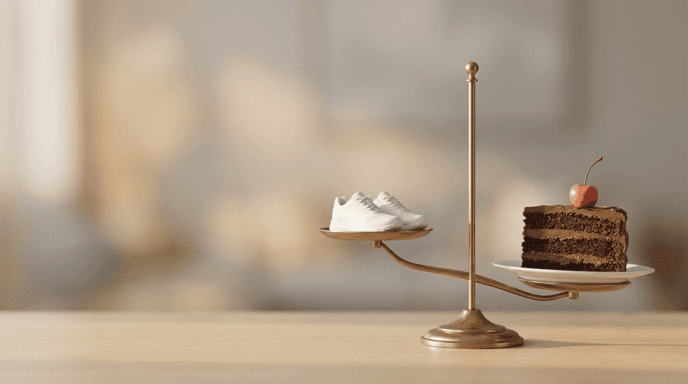
You finished your workout and you deserve a treat. You’ve eaten clean all week; go ahead and binge on Saturday. You’ve meditated every day this month; you can miss next week.
Moral licensing is one of the most beautiful snares in human psychology. Moral licensing occurs when someone acts in ways they perceive as virtuous, thereby granting themselves permission to act immorally or unethically afterward. A 2015 meta-analysis published in theJournal of Personality and Social Psychology confirmed that when people perform virtuous acts, they are subsequently more likely to engage in unethical behavior.
When applied specifically to habits, moral licensing serves as a secret fee charged by each successful day. Running five miles grants you permission to eat an additional 1200 calories. Completing Monday productively gives you permission to slack off tomorrow. Meditating each morning provides you permission to waste three hours browsing social media tonight.
Ultimately, the net benefit of the habit is negated, or even reversed, by moral licensing.
Create separation between your habit and your reward calculations. Do not think of your habit as something that earns you the right to indulge; instead, view it as an expression of who you are. A person who exercises does not earn a free pass to indulge later; they exercise because movement is part of who they are. This ties in directly with James Clear’s identity-based habit framework from entry #9. When habits are driven by identity rather than transactional rewards, moral licensing loses its grip. Understanding the psychological facts that explain your daily behavior can help you recognize when this bias is operating.
11. You Ignore the People Around You {#social-influence}

When changing our habits, we often think of the work as something we need to do alone. But research shows that other people significantly shape our ability to develop new habits.
Nicholas Christakis and James Fowler began publishing their groundbreaking studies on social contagion starting in 2007. Their findings show how behaviors such as obesity, smoking, and even happiness are contagious. Although there have been various criticisms of the methodology used in the studies and debates over specific statistics, the evidence clearly indicates that social environments play a major role in shaping our individual behaviors.
The 2025 University of Surrey study found that 65% of daily behaviors are triggered by environmental cues, including cues from our social environments. These are not passive influences; they are active cues in your habit formation. As the research on motivation myths that neuroscience disproves demonstrates, individual willpower is far less powerful than the environment you operate within.
Rather than cutting ties with your social network, you can use it strategically when building habits. For example, having one running buddy can increase your chances of sticking to a running habit. Similarly, knowing that certain social situations may trigger excessive drinking behavior gives you the tools to respond proactively.
12. You Quit Before the Automaticity Threshold {#habitual-automaticity}
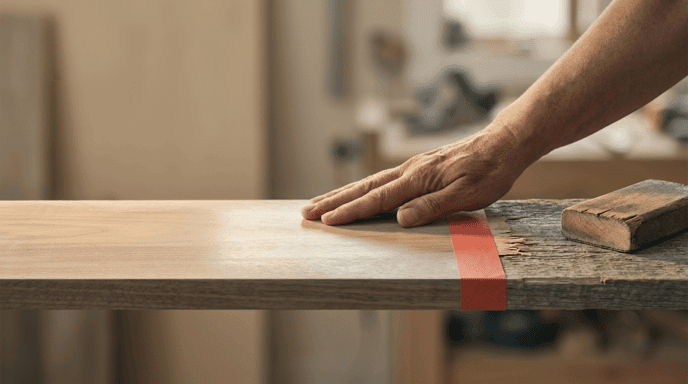
Many people believe that once they push through the initial difficulty of building a habit, the rest is easy. However, most people abandon their efforts before reaching true automaticity. In 2010, Phillippa Lally and her colleagues at University College London published a landmark study in the European Journal of Social Psychology documenting how habits form. They discovered that the rate at which automaticity develops follows an asymptotic curve. At first, the rate of gain is very slow; however, eventually the rate accelerates and then plateaus. According to their study, it took an average of 66 days for individuals to achieve automaticity; however, the range of time varied greatly from as little as 18 days for simple behaviors to as much as 254 days for more difficult behaviors.
According to a 2024 systematic review and meta-analysis inPLOS ONE, researchers broadly agree with Lally’s findings on the asymptotic nature of habit formation. The authors note that embedding habits into existing daily routines and giving people choices about which habits to build improves the likelihood of reaching automaticity.
Unfortunately, few people understand this curve exists. Most people assume that habit formation should happen faster. As a result, many individuals stop trying to create a habit before the behavior reaches the point of automaticity. Maxwell Maltz wrote a 1960 book called Psycho-Cybernetics claiming it takes approximately 21 days to form a habit. This number has become widely accepted, although many researchers have disputed Maltz’s conclusion due to the lack of scientific data supporting it.
Fortunately, according to Lally’s study, missing one day does not erase all previously gained automaticity. Missing one day results in a brief disruption, but overall, the process is remarkably resilient to small lapses. On the other hand, stopping completely before reaching the point of automaticity eliminates virtually all momentum toward establishing a lasting habit.
This understanding of the process alone helps to mitigate anxiety and fear surrounding failure. Instead of viewing day thirty as a sign of failure, you can view it as being halfway to reaching automaticity. The everyday habits that quietly wreck your mental health often persist precisely because people never reach this threshold with healthier replacements.
Comparison Table: The 12 Habit Failure Points at a Glance
| # | Failure Point | Core Mechanism | The Fix | Key Source |
|---|---|---|---|---|
| 1 | Relying on Motivation | Motivation fades; friction remains | Redesign environment to reduce friction | Wendy Wood, APA Monitor 2026 |
| 2 | Starting Too Big | Complexity kills automaticity | Shrink the habit until it requires zero motivation | BJ Fogg, Tiny Habits; Lally & Gardner 2012 |
| 3 | What-the-Hell Effect | One slip triggers total collapse of restraint | Never miss twice; normalize single lapses | Motivation Science 2022 review; Lally 2010 |
| 4 | Fresh Start Fallacy | Emotional boosts ≠ structural support | Pair temporal landmarks with if-then plans | Dai, Milkman & Riis 2014 (Wharton) |
| 5 | No If-Then Plan | Vague intentions produce vague results | Write a specific if-then implementation plan | Gollwitzer & Sheeran 2006 meta-analysis (d = .65) |
| 6 | Hostile Environment | Context cues override willpower | Apply choice architecture to your space | Neal et al. 2012; Wood APA interview |
| 7 | Streak Dependency | Tracking replaces the habit itself | Use trackers for data, not as the habit | UCL habit-tracker study; Ness Labs |
| 8 | Willpower Myth | Ego depletion is poorly supported (d = 0.10) | Build systems, not discipline reserves | Multilab replication 2020; Hagger et al. 2016 |
| 9 | Outcome vs. Identity Goals | External goals lack intrinsic fuel | Shift from “what” to “who” | James Clear; Deci & Ryan SDT |
| 10 | Moral Licensing | Good behavior permits bad behavior | Decouple habits from reward calculations | JPSP 2015 meta-analysis |
| 11 | Social Blindness | Peer behavior shapes your behavior | Use social networks strategically | Christakis & Fowler 2007 (NEJM) |
| 12 | Quitting Before Automaticity | Most quit before day 66 | Understand the automaticity curve (18–254 days) | Lally et al. 2010 (EJSP); PLOS ONE 2024 |
Frequently Asked Questions {#faq}
1. How long does it take for a behavior to become automatic?
Phillippa Lally and colleagues studied how long habits actually take to form. Published in the European Journal of Social Psychology, their study showed that it takes an average of 66 days for a behavior to become automatic, with a range of 18 to 254 days depending on complexity. The myth of 21 days is rooted in a 1960 book by a plastic surgeon named Maxwell Maltz. He observed patients adjusting to cosmetic surgery and assumed it would take approximately twenty-one days. However, his observations had nothing to do with how long it takes for habits to form.
2. Do missed days ruin progress?
No. Phillippa Lally’s study demonstrated that missing one opportunity to perform the behavior does not significantly impair habit formation. The study indicated that automaticity resumes quickly after one missed day. The danger lies in the psychological reaction to a skipped day; specifically, the what-the-hell effect, which turns one skipped day into total abandonment.
3. Are habit-tracking apps useful?
With caveats, yes. Ness Labs analyzed habit-tracking research and found that tracking apps boost motivation and help identify trends; however, they also carry the risk of habit dependence; users may continue the behavior only because of app reminders and streak notifications. The ultimate objective is developing the habit to persist independently of the application.
4. Is willpower really limited?
Although research originally led by Dr. Roy F. Baumeister suggested that willpower functions like a finite reservoir that depletes with use, there is growing skepticism about this model. Leading habit researchers, including Wendy Wood, argue that designing your environment is far more effective than relying on willpower to sustain habits.
5. What is the single best way to make a habit stick?
Create a specific if-then plan and pair it with an environmental change that reduces friction; a strategy proven effective by a 2006 meta-analysis of ninety-four studies showing a medium-to-large effect size (d = .65) on goal attainment. If-then plans produce a medium-to-large effect (.65) on goal achievement; combining that cognitive cue with an environmental redesign creates both a mental trigger and a physical path of least resistance.
6. Can my friends and family influence my habits?
Yes. The social contagion research by Nicholas Christakis and James Fowler shows that behaviors spread through social networks in measurable ways, meaning your social environment directly shapes your capacity to form new habits. Social environments provide contextual cues that trigger habitual behaviors; your social circle is a structural component of your habit-building system.


