



Sixty-nine Emmy nominations for a Friday-night sitcom nobody watched in its first season. A retired Brooklyn judge earning $47 million a year; more than Oprah. Twenty-five seasons and 253 episodes of an animated aardvark on PBS. A Nickelodeon buddy comedy that produced Saturday Night Live’s longest-tenured cast member. A WB sitcom that quietly trained an Oscar winner. Fifteen shows. One calendar year. 1996 didn’t just fill time slots; it built the architecture you’re still watching from the inside.
The Year Nobody Saw Coming
While movie buffs get to relive the nostalgia of ’96 big screen hits; audiences flocked to see Independence Day destroy Washington D.C., Scream revive a whole genre, and Mission: Impossible launch a franchise worth billions. We already covered all 20 of them. Meanwhile, back home, television underwent a major transformation. Not through one explosive debut, but through a constellation of premieres that, taken together, reveal how many foundational templates were built in a single calendar year. A family sitcom that redefined what “relatable” meant for network comedies. A satirical news desk that rewired how an entire generation viewed politics. A courtroom show hosted by a retired New York judge who would become one of the highest-paid figures in television history. An animated children’s series that aired for 25 seasons on PBS before anyone noticed it had become the longest-running animated children’s series in U.S. history. A Nickelodeon buddy comedy that helped launch the career of the longest-tenured Saturday Night Live cast member.
None of these shows arrived with the cultural detonation of a summer blockbuster. They arrived in time slots. They appeared on networks that no longer exist. They entered as mid-season replacements, Friday night fillers, and Saturday morning cartoons. And then they stayed; for five seasons, for nine seasons, for 25 seasons; building audiences, launching careers, and embedding themselves so deeply into the fabric of American pop culture that their influence became invisible. You don’t notice the architecture when you’ve been living inside the building.
This is the companion piece to our ’96 movie anniversary breakdown. Where that piece tracked the blockbusters, this one tracks the quiet revolutions. These are the 15 TV shows that debuted in 1996, turn 30 this year, and built the television landscape you’re still watching.
1. Everybody Loves Raymond
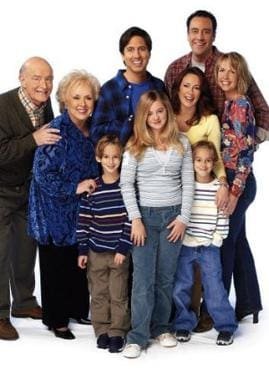
Network: CBS | Premiere: September 13, 1996 | Seasons: 9 | Episodes: 210 | Emmy Nominations: 69 | Emmy Wins: 15
Before Everybody Loves Raymond became one of the most decorated sitcoms in Emmy Award history, it was a struggling Friday night show that almost nobody watched. CBS premiered the series on September 13, 1996, parking it in a Friday time slot that had been a graveyard for sitcoms since the collapse of TGIF-style programming. The early ratings were modest at best.
What changed everything was a move to Monday nights, where Ray Romano‘s low-key, observational humor found an audience that grew steadily for the next eight years. The show’s premise was deceptively simple; a sportswriter lives across the street from his overbearing parents and perpetually jealous older brother; but the execution was anything but. Creator Phil Rosenthal drew from his own family dynamics to craft episodes that felt less like sitcom plots and more like therapy sessions set in a Long Island living room. The comedy came not from wacky premises or physical gags but from the agonizing specificity of family dysfunction that every viewer recognized. The result was a show whose humor was rooted in familiarity.
The series earned 69 Emmy nominations and won 15, including two consecutive wins for Outstanding Comedy Series (2003 & 2005). Ray Romano won Outstanding Lead Actor in a Comedy Series in 2002. Doris Roberts won four Supporting Actress awards. Brad Garrett won three Supporting Actor awards. Patricia Heaton won Outstanding Lead Actress in a Comedy Series twice. The cumulative trophy count places Raymond among the most awarded ensemble casts in television history.
When Everybody Loves Raymond ended on May 16, 2005, the series finale drew 32.94 million viewers, one of the largest audiences for a comedy finale in the 2000s; not comparable to the audience size associated with Seinfeld; however a massive audience for a show that never sought spectacle.
Thirty years on, Raymond’s relevance has not faded. CBS aired an Everybody Loves Raymond: 30th Anniversary Reunion special in November 2025, which attracted 10.08 million viewers in live+7 multiplatform. The demand was significant enough to justify a Part 2 bonus special in December.
Vibe List Take: Everybody Loves Raymond endures because it understood that comedy about family is not about being funny; it’s about being precise. The closer you get to the truth of how families actually talk to each other, the funnier it becomes. Thirty years later, that precision has not aged.
2. The Daily Show

Network: Comedy Central | Premiere: July 22, 1996 | Seasons: 29+ (and ongoing) | Emmy Awards: 28+
Most people associate The Daily Show with Jon Stewart, but the program premiered on July 22, 1996, hosted by Craig Kilborn, a former ESPN SportsCenter anchor who brought a sardonic, fratboy-adjacent energy to the desk. Kilborn’s version was a lighter, less politically charged affair; more pop-culture mockery than institutional critique. It was funny, it was niche, and it was a modest performer on a cable network still figuring out its identity.
Then Jon Stewart took over on January 11, 1999, and the show became something television had never seen before. Stewart transformed the program into a comedy series that functioned as a genuine news source for an entire generation.
Under Stewart, The Daily Show turned political satire into a nightly appointment-viewing ritual. A JSTOR-published study found that 84 percent of surveyed students said the show “occasionally” or “often” taught them something new about current events. The Daily Show didn’t just mock the news; it taught viewers to read media critically, to spot spin, and to demand accountability from both politicians and the journalists covering them.
The program has accumulated over 28 Emmy Awards across its run, including an unprecedented streak of Outstanding Variety Series wins under Stewart. It spawned some of the most influential voices in modern comedy and political commentary; Stephen Colbert, John Oliver, Samantha Bee, Hasan Minhaj, and Trevor Noah all passed through The Daily Show before launching their own programs.
The show remains on the air in 2026, now featuring rotating hosts including Stewart himself alongside Ronny Chieng, Michael Kosta, Desi Lydic, and Jordan Klepper; making it one of the longest-running programs in cable television history. Thirty years and counting.
Vibe List Take: The Daily Show’s most lasting contribution is not any single segment or interview. It’s the idea that comedy can be a legitimate lens for understanding power. Before 1996, that concept was an experiment. Thirty years later, it’s an entire industry.
3. Judge Judy

Network: Syndicated | Premiere: September 16, 1996 | Seasons: 25 | Episodes: 6,000+ | Peak Salary: $47 million per year
Judith Sheindlin was a retired New York family court judge with a reputation for sharp-tongued rulings when she first sat behind the television bench on September 16, 1996. The concept was not new; courtroom television had existed in various forms since the 1950s. What was new was Sheindlin herself; a woman who treated every small claims dispute as though the integrity of the American legal system hung in the balance.
Judge Judy did not become a hit overnight, but it built momentum that proved unstoppable. By the mid-2000s, Judge Judy had become consistently the highest-rated program in daytime syndicated television. In 2010, Judge Judy overtook The Oprah Winfrey Show in daily viewership, averaging 6.3 million daily viewers to Oprah’s 5.7 million. That sentence bears repeating: a retired family court judge from Brooklyn outperformed Oprah Winfrey.
At her peak, Sheindlin was the highest-paid personality in television, earning an estimated $47 million per year. Her net worth is estimated at approximately $440 million. The show ran for 25 seasons before concluding in 2021, after which Sheindlin launched a successor series, Judy Justice, on Amazon’s Freevee (now streaming exclusively on Amazon Prime Video).
Over the course of its 25-year run, Judge Judy produced more than 6,000 episodes and became a template for an entire subgenre; with every no-nonsense courtroom personality-type show that followed; Judge Mathis, Judge Joe Brown, Hot Bench (which Sheindlin herself conceived); existing downstream of what Judge Judy showed could be accomplished.
Vibe List Take: Judge Judy proved that authority, intelligence, and refusal to suffer nonsense constitute an entertainment format. She did not soften. And 30 years later, her formula remains the blueprint for every personality-driven courtroom show on television.
4. 3rd Rock from the Sun
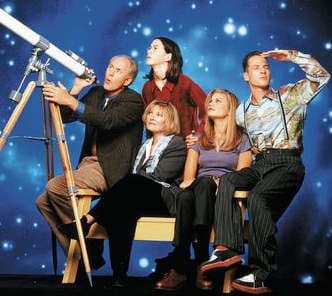
Network: NBC | Premiere: January 9, 1996 | Seasons: 6 | Episodes: 139 | Emmy Wins: 8
The premise of 3rd Rock from the Sun is, in fact, absurd. A group of extraterrestrial researchers decide to disguise themselves as humans and live in a small Ohio town to study life on Earth. John Lithgow plays the High Commander of the mission disguised as a physics professor. Kristen Johnston portrays a giant military officer stuck in a woman’s body. French Stewart portrays a genius-level intellect specialist unable to find work because he has no detectable IQ. And a teenager named Joseph Gordon-Levitt plays the oldest member of the alien team forced into the body of a high school student.
After its debut on NBC on January 9, 1996, critics took notice immediately. Within its first year, 3rd Rock from the Sun won a Golden Globe Award for Best Television Series; Musical or Comedy. John Lithgow won the Golden Globe Award for Best Actor in the same Musical/Comedy category. During its six-year run, the series won eight Primetime Emmy Awards; three of which were awarded to Lithgow for Outstanding Lead Actor in a Comedy Series (1996, 1997, 1999). Two of the Emmy Awards went to Kristen Johnston for Outstanding Supporting Actress (1997, 1998).
A classically trained Shakespearean actor, Lithgow threw himself into pratfalls and alien misunderstandings with a commitment that ensured the quiet moments landed with genuine emotional weight. Joseph Gordon-Levitt, meanwhile, used 3rd Rock from the Sun as an acting laboratory that prepared him for his eventual film career which included such films as Inception, 500 Days of Summer, and The Dark Knight Rises.
3rd Rock from the Sun aired for 139 episodes over the course of six years before it came to an end. Although it did not achieve the same kind of massive ratings success as some other shows such as Seinfeld or Friends airing on the same network at the same time, it consistently earned critical acclaim and built a devoted audience that has kept it alive in syndication and streaming for decades.
Vibe List Take: 3rd Rock from the Sun was high-concept comedy executed at the highest level. It took a ridiculous premise and extracted genuine observations about what it means to be human; delivered by characters who technically weren’t. That inversion is the entire joke, and Lithgow made sure it never stopped being funny.
5. Sabrina the Teenage Witch
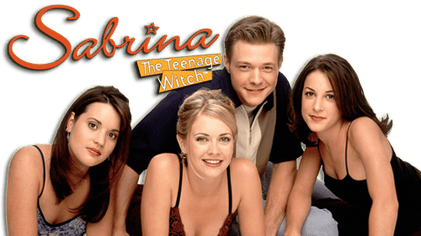
Network: ABC (later The WB) | Premiere: September 27, 1996 | Seasons: 7 | Episodes: 163
When Melissa Joan Hart first appeared as Sabrina Spellman on September 27, 1996, on ABC’s TGIF lineup, the show drew over 17 million viewers. Based on the Archie Comics character, Sabrina the Teenage Witch followed a teenager who discovers on her 16th birthday that she is a witch, navigating the collision between supernatural powers and the social minefield of high school.
Sabrina the Teenage Witch’s key asset wasn’t the magical elements; it was tone. The show found a perfect middle ground between authentic humor, gentle fantasy and the genuine fears of adolescents; which made it one of the leading teen programs of the late 1990s. Salem, the talking cat (voiced by Nick Bakay), became a cultural icon unto himself; a wisecracking ex-warlock who was cursed to live as a cat and deliver punchlines faster than many professional actors delivering dialogue.
Over the course of seven seasons and 163 episodes, Sabrina the Teenage Witch began its run on ABC but moved to The WB for its last three seasons. On Fridays it served as an anchor program for TGIF alongside Boy Meets World, developing an identity for Friday evenings that millions of ’90s kids planned their social lives around.
The enduring nature of the franchise is evident in Netflix’s Chilling Adventures of Sabrina (2018–2020), a much darker reinterpretation of the original property which took similar source material and transformed it into a horror-adjacent version. The difference in tone between the two iterations of the series exemplifies just how malleable Sabrina’s characterization is. Additionally, how influential Melissa Joan Hart‘s portrayal was in laying down a framework that future adaptations felt required to respond to.
Vibe List Take: Sabrina the Teenage Witch understood that the true “magic” of adolescence isn’t supernatural powers; it’s the daily negotiation between who you are and who everyone expects you to be. The witchcraft was the metaphor. The high school was the story.
6. Kenan & Kel

Network: Nickelodeon | Premiere: August 17, 1996 | Seasons: 4 | Episodes: 61
Kenan Thompson and Kel Mitchell had already established chemistry on Nickelodeon‘s sketch show All That when Kenan & Kel premiered on August 17, 1996. The spinoff gave them a vehicle built entirely around their contrasting energies: Kenan as the schemer, Kel as the lovable, orange-soda-obsessed wildcard who inevitably derails every plan.
The show ran for four seasons and 61 episodes, and its cultural footprint among ’90s kids is disproportionate to those numbers. Long after the show concluded, fans still reference its catchphrases (“Who loves orange soda? Kel loves orange soda!”), the physical comedy, the increasingly absurd schemes.
The 1997 spinoff film Good Burger became a cult classic in its own right, earning $23.7 million on a $9 million budget and cementing both performers as Nickelodeon royalty.
What makes Kenan & Kel genuinely significant three decades later is what happened to its lead. Kenan Thompson has been part of Saturday Night Live since joining in 2003 and has become SNL’s longest-tenured cast member with over 22 seasons.
Vibe List Take: Kenan & Kel was not trying to be important. It was trying to make kids laugh on Saturday nights. But the show that launched Kenan Thompson‘s career is, by extension, a show that shaped modern comedy’s center of gravity. That is a legacy built one can of orange soda at a time.
7. 7th Heaven
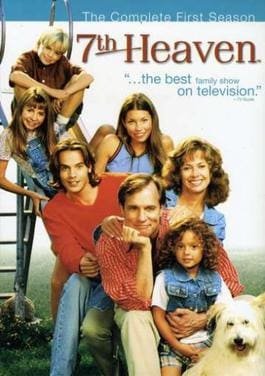
Network: The WB (later The CW) | Premiere: August 26, 1996 | Seasons: 11 | Episodes: 243
In an era when television was trending edgier, darker, and more cynical, Aaron Spelling launched a show about a Protestant minister raising seven children in suburban California. 7th Heaven premiered on The WB on August 26, 1996, and became the longest-running series in the network’s history; outlasting The WB itself, as the show migrated to The CW when The WB and UPN merged.
Across 11 seasons and 243 episodes, 7th Heaven became the longest-running family drama in American television history. The show covered numerous social issues; teenage pregnancy, substance abuse, bullying, racial tension, spousal abuse; while utilizing the Camden family; a family whose moral compass was unapologetically Christian; but presented without the judgmental edge that might have alienated broader audiences.
Additionally, 7th Heaven provided career launches for several actors. Jessica Biel played Mary Camden; the Camdens’ eldest child; prior to transitioning into major motion picture stardom. Beverley Mitchell, Mackenzie Rosman and Barry Watson produced careers either during or after 7th Heaven concluded. Stephen Collins played Reverend Eric Camden; the moral center of the Camden family; for all 11 seasons.
While television critics continuously criticized 7th Heaven as too sugary or overly simplistic, dismissing it fails to acknowledge its unparalleled success commercially and its role in establishing The WB as a legitimate alternative broadcast network. Without 7th Heaven anchoring the schedule, The WB’s path to Buffy the Vampire Slayer, Dawson’s Creek, and Gilmore Girls would have looked very different.
Vibe List Take: 7th Heaven was the show that serious TV critics refused to take seriously, and that 243 episodes’ worth of audiences refused to stop watching. There is something worth examining in that gap.
8. Spin City
Network: ABC | Premiere: September 17, 1996 | Seasons: 6 | Episodes: 145
Michael J. Fox had been absent from series television since Family Ties ended in 1989 when Spin City debuted on ABC on September 17, 1996. Developed by Gary David Goldberg (Family Ties creator) along with Bill Lawrence (Scrubs creator), Spin City followed Fox as Mike Flaherty; New York City Deputy Mayor; responsible for overseeing New York City government under a very well-intentioned but gaffe-prone mayor played by Barry Bostwick.
Spin City generated tremendous buzz immediately after its debut. Variety’s premiere review praised Fox’s return, and the series quickly became one of ABC’s top performers. Fox garnered a Golden Globe Award for Best Actor in a Musical/Comedy Series. Fox also won a Screen Actors Guild Award for his performance. The show’s political comedy was sharper than its network-sitcom packaging might suggest; Lawrence’s influence pushed it toward the workplace comedy rhythms that would define Scrubs and Cougar Town.
The show’s narrative took an unexpected turn when Fox revealed his Parkinson’s disease diagnosis in 1998; a diagnosis he had received in 1991 but kept private. Fox continued performing on Spin City through the fourth season before deciding to step away. Charlie Sheen replaced Fox for both of the final two seasons. Fox’s departure from Spin City became, in retrospect, the beginning of his transformation from sitcom star to one of the most prominent advocates for Parkinson’s research in the world. Since its inception in 2000, the Michael J. Fox Foundation has raised over $2.5 billion for Parkinson’s research.
Vibe List Take: Spin City is the show that brought Michael J. Fox back to television, and it’s the show that; through circumstances nobody wanted; redirected his legacy from entertainer to advocate. Both versions of that story matter.
9. Moesha
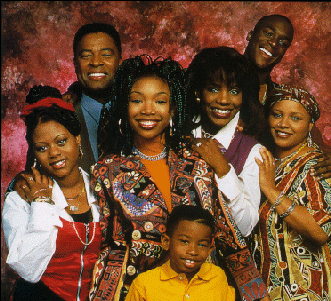
Network: UPN | Premiere: January 23, 1996 | Seasons: 6 | Episodes: 127
Moesha premiered on UPN on January 23, 1996, making it one of the earliest debuts of the year. Starring R&B singer Brandy Norwood as Moesha Denise Mitchell, the series followed a Black teenager navigating life in the Leimert Park neighborhood of Los Angeles with her upper-middle-class family. The significance of Moesha extends far beyond its episode count. In an era when Black family sitcoms on network television were either declining in number or being relegated to niche networks, Moesha became one of UPN’s flagship shows. As one of the mainstays of the UPN lineup, and one of the most prominent depictions of Black middle-class life on television throughout the late 1990s, Moesha continued to run for six seasons and aired 127 episodes. The show depicted a Black family that was neither defined by poverty nor by exceptionalism; they were professionals, they lived in a nice house, they dealt with ordinary family problems alongside culturally specific ones.
The show also gave Brandy a platform that extended beyond music. Working with Sheryl Lee Ralph, William Allen Young, and Countess Vaughn (who would go on to star in The Parkers), the cast formed a believable world that felt genuine. When Netflix added Moesha to its collection in 2020, it introduced the show to a new generation of fans. People who grew up with Moesha took to social media to share it with people who had never seen it before. The clothes, the music, the hair; Moesha is a time capsule of late-’90s Black culture, preserved with a warmth and specificity that very few shows of the era matched.
Vibe List Take: Moesha was representation that never announced itself as representation. It simply showed a Black family living their lives with humor, love, and complexity. That is simultaneously the simplest and most radical thing a television show can do.
10. Dexter’s Laboratory
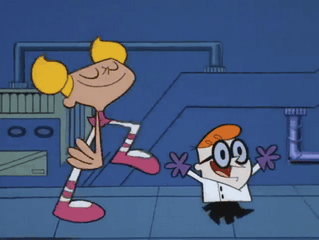
Network: Cartoon Network | Premiere: April 28, 1996 | Seasons: 4 | Episodes: 78
Genndy Tartakovsky was 26 years old when Dexter’s Laboratory premiered on Cartoon Network on April 28, 1996. The show follows a boy genius with a secret laboratory hidden behind his bedroom bookcase and his always-hassling sister, Dee Dee, whose entire purpose is destroying whatever Dexter builds.
Dexter’s Laboratory was Cartoon Network’s initial breakthrough series. Its success fundamentally altered the trajectory of the network. Prior to Dexter’s Laboratory, Cartoon Network primarily consisted of reruns of classic Hanna-Barbera cartoons and feature films. After Dexter’s Laboratory proved that original programming could attract audiences, the network greenlit what became its legendary late-’90s lineup: The Powerpuff Girls (another project created by Craig McCracken, an alumnus of Dexter’s Laboratory), Johnny Bravo, Cow and Chicken and ultimately Samurai Jack; Tartakovsky’s own sequel to his work on Dexter’s Laboratory.
Tartakovsky told Animation Magazine that Dexter’s Laboratory was born from the experimental short-film environment of Cartoon Network’s “What a Cartoon!” initiative, which gave young animators the freedom to pitch original concepts. The series went on for four seasons and 78 episodes before finishing in 2003.
What makes Dexter’s Laboratory a landmark is not just its quality but its structural impact. It proved that Cartoon Network could be a creator-driven studio, not just a library. From Adventure Time to Rick and Morty (the latter airing on Cartoon Network’s Adult Swim block), each show exists downstream of what Dexter’s Laboratory made possible.
Vibe List Take: Dexter’s Laboratory was the catalyst that transformed Cartoon Network from an outlet for reruns into a creative force. The boy genius built a secret lab behind his bookshelf. The show built an empire behind a lineup of Hanna-Barbera reruns.
11. Hey Arnold!

Network: Nickelodeon | Premiere: October 7, 1996 | Seasons: 5 | Episodes: 100
Craig Bartlett‘s Hey Arnold! debuted on Nickelodeon on October 7, 1996, and immediately distinguished itself from every other children’s animated series on the air. Arnold, the football-headed fourth grader who lived with his grandparents in a boarding house, inhabited an unnamed city modeled after Seattle, Brooklyn and Portland.
Hey Arnold! treated childhood with a seriousness most adult dramas didn’t bother with. The show ran for five seasons and 100 episodes, but what sets it apart is its ability to address complex themes: poverty, abandonment, loss, immigration, bullying, loneliness; all while remaining grounded within the show’s world rather than relying on special episodes.
Helga Pataki is Hey Arnold!’s second lead character. She is a bully who comes from an emotionally neglectful family. Her deep-seated love for Arnold is shown not as a joke but as a complex emotional arc that develops over the course of the series.
Bartlett has spoken about how the show’s emotional depth was intentional, rooted in his desire to create a children’s show that respected its audience’s intelligence and emotional capacity. The show’s legacy was honored with Hey Arnold!: The Jungle Movie, produced by Nickelodeon in 2017 after a fan campaign that lasted over a decade.
Vibe List Take: Hey Arnold! respected children enough to depict a complex world without reducing it to simplistic terms. This is less commonly done in children’s television today than it should be. Thirty years later, it remains the standard that other animated shows aspire to match.
12. Arthur
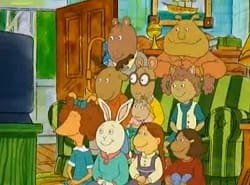
Network: PBS | Premiere: October 7, 1996 | Seasons: 25 | Episodes: 253
Marc Brown published his first Arthur book in 1976. Twenty years later, the animated version premiered on PBS on October 7, 1996. Twenty-five years later, Arthur concluded its 25-season run in February 2022 and stands as the longest-running animated children’s program on television in U.S. history.
The numbers alone make Arthur historically significant: 25 seasons, 253 episodes, a quarter century of continuous production. But the show’s cultural impact goes beyond longevity. Arthur was a PBS cornerstone that generations of American children watched before school. It addressed topics including dyslexia, asthma, autism, cancer, and same-sex marriage; the last issue was portrayed in a 2019 episode that generated nationwide attention when Alabama Public Television originally chose not to broadcast it.
The show’s visual style; anthropomorphic animals living in a suburb called Elwood City; was deceptively simple. Within that simplicity, the writers created a world where eight-year-olds dealt with real problems through the lens of their own developmental understanding.
Unlike many other children’s television shows that spoke down to children, Arthur spoke with them.
Arthur also unexpectedly became one of the primary sources of memes on the internet. A still image taken from a 1999 episode depicting Arthur clenching his fist has been one of the most frequently circulated reaction images online, demonstrating that Arthur’s visual vocabulary connected with people regardless of whether they were an intended part of its target audience.
Vibe List Take: Arthur ran for 25 seasons because it got something fundamentally right: children’s television does not need to be loud, fast, or flashy to be compelling. It just needs to take its audience seriously. PBS gave Arthur that space, and Arthur rewarded it with a quarter century of relevance.
13. The Steve Harvey Show

http://www.sonypictures.com/tv/shows/thesteveharveyshow/tvindex.html, Public Domain, https://commons.wikimedia.org/w/index.php?curid=159878504
Network: The WB | Premiere: August 25, 1996 | Seasons: 6 | Episodes: 122
Before Steve Harvey was a game show host, a morning radio personality, a bestselling relationship author, and a meme, he was Steve Hightower; a former funk musician turned high school music teacher; in a WB comedy that premiered on August 25, 1996.
Steve Harvey starred as Hightower for six seasons and 122 episodes, but it is at the intersection of two trajectories that The Steve Harvey Show finds its significance. The Steve Harvey Show was instrumental in establishing The WB as a hub for African-American audiences; along with 7th Heaven, Moesha (on UPN) and eventually Buffy the Vampire Slayer; at the end of the nineties when UPN and The WB competed aggressively for African-American viewership.
More importantly; and perhaps more notably; The Steve Harvey Show served as the launching pad for Harvey’s comedic presence as a stern but funny uncle; a characterization that defined everything he would do thereafter. Cedric the Entertainer played the vice principal of Hightower’s school, and the chemistry between the two comedians gave the show an energy that transcended its sitcom formatting.
Vibe List Take: The Steve Harvey Show represents the beginning of Steve Harvey‘s media conglomerate empire. Watch an episode from 1997 and you’ll see the exact comedic persona; the timing, the exasperation, the willingness to break format and speak directly to the audience; that now hosts Family Feud in front of millions.
14. Early Edition
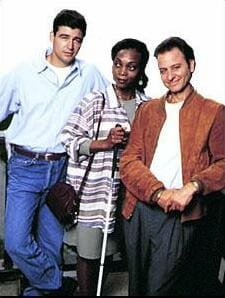
Network: CBS | Premiere: September 28, 1996 | Seasons: 4 | Episodes: 90
Here is the pitch: a man receives tomorrow’s newspaper every morning, delivered by a mysterious orange cat, and has 24 hours to prevent the tragedies he reads about. It sounds like a Twilight Zone episode. Instead, it became a CBS drama starring Kyle Chandler which premiered September 28, 1996, and ran four seasons and 90 episodes.
Early Edition never achieved the ratings dominance of CBS’s procedural heavyweights, but it developed a loyal audience attracted by its combination of science fiction premise and human-scale storytelling. Each episode posed a moral problem; Chandler’s Gary Hobson would read about a death, a disaster, or a crime in tomorrow’s paper and then had to decide whether and how to intervene; often discovering that preventing one tragedy created unforeseen consequences.
Kyle Chandler would become one of television’s most respected dramatic actors with Friday Night Lights (2006–2011), winning him an Emmy Award for Best Lead Actor in a Drama Series; and although he has come full circle from Gary Hobson to Coach Eric Taylor, there is clearly a connection between the two characters; both carry the burden of responsibility for their community through quiet, imperfect decency.
Vibe List Take: Early Edition never became a pop-culture phenomenon. It became something harder to achieve and easier to forget: a consistently good television show that trusted its audience to care about ordinary people in extraordinary circumstances. That trust paid off for four seasons, and it trained a future Emmy winner.
15. The Jamie Foxx Show
http://www.thewb.com/cmp/comedy/cm.htm, Public Domain, https://commons.wikimedia.org/w/index.php?curid=159879034
Network: The WB | Premiere: August 28, 1996 | Seasons: 5 | Episodes: 100
The Jamie Foxx Show first appeared on The WB on August 28, 1996. The show followed a fictionalized version of Jamie Foxx, as he worked at a hotel in downtown Los Angeles and pursued his aspirations of becoming an actor and singer. The show starred Garcelle Beauvais, Christopher B. Duncan, and Garrett Morris along with Foxx and aired for five seasons with 100 episodes.
The Jamie Foxx Show’s significance lies in the fact that the show and Foxx’s film career were happening at the same time. While The Jamie Foxx Show aired every Wednesday night on The WB, Foxx was developing a film career that included Any Given Sunday (1999), Ali (2001), Collateral (2004), and the role that would define Foxx’s film career: Ray (2004). At the 77th Annual Academy Awards, Foxx won the Academy Award for Best Actor for his portrayal of Ray Charles.
The sitcom allowed Foxx to showcase the entire spectrum of his skills in front of a large audience each week; specifically his comedy, music, impersonations, and physical performance; in a way that a film career alone wouldn’t have provided at that stage. He was a stand-up comedian who could also sing. He was a comedic actor who could deliver emotional performances. He refined every one of those abilities across five seasons, and by the time he won his Oscar, the range that made it possible had been built on a WB soundstage.
Vibe List Take: The Jamie Foxx Show is the solution to a question you never thought to ask yourself: Where did a comedian develop the dramatic chops necessary to earn an Academy Award for portraying Ray Charles? A WB sitcom. A hotel lobby. Every Wednesday night. For five years.
The Class of 1996 at a Glance
| # | Show | Network | Premiere Date | Seasons | Episodes | Key Legacy |
|---|---|---|---|---|---|---|
| 1 | Everybody Loves Raymond | CBS | Sep 13, 1996 | 9 | 210 | 15 Emmys; 32.94M finale viewers; 2025 reunion drew 10.08M |
| 2 | The Daily Show | Comedy Central | Jul 22, 1996 | 29+ | Ongoing | 28+ Emmys; reshaped political satire; still airing in 2026 |
| 3 | Judge Judy | Syndicated | Sep 16, 1996 | 25 | 6,000+ | Highest-paid TV host at $47M/year; outrated Oprah; $440M net worth |
| 4 | 3rd Rock from the Sun | NBC | Jan 9, 1996 | 6 | 139 | 8 Emmys; Golden Globe; launched Joseph Gordon-Levitt |
| 5 | Sabrina the Teenage Witch | ABC / The WB | Sep 27, 1996 | 7 | 163 | 17M+ premiere viewers; anchored TGIF; spawned Netflix reboot |
| 6 | Kenan & Kel | Nickelodeon | Aug 17, 1996 | 4 | 61 | Launched SNL’s longest-tenured cast member; Good Burger cult classic |
| 7 | 7th Heaven | The WB / The CW | Aug 26, 1996 | 11 | 243 | Longest-running US family drama; outlasted The WB itself |
| 8 | Spin City | ABC | Sep 17, 1996 | 6 | 145 | Michael J. Fox’s TV return; Parkinson’s advocacy origin; $2.5B+ raised |
| 9 | Moesha | UPN | Jan 23, 1996 | 6 | 127 | Landmark Black middle-class representation; Netflix revival in 2020 |
| 10 | Dexter’s Laboratory | Cartoon Network | Apr 28, 1996 | 4 | 78 | Cartoon Network’s first original hit; created the creator-driven model |
| 11 | Hey Arnold! | Nickelodeon | Oct 7, 1996 | 5 | 100 | Redefined emotional depth in children’s animation; 2017 TV movie |
| 12 | Arthur | PBS | Oct 7, 1996 | 25 | 253 | Longest-running US animated children’s series; iconic internet meme |
| 13 | The Steve Harvey Show | The WB | Aug 25, 1996 | 6 | 122 | Origin of the Steve Harvey media empire; WB anchor show |
| 14 | Early Edition | CBS | Sep 28, 1996 | 4 | 90 | Kyle Chandler’s career foundation; precursor to Friday Night Lights |
| 15 | The Jamie Foxx Show | The WB | Aug 28, 1996 | 5 | 100 | Training ground for an Oscar winner; developed Foxx’s full range |
Frequently Asked Questions
Which TV shows are celebrating their 30th anniversary in 2026? Fifteen notable TV shows that debuted in 1996 are turning 30 in 2026, including Everybody Loves Raymond, The Daily Show, Judge Judy, 3rd Rock from the Sun, Sabrina the Teenage Witch, Kenan & Kel, 7th Heaven, Spin City, Moesha, Dexter’s Laboratory, Hey Arnold!, Arthur, The Steve Harvey Show, Early Edition, and The Jamie Foxx Show.
What was the most popular TV show to premiere in 1996? By cultural and commercial impact, Everybody Loves Raymond and The Daily Show are the strongest contenders. Raymond accumulated 69 Emmy nominations and 15 wins across nine seasons, while The Daily Show has aired continuously for 29+ years and won over 28 Emmys, making it one of the most influential programs in television history.
Which TV show that premiered in 1996 had the longest running production? Arthur holds the title for 25 seasons (1996–2022), making it the longest-running children’s animated series in U.S. television history. Although The Daily Show began earlier than Arthur and has been airing longer than Arthur (since 1996–present), Arthur’s 25 seasons represent the most total produced seasons of any program featured on this list.
Did CBS produce an Everybody Loves Raymond reunion? Yes. CBS aired the Everybody Loves Raymond: 30th Anniversary Reunion in November 2025, which attracted 10.08 million viewers. The demand was strong enough that CBS produced a Part 2 bonus special featuring additional interviews and previously unaired outtakes.
Are any of the 1996 TV shows mentioned above still currently airing? The Daily Show is the only show from this list still producing new episodes as of 2026. Judge Judy ended in 2021, but Judith Sheindlin launched a successor series, Judy Justice, which continues to air.