


A 1.12 ERA built on hostility and fastballs thrown at heads. A 29-0 record forged by drowning world-class strikers against a cage. An amputated finger chosen over missing a defensive snap. A 20-year-old walking out without a robe, terrifying grown men into submission before the first bell rang. None of these athletes just played to win; they played to ensure their opponents knew exactly who they were losing to.
How we ranked this: Each entry was evaluated across multiple criteria; including statistical achievement, championship titles, and psychological intimidation; weighted to reflect what matters most for this particular subject. The result is a ranking that respects the data but is ultimately shaped by the Vibe List’s editorial judgment. This is our list, built on evidence, driven by perspective.
Introduction: The Anatomy of Athletic Intimidation
There is a distinct difference between being great and being feared. Greatness is measured in trophies, accolades, and statistics. Fear is measured in the eyes of the opponent before the competition even begins. It is the palpable, suffocating aura that surrounds an athlete when they walk into an arena; the unspoken realization among their peers that the outcome has already been decided. While modern fans endlessly debate expensive transfers and the fallout of massive contracts, true athletic intimidation transcends financial stakes and eras.
The Vibe List’s editorial team has evaluated decades of sports history to identify the competitors who broke their opponents psychologically. These are not just Hall of Famers; they are the anomalies who made professional athletes question their own abilities. From the gridiron to the tennis court, and from the boxing ring to the wrestling mat, the athletes on this list weaponized their dominance. They didn’t just beat people; they dismantled them. And while we marvel at World Cup records and modern highlight reels, the sheer terror induced by the names below remains entirely unmatched.
20. Jon Jones (Mixed Martial Arts)

When discussing the purest form of combat sports dominance, the conversation inevitably arrives at Jon Jones. He did not simply defeat the generation of legends that preceded him; he systematically retired them. At a fresh 23 years and 242 days, Jones became the youngest champion in UFC history when he defeated Mauricio “Shogun” Rua for the light heavyweight title at UFC 128 in March 2011. That initial title reign spanned a staggering 917 days, solidifying his status as an untouchable force.
What makes Jones terrifying isn’t just his physical gifts; his 84-inch reach and unparalleled fight IQ; but his sociopathic calmness inside the cage. Opponents often step into the Octagon believing they have a striking or grappling advantage, only to find themselves outclassed in their own specialized disciplines. In the Vibe List’s assessment, Jones possesses an aura of inevitability. He breaks fighters down mentally before he breaks them physically, turning seasoned veterans into hesitant, reactive targets. His legacy is complicated, but his status as an apex predator in the cage is absolute.
19. Serena Williams (Tennis)

Intimidation in non-contact sports is entirely psychological, and nobody weaponized it quite like Serena Williams. Stepping onto the baseline against Williams wasn’t just a tennis match; it was a physical and mental survival test. She retired as a 23-time Grand Slam singles champion, securing the most major wins by any woman in the Open Era. Her dominance is etched in a career that includes 73 total singles titles and an astonishing 858-156 singles match record.
Her serve is widely regarded as the greatest in the history of the sport, but it was her unmatched competitive ferocity that truly terrified the locker room. Williams held the world No.1 ranking for an incredible 319 weeks, tying Steffi Graf’s record with a 186-week consecutive reign. The Vibe List’s take is clear: you didn’t just have to outplay Serena to beat her; you had to survive her force of will. When she fell behind in a set, her opponents didn’t gain confidence; they panicked, knowing the inevitable storm was coming.
18. Tiger Woods (Golf)

Golf is famously characterized as a gentleman’s game, which makes the sheer terror Tiger Woods inflicted on the PGA Tour in the early 2000s completely unprecedented. During his prime, Woods didn’t just win tournaments; he humiliated the field. The peak of this psychological warfare occurred at the 2000 U.S. Open at Pebble Beach, where Woods secured victory by 15 shots, a margin unseen on the PGA Tour since 1948.
He beat the field average that week by a career-best 29 strokes. The aura surrounding Woods at age 24 was so suffocating that Jesper Parnevik famously remarked Woods possessed “Jedi powers” on the greens. In our view, Woods single-handedly forced an entire generation of professional golfers to overhaul their physical fitness and swing mechanics just to survive. When his name climbed the Sunday leaderboard, seasoned champions routinely collapsed under the pressure of his shadow.
17. Lawrence Taylor (American Football)
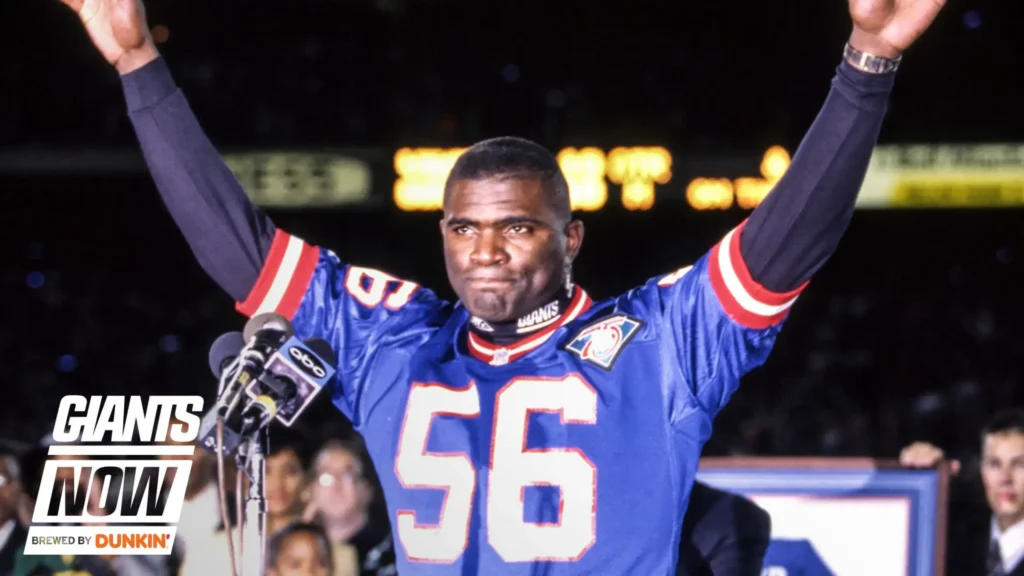
Before Lawrence Taylor entered the NFL, the left tackle position was important; after him, it became the second highest-paid position on the field out of sheer necessity. Taylor fundamentally changed the geometry of American football. He was the 1986 AP MVP with 20.5 sacks, and remains the last defensive player in history to win the award.
A two-time Super Bowl champion (Super Bowl XXI and Super Bowl XXV), Taylor was an uncontrollable force of nature. Opposing offensive coordinators would spend entire weeks devising game plans exclusively designed to slow him down, and he would completely destroy them by the second quarter. The intimidation factor wasn’t just in his speed and power; it resided in his relentless, manic energy. Quarterbacks didn’t just look for him before the snap; they braced for the inevitable, bone-crushing impact.
16. Aleksandr Karelin (Greco-Roman Wrestling)

If you were to engineer the ultimate physical manifestation of intimidation in a laboratory, the result would look exactly like Aleksandr Karelin. Known fittingly as “The Russian Bear,” Karelin was a 1.93-meter, 130-kilogram Goliath who defied human limitations. His career statistics are almost mythical: 887 victories and a single defeat.
For an astounding seven years, no opponent managed to score a single point against him. His résumé includes 12 consecutive European Championships, nine consecutive World Championships, and three consecutive Olympic gold medals. His signature move; the reverse body lift; required him to hoist a fully grown, 130kg resisting athlete off the mat and throw them. Opponents were so terrified of the physical toll of this maneuver that many simply rolled over and accepted defeat rather than endure the lift. In the realm of pure, visceral fear, Karelin stands completely alone.
15. Sonny Liston (Boxing)

Long before psychological warfare became a scripted part of combat sports promotion, Sonny Liston embodied pure, unadulterated menace. Born into crushing poverty and having learned to box while incarcerated, Liston carried a legitimate criminal reputation into the ring that genuinely terrified his contemporaries. He retired with an extraordinary 78 percent knockout ratio across 54 bouts, but the raw numbers barely capture the dread he instilled.
Liston didn’t just beat fighters; he dismantled them with a heavy, piston-like jab and a paralyzing stare. When he faced reigning heavyweight champion Floyd Patterson in 1962, Patterson was so intimidated that he allegedly brought a disguised exit outfit to the arena so he could slip away unrecognized if he lost. Liston knocked him out in two minutes and six seconds of the first round. In an era where boxing champions were expected to be polished public figures, Liston was a silent, scowling executioner. He was the athlete other professional fighters actively avoided making eye contact with; a genuine monster of the heavyweight division.
14. Ray Lewis (American Football)

To understand the absolute terror Ray Lewis inflicted on opposing offenses, you only need to watch the tape of Super Bowl XXXV. Lewis commanded a Baltimore Ravens defense that is widely regarded as the most dominant in NFL history; a unit that did not allow a single offensive touchdown in the championship game. He finished that season as the consensus AP Defensive Player of the Year, an honor he would win twice in his career alongside an astonishing 1,568 solo tackles.
But Lewis’s intimidation factor extended far beyond his hitting power. He possessed a maniacal intensity that infected his entire sideline and completely derailed the focus of opposing quarterbacks. He diagnosed plays before the snap, screaming out the exact route combinations the offense was about to run. When the ball was snapped, he arrived at the ball carrier with a ferocity that felt deeply personal. The Vibe List’s assessment is that Lewis didn’t merely play middle linebacker; he stalked the middle of the field. Receivers heard his footsteps before the ball arrived, leading to dropped passes, rushed throws, and a psychological surrender that usually occurred by halftime.
13. Randy Johnson (Baseball)

Standing six feet and ten inches tall on a raised mound, throwing a baseball that frequently exceeded 100 miles per hour, Randy Johnson was a biomechanical nightmare for left-handed batters. The “Big Unit” possessed a violently sweeping sidearm delivery that made the ball appear as though it was being released directly from the first base dugout. During a stretch from 1999 to 2002, Johnson was virtually unhittable, recording four consecutive seasons with over 300 strikeouts; a statistical anomaly in modern baseball.
His intimidation wasn’t a product of trash talk; it was entirely structural. The sheer physics of facing a man that large throwing a projectile that fast with zero margin for error broke the nerve of professional hitters. When he infamously obliterated a dove mid-flight with a fastball during a spring training game, the footage only amplified the mythology of his lethal power. John Kruk’s famous 1993 All-Star Game at-bat against Johnson; where Kruk visibly stepped completely out of the batter’s box, tapped his chest in fear, and swung wildly just to survive the encounter; remains the ultimate testament to the psychological toll Johnson extracted before the first pitch was even thrown.
12. Ronda Rousey (Mixed Martial Arts)

Before the sport evolved, Ronda Rousey was an unsolvable equation. She didn’t just defeat the women placed in front of her; she vaporized them in a matter of seconds. During the peak of her bantamweight title run, her fights were so decisively violent that fans joked they shouldn’t blink. She holds the record for the 14-second submission of Cat Zingano at UFC 184; and she ended Alexis Davis via knockout in just 16 seconds.
Rousey brought a ruthless Olympic judo pedigree into a division that was entirely unprepared for her grappling speed. When she marched to the cage with Joan Jett blaring over the arena speakers, her trademark scowl completely eroded the confidence of her challengers. Opponents knew exactly what was coming; the clinch, the hip toss, and the armbar; yet they were utterly powerless to stop it. The inevitability of her finishing sequence created a palpable aura of invincibility. For a three-year window, she was not just a champion; she was an executioner who required less time to end a professional fight than most athletes take to tie their shoes.
11. Roy Keane (Football/Soccer)

In the heart of Sir Alex Ferguson’s most successful Manchester United dynasties, Roy Keane served as the ultimate enforcer. He was an elite box-to-box midfielder, but his legacy is defined by a boiling, uncompromising rage that dictated the terms of every match he played. Keane demanded absolute perfection from his teammates and inflicted absolute misery on his opponents. He accumulated eight red cards in his Old Trafford career, often for tackles that were deliberately designed to send a violent message.
The defining moment of his terrifying persona occurred during the 2001 Manchester derby, where he executed a premeditated, brutal tackle on Alf-Inge Haaland. Referee David Elleray famously cited it as the most difficult but justifiable red card of his career. Keane didn’t play football to make friends; he played to physically and mentally break the opposition’s midfield. When teams lined up in the tunnel next to Keane, they felt his absolute refusal to accept defeat. He won matches through sheer psychological tyranny, intimidating referees, rival captains, and occasionally his own players into total submission.
10. Khabib Nurmagomedov (Mixed Martial Arts)

In mixed martial arts, fighters are taught to look for openings, exploit weaknesses, and capitalize on mistakes. When fighting Khabib Nurmagomedov, there were no mistakes to capitalize on; there was only a slow, suffocating drowning. The Dagestani grappler retired with a flawless 29-0 professional record, stepping away as the undisputed UFC lightweight champion.
What made Khabib so uniquely terrifying was the utter lack of mystery in his game plan. Every opponent knew exactly what he was going to do: he was going to back them against the cage, drag them to the mat, wrap their legs up, and methodically batter them until they submitted. And yet, knowing it was coming didn’t help anyone stop it. Elite strikers, world-class Brazilian Jiu-Jitsu black belts, and Division I collegiate wrestlers all met the exact same fate. Khabib broke fighters’ spirits in the middle of rounds; you could visibly see the moment his opponents realized they were trapped under an immovable object. He didn’t just defeat the best lightweights in the world; he made professional cage fighters look like helpless amateurs.
9. Bob Gibson (Baseball)

Baseball is a sport built on failure; even the best hitters fail seven out of ten times. But Bob Gibson made hitters fear they might never succeed again. In 1968, “Gibby” produced what is widely considered the greatest pitching season in modern history, posting a 1.12 ERA and 13 shutouts for the St. Louis Cardinals. His dominance was so absolute that Major League Baseball literally changed the rules the following year, lowering the pitcher’s mound from 15 inches to 10 inches just to give hitters a fighting chance.
Gibson’s intimidation factor wasn’t just about his blazing fastball; it was his legendary hostility. He pitched inside with venomous intent, refusing to speak to opposing players and famously throwing at anyone who dared dig in too comfortably at the plate. He once stated that he threw nine different pitches, including a “knockdown, brushback, and hit-batsman.” In a sport where psychological comfort is essential to timing a swing, Gibson intentionally made the batter’s box the most uncomfortable piece of real estate on the planet.
8. Shaquille O’Neal (Basketball)

There has never been a more devastating combination of mass, agility, and sheer physical force in the history of basketball. During his absolute peak in the 1999-2000 season, Shaquille O’Neal secured the MVP award by leading the league with 29.7 points and 13.6 rebounds per game. But statistics fail to capture the physical toll he extracted from the men tasked with guarding him.
The Vibe List’s perspective on Shaq is simple: he altered the roster construction of the entire NBA. Opposing teams had to waste roster spots on massive, untalented seven-footers just to have bodies to absorb O’Neal’s fouls. He backed down defenders with a violence that frequently left them bruised, exhausted, and completely demoralized by the third quarter. When Shaq established deep post position, the play was essentially over. Defenders didn’t try to stop him; they tried to survive him.
7. George Foreman (Boxing)

Before the grill commercials and the jovial second act of his career, the 1970s iteration of George Foreman was a walking horror movie for the heavyweight division. He won the Olympic gold medal in 1968 with almost no amateur experience, then turned professional and began a reign of terror. He retired with an astounding 76 wins, including 68 by knockout.
Foreman’s intimidation peaked in Kingston, Jamaica, during the 1973 championship bout against the undefeated “Smokin'” Joe Frazier. Frazier was a fearsome champion in his own right, yet Foreman brutally floored him seven times in two rounds before the fight was stopped. Foreman didn’t rely on speed or defensive wizardry; he threw wide, clubbing punches with such incomprehensible power that opponents appeared to lift off the canvas when struck. Fighters in the locker room genuinely feared for their lives before facing the young Foreman.
6. Ronnie Lott (American Football)

In an era of the NFL where defensive violence was celebrated, Ronnie Lott was the ultimate boogeyman. Drafted eighth overall by the San Francisco 49ers in 1981, Lott hit with a concussive force that redefined the safety position. Wide receivers running crossing routes over the middle of the field would infamously develop “alligator arms”; pulling their arms in to protect their bodies rather than extending to catch the ball; simply because they knew Lott was lurking.
His reputation for pain tolerance was just as terrifying as his hitting ability. During the 1985 season, rather than undergo a reconstructive surgery that would force him to miss games, Lott famously opted to have the tip of his left pinky finger amputated so he could stay on the field. That level of fanatical commitment completely unnerved opposing offenses. You cannot intimidate a man willing to cut off his own finger to win a football game.
5. Rafael Nadal (Tennis – Clay Court)

While Serena Williams dominated the entire sport psychologically, Rafael Nadal’s specific intimidation factor on a clay court remains the most terrifying venue-specific dominance in sports history. His 22 Grand Slam titles include an incomprehensible 14 Roland-Garros trophies.
When an opponent stepped onto the red dirt of Paris against Nadal, they weren’t playing a tennis match; they were fighting a war of attrition they knew they would lose. Nadal’s vicious topspin forehand bounced so high and heavy that it physically exhausted players trying to return it. But the true fear factor was his relentlessness. He sprinted for every seemingly unreachable ball with violent intensity, breaking the will of world-class opponents who would hit perfect winners only to see the ball come rocketing back. You didn’t beat Nadal on clay; you survived as long as your cardiovascular system allowed.
4. Kobe Bryant (Basketball)

The “Mamba Mentality” has become a cultural cliché, but during his prime, Kobe Bryant’s obsessive, sociopathic drive to win alienated teammates and terrified opponents. He possessed a psychological ruthlessness that bordered on the sadistic. His famous 2006 performance against the Toronto Raptors, where he scored an astronomical 81 points, stands as the ultimate modern scoring massacre.
Bryant actively studied his opponents’ personal lives, their insecurities, and their mechanical flaws, weaponizing that information on the court. He was notorious for guarding the opposing team’s best player defensively while demanding the ball on every offensive possession, specifically trying to break the rival star’s spirit. Defenders knew that if Kobe hit two shots in a row, the rest of the night was going to be a humiliating public execution. He possessed an icy, detached killer instinct that made leads evaporate and defensive schemes look ridiculous.
3. Wilt Chamberlain (Basketball)

Wilt Chamberlain did not just dominate his era; he broke the statistical boundaries of the sport entirely. His legendary performance on March 2, 1962, where he scored an NBA-record 100 points in a 169-147 win over the New York Knicks, remains the most mythical achievement in American sports.
The fear Wilt induced was rooted in pure physical helplessness. He was stronger, faster, and taller than everyone else in the league. Opposing centers reported feeling like children playing against an adult. In the Vibe List’s assessment, Chamberlain’s intimidation was unique because it wasn’t fueled by anger or hostility; it was fueled by inevitability. There was no defensive strategy to stop him; you simply hoped he would get bored and show mercy.
2. Michael Jordan (Basketball)

Michael Jordan is the standard by which all athletic dominance is measured. His pristine six NBA Championship titles is the bedrock of his legacy, but his true power was his psychological tyranny. Jordan didn’t just want to win; he wanted to completely destroy the confidence of the man guarding him.
He famously ruined the careers of highly drafted shooting guards by exposing them so brutally on national television that they never recovered mentally. He talked trash relentlessly, backed it up flawlessly, and possessed an extra gear in clutch situations that broke the collective heart of entire cities. When Jordan had the ball with ten seconds left, the opposing arena didn’t get loud; it went silent in sheer, paralyzing terror. He was the inevitable conclusion to every season of the 1990s.
1. Mike Tyson (Boxing)

No athlete in the history of human competition has weaponized fear quite like the 1980s iteration of Mike Tyson. When he became the youngest heavyweight champion in history at 20, he wasn’t just defeating men; he was executing them. Tyson fought with a peek-a-boo style that allowed him to slip punches and close distance with terrifying speed, unleashing devastating combinations that separated heavyweights from their consciousness.
But the fight was usually over before the opening bell. When Tyson made his ring walk; devoid of a robe, wearing plain black trunks, no socks, and a towel with a hole cut out for his neck; the atmosphere in the arena shifted from anticipation to dread. Opponents were visibly beaten during the referee’s instructions. When he fought Michael Spinks in 1988, Spinks was paralyzed with fear in the dressing room; Tyson knocked him out in 91 seconds. He remains the absolute pinnacle of athletic intimidation; a force of violence so terrifying that grown, professional fighters stepped into the ring hoping only to survive the first round.
The Intimidation Index: 20 Legends Who Broke Their Opponents
| Rank | Legend Name | Sport | Defining Intimidation Factor |
|---|---|---|---|
| 20 | Jon Jones | Mixed Martial Arts | Sociopathic calmness and a 917-day initial championship reign of terror. |
| 19 | Serena Williams | Tennis | Unmatched competitive ferocity and the greatest serve in Open Era history. |
| 18 | Tiger Woods | Golf | A 15-shot major victory margin that broke the collective nerve of the PGA Tour. |
| 17 | Lawrence Taylor | American Football | Manic defensive energy that permanently altered how offensive lines are paid. |
| 16 | Aleksandr Karelin | Greco-Roman Wrestling | A seven-year stretch without surrendering a single point to an opponent. |
| 15 | Sonny Liston | Boxing | A paralyzing stare and heavy jab that made champions plan escape routes. |
| 14 | Ray Lewis | American Football | Pre-snap play diagnosis combined with deeply personal, concussive hitting. |
| 13 | Randy Johnson | Baseball | A 6-foot-10 frame hurling 100mph fastballs from an impossible sidearm slot. |
| 12 | Ronda Rousey | Mixed Martial Arts | Inevitable, inescapable 14-second armbar submissions that ended fights instantly. |
| 11 | Roy Keane | Football/Soccer | Boiling, uncompromising rage that forced total submission from opposing midfields. |
| 10 | Khabib Nurmagomedov | Mixed Martial Arts | A 29-0 record built on slow, methodical, completely unstoppable grappling dominance. |
| 9 | Bob Gibson | Baseball | A 1.12 ERA season fueled by venomous hostility and relentless brushback pitches. |
| 8 | Shaquille O’Neal | Basketball | Unprecedented physical mass that literally bruised and exhausted interior defenders. |
| 7 | George Foreman | Boxing | Clubbing, incomprehensible punching power that lifted opponents off the canvas. |
| 6 | Ronnie Lott | American Football | Fanatical commitment to violence; willing to amputate his own finger to win. |
| 5 | Rafael Nadal | Tennis (Clay Court) | Relentless athleticism and heavy topspin that turned Roland-Garros into a war of attrition. |
| 4 | Kobe Bryant | Basketball | Sociopathic drive and a killer instinct designed to publicly humiliate rival stars. |
| 3 | Wilt Chamberlain | Basketball | An 100-point physical anomaly who made professional centers look like helpless children. |
| 2 | Michael Jordan | Basketball | Psychological tyranny and relentless trash talk that broke the hearts of entire cities. |
| 1 | Mike Tyson | Boxing | Pure malice; the youngest heavyweight champion who won fights during the referee’s instructions. |


