



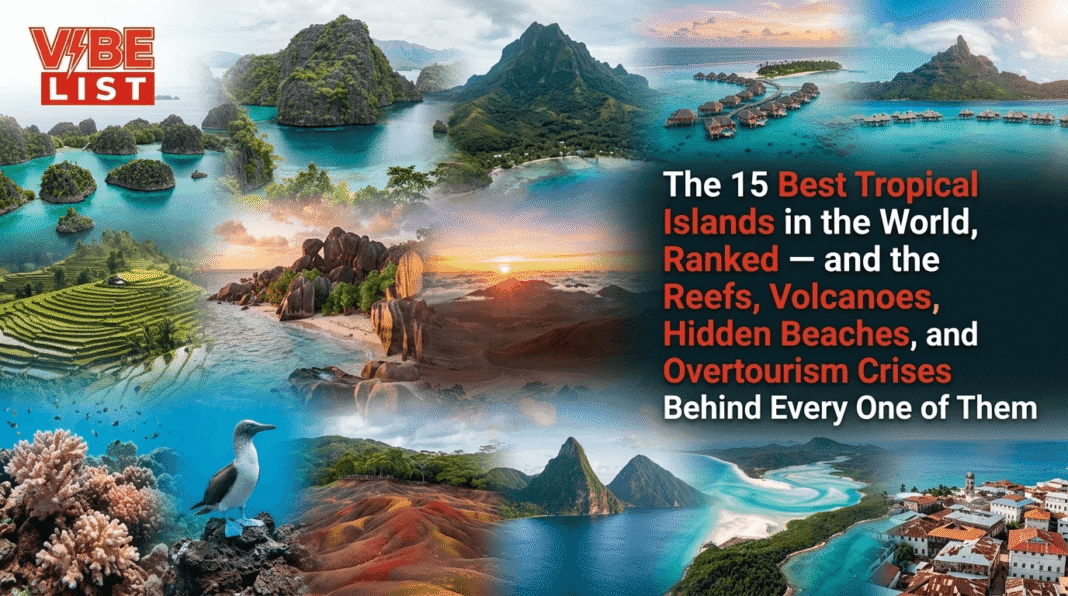
550 coral species in a single archipelago; 75 percent of every hard coral known to science. 374 fish species counted on one dive; a world record. A seven-kilometer beach made of 98 percent silica that never burns your feet. 2.25 million tourists visiting islands averaging 1.5 meters above sea level. A shark that walks on its fins and exists nowhere else on Earth. The best tropical islands were never about the resort; they were about what was already there before anyone built one.
Every travel magazine publishes a “best islands” list. Most of them are recycled press releases from resort chains. This one is not. We ranked the 15 best tropical islands in the world using reef health, cultural depth, accessibility, and a question most lists never ask; does the reality actually match the brochure?
Every year, roughly a dozen magazines publish some version of the same list; the best tropical islands in the world; and every year, the same islands appear in the same suspiciously resort-friendly order.
Bora Bora sits near the top because an editor stayed at the Four Seasons on a comped press trip. The Maldives gets a glowing paragraph that never mentions the fact that most of the country sits less than a meter above sea level and may not exist in recognizable form by 2100. Fiji appears because someone needs to fill the South Pacific slot, and the writer describes it as “paradise” without noting that it contains the third-largest barrier reef on the planet and over 42 percent of the world’s soft-coral diversity. These lists rank tropical islands the way a luxury hotel brochure would; by thread count and cocktail menu; while ignoring the things that actually make one island worth crossing an ocean for and another a beautiful but ultimately hollow postcard.
This ranking does something different. We evaluated the best tropical islands in the world across six dimensions that matter more than the quality of the welcome drink: ecological richness (reef health, endemic species, marine biodiversity); cultural depth (traditional cultures, culinary heritage, history); beach and landscape quality (sand color and texture, geological uniqueness, scenic range); accessibility and logistics (airports, flights, visas, infrastructure); overtourism reality (visitor numbers, carrying capacity, crowding); and value (how much bang you get for your buck).
Every island on this list was assessed using verified visitor statistics, UNESCO designations, marine-survey data, and on-the-ground reporting; not resort marketing copy.
The ranking runs from fifteen to one, and the order is an editorial opinion. We will explain exactly why each island sits where it does, what it does better than every island below it, and what its honest trade-offs are. If you disagree with the order, good; that means you have actually been to some of these places, and we would rather start an argument than publish another list nobody remembers by Thursday.
How we ranked this: This is a Vibe List original ranking. It reflects our editorial team’s assessment of ecological richness, cultural depth, beach and landscape quality, accessibility, overtourism reality, and value; informed by verified visitor statistics, UNESCO designations, marine biodiversity surveys, and tourism-industry data, but ultimately shaped by our own perspective. You won’t find this exact list anywhere else; and that’s the point.
15. Zanzibar, Tanzania
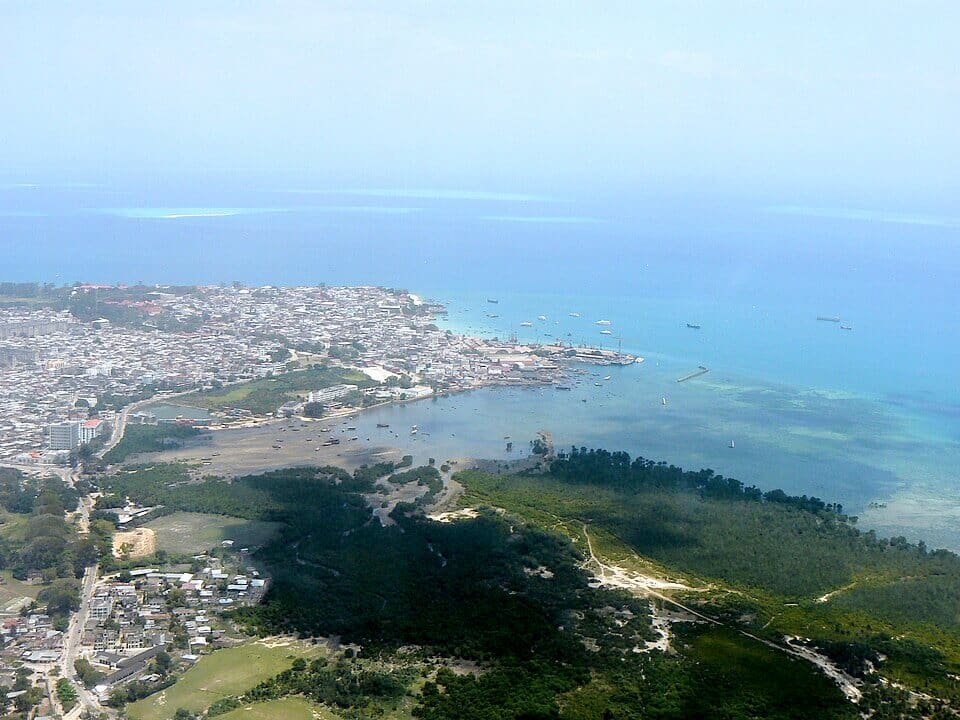
Zanzibar is the tropical island that most travelers have heard of but almost none can accurately describe, and that gap between name recognition and actual understanding is precisely what makes it one of the most underrated island destinations in the world.
The archipelago sits roughly 35 kilometers off the coast of mainland Tanzania in the Indian Ocean, and its main island; Unguja, which most people simply call Zanzibar; covers about 1,666 square kilometers of low-lying coral limestone fringed by white-sand beaches on the east coast and mangrove-lined shores to the west. The beaches at Nungwi and Kendwa on the northernmost end of the island are arguably among the best on earth. The waters are so clear that you can see the bottom at chest depth. What sets Zanzibar apart from countless other tropical coastlines is what happens when you walk inland.
Stone Town, the island’s historic center, is a UNESCO World Heritage Site inscribed in 2000. It is one of the finest surviving examples of a Swahili coastal trading town in East Africa. The labyrinthine alleyways contain carved wooden doors dating to the 18th and 19th centuries, merchant houses built from coral stone, and a cultural layering; Arab, Persian, Indian, European, and African; that no single-culture island destination can replicate. The legacy of the spice trade that once made Zanzibar one of the wealthiest ports on the Indian Ocean is still evident today in active clove, nutmeg, and cinnamon plantations throughout the interior of Unguja. Zanzibari cuisine blends Swahili, Indian, and Arab influences into dishes like pilau rice, urojo soup, and the night-market street food at Forodhani Gardens, which operates every evening at sunset and ranks among the most atmospheric open-air food experiences in the tropics.
Tourism is surging. Zanzibar recorded 743,605 international arrivals through October 2025 alone, already surpassing its full-year 2024 total of 736,755 with two months of data still outstanding. That is a staggering trajectory when you consider that the archipelago received just 260,644 visitors in 2020 and 638,498 in 2023. The Zanzibar Commission for Tourism credits the rise to new direct flights; several routes launched after the African Aviation Development Conference; and infrastructure improvements at Abeid Amani Karume International Airport. But the growth carries an obvious risk: Zanzibar’s east-coast beach villages were not designed for this volume. The gap between five-star resorts and local infrastructure is widening in ways that could erode the island’s authenticity faster than anyone expects.
Why it ranks here: Zanzibar offers the strongest cultural-depth-to-cost ratio of any tropical island on this list; a UNESCO World Heritage-listed old town; live spice-trading heritage; attractive Indian Ocean beaches; and prices as affordable as anywhere in East Africa. It sits at fifteen because its reef systems are modest compared to higher-ranked islands, its east-coast beaches are increasingly crowded, and the rapid tourism growth has not yet been matched by proportional sustainability infrastructure.
For travelers who want a tropical island that engages the brain as much as the senses, Zanzibar belongs on every serious list.
Best time to visit: June through October (dry season, cooler temperatures, best diving visibility). January and February provide a shorter dry period before the long rains begin.
14. Whitsunday Islands, Australia
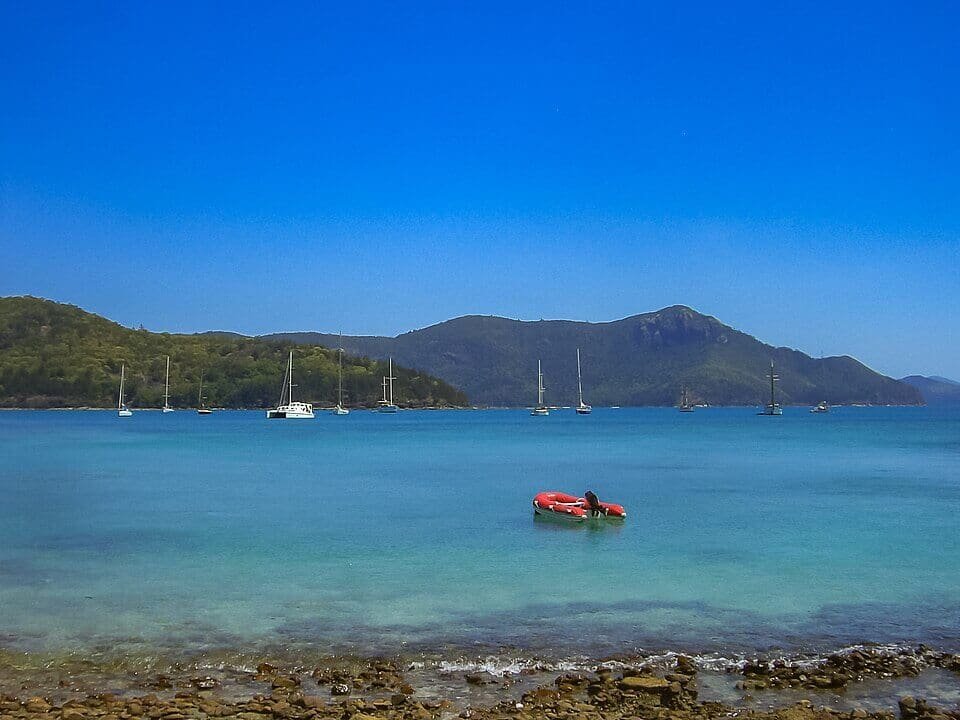
The Whitsunday Islands are 74 continental islands sitting inside the Great Barrier Reef Marine Park off the coast of Queensland, and they represent the clearest case on this list of a destination where the surrounding marine ecosystem is more important than the land itself.
Only a handful of the 74 islands are inhabited or accessible to tourists, but the ones that matter are spectacular. Whitehaven Beach stretches for seven kilometers of silica sand so pure; 98 percent silica; that it does not retain heat, which means you can walk barefoot on it in the middle of an Australian summer without burning your feet.
The Hill Inlet lookout above the beach, where the tide shifts patterns of turquoise, aquamarine, and white in a constantly changing mosaic, is one of the most photographed natural scenes in the Southern Hemisphere.
However, the Whitsundays’ primary appeal is the Great Barrier Reef. The reef system stretches over 2,300 kilometers along Queensland’s coast and supports more than 1,625 species of fish, over 450 species of hard coral, roughly 2,000 species of sponge, and approximately 9,000 known marine species in total, according to the Great Barrier Reef Marine Park Authority.
Dive and snorkel operators depart daily from both Airlie Beach on mainland Australia and Hamilton Island within the Whitsundays, making it easier than almost any other location on this list to access this incredible ecosystem.
Unfortunately, the health of the Great Barrier Reef is under documented stress. The reef has experienced mass coral bleaching events in 2016, 2017, 2020, 2022, 2024, and again in early 2025, driven by marine heatwaves linked to climate change. The Australian Institute of Marine Science noted warmer-than-usual sea temperatures during the 2024–25 summer.
Visiting the Whitsundays in 2026 means witnessing one of the planet’s most biodiverse marine ecosystems in a state of documented stress; which, depending on your perspective, is either a reason to go now or a reason to question whether tourism pressure is part of the problem.
Why it ranks here: The combination of the Great Barrier Reef (the world’s most extensive reef system) and Whitehaven Beach (which is objectively one of the best beach destinations in the world) make the Whitsundays an unparalleled tropical destination. They sit at fourteen because the islands themselves are relatively small and offer limited cultural depth beyond the resort and sailing experience, because the reef is under escalating ecological pressure, and because the logistics (fly to Proserpine or Hamilton Island, then boat transfer) add cost and complexity.
For pure marine biodiversity, however, almost nothing else on this list comes close to the ecosystem these islands sit inside.
Best time to visit: June through September (dry season, mild temperatures, optimal sailing conditions, humpback whale migration). November through March is warmer but brings cyclone risk and stinger season.
13. Saint Lucia, Caribbean
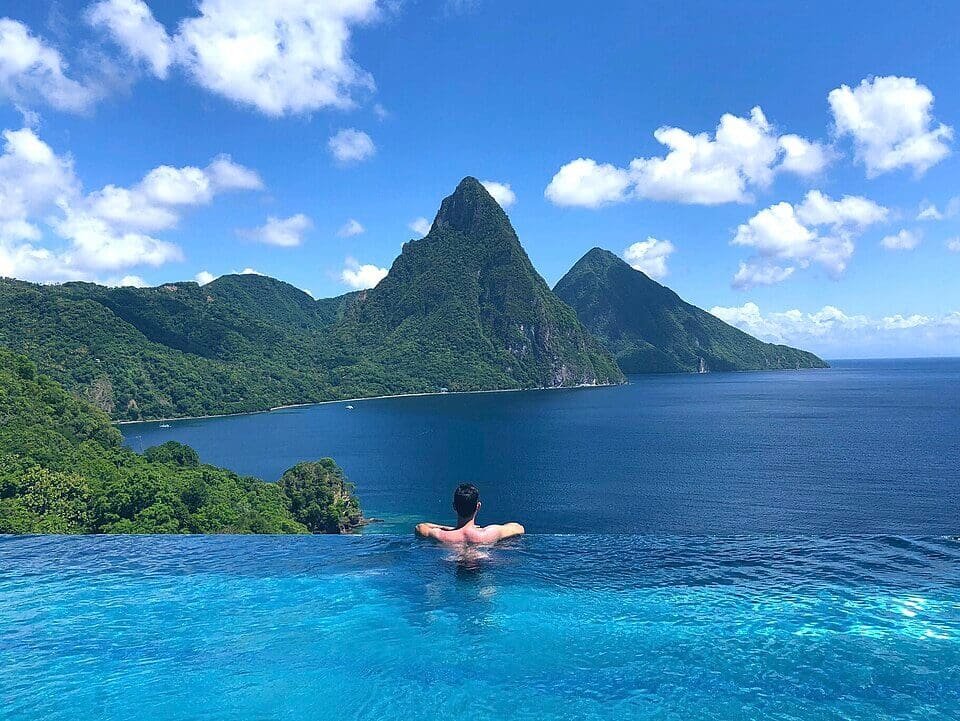
Saint Lucia is the Caribbean island that actually earned the right to call itself dramatic, and it did so by being a volcanic anomaly in a region where most competitors are flat coral platforms ringed by palm trees.
The island covers only 617 square kilometers, but it punches absurdly above its size in terms of geological spectacle. The Pitons; Gros Piton (770 meters) and Petit Piton (743 meters); are twin volcanic spires that rise directly out of the Caribbean Sea on the island’s southwestern coast. They are the kind of landform that makes you recalibrate what you thought a Caribbean island could look like. The Pitons Management Area is a UNESCO World Heritage Site since 2004 and includes not only the summits but also the surrounding tropical forests, coral reefs, and Sulphur Springs; a drive-in volcano near the town of Soufrière which calls itself the world’s only drive-in volcano. The springs’ waters are heated to roughly 170 degrees Celsius; visitors may bathe in mineral-rich mud baths at the bottom of hissing steam vents. As far from a beach chair vacation as one can get in the Caribbean.
The beaches are excellent but distinct. Anse Chastanet and Sugar Beach lie in the shadows of the Pitons providing direct access to snorkel off volcanic black sand. Reduit Beach in Rodney Bay, on the northwestern coast, represents a more typical white-sand Caribbean experience with calm waters and a series of bars and restaurants behind it. The reef systems around the Soufrière Marine Management Area have benefited from protected-area status, and the snorkeling at Anse Chastanet is among the best in the Eastern Caribbean.
U.S. News & World Report named Saint Lucia the top Caribbean destination in their 2026 Best Vacations rankings. In addition, Saint Lucia appears toward the top of almost every honeymoon-destination listing from nearly every prominent travel magazine. Tourism arrivals exceeded pre-pandemic levels by approximately eight percent in 2025, with particularly strong growth in cruise arrivals through the port at Castries.
Why it ranks here: Saint Lucia has arguably the most dramatically geological landscape in the Caribbean; a UNESCO site, volcanic hot springs, strong snorkeling; on a small enough island that it takes only a week to explore. It ranks at thirteen due to a very crowded competitive field in the Caribbean, because cruise ships visiting Castries can overwhelm the small capital, and because Saint Lucia’s road infrastructure is extremely limited and poorly developed relative to the large volumes of rental cars currently using them. However, no other Caribbean island provides such a combination of volcanic scenery and high-quality beaches.
Best time to visit: December through April (dry season, low humidity, peak pricing). May and June offer a shoulder-season sweet spot with lower prices and manageable rain.
12. Koh Samui, Thailand
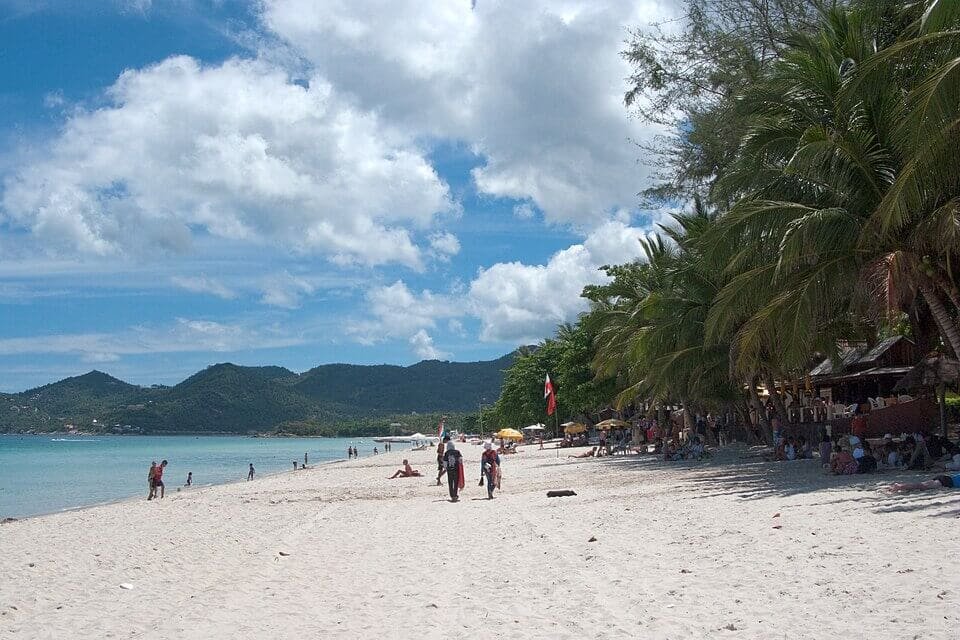
Koh Samui is a tropical island that evolved from a backpackers’ secret into a full-spectrum destination during the last thirty years. The White Lotus filmed its third season here, and the tourism impact has been immediate and measurable.
Koh Samui is 228.7 square kilometers in the Gulf of Thailand, making it the second-largest island in Thailand after Phuket. That relatively small size enables it to pack a remarkable range of experiences into its footprint. The beaches along the northern and eastern coasts; Chaweng, Lamai, Bophut, and Maenam; offer distinct personalities: Chaweng is a shopping and dining entertainment zone with nightlife; Lamai is a bit calmer with better surfing conditions; Bophut’s Fisherman’s Village offers boutique resorts and a walk-through food market; Maenam is the quietest section offering long views over to Koh Phangan. The interior of Koh Samui rises to a central ridge of jungle-covered hills, and the Namuang and Hin Lad waterfalls are accessible by short hikes that most beach-resort guests never bother to take.
In 2023, Koh Samui welcomed 3.54 million tourists, packing an island of just 228.7 square kilometers with a density that Forbes calculated at roughly 40,111 visitors per square mile; more than four times the tourist density of Paris. The island was crowned Asia-Pacific’s Best Island at Travel + Leisure’s World’s Best Awards in both 2025 and 2026; the White Lotus effect has driven a reported 65 percent surge in U.S. tourist interest and a corresponding rise in luxury hotel bookings. Hotel occupancy peaked in January 2025 at an eight percent year-on-year increase, with April 2025 ADR increases reaching as high as 21 percent.
The food alone justifies the trip. From pad thai for 40 Thai baht to tasting menus costing hundreds of dollars served at cliffside restaurants overlooking the Gulf, Koh Samui’s culinary range is unmatched at this price point. The island’s proximity to Koh Phangan (reachable by a 20-minute speedboat) and Koh Tao (one of the cheapest and most popular places on Earth to earn a PADI certification) creates a three-island system that offers beach culture, nightlife, and world-class diving within a single trip.
Why it ranks here: Koh Samui presents perhaps the greatest combination of fine cuisine, culturally interesting experiences, and value on this entire list; as well as having a unique three-island Gulf of Thailand experience that cannot be replicated by any single island. Overtourism already exists on Koh Samui; decades-long pollution from development runoff combined with anchor damage have harmed Koh Samui’s once pristine coral reefs; and the White Lotus wave has undoubtedly intensified crowding at those exact same locations and times that were previously considered to be Koh Samui’s best-kept secrets. The destination is extraordinary, but the window for experiencing it without fighting through crowds is narrowing fast.
Best time to visit: December through April (driest, calmest months). Avoid late October and November, when the Gulf of Thailand monsoon brings heavy rain and rough water.
11. Mauritius
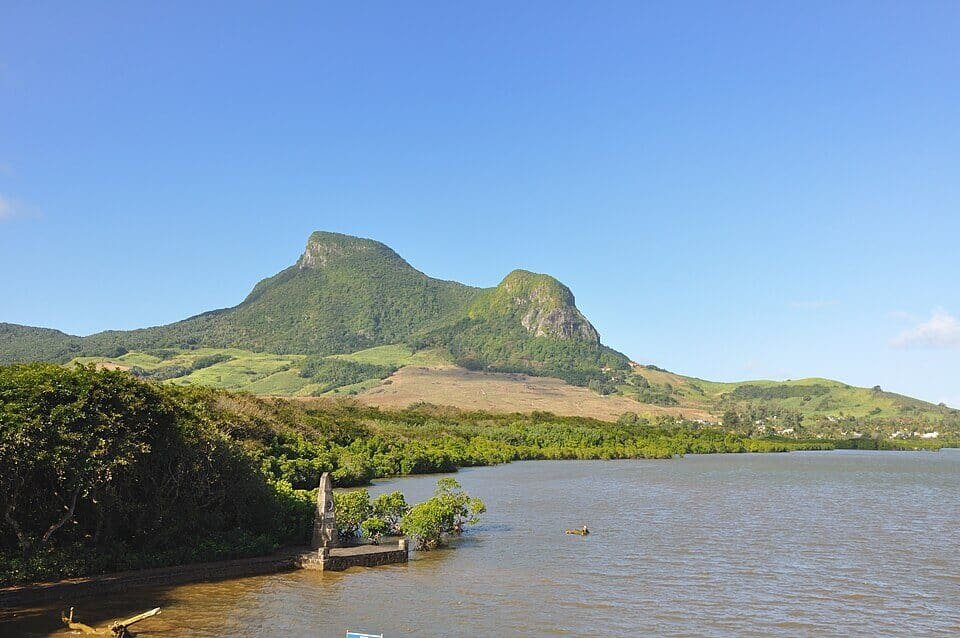
Mauritius is the tropical island that has the strongest claim to being a complete country rather than a single-dimensional beach destination, and that completeness is precisely what most island rankings fail to capture.
The island sits roughly 2,000 kilometers off the southeast coast of Africa in the Indian Ocean; remote enough that flights from Europe take at least ten hours and from North America take over twenty hours. It covers 2,040 square kilometers, making it substantially larger than most islands on this list, and that size translates into genuine geographic diversity. The interior mountains reach elevations exceeding 800 meters; numerous waterfalls cascade through dense tropical jungle in Black River Gorges National Park; and volcanic terrain produces the famous Seven Coloured Earths at Chamarel.
Statistics Mauritius reports that Mauritius received 1,436,250 international tourists in 2025; representing a 3.9 percent increase over 2024. European markets represent the largest source for tourism arrivals; France, UK, and Germany rank first through third respectively. Due to successive waves of colonizers (Dutch, French, British) layered atop an Indian-origin majority population, with Creole, Chinese, and African minorities, Mauritius is truly multicultural; and has a culinary tradition unlike any other tropical island on earth. Indian curry dishes paired with French pastry techniques, Chinese stir-frying methods, and Creole seafood flavors make Mauritius a truly one-of-a-kind experience.
Trou aux Biches and Mont Choisy on the north coast, Le Morne on the southwest beneath a UNESCO World Heritage basalt mountain, represent examples of Mauritius’ beautiful beaches; however they do not define why Mauritius outscores more popular island destinations on this list. Mauritius has a fully functional economy independent of tourism; a democratic government based upon multiple ethnicities; botanical gardens dating back to the early 18th century; and a cultural identity that does not exist solely to serve visitors. The segamusic tradition, rooted in the experience of enslaved Africans and inscribed on UNESCO’s Intangible Cultural Heritage list, is still practiced today in informal gatherings along beaches throughout the island.
Why it ranks here: Mauritius possesses significantly more cultural, culinary, and geographical depth than any comparably remote Indian Ocean island destination. It ranks at eleven rather than higher due to its remoteness which results in high costs and time required to reach; because although its coral reefs remain healthy, they are generally less impressive than those found in either the Seychelles or the Maldives; and because although many upscale resorts occupy parts of its north shore, creating an atmosphere reminiscent of a holiday compound rather than an exploratory adventure. For travelers seeking tropical island adventures that function as actual places rather than scripted escapes, Mauritius is difficult to surpass.
Best time to visit: May through December (cooler, drier winter). September and October offer optimal weather, rates, and crowd levels. Cyclone season runs January through March.
10. Galápagos Islands, Ecuador
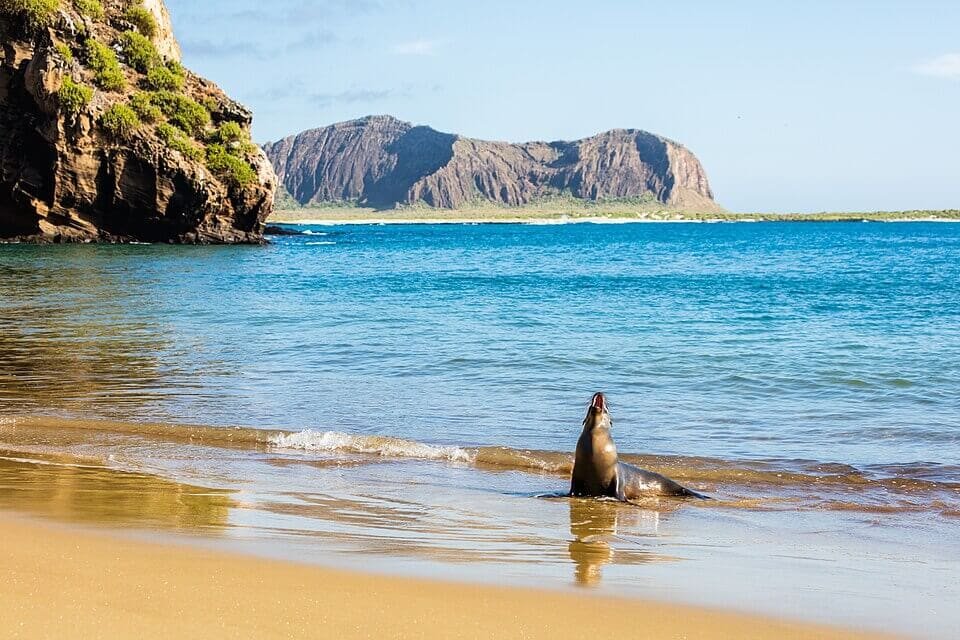
The Galápagos exist on a fundamentally different plane from everything else on this list, because the reason to go has almost nothing to do with beaches and almost everything to do with the fact that these islands changed our understanding of life on Earth.
Located in the Pacific Ocean, approximately 1,000 kilometers off the coast of Ecuador, the Galápagos Islands consist of 13 large islands, six small islands, and more than 100 islets covering a total land area of about 7,880 square kilometers. Charles Darwin traveled to this location in 1835 aboard the HMS Beagle and observed finches, tortoises, and iguanas. His observations provided substantial evidence toward developing the theory of natural selection that was later presented in On the Origin of Species in 1859. In 1978, the islands were designated as a UNESCO World Heritage Site as one of the first 12 sites worldwide. Additionally, in 2022, the marine reserve surrounding the islands was significantly expanded, providing one of the largest protected marine areas in the world.
The wildlife viewing opportunities offered by the Galápagos are unmatched anywhere else. Marine iguanas; the only ocean-swimming lizards on earth; bask on volcanic rock mere feet away from visitors. Giant tortoises, found on the highlands of Santa Cruz Island, weigh up to 400 kilograms and may live longer than 100 years. Blue-footed boobies perform their mating dance on exposed rocks while snorkelers interact with sea lions, reef sharks, and manta rays in waters between islands. Animals exhibit relatively little fear of humans due to having no terrestrial predators; therefore, wildlife viewing occurs at distances closer than on any other tropical island destination.
Approximately 329,475 visitors traveled to the Galápagos in 2023, setting a new record. Land-based tourism is replacing ship-based tourism to the extent that infrastructure on inhabited islands (Santa Cruz, San Cristóbal, and Isabela) is beginning to show signs of strain. An entrance fee ($100 currently for international visitors, recently raised from $50) collected upon arrival provides funding for conservation efforts. However, early in 2025, sewage contamination resulted in the closure of certain beaches on San Cristóbal.
Why it ranks here: The Galápagos offer the single most extraordinary wildlife experience available on any tropical island in the world. They rank at ten rather than higher because the Galápagos is not a traditional beach destination; the coastline consists of dramatic volcanic landscapes rather than idyllic beaches. Due to limited access and a high price tag ($3,000–$5,000 per person for a week-long trip including airfare and a live-aboard cruise), few individuals can travel there. Visiting the Galápagos is primarily educational rather than restful; this destination is ideal for curious travelers seeking adventure rather than relaxation. If pure unadulterated amazement is important; and it should be; then only the number-one entry offers greater levels of awe.
Best time to visit: June through November (garúa season: cooler temperatures, drier conditions, whale sharks, albatross courtship). December through May offers warmer temperatures, calmer seas, and better underwater visibility.
9. Fiji
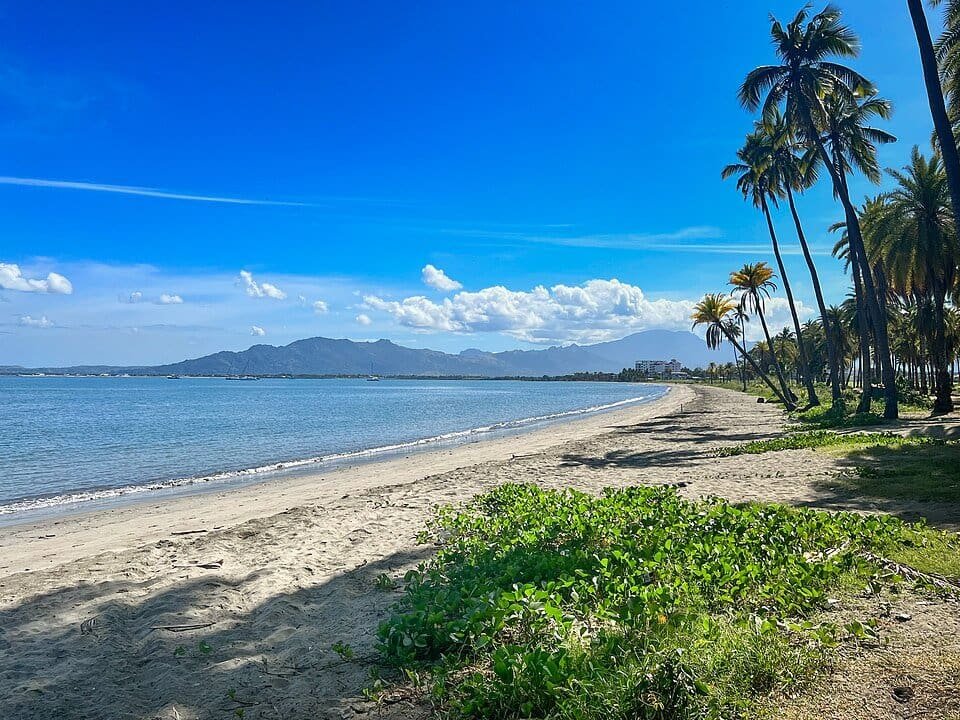
Fiji is the tropical island nation that gets chronically underestimated because it sounds like a honeymoon cliché, and that perception gap is exactly what makes it one of the best tropical islands in the world for travelers willing to go beyond the resort fence.
With over 330 islands covering an approximate area of 18,000 square kilometers of the South Pacific Ocean, Fiji has two larger islands, Viti Levu and Vanua Levu; both host the majority of the inhabitants and infrastructure. The outer island groups, specifically the Mamanuca and Yasawa chains, provide the classic white-sand-and-turquoise images used throughout most travel brochures. Fiji hosted 986,367 visitor arrivals in 2025; representing a slight increase from 2024. December 2025 alone saw 84,995 visitors; a nine percent increase from the prior year.
Unlike its South Pacific neighbors, Fiji has coral that far exceeds any competitor for soft-coral diversity. According to surveys cited by Scuba Diving Magazine and BBC Travel, Fiji hosts approximately 42 percent of the world’s soft-coral diversity. The Great Astrolabe Reef surrounding Kadavu Island south of Viti Levu represents the world’s third-largest barrier reef and provides a breeding ground for numerous species of tuna, marlin, and giant trevally along with several species of sharks. Wall-dive passages exist between Viti Levu and Vanua Levu; providing dives often featured on global top-ten lists. The Rainbow Reef near Taveuni provides a vertical reef face called the White Wall; featuring white soft coral that represents one of the most visually spectacular dive sites on Earth.
In addition to its coral reefs, Fiji exhibits an aspect lacking in most beach destinations: Fijian culture. Participating in a yaqona (kava) ceremony is not something performed solely for tourists; it is a true communal ritual practiced by villagers throughout Fiji. Partaking in a ceremony; sitting cross-legged inside a village chief’s bure; allows guests to clap once when handed a coconut shell containing kava; providing one of the most grounding cultural experiences in the Pacific. Fire-walking ceremonies held on Beqa Island hold spiritual significance dating back before European contact. Fijians view their connection to their land as an integral part of their lives; referred to as vanua. This perspective defines how Fijians practice fishing methods, hospitality, and every interaction with local communities; ultimately creating unique interactions unlike those experienced in more commercialized tourist destinations.
Why it ranks here: Fiji offers the finest diving in the South Pacific along with unprecedented soft-coral diversity and real cultural depth that lends additional value beyond scenic beauty. Fiji falls at nine since logistics are difficult; Nadi International Airport is well connected yet transferring between islands using small aircraft or long boats is complicated; resorts on the Mamanuca chain tend to mark up prices relative to quality of experience; and Viti Levu lacks appeal outside its central highland region. Yet, the outer islands and underwater environments are among the finest in the tropics.
Best time to visit: May through October (driest season, best visibility for diving and snorkeling, lower humidity). Whale season runs July through October in the Bligh Water.
8. Maui, Hawaii
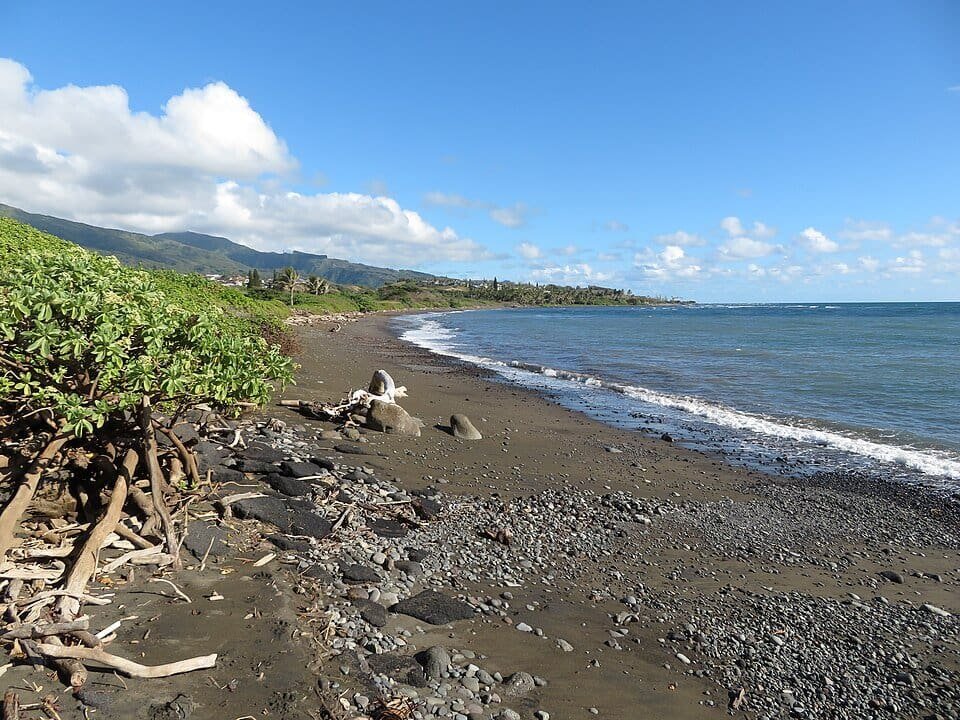
Maui is the tropical island that proves accessibility does not have to mean mediocrity, and it earns its place on this list by being the most geographically diverse island per square kilometer of any destination ranked here.
Maui spans approximately 1,883 square kilometers and includes within that space a dormant volcano (Haleakalā) standing at 3,055 meters above sea level. 48 kilometers of beaches span a wide variety of colors including white sand, red sand, and black sand resulting from volcanic ash deposits. A 104-kilometer highway (the Road to Hāna) connects tropical rainforests receiving over 4,000 millimeters of precipitation annually with arid leeward coasts averaging less than 380 millimeters annually. Microclimate variations are extreme; allowing visitors to observe sunrises at above-the-clouds heights atop Haleakalā at three in the morning, drive down to sea level by breakfast time, snorkel with green sea turtles by late morning, and trek through bamboo forests by lunchtime.
Maui welcomed approximately 2.38 million visitors in 2024, positioning Maui as the second-most visited Hawaiian island behind Oahu. As of early 2025, Maui visitor numbers had surpassed 2024 totals with over 1.89 million tourists arriving during the first nine months (representing an 8.6 percent increase year-over-year). The island’s recovery from August 2023’s devastating Lahaina wildfire; which destroyed the historic town and killed at least 101 people; remains ongoing, with tensions regarding tourism-generated revenue versus the grief of Hawaiian residents continuing to grow.
The underwater experience is strong but not exceptional by global standards; Molokini Crater; a partially submerged volcanic caldera situated off Maui’s southwestern coast; provides clear-water snorkeling opportunities with reasonable coral coverage and abundant reef fish. Humpback whale watching from December through April in the Auʻau Channel between Maui and Lānaʻi is among the world’s best.
Food scenes in Paia and Wailea demonstrate Hawaii’s multicultural heritage: poke bowls, plate lunches, and farm-to-table cuisine reflecting influences from Japanese, Filipino, Portuguese, and Native Hawaiian culinary traditions.
Why it ranks here: Maui presents a higher density of geographical and ecological diversity than any other tropical island accessible by direct flight from North America; additionally Maui possesses an established infrastructure (roads, airports, medical facilities, hotel options) that places Maui as the most developed destination on this list. Maui ranks at eight because overtourism is a persistent and evolving concern; costs associated with visiting Maui rank among the highest in the tropics (averaging $393 per person per day spent while vacationing in Hawaii). Coral reef systems present themselves as modest when compared to Indo-Pacific competitors; finally, the tragedy resulting from the Lahaina wildfire continues to generate moral concerns regarding tourism that visitors would be prudent to address rather than dismiss. Maui is extraordinary, but visiting it responsibly in 2026 requires more thought than most travel lists suggest.
Best time to visit: April through May and September through November (shoulder seasons with reduced crowds and rates). December through March for whale season.
7. Seychelles
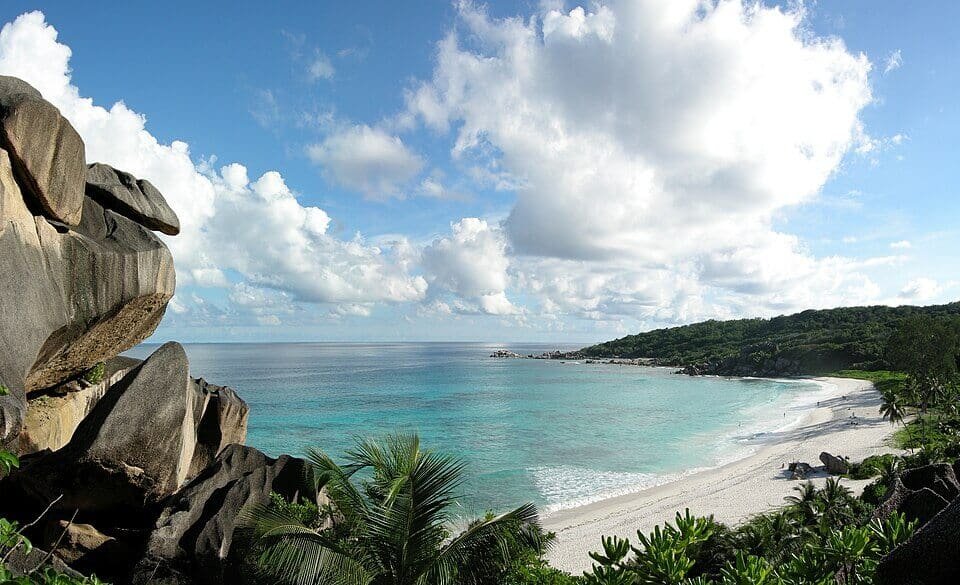
The Seychelles are the tropical island nation that does not need to try to look like paradise because the geology already did the work a hundred million years ago, and the result is an archipelago that looks like nothing else in the tropics.
While there is no doubt that the geologic processes that created these 115 islands in the western Indian Ocean produced something extraordinary, the granitic core of Seychelles is formed of the oldest mid-oceanic granites on earth. The granitic islands such as Mahé, Praslin, and La Digue contain many of the characteristics that define the Seychelles experience; large granite boulders strewn along the shores of white sandy beaches, amidst tall coconut trees and crystal-clear blue waters. The sculptured granite outcrops at Anse Source d’Argent on La Digue are considered by many to be among the most beautiful beaches in the world, and arguably one of the very few instances where the “most beautiful” designation is truly justified.
In 2019, Seychelles attracted a total of 384,204 visitors; by mid-October of 2025 this number had increased to 308,854 or 12 percent over the same period in 2024. Seychelles is targeting itself as a high-end destination with fewer visitors. According to the World Bank, Seychelles is reaching the limits of its environmentally sustainable carrying capacity for tourism of approximately 400,000 visitors annually due to geographical constraints on land availability, freshwater supply, and waste management facilities.
Ecological conditions in Seychelles are exceptional. On Praslin Island, the Vallée de Mai, a UNESCO World Heritage Site, is home to the remaining viable population of the coco de mer palm tree producing the largest seeds in the plant kingdom. Aldabra Atoll, another UNESCO site, is home to approximately 100,000 Aldabra giant tortoise individuals; representing the largest aggregation of giant tortoises in the world, exceeding even the Galápagos population. Marine life around Seychelles includes hawksbill and green sea turtle populations, whale sharks seasonally, and healthy reef ecosystems that receive much less disturbance than many more popularly touristed locations in the Indian Ocean.
Why it ranks here: Seychelles has geologically unique beaches in terms of their composition of granite boulder formations, unparalleled by any other tropical location. In addition, both Vallée de Mai and Aldabra Atoll are designated UNESCO World Heritage Sites. Seychelles is attempting to develop a sustainable tourism policy based upon quality rather than quantity. However, the cost is extremely high; Seychelles is among the most expensive destinations in Africa; individual beaches are small and can feel crowded during peak periods; and the outer islands are difficult and expensive to access individually. Still, for pure visual spectacle on land, no tropical island surpasses what the Inner Islands deliver.
Best time to visit: The best times to visit Seychelles are the transitional months between trade-wind seasons (April through May and October through November). October is the single best month for diving. Avoid January; the wettest month.
6. Bali, Indonesia
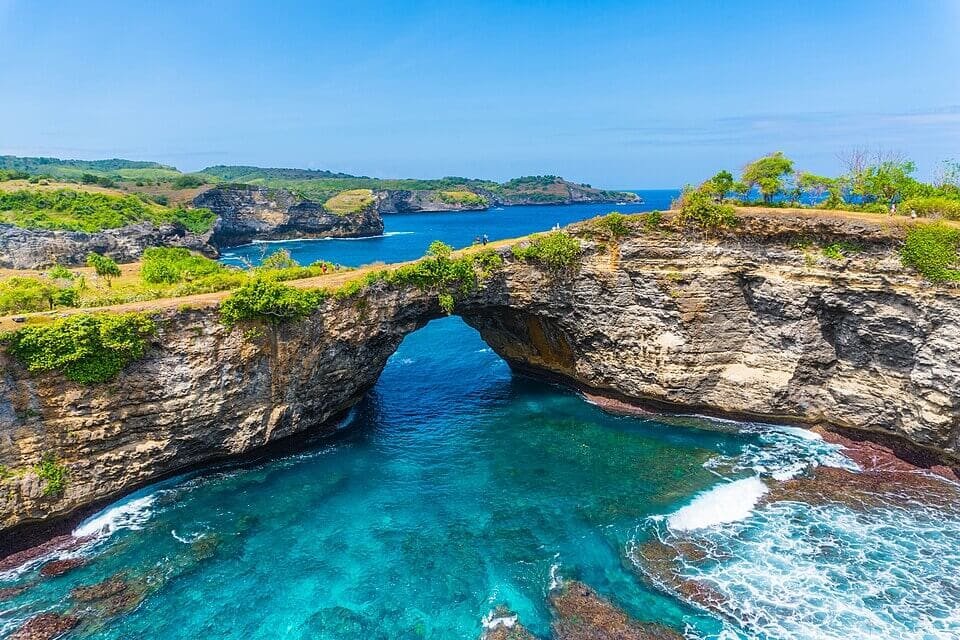
Bali is the tropical island that has borne more pressure from tourism than virtually any destination on Earth and yet it still manages to retain that thing which made it so attractive; a rich spiritual and cultural heritage which transforms a beach vacation into something deeper, longer-lasting, and different than you could ever expect.
Bali covers approximately 5,780 square kilometers of surface area in the Indonesian archipelago and received an estimated 6.95 million foreign visitors in 2025; an overwhelming number making Bali one of the most visited islands globally in sheer volume. And it is precisely this volume which represents both Bali’s biggest asset and biggest liability: the south coastal tourist strip from Kuta to Seminyak to Canggu is utterly congested and overwhelmed; traffic jams, uncontrolled development, and insufficient waste disposal have resulted in some beach areas becoming cautionary tales about unchecked tourism growth. Yet Bali is not merely its south coast. The island’s interior and northern sections represent an altogether different reality.
Ubud constitutes the cultural hub of Bali situated at the foot of the volcanic mountain range with numerous rice paddy fields; specifically the subakirrigation system, a cooperative water-management tradition dating back to the 9th century, was inscribed as a UNESCO World Heritage Cultural Landscape in 2012. Temples are ubiquitous throughout Bali; not as museum pieces but as functioning places of daily devotion: the Balinese practice a syncretic form of Hinduism that exists nowhere else; and this cyclical succession of temple ceremonies, canang sari (offerings), and ritual performances; such as Kecak Fire Dance and Barong Drama; constitute a wealth of cultural context that no other tropical island destination can compete with in scale.
As part of Indonesia; a country situated within the Coral Triangle (the global epicenter of marine biodiversity); Indonesia possesses an estimated 18 percent of all coral reefs worldwide; more than any other country on Earth. With regard to diving in Bali, although not pristine relative to other Indonesian sites such as Raja Ampat, there exist numerous exceptional diving spots including the wreck of the USAT Liberty ship (a World War II cargo ship lying at 30 meters below water level now covered in coral and inhabited by over 400 species of reef fish) at Tulamben; manta ray cleaning stations at Manta Point off Nusa Penida; and seasonal drift dives at Crystal Bay where ocean sunfish (mola mola) can occasionally be seen from July to November.
Mount Agung; Bali’s highest peak standing at 3,031 meters; is an active stratovolcano that last erupted between 2017 and 2019 and provides a dramatic volcanic backdrop that none of the other destinations on this list can possibly replicate. Additionally, Bali’s food culture encompasses a wide range from inexpensive street food (nasi goreng) served at local warungs for less than two dollars per serving to highly rated restaurants applying haute cuisine techniques utilizing traditional Indonesian ingredients; thereby catering to nearly every budget imaginable.
Why it ranks here: Bali represents the most profound cultural immersion available to travelers visiting mainstream tropical island destinations; living Hinduism; rice paddy landscapes; temple festivals; and a culinary tradition born from centuries-long trade and spiritual exchanges. However, it ranks at six due to extreme overtourism problems currently afflicting Bali’s south coast and increasing by year; degradation of reefs near major tourist areas; and the greater difference between Bali’s representation via social media versus traveling through congested Canggu streets. Nevertheless, a traveler who avoids Bali’s south coast and explores Ubud, Amed, Sidemen, and Munduk for an entire week will discover a tropical island capable of supporting a depth of cultural richness that few beach destinations can come close to replicating.
Best time to visit: The best time to visit Bali is during its dry season (April through October). June through August represents peak tourist season with highest rates. September and October provide the optimal combination of dry weather and reasonable crowds.
5. Bora Bora, French Polynesia
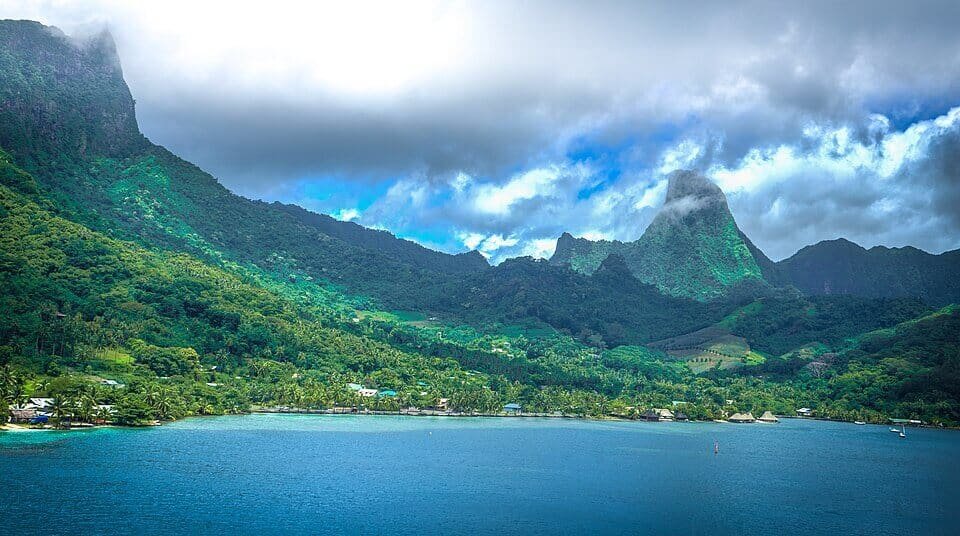
Bora Bora represents the tropical island that first introduced the contemporary idea of luxury vacations above water, and today remains the single most visually concentrated destination in the South Pacific; a place where the ratio of beauty per square kilometer reaches a density that borders on the absurd.
The primary island of Bora Bora measures just approximately 30 square kilometers, while its lagoon and perimeter coral reef add significantly to the total area. Bora Bora lies about 260 kilometers northwest of Tahiti in the Society Islands of French Polynesia. Mount Otemanu; a towering 727-meter basalt spire centered atop Bora Bora; forms an iconic backdrop for virtually all resort photographs. The lagoon surrounding Bora Bora; ranging from pale turquoise over sand to deep sapphire over coral; is frequently described as the most beautiful enclosed body of water on Earth. Matira Beach located at the southern end of Bora Bora is one of the few publicly accessible stretches of sand and is consistently listed amongst the world’s finest beaches.
The concept of the overwater bungalow; a trend that would eventually spread globally to destinations such as the Maldives, Fiji, and Jamaica; originated in French Polynesia in 1967 when three American entrepreneurs opened the first overwater accommodations on neighboring Raiatea Island. Bora Bora’s Hotel Bora Bora became the template that the global luxury hospitality industry would emulate for six decades thereafter. Currently Bora Bora features several resorts; including St. Regis, Conrad, Four Seasons, and InterContinental; charging anywhere from $1,000 per night upwards for overwater villas equipped with glass floors, private decks, and lagoon frontage.
French Polynesia welcomed a total of 281,227 tourists in 2025 (a new annual record according to ISPF); with Bora Bora accounting for an estimated 30.5 percent of all hotel nights sold in Q3 2025. Due to growing concern regarding tourism pressure on smaller island ecosystems, French Polynesia has proposed establishing an annual visitor limit at 280,000; a number already surpassed. Snorkeling with blacktip reef sharks and stingrays in Bora Bora’s lagoon remains the quintessential experience for guests; the animals having become habituated to humans but remaining wild; combined with clarity of water rendering encounters akin to swimming through a nature documentary.
Why it ranks here: Bora Bora offers perhaps the most visually intense tropical island experience existing anywhere on Earth; Mount Otemanu plus lagoon plus barrier reef create a compressed masterpiece of geological uniqueness not achievable by larger island counterparts. It sits at five because it is prohibitively expensive; this is the most expensive destination on the list by average nightly rate, with overwater villas charging $1,000 to over $5,000 per night; because the cultural experience is limited compared to destinations ranked higher (Bora Bora is primarily a resort destination with a small Polynesian village); and because reef biodiversity levels are moderate in comparison with larger Indo-Pacific destinations listed above. Still, if your singular criterion is sheer visual wonder concentrated into minimal geographic space; then Bora Bora has grounds for ranking as number one on most lists.
Best time to visit: May through October (dry season, Southern Hemisphere winter). July and August provide optimal climate conditions but peak tourist season resulting in higher costs. November offers a shoulder-season compromise.
4. Maldives
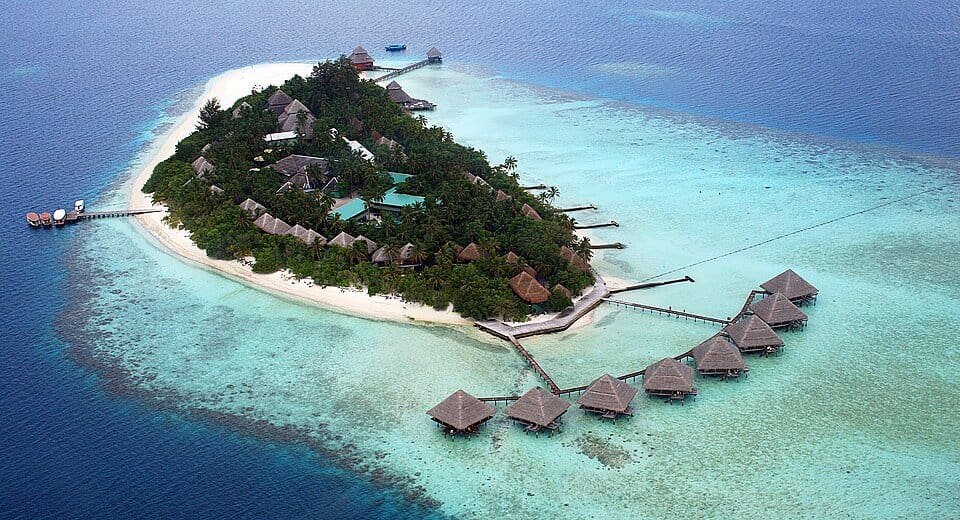
The Maldives are the tropical island destination that operates on a paradox so severe it would be unthinkable to ignore: the most luxurious beach experience on Earth is unfolding on a nation that may not remain intact in its current form within the next century due to rising sea levels.
The Maldives comprise 1,192 coral islands grouped into 26 atolls covering approximately 870 kilometers across the equator in the Indian Ocean. The average ground-level elevation is 1.5 meters above sea level, making it the lowest-lying country on Earth. None of the islands rise above 2.4 meters. The Intergovernmental Panel on Climate Change estimates that unless drastic action is taken, many parts of the Maldives will likely become uninhabitable by 2100; which is well within the lifespan of a child born today.
While facing this reality, the Maldives welcomed approximately 2.25 million tourists in 2025, representing an increase of 9.8 percent over 2024, and the Maldivian government plans for still greater increases. The tourism model used by the Maldives is unique in the world. Most tourists stay on private-island resorts, often on individual atolls, and therefore encounter few people other than resort employees and fellow guests for the duration of their trip. This creates a level of seclusion that mainland or multi-use island destinations cannot replicate. Overwater villas and underwater restaurants (the first was Ithaa at the Conrad Maldives Rangali Island) have become iconic worldwide representations of tropical luxury.
Marine environments in the Maldives are among the finest in the world. The Maldives sit directly in the center of the Indian Ocean’s coral belt, and there are extensive reef systems providing habitat for over 2,000 species of fish, 187 species of coral, and seasonal populations of five species of sea turtle, whale sharks, and manta rays. Channels between atolls create current-driven dive locations where pelagic encounters (hammerhead sharks, eagle rays, oceanic mantas) are routine rather than aspirational. One such location; Hanifaru Bay in Baa Atoll; is a UNESCO Biosphere Reserve and contains one of the largest known aggregations of manta rays and whale sharks in the world. Up to 200 manta rays feed together in Hanifaru Bay during the southwest monsoon season.
Why it ranks here: The Maldives deliver the most pristine private-beach experience available on earth with perhaps the most spectacular marine environment on earth. They sit at four because the cultural experience is minimal (most visitors never leave their resort island and interact only with hospitality staff), because the cost is extreme (budget resorts start around $200 per night but the average luxury stay runs $1,500 to $3,000 per night), because the environmental crisis is not a future abstraction but a present reality that visitors are contributing to, and because the one-resort-one-island model, while blissful, produces a narrower travel experience than islands where you can actually explore independently. The Maldives are unmatched for what they do; but what they do is specifically luxury seclusion, not exploration or cultural engagement.
Best time to visit: The best time to visit the Maldives is during the northeast monsoon; November through April. January through March are considered the best months to view manta rays in Baa Atoll. May through October are less crowded and less expensive; these months bring stronger currents and rainier weather which some experienced divers actually prefer.
3. Moorea, French Polynesia
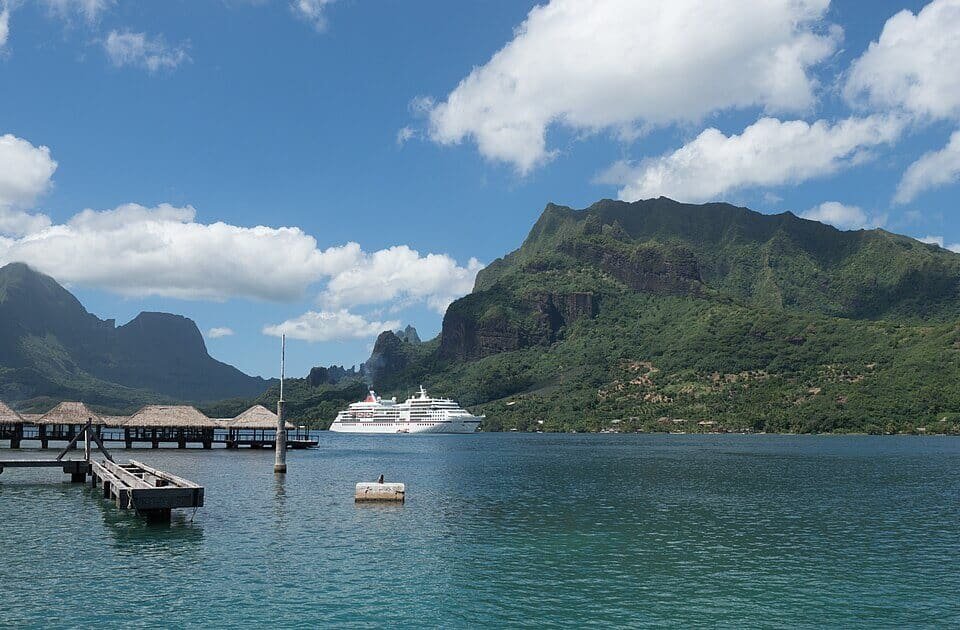
Moorea is the tropical island that exists in Bora Bora’s shadow but excels because it has managed to preserve something that its more famous neighbor surrendered decades ago; the feeling that you have arrived somewhere real rather than a destination created for tourists.
Moorea sits just 17 kilometers across the Sea of the Moon from Tahiti and can be reached by a 30-minute ferry ride costing less than a cocktail at most Bora Bora resorts. It covers approximately 134 square kilometers of volcanic terrain that has been shaped into breathtaking forms; reportedly serving as visual inspiration for the island depicted in Disney’s animated film Moana. Between two deep bays; Cook’s Bay and Opunohu Bay; located along Moorea’s northern shoreline, Mount Rotui (899 meters) rises dramatically, creating a landscape that rivals Bora Bora’s lagoon in terms of scenic beauty but offers something that Bora Bora does not: an interior worth discovering on foot.
Moorea’s coral reefs are among those most extensively researched in the world. Since 1985, the University of California at Berkeley’s Richard B. Gump South Pacific Research Station located in Cook’s Bay has conducted research on Moorea’s coral reefs and published numerous scientific studies documenting aspects of coral reef ecosystems around Moorea. As a result, Moorea’s coral reefs are probably the most documented tropical reef ecosystem on earth. Marine life is abundant around Moorea with spinner dolphins and humpback whales (July through October) passing through offshore waters. Reef sharks patrol the exterior passages, and snorkeling within Moorea’s lagoon (especially near Temae Beach on Moorea’s northwest coast) produces frequent encounters with rays, sea turtles, and rich coral gardens accessible from shore without a boat.
What truly distinguishes Moorea from other resort destinations is the richness of its cultural texture that other popular resort destinations have eliminated. Ancient Polynesian temples (marae) are scattered throughout the Opunohu Valley. In addition, Moorea has a viable economy based upon agriculture (pineapple fields, vanilla plantations, small family farms) beyond tourism, allowing for genuine interaction between locals and visitors. On Sundays, visitors can attend church services throughout the island where Polynesian hymns sung by entire congregations in small white-walled churches create music of extraordinary beauty and are open to respectful visitors. Food in Moorea reflects French-Polynesian cuisine similar to other French-Polynesian territories; however, due to Moorea’s smaller scale, roulottes (food trucks) at ferry terminals are usually owner-operated and reflect an authentic connection between visitor and vendor unlike larger corporate-run resorts.
Why it ranks here: Moorea delivers ninety percent of Bora Bora’s visual spectacle at roughly half the cost; including a functional Polynesian community; one of the world’s most heavily studied reef systems; a mountainous interior rewarding explorers willing to walk; and a cultural authenticity missing from more developed destinations. Moorea ranks third because it lacks Bora Bora’s visual compression combining peak and lagoon views; because while beach quality is high it does not approach that of either the Seychelles or Maldives at their finest; and because while medical care is adequate for minor emergencies and banking services are readily available at village centers, neither medical nor banking options are as fully developed as higher-volume destinations. Nevertheless, Moorea is quietly referred to as the favorite island by experienced travelers having visited every other island on earth, and that collective preference built from repeated trips rather than advertising is a far more valuable measure than any awards list.
Best time to visit: May through October (austral winter; dry, cool, whale season). August is peak season for the Heiva Festival held annually in nearby Tahiti featuring remarkable traditional performances in sports and dances. Weather conditions during November are ideal with greatly reduced pricing.
2. Palawan, Philippines
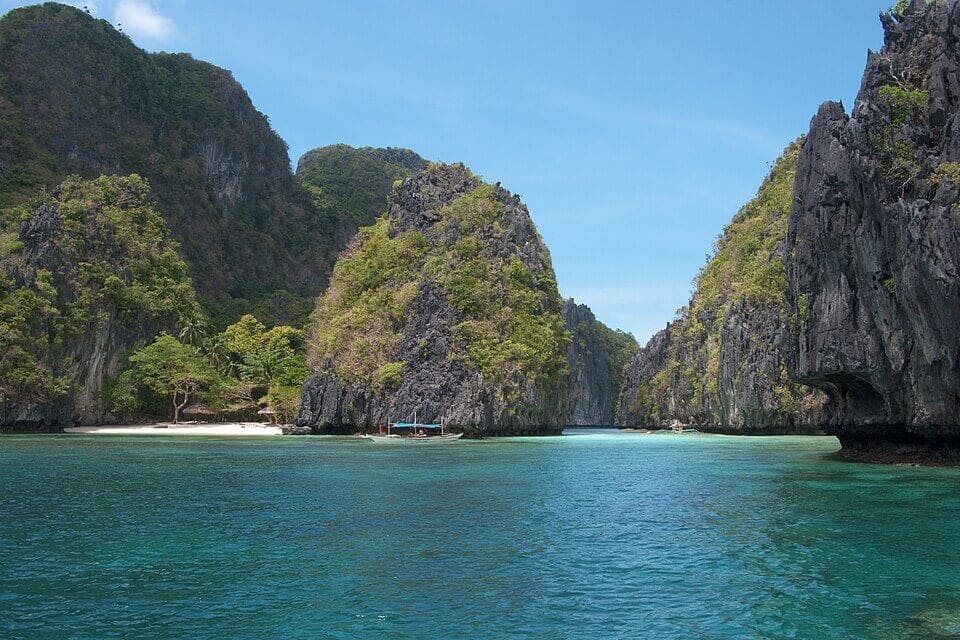
Palawan is the tropical island that repeatedly receives “best island in the world” votes only to confuse those arriving anticipating a single perfectly groomed beach, because what they ultimately experience is a 450-kilometer-long archipelago comprising over 1,780 separate islands providing more variety of natural attractions than most entire countries.
Located on the western edge of the Philippine archipelago stretching from the South China Sea to the Sulu Sea, Palawan welcomed 2.1 million visitors in 2025; an increase of 7.76 percent from 2024; with foreign visitors accounting for nearly half of total visitors. Palawan was named world’s best island according to Travel + Leisure’s World’s Best Awards; ranked number two on U.S. News & World Report’slisting of best islands for 2026; and consistently ranked among the top three destinations by reader voting in Condé Nast Traveler’s best island listings for the previous ten years. The question becomes determining if all the accolades are valid and based upon merit; regardless of whether Palawan is viewed as multiple separate experiences or a singular journey connected via boats and propeller aircraft.
El Nido located in northern Palawan and Coron (about 170 kilometers further north) are both featured in the primary showcase area. The Bacuit Archipelago includes over 40 separate islands and islets made of towering karst limestone with sheer vertical walls extending upwards out of crystal-blue lagoons; producing scenery associated with movie sets rather than places you can visit for $30 per night. Visitors regularly rate El Nido’s Big Lagoon and Small Lagoon on Miniloc Island, Secret Beach (which requires swimmers to swim through a narrow opening in a limestone wall), and routes visiting various islands in the archipelago as among the most visually dramatic coastal scenes in Southeast Asia. Coron features an entirely different dimension: sunken Japanese World War II ships lying on the bottom of 10 to 40 meters of water that have grown covered with coral, creating artificial reefs hosting an abundance of marine life. With reef dives, wreck dives, and freshwater lake swims (such as Kayangan Lake) occurring simultaneously in one location; there appears to be virtually no other place on earth that can compare.
Puerto Princesa Subterranean River located on Palawan’s western coast was designated as a UNESCO World Heritage Site (in 1999), a Ramsar Wetland (in 2012), and one of the New Seven Wonders of Nature (in 2012). The underground river extends more than 8.2 kilometers through a massive cave system, making it one of the longest navigable underground rivers on earth. The cave itself contains giant-scale stalactites and stalagmites large enough to fill cathedrals; thousands of bats flying overhead; and nothing but the sound of dripping water off the rocks.
Why it ranks here: Palawan offers more varieties of natural attractions than any other tropical island destination; karst seascapes; subterranean rivers; wreck diving; reef diving; freshwater lakes; jungled mountains; all at prices comparable to other Southeast Asian destinations while offering natural spectacle associated with Indian Ocean destinations at significantly lower prices. Palawan ranks second because despite having world-class attractions, its infrastructure remains underdeveloped; power failures occur frequently; road conditions vary widely outside Puerto Princesa City; domestic flights are unpredictable during peak seasons; and the gap between the stunning natural environment and developing tourism infrastructure can occasionally frustrate travelers familiar with more modernized destinations. However, for pure, unedited, unmanufactured natural beauty at scales unavailable elsewhere in the tropics; Palawan takes its rightful position close to the top.
Best time to visit: November through May (dry season). Peak season occurs from December through February when prices are highest but weather conditions are optimal. March through May is hotter but drier with fewer crowds and better availability.
1. Raja Ampat, Indonesia
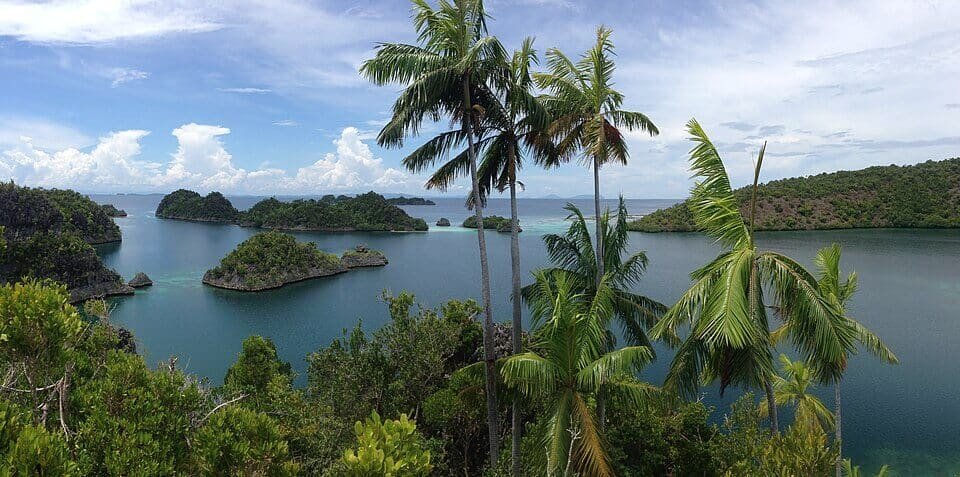
Raja Ampat, Indonesia, is the best tropical island destination in the world, and the reason is not complicated: it contains the richest marine biodiversity ever recorded on Earth, it remains one of the least-visited major dive destinations on the planet, and the experience of being there; floating above reefs that contain more species of coral and fish in a single hectare than some countries contain in their entire territorial waters; produces a kind of awe that no luxury resort can manufacture.
The Raja Ampat archipelago comprises over 1,500 islands scattered across roughly 46,000 square kilometers of ocean off the northwestern tip of Indonesia’s Papua province, sitting at the geographic heart of the Coral Triangle; the marine equivalent of the Amazon rainforest. UNESCO designated it a Man and the Biosphere Reserve. According to marine surveys, the numbers that come out of Raja Ampat read like science fiction rather than ecology. Over 550 species of hard coral have been identified here, which represents almost 75 percent of all hard coral species known to science. Over 1,800 species of reef fish have been found in the surrounding waters. Over 700 species of mollusks live on the reefs. Five species of endangered sea turtles nest on the beaches. Manta rays cruise cleaning stations in predictable seasonal patterns. Whale sharks swim through the Dampier Strait. And there are walking sharks; a type of epaulette shark that literally walks along the bottom of the reef flat using its pectoral fins. They exist nowhere else on Earth.
To put the biodiversity in context: a single dive site in Raja Ampat can contain more coral species than the entire Caribbean. One reef survey in the Dampier Strait found 374 fish species during a single dive; a world record. The marine ecosystem here is not simply healthy or impressive; it is the densest concentration of marine life scientists have ever measured.
Seeing it firsthand is genuinely eye-opening. Imagine descending over a wall where soft corals in neon purple, electric orange, and fluorescent green cascade down vertical rock faces. Schools of fusiliers swim overhead. A wobbegong shark lies camouflaged on the reef below. To say that nature has produced something that exceeds anything humans could possibly design is not hyperbole.
So why does Raja Ampat deserve to sit atop this list? First and foremost, it has successfully avoided entering the overtourism spiral that has degraded many other destinations ranked here. Only around 33,000 people visit Raja Ampat per year. According to a recent sustainability study, the reefs can sustainably support a maximum of approximately 21,000 tourists per year before ecological harm becomes measurable. While Raja Ampat has now exceeded its sustainable limits, visitor numbers remain tiny compared to places like Bali or the Galápagos. A marine park entrance fee (approximately $65 USD per person) funds patrol boats, ranger stations, and community conservation projects. Additionally, a traditional Papuan practice called sasi (temporarily closing marine areas to fishing to allow stock replenishment) has been formally incorporated into Raja Ampat’s marine management framework.
Of course, there are trade-offs. Reaching Raja Ampat requires multiple flights and boat rides. While there are ATMs available in Sorong, you will not find them on most of the islands in the archipelago. Medical care is virtually nonexistent outside of first aid at larger resorts. Internet access varies greatly depending on location; sometimes slow, sometimes nonexistent. Accommodations run the gamut from simple stilted homestays (roughly $50 to $80 per night including meals) to high-end dive resorts (up to $600 per night), but there is little in between. Restaurants are scarce and nightlife is virtually nonexistent. Your primary focus will be on the ocean.
However, even though the infrastructure is limited, Raja Ampat itself is stunning; karst limestone islands with thick jungle coverings rising out of crystal-clear water. Birdwatchers will love spotting the Wilson’s bird-of-paradise and the red bird-of-paradise, both endemic to the region and renowned for their outrageous courtship displays.
Raja Ampat’s indigenous population maintains a unique Papuan culture that is distinctly separate from those found throughout most of Indonesia. Local communities that host visitors in homestays and provide transportation and guide services continue to follow traditional methods of subsistence fishing and agriculture while participating in conservation efforts related to tourism.
Why Raja Ampat stands alone: It has an unparalleled combination of above-water beauty combined with the highest marine biodiversity ever measured on Earth. Visitors are relatively rare compared to other popular destinations on this list and therefore have a genuine sense of discovery rather than having experienced mass tourism. While several other destinations on this list excel in various ways; Bora Bora has visual intensity, Palawan has natural variety, Bali has cultural depth; none can compare with Raja Ampat when evaluating its capacity to make you feel that you are witnessing something the planet created without any consideration for human convenience, and that you are among the very small number of people who will ever see it. Those feelings cannot be purchased and disappear when mass tourism arrives.
Therefore, due to its relative isolation and ongoing commitment to preserving an unspoiled experience for visitors, Raja Ampat is currently the best tropical island in the world.
Best time to visit: October through April (calmer seas, best visibility, manta season peaks October through January). Avoid June through September when strong winds from the southeast monsoon can make boat travel uncomfortable and decrease underwater visibility. November through December is generally considered the optimal window for divers.
How We Ranked These Islands
Every ranking is an argument, and we want to be transparent about how we constructed ours. We evaluated each of the 15 best tropical islands in the world across six weighted criteria.
Ecological richness received the highest weight because we believe that a destination’s natural environment is what most clearly distinguishes an exceptional tropical island from a merely pleasant one. A destination situated within the Coral Triangle with 550 coral species operates in a different category from a destination with a pretty beach and a house reef. This criterion includes reef health, endemic species counts, marine biodiversity metrics, and the presence of functioning conservation frameworks.
Cultural depth was weighted second because we believe the best tropical islands are places, not products. An island with a living cultural tradition, a genuine cuisine, and a community that exists independently of tourism offers a fundamentally richer experience than an island where the only local inhabitants are hospitality workers.
Beach and landscape quality was weighted third because, obviously, it matters; this is a list of the top tropical islands to visit, and if the beaches and scenery are not spectacular, nothing else compensates. But we defined this broadly to include geological variety, volcanic landscapes, interior terrain, and scenic range; not just white sand.
The remaining criteria; accessibility and logistics, overtourism reality, and value; were weighted equally and served primarily to adjust positions between islands that scored similarly on the top three criteria. An island that is extraordinary but inaccessible, overcrowded, or prohibitively expensive was ranked lower than an island of comparable natural quality that is easier to reach, less impacted by mass tourism, or more financially accessible.
Our final ranking prioritizes biodiversity over luxury accommodations; cultural depth over resort aesthetics; and environmental integrity over convenience factors.
You may disagree with some of our rankings. That would be fine. Our goal was to produce a ranking that reflected editorial conviction and provided readers with arguments for our conclusions. A ranking that produces no disagreement is a ranking that took no positions, and a list that takes no positions is not worth reading.
Island‑by‑Island at a Glance: The Complete Ranking Snapshot
| Rank | Island | Country / Region | Key Strength | Annual Visitors | UNESCO Sites | Best Time to Visit | Value Level |
|---|---|---|---|---|---|---|---|
| 1 | Raja Ampat | Indonesia | Highest marine biodiversity on Earth; 550+ coral species; 1,800 reef fish species | ~33,000 | UNESCO Man and the Biosphere Reserve | Oct–Apr | Moderate ($50–$600/night) |
| 2 | Palawan | Philippines | Greatest breadth of natural spectacle; karst seascapes, wreck diving, underground river | 2.1M (2025) | Puerto Princesa Subterranean River (UNESCO); New 7 Wonders of Nature | Nov–May | Budget ($30+/night) |
| 3 | Moorea | French Polynesia | 90% of Bora Bora’s beauty at half the price; world’s best-studied reef system | Part of 281K (French Polynesia total) | None (Gump Research Station) | May–Oct | Moderate-High |
| 4 | Maldives | Maldives | Most pristine private-island beach experience; exceptional marine environment | 2.25M (2025) | Baa Atoll UNESCO Biosphere Reserve | Nov–Apr | Premium ($200–$3,000+/night) |
| 5 | Bora Bora | French Polynesia | Most visually intense tropical island; Mount Otemanu + lagoon + barrier reef | Part of 281K (French Polynesia total) | None | May–Oct | Ultra-Premium ($1,000–$5,000+/night) |
| 6 | Bali | Indonesia | Deepest cultural immersion; living Hinduism, subak rice terraces, temple ceremonies | 6.95M (2025) | Subak Cultural Landscape (UNESCO) | Apr–Oct | Budget ($2–$200+/night) |
| 7 | Seychelles | Seychelles | Geologically unique granite boulder beaches; two UNESCO World Heritage Sites | ~384K (2019 peak); ~309K by Oct 2025 | Vallée de Mai; Aldabra Atoll | Apr–May & Oct–Nov | Premium |
| 8 | Maui | Hawaii, USA | Most geographically diverse per km²; Haleakalā volcano, Road to Hāna, whale watching | 2.38M (2024) | Haleakalā National Park (NPS) | Apr–May & Sep–Nov | High (~$393/day avg) |
| 9 | Fiji | Fiji | Soft-coral capital of the world (42% global diversity); authentic kava culture | 986K (2025) | Great Astrolabe Reef (3rd largest barrier reef) | May–Oct | Moderate |
| 10 | Galápagos Islands | Ecuador | Most extraordinary wildlife experience; Darwin’s legacy; fearless endemic species | ~329K (2023 record) | UNESCO World Heritage Site (1978) | Jun–Nov | High ($3,000–$5,000/week) |
| 11 | Mauritius | Mauritius | Most complete country-island; multicultural cuisine, sega music, geographic diversity | 1.44M (2025) | Le Morne (UNESCO); Sega (Intangible Heritage) | May–Dec | Moderate-High |
| 12 | Koh Samui | Thailand | Best culinary value; three-island system; White Lotus cultural moment | 3.54M (2023) | None | Dec–Apr | Budget-Moderate |
| 13 | Saint Lucia | Caribbean | Most dramatic Caribbean geology; Pitons, drive-in volcano, reef snorkeling | 8% above pre-pandemic (2025) | Pitons Management Area (UNESCO) | Dec–Apr | Moderate-High |
| 14 | Whitsunday Islands | Australia | Great Barrier Reef access; Whitehaven Beach (98% silica sand) | Part of GBR Marine Park visitors | Great Barrier Reef (UNESCO) | Jun–Sep | Moderate-High |
| 15 | Zanzibar | Tanzania | Strongest cultural-depth-to-cost ratio; Stone Town UNESCO; spice heritage | 743K+ (through Oct 2025) | Stone Town (UNESCO) | Jun–Oct | Budget |
Frequently Asked Questions
What is the best tropical island destination in 2026?
Based upon our research and methodology, Raja Ampat remains the best tropical island destination globally due to its unrivaled marine biodiversity; over 550 hard coral species and 1,800 reef fish species representing 75 percent of all known coral species on Earth. Its limited visitor numbers (approximately 33,000 per year) and community-managed conservation activities protect an experience that mass-tourism destinations can no longer offer.
What is the most visually stunning tropical island destination?
Bora Bora offers the most visually stunning tropical island scenery due to Mount Otemanu standing sentinel amidst turquoise lagoon waters protected by a barrier reef. The Seychelles follow closely behind, featuring granite boulder beaches found nowhere else on Earth. Both destinations command premium prices reflecting their visual exclusivity.
Which tropical destinations offer excellent snorkeling and diving opportunities?
Raja Ampat offers the richest diving on Earth, with a single dive site containing more coral species than the entire Caribbean. Fiji is home to the world’s greatest soft-coral diversity, accounting for 42 percent of all known soft-coral species globally. Palawan features both World War II wrecks and pristine reefs in crystal-clear water. Hammerhead sharks, manta rays, and whale sharks are frequently spotted by divers in the Maldives’ atoll channels, where strong currents create routine pelagic encounters.
What are some affordable tropical island options?
Travelers seeking affordable options will find strong value at Koh Samui or Zanzibar due to world-class beaches, rich cultural experiences, and quality food at prices significantly lower than Indian Ocean or South Pacific luxury destinations. Palawan provides arguably the greatest diversity of natural attractions among tropical islands at Southeast Asian prices; lodging begins at $30 per night in El Nido.
What are some good honeymoon destinations?
The Maldives remain the global benchmark for honeymoon seclusion; private-island resorts where guests encounter no one except their partner and resort staff. Bora Bora originated luxury overwater bungalows and still sets the standard today. Moorea delivers ninety percent of Bora Bora’s visual impact at roughly half the price with greater cultural authenticity. Saint Lucia adds volcanic drama, UNESCO heritage, warm Caribbean climate, and romance.
Is overtourism destroying tropical islands?
Yes, significantly. Bali hosted approximately 7 million international visitors in 2025, resulting in extreme congestion on southern beaches. Koh Samui’s tourist density exceeds four times that of Paris. The Maldives welcomed approximately 2.25 million visitors in 2025 on islands averaging 1.5 meters above sea level. Zanzibar’s tourist traffic set an all-time record before October 2025. Multiple destinations on this list are approaching or exceeding scientifically established carrying capacities.