



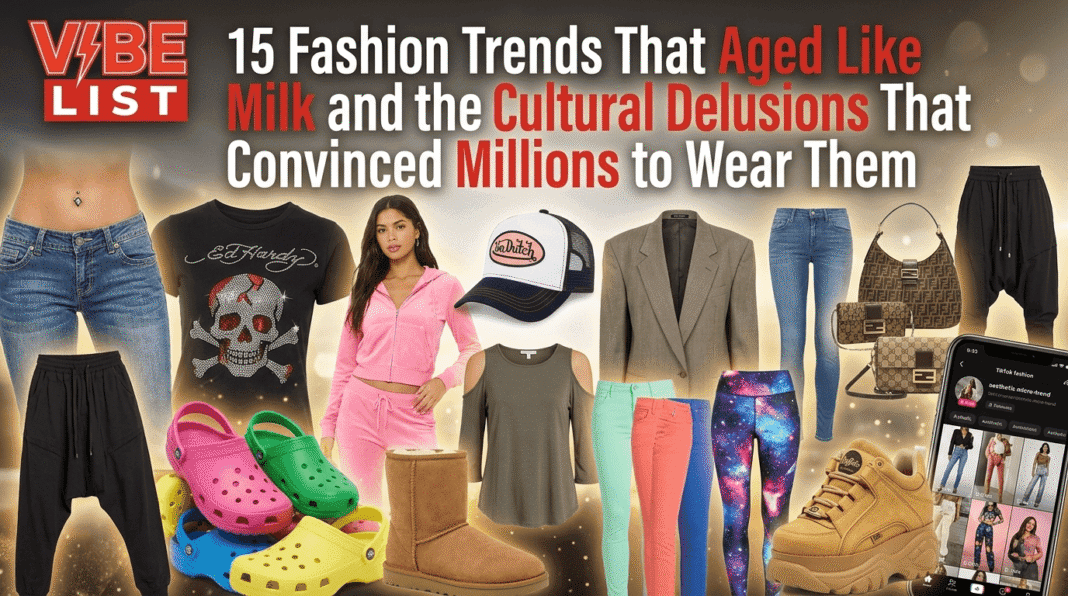
$700 million in sales for a clothing line destroyed by one man wearing it on a yacht. A 19-year denim monopoly killed by a 15-second TikTok. A shoe named one of the worst inventions of all time now generating $4.1 billion a year. Ten thousand new Shein items uploaded daily; each one obsolete before the package arrives. A divorced reality TV dad in rhinestones on the French Riviera. None of these trends died because they were ugly; they died because the delusion that sold them had an expiration date.
“In the past, there were two options; short dresses and long dresses. In more recent years, there are more options: really short dresses, floor-length dresses and midi dresses. There is an increase in variance over time and less conformity.” — Emma Zajdela, Northwestern University mathematician and lead author of the 20-year fashion cycle study
Every generation is convinced that its fashion choices are timeless. Every generation has been wrong about at least half of them.
The closet is a graveyard of confidence. Somewhere between the wire hangers and the dry-cleaning bags, there’s a garment you once believed made you untouchable; a piece you wore out of the house thinking the world would stop and take notice. The world did take notice. Just not in the way you imagined. That garment is still there, shoved behind the winter coats, because throwing it away feels like admitting defeat and wearing it again feels like a federal offense.
Fashion trends fail for specific, identifiable, and often predictable reasons. They do not simply “go out of style” the way weather changes. They collapse under the weight of overexposure, economic shifts, cultural reckonings, and the inescapable mathematics of the trend cycle itself. In 2026, mathematicians at Northwestern University confirmed what the fashion industry had long suspected but never proven: after analyzing approximately 37,000 garments spanning more than 160 years, researcher Emma Zajdela and her colleagues found that fashion trends resurface on a roughly 20-year cycle, driven by a constant oscillation between novelty and nostalgia.
“The system intrinsically wants to oscillate,” said applied mathematician Daniel Abrams, “and we see those cycles in the data.”
That oscillation means two things simultaneously. First, everything comes back. Second, everything has to die before it can return. The death is the interesting part.
The fast-fashion industry has turbocharged this natural cycle into something almost unrecognizable. What once took a full decade to rise and fall now takes months. According to the Global Fashion Agenda, we are now firmly in the era of micro trends, where TikTok-driven aesthetics like Balletcore, Tomato Girl Summer, and Coastal Cowgirl Core sprint from creation to ubiquity to irrelevance in the span of weeks. Shein, the Chinese ultra-fast fashion giant, adds up to 10,000 new items to its platform every single day, each one designed to capture a trend before it evaporates. The fashion industry now accounts for roughly 10% of global carbon emissions and consumes enough water to fill 32 million Olympic swimming pools each year.
A psychological mechanism is also at work. In 2012, researchers Hajo Adam and Adam Galinsky at Northwestern University published a landmark study introducing the concept of“enclothed cognition”, which demonstrated that the clothes people wear systematically influence their psychological processes. The study found that wearing a garment associated with a particular symbolic meaning (such as a doctor’s coat) measurably changed the wearer’s attention, confidence, and performance. This means that when you bought that trend piece and felt transformed, the feeling was real. The transformation was not. You were borrowing an identity that the trend cycle would repossess within months, leaving you holding nothing but a receipt and a closet full of evidence.
What follows are 15 fashion trends that aged terribly; not because they were inherently ugly (though several were), but because the cultural delusions that made them irresistible were destined to expire. Behind each one is a specific, traceable story of celebrity endorsement, economic forces, psychological biases, and industry manipulation. Recognizing those patterns does not just help you laugh at old photos. It helps you avoid making the same mistakes with whatever TikTok is selling you this week.
1. Low-Rise Jeans: The Trend That Weaponized Insecurity
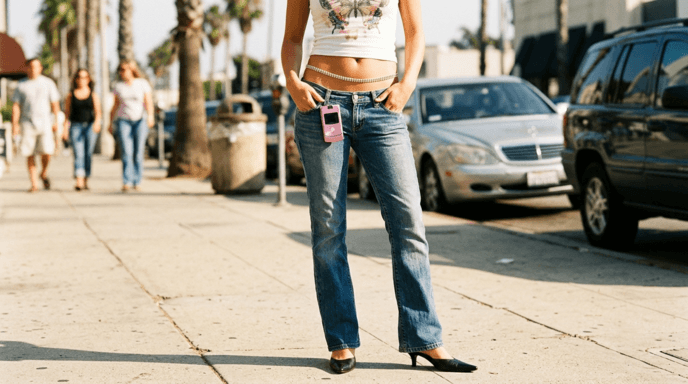
Low-rise jeans did not just fail as a fashion trend. They failed as a concept of human decency toward the human body.
The low-rise silhouette dominated the late 1990s through the mid-2000s with a grip that was as aggressive as the waistband was absent. Sitting barely above the hip bone, and in some extreme iterations below it, low-rise jeans demanded a very specific body type to function without constant wardrobe malfunction. The trend was propelled by a celebrity apparatus that included Paris Hilton, Britney Spears, and virtually every tabloid-featured young woman of the era, all of whom were photographed in jeans so low they seemed to defy the basic physics of staying on a human body.
The cultural backlash was not just aesthetic. It was psychological. As multiple analyses have documented, the low-rise era coincided with an intensification of body-image anxiety among young women, who were expected to maintain a midsection flat enough to survive public exposure between a crop top and a waistband that sat five inches below the navel. The trend didn’t just ask people to wear a specific pair of jeans. It asked them to reshape their body to accommodate a design that was fundamentally hostile to most human torsos.
Low-rise jeans began cycling back around 2022, exactly on schedule per the 20-year cycle, but the revival was noticeably tempered. The new versions sat slightly higher, the marketing was more body-inclusive, and the cultural conversation had shifted enough that the return felt more like a cautious experiment than a full-blown resurrection. The original version; the one that made an entire generation afraid to sit down in public; has not returned. It should not.
2. Ed Hardy Everything: When a Billion-Dollar Brand Was Killed by a Reality TV Dad
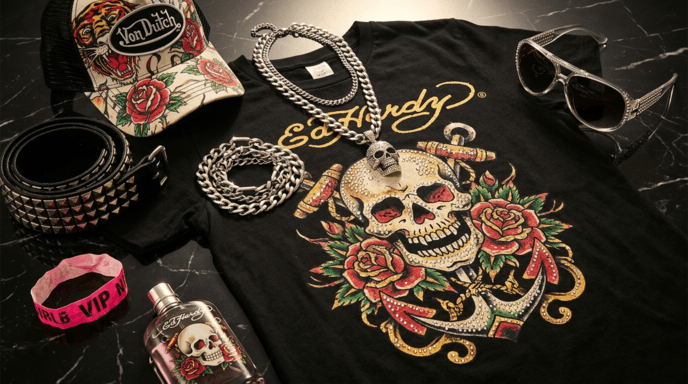
The Ed Hardy story is not a fashion cautionary tale. It is a Shakespearean tragedy performed entirely in rhinestones.
Don Ed Hardy, the man behind the name, is a genuine artist: a San Francisco Art Institute graduate, a protégé of legendary tattoo master Sailor Jerry, and a student of Japanese ukiyo-e woodblock printing tradition. His tattoo work is respected in fine art circles and has been exhibited in museums. None of this mattered once French entrepreneur Christian Audigier got involved.
Audigier licensed Hardy’s name and artwork in the mid-2000s and proceeded to plaster it across every conceivable surface: T-shirts, trucker hats, cigarette lighters, USB keychains, and anything else that could physically hold a print. By 2009, the Ed Hardy brand had generated more than $700 million in sales according toThe New York Times, with 70 stores worldwide. Then Jon Gosselin happened.
Gosselin, the embattled father from the reality show Jon & Kate Plus 8, became the most photographed Ed Hardy wearer on the planet during his very public divorce. He was spotted aboard Audigier’s yacht on the French Riviera, partying with a woman half his age, wearing Ed Hardy from head to toe. The brand’s association shifted overnight from “edgy celebrity fashion” to “midlife crisis uniform.” Hardy himself later told the Today show that Gosselin had “tanked” his brand. In his memoir, Hardy was more pointed about Audigier: “This guy is at ground zero of everything wrong with contemporary culture.”
Hardy sued Audigier for $100 million for breach of contract. The case settled. Audigier died in 2015. The brand entered years of dormancy before a tentative Gen Z revival led by Bella Hadid and Addison Rae wearing vintage Ed Hardy ironically; which is itself a kind of eulogy.
The Ed Hardy collapse demonstrates a principle that the fashion industry still has not fully internalized: a brand built on celebrity association can be destroyed by celebrity association. The same mechanism that inflated Ed Hardy to $700 million deflated it to a punchline in under twelve months.
3. Velour Tracksuits: The Loungewear That Somehow Left the House

There is a photograph of Paris Hilton at Los Angeles International Airport in approximately 2003, wearing a bubblegum-pink Juicy Couture velour tracksuit, oversized sunglasses, and a tiny dog in the crook of her arm. That photograph is the Rosetta Stone of early-2000s fashion. Everything wrong with the era can be decoded from it.
Juicy Couture, founded by Pamela Skaist-Levy and Gela Nash-Taylor in 1997, did not invent the tracksuit. It did something arguably worse: it convinced millions of women that wearing one to brunch, to the airport, to dinner, and eventually to everywhere was not only acceptable but aspirational. At its peak, Juicy Couture reported approximately $605 million in annual sales, and the velour tracksuit became the uniform of an era that confused “casual” with “costume.” Hilton herself reportedly owned hundreds of them.
The velour tracksuit aged badly for a reason that has nothing to do with velour itself. It aged badly because it was the ultimate example of aspiration untethered from substance. The message was: I am wealthy enough to look like I am not trying. The reality, visible to everyone except the wearer, was: I spent $200 to look like I am heading to a sleepover. When the economic crash of 2008 arrived and conspicuous consumption became socially uncomfortable, the velour tracksuit was among the first casualties. Juicy Couture was eventually sold at a steep loss, its once-coveted tracksuits relegated to thrift-store racks where they remain, in astonishing quantities, to this day.
4. Von Dutch Trucker Hats: Celebrity Endorsement as a Controlled Demolition
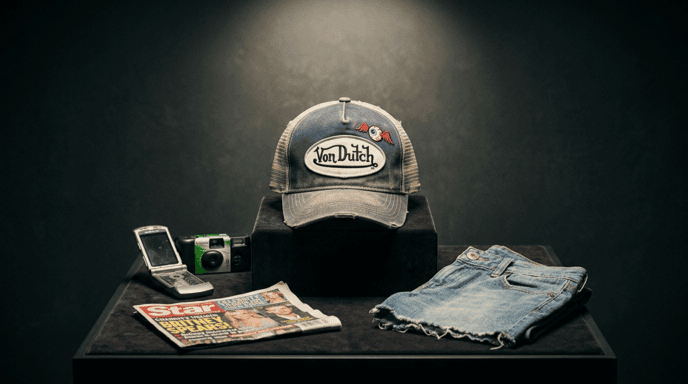
Before Von Dutch was a fashion brand, Von Dutch was a person. Kenneth Howard, known as “Von Dutch,” was a mid-twentieth-century pinstripe artist and hot rod customizer from Southern California who was, by most accounts, spectacularly talented and spectacularly troubled. He was also, as multiple sources have documented, openly antisemitic and a collector of Nazi memorabilia. The fashion brand that borrowed his name did not borrow this context; at least not publicly.
In the early 2000s, Von Dutch trucker hats became one of the most visible celebrity-driven accessories in recent memory. Ashton Kutcher, Paris Hilton, Britney Spears, Justin Timberlake, and Jay-Z were all photographed wearing them. A Hulu docuseries later revealed the chaotic backstory of the brand’s founding, which involved alleged fraud, drug use, and at least one shooting. The trucker hat had been around for decades as a functional, unglamorous piece of workwear. Von Dutch took it, stamped a logo on it, and charged $40 for something that John Deere had been giving away free at farm supply stores.
The trend collapsed for the same reason it succeeded: overexposure. Once every tabloid celebrity and their entourage had been photographed in a Von Dutch hat, the hat ceased to signal anything desirable. It signaled only that the wearer had arrived at the trend too late; which in the mid-2000s meant approximately six months after its debut. The brand’s darker history only compounded its fall. Von Dutch remains the clearest modern illustration of how fashion brands can monetize a name without interrogating what that name actually represents.
5. Oversized Shoulder Pads: Power Dressing That Became a Caricature of Itself
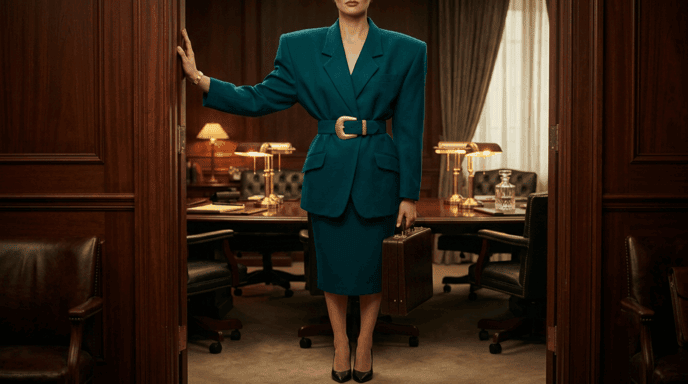
Shoulder pads have a more legitimate origin story than most people realize. As Coveteurhas documented, they emerged as a fashion element in the 1930s and 1940s, when women entering the workforce during wartime wanted clothing that projected authority in male-dominated environments. The broadened shoulder silhouette was a deliberate visual strategy: it made women appear physically larger and, by extension, more authoritative in professional settings.
The 1980s took this idea and drove it off a cliff.
By the middle of the decade, shoulder pads had migrated from subtle structural inserts into architectural statements that added several inches to each shoulder. The silhouette, epitomized by television shows like Dynasty and Dallas, was intended to project power, wealth, and corporate dominance. Instead, it created a visual effect that made the wearer look like a linebacker who had accidentally wandered into a board meeting. The problem was not the concept of power dressing. The problem was that the execution escalated until the symbolism became absurd. When your blazer’s shoulders extend past a standard doorframe, you are no longer projecting authority. You are projecting a geometry problem.
The shoulder pad did not disappear entirely. Subtler versions remained in tailored blazers and structured jackets, where they continue to serve their original functional purpose. What disappeared was the extremity; the notion that a shoulder pad the size of a dinner plate was a credible expression of professional competence. The 1980s shoulder pad is proof that a trend rooted in genuine empowerment can still age terribly when the industry decides that more is always better.
6. Skinny Jeans: A 20-Year Reign Ended by a 15-Second TikTok
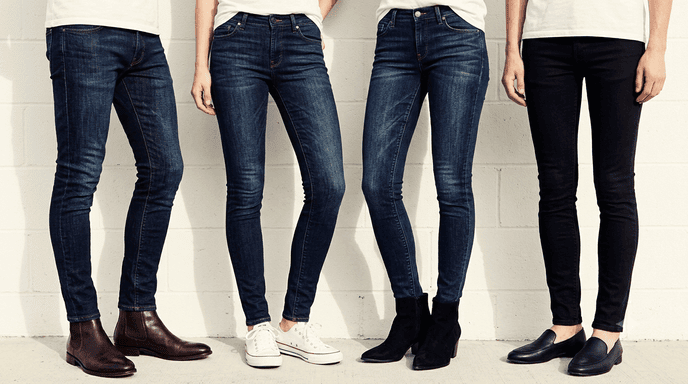
No trend on this list enjoyed a longer, more culturally entrenched dominance than skinny jeans. From the early 2000s through approximately 2020, the skinny jean was not simply a popular silhouette. It was the default. Stores stocked them almost exclusively. Finding a straight-leg or bootcut option at a mainstream retailer during the skinny-jean peak years required the kind of determination usually reserved for parking in Manhattan.
Then, in early 2021, Gen Z declared skinny jeans dead on TikTok, and the internet lost its mind.
The backlash was not gradual. It was a coordinated cultural verdict delivered by a generation that had grown up watching millennials vacuum-seal their legs into denim and decided, collectively, that this was no longer acceptable. As NPRdocumented, the TikTok-driven rejection of skinny jeans became a proxy war between generational identities, with millennials defending the style as a wardrobe staple and Gen Z dismissing it with the same energy they directed at side parts and the laughing-crying emoji. The resulting discourse was covered by virtually every major news outlet, transforming a denim silhouette into a generational Rorschach test.
What makes skinny jeans a fascinating entry on this list is that they did not age badly in the traditional sense. They aged badly socially. The jeans themselves were not aesthetically worse in 2021 than they were in 2010. What changed was their cultural meaning. Wearing skinny jeans became a signal, not of style, but of generational allegiance. Millennials who continued wearing them were, in the eyes of younger consumers, broadcasting an inability or unwillingness to evolve. The Reddit thread that cataloged this shift received 391 comments and 282 upvotes, with multiple users noting that skinny jeans haven’t actually disappeared. They have simply stopped being the unmarked default and become a conscious choice; which in fashion terms is the difference between being alive and being vintage.
7. Logomania: Wearing Your Net Worth on Your Sleeve (Literally)
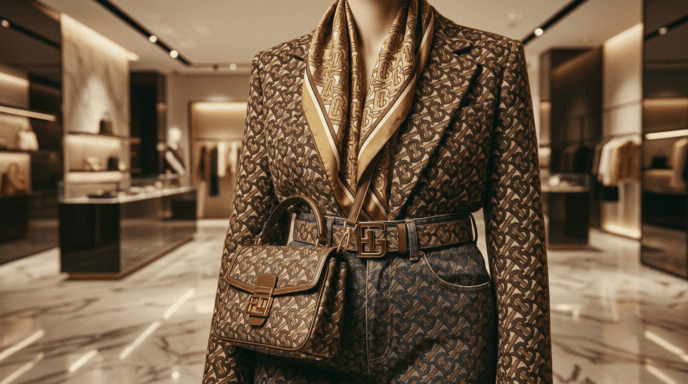
Coco Chanel placed her interlocking “Cs” on her garments in 1925, and the fashion industry has been exploiting the concept ever since. As Mission Magazinetraces in detail, the history of logomania is not simply a history of branding. It is a history of class, aspiration, and the lengths to which consumers will go to borrow someone else’s identity for the price of a handbag.
The trend reached its most recent peak twice: first in the late 1990s and early 2000s, when Fendi’s double-F monogram, Louis Vuitton’s LV pattern, and Gucci’s interlocking Gs were plastered across every conceivable garment and accessory; and again in the late 2010s, when a nostalgia-fueled streetwear boom brought the logos back with even less restraint. The crucial figure in logomania’s cultural history is Dapper Dan, the Harlem-based designer who in the early 1980s began “knocking up” (his term) luxury logos onto custom streetwear for hip-hop artists, athletes, and cultural figures. As The New Yorkerreported, Dapper Dan’s clients saw the logo-covered clothes as paying tribute to the luxury houses, but the effect was to transform European aristocratic branding into a vernacular of Black American cultural power.
Logomania ages badly because it is inherently cyclical. When the economy is strong and conspicuous consumption is culturally rewarded, logos proliferate. When the economy contracts, as it did after 2008, logos become embarrassing symbols of excess. As The New York Times‘ fashion reporter Ruth La Ferla noted in 2018, the logo goes in and out of style in near-perfect synchrony with the economic cycle. The quiet luxury movement of the early 2020s, which actively rejected visible branding in favor of understated quality, was the direct descendant of post-2008 logo fatigue. The logos will come back. They always do. And they will age badly again, because the impulse to wear your net worth as a visual display is fundamentally incompatible with the concept of lasting style. For a deeper look at what actually endures in a wardrobe, our guide to timeless wardrobe staples examines the pieces that outlast every cycle.
8. Drop-Crotch Pants: The Trend That Made Everyone Look Like They Were Carrying Extra Luggage

The drop-crotch pant, also known as the harem pant, achieved its most visible mainstream moment at the 2012 American Music Awards when Justin Bieber wore two separate pairs during the ceremony. Vanity Fair described the style as a supremely unflattering type of trousers that drooped above the knee before tapering into a skinny cuff. On the same stage, MC Hammer, the undisputed patriarch of the drop-crotch pant, performed in a pair of his own, creating a generational bridge that nobody had asked for.
The silhouette has ancient roots in traditional clothing from multiple cultures, where loose-fitting garments around the hips served practical functions in hot climates. The 2010s version had no such functional justification. It was adopted purely as an aesthetic statement, one that communicated a kind of studied nonchalance that was nearly impossible to actually pull off. The proportions were intentionally wrong, which was the point, but “intentionally wrong” has a very short shelf life in fashion. Within two years of the 2012 AMAs peak, the drop-crotch pant had effectively vanished from mainstream retail, replaced by joggers and slim-fit athleisure that offered a similar relaxed feeling without the visual suggestion that the wearer had recently lost a significant amount of weight in a very specific location.
9. Crocs: The Shoe That Was Named One of the Worst Inventions of All Time and Then Made $4.1 Billion
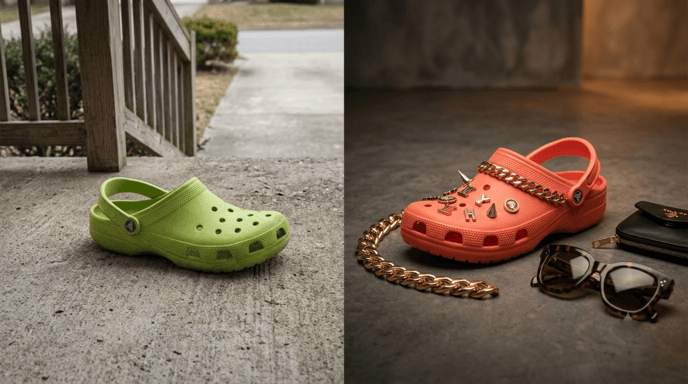
Crocs present a unique problem for a list about fashion trends that aged badly: they aged badly, then aged well again, then achieved a kind of post-ironic cultural dominance that makes them nearly impossible to categorize.
Launched in 2002 as a boating shoe, Crocs were made of a proprietary closed-cell resin called Croslite that was lightweight, odor-resistant, and looked like a cartoon drawing of a shoe that a child might make. Timemagazine named them one of the “50 Worst Inventions” of all time. Fashion critics treated them as a recurring joke. The brand nearly went bankrupt in 2008 after overexpanding.
Then something shifted. By the late 2010s, Crocs had been adopted by the streetwear and “ugly fashion” movements, which Emily Brayshaw at the University of Technology Sydney describes as “a sartorial backlash against this super slick, corporate marketing sort of world.” Collaborations with brands like Balenciaga and designers like Post Malone repositioned the shoe from eyesore to ironic statement. By 2024, Crocs reported record annual revenue of $4.1 billion, up 4% from the prior year.
The Crocs story is instructive because it illustrates that aging badly is not always permanent. It also illustrates something darker: that the fashion industry’s definition of “good” and “bad” is almost entirely socially constructed. The shoe itself did not change. The foam is the same foam. The holes are the same holes. What changed was the story the culture told itself about what those holes meant. In 2007 they meant “I have given up.” In 2024 they meant “I am too confident to care.” Same shoe. Different narrative. $4.1 billion difference. That kind of brand resurrection parallels the luxury items that actually hold their value over time.
10. UGG Boots: From Surf Culture to Suburban Sidewalks to Cultural Punchline

UGG boots were originally functional footwear. Australian and New Zealand surfers wore sheepskin boots to warm their feet after sessions in cold water. The brand’s entry into mainstream fashion was driven by Oprah Winfrey, who featured UGGs on her “Favorite Things” list in 2000, and by a parade of early-2000s celebrities including Kate Hudson, Paris Hilton, and Sarah Jessica Parker who were photographed wearing them with everything from miniskirts to pajama pants.
Global UGG sales fell 11.6% by 2012 as the brand became oversaturated and culturally coded as basic. The problem with UGGs was not the boot itself, which was genuinely warm and comfortable, but the context in which it was worn. UGGs were designed for a specific post-surf, pre-shower moment. They were deployed for brunches, classrooms, airports, and nightclubs. When a functional object is used outside its functional context at a mass scale, it does not become aspirational. It becomes a uniform. And uniforms, by definition, stop communicating individuality.
The brand has since staged a comeback, with revenues rebounding to over $300 million and a renewed Gen Z audience discovering the platform mini boot and ultra mini. The new UGG consumer is doing something the original 2000s consumer never did: wearing the boots with intentional, styled outfits rather than as a default shoe for every occasion. The lesson is that overuse kills even genuinely good products. When everything in your closet goes with UGGs, nothing in your closet goes with UGGs.
11. Cold-Shoulder Tops: The Trend That Cut Holes in Perfectly Good Shirts

The cold-shoulder top is perhaps the most baffling entry on this list because it cannot be explained by celebrity endorsement, cultural movement, or aspirational branding. It was simply a shirt with holes cut in the shoulders, and for approximately three years between 2015 and 2018, it was everywhere.
The Reddit community that analyzed disappearing fashion trends generated 456 upvotes for a comment that simply read: “Cold shoulder. I never understood that trend.” One commenter offered a fascinating manufacturing explanation: cold-shoulder designs are reportedly an efficient way to size up a garment pattern, because the shoulders are the most difficult area to fit correctly. By removing them entirely, manufacturers could produce garments that accommodated a wider range of shoulder widths without additional pattern work. If true, this means the cold-shoulder top was not a design choice at all. It was a production shortcut that the industry successfully marketed as a fashion statement.
The trend peaked during the same mid-2010s period that produced cage bras, strappy everything, and a general cultural appetite for clothing that appeared to be in the process of falling apart. It vanished when the pendulum swung back toward more constructed, tailored silhouettes. In the era of quiet luxury and “stealth wealth” dressing, a shirt with conspicuous holes in the shoulders reads less like a style choice and more like a wardrobe malfunction. The shift toward investment dressing is part of why dermatologist-backed grooming advice and evidence-based skincare have replaced trend-chasing in the personal care space as well.
12. Colored Jeans: The Brief Window When Denim Lost Its Mind
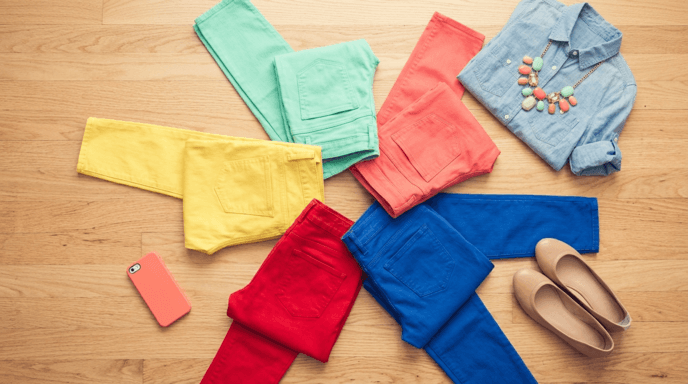
Around 2012, something happened to denim. The same fabric that had served humanity in a reliable palette of blue, black, white, and gray for 150 years was suddenly available in mint green, hot pink, burgundy, sunshine yellow, coral, lavender, and every other color that denim was never meant to be.
The colored-jeans trend swept through mainstream retail with astonishing speed. As one Reddit commenter recalled with 1,029 upvotes, the hallways of their high school in 2012 were “a sea of color,” and they remembered thinking the trend would never date. Another commenter reported owning burgundy, grey, and green pairs and believing that once they had all the colors they could “match EVERYTHING.” A third admitted to being told they “looked like an Easter egg” in lavender jeans and never wearing them again.
Colored jeans are a case study in how variety can be mistaken for versatility. Blue jeans work with almost everything because blue is a neutral. Coral jeans work with almost nothing because coral is not. The trend asked people to build entire outfits around a single pair of pants, which is the opposite of how a functional capsule wardrobe operates. The moment people discovered that their $60 mint-green skinny jeans were compatible with precisely two tops they owned, the trend began its rapid descent. By 2014, the sea of color had drained back to blue.
13. Printed Leggings: The LuLaRoe Industrial Complex
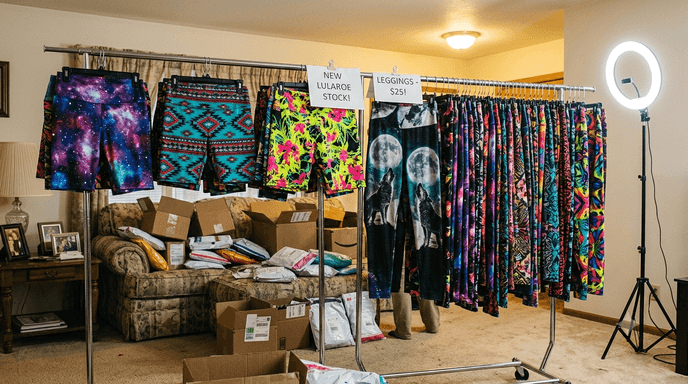
There was a period, roughly 2014 to 2018, when a significant portion of American women’s lower halves were wrapped in leggings featuring galaxy prints, geometric patterns, Aztec designs, or graphics so aggressive they could be used to calibrate a television screen.
The trend’s most infamous accelerant was LuLaRoe, a multi-level marketing company that sold printed leggings through a network of independent consultants, many of whom stocked and sold the product from their homes. At its peak, LuLaRoe generated more than $2 billion in annual revenue and employed an army of sellers who believed they were running their own businesses. A subsequent documentary, LuLaRich, and multiple lawsuits revealed allegations of pyramid-scheme dynamics, quality-control failures (leggings that tore during normal wear), and a business model that enriched its founders while many consultants lost money.
The galaxy-print legging, which preceded LuLaRoe and was popularized by brands like Black Milk Leggings around 2012, occupies a particular nostalgic space. As one Reddit user recalled with 290 upvotes: “Specifically galaxy print leggings were major around 2012ish.” Another reported buying a pair and immediately realizing they had no idea what to wear with them.
The printed legging aged badly not because leggings are bad (they remain a wardrobe staple in solid colors and muted tones) but because the prints were trend-dependent in a way that solid-color versions never were. A black legging is a neutral. A legging covered in neon wolves howling at a psychedelic moon is a commitment to a very specific cultural moment, and cultural moments expire. The same principle explains why overhyped beauty products tend to follow the same rapid rise-and-crash trajectory.
14. Platform Everything: When Height Became a Personality
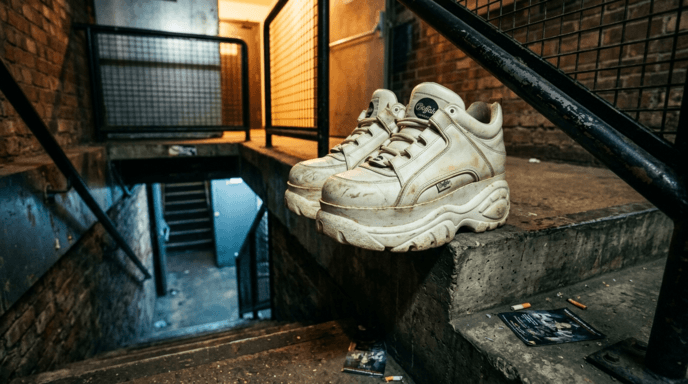
Platform shoes are cyclical in the most literal sense. They appear, they tower, they cause ankle injuries, and they disappear, only to reappear 20 years later and cause a new generation of ankle injuries.
The 1990s iteration, dominated by Buffalo Londonplatforms and made globally iconic by theSpice Girls, took the concept to a structural extreme. Scary Spice performed in platforms that added four or more inches to her height, creating a silhouette that was visually arresting and physically hazardous. The trend filtered down to mainstream retail, where teenage consumers purchased platform sneakers, sandals, and boots that turned every staircase into an obstacle course.
Platforms returned in the early 2020s, right on the 20-year schedule, though in somewhat less extreme iterations. The new versions tended toward platform sneakers and chunky-sole boots rather than the towering Buffalo-style monstrosities of the 1990s. The original versions aged badly because they prioritized visual impact over basic wearability. Fashion has a tolerance for discomfort, but that tolerance has limits, and a shoe that makes the wearer taller than their refrigerator at the cost of their ACL tends to exceed those limits within a single trend cycle.
15. Micro Trends as a Category: The Trend That Is the Trend
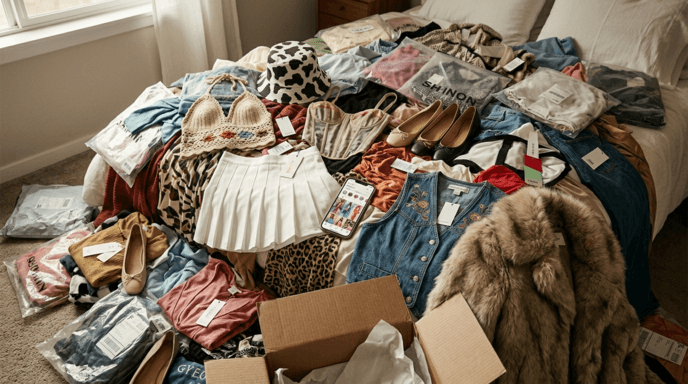
The final entry on this list is not a specific garment. It is the system itself.
We are living in the era of the micro trend, and the micro trend, as a concept, has already aged badly. It simply has not realized it yet.
As the Global Fashion Agenda documented, micro trends trickle down from broader cultural movements and are immediately commodified by fast-fashion brands that can produce a garment in as little as 10 days. Balletcore. Tomato Girl Summer. Mob Wife Aesthetic. Coastal Cowgirl. Bogcore. The Aesthetics Wiki now catalogues hundreds of these micro-aesthetics, each with a lifespan measured in weeks rather than years. By the time a consumer has identified a micro trend, purchased the garment, and received the package, the trend may already be over. As Natalia Christina of creative agency The Digital Fairy told The Facemagazine: “A perfect (and troubling, for the environment) mixture of the need to satiate our feeds with newness coupled with access to a never-ending vault of nostalgia means trends are being coined almost daily.”
The fast-fashion industry is now worth approximately $150.82 billion and produces roughly 52 “micro-seasons” per year, compared to the traditional two-season (spring/summer, fall/winter) calendar. The environmental consequences are staggering: the industry accounts for 10% of global carbon emissions, consumes vast quantities of water, and generates textile waste that disproportionately ends up in the Global South. According to the Or Foundation, approximately 40% of clothing that arrives at the Kantamanto Market in Accra, Ghana, leaves as waste.
The micro trend is a trend that has already aged badly by the time it arrives. Its entire business model depends on disposability. It is the antithesis of everything that the growing secondhand market represents; a market that grew 14% in 2024 and is projected to reach $393 billion globally by 2030, according to ThredUp’s 2026 Resale Report. The most durable fashion trend of the next decade may turn out to be the rejection of trends entirely. That same pattern of manufactured hype collapsing under scrutiny mirrors how celebrity endorsement builds billion-dollar empires and what happens when the machinery behind them is exposed.
The Pattern Behind the Pattern
The fifteen entries above share three structural features that explain why they aged badly.
The first is overexposure. Every trend on this list reached a saturation point at which it stopped communicating individuality and started communicating conformity. Low-rise jeans were rebellious when three celebrities wore them. They were a uniform when 30 million women wore them. Ed Hardy was edgy when rappers and rock stars wore it. It was a punchline when a divorced reality-television father wore it on a yacht.
The second is disconnection from function. Timeless wardrobe pieces endure because they serve a purpose that transcends their cultural moment. A white T-shirt works because it is a neutral canvas. A trench coat works because it is waterproof. UGG boots, worn by surfers to warm their feet, worked. UGG boots, worn to nightclubs, did not. When a garment’s only function is to signal trend awareness, it expires the moment the trend does.
The third is manufactured desire. The fast-fashion ecosystem has become extraordinarily efficient at creating demand for products that no one needed and no one will want in six months. The enclothed cognition research from Northwestern demonstrates that the feeling of transformation when wearing a trend piece is real. The industry has weaponized this psychological mechanism by ensuring that the feeling is perishable, requiring a new purchase to replicate it. This is not fashion. This is a subscription model for your self-esteem. The same psychological loop drives the most addictive internet trends; the mechanism that makes scrolling feel necessary is the same one that makes trend-shopping feel urgent.
What Survives and Why
The trends that survive do so for the opposite reasons. They are underexposed rather than oversaturated. They serve a function beyond trend signaling. They do not require the cultural moment that created them in order to remain relevant. The capsule-wardrobe movement, the growing secondhand market, and the quiet-luxury aesthetic are all, at their core, reactions to the exhaustion created by the trends documented above. A 2024 PwC study found that consumers claim a willingness to pay 9.7% more for sustainably produced goods, though the gap between stated intention and actual behavior remains wide.
The University of Bath’s research on cost-per-wear labeling suggests that if consumers could see the true per-use cost of their garments, their purchasing behavior would shift dramatically. A $200 coat worn 300 times costs less per wear than a $20 trend piece worn three times. The math is not complicated. The psychology is.
Your Closet Is a Time Capsule
Open your closet tonight. Look at the items you have not worn in over a year. Identify the ones you purchased because of a trend rather than because they served a need in your wardrobe. Count them. That number represents the tax you paid to the trend cycle; a cycle that was designed to extract money from you on a schedule that has now been mathematically documented.
The alternative is not to stop buying clothes. The alternative is to recognize the pattern, understand the psychology, and redirect your spending toward pieces that will not become evidence of a cultural delusion you once participated in. Your future self; the one who will eventually look at photos from 2026; will thank you. The habits that quietly reshape how you think about consumption are the same ones that reshape everything else.
Comparison Table: Trend Lifespan vs. Cultural Impact
| # | Trend | Peak Era | Lifespan | Primary Accelerant | Why It Aged Badly | Comeback? |
|---|---|---|---|---|---|---|
| 1 | Low-Rise Jeans | 1998–2006 | ~8 years | Celebrity tabloid culture | Body-image hostility; impractical fit | Partial (tempered reboot ~2022) |
| 2 | Ed Hardy Everything | 2005–2009 | ~4 years | Celebrity licensing (Audigier) | Single celebrity association destroyed brand | Ironic Gen Z revival |
| 3 | Velour Tracksuits | 2001–2008 | ~7 years | Paris Hilton; reality TV | Aspiration without substance; recession killed conspicuous loungewear | Minimal (nostalgia market only) |
| 4 | Von Dutch Trucker Hats | 2002–2005 | ~3 years | Celebrity photo ops | Overexposure; dark brand namesake history | Brief 2020s flicker |
| 5 | Oversized Shoulder Pads | 1983–1991 | ~8 years | Television; power-dressing movement | Symbolism became caricature; proportions became absurd | Subtle structural versions persist |
| 6 | Skinny Jeans | 2001–2020 | ~19 years | Mainstream retail hegemony | Generational identity rejection via TikTok | Still worn; no longer default |
| 7 | Logomania (Extreme) | 1997–2008; 2017–2020 | Cyclical (~5–7 yr waves) | Economic boom psychology; hip-hop culture | Tied to economic cycle; quiet luxury backlash | Will return (always does) |
| 8 | Drop-Crotch Pants | 2010–2014 | ~4 years | Justin Bieber; MC Hammer nostalgia | Unflattering on most body types; no functional purpose | No |
| 9 | Crocs (Original Wave) | 2004–2008 | ~4 years (first wave) | Comfort; novelty | Named worst invention; near-bankruptcy | Yes ($4.1B in 2024) |
| 10 | UGG Boots (Original Wave) | 2000–2010 | ~10 years | Oprah; celebrity paparazzi | Overuse outside intended context; cultural coding as “basic” | Yes (platform mini reboot) |
| 11 | Cold-Shoulder Tops | 2015–2018 | ~3 years | Mainstream retail; possible manufacturing efficiency | No cultural foundation; arbitrary design | No |
| 12 | Colored Jeans | 2011–2014 | ~3 years | Retail novelty; social media | Non-neutral colors limit pairing options | No |
| 13 | Printed Leggings | 2012–2018 | ~6 years | Black Milk; LuLaRoe MLM | Print dependency; MLM association; quality issues | Solid-color leggings endure |
| 14 | Platform Everything (Extreme) | 1993–2000 | ~7 years | Spice Girls; rave culture | Injury risk; extremity of height | Moderate (less extreme versions) |
| 15 | Micro Trends (Systemic) | 2020–present | Weeks per trend | TikTok algorithm; ultra-fast fashion | Built on disposability; environmentally destructive | The system itself is the problem |
Frequently Asked Questions
What is a fashion micro trend?
A micro trend is a hyper-specific fashion aesthetic, often born on TikTok or Instagram, that rises and falls within weeks rather than years. Unlike traditional trends that defined entire decades, micro trends like Balletcore, Coastal Cowgirl, and Mob Wife Aesthetic are so narrow and so rapidly commodified that they can expire before the garments inspired by them arrive in the mail. The Global Fashion Agenda describes micro trends as “commerce-enabled mirages” that fuel overconsumption without building lasting personal style.
Why do fashion trends come back every 20 years?
A 2026 study by mathematicians at Northwestern University confirmed the so-called “20-year rule” by analyzing approximately 37,000 garments spanning more than 160 years. The researchers found that fashion oscillates between novelty and familiarity on a roughly 20-year cycle, driven by designers’ need to differentiate from the recent past while still producing wearable clothing. However, the study also found that this cycle may be weakening as style becomes more fragmented and less conformist.
Are skinny jeans really out of style in 2026?
Skinny jeans are no longer the default denim silhouette, but they have not disappeared. The 2021 TikTok-driven backlash repositioned skinny jeans from an unmarked default to a conscious style choice, similar to how bootcut jeans existed after the skinny-jean era began. Many people continue to wear them, and stylists note that fit and proportion matter more than silhouette trends.
What is enclothed cognition?
Enclothed cognition is a term introduced by researchers Hajo Adam and Adam Galinsky in a 2012 study published in theJournal of Experimental Social Psychology. The study demonstrated that the clothes people wear systematically influence their psychological processes, including attention, confidence, and performance. The effect depends on both the symbolic meaning of the garment and the physical experience of wearing it.
How does fast fashion contribute to environmental damage?
The fast-fashion industry accounts for approximately 10% of global carbon emissions, produces roughly 80 billion new garments per year, and is the second-largest consumer of water among all industries. According to Earth.Org, it requires about 700 gallons of water to produce one cotton shirt and 2,000 gallons for one pair of jeans. Ultra-fast-fashion companies like Shein can add up to 10,000 new items per day, accelerating production cycles and textile waste.
What fashion choices tend to age well?
Garments that serve a function beyond trend signaling, use neutral colorways, and maintain clean proportions tend to outlast trend-dependent pieces. Research from the University of Bath on cost-per-wear suggests that higher-quality garments worn frequently over years offer better value than cheaper trend pieces worn only a few times. The secondhand market’s growth, projected to reach $393 billion globally by 2030 according to ThredUp, reflects a broader consumer shift toward durability over disposability.