




Seven years for a piece of gum that leaves your body in 40 hours. A 100,000-ton carrot surplus grown to hide radar from the Nazis. A 1994 double-blind trial of 48 children that killed the sugar-hyperactivity myth forever. A California doctor who cracked only his left knuckles for 60 years to win an Ig Nobel Prize. 2,560 bacteria samples proving the five-second rule was never real. Your parents told you all of it with a straight face; and science dismantled every word.
Your parents told you gum stays in your stomach for seven years, sugar makes you bounce off the walls, and cracking your knuckles will give you arthritis by forty. They told you the light inside the car was illegal to turn on, that sitting too close to the TV would ruin your eyes, and that if you swallowed a watermelon seed, a watermelon would grow inside your stomach. You believed every word. Science has since dismantled every single one of these claims, and the psychology behind why your parents told them in the first place might be the most interesting part of all.
Your parents lied to you. Not once. Not twice. Constantly. Relentlessly. Without a second thought. They looked you straight in the eye and told you that if you went for a swim within thirty minutes of having lunch, you would fall to the bottom of the pool like a rock. They assured you that cracking your knuckles would turn your hands into something unusable by the time you reached middle age. They informed you with all the authority of someone referencing a medical book that reading in dim lighting would ruin your vision forever.
You believed them. Of course you did. You were five.
As it turns out, your parents likely believed most of it too. These are not lies in the malicious sense. Rather, they are cultural myths so deeply embedded in parenting folklore that they have been passed from one generation to the next for decades; sometimes centuries; without anyone verifying them. Your grandparents told your parents. Your parents told you. You probably planned to tell your kids the exact same thing until today.
Scientists have investigated virtually all of these claims. Decades of peer-reviewed research, controlled studies, and accumulated data have systematically discredited each one. What remains is a catalog of well-meaning fictions that reveal as much about the psychology of parenting as they do about the myths themselves.
In 2019, researchers at Nanyang Technological University in Singapore, led by psychologist Peipei Setoh, published a study investigating the long-term consequences of parental lie-telling. The study, published in the Journal of Experimental Child Psychology and later expanded in Current Directions in Psychological Science in 2024, found that adults who recalled being lied to more frequently by their parents during childhood reported higher levels of lying in adulthood and poorer psychosocial adjustment. The study confirms that “parenting by lying,” although possibly done out of good intentions, carries demonstrable downstream effects on trust and behavior.
This does not mean your parents were bad people. It means they were human, working with the information available to them, repeating what they heard, and occasionally making things up when the real answer was ‘I don’t know.’
Below are eighteen of the most commonly repeated lies parents told their children; the scientific evidence proving each lie wrong; and the psychological factors behind why these myths persisted for as long as they did. If you have ever enjoyed the relatable moments everyone pretends don’t happen, you will discover that the lies your parents told you are just as universal, just as humiliating, and backed by just as much fascinating science.
1. “Swallowed Gum Stays in Your Stomach for Seven Years”
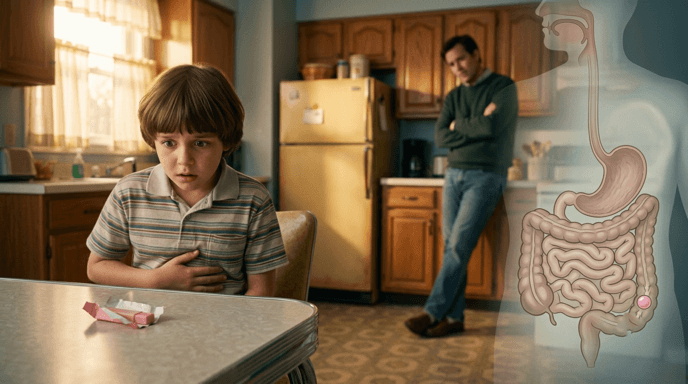
What Your Parents Said: When you swallow chewing gum, it will stay in your stomach for seven years because your body cannot digest it.
What Science Actually Says: Your body cannot fully break down the gum base; a synthetic polymer. That much is true. However, the claim that it remains lodged in your digestive tract for seven years is entirely false. According to the Mayo Clinic, swallowed gum moves through your gastrointestinal tract via normal peristalsis; the same rhythmic muscle contractions that push all food through your system; and is excreted within a few days, just like anything else your body cannot digest, such as fiber or small seeds.
Pediatric gastroenterologist Dr. David Milov at the Nemours Children’s Clinic explained in a case report he authored for Pediatrics that while gum base resists enzymatic digestion, it does not adhere to the stomach lining or intestinal walls. It simply passes through. The Duke University Health System made similar findings regarding the elimination of gum base, noting that gum base is expelled intact usually within forty hours; certainly not in seven years. The McGill University Office for Science and Society noted that the seven-year reference point apparently came from no identifiable source within medical literature and likely served as a scare tactic used to dissuade children from swallowing large amounts of gum at any given time.
For the average person swallowing a single piece, the gum will be gone long before your next dental checkup.
Why Your Parents Said This: Telling a five-year-old “it will pass through your system in approximately 40 hours via peristaltic action” is not quite as intimidating as “gum stays in your stomach for seven years.” The seven-year timeframe was easy to remember; frightening; and effective.
2. “Sugar Makes You Hyper”

What Your Parents Said: Consuming too much sugar will make you hyperactive. This was typically communicated at birthday celebrations; before Halloween; and at any occasion where cake was present.
What Science Actually Says: This is one of the most studied; and most thoroughly debunked; myths in pediatric medicine. The definitive study was conducted by Mark Wolraich, M.D., and colleagues at Vanderbilt University and published in the New England Journal of Medicine in February 1994 (volume 330, issue 5; pp. 301–307). This investigation consisted of a double-blind, placebo-controlled trial assessing 25 normal preschoolers (ages 3–5) and 23 school-age children (ages 6–10) whose parents specifically identified them as “sugar-sensitive.”
Children were assigned to three different diets for three-week periods each: a high sucrose diet; a low sucrose diet containing aspartame; and a low sucrose diet containing saccharin as a placebo. Researchers measured 39 behavioral and cognitive variables. The result was unequivocal: neither sucrose nor aspartame produced any discernible effect on behavior or cognitive performance in either group, even at intake levels well above normal dietary consumption.
Wolraich concluded that “neither sucrose nor aspartame affect children’s behavior or cognitive functions when ingested in amounts that exceed typical dietary ingestion.” The American Academy of Allergy, Asthma & Immunology and the Academy of Nutrition and Dietetics have respectively cited this and subsequent meta-analyses as conclusive evidence that a causal relationship between sugar and hyperactivity does not exist.
So why do children seem more energetic at birthday parties? Because they are at a birthday party. The excitement, the social stimulation, the noise, the novelty of the environment, and the presence of other energized children are what drive the behavior; not the frosting.
Why Your Parents Said This: The correlation looked obvious. Kid eats cake. Kid runs around screaming. Parent assumes causation. This is a textbook example of confirmation bias; the tendency to notice evidence that supports what you already believe and ignore evidence that contradicts it. Your parents were not lying on purpose. They were falling for one of the most common cognitive errors in human reasoning.
3. “If You Crack Your Knuckles, You’ll Get Arthritis”

What Your Parents Said: Stop cracking your knuckles or you’ll develop arthritis when you grow up.
What Science Actually Says: The cracking sound you hear when you pull or bend your fingers is caused by gas bubbles collapsing in the synovial fluid lubricating your joints. It is not bones rubbing against each other; thus it is not damaging your joints.
Dr. Donald Unger conducted the most famous experiment on this topic. For sixty-plus years, Unger cracked the knuckles on his left hand daily, whereas he kept his right hand uncracked as a control hand. He wrote about his results and found no difference between arthritis development between his two hands. Consequently, he received an Ig Nobel Prize in Medicine in 2009; an award granted to research first causing laughter, then prompting contemplation.
Castellanos and Axelrod published a larger, more rigorous study in the Annals of the Rheumatic Diseases in 1990. Their research involved comparing seventy-four chronic knuckle crackers with 226 non-knuckle crackers and found no statistically significant difference in arthritis rates between the two groups. The knuckle-cracking group did show slightly more hand swelling and slightly lower grip strength, but arthritis incidence was identical.
Harvard Health Publishing provided a summary of the current consensus: cracking your knuckles is annoying to the people around you, but it is not harmful. The arthritis claim has no basis in evidence.
Why Your Parents Said This: Many adults find the actual cracking sound annoying. Your parents weaponized a medical myth because the truth; that it was just annoying; lacked sufficient authority to make you stop.
4. “Don’t Swim for 30 Minutes After Eating or You’ll Drown”

What Your Parents Said: You have to wait at least 30 minutes (some parents said an hour) after eating before swimming or you will suffer from severe cramping and drown.
What Science Actually Says: There is no documented case of anyone drowning because they went swimming after a meal. According to the Mayo Clinic, eating before swimming may cause minor discomfort or mild cramping, but it does not create a drowning risk. Your body does redirect blood flow to your digestive system after eating, but not to the extent that your limbs become incapacitated. You have more than enough blood supply to digest a sandwich and move your arms simultaneously.
The American Red Cross has not included a mandatory post-meal waiting period in its swimming safety guidelines for decades. Competitive swimmers regularly eat within 30 minutes of practice and competition without incident.
The myth likely originated from a 1911 Boy Scouts of America handbook cautionary note advising against swimming after meals; this myth evolved into general parenting lore throughout the intervening century.
Why Your Parents Said This: Equal parts genuine concern and calculated parenting strategy. By implementing a thirty-minute waiting period following meals, your parents established guaranteed free time before receiving another request demanding immediate entry back into the water. The drowning threat was the enforcement mechanism.
5. “Carrots Give You Perfect Eyesight”

What Your Parents Said: Eat your carrots. They’ll give you perfect eyesight. Some parents expanded upon this to include “they’ll help you see in the dark.”
What Science Actually Says: Carrots contain beta-carotene, which your body converts into vitamin A. Vitamin A is essential for maintaining healthy vision, and a severe deficiency can cause night blindness. There is truth to that part. But if you are already getting all the vitamin A you need; and the overwhelming majority of people in developed countries are; then eating additional carrots will not improve your eyesight beyond its baseline. You cannot take your eyesight from 20/20 to 20/10 by eating carrots.
The origin of this myth is one of the most fascinating stories in modern history. According to a Smithsonian Magazineinvestigation by K. Annabelle Smith, the British Ministry of Information intentionally spread this rumor about carrots and eyesight during World War II to distract from the fact that there was a brand-new top-secret technology called airborne interception radar. John “Cat’s Eyes” Cunningham, an RAF night-fighter ace who recorded 20 kills (19 at night), was given credit for having exceptionally good night vision because he ate so many carrots. What actually helped him see at night was the AI Mark IV radar system mounted in his aircraft.
The propaganda worked wonderfully. The British government produced posters, radio shows, recipes, and even a Disney-associated cartoon character named Doctor Carrot to promote the idea. By 1942, Britain had amassed a 100,000-ton carrot surplus. People grew and ate carrots at record rates as a direct result of the propaganda. This myth remained long after the war ended, passed down through generations of parents who had no idea they were repeating wartime disinformation.
6. “Sitting Too Close to the TV Will Ruin Your Eyes”

What Your Parents Said: Get back from that screen; you’ll ruin your eyes.
What Science Actually Says: Sitting too close to a television does not permanently harm your eyes. It may cause temporary eye strain or fatigue; the same symptoms you experience after any prolonged period of focused visual attention. Both are temporary and will disappear by themselves.
There was partial basis for this myth. In the 1960s, General Electric disclosed that some of their color television sets were emitting excessive levels of radiation. The company issued a public advisory recommending that viewers sit at least six feet from the screen. The defect was fixed, but the warning survived and became standard parenting advice for the next six decades.
Modern screens; LCDs, OLEDs, and LED displays; emit no harmful radiation. A child sitting close to the television is far more likely to be nearsighted already (and compensating by sitting closer) than to develop eye problems due to closeness. If you notice this pattern, the American Academy of Ophthalmologyrecommends scheduling an eye exam rather than assuming the screen is the cause.
Why Your Parents Told You This: Primarily because of lingering fears of radiation due to the GE announcement years ago. Also because of an association between screens and eye strain, and finally because any child putting their face against a TV screen is frightening for a parent regardless of whether or not it is medically safe.
7. “Reading in the Dark Will Damage Your Eyesight”

What Your Parents Said: Stop reading in the dark! You’ll ruin your eyes!
What Science Actually Says: A 2007 study published in the British Medical Journal examined this claim and determined that reading in dim light causes no lasting damage to your eyes. While reading in low light may cause short-term eye strain; referred to as asthenopia; which may consist of symptoms including dryness, discomfort and difficulty focusing, these symptoms typically subside once proper lighting returns or the person stops reading.
The ZEISS Vision Caregroup confirmed the same finding, noting that although low-light viewing forces the ciliary muscles of your eye to work harder to maintain focus, that extra effort creates no damage to your eye structure. The Canadian Association of Optometrists and the University of Utah Health have both listed this claim as a debunked myth.
Why Your Parents Told You This: It simply appeared hazardous. Any time a parent sees a child bent over a book with their head just above the pages and their face mere inches from those pages, the parent assumes the worst-case scenario based solely on what they have observed, and “you’ll ruin your eyes” was an effective way to get a child to stop reading and go to sleep.
8. “If You Swallow a Watermelon Seed, a Watermelon Will Grow in Your Stomach”

What Your Parents Said: Don’t swallow the seeds or a watermelon will grow inside you.
What Science Actually Says: Seeds require sunlight, soil, water, and air to germinate. Your stomach contains hydrochloric acid with a pH level around 1.5 to 3.5, is completely devoid of light, has no soil, and is an anaerobic environment. No seeds will germinate under these conditions. Swallowed watermelon seeds pass through the digestive tract without germinating and are expelled along with other waste material (such as gum and corn kernels).
No case of seed germination inside the human digestive system has ever been documented in peer-reviewed medical literature. The human gastrointestinal tract is specifically designed to break down organic matter; or, when it cannot break something down, to expel it.
Why Your Parents Told You This: This one was almost certainly told for entertainment as much as deterrence. The idea of a watermelon growing in a kid’s belly is ridiculous enough that many parents told this tale with a grin on their faces. It also achieved its intended goal: stopping children from swallowing seeds; a small but real risk for younger children.
9. “The Five-Second Rule Makes Dropped Food Safe to Eat”
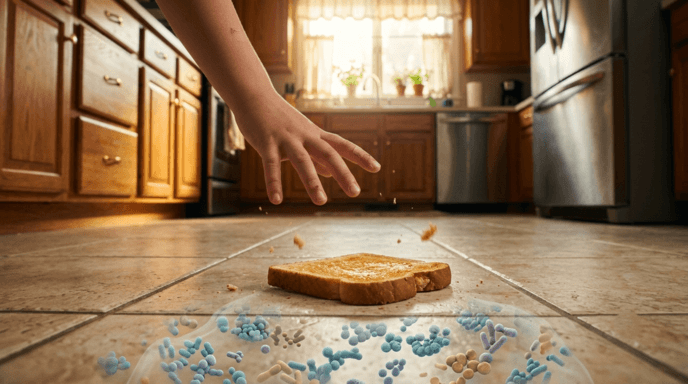
What Your Parents Said: Pick up whatever you dropped within five seconds or it becomes contaminated with germs.
What Science Actually Says: Bacteria do not observe a five-second grace period. Researchers at Rutgers University, led by food scientist Donald Schaffner, published a comprehensive study in Applied and Environmental Microbiology in 2016.
Dr. Schaffner’s team investigated several variables:
- Four different surfaces (stainless steel, ceramic tile, wood, and carpet)
- Four types of food (watermelon, bread, bread with butter, and gummy candies)
- Four different contact times (less than 1 second, 5 seconds, 30 seconds, and 300 seconds)
Each combination was repeated twenty times in a total of 128 combinations with 2,560 individual samples collected. Their conclusions were clear-cut: bacteria begin transferring immediately upon contact. Factors affecting bacterial transfer included moisture content (watermelon transferred bacteria significantly faster than all other foods); longer contact times increased bacterial transfer; however no surface nor type of food demonstrated any safety window.
A Henry Ford Healthblog post summarized the findings: “Cross-contamination happens the instant food makes contact with the floor.”
Why Your Parents Told You This: The five-second rule was convenient for parents. Telling a toddler that the cracker they dropped is ruined means a tantrum. Telling them it is fine because they picked it up quickly solves the problem in two seconds. The rule persists because it is useful, not because it is true.
10. “Shaving Makes Your Hair Grow Back Thicker and Darker”
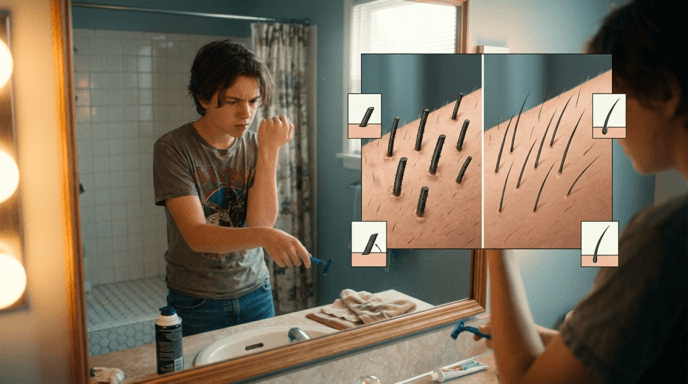
What Your Parents Said: Wait before starting to shave; once you shave, the hair grows back thicker and darker.
What Science Actually Says: Numerous studies spanning over eighty years have thoroughly debunked this myth. The Mayo Clinic states directly: “Shaving hair doesn’t change its thickness, color, or rate of growth.” A clinical trial conducted as far back as 1928 found the same result, and nothing in the intervening decades has contradicted it.
The illusion that hair appears thicker after being shaved occurs because razors cut hair off at its widest point, creating a blunt tip rather than the natural tapered end. The blunt cross-section feels coarser to the touch and may appear darker because it has not yet been lightened by sun exposure or chemical weathering. The hair itself is structurally identical to what it was before shaving.
Why Your Parents Told You This: For teenagers eager to start shaving, the “it grows back thicker” warning served as a delay tactic. Parents wanted their children to remain children a little longer, and the myth provided a seemingly scientific reason to postpone a milestone associated with growing up. The myth was also self-reinforcing: once someone began shaving and noticed the coarser stubble, they took it as proof the warning was correct.
11. “You Swallow Eight Spiders a Year in Your Sleep”

What Your Parents Said: (Or what you heard at a sleepover and your parents did not tell you to stop telling.) You eat an average of eight spiders per year while you are asleep.
What Science Actually Says: This is false, and the origin of the claim is itself an instructive lesson in how misinformation spreads. As Scientific American reports, arachnologists and entomologists have found no credible data supporting the theory that people normally consume spiders in their sleep.
Rod Crawford, Curator of Arachnids at the Burke Museum of Natural History and Culture in Seattle, told Scientific American that spiders perceive sleeping humans as part of the landscape; a big, warm, and vibrating thing that presents a threat, not something inviting. Therefore, the vibrations from the beat of a sleeping person’s heart and lungs would discourage a spider from crawling onto a sleeper. For a spider to crawl onto your face, locate the entrance of your mouth, enter your mouth, and not be pushed away by the warmth and moisture of the air you are breathing, there would need to be a chain of events so improbable that arachnologists consider it effectively impossible as a regular occurrence.
As Britannica confirms, the claim is not supported by any entomology-related research. The claim likely originated as an example of how many people believe frightening statistical claims without checking whether those claims are true; a hypothesis that was apparently validated when the claim became wildly popularized.
Why Your Parents Told You That (Or Did Not Correct It): Many parents either believed it themselves or found the reaction too entertaining to correct. Most parents accepted the spider claim as part of a larger pattern of campfire/sleepover scare-mongering that parents viewed as benign entertainment.
12. “Goldfish Have a Three-Second Memory”
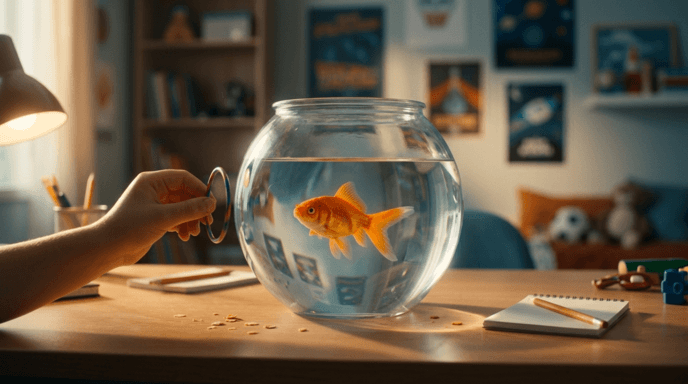
What Your Parents Said: Do not worry about the size of the tank; goldfish have a three-second memory, therefore they cannot distinguish between this small tank and any other.
What Science Actually Says: Goldfish have memories that last weeks to months; not three seconds. Scientists from the University of Plymouth taught goldfish to push a lever at a certain time of day to get fed. The goldfish learned the behavior and retained it. A study referenced by the American Museum of Natural History demonstrates that goldfish can learn complex navigation problems and remember the answers for significant amounts of time.
A widely covered experiment by a 15-year-old Australian student illustrated that goldfish were able to associate a particular signal with meal times and remember that association weeks afterward. Discover Wildlife reports that goldfish are capable of retaining learned behaviors for at least three months. Some researchers hypothesize that goldfish may have longer memory spans.
Why Your Parents Told You That: The myth about goldfish remembering nothing for three seconds provided an excuse for parents to keep their goldfish in small bowls. Since goldfish presumably forget everything every three seconds, then obviously the quality of their living space does not matter. The myth served as a convenient absolution for suboptimal pet care, and it persisted because very few people cared enough about goldfish cognition to look it up.
13. “Turning on the Car’s Interior Light at Night Is Illegal”

What Your Parents Said: Turn that light off! It is against the law to drive with your interior light on.
What Science Actually Says: There is no law in any U.S. state, Canadian province, or U.K. jurisdiction prohibiting drivers from operating a vehicle with the car’s interior dome light turned on. Traffic attorneys and legal databases have confirmed this repeatedly, and vehicle lighting regulations govern headlights, brake lights, turn signals, and other external lighting.
However, an interior dome light may slightly impair visibility at night. An illuminated car interior reduces the driver’s ability to see the road outside because the eyes adjust to the brighter interior environment, making the darker exterior harder to perceive. This is merely a comfort and visibility problem, not a legal one. A police officer might cite someone for being distracted or driving under impairment due to their poor vision caused by turning on the interior light of their vehicle, but the light itself is not the violation.
Why Your Parents Told You That: Because “it is against the law” is a conclusion that ends conversations for children in ways that “it mildly reduces my contrast sensitivity in the scotopic visual range” will not. Parents took a minor inconvenience and converted it into a full-blown law-breaking offense because lawbreaking is a more powerful deterrent than optical physics.
14. “Don’t Wake a Sleepwalker; It Could Kill Them”

What Your Parents Said: Never awaken a sleepwalker. It could kill them. Or their brain could explode. Or put them into shock and cause them to die.
What Science Actually Says: Awakening a sleepwalker will not kill them, destroy their brain, or kill them through shock. According to the Sleep Foundation, awakening a sleepwalker may result in brief disorientation or confusion, which is understandable, given that the person was unconscious and moving moments earlier; however, it poses no serious medical risk.
BrainFacts.org, published by the Society for Neuroscience, explicitly debunked the heart-attack claim and pointed out that the greatest danger is failure to intervene: sleepwalkers are prone to falling down flights of stairs, walking into streets/traffic lanes, or injuring themselves on various pieces of furniture or objects along their path. Recommended practices include gently guiding the sleepwalker back into bed instead of startling them awake; if waking them is necessary for safety, doing so is far preferable to letting them continue unmonitored.
Why Your Parents Told You That: Both warnings had dual benefits. The first benefit was preventing children from poking/shaking/yelling at their sleepwalking siblings; this would create chaos in the middle of the night. The second benefit was adding layers of mystery/danger surrounding an unusual condition, making the statement more memorable and more likely to be followed.
15. “The Great Wall of China Is Visible from Space”

What Your Parents Said: The Great Wall of China is the only man-made structure whose surface can be seen with bare eyes from space.
What Science Actually Says: The Great Wall of China is not visible to the naked eye from low Earth orbit, nor is it visible from the Moon. NASA directly addresses this myth. Although the Great Wall stretches over 13,000 miles long, it is relatively narrow (only 15–30 feet wide); far too narrow to be distinguished from orbit without magnification.
After returning from his 2003 orbital journey as China’s first astronaut, Yang Liwei confirmed that he was unable to see the Great Wall from space. Former NASA astronaut Jeff Williams stated that although astronauts can photograph the wall from the International Space Station (approximately 250 miles above Earth) using a telephoto lens, it is rarely visible to the naked eye during normal viewing conditions.
There are numerous other man-made structures on Earth that are more visible from low Earth orbit than the Great Wall; highways, airports, dams, and large urban areas; due to their width and color contrast against their surroundings.
Why Your Parents Told You That: The legend has been passed down through generations in reference books/textbooks/educational literature; often citing astronauts who allegedly claimed it. Your parents likely believed it since they read it somewhere during their youth. Additionally, it made for great trivia; an awesome indicator of human ingenuity; which made sharing it more enjoyable and less susceptible to questioning.
16. “We Only Use 10% of Our Brains”

What Your Parents Said: Human beings utilize just ten percent of their brains. Think about what you could accomplish if you utilized 100 percent!
What Science Actually Says: The assertion that we only use ten percent of our brains is entirely unfounded. Studies employing functional imaging techniques (e.g., PET scans and fMRI) demonstrate that almost all parts of the brain exhibit activity throughout the course of each day. There are no enormous sections of inactive brain tissue awaiting activation.
According to the Centre for Educational Neuroscience at University College London, the 10% brain myth was one of the most widely believed neuromyths among both the general public and educators. The exact origin of the myth remains unclear but possible explanations include misunderstandings regarding early findings demonstrating that approximately 10% of brain cells are neurons (while 90% are glial cells providing structural support) or exaggerated statements made in self-help literature claiming access to “untapped” mental capability.
From an evolutionary perspective, believing we have 90% unused mental capacity does not make biological sense. Our brains account for roughly 20% of our daily metabolic expenditure despite representing only about 2% of our overall body mass. Natural selection would have eliminated such waste millions of years ago.
Why Your Parents Told You That: Believing we only use 10% of our brains is motivating since it suggests infinite potential within us. Informing your child “you only use ten percent of your brain” is an indirect method to say “you could be so much better than you currently are.” This myth was perpetuated since it flattered people and existed in enough books, movies, and TV shows (including the 2014 film Lucy, which built its entire premise around the claim) that it began to appear factual.
17. “The Tongue Has Specific Taste Zones”

What Your Parents Said: (And what your teacher probably said while nodding in agreement.) The tongue has four distinct zones; sweet at the tip, salty on the sides, sour further back, and bitter at the rear.
What Science Actually Says: The initial concept of a “tongue taste map” was based on a misunderstanding of a study completed by David Pauli Hänig, a German scientist, in 1901. In his study, he demonstrated that there were minor variations in taste sensitivity throughout different parts of the tongue. He discovered that some areas of the tongue were slightly more sensitive to specific tastes; however, all areas of the tongue were capable of detecting all five taste categories. When Hänig’s results were translated into English and included in textbooks, the subtle gradations in sensitivity were mapped as fixed zones, producing the diagram of the tongue that has been featured in biology classrooms for generations.
Modern gustatory research has confirmed that the taste receptors responsible for all five basic tastes (sweetness, saltiness, sourness, bitterness, and umami) are spread evenly throughout the entire surface of the tongue. A study published in Nature demonstrated that single taste bud units can include cells with receptors for several different types of taste. There are no exclusive “sweet zones” or “bitter zones.” You can easily test this at home by putting a droplet of sugar water on the back of your tongue and/or a droplet of lemon juice on the tip; both will register clearly.
Why Your Parents Told You This: They were taught it in school. The idea of a “tongue taste map” was included in textbooks well into the 1990s and perhaps longer. Your parents (and their teachers) repeated what they were told by an education system that had passed along a mistranslation of a German paper for almost a century. No one intentionally attempted to deceive you. The system promoted itself upward.
18. “You Lose Most of Your Body Heat Through Your Head”

What Your Parents Said: Put on a hat! You lose most of your body heat through your head.
What Science Actually Says: You do not lose a disproportionately high percentage of your body heat through your head. The area of your head represents about ten percent of your body’s total surface area and releases approximately ten percent of your body heat; proportionate to its size and not greater than expected based upon the myth.
A widely cited investigation published in The Guardian traced the myth to a flawed U.S. military study conducted in the 1950s. In this study, subjects wore insulated clothing covering their entire bodies except for their heads. Not surprisingly, they lost a large amount of heat from their heads since that was their only exposed body part. The researchers would have concluded that humans lose most of their body heat from their legs if they had instead left their legs uncovered.
The Cleveland Clinic stated that while wearing a hat during cold weather is practical general advice (since any exposed skin loses heat), the head is not a uniquely efficient radiator of body warmth. The myth survives due to its ability to provide a simple and memorable rationale for taking a logical action (wearing a hat).
Why Your Parents Told You This: Since “wear a hat” provides good general advice regardless of whether or not there is a scientifically valid explanation supporting it, your parents provided scientific credibility to their recommendation when they claimed fifty-percent loss through your head. Their kids were therefore more likely to listen to this recommendation.
Why Your Parents Told You All of This
Across all eighteen lies presented here, a clear picture emerges concerning how parenting myths operate. None of these were invented by your parents. They were inherited. Your parents heard them from their parents, who heard them from their parents. Your parents learned these myths from old textbooks and outdated educational materials, wartime propaganda, and cultural lore. These myths survived because they worked; they made complex issues easy to understand and helped children learn how to behave correctly.
Researchers at Nanyang Technological University have demonstrated that parenting by lying is ubiquitous cross-culturally, and that the most typical kind of parental lie is called an “instrumental lie.” An instrumental lie is a false statement made by a parent with the intent to control a child’s actions towards achieving a specific end result, such as safety or obedience. “Don’t swim after eating or you’ll drown” is a textbook instrumental lie. The goal is safety. The method is fabrication. While the intent is noble; protecting their child; the methodology employed to achieve that intent is false.
Understanding these myths can serve purposes beyond mere nostalgic recall. Studies in cognitive psychology and social behavior show that beliefs acquired early in childhood are often difficult to reverse because they are stored prior to developing full-scale reasoning abilities. The sugar-hyperactivity myth, the carrot-eyesight claim, and the tongue-taste-map were all perpetuated for many years partly due to being initially learned during a period in development when authority figures were viewed as infallible.
The corrective is not to blame your parents. The corrective is to acquire the practice of questioning established knowledge regardless of whether it appears familiar or factual; especially established knowledge that has been imparted by the most trusted person in your life during periods when you were least equipped to evaluate them critically. Because if 20 lies every movie tells you about real life can fool your brain through narrative immersion, imagine what 18 lies delivered by the most trusted person in your life during your most impressionable years can do.
Childhood Myths vs. Scientific Reality: Quick-Reference Table
| # | The Lie | What Parents Said | What Science Says | Key Source |
|---|---|---|---|---|
| 1 | Gum stays 7 years | Swallowed gum lodges in your stomach for seven years | Gum passes through the digestive tract within days via normal peristalsis | Mayo Clinic |
| 2 | Sugar = hyperactivity | Sugar makes children hyperactive and uncontrollable | A 1994 double-blind NEJM study found zero behavioral effect from sucrose, even at high doses | Wolraich et al., NEJM 1994 |
| 3 | Knuckle-cracking = arthritis | Cracking knuckles causes arthritis later in life | A 60-year self-experiment and a 300-person study found no link between cracking and arthritis rates | Harvard Health |
| 4 | Swimming after eating = drowning | Wait 30 minutes after eating before swimming or you’ll drown | No documented drowning case attributed to post-meal swimming; the Red Cross dropped the guideline decades ago | Mayo Clinic |
| 5 | Carrots = perfect eyesight | Eating carrots improves your eyesight or lets you see in the dark | Carrots provide vitamin A, which prevents deficiency-related night blindness, but cannot improve already-normal vision; the myth originated from WWII British propaganda | Smithsonian Magazine |
| 6 | TV proximity = eye damage | Sitting close to the TV ruins your eyesight permanently | Sitting close causes temporary eye strain, not permanent damage; the myth traces to a 1960s GE radiation defect | American Academy of Ophthalmology |
| 7 | Dim-light reading = eye damage | Reading in the dark permanently damages your eyes | A BMJ study confirmed dim-light reading causes temporary strain but no structural damage | BMJ 2007 |
| 8 | Watermelon seed = stomach plant | Swallowing a seed means a watermelon will grow inside you | Seeds require sunlight, soil, and air to germinate; stomach acid destroys any germination potential | Basic botany and gastroenterology |
| 9 | Five-second rule | Food dropped on the floor is safe if picked up within 5 seconds | Bacteria transfer begins in less than one second; a Rutgers study tested 2,560 scenarios and found no safe window | Rutgers University, 2016 |
| 10 | Shaving = thicker regrowth | Shaving makes hair grow back thicker and darker | Shaving creates a blunt tip that feels coarser; hair thickness, color, and growth rate are unchanged | Mayo Clinic |
| 11 | Swallowing spiders in sleep | You swallow eight spiders per year while sleeping | Arachnologists confirm spiders avoid sleeping humans; no credible evidence supports the statistic | Scientific American |
| 12 | Goldfish 3-second memory | Goldfish forget everything every three seconds | Goldfish retain learned behaviors for weeks to months; they can be trained and remember tasks | Discover Wildlife |
| 13 | Interior car light is illegal | Driving with the dome light on is against the law | No U.S., Canadian, or U.K. statute prohibits interior light use while driving | Traffic law databases |
| 14 | Waking sleepwalkers kills them | Waking a sleepwalker could cause a heart attack or death | Waking a sleepwalker may cause confusion but poses no serious medical risk; not intervening is more dangerous | Sleep Foundation |
| 15 | Great Wall visible from space | The Great Wall of China is visible from the Moon or low orbit | The wall is too narrow (15–30 ft) to see with the naked eye from orbit; Chinese astronaut Yang Liwei confirmed he could not see it | NASA |
| 16 | 10% of the brain | Humans only use 10% of their brains | Neuroimaging shows all brain regions are active; maintaining a 90%-unused organ would be an evolutionary impossibility | Centre for Educational Neuroscience, UCL |
| 17 | Tongue taste zones | The tongue has four separate taste regions | All five basic tastes are detected across the entire tongue; the “map” was a mistranslation of an 1901 German paper | Nature |
| 18 | 50% heat loss through head | You lose most of your body heat through your head | The head loses heat proportional to its surface area (~10%); the myth originated from a flawed 1950s military experiment | Cleveland Clinic |
Frequently Asked Questions
Does swallowed gum remain stuck inside your stomach for years?
No. Swallowed gum passes through your digestive tract in a matter of days through regular peristalsis. The gum base does not break down enzymatically, but it does not stick either. It leaves your body intact; usually within forty hours.
Is there a relationship between sugar consumption and hyperactive behavior in children?
No. The most rigorous study on this topic, a double-blind trial published in the New England Journal of Medicine in 1994, found no measurable behavioral or cognitive effect from sucrose intake in children, including those identified by their parents as “sugar-sensitive.” Additionally, subsequent analyses of existing literature confirm these findings. The apparent link is a product of confirmation bias and the excitement of the events at which sugar is typically consumed.
Why did your parents tell you all of these lies?
According to research by Peipei Setoh at Nanyang Technological University, “parenting by lying” exists cross-culturally and universally. Most parental myths fall into the category of “instrumental lies”; false statements used to influence a child’s behavior toward a desired outcome, such as safety or compliance. Parents have told these lies because they have proven successful in influencing children’s behavior in the short term, regardless of their factual inaccuracies. Many parents have also accepted these myths as truths; believing what they were instructed regarding them by their own parents or through outdated educational texts.
Will eating carrots improve your eyesight?
Carrots contain beta-carotene; a precursor to vitamin A; necessary for maintaining healthy vision. If you have a vitamin A deficiency, eating carrots can help restore normal visual function. However, if you have sufficient vitamin A levels; as most adults residing in developed countries do; additional carrot consumption will not enhance your eyesight beyond its natural baseline. The “carrots improve eyesight” claim originated as WWII British military propaganda designed to conceal the existence of airborne radar technology.
How long does food remain safe after dropping it?
A Rutgers University study examined 128 possible food-and-surface pairings and determined that bacteria contamination occurs sooner than one second after contact begins. The degree of contamination depends on various factors; including food moisture levels, surface types, and length-of-contact duration; but no combination produced a risk-free window.
Do humans only use approximately ten percent of their brains?
No. This is one of the most persistent and thoroughly debunked neuromyths. Modern neuroimaging techniques utilizing PET scans and MRI have repeatedly demonstrated that all parts of the brain are active during virtually all aspects of daily activity. Brain activity consumes around twenty percent of an organism’s metabolic energy production despite constituting only two percent of overall bodily mass; an evolutionary impossibility if 90% were dormant. It remains unclear where this myth arose from; however, it may stem from the fact that only around ten percent of brain tissue consists of neurons, with approximately ninety percent consisting of glial cells serving support roles.
Your Day 1 Action Item
Next time you find yourself saying one of these myths to someone else (whether child, friend, anyone): stop for a second before continuing and say this to yourself: “Do I actually know this is true, or did I just hear it when I was six?” That question, applied consistently, is the most effective defense against inherited misinformation.
If you enjoyed this breakdown, you may also appreciate our deep dive into the psychological facts about everyday life that explain why you do what you do and the 10 relatable moments everyone pretends don’t happen.
Your parents loved you. They also lied to you. Both things can be true.