



Four astronauts traveling 252,756 miles to watch an eclipse from the far side of the Moon. 800,000 astronomical alerts captured by one observatory in a single night. A spacecraft plunging homeward at 32 times the speed of sound through 5,000-degree heat. A $17 million private probe hunting for life in the clouds of Venus. These aren’t distant science fiction concepts; they are the exact milestones of a twelve-month window that just rewrote our relationship with the cosmos.
This content is for informational purposes only and should not be treated as expert scientific guidance. Mission timelines referenced are subject to change based on agency and company updates.
Four days ago, four astronauts splashed down in the Pacific Ocean after traveling 252,756 miles from Earth — farther than any human beings in history. In addition to setting the farthest distance record, they traveled around the far side of the Moon, where they experienced a solar eclipse from a vantage point no human has ever occupied. The Artemis II mission may have broken many records, but it is possible that another mission later in 2026 could prove even more consequential.
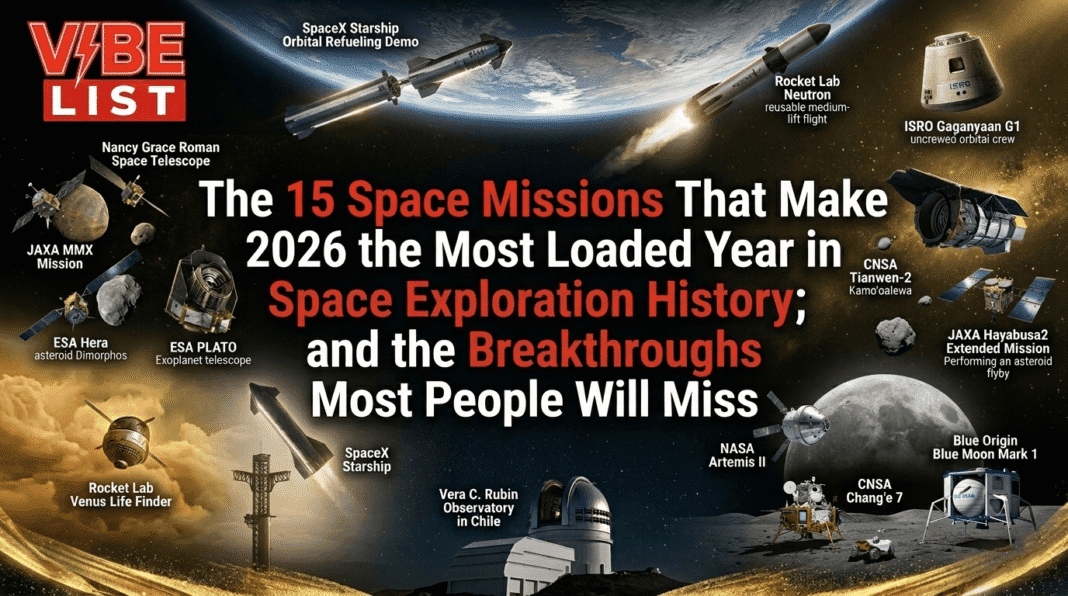
Here is what makes 2026 different. This will not be a year defined by one flagship mission and a handful of supporting launches. The United States, China, Japan, India, and the European Space Agency are all conducting major missions simultaneously. Those missions rank among the most ambitious spaceflight efforts ever attempted. NASA is preparing to launch a space telescope capable of surveying 100 times more sky than Hubble. China plans to send a spacecraft to the lunar south pole to search for water ice inside permanently shadowed craters. Japan plans to send a mission to collect samples from one of the moons of Mars. SpaceX is attempting something never accomplished at scale: transferring cryogenic propellants between two vehicles in orbit. A ground-based telescope in Chile has already produced over 800,000 real-time astronomical alerts in a single night. A private company is also sending a probe to Venus to search for evidence of life in its cloud layers. And that list does not cover everything planned for the year.
What sets 2026 apart from previous landmark years in space exploration is not merely the scale. It is also the scope. It will not be a single spacefaring nation experiencing a banner year. Rather, it will be the entire global spacefaring community operating at an ambition and pace without historical precedent. Crewed lunar missions, asteroid sample returns, new deep-space telescopes, planetary defense follow-ups, commercially funded space stations, reusable rocketry milestones, and the world’s first privately funded interplanetary probe — all of it is expected within the same twelve-month window.
Space is only one front — these 15 technologies have already changed your daily life in 2026 without most people noticing.
These are the 15 missions that define the year.
1. Artemis II — Humanity Returns to the Moon
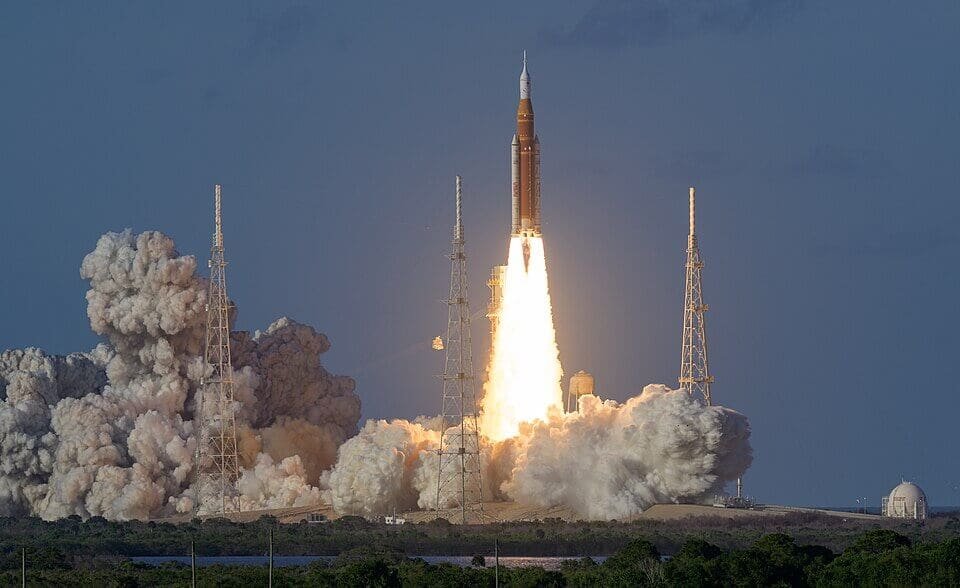
In April 2026, NASA’s Space Launch System rocket launched from Kennedy Space Center carrying the Orion spacecraft — dubbed Integrity — with four astronauts aboard: Commander Reid Wiseman, Pilot Victor Glover, Mission Specialist Christina Koch, and Canadian Space Agency astronaut Jeremy Hansen. Ten days later, on April 10, they splashed down in the Pacific Ocean off the coast of San Diego after completing the first crewed journey to the Moon’s vicinity since Apollo 17 in December 1972.
The trip was a remarkable feat. The crew traveled a combined total of 694,392 miles over two Earth orbits and a lunar flyby, coming within approximately 4,067 miles of the Moon’s surface. At their farthest point on April 6, they reached 252,756 miles from Earth, surpassing Apollo 13’s record of roughly 248,655 miles. They saw a solar eclipse from the far side of the Moon. They were the first humans to see parts of the lunar far side with their own eyes.
Victor Glover became the first Black astronaut on a lunar mission, Christina Koch the first woman, and Jeremy Hansen the first non-American. Those firsts, layered on top of the mission’s engineering achievements, drew millions of viewers worldwide.
Over 3 million people watched NASA’s live broadcast of the splashdown via its YouTube channel.
The mission also served as a critical test of Orion’s reentry system. During the uncrewed Artemis I flight in 2022, the heat shield had experienced unexpected scorching, prompting NASA to adjust the descent trajectory for Artemis II. The Orion capsule descended at approximately 32 times the speed of sound. Temperatures reached as high as 5,000 degrees Fahrenheit. The adjusted trajectory worked. NASA called the result a “perfect bull’s-eye splashdown.”
A statement from Jeremy Hansen aboard the Orion spacecraft captured the essence of the mission: “We most importantly choose this moment to challenge this generation and the next to make sure this record is not long-lived.”
Vibe List Takeaway: Artemis II was not merely a test flight. It was a demonstration of the entire Artemis framework — the SLS rocket, Orion capsule, deep-space life support, and reentry technology — that will underpin every crewed lunar landing for the rest of this decade. Because everything worked on the first crewed attempt, the question shifted from whether NASA can do this to how soon they can do it again. NASA has already said the Artemis III crew will be named “soon.” Next year’s agenda already includes a crewed docking test — another step toward the first lunar landing.
2. China’s Chang’e 7 — The Lunar South Pole Ice Hunt
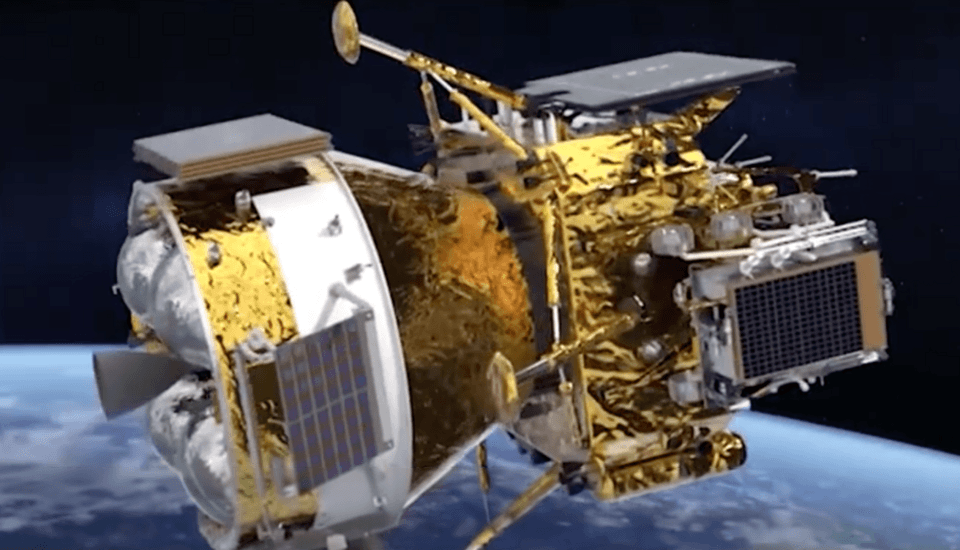
If Artemis II was a declaration of a new lunar age, then Chang’e 7 is the answer. Planned to launch in August 2026, Chang’e 7 will travel to a location where no spacecraft has operated successfully — the lunar south pole, specifically the rim of Shackleton Crater.
This is not a symbolic destination. The lunar south pole matters because of potential water ice deposits locked inside permanently shadowed craters. If water exists in usable quantities, it will fundamentally change the economics of lunar exploration. Water can be split into hydrogen and oxygen — essentially rocket fuel — turning the Moon into a refueling depot for deeper space missions.
Chang’e 7 will consist of an orbiter, lander, rover and miniature flying probe capable of hopping into permanently shaded craters and searching for evidence of ice deposits.
As of early April 2026, the spacecraft is at the Wenchang launch site in Hainan. The mission is on schedule.
The geopolitical implications are impossible to ignore. NASA plans to achieve a crewed lunar landing by 2028. China has pledged crewed lunar landings by 2030. Chang’e 7 serves as reconnaissance for China’s International Lunar Research Station scheduled to open in the 2030s.
Vibe List Takeaway: If Chang’e 7 confirms usable water ice at the lunar south pole, it will rank among the most consequential robotic missions ever flown — not for the discovery itself but for what that discovery makes possible. The nation that confirms water reserves on the Moon holds a strategic advantage for the next century of exploration. Chang’e 7 receives a fraction of the mainstream coverage that Artemis does, but in the long run, its findings could matter more.
3. The Nancy Grace Roman Space Telescope — Hubble’s True Successor in Scope
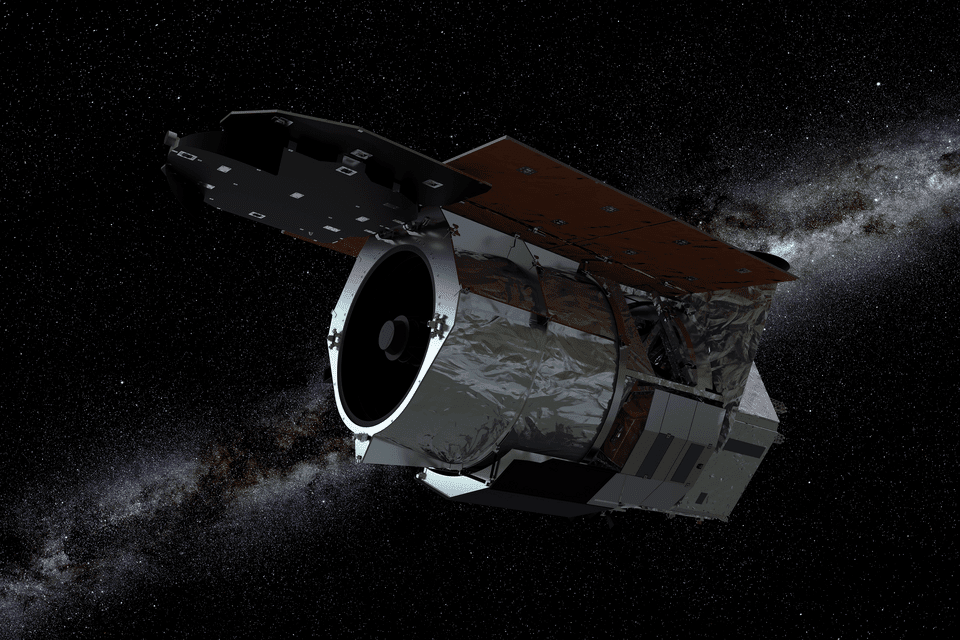
The James Webb Space Telescope dominates the public conversation. The Nancy Grace Roman Space Telescope is about to change that. Roman has been fully assembled at Goddard Space Flight Center and is slated for launch no earlier than September 2026 aboard a SpaceX Falcon Heavy. If JWST is a scalpel — capable of examining individual targets with extraordinary precision — Roman is a wide-angle lens trained on the entire sky.
Roman’s field of view is at least 100 times wider than Hubble’s, and in five years it is expected to cover more sky than Hubble managed in thirty. The Planetary Society predicts that Roman will survey 100 million stars and discover 2,500 new exoplanets during its mission. Roman will also carry a coronagraph that blocks starlight, enabling direct imaging of exoplanets — effectively photographing worlds orbiting other suns.
The primary scientific objectives for Roman are understanding dark energy and dark matter, the two phenomena that govern much of the large-scale structure of the universe yet remain poorly understood. Roman will map the distribution of galaxies across cosmic time, testing whether the prevailing Lambda-CDM model of the universe holds up.
[Infographic: Roman Space Telescope vs. Hubble vs. JWST — field of view comparison, key specs, primary science goals]
Named after NASA’s first chief astronomer, Roman will be unveiled to the public at Goddard on April 21, 2026.
Vibe List Takeaway: Roman will probably never produce the jaw-dropping single images that JWST made famous. Its power is sheer volume — surveying more sky, more galaxies, and more planets than any space telescope before it. Roman could settle open questions about dark energy, dark matter, and the architecture of the cosmos — even if none of its images ever trends on social media.
4. SpaceX’s Starship Orbital Refueling Demo — The Key That Unlocks Everything
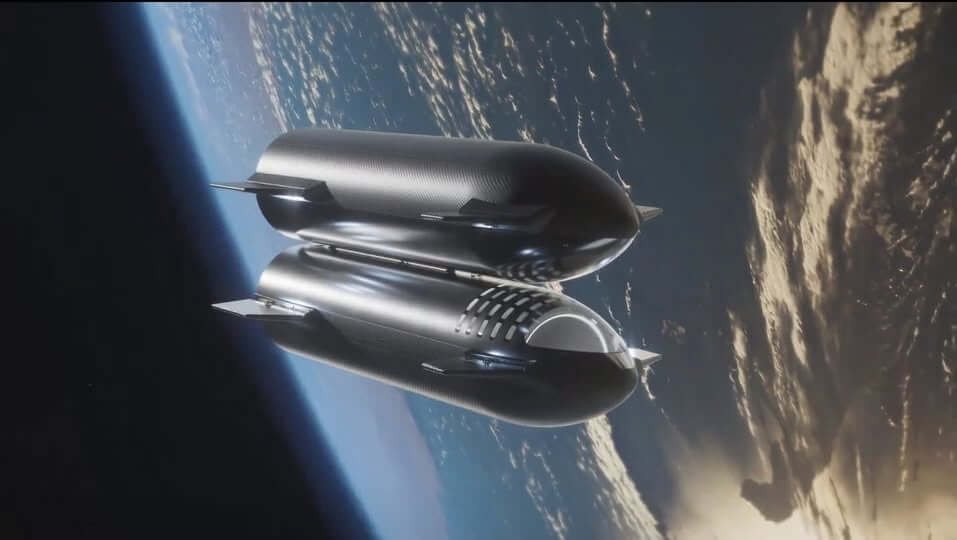
Every ambitious deep-space plan SpaceX has announced — Moon landings, Mars colonization, orbital infrastructure — depends on a capability never demonstrated at scale: cryogenic orbital refueling. In 2026, SpaceX will attempt the first large-scale propellant transfer between two Starship vehicles in orbit.
The concept is straightforward: launch two Starships, dock them in orbit, and transfer cryogenic liquid oxygen and methane from one to the other. In practice, the difficulty is enormous. Managing cryogenic fluids in microgravity — where liquids and gases behave unpredictably and propellant interfaces do not form cleanly — remains one of the biggest unsolved problems in spaceflight engineering.
In March 2026, SpaceX successfully transferred 10 tons of liquid oxygen internally within a single Starship upper stage while in orbit. The next step — a ship-to-ship transfer — is targeted for mid-2026.
Why does this matter beyond SpaceX? Because NASA’s Artemis lunar-landing plan depends on it entirely. The Starship Human Landing System, which will carry astronauts to the lunar surface, must be refueled in orbit before it can make the trip. Without orbital refueling capability, there is no crewed Moon landing using Starship. Period.
According to Ars Technica’s assessment, the probability of the ship-to-ship demonstration succeeding in 2026 is estimated at 50 percent. Even a partial success — demonstrating that propellant can be managed and transferred between vehicles at scale — would be the most significant spaceflight engineering achievement of the year.
Vibe List Takeaway: If ship-to-ship refueling works in 2026, it unlocks everything SpaceX and NASA have planned for the rest of the decade. If it does not, Artemis lunar landings slip and the Mars timeline evaporates. No other single demonstration this year carries that much downstream weight.
For more on how technology is reshaping 2026, see the AI tools everyone is already using.
5. Japan’s MMX Mission — Stealing a Piece of a Martian Moon
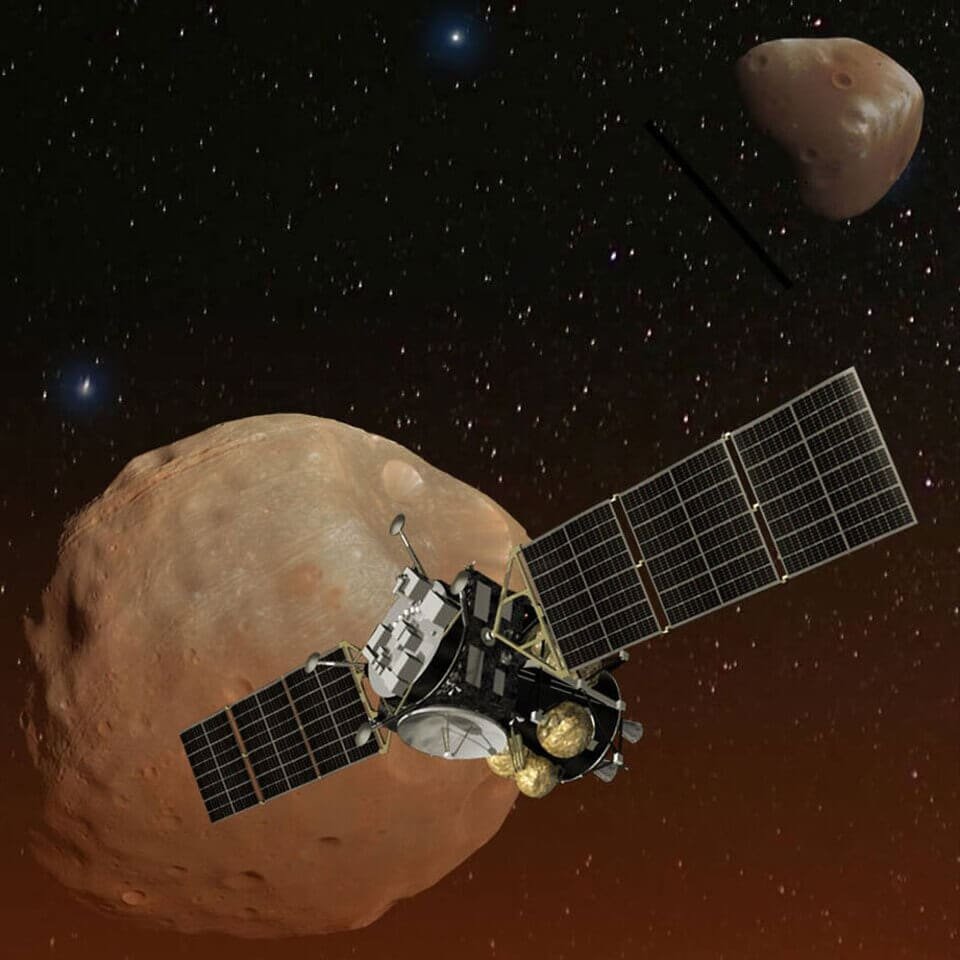
Japan does not get enough credit in the global space conversation. The country that pioneered asteroid sample return with Hayabusa is now aiming higher — collecting samples from Phobos, one of Mars’s two moons.
JAXA’s Martian Moons eXploration (MMX) spacecraft will launch aboard Japan’s H3 rocket in October 2026. Following arrival at Mars in 2027, the MMX spacecraft will attempt to land on Phobos — JAXA’s first-ever landing on another planetary body — collect surface samples, and return them to Earth by 2031.
Japan’s H3 rocket suffered a launch failure in December 2025, raising schedule questions. That said, the MMX spacecraft has already completed environmental testing, and there are several months before the October window to return H3 to flight status. According to Ars Technica, the mission has an 80 percent chance of launching on schedule.
The potential scientific value is immense. Phobos is thought by some researchers to be a captured asteroid while others believe it formed from debris left behind after a massive impact on Mars. A sample return could settle one of the oldest debates in planetary science and provide the first direct analysis of material from the Martian system.
Vibe List Takeaway: If JAXA pulls this off, Japan will have executed sample returns from an asteroid, a second asteroid, and a Martian moon — three different types of bodies in the solar system. No other space agency has that range.
6. ESA’s Hera — Inspecting the Asteroid We Deliberately Smashed
In September 2022, NASA’s DART spacecraft deliberately collided with the asteroid Dimorphos at roughly 14,000 miles per hour, marking the first time humanity intentionally altered the orbit of a celestial body. The collision was successful in shortening Dimorphos’s orbit around its larger companion Didymos by 33 minutes. But DART was a kinetic impactor, not a survey platform — it carried no instruments for a close-up inspection of the aftermath.
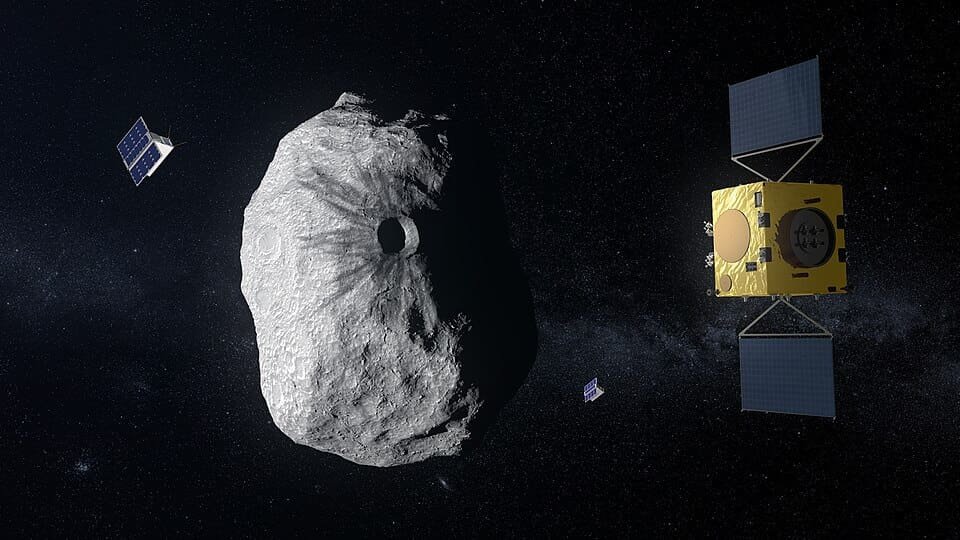
That changes in November 2026, when ESA’s Hera spacecraft arrives at the Didymos system after a two-year journey. Hera completed a critical deep-space maneuver in early 2026 to align its trajectory with Didymos. Hera is en route and may arrive ahead of schedule.
Upon arrival, Hera will study the crater DART created, measure Dimorphos’s internal structure, and deploy two cubesats — Milani and Juventas — directly onto the asteroid’s surface. The data will transform DART from a one-shot experiment into a complete, quantified planetary defense test.
Vibe List Takeaway: Planetary defense does not generate the emotional response of crewed spaceflight, but it is arguably the most practically important branch of space science. Hera’s inspection of the DART crater will determine whether kinetic impactors are a viable planetary defense strategy — the kind of finding that could matter more over the long term than anything else on this list.
7. China’s Tianwen-2 Arrives at Kamoʻoalewa — The Quasi-Moon Gets a Visitor
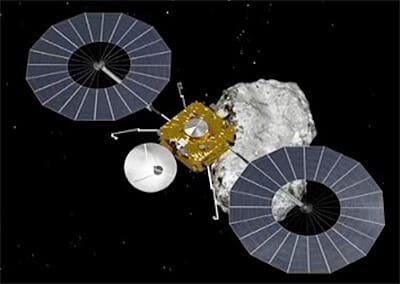
469219 Kamoʻoalewa is one of the strangest objects in the solar system. It is a quasi-satellite of Earth — an asteroid locked in an orbit that keeps it perpetually near our planet. Some researchers believe it might be a chunk of the Moon blasted into space due to an ancient impact event.
China’s Tianwen-2 mission, launched on May 28, 2025, is scheduled to arrive at Kamoʻoalewa on July 4, 2026. Upon arrival, Tianwen-2 will orbit the small asteroid, study it with 11 instruments, collect surface samples, and begin the journey back to Earth. If successful, those samples would arrive on Earth by November 2027.
As of February 2026, Tianwen-2 was roughly 43 million kilometers from Earth and operating normally. Kamoʻoalewa measures an estimated 40 to 100 meters across — roughly the length of a football field. Navigating to it, orbiting it, and collecting samples from a body with virtually no gravity is among the most demanding engineering challenges of the year.
Vibe List Takeaway: If Kamoʻoalewa turns out to be a piece of the Moon, it would be the first confirmed case of lunar material naturally escaping into a stable Earth-adjacent orbit — a discovery with implications for our understanding of both lunar history and near-Earth object origins.
8. The Vera C. Rubin Observatory — 800,000 Alerts in a Single Night
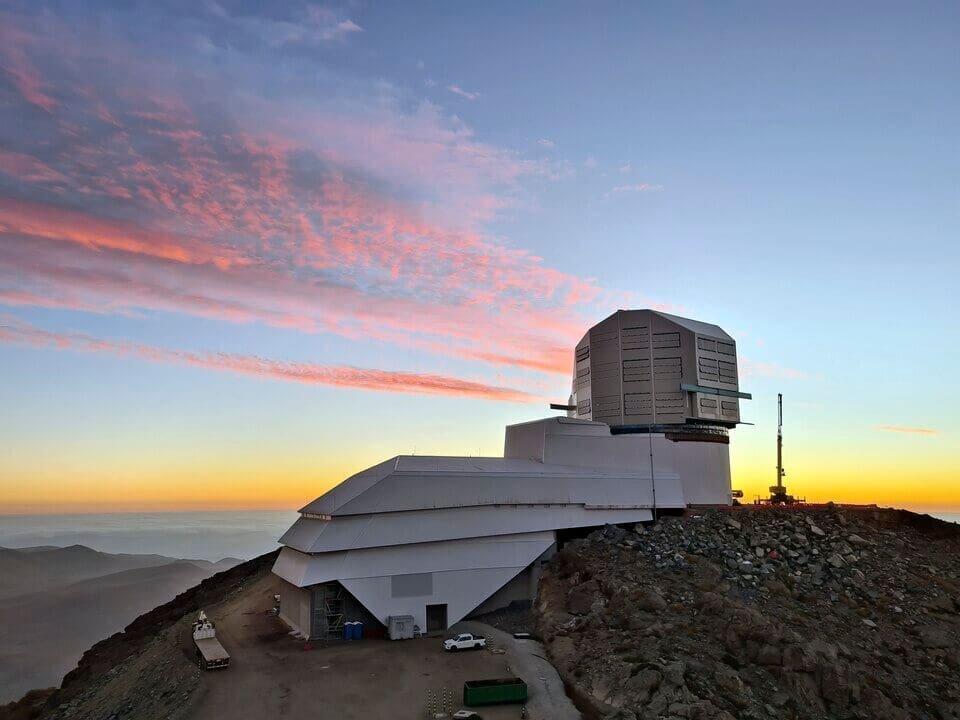
Not every transformative space mission leaves Earth. On February 24, 2026, the Vera C. Rubin Observatory in Chile activated its real-time alert system and pushed roughly 800,000 astronomical alerts to astronomers worldwide in a single night. Supernovae. Variable stars. Active galactic nuclei. New asteroids. Previously unknown objects flagged and distributed almost instantly.
The observatory’s Legacy Survey of Space and Time (LSST) is expected to start its full survey this spring using the world’s largest digital camera. Over its ten-year run, LSST is projected to catalog tens of billions of objects — more than all previous astronomical surveys combined.
Rubin made international headlines in January 2026 by detecting a notable near-Earth asteroid while still in its commissioning phase.
Vibe List Takeaway: Rubin is the anti-JWST. Where Webb stares at one object with extraordinary depth, Rubin scans everything with extraordinary breadth. Rubin will discover more asteroids, more supernovae and more transient phenomena than every telescope ever built, combined. The 800,000-alert night was simply the warm-up.
9. Blue Origin’s Blue Moon Mark 1 — Bezos Finally Reaches the Lunar Surface
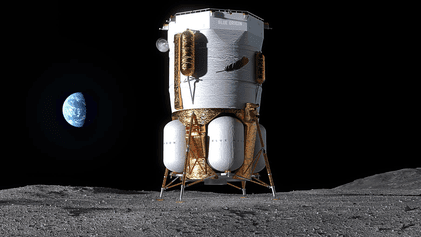
Blue Origin has spent years developing its lunar lander — and 2026 is the year it finally flies. Blue Moon Mark 1 is planned to launch atop a New Glenn rocket and attempt an unpiloted landing on the lunar surface. Standing more than 26 feet tall and 10 feet in diameter, Blue Moon Mark 1 would become the largest spacecraft ever to land on the Moon.
The first unit rolled out of Blue Origin’s Merritt Island facility in January 2026 and was shipped to NASA’s Johnson Space Center for vacuum-chamber testing. A second unit is already moving through the production line. Blue Origin’s cargo lander can deliver up to three metric tons anywhere on the lunar surface.
The stakes go well beyond a single cargo delivery. Blue Origin holds a NASA contract to develop Blue Moon Mark 2, a crewed variant that will serve alongside SpaceX’s Starship HLS as a second path to the lunar surface. Blue Moon Mark 1 is the pathfinder — if it fails, the crewed timeline slips.
According to Ars Technica, the mission has a 70 percent chance of launching in 2026.
Vibe List Takeaway: Blue Origin has been the punchline of the private space race for years — big promises, few results. Blue Moon Mark 1 landing successfully on the Moon would change that narrative overnight and give NASA the dual-provider redundancy it desperately needs for Artemis.
10. The Starship Catch — Full Reusability or Bust
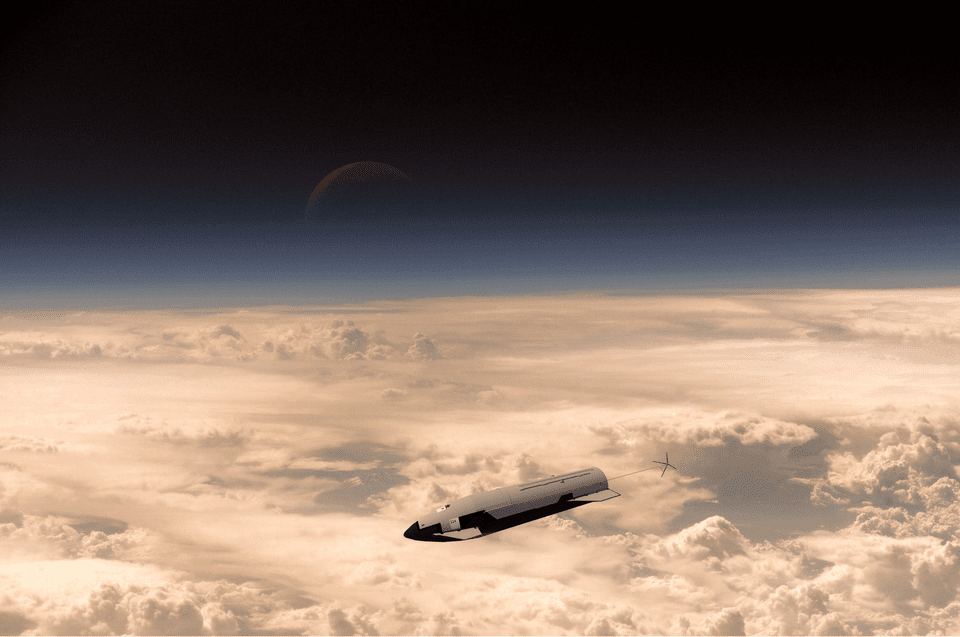
SpaceX already proved they could catch the Super Heavy booster with mechanical arms in October 2024. The next milestone: catching the Starship upper stage itself. If SpaceX succeeds in 2026, Starship becomes the first fully reusable orbital-class rocket ever built.
The plan: launch Starship Version 3 — a redesigned upper stage critical to NASA’s Artemis program — send it to orbit, bring it back over the Gulf of Mexico, and catch it at Starbase, Texas. According to Ars Technica, there is a 70 percent chance SpaceX achieves a successful Starship catch this year.
Full reusability has been rocketry’s longest-standing goal because it rewrites the cost equation entirely. A fully reusable Starship would cut the cost per kilogram to orbit by an order of magnitude, making space stations, lunar infrastructure, and interplanetary missions economically viable at scales that are impossible today.
Vibe List Takeaway: Catching the booster was impressive. Catching the upper stage would be historic. A fully reusable orbital rocket is the single development most likely to determine whether humanity becomes a spacefaring civilization or stays parked in low Earth orbit for another generation.
11. Rocket Lab’s Venus Life Finder — The First Private Mission to Another Planet
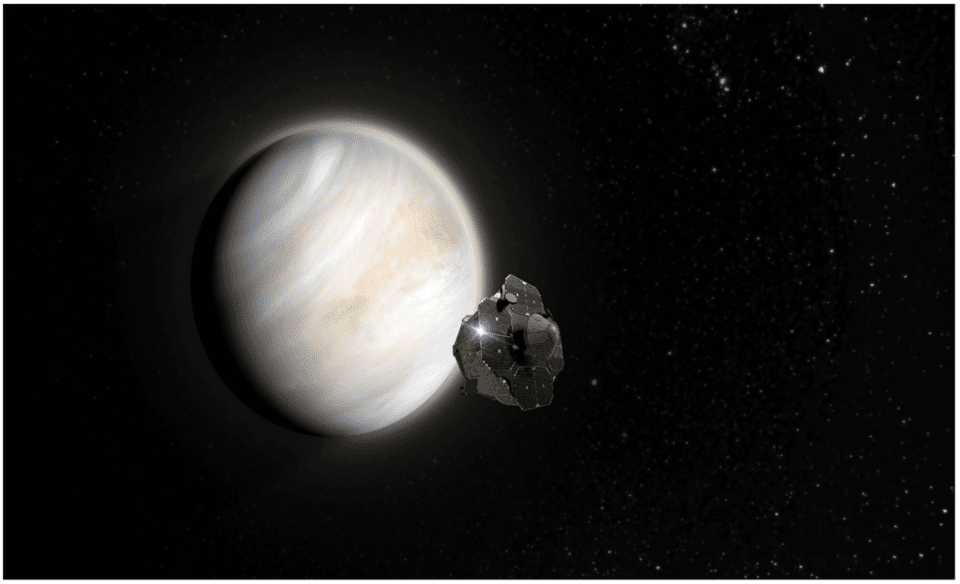
This mission deserves far more media coverage than it receives. Rocket Lab and MIT are developing the first privately funded interplanetary mission. The destination: Venus.
The Venus Life Finder will deploy a small probe into Venus’s cloud layer, between roughly 72 and 97 miles altitude, to search for signs of biological activity. The probe will collect data for roughly 330 seconds — about five and a half minutes — as it descends through the clouds.
The total mission cost is approximately $17 million. This is a fraction of what many individual instruments on flagship missions cost. When a private company sends a probe to another planet for less than the cost of a luxury apartment building, it demolishes the assumption that interplanetary exploration requires billion-dollar budgets.
Vibe List Takeaway: Venus is experiencing a scientific resurgence. For decades, scientists focused on Mars while the potential for microbial life within Venus’s cloud layers — where temperature and pressure conditions at certain altitudes are surprisingly close to those on Earth’s surface — remained underexplored. If this $17 million probe discovers anything unusual, it will drastically alter the course of planetary research for generations.
12. India’s Gaganyaan G1 — A Nation’s Crewed Spaceflight Dream Inches Closer
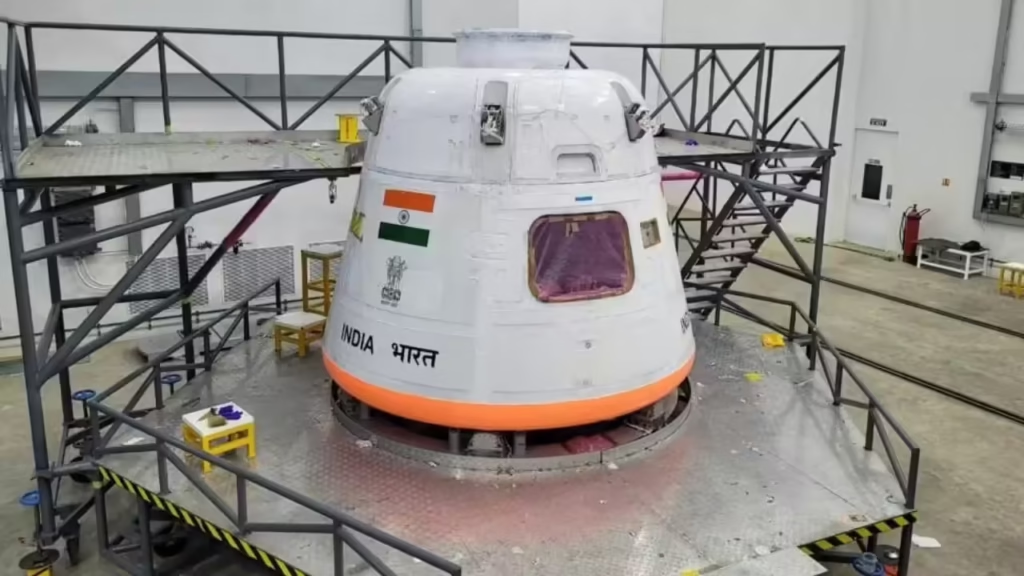
After years of delays, India is closing in on joining the exclusive club of nations capable of launching humans into space. The Gaganyaan program was approved in 2018, and its first uncrewed orbital test — designated G1 — has been described as “months away” for nearly five years.
But 2026 may finally be the year India joins that group. ISRO Chairman V. Narayanan confirmed in April 2026 that preparations were on track, with a launch date expected imminently. ISRO has completed more than 8,000 ground tests, human-rated the LVM3 launch vehicle, and successfully tested parachutes and integrated air-drop systems. According to Britannica, G1 is expected to launch in 2026, followed by H1, the first crewed flight, in 2027.
Vibe List Takeaway: While India’s space program remains somewhat low-key, it is quickly emerging as one of the best in the world. India successfully landed Chandrayaan-3 on the Moon’s south pole in 2023, and it achieved orbit around Mars on its first attempt. If Gaganyaan G1 is successful, India will be just one step away from becoming the fourth country — behind the United States, Russia and China — to achieve independent crewed access to orbit.
13. ESA’s PLATO — The Planet Hunter With 26 Eyes
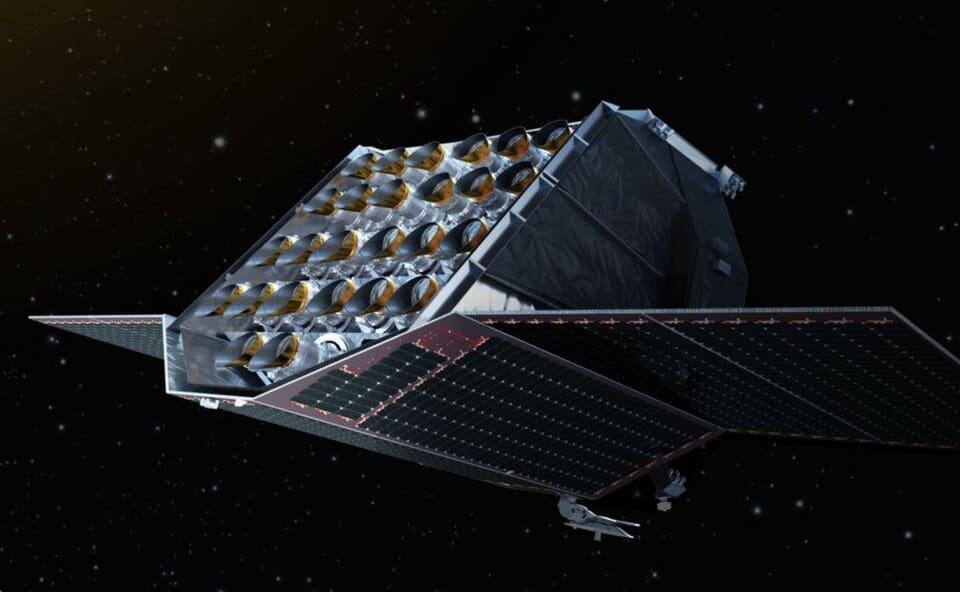
ESA’s PLATO telescope — short for PLAnetary Transits and Oscillations of stars — is scheduled to launch on an Ariane 6 in December 2026, though ESA has indicated the timeline may slip into early 2027. The spacecraft features 26 ultrasensitive cameras designed to measure the faint dimming of starlight caused by transiting planets.
PLATO has a singular goal: finding Sun-Earth analogs — rocky, potentially habitable planets orbiting stars like our own. The mission is expected to discover thousands of new exoplanets, potentially doubling or tripling the confirmed catalog.
Assembly was completed in October 2025, and the spacecraft is now undergoing vibration, acoustic, and thermal-vacuum testing. ESA has said it holds at least two months of schedule margin, which may be needed if late testing reveals issues.
Vibe List Takeaway: PLATO is hunting for the single most important category of exoplanet — Earth-sized worlds in the habitable zones of Sun-like stars. If it finds them in significant numbers, we will know for the first time whether our planet is common or cosmically rare.
14. Rocket Lab’s Neutron — The Medium-Lift Challenger
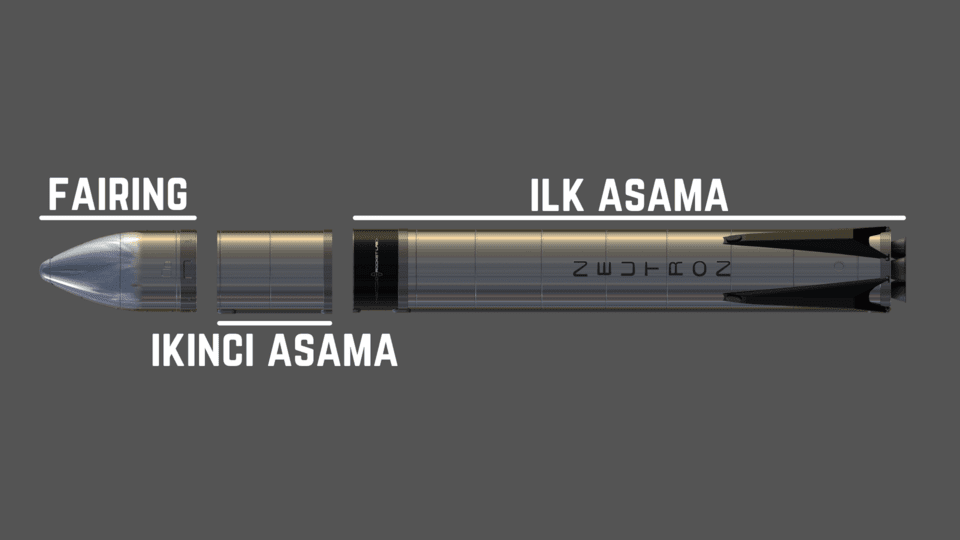
Rocket Lab is already the second-most-active launch provider in the United States, trailing only SpaceX, thanks to its small Electron rocket. Its next vehicle, Neutron, is a partially reusable medium-lift rocket designed to compete directly with Falcon 9 for commercial satellite launches.
Development has not gone without setbacks. A propellant-tank failure during testing forced Rocket Lab to delay Neutron’s maiden flight to at least Q4 2026. CEO Peter Beck acknowledged the delay to investors but assured them that Rocket Lab will not rush to meet a launch deadline. The launch site at Wallops Island, Virginia, is complete. According to Ars Technica, there is a 50 percent chance Neutron will make its maiden flight in 2026.
Why Neutron matters beyond Rocket Lab: the global launch market has a bottleneck. SpaceX’s Falcon 9 dominates availability. Nearly every major commercial constellation, NASA science mission, and independent launch contract depends on Falcon 9 availability. A credible medium-lift alternative from Rocket Lab, alongside Blue Origin’s New Glenn, would be a major step toward diversifying a launch market that desperately needs competition.
Hardware failures in aerospace carry enormous costs — as these billion-dollar corporate blunders prove.
Vibe List Takeaway: Neutron is not the flashiest mission on this list, but it may be among the most structurally important. Right now, a single company controls access to orbit for most of the Western world. A successful Neutron debut would begin to change that.
15. The Hayabusa2 Extended Mission — A Flyby Nearly 12 Years in the Making
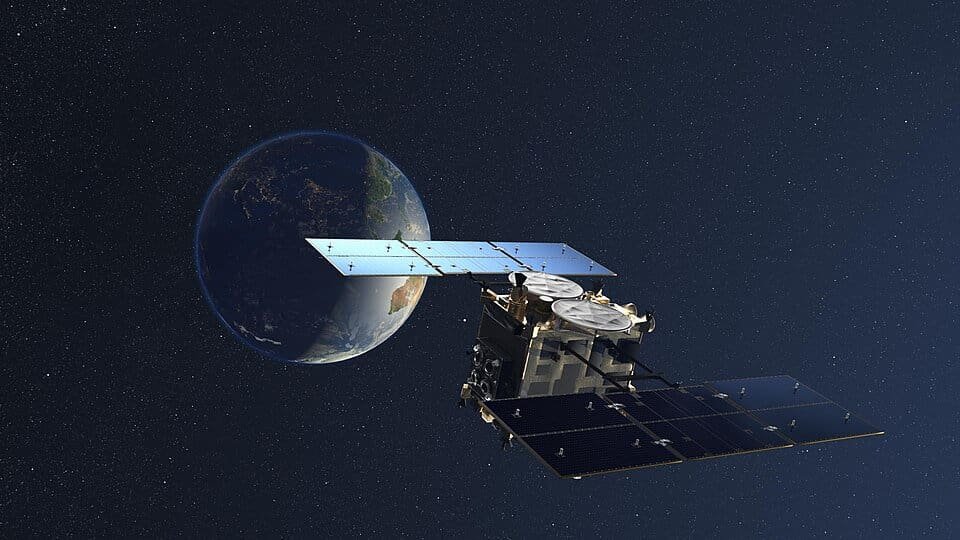
Hayabusa2 accomplished one of the most celebrated space missions of the 21st century, returning samples from the asteroid Ryugu to Earth in 2020. But the spacecraft was not finished. JAXA redirected it toward a new target, and on July 5, 2026, it will fly past the asteroid Torifune (also designated 2001 CC21) — more than a decade after Hayabusa2 first launched.
This is not a sample return mission. The high-speed flyby will yield close-range photographs and observations using instruments already proven in deep space. After Torifune, Hayabusa2 will head for a rendezvous with the small asteroid 1998 KY26 in 2031.
Vibe List Takeaway: There is something deeply compelling about a spacecraft that refuses to stop working. Hayabusa2 was built for one mission. It is now embarking on its third. The Torifune flyby will deliver humanity’s first close-up view of a near-Earth asteroid never studied in detail, extending the legacy of a mission that has already surpassed every expectation.
The 15 Missions Rewriting Space History in 2026
| # | Mission / Initiative | Agency / Company | Destination | Key Milestone |
|---|---|---|---|---|
| 1 | Artemis II | NASA | The Moon | First crewed lunar flyby since 1972 |
| 2 | Chang’e 7 | China (CNSA) | Lunar South Pole | Search for water ice in shadowed craters |
| 3 | Nancy Grace Roman Space Telescope | NASA | Deep Space | Surveying 100 million stars and dark energy |
| 4 | Starship Orbital Refueling Demo | SpaceX | Low Earth Orbit | Ship-to-ship cryogenic propellant transfer |
| 5 | MMX Mission | Japan (JAXA) | Phobos (Mars) | Collect surface samples from Martian moon |
| 6 | Hera | ESA | Didymos/Dimorphos System | Inspect DART collision crater and deploy cubesats |
| 7 | Tianwen-2 | China (CNSA) | Kamoʻoalewa | Sample return from Earth quasi-satellite |
| 8 | Vera C. Rubin Observatory | NOIRLab / NSF | Earth (Chile) | Begin 10-year Legacy Survey of Space and Time |
| 9 | Blue Moon Mark 1 | Blue Origin | The Moon | Unpiloted lunar surface cargo landing |
| 10 | The Starship Catch | SpaceX | Earth (Gulf of Mexico) | Catching the Starship upper stage for full reusability |
| 11 | Venus Life Finder | Rocket Lab & MIT | Venus | Private probe searching for biological activity in clouds |
| 12 | Gaganyaan G1 | India (ISRO) | Low Earth Orbit | Uncrewed orbital test for crew capsule |
| 13 | PLATO | ESA | Deep Space | Hunting for Sun-Earth analog exoplanets |
| 14 | Neutron | Rocket Lab | Low Earth Orbit | Maiden flight of reusable medium-lift rocket |
| 15 | Hayabusa2 Extended Mission | Japan (JAXA) | Asteroid Torifune | High-speed flyby of near-Earth asteroid |
Frequently Asked Questions
What was NASA’s Artemis II mission? Artemis II was NASA’s first crewed mission under the Artemis program, sending four astronauts on a lunar flyby from April 1 through April 10, 2026. The astronauts set a new distance record for the farthest distance humans had ever traveled from Earth at 252,756 miles, exceeding the record previously held by the Apollo 13 mission in 1970.
When is NASA’s Nancy Grace Roman Space Telescope expected to launch? The Roman Space Telescope is expected to launch aboard a SpaceX Falcon Heavy rocket no earlier than September 2026 from Kennedy Space Center. The telescope has completed assembly at Goddard Space Flight Center and is now completing its final round of environmental testing.
Is China landing people on the Moon in 2026? China plans to send the Chang’e 7 robotic mission to the Moon in August 2026 to search for water ice, but the mission is uncrewed. China intends to conduct their crewed lunar landing mission around 2030.
What is SpaceX’s orbital refueling demo? SpaceX plans to demonstrate the transfer of cryogenic fuel between two Starships in orbit. The ability to perform such operations is critical to NASA’s Artemis lunar landing missions, as the Starship HLS will need to be fueled in orbit prior to descending to the Moon.
What is the Vera C. Rubin Observatory? The Vera C. Rubin Observatory is a ground-based telescope located in Chile equipped with the world’s largest digital camera. It produced over 800,000 astronomical alerts in a single evening during its debut on February 24, 2026. For 10 years, the Rubin Observatory will survey the entire visible sky every few days.
Will India launch astronauts in 2026? India’s Gaganyaan G1 mission in 2026 is an uncrewed orbital test of the crew capsule. A successful G1 would clear the way for India’s first crewed flight, H1, currently scheduled for 2027. That would make India the fourth country with independent crewed access to orbit.