



A 10-second blast of radiation wiping out 85 percent of all marine species. A rogue magnetic field strong enough to dissolve your molecular structure from 600 miles away. A single fleck of paint punching through solid metal at 22,000 miles per hour. An invisible mass of 8,000 galaxies dragging the Milky Way into the dark. None of these threats offer a warning or a chance to escape; they are the uncompromising mechanics of a universe where survival is a mathematical rounding error.
Introduction
Space isn’t just cold and empty; it is actively hostile. While we look up at the night sky and see a serene, unchanging expanse, the reality of the cosmos is one of violent extremes, incomprehensible scale, and mechanical triggers that could extinguish our solar system without a fraction of a second’s warning. The night sky is an illusion of stillness, masking a three-dimensional environment where the laws of physics frequently operate at catastrophic extremes.
Popular science often frames astronomy as the peaceful mapping of stars and planetary orbits. But advanced observatories are continuously proving that the universe is not a quiet void; it is a live minefield. From invisible gravitational anomalies dragging our entire galaxy across the universe to rogue singularities wandering the darkness, the physics of our reality are far more unstable than they appear. The deeper we peer into the dark, the more we realize that Earth is not a protected sanctuary; it is a fragile raft floating through a crossfire of relativistic jets, hypervelocity projectiles, and fundamental fields that could collapse at any moment. Here are 12 terrifying space facts that prove just how fragile our existence truly is.
1. The Universe Could Delete Itself at the Speed of Light
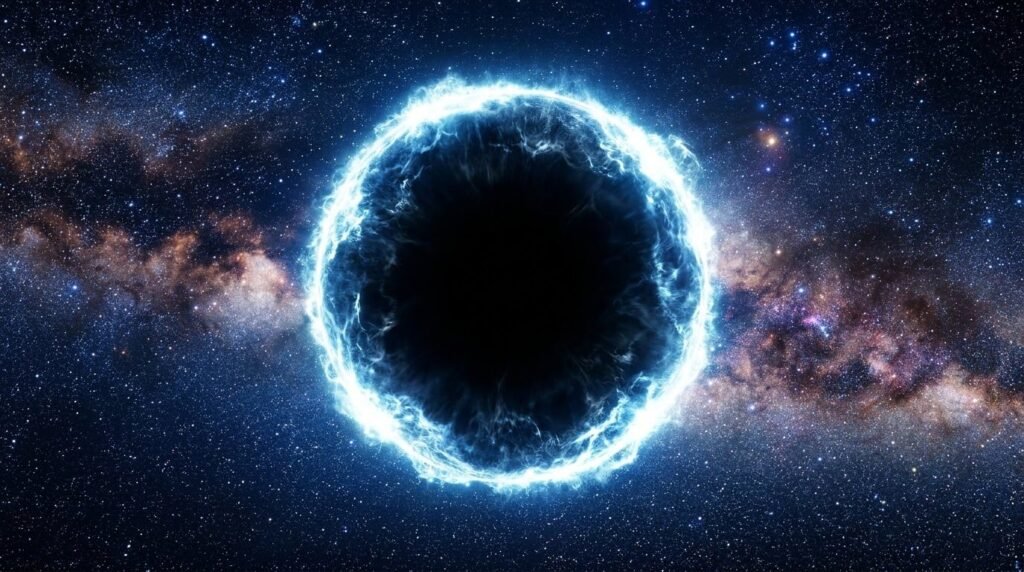
The Higgs boson and its corresponding field dictate the fundamental nature of reality. The Higgs field permeates the entire universe; it is the mechanism responsible for giving mass to everything, from the electrons in your nervous system to the core of the sun. But physics measurements regarding the mass of the Higgs boson indicate something deeply unsettling: our universe currently exists in a “metastable” state. This means the vacuum of space is stable for now, but it is not in its lowest possible energy state. It exists in a precarious balance, and a random quantum fluctuation could push the Higgs field into a more stable configuration.
If that happens, it triggers a phase transition known as false vacuum decay. A bubble of “true vacuum” would form in a random sector of the universe and begin expanding outward at exactly the speed of light. Inside this bubble, the laws of physics, the constants of nature, and the masses of particles would be entirely rewritten. Because it moves at light speed, we would receive absolutely no warning; no approaching glow, no shifting gravitational waves. The bubble would simply arrive and instantly rewrite reality, destroying all chemistry, dissolving all atomic bonds, and annihilating life as we know it. We would not even have the neurological time to process the end of the universe before ceasing to exist.
2. Invisible Rogue Black Holes Are Wandering the Cosmos
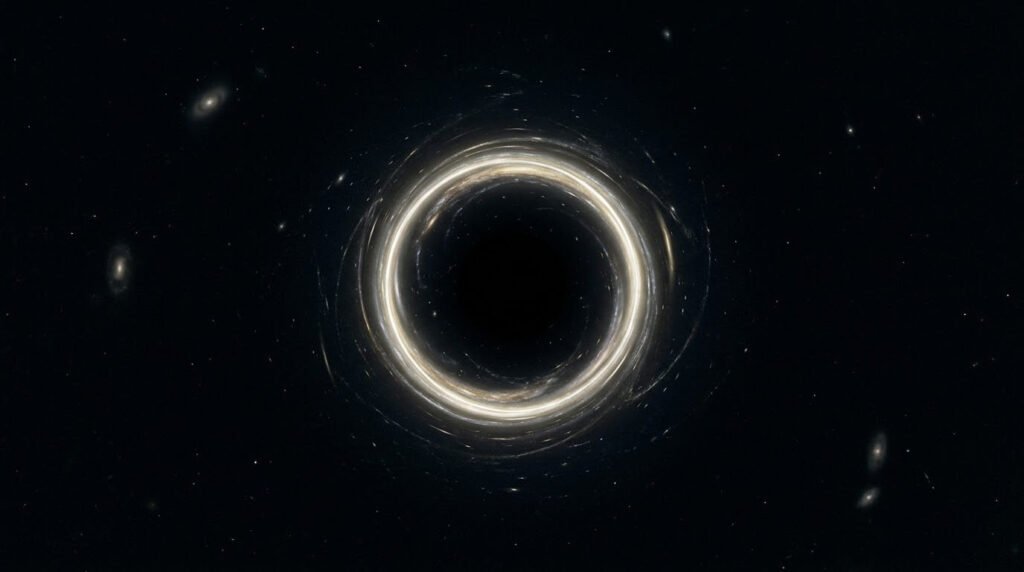
We usually picture black holes anchoring the centers of galaxies or locked in orbit with dying stars. They are the inescapable anchors of the cosmic web. But the universe is chaotic, and massive gravitational events can literally boot these titans out of their homes. When two galaxies merge, their central supermassive black holes enter a decaying orbit, spiraling toward each other over millions of years. When they finally collide and merge, the event generates gravitational waves of such violent magnitude that they ripple through the fabric of spacetime.
This emission of gravitational waves is rarely symmetrical. If more energy is radiated in one direction, the newly merged supermassive black hole, an object weighing millions or billions of times the mass of our sun, receives a recoiling “kick” in the opposite direction. This kick can easily exceed the escape velocity of the galaxy itself. The result is a monster black hole rocketing through the intergalactic medium at millions of miles per hour as a rogue anomaly. Because black holes do not emit light, these wandering gravitational titans are entirely invisible against the blackness of space. We only know they are there by observing “microlensing,” the temporary, violent warping of background starlight as the invisible mass passes in front of distant stars. There are likely millions of these rogue singularities currently drifting through the dark, a phenomenon the Hubble Space Telescope has confirmed.
3. Something Massive is Dragging Our Entire Galaxy
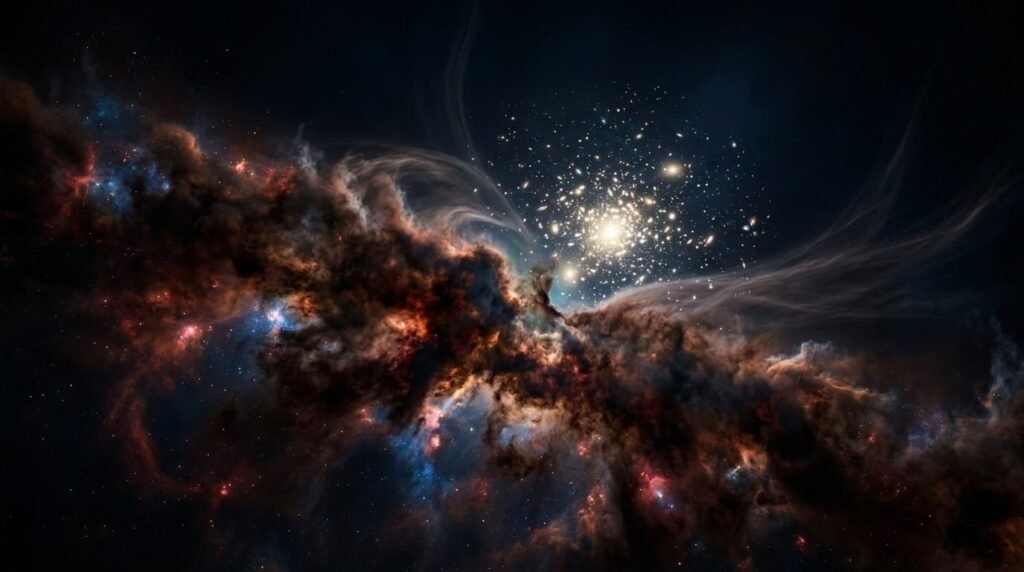
The Milky Way is currently hurtling through space at roughly 1.3 million miles per hour. We are not just drifting; we are being pulled. The destination is a mysterious gravitational anomaly approximately 220 million light-years away. Astronomers call it the Great Attractor.
This localized concentration of mass exerts a gravitational pull so immense that it is dragging our galaxy, the Andromeda galaxy, and the rest of our Local Group toward it. For decades, scientists could not see what was pulling us because the Great Attractor sits exactly within the “Zone of Avoidance,” a region of the sky completely obscured by the dense gas, dust, and stars of our own Milky Way’s galactic disk. The dense interstellar medium renders traditional optical astronomy useless in this direction. Recent radio telescope observations managed to peer through this galactic smog and discovered hundreds of previously hidden galaxies clustered together in the Norma Cluster. Yet, even with these new discoveries, the visible mass is not nearly enough to explain the terrifying gravitational pull. It turns out the Great Attractor itself is being pulled by something even larger sitting behind it: the Shapley Supercluster, a massive concentration of 8,000 galaxies. We are being dragged into the dark, pulled by a chain of increasingly massive leviathans, and we still don’t entirely know what is waiting for us at the end of the line.
4. A 10-Second Gamma-Ray Burst Could Erase Our Atmosphere
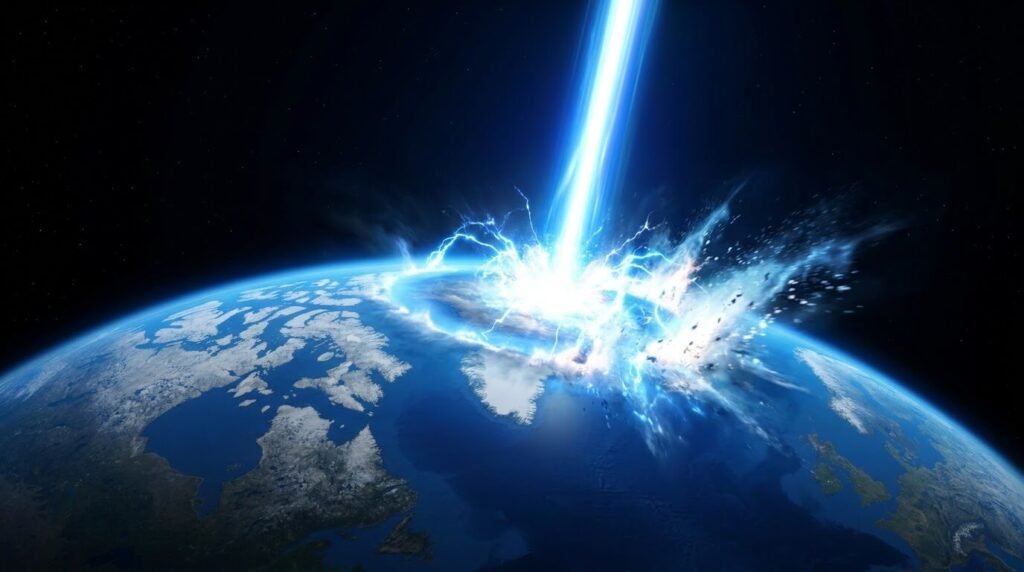
When the most massive stars in the universe collapse into black holes, or when two ultra-dense neutron stars collide, they release gamma-ray bursts; the most powerful electromagnetic explosions in the universe since the Big Bang. These events release more energy in seconds than our sun will generate over its entire 10-billion-year lifespan. Crucially, this energy is not dispersed equally in all directions. It is focused into tightly beamed, relativistic jets of high-frequency radiation that can cross billions of light-years without dissipating.
If a gamma-ray burst were to occur relatively close to Earth, within a few thousand light-years, and point its beam directly at us, the results would be apocalyptic. Atmospheric modeling demonstrates that a gamma-ray burst hitting Earth for just ten seconds would completely shred our planet’s protective ozone layer. The high-energy photons would break apart nitrogen gas, forming nitrogen oxides that relentlessly consume ozone. Without that shield, unfiltered ultraviolet radiation from the sun would sterilize the surface of the planet. It would kill land-based flora and instantly destroy the surface-dwelling marine phytoplankton that forms the foundation of the global food chain. Many paleontologists believe a localized gamma-ray burst was exactly what triggered the Ordovician-Silurian mass extinction on Earth 440 million years ago, wiping out 85% of all marine species.
5. Stars Are Being Fired Like Cosmic Bullets
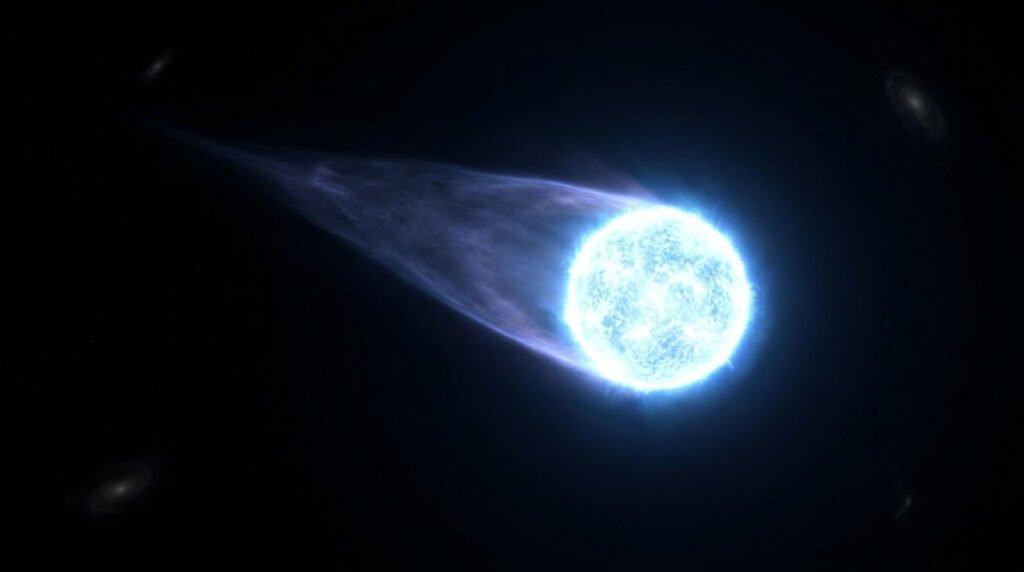
Not everything in the Milky Way is orbiting peacefully. Lurking at the exact center of our galaxy is Sagittarius A*, a supermassive black hole. Occasionally, a binary star system, two stars orbiting each other, wanders a little too close to this gravitational monster.
When this happens, the black hole engages in a brutal mechanism of celestial mechanics known as a Hills encounter. The intense tidal forces of the black hole rip the binary system apart. It violently devours one of the stars, capturing it in a decaying orbit. Meanwhile, the orbital momentum of the doomed twin is instantly transferred to the surviving star. This gravitational slingshot ejects the surviving star from the galactic center at speeds up to 2 million miles per hour. Astronomers have tracked dozens of these “hypervelocity stars” as they rocket through the Milky Way. They are moving so fast that they have completely broken free of the galaxy’s gravitational grip; they are unbound, rogue suns tearing through the void like celestial shrapnel, destined to exit the galaxy and exhaust their fuel in intergalactic space.
6. The Boötes Void is a 330-Million-Light-Year Expanse of Absolute Nothingness
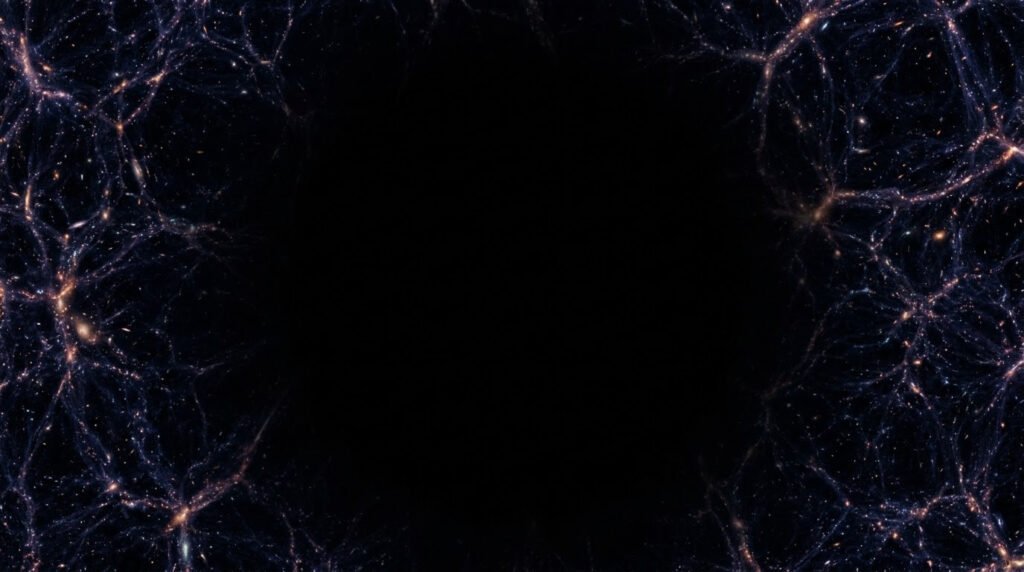
When we map the macro-structure of the universe, we typically see a cosmic web; superclusters of galaxies strung together by glowing filaments of dark matter and gas. But between these filaments are voids. The most extreme of these is the Boötes Void, a spherical expanse stretching 330 million light-years across.
To understand how unsettlingly empty this region is, you have to consider the density of our local cosmic neighborhood. In a standard patch of space the size of the Boötes Void, astronomers would expect to find roughly 10,000 galaxies. In the Boötes Void, extensive deep-space surveys have found fewer than 60. It is a region of nothingness so vast and so desolate that if the Milky Way were placed dead in its center, humanity would not have known other galaxies existed until the invention of advanced deep-space telescopes in the 1960s. The sheer scale of this emptiness defies early models of galaxy formation. Some astrophysicists suggest the void was formed by smaller voids merging together like soap bubbles over billions of years, but its existence remains one of the most haunting structural anomalies in the known universe; a pocket of absolute isolation where light travels for hundreds of millions of years without hitting a single object.
7. Magnetars Have Magnetic Fields Strong Enough to Dissolve Molecular Structure
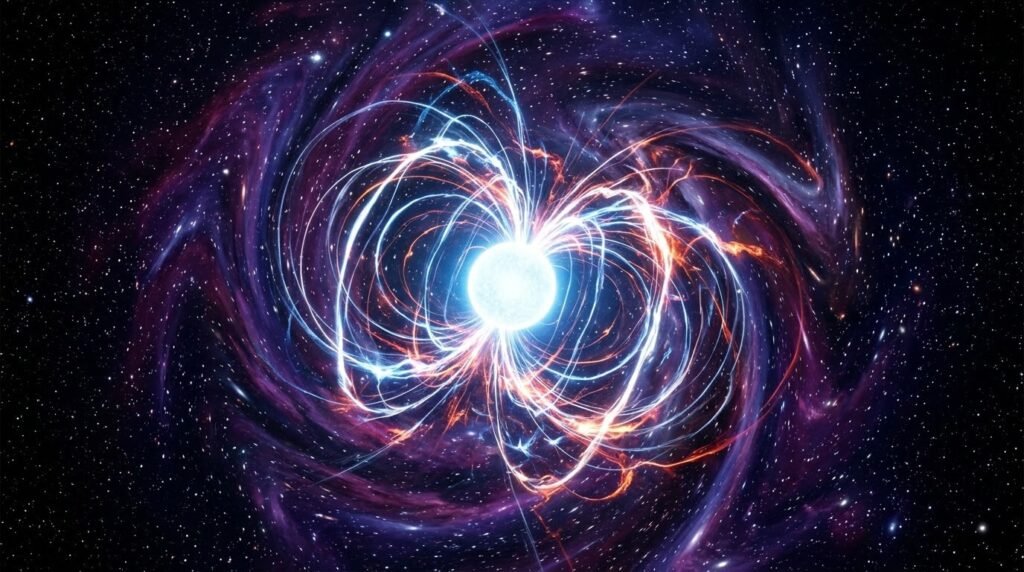
When certain massive stars go supernova, their cores collapse into ultra-dense remnants called neutron stars; objects so dense that a single teaspoon of their material weighs billions of tons. A very small, highly volatile subset of these are magnetars; the absolute most powerful magnets in the known universe. Their magnetic fields are incomprehensibly strong, reaching up to a million billion gauss. To put that catastrophic power in perspective, a standard refrigerator magnet generates about 100 gauss, and the magnetic field of the Earth; which is strong enough to deflect solar wind and align compasses globally; is merely half a gauss.
If a magnetar were positioned halfway between Earth and the moon, its magnetic field would be strong enough to wipe the magnetic strip of every credit card on our planet and irreversibly scramble our global digital infrastructure. But the physical threat is much worse. If a human were to get within 600 miles of a magnetar, the magnetic field is so intensely concentrated that it would begin to distort the electron clouds of the atoms inside your body. Atoms are held together by electromagnetic forces; a magnetar simply overpowers them. Your molecular structure would physically stretch and dissolve, disrupting your biological chemistry before the lethal radiation even reached your nervous system.
8. The “Big Rip” Theory Suggests Dark Energy Will Shred Every Atom
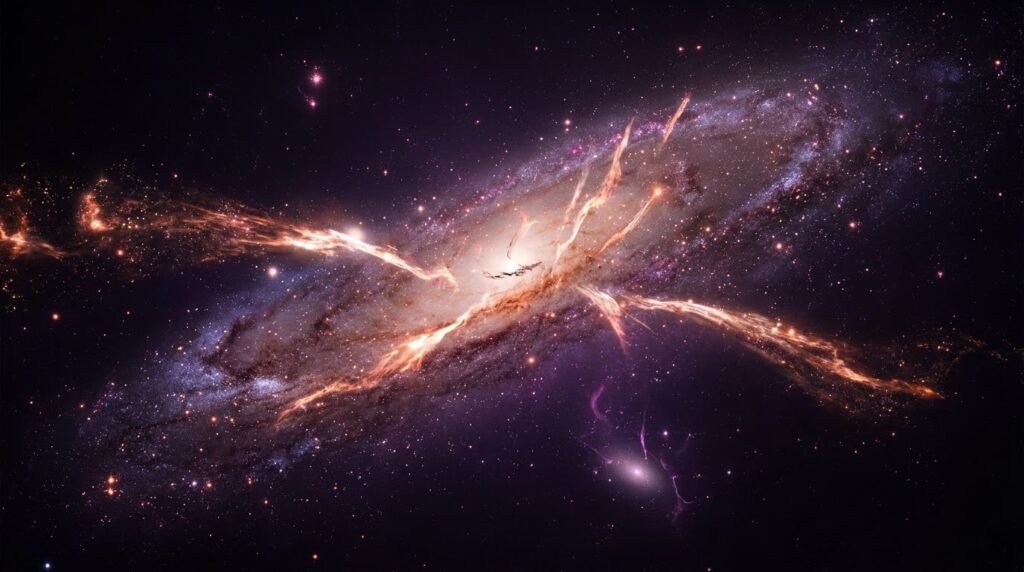
The universe is expanding, and that expansion has been accelerating for billions of years due to an invisible, entirely unexplained force that cosmologists call dark energy. While some older cosmological models predict a slow, freezing death for the universe as stars burn out over trillions of years, the “Big Rip” scenario is a far more violent endgame.
In the Big Rip model, the density and repulsive force of dark energy do not remain constant; they continue to increase exponentially over time. Eventually, this phantom energy becomes so dominant that its repulsive force overpowers every fundamental binding force of nature; including gravity, electromagnetism, and the strong nuclear force. This destruction would unfold in a precise sequence. First, the expansion of space would outpace the gravity holding superclusters together, isolating every galaxy. Then, galactic gravity would fail, sending stars flying out into the void. Months before the end, solar systems would lose their gravitational binding, unmooring planets from their stars. Minutes before the end, planets themselves would shatter. In the final, unimaginable fraction of a second, the very atoms that make up all matter; including the atoms currently comprising your body; would be violently shredded apart as the strong nuclear force is overwhelmed by the expanding fabric of space itself.
9. A Coronal Mass Ejection Could Plunge Earth into a Multi-Year Blackout
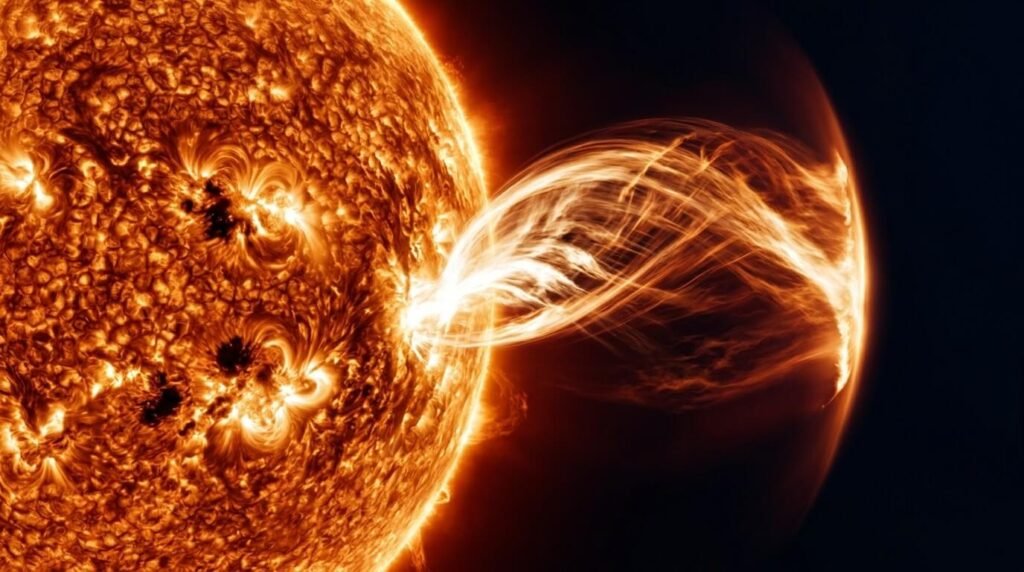
We rely entirely on the sun for survival, but our local star occasionally ejects massive clouds of magnetized plasma and radiation known as coronal mass ejections (CMEs). If a large CME is aimed directly at Earth, it triggers a severe geomagnetic storm as the plasma impacts our magnetosphere. In 1859, a direct hit known as the Carrington Event caused telegraph wires to spark, severely shocking operators and literally setting telegraph offices on fire.
If a Carrington-level event struck today, the consequences would be catastrophic for modern civilization. The electromagnetic surge would induce massive electrical currents in the long-distance transmission lines that make up the global power grid. This sudden spike in direct current would overheat and melt the copper wiring inside massive, custom-built high-voltage transformers. These transformers are the backbone of the grid; they weigh hundreds of tons, are custom-manufactured, and take years to replace. We would lose electricity, GPS satellites, telecommunications, water filtration systems, and global supply chains in an instant. Humanity would be plunged into a technological dark age without warning; a blackout that could realistically last for years, causing a systemic collapse of modern logistics.
10. Micrometeoroids Can Punch Through Solid Metal at 22,000 MPH

While planetary defense focuses on massive asteroids, the most immediate danger to spacecraft is microscopic. Micrometeoroids are tiny flecks of rock, orbital debris, or even chipped paint, some no larger than a single grain of sand.
Because there is no air friction in the vacuum of space to slow them down, these microscopic bullets travel at hypervelocity speeds; averaging 22,000 miles per hour. Kinetic energy scales exponentially with velocity. At that speed, a single one-centimeter fleck of paint impacts with the kinetic energy of a 550-pound anvil moving at highway speeds. These invisible projectiles can punch cleanly through solid metal bulkheads, shatter highly reinforced satellite optics, or instantly depressurize an astronaut’s spacesuit if struck in a vulnerable location. The International Space Station is heavily armored with Whipple shielding to absorb these impacts, but it still regularly sustains gouges and cracked windows from debris too small for radar to track but fast enough to kill.
11. “Vampire Stars” Prolong Their Lives by Sucking Mass from Neighbors
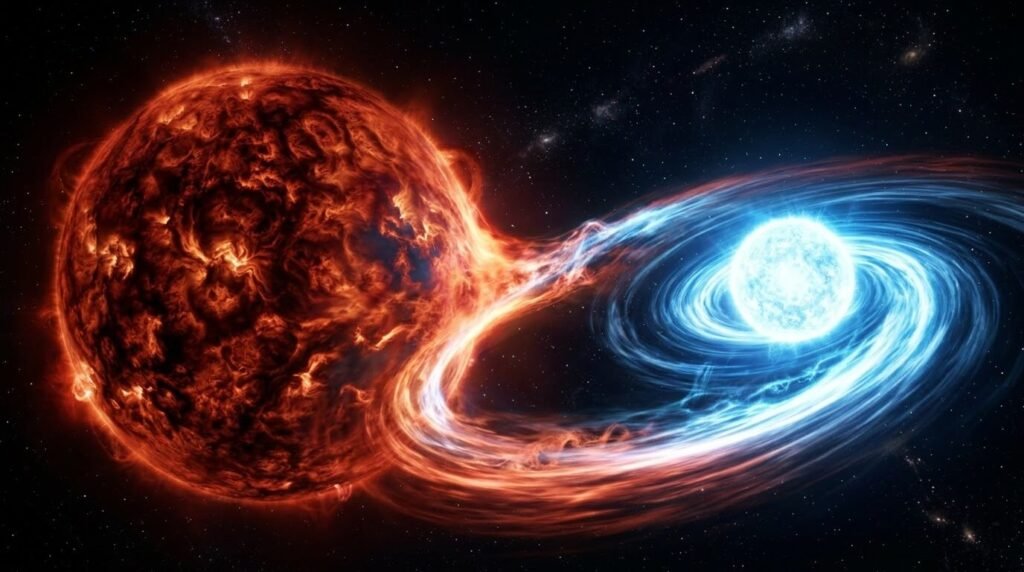
Stars have fixed, mathematically predictable lifespans dictated entirely by their initial mass. But astronomers surveying ancient, densely packed globular star clusters discovered a glaring anomaly; certain stars that looked inexplicably young. They were burning hot and blue in stellar neighborhoods where every other star was billions of years old, cold, and dying. Astronomers originally dubbed them “blue stragglers,” but their mechanism of survival is far more sinister than the name implies.
These anomalies function as stellar vampires. Operating in binary star systems where two stars orbit each other in close proximity, a blue straggler prolongs its own life by parasitically siphoning the hydrogen fuel off its partner star. As the companion star ages and begins to swell into a red giant, its outer layers cross a gravitational threshold known as the Roche lobe. The vampire star’s gravity strips this material away, gorging on the stolen mass until the victim is reduced to a dead, shriveled white dwarf core. The vampire, meanwhile, is rejuvenated by the fresh hydrogen; burning bright and young, wearing the stolen youth of its dead twin while orbiting its corpse.
12. Space Junk Could Trap Humanity on Earth Forever
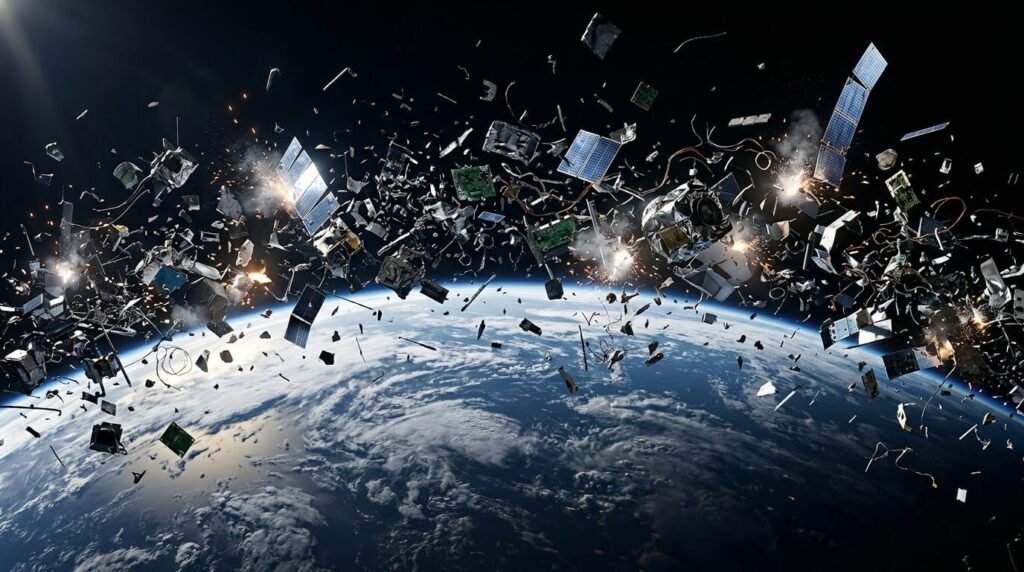
We have spent decades launching satellites, rockets, and orbital probes into low-Earth orbit, gradually creating a high-speed graveyard of derelict hardware circling the planet. In 1978, NASA astrophysicist Donald Kessler predicted a terrifying threshold now known as the Kessler Syndrome.
If the density of space junk reaches a critical mass, one accidental collision between two dead satellites will create a cloud of hypervelocity shrapnel. Because everything in orbit is moving at roughly 17,500 miles per hour, that shrapnel will inevitably hit other satellites, creating even more shrapnel. This triggers an unstoppable, exponential chain reaction of orbital destruction known as an ablation cascade. Once the cascade begins, no human intervention can stop it. Low-Earth orbit would become an impenetrable, chaotic shell of lethal, high-speed debris. We would lose all satellite communications, global weather tracking, GPS navigation, and orbital observatories. Humanity would be physically imprisoned on Earth, completely unable to launch rockets or crewed spacecraft through the lethal debris field for generations until the fragments dragged back into the atmosphere and burned up.
At a Glance: The Universe’s Most Terrifying Anomalies
| Cosmic Anomaly | Scale / Size | Primary Threat Mechanism | Distance from Earth |
|---|---|---|---|
| False Vacuum Decay | Universal | Fundamental physics rewrite | Anywhere; moves at light speed |
| Rogue Black Holes | Millions of Solar Masses | Irresistible gravitational consumption | Wandering; completely invisible |
| The Great Attractor | 220 Million Light-Years | Mass gravitational dragging | Obscured by Milky Way core |
| Gamma-Ray Bursts | Trillions of miles (beam length) | Atmospheric ozone depletion | Distant galaxies; unpredictable |
| Hypervelocity Stars | Stellar mass | Gravitational disruption / collision | Ejected from galactic center |
| Boötes Void | 330 Million Light-Years | Absolute isolation | 700 million light-years |
| Magnetars | 12 miles (diameter) | Molecular dissolution via magnetic fields | Throughout the Milky Way |
| Big Rip | Universal | Atomic tearing via dark energy | Expanding everywhere |
| Coronal Mass Ejections | Millions of miles wide | Global grid destruction | 93 million miles (The Sun) |
| Micrometeoroids | 1 centimeter or less | Hypervelocity kinetic impact | Low Earth Orbit / Local space |
| Vampire Stars | Stellar mass | Siphoning matter from companion | Common in dense star clusters |
| Kessler Syndrome | Planetary orbit | Unstoppable collision cascade | Low Earth Orbit |
Frequently Asked Questions (FAQ)
Can we predict a Gamma-Ray Burst before it hits Earth? No. Because gamma-ray bursts consist of electromagnetic radiation traveling at exactly the speed of light, no warning signal could ever reach us before the burst itself. We would only know it happened at the exact moment it struck our atmosphere and began altering our chemistry.
Is the Great Attractor a black hole? No, the Great Attractor is not a single black hole. It is a localized concentration of mass, consisting of hundreds of galaxies within the Norma Cluster, pulling the Milky Way toward it. However, because it sits behind the dense dust of our galaxy’s center, its exact structure remains partially obscured.
Could a rogue black hole enter our solar system? Statistically, it is highly unlikely given the vast distances of space, but it is physically possible. Because rogue black holes emit no light, we would not see one approaching; we would only notice its approach when the orbits of the outer planets became inexplicably distorted by its gravitational well.
Will the sun ever become a vampire star? No. The sun is not part of a binary star system, which is mechanically required for a star to siphon mass from a companion via Roche lobe overflow. The sun will eventually expand into a red giant and swallow the inner planets, but it will never act as a blue straggler.
Can we clean up space junk to prevent the Kessler Syndrome? Space agencies are currently developing experimental technologies to capture and de-orbit large pieces of derelict space debris using nets, harpoons, and magnetic tethers. However, tracking and capturing millions of millimeter-sized hypervelocity fragments remains technologically impossible at present.