


Thirteen legends. One Viking site in Newfoundland preserves European presence in the Americas from more than 1,000 years ago. English ballads carried Robin Hood from at least the 14th century, while a 15th-century prince helped give Dracula his historical chill. Gold dust drifted over a sacred lake, turf walls faced Atlantic wind, and giant squid rose into stories as monsters. These myths endured not because the impossible proved true, but because reality was already violent, sacred, and unforgettable.
Most legends stick around because they are either beautiful or terrifying. The most resilient legends, however, tend to be connected to something “real,” which helps make them memorable for years to come. A city did exist. A king did rule. There was a ceremonial event. A wild creature did wash up on a beach. Ruins remained in the right places long enough for the legend to attach itself to the rocks and keep living.
This pattern appears throughout history. When history combines with mythology, the details multiply, the emotion intensifies, the symbols grow stronger, and yet an element of truth remains that keeps the whole thing from drifting away.
It is this blend that creates such a strong attachment to legend. A complete fabrication would not inspire centuries of debate, while an ordinary piece of history would simply fade from collective memory; the middle ground between the two is far more compelling. This is where most of our popular myths reside.
These are histories infused with theatrical light. These are memories enhanced through exaggerated retellings. These are geographies altered by fear, grief, propaganda, religious belief, desire, and political agendas over time. By the time we receive most of these myths, they are no longer accounts of what occurred. Rather, they are accounts of what a culture needed the past to represent.
That is why a compelling “real history behind this legend” article rarely ends by declaring that every part of the myth was true. The answer is usually more complicated and more revealing. Atlantis probably was not a physical lost empire, but it may echo a major Bronze Age catastrophe. Troy was treated as literary scenery for generations until archaeology forced people to acknowledge that a real city stood there. El Dorado was not a city of gold hidden in the South American interior, but it did grow out of an actual ritual involving gold, power, and sacred waters. Dracula was fiction, but it fused so completely with the historical reputation of Vlad III that the prince and the vampire now seem to have entered memory together.
There should not be a single formula for articles about mythology and legend. Some legends point toward real places. Others direct attention toward real individuals. Some preserve misunderstood scientific knowledge. Many reflect identifiable social conditions rather than a single moment of invention. Several become especially fascinating because “the truth behind them” is not merely a buried fact, but the way fear, empire, religion, and storytelling distort reality until rumor begins to function like evidence.
That is the method used here. This list is not concerned with proving that every legend contains factual components. Rather, it asks what kind of reality gave each legend enough weight to endure.
This approach also aligns with the preferred style of VibeList’s History & Facts coverage. The strongest history listicles on VibeList’s broader History & Facts archive do not present the past as something sealed behind museum glass. Instead, they invite readers to see how old anxieties, rituals, and obsessions still feel familiar now, whether the subject is political power, strange belief, or the bodily extremes described in features like this ancient-history piece on beauty practices.
Ultimately, the objective is not simply to say that something unusual once happened. The goal is to show that ambition, panic, greed, prestige, curiosity, superstition, and fear helped shape the past in ways that still resonate. The packaging has changed. The tools have changed. The stories humans tell about their world have changed. The underlying desires, however, remain remarkably consistent.
So this is not a listicle of “myths proven 100% true.” That category is usually too simplistic and often dishonest. What follows is a set of famous legends that seem completely implausible until you examine the archaeology, chronicles, geography, literature, rituals, and historical pressures behind them. At that point, the stories become less magical but more interesting: no longer fairy tales, but records of what human beings do when the world is too chaotic, too destructive, too attractive, or too difficult to leave unexplained.
1. Atlantis
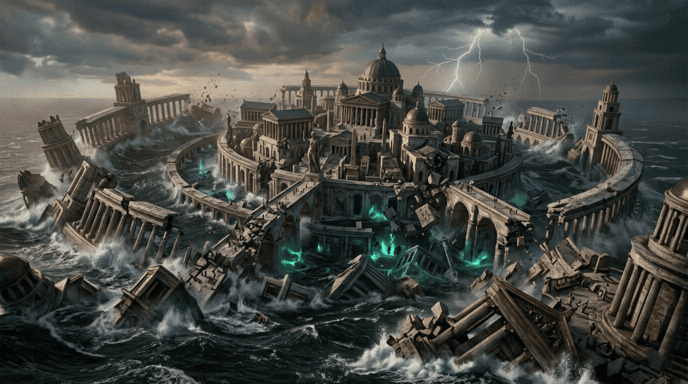
The legend of Atlantis may be the most famous example in the world of a story repeatedly pulled out of its symbolic setting and forced back into geography. In Plato’s dialoguesTimaeusandCritias, Atlantis appears as a powerful island nation beyond the Strait of Gibraltar, a place that rose to immense wealth and influence, slipped into moral decay, and was finally destroyed by earthquakes and tidal waves. The story endures not just because it offers a “lost city” mystery, but because it also works as an allegory of civilizational collapse, moral failure, and catastrophic destruction.
One essential point is that Britannica’s Atlantis entry describes Atlantis as “probably a mere legend.” That matters because it eliminates one of the easiest tricks in articles that claim to have “proven” old myths. Uncertainty is not evidence. The more interesting question is why Atlantis remains so difficult to let go of. Plato may have used it as a philosophical vehicle, but the legend may also preserve residual memories of older disasters, including volcanic eruptions, earthquakes, and tsunamis that shattered Bronze Age societies in the eastern Mediterranean.
Even if that connection can never be demonstrated with certainty, it helps explain why Atlantis feels larger than a simple invention. Massive environmental catastrophe leaves impressions that can survive in cultural memory long after the original event disappears.
Atlantis also shows how modern fascination helps keep old legends alive. Each generation wants to be the one that finally uncovers what all previous generations missed. That is why Atlantis is constantly relocated. It appears in the Atlantic, the Mediterranean, Scandinavia, North America, and wherever the current imagination happens to prefer placing it. The legend survives because it is portable.
Yet the basic appeal of Atlantis seems to rest on the same three elements every time: a real human fear of civilizational collapse, a lingering memory of environmental disaster, and a body of literature strong enough to animate the story for centuries. That combination gives Atlantis a durability that a purely decorative myth would not have.
Even if it is impossible to prove exactly why Atlantis feels believable to so many people, it is easy to see why it persists. The story demonstrates how traumatic historical experience can survive not as a record, but as a legend.
2. Troy
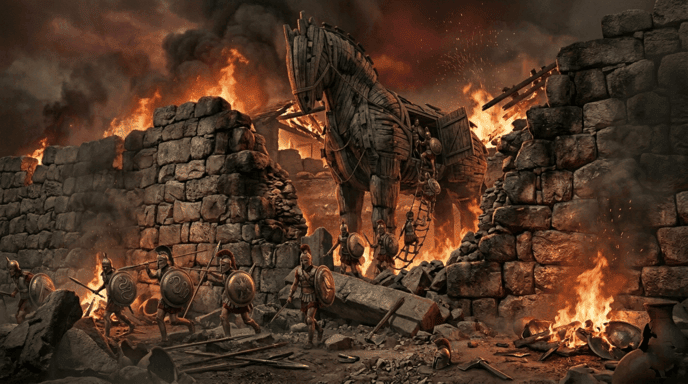
The legend of Troy shows what happens when literature enjoys a centuries-long lead over archaeology in determining what people think is real. For much of the modern era, Troy was treated as little more than an idealized setting for epic poetry, a necessary backdrop for burning cities, heroic deaths, and Homeric grandeur. Excavation changed that conversation.
Britannica’s account of Troy describes it as an ancient city in northwestern Anatolia with an enduring place in both literature and archaeology. That dual significance is central to why Troy matters so much. The city occupied a strategic position on trade routes between Europe and Asia near the Dardanelles, which helps explain why it would have remained prominent in memory even without Homer.
The historical picture becomes more compelling the closer you look. Excavations at Hisarlık revealed multiple layers of settlement, and those layers record repeated occupation, destruction, rebuilding, and urban development over long stretches of time. That is not the profile of a literary hallucination. It is the profile of a real place shaped by centuries of human activity.
The real questions now are different ones. Which layer of Hisarlık, if any, corresponds most closely to the conflict remembered in the Iliad? How large was the settlement at its height? How much of Homer’s Troy reflects memory attached to a real site, and how much emerged from generations of poetic elaboration?
That shift matters because Troy illustrates one of the most important lessons in the study of legend: a story does not need to function as a documentary record in order to be anchored in reality. Once Troy’s archaeological footprint was established, the Iliad became harder to dismiss as pure invention. The poem began to look less like a fantasy attached to nowhere and more like a poetic memory attached to an actual place that had long inspired conflict, destruction, and fascination.
That is also why Smithsonian’s survey of mythical places archaeologists think may have existed includes Troy. The site demonstrates that traditional narratives that appear semi-mythical can still retain walls, strata, and artifacts beneath them.
At the same time, Homer still matters. Without the Iliad, Troy might have become just another buried mound. Instead, Troy became one of the most powerful examples on earth of poetry and excavation speaking to one another across time. Whether Homer described the war accurately remains uncertain. Whether the wooden horse belongs to history or literature remains uncertain. But the central lesson endures: human beings built Troy, and later human beings created enough cultural force to keep its memory alive long after its inhabitants were gone.
3. The Amazons

A civilization composed entirely of women warriors sounds like the kind of idea people invent when they are both fascinated by and uneasy about the possibility of a society arranged differently from their own.
Britannica’s treatment of the Amazons immediately points to the broader cultural logic behind the story. The legend likely belongs to a recurring motif found across many cultures: the idea of a distant land organized in opposition to one’s own. That is historically important because it suggests that the Amazons were never just a question of whether an all-female warrior kingdom literally existed. They may instead reflect a Greek habit of conceptualizing foreignness through inversion.
Once that becomes clear, the story opens up. The Amazons are woven into some of the largest narrative systems in Greek mythology, including the labors of Heracles, the Trojan cycle, and the stories of Theseus. They are not random monsters dropped into the margins of myth. They are human adversaries who challenge conventional ideas about power, gender, warfare, and order.
One of the most revealing details in Britannica’s Amazon entry is that the Amazons’ geographic home moved farther away as Greek knowledge of the world expanded. That detail is almost too perfect. As the Greeks came to know a region more concretely, it became harder to leave a useful fantasy there. So the Amazons retreated into greater imaginative distance. The legend adjusted itself to preserve meaning when geography could no longer support it.
This does not mean myths are disconnected from lived experience. They rarely are. But it does mean that the safest historical reading of the Amazons is not that they were secretly real in the form the stories describe. A stronger reading is that the myth absorbed Greek anxieties and fascinations surrounding unfamiliar peoples, military cultures, and powerful warrior women, then shaped them into a durable opposite world for repeated use in storytelling.
That is why the Amazons matter historically. They allowed Greek storytellers to imagine the border between civilization and otherness without creating a literal beast. They are monstrous only in the sense that they violate expectation.
So the myth of the Amazons is not less historically meaningful because it may not describe a documented nation. It is more meaningful in a different way. Myths do not only provide evidence about whether something existed in physical reality. They also provide evidence about what a culture finds plausible or impossible, admirable or frightening, acceptable or threatening. The Amazons reveal a Greek society trying to understand itself by projecting onto a distant landscape an armed, disciplined, female “other,” then repeatedly confronting, mourning, marrying, aestheticizing, and fighting that figure in its stories. That is real history of a different kind.
4. King Arthur

King Arthur endures because he embodies nearly every quality people want in a legendary founder: he is martial enough to defend a collapsing world, noble enough to anchor a moral order, and adaptable enough to absorb the values of whatever later age wishes to claim him.
Britannica’s Arthur entry is appropriately cautious about his historical development. It identifies him as a legendary British king and notes that it is uncertain how the tradition formed or whether Arthur was based on an actual historical person. That uncertainty is not incidental. It is the point. Arthur matters because the absence of definitive evidence did not prevent the story from becoming culturally necessary.
Early material associated with Arthur is exactly the kind of material that keeps legends alive without stabilizing them. Britannica’s discussion of Arthur’s early sources points to figures such as Gildas and Nennius, as well as the Annales Cambriae and early Welsh literature, all of which contributed to transforming Arthur into something larger than a name attached to conflict. None of that produces a coherent biography. It produces fragments: battle associations, retrospective attributions, heroic expansion, and literary embellishment. Scholars continue to circle the same question because the sources leave room for almost every possibility.
Perhaps there was a historical leader somewhere in the background. Perhaps several figures were folded into one. Perhaps there was no singular Arthur at all in the way popular culture wants there to have been. The ambiguity itself helps explain the legend’s power. It resists certainty just enough to invite belief.
Geography helps as well. Smithsonian’s piece on mythical places archaeologists think may have existed includes Tintagel Castle as one of the landscapes tied to Arthurian tradition. That does not prove Camelot as people imagine it, but it does show how actual coastlines, ruins, and fortifications can help fasten a myth to apparent reality. Once a dramatic place is publicly identified as the setting of a legendary life, the story stops feeling abstract. It acquires stone, weather, and horizon. People can stand there and say, “This is where it happened,” even if the exact claim remains unverifiable.
The real history behind Arthur, then, is not a solved mystery but a visible process: a possible conflict zone in post-Roman Britain, early descriptions vague enough to invite elaboration, medieval writers in search of a sovereign worthy of chivalric ideals, tangible places capable of hosting the legend, and later audiences determined to keep reinventing him. Arthur shows what happens when a culture’s desire for an ideal past outlasts its ability to document that past clearly. He may or may not have existed as an identifiable man. The historical conditions that created the need for Arthur, however, were undeniably real, and those conditions turned him into one of the world’s most durable legends.
5. Robin Hood

Robin Hood feels real because he lives in one of the most persuasive settings any legend can inhabit: not a royal court, not a temple, not an impossible kingdom, but a forest on the edge of lawlessness. That setting matters. It makes the story feel close enough to touch and unstable enough to believe.
Britannica describes Robin Hood as the legendary outlaw hero of English ballads dating back at least to the 14th century. That detail tells you almost everything important. Robin Hood survives in exactly the kind of form collective memory favors. Ballads travel. They absorb local detail. They simplify social conflict into strong emotional patterns. A figure who lives there does not need a birth certificate to achieve cultural immortality.
That is also why the search for one definitive historical Robin Hood has never produced much. As Britannica notes in its overview of Robin Hood, the ballads themselves were the only evidence many medieval writers had for his existence, and none of the later attempts to identify him with a specific historical figure has won broad support. The legend persists precisely because the fragments never separate cleanly into history on one side and fiction on the other.
The records and traditions surrounding Robin Hood do not emerge from nothing. They emerge from a recognizable social world: forest law, resentment of authority, agrarian grievance, outlaw life, and popular anger at those who enforced unequal power. This is the real history behind the legend. Robin Hood feels less like an invented superhero than like the distilled fantasy of people living under social pressure and imagining a rebel who could humiliate the agents of power on their behalf.
Britannica explicitly links the authentic Robin Hood ballads to popular aspirations in northern England during an era of rebellion and discontent. That does not prove the later, polished version of Robin as a noble outlaw who stole from the rich to give to the poor. It does explain why such a figure became necessary.
Later tradition softened and romanticized him. It turned him into fallen nobility, then into a more aristocratic rebel, then into a cleaner cinematic folk saint. But beneath those revisions lies an older and sharper truth: societies subjected to distant authority repeatedly create stories about outlaws who behave more justly than the institutions governing them.
That is Robin Hood’s historical foundation. He may or may not have existed in any recognizable individual form. In some ways, though, his importance is greater because he may not have been just one man. A single documented outlaw would be interesting. A body of legend created from the longings of ordinary people is unforgettable.
6. El Dorado

El Dorado is one of the clearest examples of how conquest destroys understanding long before it destroys bodies.
Popular imagination treats El Dorado as the ultimate lost city of gold, or as an inland wonderland of impossible riches waiting for some ambitious intruder to find it first. But the historical record points in a different direction. As BBC News explains in its account of the real story behind El Dorado, El Dorado originally referred not to a city, but to “the golden one”—a ruler associated with Muisca ritual in central Colombia whose body was covered in gold dust before ceremonies involving offerings and sacred waters. That same core definition also appears in Britannica’s Eldorado entry, which traces the legend back to a gilded ruler connected to Lake Guatavita.
That is a complete reversal of the popular version. The image of El Dorado as an urban paradise emerged because outside observers misunderstood rituals centered on a person and transformed them into a fantasy about a place.
What makes El Dorado so historically revealing is its origin. BBC’s reconstruction of the Muisca succession rite describes a ceremonial journey onto a sacred lake accompanied by priests, offerings, incense, spectators, and gold. Archaeological work, along with surviving objects such as the Muisca raft described by the BBC, has validated substantial parts of that tradition.
The point is not that every later retelling of El Dorado was accurate. The point is that El Dorado did not begin as pure invention. It arose from a genuine ritual framework in which gold held spiritual and ceremonial power, and European conquerors then reinterpreted that framework through the logic of extraction, conquest, and wealth.
That mistranslation is the real history behind El Dorado. For Muisca society, gold carried sacred and ceremonial significance rather than merely economic value. To Spanish conquistadors obsessed with treasure, however, stories about a gold-covered ruler offering gifts into a lake sounded less like religion than like a map waiting to be followed.
Once enough such stories accumulated, greed took over. A man became a place. A rite became a destination. A sacred act became an imperial rumor persuasive enough to send adventurers deeper into landscapes they scarcely understood and often did not survive.
El Dorado therefore represents more than cinematic potential. It shows how empires manufacture myth out of misunderstanding. The underlying reality was already striking enough: ceremonial gold, sacred water, succession rites, extraordinary craftsmanship, and a society with its own cosmology of offerings. Colonizers converted that reality into a fantasy of accumulation because that was the only version they were prepared—or willing—to understand.
That is why El Dorado endures. It survives both as a symbol of wealth and as evidence of interpretive violence: a case in which colonial desire transformed ritual into geography and belief into rumor.
7. Vinland

Vinland occupies an awkward but fascinating space. For decades it belonged to the class of stories historians either respected or distrusted, depending on temperament. It was too specific to dismiss outright, yet too saga-like to accept as established fact. Accounts of western lands in Norse literature carried a persistent air of plausibility from Greenland outward, but plausibility is not proof.
Then archaeology changed the discussion. Parks Canada’s L’Anse aux Meadows page describes the site as the earliest known evidence of European presence in the Americas and the remains of a Viking encampment more than 1,000 years old. There is nothing poetic about that statement. It is material history.
The importance of that discovery is difficult to overstate. A site in Newfoundland verifying Norse presence in North America forces a reassessment of older skepticism about westward voyaging. Smithsonian’s survey of mythical places archaeologists think may have existed likewise identifies L’Anse aux Meadows as one of the legendary places archaeology has helped confirm, and it explicitly connects the site to Vinland in the Greenlanders’ Saga. That does not validate every detail in the sagas, but it does validate their premise: Norse explorers reached North America before Christopher Columbus.
That is what makes Vinland so useful for thinking about legend and historical memory. Legends can preserve traces of exploration, contact, and movement beyond the accepted map of a society. These were not abstract myths about a fantasy realm. They were stories about voyage, landfall, and encounter beyond familiar boundaries.
Once archaeology confirmed a Norse presence in North America, the sagas no longer looked like exaggerated campfire tales. They began to look like narratives built from remembered travel, remembered landfalls, and remembered contact with places beyond the inherited horizon of the Norse world. In that sense, the legend did not create the impossible. It preserved a reality that later historical consciousness had partly forgotten how to remember.
It is also fitting that confirmation came in the form of a relatively small encampment rather than a spectacular metropolis. That scale feels true to exploration. Exploration is usually less cinematic than later legend makes it seem. Encampments leave turf walls, tools, logistical strain, and a temporary foothold, whereas conquest dreams of paradise.
Vinland became legendary because distance does what distance usually does: it enlarges wonder and shrinks proportion. Archaeology restored the proper scale without destroying the mystery. It showed that the Norse world extended farther than many later generations realized, and that sometimes the most unbelievable legend is not an exaggeration at all, but underremembered history.
8. The Cretan Labyrinth & the Minotaur

The Minotaur is plainly mythical. No serious reading of the legend requires belief in a literal bull-headed man devouring sacrificial youths inside a maze designed by Daedalus. Britannica’s Minotaur entry identifies the creature as part of Greek mythology, and Britannica’s entry on the Cretan labyrinth makes clear that the physical reality of the labyrinth remains uncertain as a literal historical structure. But stories that vivid rarely fasten themselves to places at random.
The real question is not whether excavators will someday uncover the bones of a human-bovine hybrid. It is what kind of historical environment made a story like this feel plausible, durable, and meaningful for so long.
Part of the answer is location. The myth is inseparable from Crete, Minos, and the idea of a palace world powerful enough to inspire awe and dread at the same time. Earlier traditions placed the labyrinth near Knossos in the Cretan labyrinth tradition, and Smithsonian’s article on archaeology-backed mythical places notes how recent discoveries on Crete inevitably revive comparison to the Minotaur’s maze. That does not prove the legend. It does show how complex palace landscapes, Minoan prestige, and memories of concentrated power provided fertile ground for later Greeks to imagine confinement, tribute, monstrosity, and royal authority in geographic form.
Another reason the myth remains so compelling is that its emotional logic resembles recognizable historical experience. The story is saturated with political anxiety: domination by an external power, submission through tribute, young lives sacrificed to systems centered far from home, and the need for a hero to enter a zone of danger and break the cycle. Whether the beast existed is beside the point. The structure of the myth reflects truths about how societies imagine subjugation and liberation.
A monster in a maze is figurative. Tribute extracted by a powerful center is not. That is why the historical basis of the legend lies not in hidden zoology, but in cultural memory tied to place, architecture, and power. Ancient Crete was impressive enough to survive in later Greek memory as a realm of old authority and strange design. Later generations encountered those remnants and transformed what they did not fully understand into a terrifying figure.
The complex palace architecture was reimagined as a literal maze; the predatory force of the political center became a man-eating beast; and the hero emerged as the one capable of navigating the system and ending the cycle of subjugation. The result is one of the clearest examples in classical tradition of how historical magnificence can harden into legendary terror.
9. The Flying Dutchman
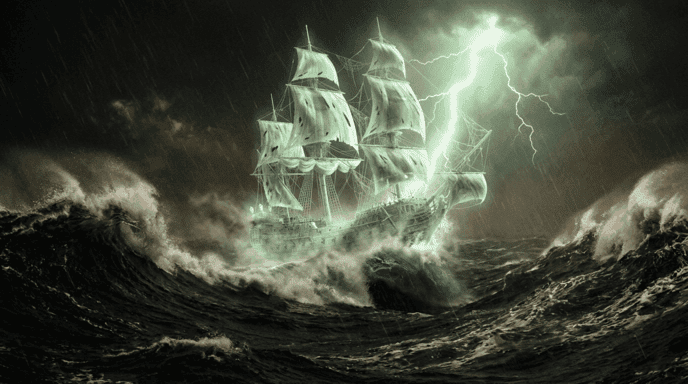
The Flying Dutchman belongs to the kind of legend that could only have flourished in a world where the sea still seemed morally charged. Britannica’s overview of the Flying Dutchman describes it as a spectral ship doomed to sail forever, its appearance often taken by sailors as a sign of imminent disaster. In many versions the legend centers on Captain Van der Decken, whose defiance near the Cape of Good Hope condemns him to eternal wandering.
That is more than a ghost story. It is maritime dread given shape.
The verifiable history behind the Flying Dutchman lies not in the ship itself, but in the world that found such a ship believable. Long-distance sailing produced precisely the conditions that let legends like this thrive: isolation, storms, rumor, poor visibility, sudden death, and the persistent feeling that the ocean punishes arrogance. Britannica also traces the Dutchman’s literary afterlife through later artistic reinterpretations, including Richard Wagner’s opera. The important point is that the Dutchman moved from sailors’ fear into high art without losing its original force.
Unlike Troy or Vinland, this is not a legend that archaeology can verify with walls and foundations. The truth behind the Flying Dutchman exists in another register. It reveals what sailors feared, how they read punishment into nature, and how maritime cultures transformed danger into omen. Stories about cursed ships embody the emotional logic of professions built on disappearing horizons and incomplete information.
One vessel is destroyed in a storm. Another crew sees strange lights in the distance. A route earns a reputation for disaster. An aging sailor boasts too loudly about attempting what should not be attempted, and soon afterward the sea seems to answer him personally. That kind of sequence may never become a logbook entry, but it captures a truth sailors understood intimately: on certain coasts and in certain weather, one bad decision can feel like the whole ocean closing in.
That is why the legend has historical roots even without physical proof. Not all myths endure because they point to ruins, corpses, or rituals. Some endure because they become emotional languages for entire occupations. The Flying Dutchman did that for maritime culture. It gave peril a hull. It gave hubris a face. It turned oceanic uncertainty into an emblem so powerful that even people who have never stood on a pitching deck immediately understand what it means. Effective legends compress an entire environment into one unforgettable apparition.
10. The Kraken

The Kraken remains effective because giant sea creatures are among the few things that continue to inspire fear even after science explains them. Britannica’s Kraken entry describes it as a legendary sea creature from Scandinavian folklore, possibly inspired by sightings of giant squid and large octopuses. The Natural History Museum’s explanation of the Kraken legend sharpens that idea by arguing that rare encounters with large squid and octopus species—especially dead or partially decomposed specimens—likely helped generate sea-monster legends in the first place. At that point, the Kraken stops looking like arbitrary fantasy and starts looking like one way human beings respond to biological phenomena that seem fictional before they are understood scientifically.
The mechanism is almost embarrassingly understandable. Earlier seafarers had no marine biology, no underwater footage, and no reliable interpretive framework for organisms that lived in the deep and surfaced only rarely. Sailors saw enormous tentacles under terrible viewing conditions. Coastal communities found huge rotting masses washed ashore. Interpretation began immediately. As the Natural History Museum notes in its sea-monsters feature, such discoveries could easily be read as supernatural signs, monstrous entities, or religious warnings. In Norway, washed-up remains were sometimes interpreted as sea angels, sea devils, or other charged symbols.
That response is deeply human. People sort unknown bodies and behaviors into categories they already recognize, especially when they lack the tools to explain what they are seeing. The Kraken is a textbook example of fear rushing in where knowledge is thin.
An even more interesting point is that this same logic appears across multiple cultures. The Natural History Museum’s discussion of convergent myth-making in sea-monster stories suggests that different seafaring societies can encounter unusual marine organisms and arrive at strikingly similar images of colossal, tentacled sea beasts, whether or not those cultures were in direct contact.
That matters because it suggests the Kraken did not survive by accident or by one literary tradition alone. It survived because deep-sea environments keep producing the same horrific prompts. Give coastal cultures enough rare encounters with cephalopods, enough darkness, enough rough water, and enough partial glimpses, and many of them will produce some version of the same nightmare.
That is also why the legend now feels less absurd than it once did. As the Natural History Museum’s giant squid page observes, giant squid were once thought to belong only to sea-monster stories like the Kraken until actual specimens made the underlying inspiration harder to dismiss. Science did not kill the myth. It clarified the process that gave birth to it.
11. Vampires

The emergence of vampires is best understood as the result of disease, decay, fear of infection, and a lack of reliable medical knowledge operating inside the same frightened communities. Britannica’s history of vampire belief notes that vampiric figures appeared as far back as ancient Greek culture and that vampire legends flourished across medieval and early modern Europe, especially during outbreaks of disease. That pattern is not random. When unexplained deaths spread through a community, families began to waste away, and one burial seemed to lead to another, supernatural explanation became easier to accept than medical uncertainty.
That combination of ordinary decomposition and fear of the unknown helps explain why folklore about the undead became so persuasive. As Britannica explains in its discussion of decomposition and vampire belief, receding gums, skin changes, swelling, fluid buildup, and the apparent growth of hair and nails could make a corpse seem unnervingly active. To people without a modern understanding of how bodies decay, such remains did not look peacefully dead. They looked suspiciously unfinished.
Once those fears took hold, exhumation became a search for proof. And when frightened people search for proof, they usually find something that looks like it. The body appears abnormal because normal decomposition is being read as unnatural activity. That feedback loop helped sustain vampire belief for generations.
The biological dimension matters too. Britannica’s overview of vampire origins notes that several diseases have been proposed as partial contributors to vampire folklore, including porphyria, tuberculosis, pellagra, and rabies. No single illness created the vampire myth, but different combinations of wasting, light sensitivity, biting, plague associations, and visible bodily change could easily reinforce beliefs about blood-drinking revenants.
In other words, disease created a plausible setting in which communities experienced terrifying events they lacked the tools to diagnose correctly. The vampire did not emerge because one disease produced one monster. It emerged because many societies faced death they could not explain and gave that fear a recognizable face.
That is why the vampire remains more than a Gothic literary creature. It is a folklore record of epidemiological fear. Wherever a society loses confidence that death is stable, final, and understandable, the boundary between corpse and threat begins to blur. Vampire myths capture that blur with unusual clarity. They turn grief, disease, and the human body into one another’s enemies.
So the historical truth inside the vampire legend is not a hidden species of immortal predator. It is the way frightened communities tried to explain death before science could account for what they were seeing.
12. Dracula

Dracula is unusual because the historical reality behind him is not the same thing as the broader history of vampire folklore. Dracula is a literary creation, and that should be stated plainly. But he became closely entangled with historical memory because Bram Stoker’s Dracula drew on the reputation of Vlad III, better known as Vlad the Impaler.
Stoker’s character is not a biography of Vlad III, but the connection is not arbitrary. Britannica’s profile of Vlad the Impaler describes a Wallachian ruler whose cruelty and methods of punishing enemies gained notoriety throughout 15th-century Europe. He became infamous for impalement, terror, and spectacular violence. That was already enough to make him feel larger than life before fiction ever claimed him.
Stoker’s use of that reputation gave his novel a special kind of credibility. He did not have to invent an aristocratic figure with a sinister name, violent history, and aura of dread from nothing. Europe had already supplied one. As Britannica’s essay on whether Dracula was a real person makes clear, some scholars do believe the literary bloodsucker was derived in part from the historical Walachian prince.
Once the literary vampire was paired with Vlad’s remembered reputation, Dracula acquired a strange quality that few fictional characters possess. He became a monster wearing a mask of history. That helps explain why Dracula displaced so many other vampire figures. Older folklore supplied the undead framework, but Vlad provided nobility, foreignness, politics, cruelty, and a genuine historical chill.
That combination transformed a superstition into something closer to a cultural brand. Readers could imagine Dracula as aristocratic, alien, violent, and historically tainted all at once. The result was not an accurate portrait of Vlad III. It was a fictional creature authenticated by a real reputation.
So when people ask whether Dracula was really based on a historical figure who wandered through Transylvania drinking blood, the answer is both simpler and stranger than expected. No, there was no historical vampire count stalking castles and feeding on blood. But yes, one of literature’s most iconic monsters drew heavily from an actual ruler whose brutality had already become legendary.
That is what Dracula ultimately demonstrates: history can generate an atmosphere so dark that fiction barely has to exaggerate it. Sometimes all fiction needs is one sufficiently cruel man to turn memory into myth.
13. Zombies
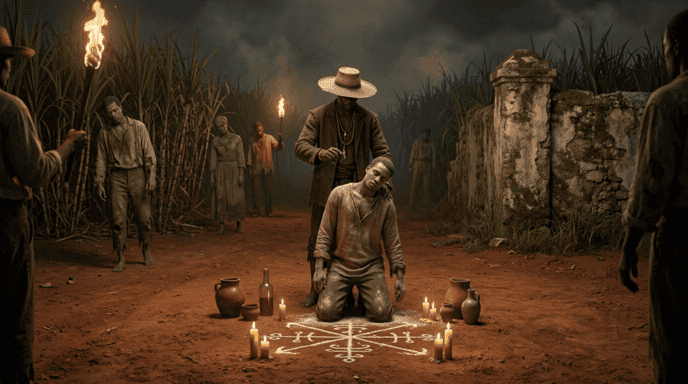
The zombies most people imagine today are among the least historically relevant versions of the idea. Modern apocalyptic zombies—viral outbreaks, shambling hordes, collapsing civilization—have largely swallowed earlier meanings. But Britannica’s entry on the Haitian zombi points back to an older origin that is more specific and, in many ways, more disturbing.
In Haitian Vodou, a zombi is a dead person revived after burial and compelled to obey the one who revived them. Britannica describes such a figure as being forced into criminal acts or heavy labor, and it notes that scholars believe alleged zombis may in some cases have been living persons under the influence of powerful drugs. The horror here is not primarily appetite. It is domination.
That distinction matters. The older zombi concept is not mainly about contagion, mass infection, or civilizational collapse. It is about agency, coercion, spiritual power, and the terror of losing autonomy while the body continues to function. By contrast, Britannica’s account of the modern fictional zombie emphasizes the later pop-cultural development of zombies through contagion, radiation, biting, and apocalyptic spread.
Britannica also notes that some researchers interpret alleged zombie cases as involving strong chemicals, including substances such as scopolamine. That does not mean every zombie-related belief can be reduced to chemistry. It means some experiences understood through religion and culture may also have overlapped with altered physiological states.
Together, those elements—cultural framework, religious meaning, coercion, and possible pharmacological alteration—produced something much more historically grounded and psychologically unsettling than the usual apocalypse version. The modern zombie craze flattened these distinctions by reducing everything to infection. But older forms preserved a deeper terror: what happens when a person loses identity without actually dying?
That fear resonates especially strongly in societies shaped by enslavement, forced labor, and systems that treated human beings as tools. Even when later pop culture strips away the original context, a trace of the older meaning remains. The zombie is frightening because it represents the loss of autonomy.
The historically rooted terror here is not simply “the undead.” It is the prospect of being converted into involuntary labor, stripped of will, selfhood, and control. Seen from that angle, contemporary zombies look less like the definitive version of the myth and more like loud remakes of something older, darker, and more precise.
To recover the lost historical weight of the zombie, it helps to return to the earlier Haitian Vodou conception of the zombi from which the word first gained force.
Conclusion / Closing Sections
These supposedly fake legends have some of the most compelling relationships with reality. Not because their impossible elements usually turn out to be literally true, but because those impossible elements were often built on top of something that did matter: a catastrophe remembered in the shadow of Atlantis, a trading city and war memory preserved in Troy, a sacred rite distorted into El Dorado, misunderstood corpses turned into vampires, a prince remembered for cruelty behind Dracula, or creatures from the deep that eventually clarified the logic of the Kraken.
That is why debunking is usually the wrong goal. The better question is which parts of reality the legend preserved, distorted, defended, or exploited. Once that question becomes central, myths stop looking like naive mistakes and start looking like historical records written in emotional code. They tell us less about whether a monster literally walked the earth than about what kind of world needs monsters in the first place.
This is also why such stories remain alive. They are not dead folklore sealed behind glass. They are instruments for turning uncertainty into narrative. Cultures produce stories like these when ruins are too evocative, nature is too violent, politics is too brutal, or reality is too strange to leave uninterpreted. Names change. Costumes change. Mediums change. The impulse does not. Human beings keep standing at the edge of the unknown and building stories large enough to contain it.
The thirteen cases in this list show that legends attach themselves to reality in different ways. Sometimes a legend clings to a place so firmly that archaeology eventually has to respond, as it did with L’Anse aux Meadows and Vinland. Sometimes it gathers around a person whose reputation is already larger than life, as with King Arthur or Vlad the Impaler. Sometimes it grows from a ritual outsiders misunderstood, as with El Dorado. Sometimes it develops from a misreading of nature or the body, as with the Kraken and vampires. Sometimes it is less about one original event than about a culture producing the same fantasy often enough for one version to outlast the rest. That diversity matters, because “the actual history behind a myth” should never suggest that every legend fits the same mold. Some are distorted maps. Some are symbolic biographies. Some are medical misunderstandings. Some are political dreams dressed as folklore.
Perhaps that is why myth and legend are often more resilient than fact alone. Facts can disappear unless someone has a reason to preserve them. Legends keep evolving because cultures keep finding new reasons to use them. So Atlantis becomes a warning about collapse. Arthur becomes a fantasy of national origin. Dracula becomes aristocratic terror. The Kraken becomes proof that the ocean still hides things larger than common sense prefers to imagine. As long as reality keeps supplying new fuel—fear, ignorance, ambition, wonder, longing—legend will continue to survive. That same instinct is why archives like VibeList’s History & Facts section continue to work when they connect old stories to the living anxieties that keep them relevant.
Quick Reference Summary Table
| # | Legend | What Sounds Completely Fake | Real History Behind It | Why It Endured |
|---|---|---|---|---|
| 1 | Atlantis | A lost super-civilization swallowed by the sea. | Plato’s allegorical island may preserve cultural memory of catastrophic Bronze Age disaster, earthquakes, and tsunamis. | It fuses moral collapse, vanished grandeur, and environmental catastrophe into one endlessly portable mystery. |
| 2 | Troy | An epic war city long treated as poetic scenery. | Excavations at Hisarlık revealed a real, multilayered Anatolian city with strategic importance near the Dardanelles. | Homer kept the memory alive until archaeology forced literature and material evidence to meet. |
| 3 | The Amazons | An all-female warrior civilization opposing the Greek world. | The myth likely reflects Greek ways of imagining foreignness, inversion, and anxiety around gender, warfare, and power. | As geography expanded, the Amazons simply retreated farther into imaginative distance without losing symbolic force. |
| 4 | King Arthur | A perfect warrior-king with Camelot, chivalry, and national destiny. | Fragmentary Welsh and medieval traditions, possible post-Roman conflict memory, and real landscapes such as Tintagel helped build the legend. | Ambiguity made Arthur adaptable enough to serve every later age that needed an ideal past. |
| 5 | Robin Hood | A noble outlaw in the forest robbing the powerful and defending the poor. | The legend grew from medieval ballad culture, forest law, agrarian grievance, and resentment toward unequal authority. | He survives because he expresses popular fantasies of justice more powerfully than any single biography could. |
| 6 | El Dorado | A lost South American city made of gold. | It began with a Muisca ruler covered in gold dust during sacred lake ritual, later misunderstood by Europeans as treasure geography. | Colonial greed transformed ceremony into rumor, and rumor into one of history’s most durable imperial fantasies. |
| 7 | Vinland | A saga-land west of Greenland that sounded too specific to dismiss and too literary to trust. | L’Anse aux Meadows confirmed Norse presence in North America more than 1,000 years ago. | The sagas preserved real exploration memory, and archaeology restored scale without killing wonder. |
| 8 | The Cretan Labyrinth & the Minotaur | A bull-headed monster devouring youths inside an impossible maze. | The legend likely grew from memory of Minoan palace complexity, concentrated power, tribute systems, and political dread centered on Crete. | Architecture, fear, and memory fused into one perfect image of authority turned monstrous. |
| 9 | The Flying Dutchman | A cursed ghost ship doomed to sail forever. | Its truth lies in maritime culture: storm danger, poor visibility, sailor superstition, and the sense that the sea punishes arrogance. | It gave seafaring communities a single unforgettable emblem for peril, omen, and hubris. |
| 10 | The Kraken | A colossal tentacled sea monster dragging ships into the deep. | Rare encounters with giant squid and octopus, especially washed-up remains, likely fueled the legend. | The deep keeps producing partial glimpses that invite fear faster than explanation can catch up. |
| 11 | Vampires | Blood-drinking undead rising from the grave. | Disease outbreaks, mistaken death, and misunderstood decomposition helped make corpses look frighteningly active. | The myth gave epidemic fear, grief, and bodily decay a face communities could blame. |
| 12 | Dracula | A gothic vampire count who feels oddly historical. | Bram Stoker’s fictional monster drew heavily on the remembered cruelty and notoriety of Vlad the Impaler. | He became unforgettable because literature borrowed the authority and horror of real political violence. |
| 13 | Zombies | The walking dead as unstoppable apocalypse hordes. | The older Haitian Vodou zombi centered on coercion, forced labor, revival after burial, and loss of autonomy. | It survives because fear of losing the self is deeper than fear of merely losing the body. |
1. Atlantis
What sounds fake: A lost super-civilization swallowed by the sea.
Real history: Plato’s island may preserve memory of catastrophe, earthquakes, and tsunamis.
Why it endured: It merges vanished grandeur, moral collapse, and disaster into one portable mystery.
2. Troy
What sounds fake: An epic war city long treated as poetic scenery.
Real history: Hisarlık revealed a real multilayered city in Anatolia.
Why it endured: Homer preserved the memory until archaeology caught up.
3. The Amazons
What sounds fake: An all-female warrior civilization.
Real history: A mythic way of imagining foreignness, inversion, and gender anxiety.
Why it endured: The idea stayed useful even as real geography became better known.
4. King Arthur
What sounds fake: A perfect warrior-king at the center of national destiny.
Real history: Fragmentary traditions, post-Roman conflict memory, and real landscapes helped build the legend.
Why it endured: Ambiguity made Arthur endlessly adaptable.
5. Robin Hood
What sounds fake: A noble outlaw fixing injustice from the forest.
Real history: Ballad culture, forest law, grievance, and resentment toward authority.
Why it endured: He embodies popular fantasies of justice.
6. El Dorado
What sounds fake: A lost city made of gold.
Real history: A Muisca ruler and sacred ritual were turned into treasure geography.
Why it endured: Colonial greed gave the misunderstanding enormous momentum.
7. Vinland
What sounds fake: A saga-land west of Greenland.
Real history: L’Anse aux Meadows confirmed Norse presence in North America.
Why it endured: Saga memory preserved real exploration.
8. The Cretan Labyrinth & the Minotaur
What sounds fake: A bull-headed monster inside an impossible maze.
Real history: Minoan palaces, tribute memory, and political fear shaped the myth.
Why it endured: Architecture and dread fused into one image.
9. The Flying Dutchman
What sounds fake: A cursed ghost ship doomed to sail forever.
Real history: Maritime danger, sailor superstition, and the sense that the sea punishes hubris.
Why it endured: It gave seafaring culture a single emblem for peril.
10. The Kraken
What sounds fake: A colossal sea beast dragging ships under.
Real history: Giant squid and octopus encounters likely fed the legend.
Why it endured: The deep still produces fear faster than explanation.
11. Vampires
What sounds fake: Blood-drinking undead rising from the grave.
Real history: Disease, mistaken death, and misunderstood decomposition helped shape the myth.
Why it endured: It gave epidemic fear a face.
12. Dracula
What sounds fake: A gothic vampire count with a suspiciously real aura.
Real history: Stoker’s monster borrowed from Vlad the Impaler’s notoriety.
Why it endured: Fiction gained power by wearing a real ruler’s reputation.
13. Zombies
What sounds fake: The walking dead as apocalypse hordes.
Real history: Haitian Vodou zombi traditions centered on coercion and loss of autonomy.
Why it endured: Fear of losing the self is deeper than fear of losing the body.
Final Take
All thirteen entries are connected by one underlying truth: the legends that sound most fabricated usually have the most intriguing relationship with reality. Not because their fictional components are secretly factual, but because those fictional components were built atop something significant—a catastrophe, a trade city, a ritual, a ruin, a battle zone, a misunderstood corpse, a ruler remembered for cruelty, or some other historical pressure that demanded narrative.
For that reason, debunking a legend is too limited an ambition. The better task is to ask what reality the story was trying to record, distort, defend, or exploit. Once we do that, myths stop looking like childish errors and begin to look like historical memory translated into emotion. They tell us less about whether a creature literally roamed the earth than about what kind of world creates monsters—and therefore creates stories. And that, ultimately, is what makes them endure—not just in scholarship, but in places like VibeList’s broader History & Facts archive, where the past continues to matter only when it still feels alive.


