


A $1,300 phone with a screen only you can see. A pair of $299 sunglasses that sold seven million units in twelve months. A 77-inch TV thinner than a pencil, hanging on a wall with zero cables. A $249 pair of earbuds the FDA authorized as a hearing aid. A robot vacuum that picks up your socks before it starts cleaning. A $6 smart bulb that made the entire smart home industry rethink its pricing. And on the other side: a $3,499 headset that shipped 45,000 units in a quarter, a $699 AI pin sold for parts, and a $199 gadget trying to outrun its own obituary. The best tech of 2026 didn’t win by being the smartest; it won by solving problems people actually have.
Every January, thousands of tech executives descend on Las Vegas to sell the future of technology. In general, the promises far exceed the products on display. Most of the time, those promises never materialize as working products. CES 2026, however, has been different. Several products shown at CES have already shipped and are available to buy. The best tech products of 2026 are reshaping how millions interact with their devices.
Samsung released a new flagship phone with a “privacy screen” that nobody saw coming. LG mounted a 77-inch TV thinner than a pencil flat against a wall. It was impossible to miss.
IKEA attended its first CES and introduced a $6 smart bulb that made the entire smart home category rethink its pricing. And, in China, a robotics company put a robotic arm on a vacuum cleaner, and…it worked.
On the flip side, some of the hottest products from the last couple of years are now hitting roadblocks. Apple’s $3,499 spatial computing headset is bleeding production. The standalone AI hardware movement (Humane & Rabbit) is essentially dead. And several of CES’s biggest announcements have vanished into “coming soon” limbo, their release dates evaporating faster than their marketing budgets.
Below are the 15 tech products that matter most in the first half of 2026. They made the cut because they either exceeded expectations or failed so badly they taught everyone else in the tech community a lesson. Each listing includes verifiable sales data, pricing, expert opinion, and the Vibe List’s unfiltered take on whether each product justifies the hype, price, and media attention.
The AI tools reshaping daily productivity are covered separately. The technologies already changing how you live have their own deep dive. The list below covers the hardware; devices you can physically hold, install, wear, or later regret purchasing.
1. Samsung Galaxy S26 Ultra {#1}

Price: $1,299.99 (256GB) / $1,499.99 (512GB) / $1,799.99 (1TB)
Category: Flagship Smartphone
Verdict: The best Android phone you can buy in 2026, and it still carries one new idea no competitor has copied.
The Samsung Galaxy S26 Ultra isn’t a radical departure from its predecessor. It doesn’t have to be. Instead, the S26 Ultra refines an already excellent formula so thoroughly that PCMag awarded it an Editors’ Choice designation, describing it as “an excellent phone for creatives who want an S Pen stylus and the absolute best cameras.”
However, the biggest story here is the introduction of Privacy Display; a built-in screen filter that is virtually unreadable from any angle except straight on.
No one asked for this feature. Which is why it is fascinating. Samsung built a privacy filter directly into the display panel, allowing users to toggle it on or off for the entire screen or for notifications only. It is the kind of feature that becomes essential after your first commute on a packed bus or train.
Beneath the surface lies a Qualcomm Snapdragon 8 Elite Gen 5 processor that matches or beats every competing flagship in benchmarks. The base model’s 12GB of RAM, however, occasionally falls behind competitors offering 16GB.
Samsung also upgraded the 200MP main camera with an f/1.4 aperture that allows 47% more light than the S25 Ultra; an improvement visible in every low-light shot.
Samsung’s battery life remains a weakness. In PCMag’s streaming test, the S26 Ultra averaged 15 hours and 5 minutes; respectable, but significantly behind the iPhone 17 Pro Max (32 hours) and the OnePlus 15 (26 hours and 11 minutes), which uses a larger 7,300mAh silicon-carbon battery.
When PCMag asked about adopting silicon-carbon batteries, Samsung said it is “still evaluating” the technology. The caution presumably traces back to the Galaxy Note 7 battery fires. Samsung’s 60W fast-charging fills the battery in roughly 60 minutes, but the phone drains faster than its closest competitors.
Sales speak louder than specs. According to Sammy Fans, Samsung ramped Galaxy S26 Ultra production beyond initial targets to meet surging demand. Phone Arena reported in April that the Galaxy S26 lineup hit its first major sales milestone, with the Ultra accounting for most of the volume. At a $1,299.99 starting price, that is a significant achievement.
The Vibe List’s Take: The Privacy Display alone justifies upgrading from an older model for anyone who regularly uses their phone in public. Samsung’s camera ranks among the top two or three in mobile, but the battery is a serious weakness the company must fix before the next generation. If you are choosing between this phone and the OnePlus 15 at $899.99, the question is whether the S Pen, Privacy Display, and camera system are worth an extra $400. For most consumers, the answer is yes.
2. Meta Ray-Ban Smart Glasses {#2}
Price: Starting at $299 (standard) / $799 (Display model)
Category: Smart Glasses / Wearable AI
Verdict: First wearable AI product that people are willing to wear. Sold seven million units in 2025. Category is now officially alive.
Smart glasses have been a joke for years. After Google Glass became a cautionary tale, Snap Spectacles went through numerous generations without ever establishing a loyal customer base. Then Meta partnered with EssilorLuxottica to create a product that simply resembled regular eyeglasses.
Numbers no longer disputed. CNBC reported that EssilorLuxottica sold over seven million smart glasses in 2025; more than three times the units sold during 2023 and 2024 combined. In Q4 2025, EssilorLuxottica confirmed the figures, announcing that smart glasses were “helping to propel the AI-glasses revolution.”
Meta and EssilorLuxottica introduced second-generation Ray-Ban Display smart glasses for $799 in September 2025. The glasses feature hand gesture control, neural input technology, and a small display embedded in one lens. So strong was demand that Meta delayed the international rollout originally scheduled for early 2026, citing “unprecedented” domestic U.S. demand. Bloomberg reported that Meta and EssilorLuxottica are exploring plans to scale production to at least twenty million units by the end of the year.
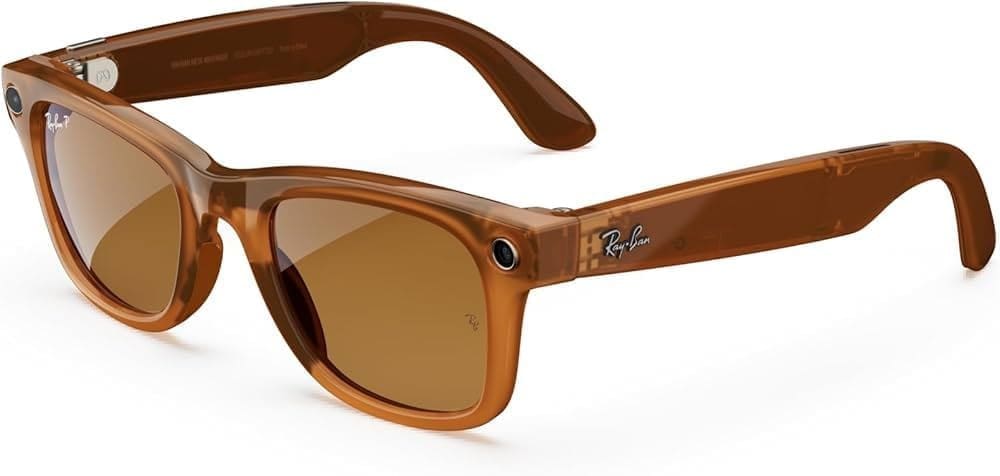
The $299 Ray-Ban Meta smart glasses include a camera, speaker, and Meta AI in frames that weigh roughly the same as standard Ray-Bans. Users can livestream, take photos, ask Meta AI real-time questions, and play music without headphones. The experience is imperfect; battery life averages about four hours, and camera resolution cannot match the best smartphones of 2026. Nevertheless, the form factor has passed from novelty into practicality.
The Vibe List’s Take: This is the product that proved the smart glasses category is real; not as a novelty, but as a mass-consumer product. Seven million units in a single year exceeds the combined total of every other smart glasses manufacturer since the category was born. Wearable AI ranks among the addictive internet trends driving 2026 because Meta understood that the best technology disappears into objects you already wear.
3. LG OLED Evo W6 Wallpaper TV {#3}

Price: $5,500 (77-inch model) / $7,500 (83-inch model)
Category: Television / Home Entertainment
Verdict: The most visually striking television at CES 2026 and a statement about how far display technology has come; but at this price, buyers need a strong reason.
CES 2026 showcased impressive hardware across every category; smartphones, robots, AI gadgets; but the single product that stopped people in their tracks was a television thinner than a poster.
The LG OLED Evo W6 measures just 9mm thick; roughly the width of a pencil. LG revived the Wallpaper name because this TV is designed to hang nearly flush against a wall. Inputs and processing are handled by a separate wireless controller box. Engadget awarded it Best TV at CES 2026, calling it a set that “practically disappears when viewed from an angle.” According to Engadget’s Devindra Hardawar, it features “LG’s latest OLED technology, which promises to be about 20 percent brighter than previous generations.”
LG released pricing on April 22, 2026. The 77-inch model starts at $5,500; the 83-inch at $7,500. Both carry a $1,000 premium over LG’s OLED Evo G6, which lacks the Wallpaper design. The TV needs only a power cord; everything else connects wirelessly through LG’s Zero Connect box.
The W6 may represent the engineering limit of current OLED panel technology. At $5,500, it is pricey but not outrageous compared to other flagships. The last OLED Wallpaper TV from LG cost more than $8,000. The W6 eliminates the cable-management headaches of wall-mounting a large TV. Early reviews and CES demos confirm the W6’s image quality matches LG’s best-in-class OLEDs.
The Vibe List’s Take: If you want a TV that disappears when off and commands the room when on, the W6 is worth the price. At $5,500, it is expensive, but the gap between this TV and an average OLED is visible to the naked eye. And if LG delivers on the wireless reliability they claim, the W6 may signal the start of the end for HDMI cables.
4. Apple AirPods Pro 3 {#4}

Price: $249
Category: Wireless Earbuds / Health Wearable
Verdict: The first earbuds that double as an FDA-authorized medical device. The sound quality is the best Apple has produced; the hearing health features are the reason they matter.
Apple sells more earbuds than any other manufacturer. When AirPods Pro 3 shipped in late 2025, they carried something no earbuds ever had; a feature set that blurred the line between consumer audio and medical device.
The headline feature is hearing health. The U.S. Food and Drug Administration authorized Apple’s Hearing Aid Feature as the first over-the-counter hearing aid software, enabling AirPods Pro 3 to function as a clinical-grade hearing aid for mild-to-moderate hearing loss. They administer hearing tests, serve as hearing aids, and provide active hearing protection; all from earbuds that fit in your pocket.
According to Phone Arena, demand for AirPods Pro 3 exceeded Apple’s expectations, causing supply chain issues in the weeks after launch. Apple posted record revenue of $143.8 billion in FY Q1 2026, and iDropNews analysis showed wearables drove significant year-over-year growth.
In a long-term review, 9to5Mac noted that AirPods Pro 3 continued to improve their sound quality and noise cancellation through software updates. According to Apple Insider, reviewer praise for improved audio and ANC came with one caveat: hearing health features are unavailable in certain countries.
The Vibe List’s Take: Apple AirPods Pro 3 are the best wireless earbuds Apple has ever made, and that is the least interesting thing about them. Their hearing health features represent one of Apple’s most strategic moves: embedding a medical device inside a product hundreds of millions of people already want. If you know someone who has avoided getting their hearing tested, these earbuds may accomplish what years of gentle prodding could not.
5. Roborock Saros Z70 {#5}
Price: $1,299.99 (a $1,300 discount off original launch price of $2,600)
Category: Robot Vacuum with Robotic Arm
Verdict: The first mass-produced robot vacuum with an articulated mechanical arm. Exactly as ridiculous and useful as it looks.
The Saros Z70 is a robot vacuum. It is also one of the most fascinating pieces of consumer robotics to ship in years.
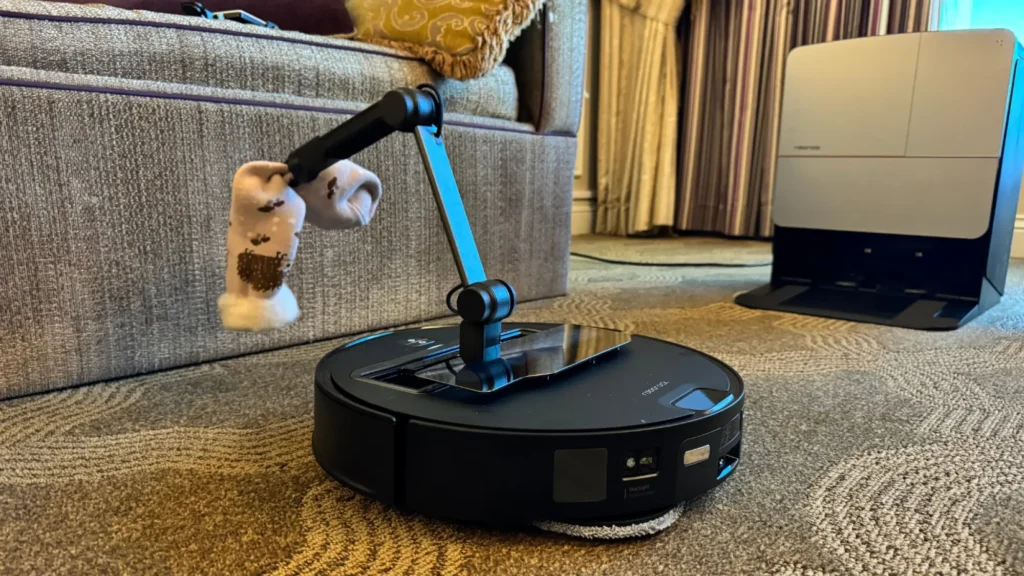
At CES 2026, CNET reported that Roborock emerged as a leader in AI robotics, spotlighting its OmniGrip five-axis mechanical arm. It is the first commercially available robot vacuum with a foldable arm capable of lifting objects up to 300 grams. Before vacuuming, it detects and picks up obstacles like socks, wires, and toys; the clutter that normally forces you to tidy up before running a robot vacuum.
Pre-orders opened at $1,899 according to The Verge, but discounts have since dropped the price to $1,299.99 on Amazon. Its 22,000Pa suction ranks among the most powerful in the category, backed by an AI obstacle detection system that identifies more than 100 object types. The arm adds roughly 15 seconds per pickup; scatter 12 items on the floor and you add about three minutes to a cleaning cycle.
Engadget handed out Best of CES 2026 awards across multiple categories, and Roborock dominated the robotics conversation throughout the show.
The Vibe List’s Take: The Z70 solves the oldest problem in robot vacuum ownership: having to clean before your robot can clean. Although not quick or elegant and sometimes dropping objects, its articulated mechanical arm does work. At $1,299.99, it sits at the premium end of robot vacuums, well above the $500 mid-range. But the gap is not incremental; it is a fundamentally different kind of machine. No other robot vacuum can pick up your socks before cleaning around them.
6. OnePlus 15 {#6}

Price: Starting at $899.99
Category: Flagship Smartphone
Verdict: On pure spec-to-dollar ratio, the OnePlus 15 is the flagship that makes Samsung’s pricing look unreasonable. Same processor. Better battery. $400 cheaper.
The OnePlus 15 has a simple value proposition: flagship specs, several hundred dollars cheaper than every competitor.
TechRadar gave the OnePlus 15 a perfect score, calling it “the phone that earns a perfect score.” PCMag titled its review “A Battery Beast That Outlasts Galaxy and Pixel” and awarded the phone Editors’ Choice. The phone runs Qualcomm’s Snapdragon 8 Elite Gen 5; the same chip in the Galaxy S26 Ultra; paired with a 165Hz OLED display that improves on an already excellent predecessor.
On battery life, OnePlus has left Samsung behind. In PCMag’s streaming test, the OnePlus 15 and its silicon-carbon battery lasted 26 hours and 11 minutes; more than eleven hours longer than the Galaxy S26 Ultra. With the included 80W charger, charging from zero to full takes approximately 31 minutes.
At $899.99 (12GB + 256GB), the OnePlus 15 costs at least $400 less than Samsung’s Galaxy S26 Ultra. Samsung retains two advantages OnePlus cannot match: S Pen support and the Privacy Display. The OnePlus camera system is excellent but lacks Samsung’s 200MP sensor at maximum zoom. For virtually all practical purposes, these two phones are functionally identical; except one lasts dramatically longer on a charge and costs significantly less.
The Vibe List’s Take: The OnePlus 15 is 2026’s best value story in tech for anyone who prioritizes substance over brand. OnePlus will never win a social media comparison contest and does not have Samsung’s ad budget. What it does have: the same processor, vastly superior battery life, and a screen reviewers call “better still”; all at roughly half the price.
7. IKEA KAJPLATS Smart Home Line {#7}
Price: Beginning at $5.99 (smart lightbulb)
Category: Smart Home Devices
Verdict: IKEA did to smart homes what it did to furniture: made them affordable enough that the price barrier essentially disappears.
Smart homes have been “on the cusp” of mainstream adoption for a decade. Why haven’t they broken through? Cost and complexity. Typically, Philips Hue smart lightbulbs sell for $30–$40+ per unit. Setting up a smart home means choosing an ecosystem, buying a hub, downloading an app, and pairing each device individually; a process that often fails. Many buyers give up after their second smart bulb refuses to pair.
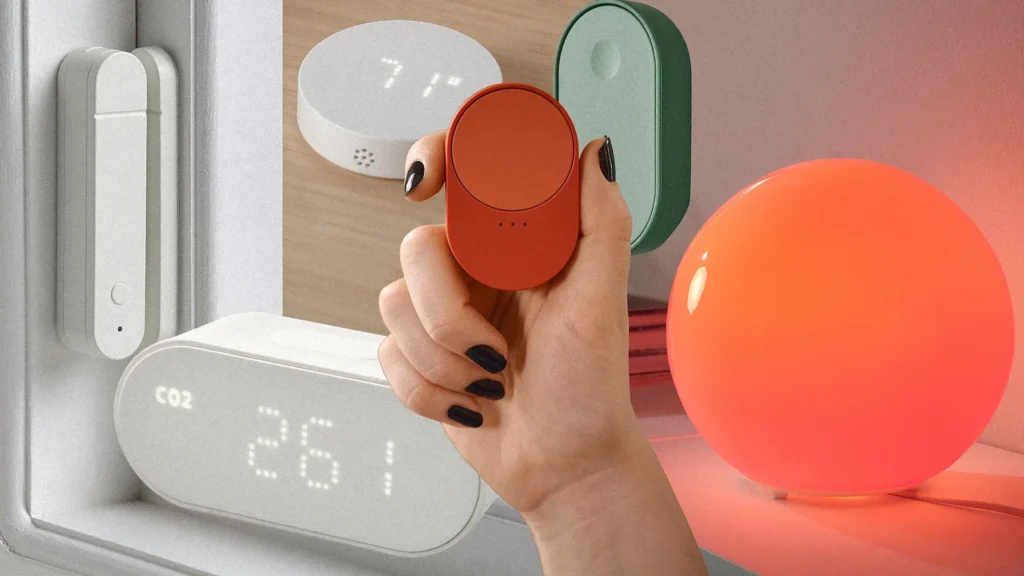
IKEA’s answer: 21 Matter-compatible devices starting at $5.99 for a smart bulb, with plugs at $7.99 and remotes priced similarly. Every device supports Matter, meaning automatic integration with Apple HomeKit, Google Home, Amazon Alexa, and Samsung SmartThings.
Engadget chose IKEA as winner for Best Smart Home at CES 2026, reporting on senior reporter Amy Skorheim’s observation: “Function paired with accessible pricing is sort of what IKEA is known for, so the lineup didn’t exactly surprise me as much as make me appreciate that someone is finally simplifying and democratizing smart home stuff.”
Each KAJPLATS device requires a Matter-compatible hub; either IKEA’s own DIRIGERA hub or any third-party alternative. By removing proprietary lock-in and slashing prices, IKEA lets you buy a full starter kit; four bulbs, two smart plugs, and a remote; for under fifty dollars. For comparison, four Philips Hue bulbs and two smart plugs would cost over two hundred dollars.
The Vibe List’s Take: This is one of 2026’s most important smart home launches; not for the technology, but because IKEA removed the price barrier that kept most people out. When a smart bulb costs $5.99 and a standard bulb costs $2, the argument against smart homes collapses. IKEA realized that smart home was never about solving technology problems; rather about addressing cost issues. Smart home infrastructure that costs less than a fast-food meal is now part of the technologies reshaping daily life in 2026. IKEA solved the affordability problem.
8. Google Pixel 10a {#8}

Price: Starting at $499 Category: Mid-Range Smartphone Verdict: While the Google Pixel 10a does not offer dramatic improvements over the prior year’s model, it remains the smartest Android purchase under $500.
TechRadar wrote that the Pixel 10a “doesn’t bring many upgrades over the Pixel 9a, but it still delivers where it matters most: a comfortable design, strong battery life, and one of the best camera systems in this price range.”
PCMag awarded it an Editors’ Choice, stating that the Pixel 10a “is one of the best values in midrange Android phones” due to its cameras, brighter screen, and powerful AI features.
The Pixel 10a’s primary strength is its software. Google’s AI powers features like Call Screen, Magic Eraser, Best Take, and Gemini integration. These are features normally reserved for phones costing twice as much, paired with clean Android and seven years of guaranteed updates.
Android Central called it “the best $500 Android phone you can buy,” noting that “for most things, it is perfectly adequate.”
Ars Technica’s community review called the Pixel 10a “the sidegrade,” noting little excitement for this year’s update. Still, Ars Technica concluded that no other Android phone at this price comes close to matching the Pixel 10a’s value.
The Vibe List’s Take: The Pixel 10a is the phone to recommend to anyone who asks what to buy. It is not an exciting device. It will not turn heads at a party. But it takes great pictures, gets updates for seven years, and costs less than half what Samsung and Apple charge for their flagships. Excitement is overrated. Reliable at $499? Absolutely.
9. SwitchBot Onero H1 {#9}
Price: Under $10,000 (confirmed; exact pricing TBA) Category: Home Humanoid Robot Verdict: A home robot capable of folding laundry, loading a washer, and sorting objects. Slow, limited in capability, and perhaps the most important product category from CES 2026.
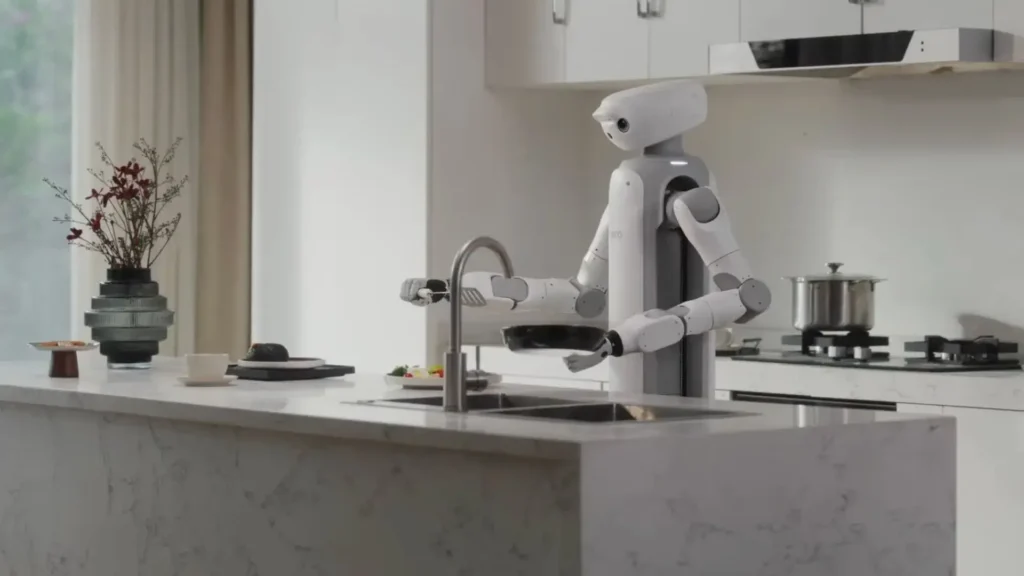
The SwitchBot Onero H1 received Engadget’s Best Robot Award at CES 2026. According to The Verge, the robot uses cameras, articulated arms, and on-device AI to navigate a home and accomplish household tasks. ZDNET referred to it as “an embodied AI robot aimed to remove the need for humans to complete housework.”
The Onero H1’s CES demos were admittedly slow and limited. Engadget’s Karissa Bell noted that “the demo we saw was limited, but SwitchBot claims it can help with an array of household chores (even if it might do them more slowly than a human).” What matters: SwitchBot is committing to ship the Onero H1 in 2026 at under $10,000. Most competitors are still stuck in demo mode.
The Vibe List’s Take: The Onero H1 will not replace household labor in 2026. It is a first-generation product at early-adopter pricing, built for buyers willing to accept limitations in exchange for owning a home robot that actually ships. The comparison to early robot vacuums is apt: the first Roomba in 2002 was slow, expensive, and constantly getting stuck. Twenty-two years later, robot vacuums represent a multi-billion-dollar product category. The Onero H1 represents the 2002 Roomba of household robots. Worth monitoring; although it will likely not be worth $10,000 for most people.
10. Samsung Galaxy Z TriFold {#10}

Price: Estimated around $2,500 (from South Korean pricing) Category: Foldable Phone / Tablet Verdict: Samsung finally created a foldable phone that validates the form factor. A ten-inch tablet that folds up into a phone; who didn’t know they wanted this?
Unlike Samsung’s previous foldables, the Galaxy Z TriFold folds into thirds, offering a 6.5-inch phone when closed and a 10-inch tablet when fully open. CES 2026 offered the first public hands-on experience.
According to Engadget’s hands-on review, the Galaxy Z TriFold is Engadget’s Best Mobile Tech from CES 2026. UK bureau chief Mat Smith wrote: “The jump from the almost-square screen ratio of Samsung’s past foldables to approximately 4:3 is a major improvement. This is a device that I could happily watch entire movies on.”
Reviewers noted a 200-megapixel main camera and Samsung’s largest foldable battery to date.
With the Galaxy Z TriFold, Samsung has addressed the recurring criticism that prior generations’ internal screens were too narrow for comfortable tablet usage. The tri-fold design produces a 10-inch, 4:3 screen that could genuinely replace an iPad Mini for content viewing and productivity.
The tri-fold design relies on multiple hinge mechanisms, and long-term reliability will depend on whether those hinges survive repeated daily use. Samsung has released no data on hinge longevity.
The Vibe List’s Take: The Galaxy Z TriFold is not intended for mass markets. It is a proof of concept, priced accordingly ($2,500). The tri-fold format is genuinely compelling. If Samsung brings the next generation under $2,000 and proves hinge reliability over two years of daily use, this form factor will define the future of mobile computing. For now, it is the most intriguing phone you will probably never buy; unless you simply cannot resist.
11. Framework Laptop 13 (2026) {#11}
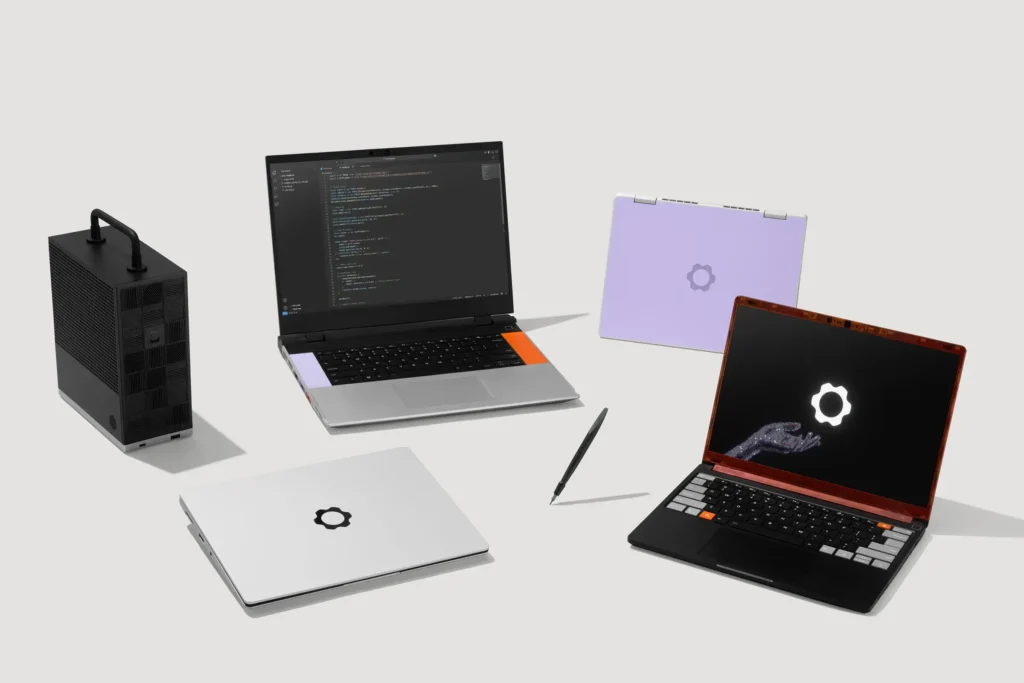
Price: Starting at $849 (DIY Edition) Category: Modular Laptop Verdict: Finally; a right-to-repair laptop with Intel’s newest chips, redesigned shell, and same promise: this is the last computer you will ever need to discard.
Framework is built on a principle the rest of the laptop industry rejects: laptops should be repairable, upgradeable, and configurable by their owners. The 2026 Framework Laptop 13 features a redesigned shell, Intel’s latest processors, and swappable I/O ports, memory, and M.2 SSDs.
Framework was recognized as one of Fast Company’s most innovative consumer electronics companies of 2026. Framework’s philosophy is directly opposed to the seal-glue-solder design paradigm found in virtually every laptop manufactured today. When a keyboard begins failing, when a battery begins degrading, or when a connector breaks; you don’t send it to recycle. Instead, you spend $50 and fifteen minutes with a screwdriver replacing the failed component.
At $849 for the DIY Edition (you supply memory, SSD, and operating system), the Framework Laptop 13 is price-competitive with comparable ultrabooks. Pre-assembled models cost more upfront, but the total cost of ownership over five to seven years is lower than any competitor because individual components can be replaced or upgraded.
The Vibe List’s Take: Framework is building the kind of laptop that everyone else in the industry should be building. In an industry dominated by disposable $1,500 machines that become obsolete within three years, Framework builds a laptop that respects your wallet and the planet. The 2026 redesign addressed longstanding criticism of build quality and module flexibility. If you believe laptops should last longer than three years, buying a Framework is a vote in that direction.
12. Apple Vision Pro — The Cautionary Tale {#12}

Price: $3,499 Category: Spatial Computing Headset Verdict: The most technologically innovative product Apple introduced in the past ten years. And, at the same time, proof that innovation alone doesn’t lead to a market.
The Apple Vision Pro launched in February 2024 to widespread acclaim for its display, eye-tracking precision, and build. At $3,499, the price was steep, but many felt it was justified by the headset’s pioneering role in defining a new product category.
After nearly two years, the story has taken a dramatic turn. The Guardian reported that Apple would reduce production of the Vision Pro due to poor sales. In Q4 2025, PCMag reported that IDC estimated Apple shipped just 45,000 Vision Pro units, while iPhone sales continued to boom. According to The Register, Apple shipped approximately 390,000 Vision Pro units worldwide in 2024, generating around $1.4 billion in revenue. $1.4 billion sounds substantial, but it represents less than a fifth of what Apple needs to sustain a product category.
Compare that to Meta’s Ray-Ban smart glasses: 7 million units at $299 to $799. The contrast explains everything. Meta took AI technology and integrated it into a form factor people already wore. Apple asked customers to strap ski goggles to their faces for $3,499 and then find a use case worth the price. The market spoke loudly.
The Vibe List’s Take: The Vision Pro is not a bad product. It is an extremely capable piece of technology trapped behind a price and a form factor that customers rejected. The biggest corporate failures of the past few decades share a pattern: brilliant technology launched without a clear audience or a compelling daily use case. Apple will likely evolve toward a lighter, less expensive version. The current Vision Pro remains 2026’s most expensive lesson in the gap between what technology can do and what consumers actually want it to do.
13. Humane AI Pin — The Postmortem {#13}
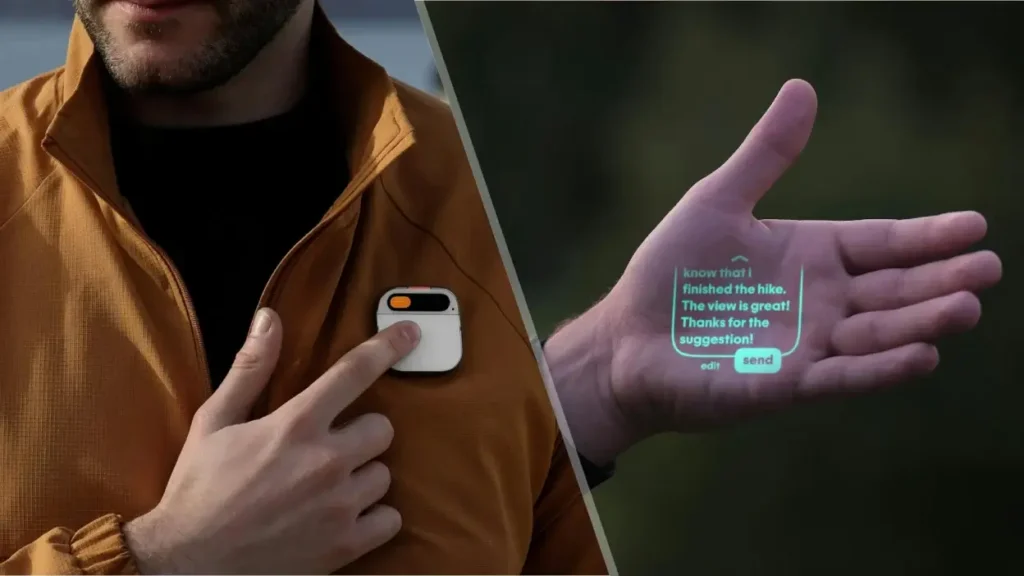
Price: $699 at launch; $499 at discontinuation Category: Wearable AI Device (Defunct) Verdict: The product that demonstrated that standalone AI hardware is looking for a problem. Acquired by HP for $116 million in parts.
The Humane AI Pin was designed to replace your smartphone. It projected images onto your palm via a tiny laser, accepted voice commands, and promised a screenless future. Instead, it became one of the most harshly criticized products in tech history.
TechCrunch reported that Humane sold most of its assets to HP Inc. for $116 million. Following the announcement, Humane discontinued sales of its AI Pin. Axios confirmed the discontinuation, stating that HP purchased Humane’s technology, patents, and some employees.
Humane’s failure was hardly surprising. Reviews were devastating. The device was slow, inaccurate, and overheated under heavy use. It did nothing a smartphone could not do better, faster, and more reliably. The laser projections were unreadable in bright sunlight. The $24 monthly cellular subscription added recurring costs to a device delivering diminishing value.
According to TechRadar, HP folded Humane’s AI technology into its HP IQ enterprise platform; an implicit acknowledgment that the technology’s value was never in consumer hardware.
The Vibe List’s Take: Humane’s failure taught the tech industry a necessary lesson: AI hardware that does everything your smartphone does; but slower and worse; is not a product category. It is a misfire. HP paid $116 million for Humane’s assets. Humane had raised more than $230 million in venture funding. The gap between those numbers tells the entire story.
14. Rabbit R1 — The Attempted Comeback {#14}
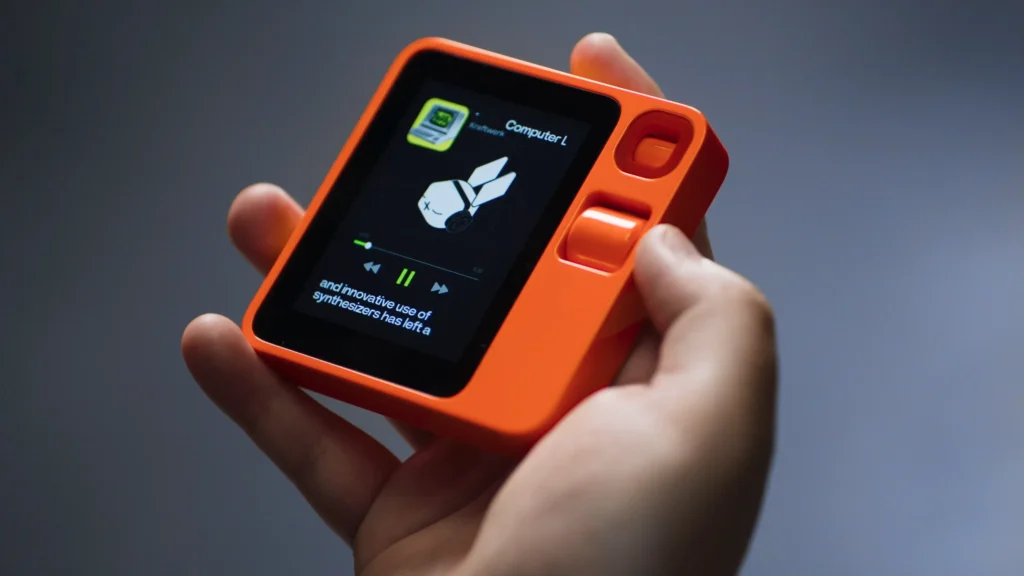
Price: $199 Category: AI Companion Device Verdict: Despite overwhelming negativity, Rabbit continues to exist. With the R1, Rabbit is attempting to shift focus from being an isolated AI device to being an open platform. But ultimately the question is whether anyone still cares.
The Rabbit R1 debuted concurrently with the Humane AI Pin in 2024 and both received similarly withering reviews. Where Humane ceased operations and sold off its remaining assets, Rabbit has survived, albeit barely.
Early in 2026, Rabbit shipped DLAM (a new device-level AI model), launched OpenClaw (an open platform for third-party add-ons), and announced next-generation hardware. Yanko Design called the OpenClaw update “its most important moment yet,” but flagged a serious problem: over 400 malicious add-ons were discovered on the skill hub in early 2026, raising security alarms for early adopters. A 2026 Edition hardware refresh also upgrades the R1’s internals.
Digital Applied’s analysis of 2026 AI failures grouped the Rabbit R1 with the Humane AI Pin and OpenAI’s Sora, identifying a shared weakness: once AI hardware ships, it cannot iterate and improve the way software can. Rabbit’s survival depends on whether software updates can retroactively justify hardware that reviewers initially dismissed.
The Vibe List’s Take: Rabbit should receive credit for refusing to die. Pivoting from isolated gadget to open platform gives developers a reason to care and gives owners a reason to keep the device running. That said, the security issues are serious, the user base remains small, and at $199 the R1 competes against the device already in your pocket: your smartphone. The R1 is 2026’s most fascinating experiment in whether a product can be saved from death by persistence and a well-timed software update. So far, the results are inconclusive.
15. Dell XPS 14 and XPS 16 (2026) {#15}

Price: Starting at approximately $1,499 (XPS 14) / $1,799 (XPS 16) Category: Premium Laptops Verdict: Dell killed its legendary XPS brand, realized the mistake, and brought it back with arguably the best XPS laptops ever made. Redemption arc of 2026.
Before CES 2026, Dell made one of the strangest branding decisions in recent memory, killing its iconic XPS name and replacing it with “Premium.” Engadget published an article titled “Dell killing the XPS name is an unforced error.” Market reaction was swift.
At CES 2026, Dell admitted the mistake and revived XPS with two new laptops; the XPS 14 and XPS 16; which Engadget named Best PC or Laptop at the show. Sam Rutherford noted: “brand new chassis featuring the latest chips from Intel, gorgeous tandem OLED displays and precision engineering that embodies everything we loved about XPS laptops from previous years.”
The 2026 XPS models directly address criticism of their predecessors. Dell restored physical function keys, brought back the segmented touchpad, shed roughly a pound from each model, and equipped both with tandem OLED displays that rank among the brightest and most color-accurate at this price. Dell also previewed an upcoming XPS 13 that will be thinner and lighter than any previous version.
The Vibe List’s Take: Dell publicly admitting a branding mistake and correcting it within twelve months is rare in an industry where executives typically double down on bad decisions until the market forces their hand. Both the XPS 14 and XPS 16 are exceptional laptops. The tandem OLED displays are spectacular, the redesigned keyboards address longstanding complaints, and the weight reduction on the 16-inch model is significant. However, the true story here is the brand rehabilitation. Dell’s XPS line is back, and it is better for having briefly gone away. Sometimes the best product decision is admitting the last one was wrong.
The 2026 Tech Scorecard: 15 Products at a Glance
| # | Product | Category | Price | Key Highlight | Notable Data | Verdict |
|---|---|---|---|---|---|---|
| 1 | Samsung Galaxy S26 Ultra | Flagship Smartphone | $1,299.99+ | Privacy Display; 200MP f/1.4 camera; Snapdragon 8 Elite Gen 5 | PCMag Editors’ Choice; production ramped beyond targets | Best Android phone of 2026 |
| 2 | Meta Ray-Ban Smart Glasses | Smart Glasses / Wearable AI | $299 / $799 | Camera, speaker, Meta AI in standard Ray-Ban frames | 7M units sold in 2025; 20M target for 2026 | Category-defining product |
| 3 | LG OLED Evo W6 Wallpaper TV | Television | $5,500 / $7,500 | 9mm thick; fully wireless via Zero Connect; 20% brighter OLED | Engadget Best TV, CES 2026 | Most striking TV at CES |
| 4 | Apple AirPods Pro 3 | Wireless Earbuds / Health | $249 | FDA-authorized hearing aid; clinical-grade hearing test | Apple Q1 2026 revenue: $143.8B; wearables growth | Medical device disguised as earbuds |
| 5 | Roborock Saros Z70 | Robot Vacuum | $1,299.99 | OmniGrip 5-axis mechanical arm; lifts objects up to 300g | 22,000Pa suction; 100+ object types detected | First robot vacuum that cleans before cleaning |
| 6 | OnePlus 15 | Flagship Smartphone | $899.99 | Snapdragon 8 Elite Gen 5; 7,300mAh silicon-carbon battery | 26hr 11min battery (PCMag); Editors’ Choice | Best value flagship of 2026 |
| 7 | IKEA KAJPLATS Smart Home Line | Smart Home Devices | From $5.99 | 21 Matter-compatible devices; works with all major platforms | Engadget Best Smart Home, CES 2026 | Killed the smart home price barrier |
| 8 | Google Pixel 10a | Mid-Range Smartphone | $499 | AI features (Call Screen, Magic Eraser, Gemini); 7-year updates | PCMag Editors’ Choice; TechRadar, Android Central top ratings | Smartest Android under $500 |
| 9 | SwitchBot Onero H1 | Home Humanoid Robot | <$10,000 | Folds laundry, loads washer, sorts objects; articulated arms | Engadget Best Robot, CES 2026 | The 2002 Roomba of home robots |
| 10 | Samsung Galaxy Z TriFold | Foldable Phone / Tablet | ~$2,500 | Triple-fold: 6.5″ phone → 10″ tablet; 4:3 ratio; 200MP camera | Engadget Best Mobile Tech, CES 2026 | Most intriguing phone you’ll never buy |
| 11 | Framework Laptop 13 (2026) | Modular Laptop | From $849 | Swappable I/O, memory, SSD; Intel latest; redesigned shell | Fast Company Most Innovative 2026 | The last laptop you’ll need to discard |
| 12 | Apple Vision Pro | Spatial Computing Headset | $3,499 | Best display/eye-tracking in class; no market fit at price | ~45K units Q4 2025; ~390K total 2024; ~$1.4B revenue | 2026’s most expensive lesson |
| 13 | Humane AI Pin | Wearable AI (Defunct) | $699→$499 (disc.) | Laser palm projector; voice AI; promised screenless future | Sold to HP for $116M; raised $230M+ | Standalone AI hardware is dead |
| 14 | Rabbit R1 | AI Companion Device | $199 | OpenClaw open platform; DLAM AI model; 2026 hardware refresh | 400+ malicious add-ons found; survival uncertain | Fascinating experiment; inconclusive results |
| 15 | Dell XPS 14 & XPS 16 (2026) | Premium Laptops | ~$1,499 / $1,799 | Tandem OLED; physical keys restored; ~1 lb lighter | Engadget Best PC/Laptop, CES 2026 | Redemption arc of 2026 |
Frequently Asked Questions
Which are the best tech products for 2026 so far?
Standout products include the Samsung Galaxy S26 Ultra (Privacy Display, flagship cameras), Meta Ray-Ban Smart Glasses (7 million units sold), Apple AirPods Pro 3 (FDA-authorized hearing health), the OnePlus 15 (26-hour battery at $899.99), the LG OLED Evo W6 Wallpaper TV, and IKEA’s KAJPLATS smart home line.
Were there any big tech failures in 2026?
There were three major tech failures in 2026. HP purchased Humane’s assets (AI Pin) for $116 million, effectively shutting down Humane. Apple Vision Pro sales were critically low; IDC estimated just 45,000 units shipped in Q4 2025, forcing Apple to cut production. Rabbit attempted to revitalize interest in its R1 device by transforming it into an open platform; although success remains uncertain.
Is Samsung Galaxy S26 Ultra worth buying?
If you prioritize camera quality, S Pen support, and Privacy Display, the Samsung Galaxy S26 Ultra is one of the best Android phones available. Alternatively, the OnePlus 15 at $899.99 offers comparable specs at a lower price with significantly longer battery life.
What happened to Apple’s Vision Pro?
Apple reduced Vision Pro production in early 2026 after a lackluster holiday season. IDC estimated just 45,000 units shipped in Q4 2025, down from an estimated 390,000 units shipped globally in 2024. At $3,499, the Vision Pro has not achieved the mass-market traction Apple needs to sustain the category, though lighter and cheaper versions are expected.
Which budget phone will be the best in 2026?
The Google Pixel 10a at $499 is widely regarded as one of the best budget Android phones of 2026. Reviewers from PCMag, TechRadar, and Android Central gave the Pixel 10a top marks for camera quality, AI features, clean Android, and a seven-year update commitment. If you’re willing to pay more, the OnePlus 15 at $899.99 delivers superior flagship performance and record-breaking battery life exceeding 26 hours.
Do smart glasses offer value in 2026?
The Meta Ray-Ban Smart Glasses are the first smart glasses to achieve mainstream popularity with over seven million units sold. The standard model is priced at $299. Each pair includes a camera, speaker, and Meta AI built into frames that look like standard Ray-Bans. Four-hour battery life limits extended use, and camera quality falls short of smartphone standards. For hands-free AI, music, calls, and casual photography, the Ray-Ban smart glasses are the first wearable that delivers in 2026.


