


A five-dollar extruded dairy dessert sitting next to frozen peas. A 64-pack of colored wax with a built-in plastic sharpener. A three-dollar jar of mustard made entirely of white wine and seeds. A heavy safety net purchased desperately to avoid a homeowners liability lawsuit. We didn’t understand mortgage interest rates, credit scores, or generational wealth, so we measured status through aggressively televised grocery items. We didn’t want to be billionaires; we just wanted a refrigerator that dispensed crushed ice.
Childhood is a period defined by profound economic innocence. When you are seven years old, you have absolutely no functional concept of mortgage interest rates, diversified stock portfolios, credit scores, or generational wealth. You do not understand what a mutual fund is; and if an adult attempted to explain the concept of a 401(k) retirement account to you, you would likely assume it was the model number for a new Super Soaker water gun. Because children lack the vocabulary and the cognitive frameworks required to understand actual financial capital, they are forced to invent their own metrics.
Kids measure wealth entirely through tangible, immediately visible assets; specifically, highly marketed, brightly colored, heavily televised tangibles that their own parents have deemed “too expensive” or “unnecessary.” This creates a shared, hilarious generational delusion. We collectively decided, entirely without irony, that certain mundane household consumer packaged goods were the absolute pinnacle of human luxury, elevating everyday items to the status of royal crown jewels.
Looking back as adults who actually pay rent and buy groceries, this skewed perception of luxury is universally hysterical. We realize that the items we coveted were not symbols of billionaire status at all; they were merely the successful results of aggressive 1990s marketing campaigns targeting our developing brains. Unlike the things everyone did in the early 2000s that were based on adapting to actual technological limitations, or the lies every parent told you to manipulate your behavior for safety reasons, these misconceptions were born purely of innocent consumerism and playground social dynamics. We truly thought eating a specific brand of mass-produced ice cream made you royalty. We believed that a cheap plastic pencil sharpener built into a cardboard box was a flex of unimaginable wealth. We assumed that a house with a second floor meant you were part of the untouchable global elite.
We have curated the top 15 consumer goods, architectural features, and household items that defined childhood wealth. We are executing a deep dive into the psychology behind why we believed these things were reserved for the filthy rich, how television advertising brilliantly manipulated our perceptions, and the comedic betrayal of realizing the mundane truth as adults. Prepare to confront the hilarious, highly processed reality of your own childhood financial literacy.
1. The Viennetta Ice Cream Cake Illusion

If there is a single defining symbol of false childhood luxury, it is the Viennetta ice cream cake. To a child growing up in the 1990s, the Viennetta was not merely an after-dinner dessert; it was a culinary masterpiece reserved strictly for diplomats, European aristocrats, and people who casually owned yachts. We truly, deeply believed that if your parents served a Viennetta on a random Tuesday night, you were living in a tax bracket far above the rest of the suburban neighborhood.
The root of this massive cultural misunderstanding lies entirely in the television commercials. The advertising agencies responsible for Viennetta executed one of the most psychologically effective conditioning campaigns in modern history. The commercials always featured crystal glassware, softly lit mahogany dining tables, sweeping classical music, and sophisticated adults in evening wear delicately slicing through the wavy, architectural layers of ice cream and compound chocolate. The voiceover spoke in hushed, reverent tones, treating the cake as if it were a priceless artifact being unveiled at a museum. These advertisements broadcasted a clear, devastating message to children watching Saturday morning cartoons: this dessert is vastly too sophisticated for you. It triggered an immediate, intense desire for status. We begged our parents for it; and when they inevitably said “no” because it was slightly more expensive than a standard cardboard tub of generic vanilla, it only cemented the Viennetta’s status as an unattainable, mythical luxury item.
The comedic betrayal of adulthood is walking into a standard, mid-tier grocery store and realizing that the legendary Viennetta is sitting in the frozen food aisle right next to the frozen peas and the discount fish sticks. It is not kept in a velvet-lined vault; it is a mass-produced, extruded dairy product that costs roughly five dollars. The realization that you could, as an adult with a basic income, purchase ten Viennettas right now and eat them all on your couch while wearing sweatpants, destroys the entire aristocratic illusion we held so dearly. It was never the dessert of kings; it was just regular ice cream folded like an accordion.
2. The Refrigerator With an Exterior Ice and Water Dispenser

In the strict hierarchy of childhood kitchen envy, nothing reigned supreme quite like the refrigerator with a built-in ice and water dispenser on the exterior door. If you went to a friend’s house and they did not have to open their freezer door to retrieve a rigid plastic ice cube tray; if they did not have to brutally crack the plastic over the sink to dislodge the cubes; if they simply pressed a glass against a mechanical lever and received perfectly crushed ice on demand; you immediately knew their family possessed generational wealth.
For the vast majority of households, getting a glass of cold water required running the kitchen tap for thirty seconds and hoping for the best, or keeping a bulky plastic Brita pitcher taking up half the top shelf in the fridge. Ice was a manual labor process that required foresight and physical exertion. The integrated exterior dispenser represented a frictionless, automated existence. It was a machine that catered to your immediate desires without requiring you to breach the thermal envelope of the refrigerator itself. Furthermore, the toggle switch option to select between “cubed” and “crushed” ice felt like a level of granular customization reserved only for the corporate elite. To a child, a machine that produces crushed ice on demand is practically magic; it suggests a home that is entirely optimized for comfort. We would stand in our friends’ kitchens, filling glasses with water we didn’t even want to drink, simply to experience the sheer mechanical luxury of the dispenser engaging.
As adults who now have to maintain household appliances and pay for repairs, the illusion shatters completely. The exterior water dispenser is not a symbol of infinite wealth; it is a symbol of a constantly clogged water filter, a perennially jammed ice auger, and an unsightly hard water stain dripping endlessly down the stainless steel door. We now understand the complex plumbing requirements, the absurd maintenance costs, and the inevitable, crushing moment the ice maker freezes over and breaks permanently. What we once viewed as the ultimate futuristic luxury, we now recognize as the very first mechanical component that will inevitably fail in a modern kitchen.
3. The 64-Pack of Crayola Crayons With the Built-In Sharpener

The elementary school classroom was a brutal, unforgiving microcosm of societal class structures, and the ultimate marker of socioeconomic dominance was the 64-pack of Crayola crayons. The baseline standard was the 24-pack. Some truly unfortunate souls were stuck with the 8-pack, or worse, the generic, waxy off-brand crayons that barely transferred color to construction paper and smelled faintly of petroleum. But the 64-pack was the undisputed crown jewel of the back-to-school shopping season.
It was not merely the sheer volume of colors that signaled wealth; it was the inclusion of highly specific, exotic shades like “Macaroni and Cheese,” “Burnt Sienna,” “Timberwolf,” and “Cerulean.” Having access to these hyperspecific shades meant you were an artist of refinement; you didn’t just color the sky blue, you colored it Cerulean. However, the true, undeniable status symbol was the plastic sharpener physically integrated into the back of the cardboard box. This was the ultimate classroom flex. If your crayon became dull, you did not have to stand up and walk to the loud, communal mechanical sharpener at the front of the classroom like a commoner. You could sharpen your “Tickle Me Pink” crayon right at your desk, entirely self-contained. You were a self-sufficient, wealthy entity operating entirely on your own grid.
Looking at back-to-school prices today, the 64-pack is remarkably affordable, often retailing for just a few dollars during late summer promotional sales. The fact that an entire generation of children based their classroom social hierarchy on a five-dollar box of colored wax proves just how skewed our priorities were. Our parents likely refused to buy it not because we were destitute, but because they correctly assumed we would lose half the crayons under the car seat and break the brittle plastic sharpener within the first week of September.
4. A Second Refrigerator Exclusively for the Garage

Having one refrigerator meant you were surviving. Having a completely separate, second refrigerator located in the garage meant you had achieved a level of surplus wealth that bordered on the grotesque. To a child, the garage fridge was a mythical portal to infinite joy; it was almost always stocked exclusively with items that the primary house fridge did not have room for, which universally meant high-sugar bulk beverages and frozen treats.
If you went to a friend’s house and their mother casually said, “Go grab a soda out of the garage fridge,” it was a religious experience. You would open the heavy, often dented door of an older appliance to reveal rows upon rows of Capri Suns, Sunny Delight, canned sodas, and bulk-purchased Popsicles. The garage fridge signaled that a family had so much food and so much expendable income that their primary kitchen could not physically contain their bounty. It implied routine trips to wholesale club stores like Costco or Sam’s Club, which in itself felt like an exclusive, members-only financial tier. The garage fridge was the ultimate childhood marker of hospitality, abundance, and endless summer afternoons.
The pragmatic adult truth of the garage fridge is far less glamorous and significantly more practical. It is almost never a deliberate luxury purchase. In nearly every case, the garage fridge is simply the family’s old, slightly malfunctioning refrigerator that was banished to the garage when a new, sleeker model was purchased for the kitchen. Rather than paying a municipal hauling fee to dispose of it, resourceful parents plugged it into a concrete wall to store overflow Thanksgiving turkeys, cheap beer, and Tupperware containers of questionable age. It is a symbol of pragmatic middle-class recycling and utility bill inefficiency; not exorbitant, untouchable wealth.
5. Having a House With an Upstairs

For children who grew up in single-story ranch homes, split-levels, or apartment complexes, the concept of a house with stairs was the absolute height of architectural luxury. An ‘upstairs’ felt like a magical, elevated realm reserved solely for sleeping and privacy. It physically separated the public living areas from the private quarters, which to a child’s mind, felt like the defensive layout of a medieval castle.
Our perception of the two-story house was heavily influenced and continually reinforced by television and film. Every wealthy, functional family on 90s television sitcoms had a grand staircase prominently featured in their living room. Sitcom characters made dramatic, emotionally charged entrances walking down the stairs; teenagers stormed up the stairs and slammed their bedroom doors in fits of broadcast angst; kids slid down the polished wooden banisters. If your house was entirely flat, you felt robbed of these essential cinematic moments. Having an upstairs meant you had a “downstairs,” which inherently implied massive square footage. The ultimate, untouchable flex was the fabled “second staircase”; a house so massive it required a formal front staircase for guests and a utilitarian back staircase near the kitchen. If a friend had two staircases, you simply assumed their father was a CEO or an international spy.
As adults navigating the housing market, we understand that a two-story house is often just a way for residential builders to maximize square footage on a smaller, cheaper plot of land by building vertically rather than horizontally. A sprawling, single-story mid-century modern home on a large lot is often significantly more expensive than a standard two-story suburban tract build. Furthermore, aging adult knees and the grueling reality of carrying heavy laundry baskets up and down wooden steps every single week completely obliterate the glamorous allure of the two-story home.
6. Owning a Trampoline With a Safety Net
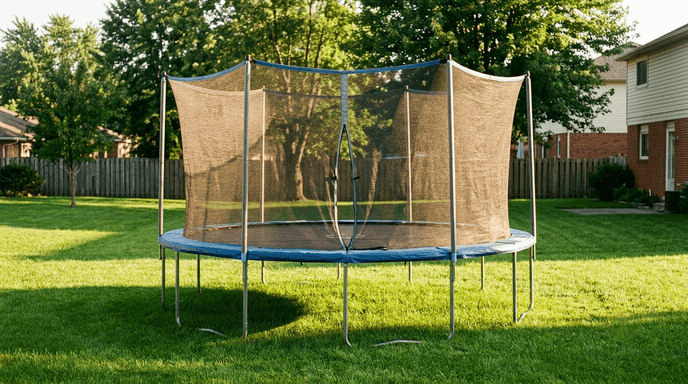
In the suburban ecosystem of the 1990s, the child who owned a trampoline controlled the neighborhood. Their backyard became the de facto gathering spot; a private, highly exclusive country club where social capital was traded based entirely on who was allowed to jump, who could successfully execute a front flip, and who knew how to perform the devastating “double bounce” maneuver.
While a standard trampoline was a sign of comfortable middle-class existence, a trampoline equipped with a safety net enclosure was a sign of immense, untouchable wealth. Early trampolines were notoriously dangerous; they were essentially metal springs and a tight canvas stretched over a galvanized steel frame with zero fall protection. If you misjudged a jump or were double-bounced too high, you were launched directly onto the grass, the concrete patio, or the exposed metal springs. When safety nets began appearing in backyards, they looked like massive, expensive architectural installations. If your friend’s parents bought the safety net, it meant two things to a child: first, they had a massive amount of disposable income to spend on an optional accessory; and second, they actually cared enough about their children’s physical safety to invest in it. It was the ultimate flex of protective wealth.
The adult realization regarding trampolines revolves entirely around insurance premiums and liability. We now know that parents did not avoid buying trampolines because they were prohibitively expensive; they avoided them because they are massive, terrifying liability nightmares. Homeowners insurance policies frequently require special riders or outright deny coverage if a trampoline is present on the property, due to the astronomical rate of emergency room visits and orthopedic injuries they generate. The safety net was not a luxury flex; it was a desperate, panicked attempt by parents to avoid a devastating lawsuit when the neighbor’s kid inevitably bounced off the canvas and broke their arm.
7. Grey Poupon Mustard in the Pantry

How did a small jar of Dijon mustard convince an entire generation of children that it was the exclusive, preferred condiment of billionaires? If you opened a friend’s refrigerator to grab a juice box and saw the distinct, slightly curved glass jar of Grey Poupon sitting next to the Heinz ketchup, you immediately assumed their family dined on Beluga caviar and rode dressage horses on the weekend.
Once again, the advertising industry completely warped our childhood reality. The iconic 1980s and 90s television commercials for Grey Poupon featured a wealthy, older aristocrat being chauffeured in a pristine Rolls-Royce through the English countryside. Another Rolls-Royce pulls up alongside him at a scenic stop, the back window rolls down, and an equally wealthy man leans out to ask, “Pardon me, would you have any Grey Poupon?” This single thirty-second narrative cemented the product as a luxury good of the highest order. As children, we took the commercial completely literally. We believed that if you were truly rich, you carried this specific mustard in the glove compartment of your limousine at all times. We did not understand that it was a clever, highly effective marketing campaign designed to make a completely affordable grocery store item feel premium; we simply accepted that yellow mustard in the plastic squeeze bottle was for the working class, and Grey Poupon was for the global elite.
The illusion is instantly shattered the first time you go grocery shopping for yourself as a young adult. You walk down the condiment aisle and discover that the legendary “mustard of kings” retails for roughly three dollars. It is literally just white wine and mustard seeds. The fact that a slightly elevated price point and a clever British accent in a commercial convinced millions of children that Dijon mustard was a wealth indicator proves just how easily advertising manipulated us.
8. A Dedicated Landline Telephone in Your Bedroom

Before the ubiquitous adoption of mobile phones, telecommunication was a communal and highly monitored household activity. The main telephone was usually tethered to a wall in the kitchen or the living room by a coiled cord. If you wanted to talk to a friend or a crush, you had to stretch that cord as far as it would physically go; usually sitting on the floor in a hallway while your parents listened to your entire conversation while chopping vegetables nearby.
If you had a friend who had a dedicated landline phone in their own bedroom, they were the absolute elite. It meant they had achieved the holy grail of 90s adolescence: unmonitored, private communication behind a closed door. Having a physical Conair telephone in your room was one level of wealth; but having a dedicated second phone line with its own unique phone number was billionaire status. This meant that the teenager could talk to their friends for hours without tying up the family’s main line, completely bypassing the dial-up internet conflict that plagued standard households. It was the ultimate display of parental financial indulgence. If a friend handed you a piece of paper and said, “This is my private number,” you looked at them as if they were a legitimate Hollywood celebrity.
Today, literally every child over the age of ten carries a private, encrypted, globally connected supercomputer in their pocket. The concept of a physical phone wired into a bedroom wall feels like ancient history. The realization that our parents had to pay the local telecom company a monthly fee just for the privilege of installing a second copper wire into the drywall makes the luxury feel entirely obsolete and ridiculously inefficient.
9. Cable Television With Unlocked Premium Channels
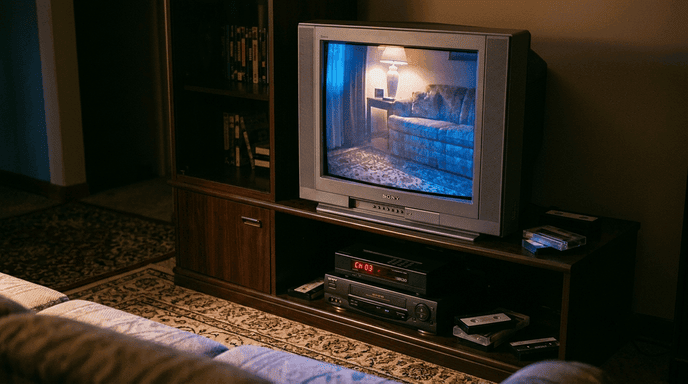
For the vast majority of 90s children, television was divided into two distinct realms: the channels you could watch, and the channels that were scrambled. Basic cable provided a wealth of cartoons, sitcoms, and music videos, but as you scrolled higher up the numerical dial, you would hit the premium channels; HBO, Showtime, and Cinemax. For most of us, these channels were a static-filled, scrambled mess of jagged lines and distorted audio, occasionally offering a blurry glimpse of a movie before scrambling again.
If you went to a sleepover at a friend’s house and their parents had unlocked premium channels, it felt like you had magically gained access to an exclusive VIP club. The ability to watch uncensored movies, high-budget documentaries, and exclusive boxing matches without a trip to the video rental store was mind-blowing. We assumed that paying for premium cable required a massive, untouchable salary. It meant your family had so much disposable income that they could afford to throw money at the television provider every single month just for the privilege of watching movies a few months before they aired heavily edited on network TV. The little black descrambler box sitting on top of the VCR was the technological crown jewel of the living room.
The modern adult perspective on this “luxury” is deeply ironic. Today, we exist in an era of intense, exhausting subscription fatigue, where the average consumer pays for Netflix, Hulu, Disney+, Max, and Prime Video simultaneously. We are all essentially paying for modern “premium cable,” but rather than feeling like an exclusive luxury, it feels like a relentless monthly financial drain. The sheer magic of flipping to an unlocked HBO channel has been entirely replaced by the paralysis of scrolling through infinite streaming menus for forty minutes and ultimately watching nothing.
10. Name-Brand Lunchables Instead of Generic Sandwiches

The elementary school cafeteria was a ruthless economic trading floor, and the currency of choice was the packed lunch. A homemade sandwich in a plastic bag; regardless of how lovingly it was prepared by your parents or how high-quality the deli meat ingredients were; had absolutely zero social value. It was the baseline of existence; it proved only that you were not starving.
The ultimate status symbol; the Rolex of the lunchroom; was the name-brand Lunchables kit. Specifically, the Lunchables Pizza kit or the highly coveted Nachos kit. If a child pulled a bright yellow cardboard box out of their backpack, the entire table took notice. We inherently understood that Lunchables were expensive because our parents reminded us constantly. “I’m not paying four dollars for three crackers and a slice of processed cheese,” was the universal parental refrain across the nation. Therefore, the child who consistently arrived with a Lunchables kit was viewed as a scion of wealth. Their parents were clearly willing to pay a premium for packaging and convenience over sustenance. We did not care that the “pizza” was a cold disc of dense bread covered in room-temperature sauce and synthetic cheese dust; we only cared about the modular, interactive experience and the intense social envy it generated among our peers.
As adults who now pack lunches for ourselves or our own children, the illusion of the Lunchables luxury is darkly comedic. We now look at the nutritional information and the ingredient list, recognizing that this highly coveted status symbol was essentially a box of heavily processed sodium, chemical preservatives, and sugar. The homemade sandwich our parents forced us to eat was objectively superior in every measurable nutritional way, but in the brutal economy of childhood, brilliant marketing and colorful packaging always defeated nutrition.
11. Ferrero Rocher Chocolates Stacked in a Pyramid

If Viennetta was the ice cream of the elite, Ferrero Rocher was the chocolate of international royalty. The packaging alone; the crinkly gold foil, the delicate brown paper cup, the clear plastic display box; signaled that this was not a standard candy bar to be eaten casually on a playground. This was an event. It required unwrapping, not just opening.
Once again, we must blame the advertising industry for completely warping our perspective. Ferrero Rocher commercials frequently depicted elegant, black-tie European parties where a butler would circulate among the guests carrying a massive silver tray. On this tray, the chocolates were stacked in a mathematically perfect, glowing golden pyramid. The commercials literally featured characters saying things like, “Monsieur, with these Rocher, you are really spoiling us.” We absorbed this messaging completely and without question. If we went to a friend’s house during the holidays and their parents had a plastic box of Ferrero Rocher sitting on the coffee table, we assumed we were in the presence of high society. We treated the chocolates with intense reverence, carefully peeling back the gold foil as if unearthing an ancient, priceless treasure.
The adult reality is that you can purchase a three-pack of Ferrero Rocher at literally any gas station, pharmacy, or discount grocery store checkout aisle in the country for a handful of loose change. They are delicious, certainly, but they are mass-produced confections available globally at extreme volume. The realization that the “ambassador’s chocolate” is impulse-bought next to the breath mints and the generic lip balm is a harsh destruction of a beautiful, golden childhood myth.
12. A Dedicated, Purpose-Built Playroom

For most children, toys were kept in the bedroom. Your sleeping space and your playing space were one and the same. You had a toy box at the foot of your bed, and if you wanted to build a massive Lego castle, you had to negotiate floor space with your laundry basket, your desk, and your closet door.
Therefore, the concept of a house possessing a dedicated “playroom”; an entire room whose sole architectural purpose was the containment of joy, board games, and plastic; was completely unfathomable. If a friend said, “Let’s go play in the playroom,” you immediately knew they lived in a mansion. Having a playroom meant that the house had so much excess square footage that an entire room could be sacrificed to pure chaos. It meant the parents did not need that room for a home office, a guest bedroom, or household storage. Furthermore, it meant that the rest of the house could remain pristine and adult-focused, because all the childhood mess was quarantined behind a specific door. It was the ultimate architectural flex of suburban wealth.
As adults dealing with real estate, interest rates, and the exorbitant price per square foot of modern housing, we finally understand the sheer financial weight of an “extra” room. The childhood perception was actually entirely correct on this specific point; having a dedicated playroom does require a significant amount of wealth, because buying a larger house simply to contain toys requires a substantial mortgage and significantly higher property taxes. Our childhood instincts regarding real estate square footage were surprisingly sharp.
13. Light-Up L.A. Gear Sneakers

In the early 1990s, children’s footwear was revolutionized by the introduction of the light-up sneaker, championed primarily by brands like L.A. Gear. To a child, a shoe that illuminated with every heel strike was not a piece of clothing; it was a piece of advanced sci-fi technology strapped directly to your feet. It was the future, available now at the local mall.
If a kid walked into the classroom wearing LA Lights, they were instantly the center of attention. The entire physical mechanics of walking changed; kids would intentionally stomp their heels into the linoleum floor with maximum force just to ensure the red LEDs flashed as brightly as possible. In a darkened school gymnasium or a weekend roller rink, the kid with the light-up shoes was a literal beacon of wealth and status. We assumed these shoes cost hundreds of dollars because they contained “electronics” and wires. We begged our parents for them, completely ignoring the fact that they were often bulky, heavy, uncomfortable, and objectively ugly in their design. The sheer spectacle of the lights overrode all practical considerations.
The reality of the light-up sneaker was a masterclass in temporary joy. The batteries sealed inside the soles could not be replaced or recharged. After a few months of aggressive heel-stomping, the lights would inevitably die. Often, one shoe would die before the other, leaving the child walking with a tragic, asymmetrical limp of unlit plastic. The “wealth” of the light-up shoe was entirely ephemeral, fading exactly as quickly as the cheap internal wiring degraded.
14. Riding in a Stretch Limousine for Any Occasion

To the childhood mind, there were regular cars, and then there was the stretch limousine. A limousine was not merely a vehicle; it was a rolling palace on wheels. It had a television inside. It had neon lights illuminating the ceiling. It had glasses made of actual glass, not plastic. If you saw a limousine driving down the street in your neighborhood, you immediately pressed your face against the car window trying to see which celebrity, president, or billionaire was inside.
The ultimate display of childhood luxury was when a kid’s parents rented a limousine for their 10th birthday party to drive a group of screaming children to the local bowling alley or laser tag arena. For the fifteen-minute drive, you felt like you owned the entire city. You drank generic brand soda out of champagne flutes, sank into the leather seats, and pushed every button on the intercom system to talk to the driver. You truly believed that this was how the richest people in the world traveled every single day.
As we grew into teenagers and eventually adults, the illusion of the limousine slowly degraded into reality. We learned that high school students primarily rent limousines for prom, loud bridal parties, and groups of tourists in Las Vegas. We realized that they are often claustrophobic, smell faintly of stale air freshener and old leather, and possess terrible suspension that makes you deeply carsick if you sit facing backward. The vehicle we once thought was reserved exclusively for billionaires is actually an hourly rental service accessible to anyone with a credit card; a hilarious, slightly depressing downgrade from our childhood awe.
15. Having an In-Ground Swimming Pool

If you had a pool in your backyard, you did not just have wealth; you had the ultimate currency of summer social survival. You were entirely immune to the heat. You did not have to beg your parents to drive you to the crowded, heavily chlorinated public pool where you had to share a swimming lane with fifty screaming strangers and hope nobody had an accident in the shallow end.
An in-ground pool felt like having a private luxury resort attached directly to your house. It was the absolute zenith of suburban luxury. Kids who had pools experienced a sudden, massive surge in popularity every single year in late May. We assumed that paying a construction crew to dig a massive hole in the earth, line it with rebar and concrete, and fill it with thousands of gallons of water required a trust fund. Even an above-ground pool signaled a level of disposable income that commanded deep respect on the playground.
Of all the items on this list, the swimming pool is the only one where the reality actually matches the childhood perception of expense, but for entirely different, deeply frustrating reasons. As adults, we do not view a pool as a luxurious aquatic playground; we view it as a terrifying, relentless money pit. We now understand the true cost of pool ownership: the astronomical water bills, the constant chemical balancing, the expensive pump repairs, the grueling winterizing process, and the endless skimming of dead leaves and insects. Our parents didn’t refuse to buy a pool because we were poor; they refused because they knew they would be the ones spending every Saturday morning maintaining a concrete hole that we would ultimately only use three weeks out of the year. The wealth wasn’t in buying the pool; the wealth was in having the time and money to keep it from turning into a toxic swamp.
Quick Reference Summary Table
| The Childhood “Luxury” Item | What We Believed It Meant | The Hilarious Adult Reality |
|---|---|---|
| 1. Viennetta Ice Cream | You dined with European aristocrats, diplomats, and billionaires. | It’s a five-dollar mass-produced grocery store dessert found next to the frozen peas. |
| 2. Fridge Water Dispenser | You lived in a fully automated, frictionless home of the future. | You are constantly paying to change filters and fix a perennially jammed ice auger. |
| 3. 64-Pack Crayola Crayons | You were the undisputed elite of the classroom with absolute artistic autonomy. | A five-dollar back-to-school item that lost its plastic sharpener in a week. |
| 4. Garage Refrigerator | Your family possessed an infinite surplus of bulk beverages and grocery wealth. | It’s just a malfunctioning old appliance pragmatically plugged into a concrete wall. |
| 5. A Two-Story House | You lived in a massive, sprawling cinematic mansion with an elevated private realm. | It is just cheaper for residential builders to build vertically on smaller lots. |
| 6. Trampoline With a Net | Your parents were rich enough to buy the ultimate backyard country club accessory. | Your parents were desperately trying to avoid a devastating liability lawsuit. |
| 7. Grey Poupon Mustard | You literally rode in chauffeured limousines through the English countryside. | It’s just white wine and mustard seeds available for three bucks at the grocery store. |
| 8. Bedroom Landline | You possessed unmonitored, private communication like a Hollywood celebrity. | It required paying a telecom company a monthly fee for a second copper wire. |
| 9. Premium Cable Channels | Your family had immense disposable income for exclusive VIP entertainment. | It’s the exact same dynamic as today’s exhausting, expensive streaming subscription fatigue. |
| 10. Name-Brand Lunchables | Your parents willingly paid a premium for ultimate cafeteria social capital. | It was a nutritionally inferior box of processed sodium and chemical preservatives. |
| 11. Ferrero Rocher Chocolates | You routinely hosted international ambassadors and high society at your home. | You impulse-bought them at the gas station checkout counter next to the breath mints. |
| 12. A Dedicated Playroom | You lived in a mansion with massive excess square footage devoted purely to toys. | It genuinely requires a substantial mortgage to afford the extra architectural room. |
| 13. Light-Up Sneakers | You were wearing advanced, highly expensive sci-fi technology strapped to your feet. | The irreplaceable batteries died in a month, leaving you with an asymmetrical limp. |
| 14. Riding in a Limousine | You traveled like the richest people in the world traveled every single day. | It’s a claustrophobic, hourly rental service for prom and loud bridal parties. |
| 15. In-Ground Swimming Pool | You owned a private luxury resort and possessed the ultimate summer currency. | It is a terrifying, relentless money pit of chemical balancing and expensive pump repairs. |
Conclusion: Confronting Our Processed Financial Literacy
Ultimately, looking back at this skewed perception of luxury as rent-paying, grocery-buying adults is universally hysterical. Childhood is a period defined by profound economic innocence. Because kids lack the cognitive frameworks to understand concepts like 401(k)s, mutual funds, or mortgage interest rates, they are forced to invent their own hilarious metrics for wealth.
Our collective generational delusion has finally shattered, revealing that the “status symbols” we so deeply coveted generally fall into a few distinct, pragmatic categories:
- Marketing Masterpieces: Items like Viennetta ice cream, Grey Poupon mustard, and Ferrero Rocher chocolates were never reserved solely for European aristocrats or the global elite. They were simply the successful results of aggressive 1990s marketing campaigns targeting developing brains.
- Maintenance Nightmares: The futuristic magic of an exterior refrigerator water dispenser is actually just a symbol of constantly clogged water filters, jammed ice augers, and unsightly hard water stains.
- Massive Liabilities: We now understand that trampolines and in-ground swimming pools aren’t just exclusive suburban country clubs; they are terrifying money pits and liability nightmares plagued by expensive pump repairs, grueling maintenance, and the threat of devastating lawsuits.
- Temporary Joys: The extreme wealth signaled by light-up L.A. Gear sneakers was entirely ephemeral, fading exactly as quickly as their cheap, unreplaceable internal wiring degraded.
- Nutritional Deficits: In the brutal economy of the playground, the brilliant marketing and colorful packaging of a heavily processed, high-sodium name-brand Lunchables kit easily defeated the objective nutritional superiority of a homemade sandwich.
Ironically, our childhood instincts were incredibly sharp on only one front: real estate. We correctly perceived that dedicating extra square footage to a purpose-built playroom requires a significant amount of wealth, a crushing reality we now fully understand when looking at modern mortgage interest rates and property taxes.
While the truth behind our childhood financial literacy was born purely out of innocent consumerism and playground social dynamics, there is still something incredibly nostalgic about it. We may no longer believe that a dedicated bedroom landline or unlocked premium cable makes you a billionaire, but we can all share a laugh at a time when we genuinely thought a cheap plastic sharpener built into a 64-pack of Crayola crayons was the absolute pinnacle of human achievement.


