



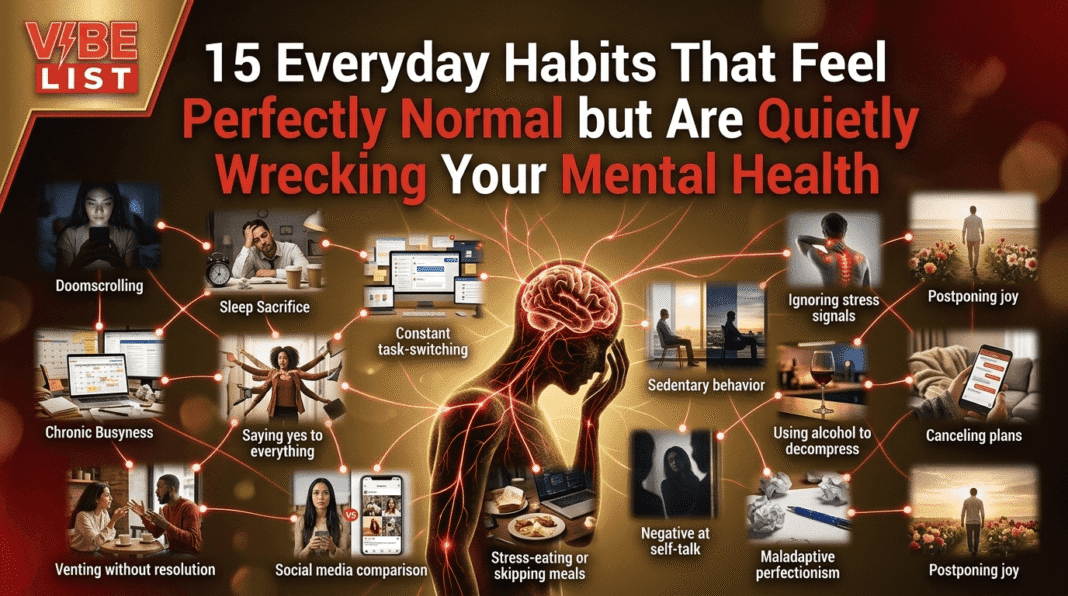
359 million people with an anxiety disorder. An amygdala 60% more reactive after one bad night of sleep. Fourteen minutes of news scrolling before bed measurably raising your baseline anxiety. Forty percent of your productive day lost to the illusion of multitasking. Half of all American adults reporting loneliness. None of these are caused by a diagnosis. They’re caused by habits you’d describe as ‘totally normal’ if someone asked you about them tomorrow morning.
This content is for informational purposes only and does not constitute professional medical or psychological advice. Consult a qualified mental health professional for personalized guidance.
An estimated 359 million people worldwide experienced an anxiety disorder in 2021, according to the World Health Organization. That makes anxiety disorders the most common mental health condition on Earth. The American Psychological Association’s 2025 Stress in America survey found that 62% of adults feel more disconnected than ever. Nearly seven in ten respondents identified the spread of misinformation as a top source of stress. These numbers keep climbing, and while advice like sleeping more, exercising, and talking to someone has been around for years, there’s a different problem that rarely gets discussed:
Most of the habits quietly damaging your mental health look productive. They look like being a good friend. They look like staying informed. They pass for normal because everyone around you seems to do the same things. And they erode your mental health slowly enough that you don’t realize how long you’ve been running on fumes until months have passed.
This is not another list of obvious red flags. You already know that sleeping four hours a night is bad for you. What you probably don’t know is that the way you scroll your phone every night, the way you vent to friends, and the way you keep saying yes to things you don’t want to do are producing measurable damage to your brain’s ability to manage stress, regulate emotions, and maintain what researchers call your baseline mood — the feeling you think of as feeling like yourself.
Vibe List dug into the behavioral psychology, neuroscience, and clinical research behind fifteen of these everyday habits. None of them will seem alarming. That’s exactly why they’re dangerous.
1. Doomscrolling as a Pre-Sleep Routine
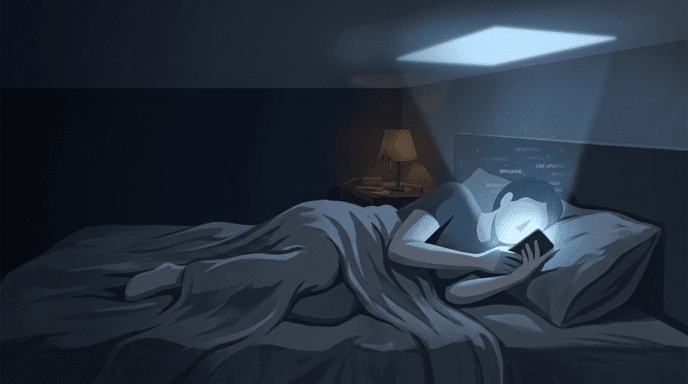
You are lying in bed. The lights are off. Instead of sleeping, you’re thumbing through an endless feed of breaking news about politics, natural disasters, violence, and economic collapse. You tell yourself you’re just staying informed. You’ll stop in five minutes. Forty-five minutes later, your heart is racing and your brain is buzzing with a low-grade dread you can’t quite name.
Doomscrolling has been studied extensively since the term went mainstream during the COVID-19 pandemic. Harvard Medical School researchers have linked the habit to the brain’s limbic system — specifically the amygdala, the region responsible for triggering the fight-or-flight response. Dr. Aditi Nerurkar, a Harvard Medical School lecturer, explains that chronic stress fuels the urge to keep scrolling: “We’re hypervigilant and scanning for danger. The more you scroll, the more you feel you need to.”
The long-term effects are not theoretical. A 2023 study in Applied Research in Quality of Life reviewed data from roughly 1,200 adults across three studies and found that doomscrolling was linked to poorer mental health and lower life satisfaction. A 2024 study in Computers in Human Behavior Reports reached similar conclusions. The researchers found that doomscrolling contributed to higher levels of existential anxiety. Mental Health America reports that anxiety and depressive symptoms increase after as little as 14 minutes of news consumption.
The Vibe List’s take: The most dangerous part of doomscrolling isn’t the content. It’s the timing. Doomscrolling right before bed forces your amygdala online at exactly the moment your brain is supposed to be winding down. You’re conditioning your nervous system to associate bedtime with threat detection. Quitting the news entirely isn’t realistic, but limiting consumption to a fixed window earlier in the day and moving your phone off the nightstand are two small changes with outsized payoff. Dr. Nerurkar has called this single adjustment a potential “game-changer” for stress management.
2. Treating Sleep Like a Negotiable Resource
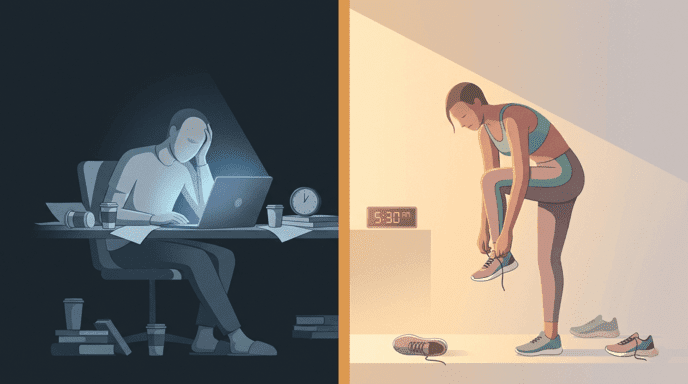
Everyone knows sleep matters. And yet, sleep is still the first thing people sacrifice when life gets busy. You stay up late finishing a project, wake up early for a workout, and tell yourself six hours is enough. It isn’t.
In 2007, Matthew Walker and his team at UC Berkeley published landmark research using functional magnetic resonance imaging (fMRI) to examine what happens inside the emotional brain when it doesn’t get enough sleep. They found that the amygdala responded over 60% more reactively to negative images in sleep-deprived subjects compared to those who slept normally. At the same time, connectivity between the amygdala and the prefrontal cortex — the brain region responsible for logical thinking and emotional regulation — dropped significantly. Walker described the sleep-deprived brain as having “reverted back to more primitive patterns of activity, in that it was unable to put emotional experiences into context and produce controlled, appropriate responses.”
In practical terms, here’s what that means. Each night of poor sleep doesn’t just leave you tired. It leaves you emotionally volatile. The National Institutes of Health has found that chronic sleep deprivation impairs the brain’s emotional regulation circuitry, heightening sensitivity to negative events and reducing your ability to think through them clearly.
The Vibe List’s take: Most people understand sleep is essential, but the culture still treats sacrificing it as a badge of ambition. When someone says “I’ll sleep when I’m dead,” it’s supposed to signal drive. What the science actually shows is that chronic undersleeping doesn’t build resilience — it destroys your ability to tell the difference between a minor inconvenience and a genuine crisis. That’s not toughness. That’s impaired functioning with extra steps.
3. Staying Busy to Avoid Sitting with Your Own Thoughts
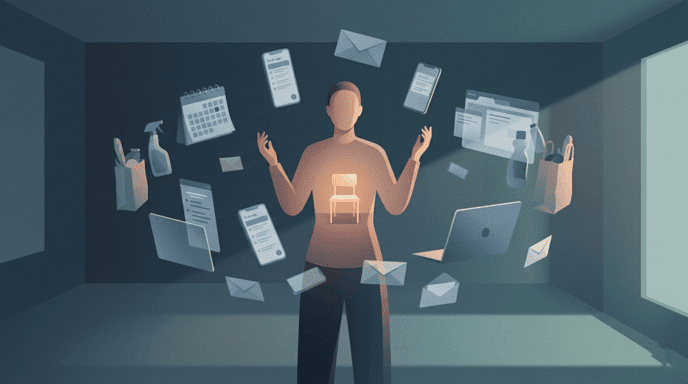
There’s a version of productivity that exists purely to avoid feeling anything. You fill every hour with tasks. Every slot is booked. There’s always another errand, another email, another thing that needs your attention. And the moment free time opens up, you fill it. Cleaning, scrolling, organizing — anything to avoid silence.
Psychologists call this experiential avoidance. It’s the tendency to suppress or escape uncomfortable internal experiences — thoughts, feelings, memories, physical sensations — instead of letting them surface. A 2024 review in Psychiatry and Clinical Psychopharmacology found that experiential avoidance is a significant cross-diagnostic factor in anxiety, depression, and chronic stress.
Kristen Beesley writes in Psychology Today that chronic busyness functions as a defense mechanism, with suppression as its underlying motive. The Western Tidewater Community Services Board has documented that chronic busyness can serve as a trauma response — constant activity used to avoid confronting unresolved grief, fear, or pain.
The Vibe List’s take: The difference between genuine engagement and avoidance dressed up as productivity comes down to one thing: whether you can sit with discomfort without trying to numb it. The simplest test: when you’re unexpectedly alone with nothing planned, what happens? Anxiety? Restlessness? An instant urge to plan something? That’s not boredom — that’s your nervous system panicking because the thing you’ve been outrunning just caught up. Learning to sit with discomfort instead of burying it is one of the hardest habits to build — and one of the most valuable.
4. Chronic Venting Without Ever Reaching a Solution
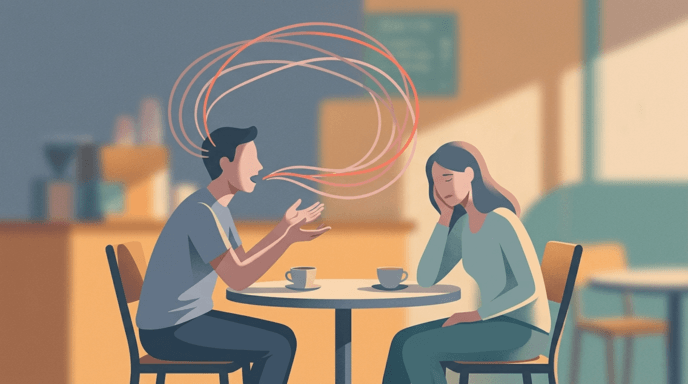
You have had an awful day and decide to contact your closest friend for assistance with processing it. You describe each minute of your awful day in vivid detail. They listen attentively. They validate you. For about twenty minutes, you feel a little better. Then the feelings come back — sometimes worse. So you call someone else and repeat the cycle.
Research shows that venting feels helpful in the moment but actually makes things worse unless it’s paired with reframing how you see the situation.
Ethan Kross — professor of psychology and neuroscience at the University of Michigan and author of Chatter — has studied this pattern extensively. In an interview with UC Berkeley’s Greater Good Science Center, he explained: “When we get stuck in a venting session, it feels good in the moment, because we’re connecting with other people. But if all we do is vent, we don’t address our cognitive needs, too.”
A study in the British Journal of Health Psychology found that students who vented their anxieties after September 11th showed increased anxiety levels over the following four months compared to those who didn’t vent. The authors concluded: “focus on and venting of emotions was found to be uniquely predictive of longer-term anxiety.”
A 2026 Psychology Today article on the “venting trap” cited research showing that people who physically release anger — punching bags, smashing plates — actually become more aggressive afterward, not less.
The Vibe List’s take: Nobody is saying don’t talk about your problems. The distinction that matters is between processing and replaying. Processing means reflecting on a situation and eventually shifting toward a new perspective, a lesson, or a next step. Replaying means telling the same story in the same emotional tone without anything changing. The first builds resilience. The second wears a groove in the neural pathway that makes it easier to retrieve distress.
If you catch yourself telling the same story to multiple people in the same emotional key, that’s your cue to ask a different question: “How can I think about this differently?”
5. Saying Yes to Everything
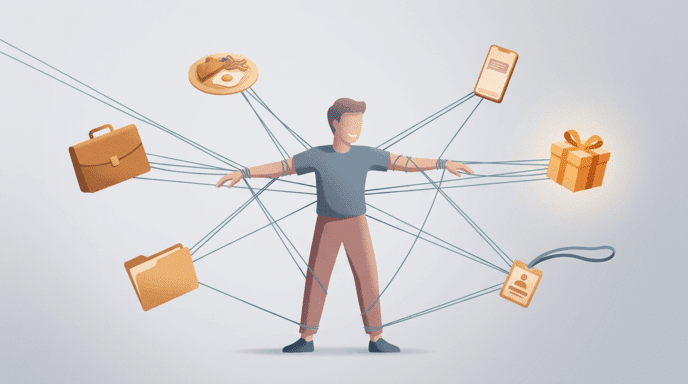
You take on another project at work. You agree to weekend brunch with acquaintances you don’t even like. You join a committee because nobody else volunteered. Each yes feels small on its own. Together, they build an invisible web of obligations that leaves you permanently exhausted and quietly resentful of the very people you were trying to help.
In behavioral terms, this pattern often traces back to the fawn response — a trauma-driven habit in which a person prioritizes other people’s emotional needs to secure safety and acceptance. According to Psychology Today, the fawn response develops when someone learns that their safety, love, or survival depends on keeping others happy.
Whether or not trauma is involved, chronic people-pleasing carries well-documented mental health risks. A 2025 Psychology Today article found that chronic overcommitment often signals self-abandonment — agreeing to too much creates a disconnect from your actual needs, producing tension, guilt, and emotional exhaustion that rest alone can’t fix. Amen Clinics documented eleven risks of chronic people-pleasing, including heightened anxiety, identity erosion, and emotional depletion.
The Vibe List’s take: The discomfort of setting a boundary lasts minutes. The resentment from an obligation you didn’t want lasts weeks. Most chronic people-pleasers don’t have a generosity problem. They have a belief problem — the belief that their own needs come second. That’s not altruism. It’s self-erasure on an installment plan. If you want to explore the psychology of healthy relationships and emotional intelligence, learning to set boundaries is where virtually every credible framework starts.
6. Comparing Your Behind-the-Scenes to Someone Else’s Highlight Reel
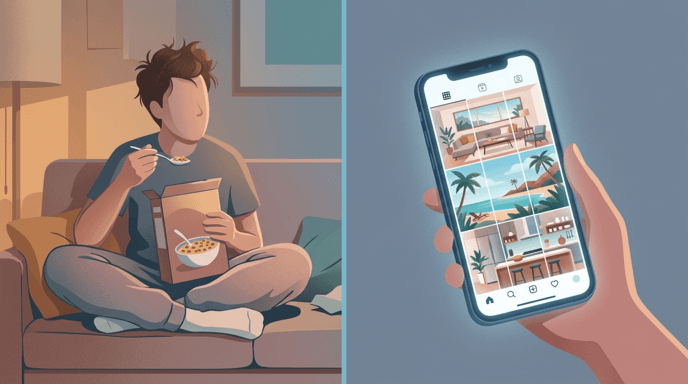
You open Instagram and your old classmate just bought a house. Another acquaintance is in Positano. And then there was that young woman with 400,000 followers posting pictures of her perfectly organized kitchen. Meanwhile, you’re sitting here in sweatpants at 2 p.m. on a Saturday, eating cereal from the box, and suddenly you feel like you’ve fallen behind everyone.
Psychologists call this upward social comparison. The concept was first described by psychologist Leon Festinger in 1954 and has since become a major focus in digital mental health research. A 2023 meta-analysis in Media Psychology found that most users respond to curated social media content with negative self-evaluation — comparing upward and coming away with reduced self-worth and well-being.
A 2025 meta-analysis in Frontiers in Psychology confirmed that social comparison on social media contributes to poor mental health among young adults. The authors found links between social media use and lower self-esteem, poorer body image, and more severe depressive symptoms. Another 2025 meta-analysis in PLOS ONE found significant positive correlations between social media addiction and anxiety (r = 0.31), depression, loneliness, and fear of missing out.
The Vibe List’s take: Social media isn’t inherently bad. The problem is that you’re measuring your unfiltered behind-the-scenes against someone else’s curated highlight reel. Your brain doesn’t automatically correct for that gap. Every image you scroll past without thinking “this is a performance” chips away at your baseline sense of adequacy. The researchers didn’t say delete your accounts. They said to notice the comparison loop as it happens and pay attention to when your mood shifts after consuming certain content. That awareness is the circuit breaker.
7. Wearing Constant Task-Switching Like a Personality Trait
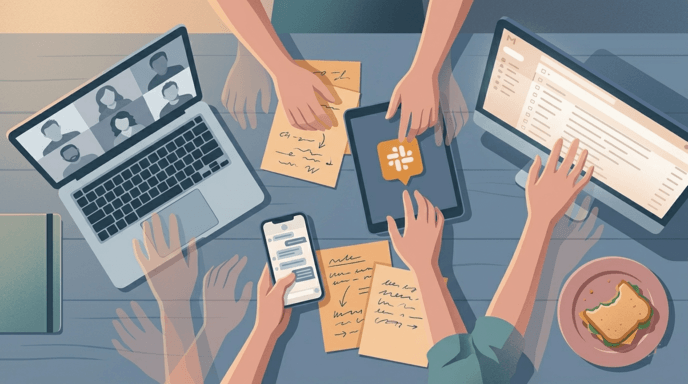
You are checking your email during a video conference call while simultaneously texting a friend and monitoring your Slack messages. You call it multitasking. Decades of research from psychologists Joshua Rubinstein, Jeffrey Evans, and David Meyer show it’s actually rapid task-switching. And it comes at a measurable cognitive cost.
Their studies showed that participants lost time every time they switched tasks, and the cost grew with task complexity. According to Meyer, the cumulative disruption can waste up to 40% of a person’s productive time.
But the damage doesn’t stop at productivity. Hartford Hospital found that constant task-switching causes cognitive overload — showing up as brain fog, irritability, difficulty concentrating, and weakened emotional control. Research in BMC Psychology on digital multitasking found it correlates with hyperactivity symptoms and carries indirect effects on brain health, including reduced working memory and increased mental fatigue.
The Vibe List’s take: Multitasking feels productive because the rapid shifting creates an illusion of momentum. What’s actually happening is your brain is burning energy on the switching itself, not on completing anything. The result is a particular kind of exhaustion: you’ve spent all day doing things and feel like you’ve accomplished nothing.
The fix is simple: single-task in blocks of 25 to 45 minutes with deliberate transitions. Your brain will resist at first — it’s grown accustomed to the stimulation of constant switching. That resistance is withdrawal, not a sign that you need more tabs open.
8. Skipping Meals or Stress-Eating on Autopilot
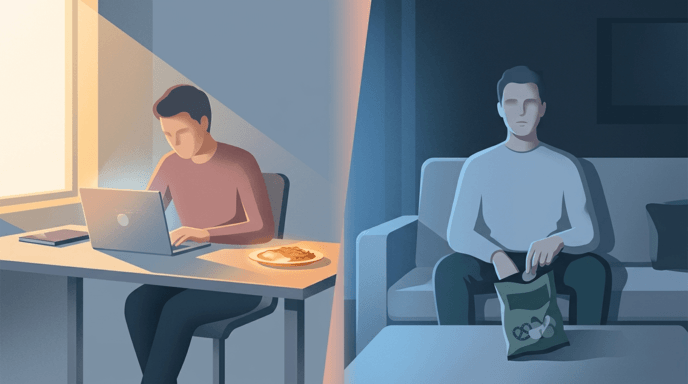
You didn’t eat today because you simply forgot or were too busy. Alternatively, you ate an entire sleeve of cookies at 10 p.m. without even tasting them. These behaviors are so common that they often appear as personality traits rather than signs of stress.
Researchers at the University of Wisconsin have shown that stress-driven cortisol spikes trigger cravings for calorie-dense foods. The Harvard Brain Science Initiative found that people with heightened stress responses and higher anxiety are more likely to eat for emotional reasons rather than physical hunger.
A 2022 study in the Journal of Nutrition Education and Behavior confirmed that perceived stress is significantly related to emotional eating. The researchers also found that eating for emotional rather than physical reasons carries compounding consequences for both physical and mental health over time. The cycle feeds itself: stress triggers emotional eating, emotional eating produces guilt and physical discomfort, guilt creates more stress, and the loop continues.
The Vibe List’s take: Neither emotional eating nor skipping meals is really about the food. It’s about behavior running on autopilot. Once you start responding to emotions with eating — or not eating — instead of listening to actual hunger and fullness cues, you lose one of your most basic tools for self-regulation. Skipping meals isn’t a badge of busyness. It’s your stress response overriding the signals your body uses to tell you it needs fuel. Neither habit usually calls for a dramatic dietary overhaul, but both require awareness before action. Before you eat, ask whether you’re actually hungry. Before you skip a meal, ask why.
9. Treating Your Inner Critic Like a Life Coach
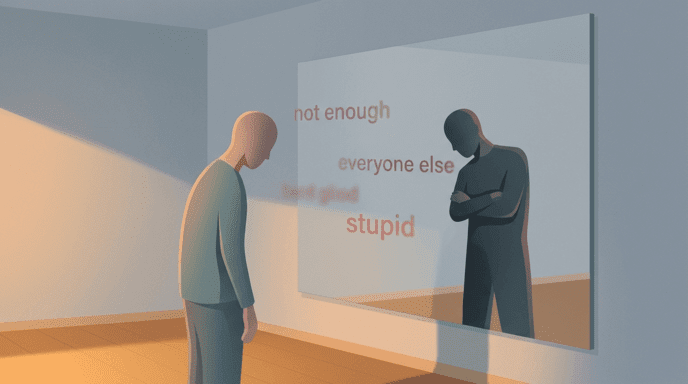
“Stupid.” “Can’t do anything right.” “Everybody else got this down.” You say these things to yourself in a tone you’d never use with a friend, then rationalize it as “just being honest” or “holding myself accountable.”
The research says otherwise. A 2021 study in Scientific Reports used neuroimaging to show that positive and negative self-talk alter brain function in measurably different ways. Negative self-talk doesn’t sharpen focus — it degrades it. Psychology Today has documented multiple studies linking chronic self-criticism to social anxiety, depression, eating disorders, and chronic stress. Verywell Mind confirmed that chronic negative self-talk correlates with higher stress levels and lower motivation.
Qualitative research in BMC Psychology mapped the self-perpetuating cycle: criticism produces shame, shame erodes confidence, lower confidence leads to worse outcomes, and worse outcomes validate the original criticism. It’s a closed loop.
The Vibe List’s take: The most dangerous thing about negative self-talk isn’t any single statement. It’s that you hear it in your own voice so often it stops sounding like an opinion and starts sounding like a fact. “I’m not good enough” stops feeling like a thought and starts feeling like a description. The fix isn’t forced positivity. It’s treating your inner critic’s verdict as an educated guess rather than a final ruling. Demand evidence. Would you let someone else talk to you this way? You wouldn’t.
10. Perfectionism Disguised as High Standards
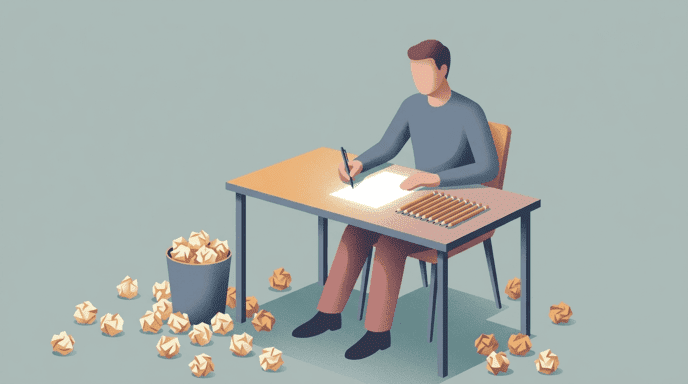
You rewrote that email four times before sending it. You won’t start a creative project until you’re sure it’ll be good. You see a 92 on an exam and feel like you failed. You call it “having high standards.” Psychology has a different name for it — and it’s far more destructive.
A 2023 meta-analysis in the Journal of Experimental Psychology found that maladaptive perfectionism strongly predicts anxiety, depressive symptoms, and rumination in college-aged students. Research highlighted by Science Daily shows that perfectionistic concerns correlate with burnout across every context studied — work, school, and sports.
Time magazine featured research showing that maladaptive perfectionism creates its own distinct pathway to burnout — a cycle of chronic stress that eventually collapses under its own weight.
There’s an important distinction here. Healthy ambition says, “I want to do this well.” Maladaptive perfectionism says, “If I fail, I’m fundamentally flawed.” One motivates effort. The other produces paralysis.
The Vibe List’s take: Perfectionism is anxiety wearing a professional suit. It looks like your high standards are what drive your success, but in almost every case they’re what keeps success from ever feeling like enough. The person who submits the imperfect draft and edits it later learns twice. The person who won’t submit until it’s flawless learns nothing and burns out wondering why. If you consistently wait for conditions to be perfect before acting, perfectionism isn’t raising your standards — it’s killing your output.
11. Sitting All Day
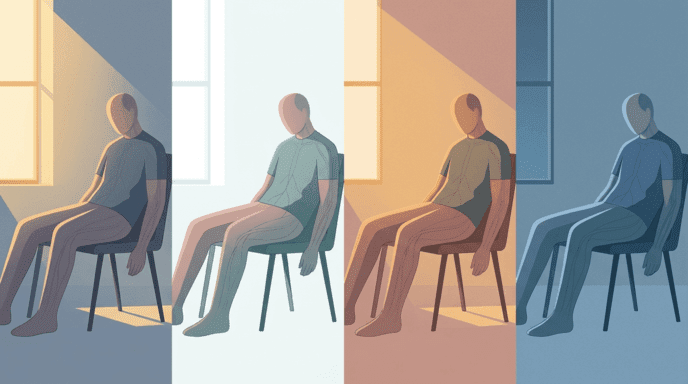
Sitting down to go to work. Sitting down to travel to work. Sitting down to eat. Sitting down to relax.
Your body barely moves from 7 a.m. to 10 p.m., and you tell yourself that three gym sessions a week cover the mental health side. They probably don’t.
A 2024 study in Scientific Reports found that prolonged sedentary behavior increases the risk of depressive symptoms. A 2024 systematic review and network meta-analysis in the BMJ concluded that exercise is an effective treatment for depression, with walking, jogging, yoga, and strength training outperforming many other interventions. A study of 1.2 million Americans in The Lancet Psychiatry found that people who exercised regularly reported 1.5 fewer days of poor mental health per month compared to non-exercisers, with the strongest effects seen in team sports, cycling, and aerobic exercise.
The Vibe List’s perspective: Sitting all day harms your mental health regardless of whether you exercise. A 45-minute run can’t undo the biochemical effects of 13 hours in a chair. Keeping your cortisol levels stable throughout the day requires frequent movement — a walk, a standing desk, a few minutes of stretching between tasks. The point isn’t athletic performance. It’s breaking the sedentary default your nervous system reads as stagnation.
12. Using Alcohol to Relax and Socialize
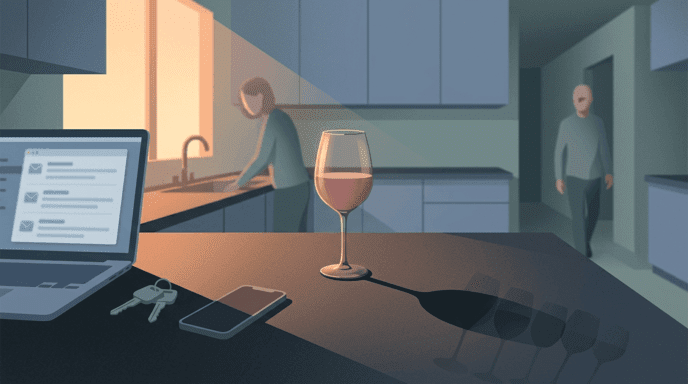
A glass of wine after work to “relax.” A few drinks to feel comfortable at parties. A nightcap before bed to help you sleep. None of these are unusual. All of them are socially encouraged.
Alcohol temporarily lowers anxiety and inhibitions, but it disrupts the brain’s normal signaling in ways that affect mood, behavior, and cognition. It depresses the central nervous system, producing a short-term sedative effect, but it also damages REM sleep quality — meaning the sleep you get after drinking is structurally worse than sober sleep.
The WHO classifies alcohol as a Group 1 carcinogen and has stated that no level of consumption is safe for health. For mental health, the question isn’t how much you drink — it’s why you’re drinking. If you rely on alcohol to move between emotional states — stressed to relaxed, anxious to social, awake to asleep — you’ve outsourced your emotional regulation.
The Vibe List’s perspective: This isn’t an argument for total abstinence. Instead of asking “How much do I drink?” try asking “What would happen if I couldn’t?” If the answer is “I’d struggle to relax” or “I’d feel uncomfortable at everything,” that’s worth paying attention to — whether or not you consider yourself someone with a drinking problem.
13. Canceling Plans Every Week Because You “Need to Recharge”
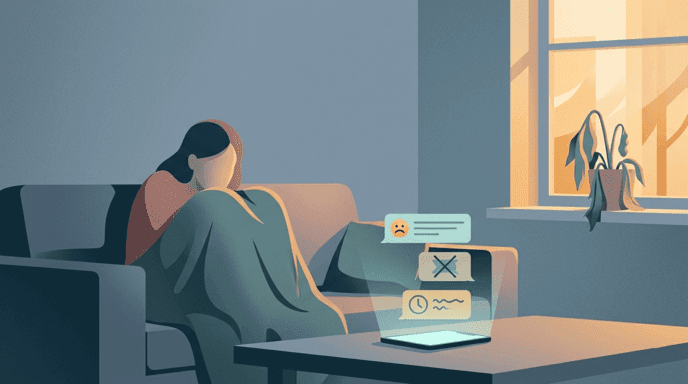
Introversion is real. Social fatigue is real. Sometimes you genuinely need to be alone, and that’s fine. But when canceling becomes the rule rather than the exception — when you feel genuine relief every time plans fall through — you may be withdrawing out of avoidance, not self-care.
Harvard Health identifies social connection as one of the strongest buffers against the stress response. The APA’s 2025 Stress in America survey found that disconnection and loneliness define the current American mental health landscape, with roughly half of respondents reporting loneliness.
The Vibe List’s perspective: Canceling plans feels like self-care in the moment because it removes an immediate energy drain. But chronic withdrawal creates a paradox: the less you socialize, the more draining socializing becomes, because you lose the practice that makes interaction feel natural. At a certain point, you’re not recharging. You’re deconditioned. Your social battery used to last an entire evening. Now it drains in an hour — not because it shrank, but because it hasn’t been used enough to hold its charge. Real recharging requires both solitude and connection — not one at the permanent expense of the other.
14. Ignoring What Your Body Is Telling You
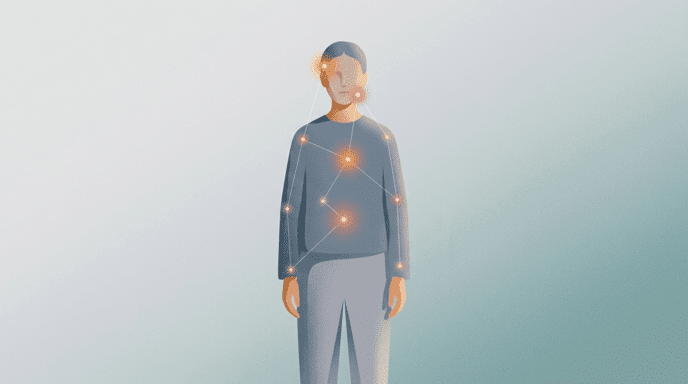
The headache you attribute to dehydration. The jaw tension you didn’t know about until your dentist pointed it out. The knot between your shoulder blades that’s been there so long it feels structural. The stomach issues you’ve written off as “that’s just how my body works.”
Baylor Scott & White Health lists the common physical signs of burnout: persistent fatigue even after rest, frequent headaches, muscle pain, digestive problems, disrupted sleep, and getting sick more often than usual. Harvard’s research on the stress response shows that chronic stress raises blood pressure, promotes arterial plaque buildup, and physically alters brain structure.
When you dismiss these symptoms as physical annoyances without considering psychological causes, you’re ignoring half the diagnostic picture.
The Vibe List’s perspective: One of the most dangerous phrases in health is “It’s just stress.” Stress isn’t “just” anything — it’s a physiological state with documented effects on nearly every organ system in your body. The knots in your neck, the clenching in your jaw, the chronic stomach discomfort — those aren’t separate problems. They’re your nervous system sending the same message through different channels. Listening to one might mean you don’t have to hear the rest.
15. Putting Off Joy Until Everything Is Perfect
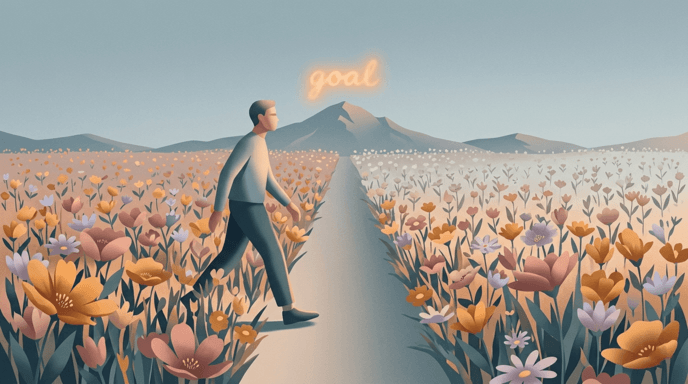
“I’ll be happy when I receive my promotion.” “I’ll relax once this project is completed.” “I’ll plan a vacation after my next deadline.” You’ve built your entire emotional life around a future state that keeps moving further away.
Psychologists call this the arrival fallacy — the belief that happiness begins once you reach a major milestone. Tal Ben-Shahar, a Harvard-trained positive psychologist who coined the term, defines it as the illusion that reaching a significant goal will produce lasting happiness. Research consistently shows that achievement does produce a temporary spike in pleasure — but it doesn’t last. People who chronically postpone enjoyment tend to have lower baseline happiness than those who build small pleasures into daily life.
Research supported by the American Psychological Association shows that chronic stress worsens when people have no access to positive emotions in the present. Joy isn’t the reward for surviving stress — it’s one of the tools that makes survival possible. Positive experiences trigger dopamine, serotonin, and oxytocin — neurochemicals that directly counteract cortisol and help restore nervous system balance.
The Vibe List’s perspective: Postponing joy might be the most socially acceptable habit on this entire list. Nobody gets criticized for working hard and playing less. But the science is clear: your brain needs positive input during stress, not after it. The walk in nature, the 20 minutes of reading, dinner with friends — these aren’t luxuries you earn through hard work. They’re maintenance your nervous system requires. Treating them as optional is like skipping oil changes and expecting your car to run fine.
15 Everyday Habits Secretly Hurting Your Mental Health; Quick Reference Guide
| # | Habit | Key Research Finding | Primary Source | The Vibe List’s Core Insight |
|---|---|---|---|---|
| 1 | Doomscrolling as a Pre-Sleep Routine | Anxiety and depressive symptoms increase after as little as 14 minutes of news consumption; doomscrolling linked to lower life satisfaction across 1,200 adults | Harvard Medical School; Applied Research in Quality of Life (2023) | The danger isn’t the content; it’s the timing. You’re conditioning your nervous system to associate bedtime with threat detection. |
| 2 | Treating Sleep Like a Negotiable Resource | The amygdala responds over 60% more reactively to negative stimuli in sleep-deprived subjects; prefrontal connectivity drops significantly | Matthew Walker / UC Berkeley (2007); National Institutes of Health | Chronic undersleeping doesn’t build resilience; it destroys your ability to tell the difference between a minor inconvenience and a genuine crisis. |
| 3 | Staying Busy to Avoid Your Own Thoughts | Experiential avoidance is a significant cross-diagnostic factor in anxiety, depression, and chronic stress | Psychiatry and Clinical Psychopharmacology (2024); Psychology Today | When unexpected silence triggers anxiety instead of boredom, your nervous system is panicking because the thing you’ve been outrunning just caught up. |
| 4 | Chronic Venting Without Reaching a Solution | Venting without reframing is uniquely predictive of longer-term anxiety; physically releasing anger increases future aggression | British Journal of Health Psychology; Ethan Kross / University of Michigan | Processing means shifting toward a new perspective. Replaying means telling the same story in the same emotional tone without anything changing. |
| 5 | Saying Yes to Everything | The fawn response links people-pleasing to trauma-driven behavior; chronic overcommitment signals self-abandonment | Psychology Today (2025); Amen Clinics | The discomfort of setting a boundary lasts minutes. The resentment from an obligation you didn’t want lasts weeks. |
| 6 | Comparing Your Life to Someone Else’s Highlight Reel | Upward social comparison leads to negative self-evaluation; social media addiction correlates with anxiety (r = 0.31), depression, and loneliness | Media Psychology (2023); Frontiers in Psychology (2025); PLOS ONE (2025) | Your brain doesn’t automatically correct for the gap between your unfiltered life and someone else’s curated performance. |
| 7 | Constant Task-Switching as a Personality Trait | Rapid task-switching wastes up to 40% of productive time; causes brain fog, irritability, and reduced working memory | APA (Rubinstein, Evans, Meyer); Hartford Hospital; BMC Psychology | Your brain is burning energy on the switching itself, not on completing anything. That exhaustion is withdrawal, not productivity. |
| 8 | Skipping Meals or Stress-Eating on Autopilot | Stress-driven cortisol spikes trigger cravings for calorie-dense foods; perceived stress is significantly related to emotional eating | University of Wisconsin; Harvard Brain Science Initiative; Journal of Nutrition Education and Behavior (2022) | Neither habit is about the food. It’s about behavior running on autopilot while your stress response overrides your body’s signals. |
| 9 | Treating Your Inner Critic Like a Life Coach | Negative self-talk degrades cognitive function; self-criticism creates a closed loop of shame, reduced confidence, and worse outcomes | Scientific Reports (2021); Psychology Today; BMC Psychology | The danger is hearing your own voice so often it stops sounding like an opinion and starts sounding like a fact. |
| 10 | Perfectionism Disguised as High Standards | Maladaptive perfectionism strongly predicts anxiety, depressive symptoms, and rumination; correlates with burnout across work, school, and sports | Journal of Experimental Psychology (2023); Science Daily; Time | Perfectionism is anxiety wearing a professional suit. It keeps success from ever feeling like enough. |
| 11 | Sitting All Day | Prolonged sedentary behavior increases depressive risk; exercisers report 1.5 fewer poor mental health days per month (1.2 million Americans studied) | Scientific Reports (2024); BMJ (2024); The Lancet Psychiatry | A 45-minute run can’t undo 13 hours in a chair. The point is breaking the sedentary default your nervous system reads as stagnation. |
| 12 | Using Alcohol to Relax and Socialize | Alcohol is a WHO Group 1 carcinogen; no level of consumption is safe; alcohol damages REM sleep quality | World Health Organization; NIAAA | The question isn’t how much you drink. It’s what would happen if you couldn’t. |
| 13 | Canceling Plans Every Week to “Recharge” | Social connection is one of the strongest stress buffers; roughly 50% of Americans report loneliness | Harvard Health; APA Stress in America (2025) | Your social battery didn’t shrink. It hasn’t been used enough to hold its charge. Real recharging requires both solitude and connection. |
| 14 | Ignoring What Your Body Is Telling You | Chronic stress raises blood pressure, promotes arterial plaque, and physically alters brain structure; burnout manifests as fatigue, headaches, and digestive issues | Baylor Scott & White Health; Harvard Stress Response Research | The knots, the clenching, the chronic discomfort aren’t separate problems. They’re your nervous system sending the same message through different channels. |
| 15 | Putting Off Joy Until Everything Is Perfect | The arrival fallacy: achievement produces a temporary pleasure spike that doesn’t last; chronic postponement of joy lowers baseline happiness | Tal Ben-Shahar (Harvard); American Psychological Association | Your brain needs positive input during stress, not after it. Joy isn’t the reward for surviving; it’s the tool that makes survival possible. |
Frequently Asked Questions
Are there signs which indicate whether my daily routine is affecting my mental wellness?
A habit becomes problematic based on its function — whether it’s helping or hurting — not just its frequency. If you notice a routine that consistently leaves you with less energy, more anxiety, or deeper isolation instead of relief, it’s worth talking to a licensed mental health professional about it.
Will my daily routines lead me to develop clinical anxiety or depression?
No single bad habit will cause a clinical disorder on its own. But research shows that multiple unhealthy habits compound your chronic stress load, increasing the likelihood of developing anxiety or depression depending on your genetic and environmental risk factors. If symptoms persist, consult a licensed mental health professional.
What is the primary distinction between healthy venting and maladaptive rumination?
Healthy venting helps you process an event — finding meaning, gaining insight, and deciding what to do next. Rumination means replaying an emotionally charged experience without moving toward resolution. Dr. Ethan Kross recommends asking yourself, “How should I think about this differently?” as the bridge from venting to cognitive reframing.
Am I able to make changes to all of my identified habits simultaneously?
No. Trying to change everything at once is likely to create the exact overwhelm your habits are already producing. Research suggests the most effective approach is tackling one or two habits at a time. Give each habit 30 to 66 days to stabilize before adding another. The goal is lasting adjustment, not a dramatic overhaul that collapses within weeks.
Do I need to see a mental health professional regardless of whether I have a diagnosed mental health condition?
Yes. Therapy is often associated with diagnosed mental illness, but many of the approaches referenced above — Cognitive Behavioral Therapy, Acceptance and Commitment Therapy — were designed to identify and change maladaptive thought patterns, emotions, and behaviors common in people experiencing elevated stress and anxiety. The World Health Organization identifies psychological interventions as fundamental treatment approaches. These interventions teach new ways of thinking about, coping with, and relating to anxiety.
Is there a correlation between physical activity and mental well-being?
A 2024 systematic review in the BMJ confirmed that exercise is an effective treatment for clinical depression. Effective modalities include walking, jogging, yoga, and strength training. A large-scale study of over 1.2 million Americans in The Lancet Psychiatry adds further weight. People who exercised regularly reported 1.5 fewer days of poor mental health per month compared to non-exercisers.