



35.5 million square kilometers under one flag. 24 million square kilometers of contiguous steppe ruled from a single tent. A civil code drafted in 1804 still governing courtrooms across four continents. An empire that turned a desert trade language into the mother tongue of 400 million people. A Tamil king’s grandson building the largest religious structure on Earth in a Cambodian jungle. 500 million native Spanish speakers tracing their vowels back to a handful of conquistadors. None of these empires lasted forever; but the borders they drew, the laws they wrote, and the languages they imposed never left.
Thirty-five and a half million square kilometers under a single flag. Twenty-four million square kilometers of steppe conquered from a single tent. A civil code written in 1804 still governing courtrooms across four continents. An empire that turned a desert trade language into the mother tongue of over three hundred million. A Khmer king building the biggest temple in the world in a Cambodian jungle. Five hundred million Spanish speakers whose vowels traced back to a handful of conquistadors. None of these empires lasted forever; but the borders they drew, the languages they imposed, and the laws they left behind never fully disappeared.
Every border on a modern map is an argument somebody won a long time ago. The language you are reading right now exists in its present form because one empire spread it by sword and another sent it by ship. The laws that govern your property, marriage, and right to due process trace back not only to parliaments and constitutions but to emperors whose influence was still taking shape centuries later.
This is not another list of the world’s biggest empires, though size matters here; just not as much as other variables also matter. What we wanted to know is which empires left the deepest imprint on the present; on the languages spoken by billions, the legal codes enforced in more than a hundred countries, the road networks and trade routes still in use, and the cultural and religious landscapes that fill most people’s days.
Some of these will be obvious. Rome and Britain need no introduction. Others might surprise you. The Khmer Empire, for instance, engineered a hydraulic system across 1,500 sq km that could support a million-plus people; oh, and the world’s largest religious monument while we’re at it. The Mali Empire produced a ruler whose extravagant spending on a single pilgrimage crashed the price of gold in Egypt for over a decade. The Akkadian Empire, the oldest entry on this list, invented empire itself.
Here are fifteen empires, ranked from bottom to top, not by the swathe of land that they grabbed, but how much of that land’s future they shaped.
How We Ranked These Empires
Classic histories of empire ranking often opt for size of territory or number of conquests. We chose a more layered approach than a single-axis ranking. Instead our ranking weighs five criteria roughly equally.
Linguistic legacy: how many people today speak a language that the empire spread or standardized. The Spanish Empire scores extremely well here; Spanish is an official language in 20 sovereign nations and has more than 500 million native speakers. The Roman Empire scores through its descendants; Spanish, Portuguese, French, Italian and Romanian account for more than 900 million native speakers.
Legal and institutional influence measures where legal codes, systems, and administrative practices were adopted. The French Empire scores highly because the Napoleonic Code served as a model for civil-law systems in roughly 120 countries. The Byzantine Empire scores for Justinian’s Corpus Juris Civilis, the legal foundation for the vast majority of continental Europe’s modern civil law.
Infrastructure and trade networks scores roads, ports, postal networks, and trade corridors that outlived the empire that built them. The Royal Road of the Achaemenid Empire and the Yam relay net of the Mongol Empire both score high.
Cultural and religious diffusion tracks the spread of religion, art, knowledge, and culture. The Umayyad Caliphate is the most obvious score here, for carrying Islam, the Arabic language, and a Golden Age of scholarship across three continents.
Territorial scale and population governed is the baseline; not the whole picture, but part of it. An empire which ruled 44% of the world’s population (the Achaemenid Empire at its height, c. 480 BCE) or 24% of the planet’s land surface (the British Empire in 1920) surely deserves a place in any discussion of influence.
One of the challenges of ranking empires by influence is the simple fact that they’re messy. The borders are messy, the gaps are messy, the story is messy; and their legacies frequently blend innovation and exchange with violence and exploitation. We’ve tried to be transparent about what we measured and how, and what principles guided us.
15. Akkadian Empire (c. 2334–2154 BCE)
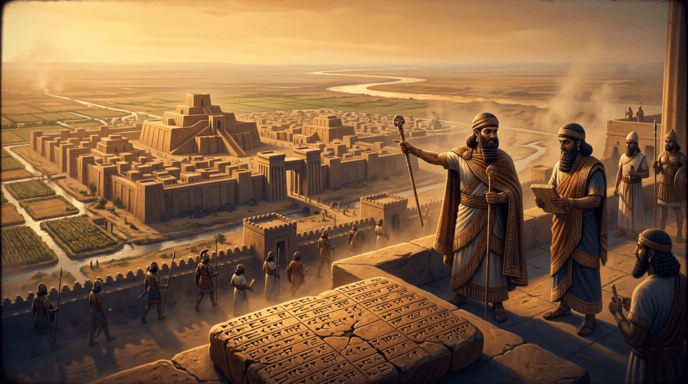
The Akkadian Empire was the first empire. Before the Akkadian Empire, there were city-states, kingdoms, and areas controlled by force. There wasn’t yet a real empire; a centralized authority governing multiple peoples, languages, and regions.
Sargon of Akkad changed that when he united Sumerian city-states under Akkadian control around 2334 B.C. He appointed governors to manage the provinces he created by conquest, standardized weights and measurements, and maintained a standing army. While none of these things were new individually, combining them into a coherent system of governance was. It became a pattern.
Though the Akkadian Empire lasted fewer than two centuries, the administrative structures it developed; centralized taxation, appointed regional governors, professional armies, and a common bureaucratic language; were inherited by subsequent Mesopotamian states: the Third Dynasty of Ur, Babylon, Assyria, and finally Persia. Sargon didn’t just establish the first empire. He established the prototype.
14. Macedonian Empire (336–323 BCE)
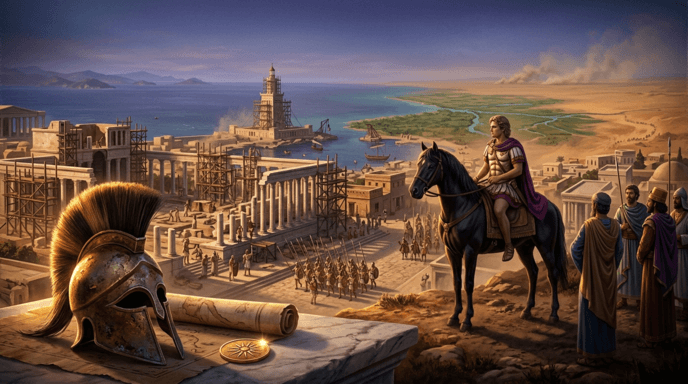
Alexander III of Macedon conquered a territory stretching from Greece to northwest India in fewer than 13 years. When he died in Babylon in 323 BCE at the age of 32, he had built the largest empire any single conqueror had ever created; approximately 5.2 million km². The sheer military accomplishment is impressive, but his cultural legacy is what placed him here.
Alexander’s conquests began the Hellenistic Period, roughly 300 years during which Greek language, art, philosophy, and science spread throughout the Eastern Mediterranean, the Middle East, and Central Asia. In addition to founding more than 20 cities called Alexandria; the most famous being the one in Egypt, founded on April 7, 331 BCE, which housed the Great Library and remained the intellectual hub of the ancient Mediterranean for centuries; Alexander made Greek the lingua franca of scholarship and diplomacy across much of the known world. Because of that linguistic dominance, the New Testament was written in Greek, not Aramaic or Hebrew; that affected how Christianity spread throughout Western civilization. During the Hellenistic Period, Greek, Egyptian, Persian, and Indian cultures merged to produce breakthroughs in mathematics, astronomy, medicine, and engineering that laid the groundwork for Western scientific thinking.
When Alexander died in Babylon shortly after establishing his empire, it broke apart quickly among his generals into successor kingdoms. However, the cultural momentum he set in motion lasted another 300 years and in some respects continued even longer.
13. Achaemenid (Persian) Empire (c. 550–330 BCE)
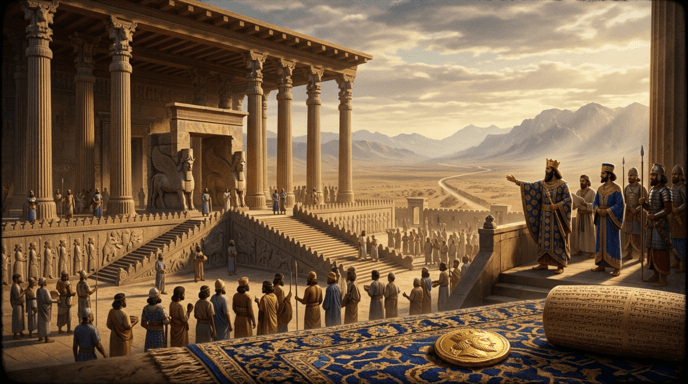
At its maximum territorial extent around 480 BCE, the Achaemenid Empire ruled an estimated 49.4 million individuals out of a total global population of approximately 112.4 million; roughly 44% of all humans alive. No empire before or since has ruled a greater percentage of humanity.
Cyrus the Great founded the empire in 550 BCE with an approach to governance that, for the ancient world, was surprisingly inclusive. Cyrus permitted the peoples he conquered to retain their native languages, religions, and customs. The Cyrus Cylinder; a clay artifact from 539 BCE found in the ruins of Babylon; details Cyrus’ plan to restore temples and allow displaced peoples to return home. Scholars debate whether the modern notion of ‘human rights’ adequately captures Cyrus’ original intentions.
The Achaemenids built extensive infrastructure. They built a royal highway roughly 2,700 km long, stretching from Sardis (modern-day Turkey) to Susa (modern-day Iran), enabling mounted messengers to carry imperial messages across the empire in roughly nine days. On foot, the same journey would have taken roughly 90 days.
Herodotus wrote in Book VIII, section 98 of his Histories regarding those messengers: “Neither snow nor rain nor heat nor gloom of night stays these couriers from the swift completion of their appointed rounds.” That paraphrase was later adopted as the unofficial motto of the USPS when it was inscribed above the entrance to the General Post Office (now known as the James Farley Post Office) in New York City during the building’s construction, completed in 1914.
The Achaemenid system of administering provinces through satrapies; semi-autonomous regional governments run by governors appointed by the crown, responsible for collecting taxes, maintaining order, and reporting to the central authority; influenced the administrative models of later empires, including the Hellenistic, Roman, and Ottoman. One of the Achaemenid Empire’s key contributions was the concept that a vast, multilingual territory could be held together through bureaucracy rather than constant military force.
12. Han Dynasty (206 BCE–220 CE)
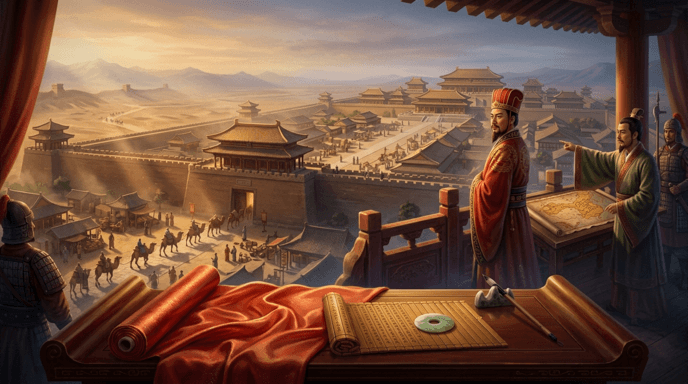
The Han Dynasty governed China for over four centuries, and its impact on Chinese history is so profound that the majority ethnic group in China; the Han Chinese, who comprise roughly 92 percent of China’s population; still bear its name. But that barely begins to capture the Han Dynasty’s influence.
Around 105 CE, a Han court official named Cai Lun developed methods for producing paper from tree bark, hemp waste, old rags, and fishnets. Cruder forms of paper had existed before Cai Lun’s innovation. Yet his method produced paper that was cheap, lightweight, and durable enough for widespread use in government and scholarship. The papermaking technique spread westward along the Silk Road, reaching the Islamic world by the 8th century and Europe by the 12th. With little exaggeration, nearly every written document and printed book produced in the past two thousand years owes a debt to Cai Lun’s innovation.
The Han also opened and maintained the trade routes later known as the Silk Road, connecting China with Central Asia, the Middle East, and ultimately the Roman Empire. Silk, spices, and lacquerwork traveled westward; glassware, gold, and grapes traveled eastward; and techniques in metallurgy and glassmaking crossed borders in both directions. These exchanges went far beyond commerce; religion, language, technology, and disease followed the same paths. Buddhism arrived in China along Silk Road routes during the Han era and shaped East Asian civilization for over two thousand years.
The Han implemented a merit-based civil service system, using competitive exams instead of relying primarily on birth or military accomplishment to appoint officials. Although this system evolved over the following centuries, it remains one of the longest-lasting features of Chinese governance and eventually inspired civil service reforms in Europe, particularly in late nineteenth-century Britain.
11. Roman Empire (27 BCE–476 CE / 1453 CE)
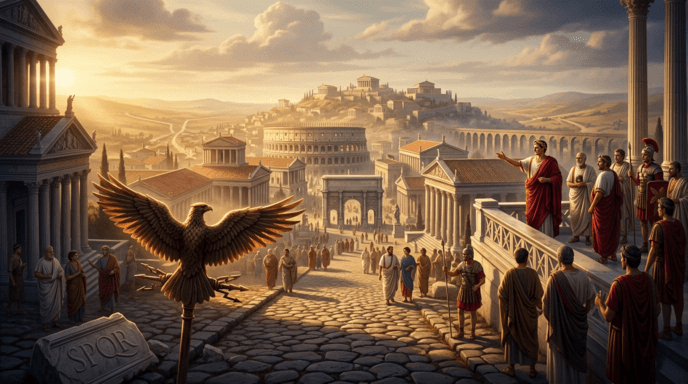
A useful way to grasp the Roman Empire’s influence is through its roads. Romans built roughly 80,000 km of stone-paved roads within a network exceeding 400,000 km in total; some of those roads are still in use. Since many of those roads are in modern-day Europe, modern routes frequently follow and are built directly on Roman foundations. Beyond the physical remnants, the Empire reshaped modern society in ways that persist today. At its peak in the second century CE, the Roman Empire was home to between 55 and 70 million people; roughly 20 to 30 percent of the world’s population at the time.
The Roman Empire was geographically expansive. It encompassed all of Britain, the entirety of France, the Iberian Peninsula, Italy, the Balkans, Greece, Turkey, the Levant (modern-day Lebanon, Syria, Israel, and Jordan), Egypt, and the North African coast including Libya, Tunisia, Algeria, and Morocco; its northern frontier extended to the Rhine and Danube rivers, incorporating parts of modern Germany, Austria, Switzerland, Belgium, and the Netherlands. However, the Romans’ most significant legacies were not geographical. Rather, they were linguistic (Latin), legal (Roman law), and administrative.
Although Latin is no longer spoken as a first language by anyone, it lives on in every Romance language (Spanish, Portuguese, French, Italian, and Romanian); together, these languages have over 900 million native speakers. All of these languages descend from the military and administrative Latin spoken across the empire. Additionally, roughly 60 percent of English words come from Latin or from Latin-derived Romance languages.
Many elements of Roman law continue to shape modern legal systems; particularly the concepts of public versus private law, legal personhood, and the right to a defense. Although it took centuries for Roman law to be reintroduced to medieval Europe through Justinian’s Corpus Juris Civilis and canon law, the Roman roots of these institutions remain uncontested.
Similarly, Roman engineering innovations; aqueducts, hydraulic concrete, the arch, the dome, the hypocaust; have influenced European architecture and civil engineering for thousands of years. The Pantheon in Rome; completed around 126 CE; is still the largest unreinforced concrete dome in existence, a record it has held for roughly 1,900 years.
If you speak a Romance language, live under a civil law system, travel a road originally built by the Romans, or believe yourself innocent until proven guilty; Rome is still in your operating system. To read further about how ancient civilizations continue to shape daily life and customs, see our article about Wild Beauty Trends of the Ancient World.
10. Byzantine Empire (330–1453 CE)
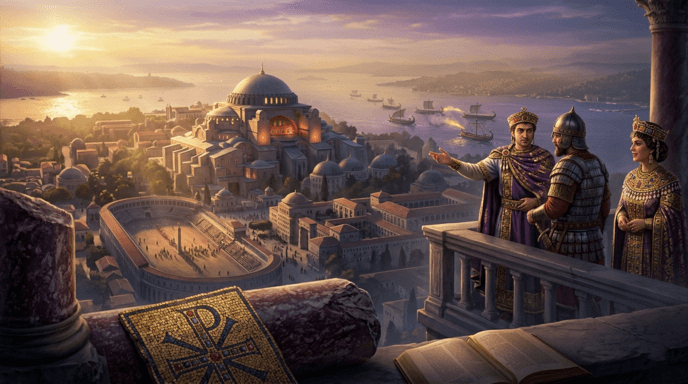
The Byzantine Empire represents Rome’s second act; and demonstrates how sequels sometimes surpass originals. While the Western Roman Empire fell in 476 CE, the eastern half continued for nearly 1,000 additional years as a living continuation of Rome; specifically from its capital, Constantinople (modern Istanbul).
During this period; while other parts of the world evolved and developed new systems of government; the Byzantine Empire preserved the classical world’s scientific heritage, legal codes, and literature. The single most important Byzantine legacy is Justinian’s Corpus Juris Civilis (compiled between 529 and 534 CE); a codification of Roman law that became the foundation for civil-law systems throughout continental Europe; as well as in much of South America, Africa, and parts of Asia. If you live in a country whose legal system is based on codified statutes instead of case-law precedent; you are living in Justinian’s shadow.
The Byzantine missionaries Cyril and Methodius developed the Glagolitic script in the ninth century to translate Christian texts into Slavic languages. A later group of scholars; primarily Clement of Ohrid; working at the Preslav Literary School in the First Bulgarian Empire developed the Cyrillic alphabet based on Greek letter forms. Today Cyrillic-based alphabets are used by roughly 250 million people in Russia, Ukraine, Serbia, Montenegro, North Macedonia, plus parts of Mongolia and Central Asia.
Finally, Constantinople; Constantine’s new capital; served as a crucial link between Europe and Asia for hundreds of years. Due largely to its strategic location, Constantinople became the wealthiest city in the medieval world; a conduit through which classical Greek and Roman writings flowed into Western Europe during the Renaissance, and through which Arab advances in science and mathematics traveled back into Europe.
9. Umayyad Caliphate (661–750 CE)
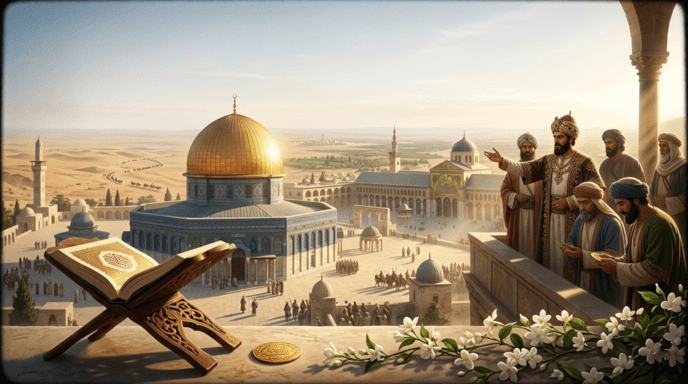
Established in Damascus, the Umayyad Caliphate was one of the fastest-expanding territorial empires in history. From Muhammad’s death in 632 CE to the end of Umayyad rule in 750 CE; roughly a century passed. By that time, the Umayyad Caliphate stretched from the Iberian Peninsula to the Indus River Valley; roughly 11.1 million square kilometers in total. The estimated population of this enormous empire was approximately 62 million; roughly 29% of the global population.
To govern such a broad expanse, Arabic emerged as both the official administrative and scholarly language across three continents. The standardization of Arabic enabled the Islamic Golden Age (roughly the eighth through thirteenth centuries), during which scholars working in Arabic made foundational contributions to algebra, optics, astronomy, medicine, and philosophy. The word ‘algorithm,’ for instance, derives from the Latinized name of the Persian mathematician al-Khwarizmi; who wrote within an Arabic scholarly tradition. Similarly, ‘algebra’ is named after his treatise, al-Kitab al-Mukhtasar fi Hisab al-Jabr wal-Muqabala.
Umayyad expansion also established architectural and artistic traditions; pointed arches, geometric tilework, calligraphy, and ornamentation; that spread across the Islamic world and influenced European Gothic architecture through contact in Spain, Sicily, and the Crusader states.
Most importantly, Umayyad expansion brought Islam into regions where it remains the predominant faith today: North Africa, the Levant, Mesopotamia, Persia, and the Iberian Peninsula, where Muslim rule persisted in various forms until the fall of the Emirate of Granada in 1492. The borders established by Umayyad administration continue to define cultural, linguistic, and religious landscapes in these regions today.
To learn about how trade routes shaped food cultures across the globe, see our listing of Most Popular International Cuisines.
8. Khmer Empire (802–1431 CE)
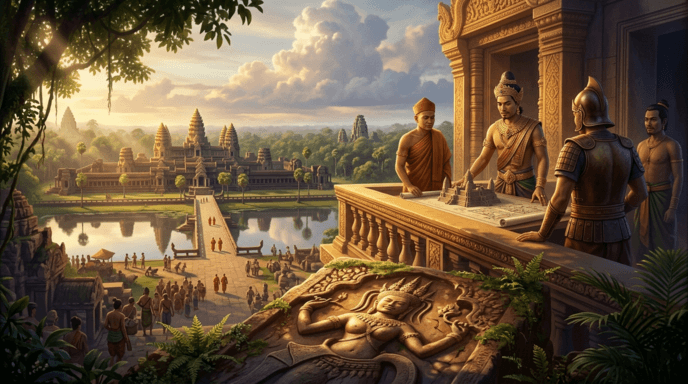
Readers scanning lists of history’s greatest empires rarely expect to find the Khmer Empire of Cambodia. It ranks high on this list for several reasons.
One reason is how rarely the Khmer appear in Western-focused historical rankings. Not because the empire lacks significance, but because its absence exposes a bias in how those rankings are built.
Built during the reign of King Suryavarman II (1113–1150 CE), Angkor Wat is recognized by the Guinness Book of World Records as the largest religious monument on Earth. Originally built to honor the Hindu god Vishnu, it later became a Buddhist site. In sheer scale, Angkor Wat surpasses Vatican City.
However, Angkor Wat was only one part of a larger urban and imperial project known as the Greater Angkor complex. At its peak in the twelfth through fifteenth centuries, the Greater Angkor complex housed between 750,000 and one million people; making it the largest pre-industrial city on Earth.
The Greater Angkor complex achieved such density largely because of a highly advanced hydraulic system engineered by the Khmer. The system consisted of barays; massive rectangular reservoirs measuring up to 800 feet wide and 2,400 feet long; linked by canals and dikes that captured monsoon floodwaters and distributed them through the dry season, allowing multiple rice harvests per year in a climate where rainfall is seasonal. The West Baray alone measured 8 km by 2.3 km. No other pre-industrial civilization engineered tropical water management on a scale matching what the Khmer achieved. Eventually, a combination of climatic shifts and strain on infrastructure led to the decline of the Khmer Empire and the abandonment of Angkor around 1431 CE.
7. Mongol Empire (1206–1368 CE)
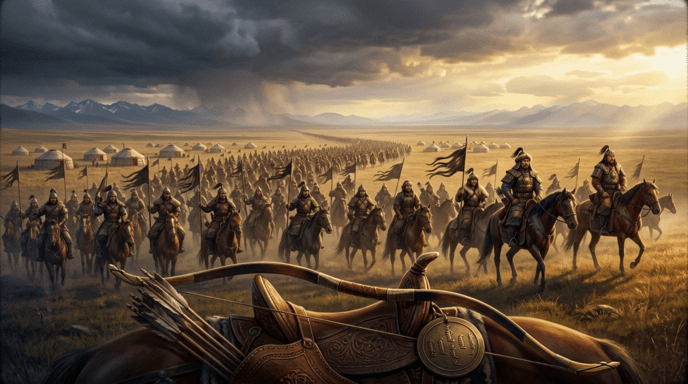
The Mongol Empire is the largest contiguous land empire to date; covering 24 million square kilometers at its peak, with a presence extending from Korea to Hungary, Siberia to the Persian Gulf. The dates listed above represent the core Mongol Empire through the fall of the Yuan Dynasty in China, although successor khanates maintained a presence in various forms through the fifteenth and into the sixteenth century.
The historical narrative surrounding the Mongols typically emphasizes destruction: the sacking of Baghdad (1258), the ravaging of Central Asian cities, and a temporary global reduction in carbon emissions caused by massive population loss (documented by researchers at the Carnegie Institution). While that narrative accurately describes the destruction the Mongols wrought, it fails to recognize the connective infrastructure they built across the devastated landscape.
The Yam postal relay system was a network of relay stations spaced roughly 40 to 65 km apart throughout the entire empire. Couriers on horseback could travel 200 to 300 km per day by switching horses at each station, relaying messages, goods, diplomats, and intelligence across previously unconnected territory.
The Mongols also implemented a policy of religious tolerance throughout their territories, protected trade caravans along the Silk Road during the Pax Mongolica, and introduced the paiza; a metal passport guaranteeing safe passage; decades before any European equivalent. Marco Polo traveled using a paiza; so did diplomats, missionaries, and merchants from dozens of cultures and faiths.
The Mongol Empire’s role as a conduit for ideas, technology, and disease (the Black Death among them) makes it one of history’s great connectors; for good and ill alike.
6. Mali Empire (c. 1235–c. 1600 CE)
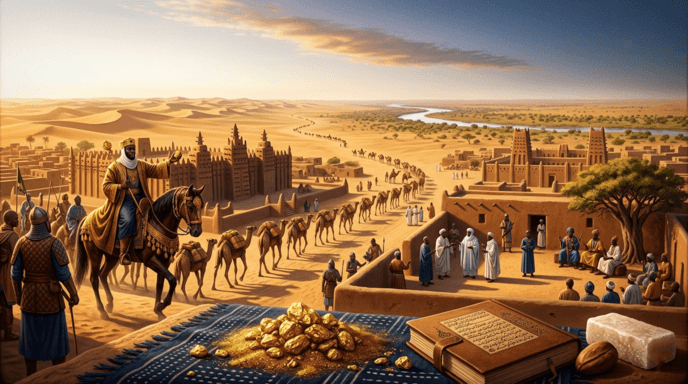
The empire at its peak (fourteenth century) controlled the gold and salt trade throughout West Africa; two commodities that functioned much like oil and semiconductors do today. The wealth accumulated by Mali’s ruler Mansa Musa (who reigned c. 1312–1337) has been estimated at roughly $400 billion in modern terms, though this figure remains speculative.
In 1324, Mansa Musa began his pilgrimage (hajj) to Mecca, traveling with a reported caravan of 60,000 people and camels bearing vast amounts of gold. The generosity he displayed during his stopover in Cairo was so extreme that it crushed the gold market in Egypt. As noted by the historian al-Maqrizi (1364–1442), the price effect was so pronounced that the market remained depressed for approximately twelve years post Mansa Musa’s visit.
(There is evidence that al-Maqrizi may have exaggerated the severity of the price drop, although many historians cite the incident as a prime example of how personal wealth can affect a national economy.)
Mansa Musa’s patronage transformed Timbuktu into a major center of Islamic scholarship. The University of Sankore housed an extensive manuscript collection covering theology, law, astronomy, and medicine, attracting scholars from across the Islamic world and producing a literary and intellectual tradition that continued long after the empire’s decline.
Trade networks linking sub-Saharan Africa with the Mediterranean, Europe, and the Middle East enabled Mali to export gold. That gold funded Venetian and Genoese commerce, was minted into Florentine florins, and circulated through economies that had no idea where it originated.
To read more about how personal wealth shapes fame, see our article Celebrity Billionaires Who Turned Fame Into Business Empires.
5. Ottoman Empire (c. 1299–1922 CE)
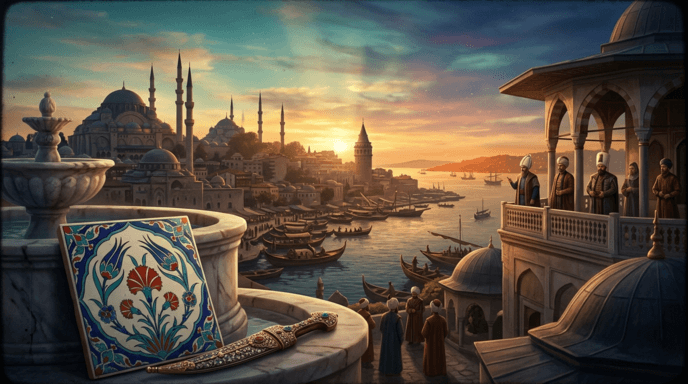
The Ottoman Empire was founded by Osman Bey in the late thirteenth century. The Ottomans ruled what is now Turkey and expanded throughout southeast Europe, western Asia, and north Africa. In 1683 they reached the apex of their territorial extent.
They ruled an estimated 35 million people across roughly 5.2 million square kilometers. One of the most distinctive features of the Ottomans’ administrative structure was the millet system. This was a method of organizing non-Muslim communities; Greek Orthodox, Armenian, and Jewish, among others. These non-Muslim communities had semi-autonomous status, with their own religious leaders, courts, and educational institutions.
Although the millet system was not equal by modern standards (non-Muslims paid additional taxes and had limited legal rights), it was a practical way of administering religious diversity within a single state. Many of the principles behind the millet system are echoed in modern practices of minority rights and religious pluralism.
Istanbul itself; straddling Europe and Asia and dominating access to the Bosphorus; was one of the most strategically located capitals in world history. The Ottomans’ dominance of the Eastern Mediterranean and key overland routes to Asia gave European powers a strong incentive to find sea routes to India and East Asia, helping to launch the Age of Exploration and everything that followed.
The division of Ottoman lands following World War I produced many of the contemporary national borders in the Middle East, Balkans, and northern Africa (many of which remain sources of political contention today).
4. Qing Dynasty (1644–1912 CE)
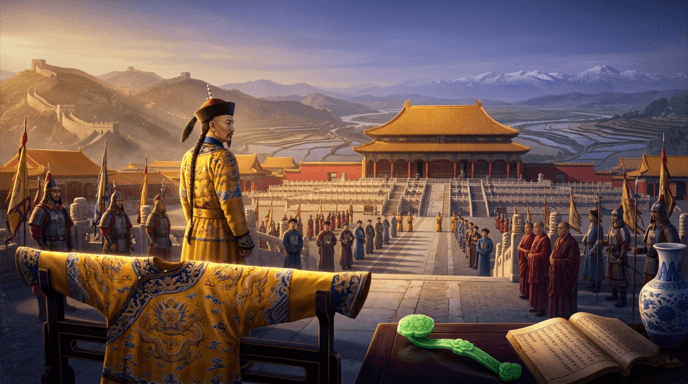
The Qing Dynasty was the last imperial dynasty in Chinese history, and the largest by land area. At its peak around 1790, it controlled approximately 14.7 million square kilometers. At that time, it was the fourth-largest empire in recorded history by land area and the most populous nation on earth.
The Qing incorporated Tibet, Xinjiang, Taiwan, and Mongolia (regions currently part of the People’s Republic of China) into its domain. In essence, the boundaries of modern China are largely those of the Qing Dynasty.
In addition to expanding China’s territory, the Qing oversaw an enormous increase in population; from approximately 150 million to almost 450 million inhabitants; due largely to the introduction of New World crops (such as maize, sweet potatoes, and peanuts) through the Columbian Exchange. This growth made China the most populous country on earth for centuries.
The Qing era also produced remarkable achievements in art and literature. Some of the most important works of Chinese literature emerged during this era; Dream of the Red Chamber (also known as The Story of the Stone), generally regarded as China’s greatest novel. The Kangxi Dictionary (completed in 1716) standardized Chinese characters and remains a reference work today. Additionally, the Qianlong Emperor commissioned the Siku Quanshu; the largest collection of books in imperial Chinese history.
The Qing Dynasty’s fall in 1912 plunged China into decades of turmoil; the Republic of China, warlordism, Japanese invasion, civil war, and eventually the founding of the People’s Republic; yet the geographic and demographic framework the Qing established remains foundational to modern China.
3. Spanish Empire (1492–1976 CE)
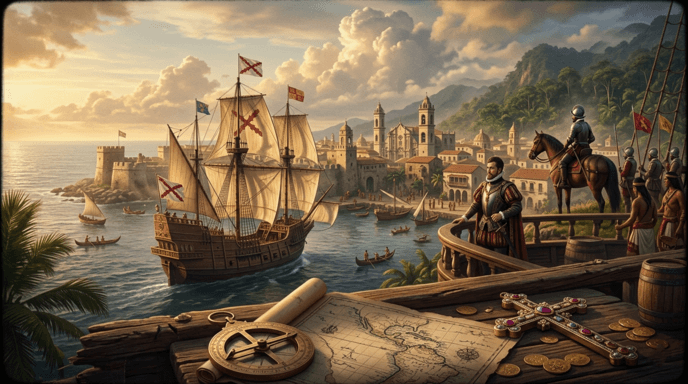
At its peak, the Spanish Empire controlled an estimated 13.7 million square kilometers of land across four continents: the Americas, Europe, Africa, and the Asia-Pacific. The last Spanish colonial territory was relinquished on February 26, 1976, when Spain withdrew from Western Sahara, transferring administration to Morocco and Mauritania. The territory’s status remains internationally disputed. Spain had controlled Western Sahara since 1884, roughly 92 years.
The clearest measure of the Spanish Empire’s legacy is its impact on language. Spanish is an official language in twenty sovereign nations (twenty-one if Puerto Rico is included), with over five hundred million native speakers; the second-highest native-speaker count of any language on Earth, behind only Mandarin Chinese. From Mexico City to Buenos Aires, from Madrid to Manila’s historic Spanish district, the language endures as a product of colonial government, missionary work, and settlement.
The transfer of plants, animals, cultures, technology, and disease between the Old and New Worlds following Christopher Columbus’s voyage in 1492; known as the Columbian Exchange; was driven predominantly by the Spanish Empire. The Columbian Exchange altered global agriculture, demography, and ecosystems more profoundly than any single event in the previous millennium. Potatoes, tomatoes, corn, and cocoa moved from the Americas to Eurasia and Africa, while wheat, horses, cattle, smallpox, and measles moved in the opposite direction.
Indigenous populations collapsed; by an estimated ninety percent in some areas within a century of initial contact; mainly due to epidemics. This represents one of the biggest declines in population in human history.
Spanish Catholicism; brought to South America, the Philippines, and Africa by Spanish missionaries; became a state-imposed religion across most of these colonies. Today, more Catholics live in countries formerly ruled by Spain or Portugal than anywhere else.
The majority of Latin American countries use a combination of colonial laws developed by Spain (and Portugal), customs and laws developed by local indigenous peoples, and subsequent civil codes developed in France and Italy during Napoleon Bonaparte’s era; resulting in complex legal systems that affect property, family law, and commercial transactions today.
2. French Empire / Napoleonic Empire (1534–1980 CE)
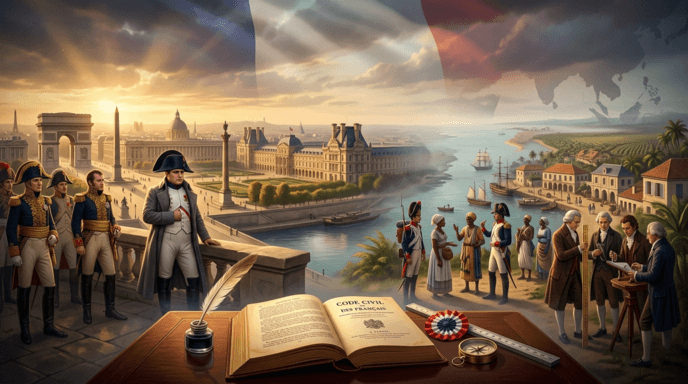
At its maximum territorial expanse, French colonies controlled nearly as much territory; about 13.5 million km² and an estimated 112 million people; as Spanish colonies at their peak. However, instead of leaving a physical legacy similar to that left by Spain, France bequeathed something less tangible yet equally enduring; documents.
Specifically, it bequeathed the Napoleonic Civil Code (Code civil des Français); completed in 1804; the first modern civil code and a systematic compilation of law designed to replace the patchwork of feudal, religious, and local customs that previously governed French society. The Code declared that individuals were entitled to equal treatment under law, recognized the right to private property, placed civil matters under secular authority, and gave statutory law precedence over judicial discretion.
Like other French innovations (the metric system, for one), this code spread wherever French arms and influence reached: across Europe during Napoleon’s conquests, across Africa and Southeast Asia during colonization, and long after France lost military control of its colonies. Estimates vary depending on the method used, but French law has influenced civil-law systems in roughly 120 countries; from Belgium, the Netherlands, and Japan to Latin America, francophone Africa, and Louisiana (the one U.S. state with a civil-law tradition).
France also introduced the concept of a formal declaration of rights, exemplified by the Declaration of the Rights of Man and of the Citizen (1789); a precursor to similar documents worldwide. It provided models for republican governance, promoted secular government traditions that inspired revolutions from Haiti to Vietnam, and contributed to the founding of international organizations including the United Nations, the Olympics, and the Red Cross. French remains an official language in 29 countries and serves as a working language for the UN, EU, and NATO.
France’s extensive use of its language as a tool of colonial expansion is why French is now an official language in 29 countries and a working language for numerous international organizations. The organization promoting Francophone nations; countries where French is either an official language or widely used in government, banking, and business; is the Organisation internationale de la Francophonie. Its 88 member states and governments are a direct product of French imperialism.
To learn more about how French colonialism shaped international dessert traditions, see our article: Best Desserts on Earth.
1. British Empire (1583–1997 CE)
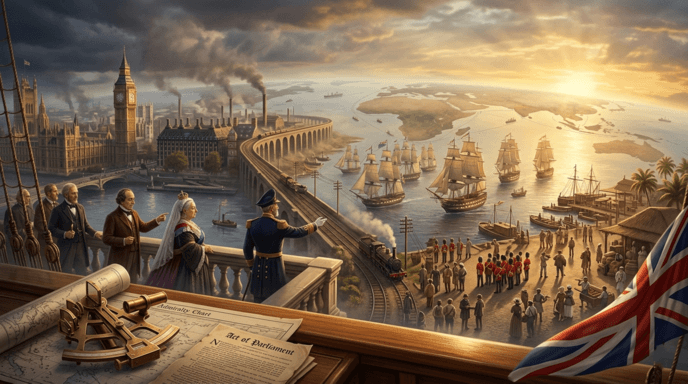
At its peak around 1920, the British Empire controlled approximately twenty-four percent of Earth’s land area; roughly 35.5 million square kilometers; and governed approximately twenty-three percent of the world’s population, placing it at or near the top by both measures.
However, it is not merely because of sheer size that this empire tops our list. Rather, it is because so many of its systems continue to function today (albeit often modified) across its former territories.
Approximately 1.5 billion people speak English worldwide; as native speakers, second-language speakers, or foreign-language learners; making it the most widely spoken language on Earth. It is also the dominant language of international commerce, science, aviation, diplomacy, and internet communication. Much of this English-language dominance stems directly from British colonialism, reinforced afterward by American cultural and economic influence.
Over eighty jurisdictions around the world use common law; a legal system based on court precedents rather than codified legislation; including the United States, Canada, Australia, India, Nigeria, Kenya, Hong Kong, and Singapore. Similarly, many constitutions in former colonies are modeled on the British Westminster system.
The British Empire built much of the basic infrastructure supporting global trade; ports, shipping lanes, telegraphs, railroads, and financial institutions. For example, London remains one of the world’s two major financial centers; a role built on commercial networks created by British colonialism. Before World War II, Britain’s currency (the pound sterling) served as the global reserve currency; it was replaced by the U.S. dollar after the war; a shift that itself reflected the scale of British-built financial infrastructure.
British imperial legacy extends beyond purely economic and governmental realms. Sports represent another underappreciated aspect of British imperial legacy. British colonial networks spread sports including football (soccer), cricket, rugby, tennis, golf, and field hockey; each codified in Britain and carried worldwide through colonial activity. Two examples are the FIFA World Cup and the ICC Cricket World Cup; both competitions built around games whose rules were written in Britain and spread through the British Empire.
The legacy of British imperialism is defined as much by its negatives; exploitation, extraction, famine, displacement, and violence; as by its positives in law, language, and institutions. Examples include the Bengal Famine (1943), the Jallianwala Bagh Massacre (1919), the Mau Mau detention camps in Kenya, and the transatlantic slave trade. Any accurate account of British imperial legacy must recognize both. The consequences of colonialism; economic inequality, ethnic division, arbitrarily drawn borders, and ongoing conflicts over sovereignty; continue to be felt today and contribute as much to the present-day legacy as the English language and common-law system.
The transfer of Hong Kong to China on July 1, 1997; the last major remnant of British sovereignty; marked the symbolic end of the largest and most far-reaching empire in history.
For a look at how imperial-era decisions still shape the countries travelers overlook today, see our guide to the most criminally overlooked destinations on Earth.
Highlights: What We Learned
The oldest empire on this list: The Akkadian Empire (c. 2334 B.C.) — it created the idea of an empire.
Largest geographic footprint: The British Empire (~35.5 million km², ~24% of Earth’s land).
Highest percentage of global population: The Achaemenid Empire (~44% of all humans alive, c. 480 BCE).
Longest-lasting legal legacy: The French Empire — the Napoleonic Code affects about 120 countries.
Widest use of a language: The British Empire — English is spoken by ~1.5 billion people.
Largest pre-industrial city: Angkor (Khmer Empire) ~1000 km²; population ~750,000-1,000,000.
Wealthiest person in history: Mansa Musa (Mali Empire) ~$400 billion (estimated).
Greatest contiguous land empire: The Mongol Empire ~24 million km².
15 Empires That Shaped the Modern World; At a Glance
| Rank | Empire | Dates | Key Legacy | Notable Stat | Peak Territory / Population |
|---|---|---|---|---|---|
| 15 | Akkadian Empire | c. 2334–2154 BCE | Invented the concept of empire; centralized taxation, governors, standing army | Oldest empire on this list | Mesopotamia |
| 14 | Macedonian Empire | 336–323 BCE | Launched the Hellenistic Period; Greek became lingua franca of scholarship | ~5.2 million km² in 13 years | Greece to northwest India |
| 13 | Achaemenid (Persian) Empire | c. 550–330 BCE | Satrapy governance model; Royal Road; religious tolerance | ~44% of all humans alive (c. 480 BCE) | 49.4M of 112.4M global pop. |
| 12 | Han Dynasty | 206 BCE–220 CE | Paper invention; Silk Road; merit-based civil service | 92% of China’s population still bears its name | China, 400+ years |
| 11 | Roman Empire | 27 BCE–476/1453 CE | Latin & Romance languages; Roman law; roads & engineering | 900M+ native Romance-language speakers | 55–70M people (~20–30% of world) |
| 10 | Byzantine Empire | 330–1453 CE | Corpus Juris Civilis; Cyrillic alphabet; preserved classical knowledge | ~250M Cyrillic users today | Constantinople as wealthiest medieval city |
| 9 | Umayyad Caliphate | 661–750 CE | Spread of Islam & Arabic; Islamic Golden Age foundations | ~29% of global population | ~11.1M km²; ~62M people |
| 8 | Khmer Empire | 802–1431 CE | Angkor Wat; advanced hydraulic engineering; largest pre-industrial city | Largest religious monument on Earth | ~750K–1M residents at Greater Angkor |
| 7 | Mongol Empire | 1206–1368 CE | Yam relay system; Pax Mongolica; connected Eurasia | Largest contiguous land empire ever (~24M km²) | Korea to Hungary |
| 6 | Mali Empire | c. 1235–c. 1600 CE | Gold & salt trade; Timbuktu scholarship; trans-Saharan networks | Mansa Musa ~$400B (estimated) | West Africa |
| 5 | Ottoman Empire | c. 1299–1922 CE | Millet system; catalyzed Age of Exploration; Middle East borders | ~35M people across ~5.2M km² | SE Europe, W Asia, N Africa |
| 4 | Qing Dynasty | 1644–1912 CE | Modern China’s borders; population tripled; literary golden age | ~14.7M km²; 150M→450M people | 4th-largest empire by area |
| 3 | Spanish Empire | 1492–1976 CE | 500M+ Spanish speakers; Columbian Exchange; Catholic expansion | Official language in 20 nations | ~13.7M km² across 4 continents |
| 2 | French Empire | 1534–1980 CE | Napoleonic Code (~120 countries); Declaration of Rights; French language in 29 nations | 88 OIF member states | ~13.5M km²; ~112M people |
| 1 | British Empire | 1583–1997 CE | English (~1.5B speakers); common law (80+ jurisdictions); global sports | ~24% of Earth’s land area | ~35.5M km²; ~23% of world population |
Frequently Asked Questions
Which empire was the largest in terms of landmass? The British Empire was the largest empire by land area at approximately 35.5 million square kilometers (~13.7 million sq miles) at its height around 1920, accounting for ~24% of Earth’s total landmass. The Mongols controlled the greatest contiguous territory at approximately 24 million km².
Was there an empire that accounted for the highest percentage of the world’s population? Approximately 44% of the world’s population lived within the Achaemenid (Persian) Empire at approximately 480 B.C., i.e., 49.4 million of an approximate 112.4 million people globally.
Why is the United States missing from this list? The U.S. is a global superpower, but not a traditional territorial empire like the ones on this list. Although it has exerted massive cultural, military, and economic influence since its founding, it does not directly govern an extensive network of foreign territories.
Approximately how many people speak English now? Roughly 1.5 billion people speak English as a first, second, or foreign language. Of those, approximately 400 million are native speakers, while over one billion speak it as a second or foreign language. This level of global dominance results from British colonialism and later American cultural and economic influence.
Were there any other empires omitted from consideration, and why? We seriously considered several other empires but ultimately omitted them, including the Mauryan Empire, the Abbasid Caliphate, the Aztec Empire, the Inca Empire, the Portuguese Empire, and the Russian Empire. The Russian Empire, e.g., controlled approximately 22.8 million km² at its maximum extent (circa 1866), making it the third-largest empire in history by land area. However, we placed more weight on enduring global institutional and linguistic impact than on territorial expanse alone. Each of these empires left a significant legacy, and a much-expanded list would likely have included any of them. Ultimately, our methodology used the five criteria outlined in the ranking section above, resulting in some empires with legitimate claims being excluded.
What was the Columbian Exchange? The Columbian Exchange represents the large-scale exchange of plants, animals, cultures, human populations, technologies, disease vectors, and ideas between the New World (the Americas), West Africa, and the Old World after Christopher Columbus arrived in the New World in 1492. It profoundly reshaped global agriculture, demography, and ecosystems.
Conclusion
All fifteen empires represented in this study left us with something we continue to use; a language, a legal precedent, a street, a boundary line, a faith, a food source, a trade route, a writing script. Many of those legacies thrive, while others are still being reckoned with. Most represent both.
What is obvious from this ranking is that modern civilization did not emerge from a single tradition or a single region. Rather, it was built by Sumerian administrators and Mongol mail carriers; Roman engineers and Khmer water managers; West African gold merchants and French legal codifiers. Fifteen empires did not simply conquer land. They remade how peoples governed themselves, communicated, worshiped, ate, traded, built, and thought.
Your maps’ boundaries, your contract language, your rules for watching sports, your crops, your legal protections; all of these trace back to decisions made by empires that few people can place on a timeline.
You now know where to begin looking.