


$200 for two ounces of mineral oil and petrolatum in a glass jar. $24 for a lip balm that does exactly what a $4 tub of Vaseline has done for over a century. A jade roller that performs identically to your own fingers. A 58 percent average profit margin across an industry where 54 percent of executives privately admit consumers might stop buying. Five dermatologist-backed products costing $350 a year, replacing fifteen overhyped ones costing $2,000. The beauty industry’s biggest breakthrough isn’t a molecule; it’s the markup.
This content is for informational purposes only and does not constitute professional medical or dermatological advice. Consult a board-certified dermatologist for personalized guidance.
The global beauty industry will continue to grow 5 percent per year through 2030, according to McKinsey’s 2025 State of Beauty report. In an industry with an average profit margin of 58 percent; and a growing gap between marketing claims and clinical evidence; that represents a staggering amount of money flowing toward products that may mislead the people buying them.
A 2025 Delphi consensus study published in the Journal of the American Academy of Dermatology asked nearly 80 board-certified dermatologists to assess 318 skincare ingredients. Only 23 of those ingredients reached the Delphi consensus threshold for expert recommendation. That represents a 92.8 percent rejection rate.
While consumers continue to spend, the industry’s own leadership reveals a telling anxiety about whether that spending will last. In McKinsey’s executive survey, 54 percent of beauty executives named uncertain consumer demand as the single biggest threat to future revenue. Yet 75 percent of those same respondents plan to double down on sales growth.
The disconnect is stark: the industry’s greatest fear is that consumers will stop buying, and its primary strategy is to push even harder.
This article is your antidote. We reviewed 15 of the most aggressively marketed and widely viral overhyped beauty products of 2026, then held each one to a simple test: what does the science actually say about whether it works? What do dermatologists say you should actually buy instead?
You could save yourself hundreds of dollars a year; and if nothing else, your skin will probably look better for it.
1. Luxury Moisturizers With Drugstore Ingredients

Crème de la Mer is arguably the world’s best-known luxury moisturizer. A 2 oz jar retails for approximately $200 on La Mer’s official website. The company promotes its Miracle Broth, a proprietary fermented sea kelp extract that allegedly took physicist Max Huber twelve years to develop. The narrative is compelling. Unfortunately, the ingredients list tells a different story.
On La Mer’s website and Sephora’s ingredient disclosure, the first items listed after algae extract are mineral oil and petrolatum. Both are occlusive moisturizers; they work well as such. Neither is expensive; raw materials cost less than 50 cents per ounce. Both are primary ingredients in drugstore moisturizers priced between $10 and $20.
Dr. Mona Gohara, associate clinical professor of dermatology at Yale School of Medicine, told Real Simple: “Save your splurges for prescription Tretinoin or a well-formulated peptide cream, not a basic cleanser, moisturizer, hyaluronic acid, or vitamin C serum.”
The Vibe List’s alternative: CeraVe Moisturizing Cream. It includes three essential ceramides, hyaluronic acid, and petrolatum; formulated with dermatologist input; and a 16 oz tub costs roughly $19. That means eight times the product for one-tenth of the price. The moisturizing effect is functionally identical.
2. Dedicated Eye Creams
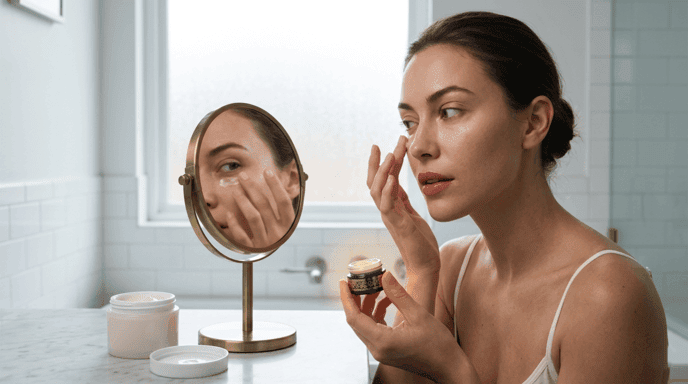
The cosmetic industry now offers an enormous range of dedicated eye-area products. Most come in 0.5 oz jars, making them some of the most expensive products per ounce in any store. The implication is that the skin around your eyes needs something your regular moisturizer cannot deliver.
A growing number of dermatologists disagree. Dr. Mona Gohara said in Real Simple: “Eye cream is usually just face moisturizer in a smaller, more expensive jar. Think of it as the ‘fun-size candy bar’ of skincare — it’s the same thing with less product.”
The science behind eye creams is slightly more nuanced than a blanket dismissal. A 2024 review in Skin Research and Technology found that retinoids, vitamin C, and caffeine show promise for treating under-eye wrinkles and hyperpigmentation. However, these are the exact same active ingredients you’ll find in your facial serums or moisturizers.
So why pay twice the price per ounce for the same active ingredients in a smaller jar?
The Vibe List’s alternative: Use your regular facial moisturizer around your eyes. If you need to target dark circles or wrinkles, a prescription retinoid like 0.025% tretinoin applied to the orbital area costs less per year than three jars of eye cream.
3. Facial Toners

Toners sit awkwardly in today’s skincare routine. On one hand, they’ve always been a part of our routines; on the other hand, their original purpose has disappeared.
According to Dermatology Times, Dr. Zoe Draelos explains that toners originated as a way to remove the soap scum left behind when lye-based soaps were used with hard water. The alcohol-based toner stripped away that residual scum, effectively making lye-based cleansers milder. Since almost nobody uses lye-based soaps or well water anymore, the original rationale for toners has vanished; yet they remain popular.
Dr. Mona Gohara put it memorably in Real Simple: “Toners are the flip phones of skincare — nostalgic but not necessary.”
Many modern toners have moved away from delivering moisture and now focus on active ingredients like glycolic acid or niacinamide. When they do, they are essentially diluted versions of your serums; so buying a separate toner with the same active ingredient is redundant.
The Vibe List’s alternative: Ignore toner altogether. If you want chemical exfoliation, use an AHA or BHA serum at the appropriate strength. If you want hydration, your moisturizer already handles that. The toner step is a relic; made unnecessary by how modern cleansers and moisturizers actually work.
4. Activated Charcoal Masks and Cleansers

Activated charcoal masks and cleansers surged in popularity on the promise that charcoal could detoxify skin by drawing out impurities. Social media went wild for them; peel-off videos racked up tens of thousands of views as users ripped dark-stained masks from their faces. The visual satisfaction of peeling off a charcoal mask is real; the scientific evidence behind it is not.
A peer-reviewed study in Clinics in Dermatology; “Charcoal: An ancient material with a new face”; reviewed the dermatologic evidence and found a “lack of evidence to support its exfoliative or anti-aging abilities” in skincare. The study acknowledged charcoal’s long safety record in medical treatments, but that history did not extend to cosmetic efficacy. Its leap into cosmetics was driven by marketing, not clinical trials.
Board-certified dermatologist Dr. Ranella Hirsch told NBC’s Today that charcoal needs considerably more clinical data before it can be considered a credible skincare ingredient, particularly for anti-aging.
The Vibe List’s alternative: If you want a deep pore cleanse, use a gentle cleanser with salicylic acid (BHA). It will cost less and accomplish more. If you enjoy the ritual of masking, a simple clay mask with kaolin or bentonite offers light oil absorption without the unsubstantiated “detoxing” claims.
5. Collagen Creams

At first glance, collagen creams make logical sense. Skin loses collagen as we age, so applying it topically should help restore what was lost. Sounds reasonable; unfortunately incorrect.
Collagen molecules are too large to pass through the stratum corneum; the outermost layer of your skin. When you apply a collagen-rich cream, the collagen sits on the surface, providing slight hydration through occlusion. It never reaches your dermal layers, and it does not stimulate new collagen production or rebuild the protein structures that give skin its firmness. Topical collagen was notably absent from Northwestern University’s Delphi consensus study; it did not rank among the 23 dermatologist-recommended ingredients.
Oral collagen supplements represent a separate topic with mixed scientific evidence. A 2023 systematic review in Nutrients found that hydrolyzed collagen supplements produced measurable improvements in skin hydration across multiple studies. However, a later review in the American Journal of Medicine concluded that no scientific evidence currently supports the claim that ingesting collagen prevents or treats skin aging.
The evidence remains mixed; but crucially, every positive result came from oral supplements, not from topical creams.
The Vibe List’s alternative: If you genuinely want to stimulate collagen production, only two ingredient categories have strong scientific backing: retinoids and vitamin C. Harvard Health reports that retinoids promote collagen synthesis and accelerate cell turnover, resulting in fewer wrinkles. Both are backed by decades of clinical trials and will do far more for collagen production than any topical collagen cream. For a deeper look at which skincare ingredients dermatologists really use; and which trendy ones they reject; the data is striking.
6. Sheet Masks With Active Ingredients

Sheet masks are a hallmark of Korea’s cultural influence on beauty and a major retail phenomenon worldwide. However, multiple dermatologists call sheet masks one of the least effective ways to deliver active ingredients.
Dr. Shereene Idriss identified sheet masks as one of five skincare products that are a waste of money. She explained that the temporary hydration visible after removing a sheet mask comes entirely from occlusion; the sheet sitting on skin for 15 to 20 minutes. The active ingredients (niacinamide, hyaluronic acid, vitamin C) are present at far lower concentrations than in a dedicated serum, and the contact time is too short for meaningful absorption.
Sheet masks are harmless; that is not the issue. The problem is what you are giving up: you pay more per dose for a weaker delivery system wrapped in single-use packaging.
The Vibe List’s alternative: Apply a quality serum to clean skin, then seal it with an emollient moisturizer. You get higher concentrations of active ingredients at a fraction of the cost per application.
7. Jade Rollers and Crystal Face Tools
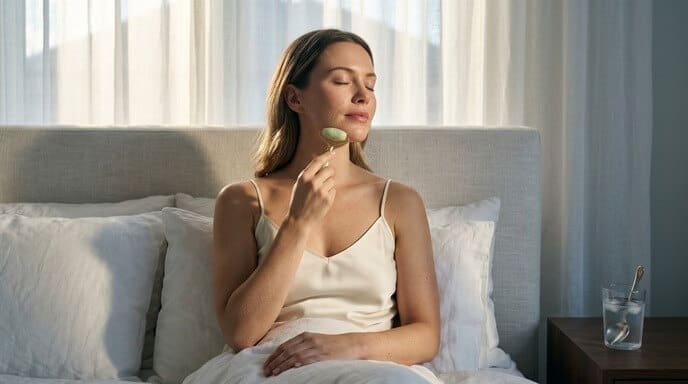
Jade rollers became one of the most popular beauty tools in the late 2010s, and they remain so today. They are fun to use, visually appealing, and marketed with an aura of “wellness” magic. The scientific data, however, does not support those claims.
Popular Science reported that jade rollers can temporarily reduce puffiness and boost circulation; just like any other form of facial massage. Popular Science also emphasized that no long-term anti-aging benefits have been documented.
Healthline agreed, noting no substantial scientific evidence supports jade roller claims about enhancing skin quality.
A 2025 study published in PMC compared facial rolling to gua sha and found that both produced similar, temporary improvements in facial contour; mainly through improved lymphatic drainage and increased blood flow. The researchers found that any massage tool; jade, rose quartz, stainless steel, or even bare fingers; produces the same temporary physiological effects. In other words, what the tool is made of does not matter.
The Vibe List’s alternative: Use your hands. A two-minute facial massage using clean hands produces the same physiological effects on lymphatic drainage and blood flow as a roller. If you want a cooling tool for de-puffing, a stainless steel spoon from your refrigerator costs nothing and works just as well. Jade may look prettier on your vanity, but it adds zero functionality.
8. Expensive Hyaluronic Acid Serums
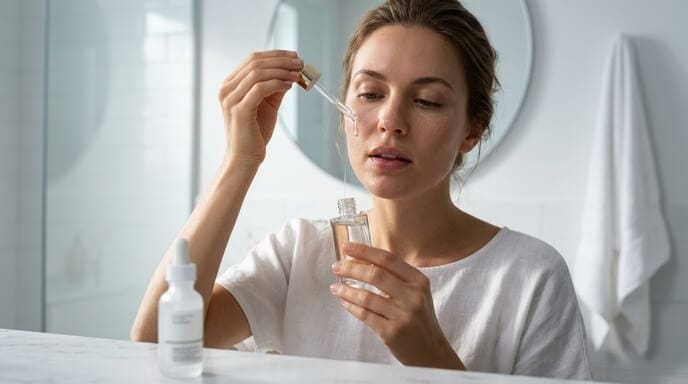
Hyaluronic acid is one of the most common humectants in skincare, and for good reason: a single molecule can hold up to 1,000 times its weight in water, according to Harvard Health. The molecule is naturally occurring in human skin and serves as an excellent hydrator. Where the hype gets exaggerated is in pricing. Luxury brands charge $70 to $120 for a 30 ml hyaluronic acid serum, implying their formula is fundamentally superior to the $15 to $20 version.
The truth is that hyaluronic acid is hyaluronic acid. There is no proprietary molecule. Formulation differences come down to molecular weight; low-MW HA penetrates deeper, while high-MW HA hydrates the surface; and supporting ingredients. However, these differences rarely justify a 5x to 7x price differential.
The Vibe List’s alternative: Neutrogena Hydro Boost Hyaluronic Acid Serum ($15 to $18 at pharmacies). It delivers hyaluronic acid at an effective concentration, is fragrance-free, and works for all skin types. For most consumers, the performance gap between this and a $100 HA serum is negligible.
9. Lip Plumping Glosses
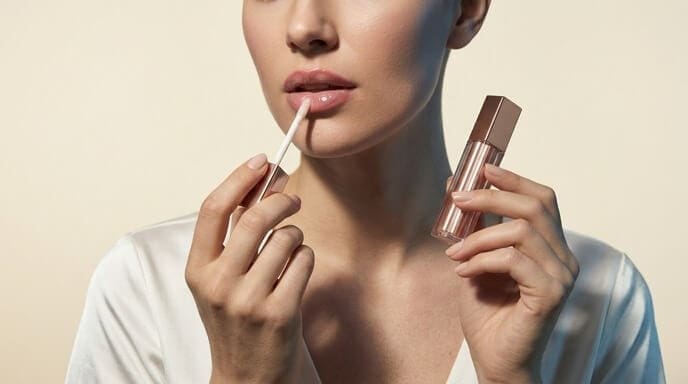
Lip plumping products suggest fuller lips without the needle. They do deliver fuller lips; temporarily; by relying on irritation. Most lip-plumping glosses rely on mild irritants; capsaicin, menthol, cinnamon, or ginger; to trigger localized inflammation that draws blood to the lips and causes temporary swelling. Paula’s Choice clarified that the short-term fullness comes from mild inflammation, not from any actual increase in lip tissue.
Hyaluronic acid-based lip plumpers work differently; they draw moisture to the lip surface, creating a temporarily hydrated look. This effect is also temporary. According to Byrdie’s 2026 testing, even the best-performing options provided only a few hours of noticeable plumping before the effect vanished entirely.
Premium lip plumpers cost $25 to $45 each, and the visible effect lasts roughly three to four hours.
The Vibe List’s alternative: A hydrating lip balm with hyaluronic acid or ceramides delivers a similar surface-level plumping effect through hydration; without the irritation. To extend the look, line slightly above your natural lip line and finish with a metallic gloss. Makeup artists have relied on this technique for decades; it creates the appearance of fullness without any inflammation.
10. Cellulite Creams
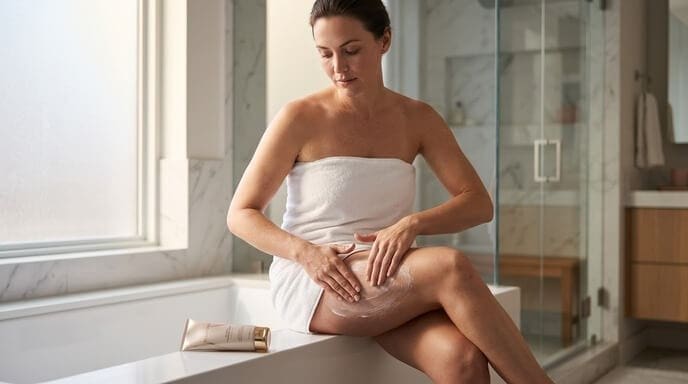
Dr. Mona Gohara was characteristically blunt in Real Simple: “No lotion can melt fat; if it could, I would sleep in it! At best, they smooth for a night out. Think of them like Spanx in a bottle; not a magic wand.”
Cellulite occurs when fat cells push through connective tissue below the surface of the skin. It is structural. Topical creams cannot alter the structural arrangement of subcutaneous fat regardless of how many “firming,” “sculpting,” or “contouring” claims appear on the label. The short-lived smoothing effect comes mainly from caffeine, which temporarily tightens skin by dehydrating the outer layer; an effect that fades within hours.
The American Academy of Dermatology confirms that no topical treatment has demonstrated long-term reduction in the appearance of cellulite. The evidence-backed options, the AAD notes, are laser and radiofrequency procedures performed by board-certified dermatologists; not creams.
The Vibe List’s alternative: Start by recognizing that cellulite is a normal anatomical feature; it appears on roughly 80 to 90 percent of post-pubertal women. If you want temporary smoothing for a specific event, apply a caffeine-containing body lotion beforehand; it produces the same short-lived tightening as a $50 “cellulite cream” at a fraction of the cost. For anything beyond surface-level smoothing, consult a board-certified dermatologist about evidence-based procedures.
11. Pore-Shrinking Products

Beauty products claiming to be “pore minimizers” or “pore erasers” represent perhaps the most misleading category in all of beauty. Dr. Mona Gohara clarified this in Real Simple: “Pores aren’t garage doors that you can open and shut. Good skincare can make them look smaller, but they don’t actually close.”
Genetics determine the primary size of pores; age-related decline in skin elasticity contributes to secondary variations. No topical product can physically minimize a pore. Products claiming to “shrink” pores generally rely on one of two tricks: astringents like witch hazel, which cause a mild skin contraction that reverses as soon as the product evaporates, or silicone-based primers that fill in pore texture visually without changing anything structurally.
The Vibe List’s alternative: Retinoids. Consistent application of retinoids over time promotes cell turnover and enhances collagen production adjacent to pore walls. Over time, this leads to visibly smaller-looking pores. The Delphi consensus study gave retinoids a 93.6 percent agreement rating for pore-size reduction; the highest of any ingredient studied. A $12 tube of adapalene gel (sold OTC as Differin) will do more for your pores than any “pore-shrinking serum.”
12. Detoxifying Face Masks

One of the most commercially successful words used in beauty marketing is “detox.” One of the least scientifically relevant. Dr. Mona Gohara was succinct in Real Simple: “Your liver and kidneys have the detox job covered. Masks are spa-day props; not purifiers.”
Human skin does not accumulate toxins that need to be removed by a topical product. Your body’s actual detoxification organs; liver, kidneys, and lymphatic system; handle waste removal at the cellular level. A face mask, no matter how many toxic-looking colors are included, nor how large its price tag, will never accelerate this biological process.
Face masks provide only two cosmetic effects: temporary absorption of surface oils (if they contain clays or charcoals), and temporary hydration (via occlusion). Neither constitutes “detoxification.” The BBC investigated the broader skincare dupe market and found that numerous high-priced products with impressive-sounding claims contained essentially the same actives as their lower-cost alternatives.
The Vibe List’s alternative: Apply a simple kaolin or bentonite clay mask weekly for surface-level oil absorption; and drop the pseudoscience along with the unnecessary expense. Aztec Secret Indian Healing Clay costs roughly $10 for a 1 lb jar that provides weeks’ worth of applications. The ritual remains the same; the deception has been eliminated.
13. Celebrity-Branded “Glow” Filters

Charlotte Tilbury’s Hollywood Flawless Filter was arguably one of the most viral beauty products in recent history. It is undeniably well-formulated; but it appears on this list because a nearly identical product exists at roughly one-third the price.
e.l.f.’s Halo Glow Liquid Filter debuted as a direct competitor at approximately $14. Beauty communities on Reddit and TikTok have extensively compared the two products, and reviewers consistently report striking similarities in finish, durability, and glow.
This trend extends beyond this single product. Many celebrities leverage their personal brands to justify prices that the actual formulations do not support. McKinsey’s research found that founder personas now rank among the least important factors in beauty purchasing decisions; consumers value product quality over celebrity association more than ever. This mirrors a broader shift seen across industries; even the celebrity billionaires who turned fame into multi-billion-dollar business ventures increasingly succeed through product quality, not name recognition alone.
The Vibe List’s alternative: e.l.f.’s Halo Glow Liquid Filter ($14). Widely available, widely praised as a near-exact dupe, and identical in finish, duration, and glow.
If you are willing to pay an extra $35 for the Charlotte Tilbury name, understand that the premium covers branding; not a better product.
14. Overnight Lip Sleeping Masks
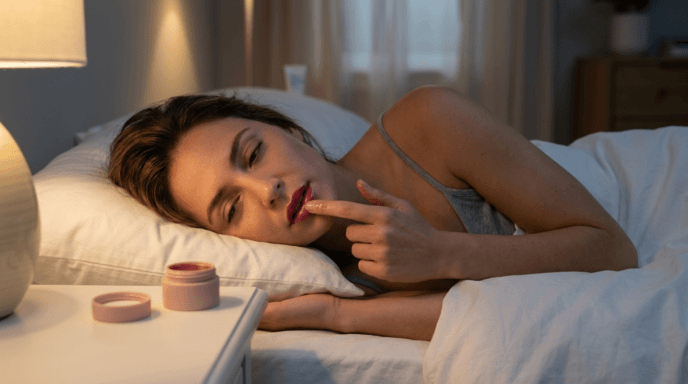
Laneige’s Lip Sleeping Mask turned overnight lip treatment into a mainstream beauty category; repackaging an old trick in a fancy jar. Laneige’s lip sleeping mask sells for around $24 per 0.7 oz.
Dr. Kavita Mariwalla, a double board-certified dermatologist and Mohs surgeon, was very blunt in her review for Real Simple: “If your lips are so dry that you need a nightly lip mask, something is wrong and you need to see a dermatologist. This is absolutely not essential.”
This product uses basic occlusion; it creates a barrier to prevent moisture loss from your lips when you sleep. Which is exactly how petroleum jelly (Vaseline) and lanolin balms have worked since before anyone alive today was born. But now we get to pay extra for it in a fun little lip mask. The product is also scented and textured. Petroleum jelly and lanolin balms work equally well and are both under $10.
The Vibe List’s alternative: Apply a small amount of Aquaphor Lip Repair or Vaseline to your lips before bed. Both provide the same level of occlusive protection. If your lips remain chronically dry despite an occlusive balm, see a dermatologist; the cause may be dehydration, habitual lip licking, contact dermatitis, or a medication side effect. Upgrading to a pricier balm is not going to help.
15. Scalp Scrubs and Exfoliating Treatments
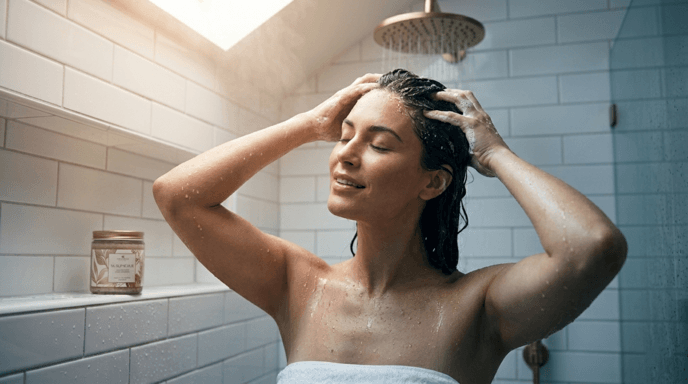
Scalp scrubs have surged in popularity alongside the broader “scalp care” trend. Brands promote them as necessary for removing buildup from styling products and improving hair growth. Dr. Kavita Mariwalla was emphatic in Real Simple: “The microbiome on your scalp does its own thing and is usually in balance. If it is not, your scalp will let you know by getting irritated and flaky. There is zero reason the skin on your scalp needs to be scrubbed or exfoliated. Keep those cuticles closed and the hair on your head.”
Beyond being ineffective, aggressive scalp exfoliation can cause micro-tears, disrupt the natural microbiome, and damage the cuticle layers closest to hair roots. If your scalp is normal and balanced, regular washing with a mild shampoo is all you need.
If you have persistent flakiness, itchiness, or excess oil, those symptoms call for a dermatologist; not a commercial scrub. The common treatments for these conditions include medicated shampoos containing zinc pyrithione, ketoconazole, or selenium sulfide. All three are available over the counter. Similar principles apply across all personal care; the grooming mistakes still sabotaging how men look often come down to the same pattern of overspending on hype products while ignoring dermatologist-backed basics.
The Vibe List’s alternative: Use a gentle, sulfate-free shampoo regularly. Or if you have specific scalp issues, try an OTC medicated shampoo (Nizoral, Head & Shoulders Clinical Strength, or Selsun Blue). They’ll give you better results for less money than some of the trendy scalp scrubs.
The Vibe List’s 5-Product Routine That Replaces Everything Above
You don’t really need that much. If you swapped every product on this list for something backed by dermatological evidence, you would need five products total. That’s it. The simplest clinically backed routine; endorsed by every dermatologist referenced in this article; looks like this:
A gentle cleanser (similar to CeraVe Hydrating Cleanser; approximately $15). A retinoid for wrinkle prevention, acne, hyperpigmentation, and pore refinement; adapalene gel (OTC) or prescription tretinoin (approximately $12 to $30). A vitamin C serum for antioxidant protection and brightening (10-20% L-ascorbic acid; approximately $15 to $30). A basic moisturizer with ceramides (CeraVe Moisturizing Cream; approximately $19). A daily broad-spectrum SPF 30+ sunscreen; Neutrogena or La Roche-Posay are solid options (approximately $12 to $18).
Annual cost of this 5-product skincare regimen: approximately $200 to $350. Annual cost if you were buying all 15 hype-driven products listed above: easily $1,000 to $2,000+. Building sustainable daily habits that quietly change your life; like simplifying your skincare routine; often delivers compounding returns.
Senior study author Dr. Murad Alam of Northwestern University reiterated this philosophy: “Using too many products can irritate your skin and make things worse.”
Overhyped vs. Worth It: The 2026 Beauty Product Scorecard
| # | Overhyped Product | Typical Price | Why It’s Overhyped | Vibe List Alternative | Alt. Price | Verdict |
|---|---|---|---|---|---|---|
| 1 | Luxury Moisturizers (e.g., La Mer) | $200 / 2 oz | Core ingredients (mineral oil, petrolatum) identical to drugstore versions | CeraVe Moisturizing Cream | ~$19 / 16 oz | Skip |
| 2 | Dedicated Eye Creams | $40–$80 / 0.5 oz | Same active ingredients as facial moisturizers in smaller, pricier jars | Regular facial moisturizer | ~$14–$19 | Skip |
| 3 | Facial Toners | $15–$40 | Original purpose (soap scum removal) is obsolete; active-ingredient versions are diluted serums | Skip entirely; use AHA/BHA serum if needed | $10–$20 | Skip |
| 4 | Activated Charcoal Masks | $15–$35 | Zero clinical evidence for skincare claims (Clinics in Dermatology) | Salicylic acid cleanser or kaolin clay mask | ~$8–$12 | Skip |
| 5 | Collagen Creams | $25–$80 | Collagen molecules too large to penetrate skin; absent from Delphi consensus | Retinoid + Vitamin C serum | ~$12–$30 | Skip |
| 6 | Sheet Masks | $3–$8 / use | Low-concentration actives; brief contact time; single-use waste | Quality serum + emollient moisturizer | ~$0.50–$1 / use | Skip |
| 7 | Jade Rollers & Crystal Tools | $15–$50 | No benefit beyond what fingers or any tool provides; effects are temporary | Clean hands or a cold spoon | $0 | Skip |
| 8 | Expensive HA Serums | $70–$120 / 30 ml | HA is HA; no proprietary molecule justifies 5x–7x markup | Neutrogena Hydro Boost HA Serum | ~$15–$18 | Swap |
| 9 | Lip Plumping Glosses | $25–$45 | Temporary effect (3–4 hrs) via irritation or surface hydration | Hydrating lip balm + liner technique | ~$5–$10 | Skip |
| 10 | Cellulite Creams | $30–$50 | Cannot alter subcutaneous fat structure; AAD confirms no long-term topical solution | Caffeine body lotion for events; dermatologist for procedures | ~$8–$15 | Skip |
| 11 | Pore-Shrinking Products | $20–$45 | Pores cannot physically close; effects are temporary or optical illusion | Adapalene gel (Differin) OTC | ~$12 | Swap |
| 12 | Detoxifying Face Masks | $20–$50 | Skin does not accumulate toxins; “detox” is marketing fiction | Kaolin/bentonite clay mask | ~$10 | Skip |
| 13 | Celebrity “Glow” Filters | ~$49 | Near-identical dupes exist at one-third the price; founder persona is lowest purchase factor | e.l.f. Halo Glow Liquid Filter | ~$14 | Swap |
| 14 | Overnight Lip Masks | ~$24 / 0.7 oz | Basic occlusion; identical mechanism to petroleum jelly | Aquaphor Lip Repair or Vaseline | ~$4–$8 | Swap |
| 15 | Scalp Scrubs | $15–$35 | Unnecessary for healthy scalps; risks micro-tears and microbiome disruption | Sulfate-free shampoo or OTC medicated shampoo | ~$8–$15 | Skip |
Frequently Asked Questions
Are expensive beauty products always a waste of money?
No. Some premium products do contain higher concentrations of proven actives, more stable delivery systems, or more rigorous third-party testing. The 15 categories critiqued here, however, are ones where the higher price does not translate to meaningfully better results. When evaluating any product, check the ingredient list and the evidence behind those ingredients; not the price tag or the marketing story.
What is de-influencing, and why does it matter in beauty?
De-influencing is a social media counter-trend where content creators identify viral beauty products that have been grossly exaggerated and recommend skipping them. At its best, de-influencing empowers consumers to make evidence-based purchasing decisions. At its worst, de-influencing becomes another way for influencers to promote their own products. The core idea is sound: not everything trending on TikTok deserves a place in your routine, and clinical evidence should always outweigh an influencer’s endorsement. The broader dynamics of how influencers built global brands from social media help explain why so many viral product recommendations are financially motivated rather than evidence-based.
How do I know if a beauty product really works?
First, check if any of the active ingredients have been validated through peer-reviewed clinical trials. The 2025 Delphi consensus study is the most comprehensive recent reference for evidence-based ingredient evaluation. Ingredients such as retinoids, sunscreen, vitamin C, niacinamide, azelaic acid, and alpha hydroxy acids have extensive clinical research supporting them. Second, check the concentration of each active ingredient and the type of formulation. Vitamin C serums need to include between 10-20% L-ascorbic acid at a pH below 3.5 to provide clinically relevant levels of antioxidant activity, according to Harvard Health.
Is the skincare industry intentionally misleading consumers?
While the industry operates within the boundaries of legal compliance, it frequently leverages the gap between what is technically permissible and what provides actual help. Consider the language: “dermatologist-tested” means only that a dermatologist was present during testing; not that they endorsed the product. “Clinically proven” may refer to a company-funded trial with a handful of participants. “Clean beauty” has no regulatory definition at all. This kind of language gives consumers the impression that far more clinical evidence exists than actually does. McKinsey’s consumer research confirms this shift: consumers are increasingly skeptical, and product quality now outranks brand founders and marketing narratives as the top purchasing factor.
What three products would a dermatologist recommend if I could only afford three?
Retinoids, because they have the strongest evidence base across the widest range of concerns; wrinkles, acne, hyperpigmentation, and pore refinement. A basic ceramide moisturizer, since ceramides maintain your skin’s protective barrier. And a broad-spectrum SPF 30+ sunscreen; the only intervention proven in randomized controlled trials to measurably slow skin aging.
If I enjoy using products on this list, should I stop?
Not necessarily. There is real value in enjoying your skincare routine. So if you enjoy using something that isn’t damaging your skin, go ahead and keep using it. Just understand that a jade roller will never outperform a gentle facial massage with your own hands; so enjoy the ritual, but set your expectations accordingly.


