


A $580 million purchase price that became a $35 million fire sale six years later. A $4 billion startup that laid off half its staff before it ever turned a profit. A 200-million-user video app shut down because its biggest creators asked for a paycheck. A $30 million Google buyout offer rejected in 2003 by a founder who was certain his network was unstoppable. Fifty million songs and twelve years of music history erased forever in a single botched server migration. None of these dead social media platforms died because the internet got tired of them; they died because the people running them made one specific, identifiable, fatal mistake. And the next one to fall is already making the same one.
These are the failed social media apps, the forgotten social media apps, the social media platforms that no longer exist; collectively, the largest cluster of addictive internet trends that the internet ever produced and then buried. Some of them are barely a footnote now. Some of them shaped the entire grammar of how we behave online today. All of them are dead.
How a Social Network Actually Dies: The Five Deaths
Read enough social media obituaries and a clear pattern emerges. The platforms in this graveyard did not expire from random misfortune. They died one of five identifiable deaths, and almost every dead platform fits cleanly into one category, sometimes two.
The Creator Exodus. The biggest stars on a social network tell management they need to be paid. Management refuses, delays, or fumbles the response. The largest creators leave, taking their audiences with them. Vine is the textbook example. Path lost its smaller creators the same way. Periscope watched its livestreamers drift to YouTube and Twitch. The lesson echoes through the 15 influencer downfalls that destroyed empires overnight; when creators leave, value leaves with them.
The Feature Cannibalization. A bigger platform with more resources, and more reach, copies the smaller network’s signature feature and hands it to its massive existing user base. The smaller network either dies from the bleed or limps along until it is irrelevant. Clubhouse died this way when Twitter, Facebook, Spotify, and LinkedIn all shipped audio-room products in under nine months. Snapchat barely escaped the same fate by diversifying its product fast; Meerkat did not.
The Trust Collapse. When a social network suffers a data breach, fails at moderation, or breaks user trust on privacy, the users who leave generally do not come back. Google+ accelerated its own shutdown by roughly four months after API leaks exposed personal data for 52 million users. Yik Yak collapsed under harassment; Tumblr lost roughly a third of its audience the moment it banned adult content.
The Pivot Catastrophe. Management decides the platform must become something other than what made it successful in the first place. MySpace turned itself into a music portal nobody asked for. Tumblr banned the content that kept its biggest community alive. Ping tried to build a social network that only worked if you bought your music through iTunes.
The Network Effect Reversal. When the first wave of users leaves a social network, the people left behind can see the empty space and follow their friends out the door. This happened to Friendster, Bebo, Orkut, and hi5, all of which watched their networks collapse from the outside in. A 2013 academic study titled “Friendster: an empirical study of user bond decay” mapped exactly how those connections fail, one by one.
Every platform below died from at least one of these. Many died from three or four. As you read each entry, watch for the pattern.
1. MySpace ; The $580 Million Empire That Lost Its Soul to Advertising
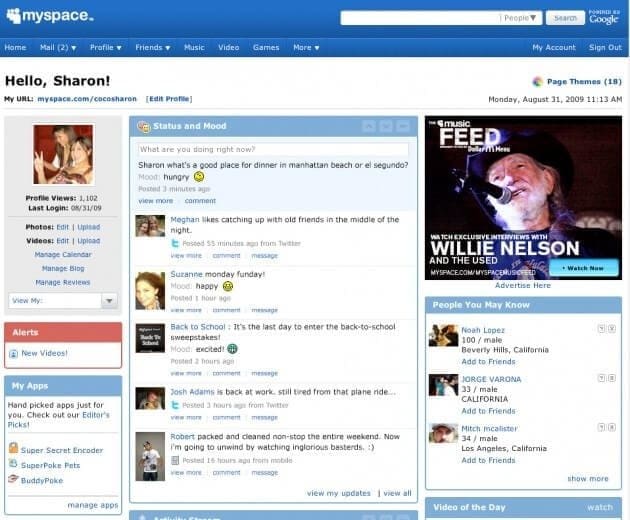
Peak: 115 million monthly visitors in April 2008; valued at $12 billion in 2007; more than 300 million registered users at its height. Killed by: The Pivot Catastrophe + The Creator Exodus. Time of death: 2009 (effectively); still technically alive but unreadable since 2022.
It is hard to overstate how completely MySpace owned the internet between 2005 and 2008. According to a Reuters report on MySpace’s decline, in June 2006 it overtook Google to become the most-visited website in the United States. In 2007, News Corp attempted to merge MySpace with Yahoo at a $12 billion valuation. Bands such as Arctic Monkeys, Lily Allen, and a young Taylor Swift used MySpace as their primary outlet to build an early fanbase. It was also where the first selfies were posted, long before anyone thought to call them that.
Then Rupert Murdoch purchased MySpace.
In July 2005, News Corp acquired MySpace for $580 million. He has publicly called it a “huge mistake.” Former employees interviewed by Reuters laid out the reason in detail. The cause was advertising.
News Corp signed a three-year, $900 million exclusive search partnership with Google in August 2006. On paper, it sounded like free money. In practice, it forced MySpace to plaster every inch of screen real estate with ads, making the site slow, ugly, and impossible to redesign without losing revenue. Meanwhile, Facebook was rolling out its clean, white wireframe design, while MySpace was contractually blocked from doing anything similar under the terms of the Google deal.
By late 2010, MySpace executed its Pivot Catastrophe: its new leadership announced the site would become a “music-oriented” entertainment portal. Users who had survived the ad clutter and security issues now arrived at a redesigned site that effectively told them they should not have been using the old one in the first place. Within twelve months, MySpace had hemorrhaged nearly 32 million unique users, and News Corp put it up for sale at $50–$200 million.
Specific Media acquired what was left for a reported $35 million in June 2011; a roughly 94% loss in six years. The final insult came in March 2019, when a botched server migration erased more than 50 million songs and twelve years of user-generated content in a single day; more music history than most national archives hold combined.
The Vibe List’s take: MySpace did not lose to Facebook because Facebook was better. MySpace lost because a media conglomerate treated a community as inventory.
2. Vine ; The 6-Second App That Killed Itself by Refusing to Pay Its Stars

Peak: more than 200 million active users by December 2015. Killed by: The Creator Exodus + The Feature Cannibalization. Time of death: January 17, 2017.
Vine is the platform whose ghost still haunts every TikTok video. Dom Hofmann, Rus Yusupov, and Colin Kroll founded Vine in June 2012. Twitter acquired it four months later for $30 million, before the app had even launched.
Vine introduced an entire generation to short-form looping video. By April 2013, three months after launch, it was already the most downloaded free app in the Apple App Store. By the end of 2015, more than 200 million people were watching six-second clips every month.
Then Twitter said no. Vine’s biggest stars had asked for $1.2 million each per year in exchange for guaranteeing 12 Vines per month, providing creative consulting, and ending the algorithms that buried their work. Mic first reported the meeting; Vanity Fair confirmed the details. The eighteen creators in that room represented the top accounts on the platform; the people producing nearly all of Vine’s traffic.
Vine’s biggest stars filmed farewell videos pointing their followers to other platforms. The momentum collapsed almost immediately. In October 2016, Twitter announced Vine’s shutdown as part of broader layoffs. On January 17, 2017, Vine went dark.
Five months before Vine went dark, ByteDance had launched the app that would become TikTok. When The Verge described TikTok as “the closest thing we’ll get to having Vine back,” it was a backhanded eulogy; by almost any measure, all Vine had to do was cut some checks.
But the harshest truth is this: Vine’s creators defined the last decade of internet culture. Shawn Mendes signed with Island Records and sold more than fifty million records. David Dobrik, Liza Koshy, Logan Paul, Jake Paul, and Lele Pons now command audiences larger than most TV networks; the same dynamics that defined the songs that owned TikTok in 2026 were first written in six-second loops. None of them ever saw a cent from Vine.
The Vibe List’s take: of every dead platform in this graveyard, Vine is the only one whose creators built bigger empires after it died than they ever could have built on it. That is not a coincidence; it is the entire story. The full arc of how those careers exploded is documented in our coverage of the top 10 influencers who built global brands from social media.
3. Friendster ; The Pioneer That Turned Down Google’s $30 Million Lifeline

Peak: 115 million registered users; leading social network in 2003. Killed by: Technical Decay + The Network Effect Reversal. Time of death: functionally dead in the U.S. by 2006; officially shut down in 2018.
Before MySpace, before Facebook, before LinkedIn; there was Friendster. Canadian software developer Jonathan Abrams founded Friendster in February 2002. It established the blueprint for what social networking would become; user profiles, friend networks, photo sharing, dating, news feeds. Everything that followed borrowed from it.
By September 2003, Friendster was the leading social network on the internet, and Google offered Jonathan Abrams $30 million to acquire it.
According to Abrams’ October 2006 interview with The New York Times, and corroborated by TechCrunch’s analysis of Friendster’s demise, he declined Google’s offer because he believed the company was worth far more. His venture capital backers at Kleiner Perkins supported him, agreeing to a $13 million Series B round at an increased valuation.
Within twelve months, Friendster had lost its lead in US page views to MySpace. Within twenty-four months, Abrams had been ousted as CEO. Within three years, Friendster was dead in its home country.
Why? Technologically, the reason was simple. Friendster was written in JavaServer Pages and could not render individual profile pages in under thirty seconds during peak load. Abrams knew it; he told reporters as much. He pushed to rebuild the platform on faster technology, but management demanded more features instead of better performance. Users who waited thirty seconds for a friend’s profile to load did not wait a second time.
An April 2013 academic study from the Vienna University of Technology performed a forensic autopsy on the dead network. Researchers mapped exactly how Friendster’s user relationships came apart in sequence, starting at the edges and collapsing inward. Their conclusion: Friendster’s user bonds were structurally weaker than Facebook’s, and once a few key connectors left, large clusters of adjacent connections fell with them.
Friendster pivoted into social gaming in Southeast Asia in late 2011, found some limited traction, and finally shut down for good in 2018.
If Abrams had taken Google’s $30 million, Friendster would have been folded into the company that now owns YouTube, Android, and Gmail. Instead, it is a footnote.
As The New York Times put it in its 2006 post-mortem, “He could take the safe bet and accept the $30 million that Google was offering him for Friendster.” He did not.
The Vibe List’s take: the Friendster autopsy is now standard reading in network science, and it sits comfortably alongside the internet’s most baffling unsolved mysteries as one of the great forensic puzzles of the early web. The answer in Friendster’s case is simpler than most; it died because it was slow, and because its founder thought $30 million was an insult.
4. Google+ ; The Platform Google Forced on a Billion Users That Nobody Wanted
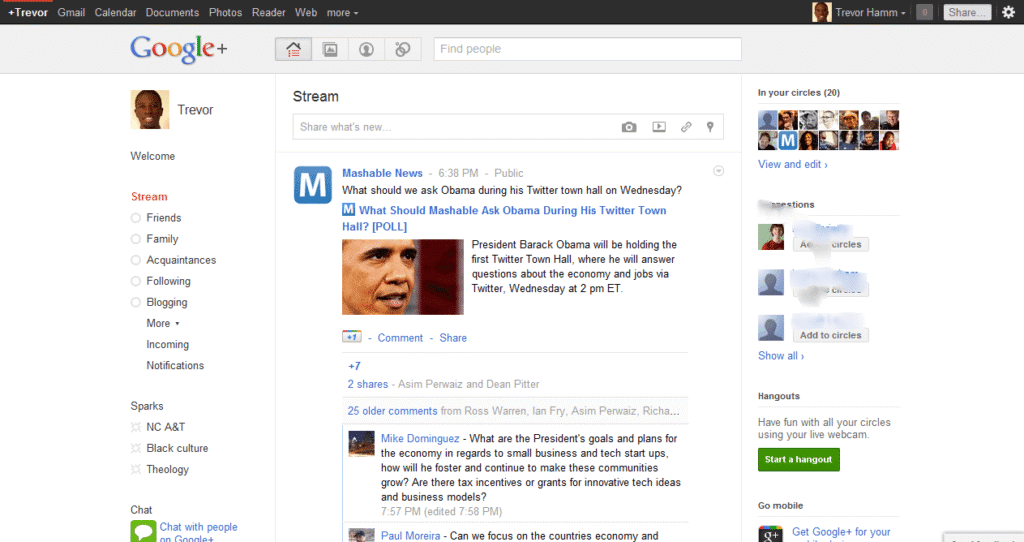
Peak: hundreds of millions of accounts created. 90% of user sessions lasted under five seconds. Killed by: The Trust Collapse + structural irrelevance. Time of death: April 2, 2019.
There is a special category of social media failure reserved for platforms that had every conceivable advantage and still could not become a real product. Google+ is the patron saint of that group; the cleanest case study in the Google Plus shutdown reason being neither funding nor technology, but desire.
Google+ launched in June 2011 with one explicit goal: knock Facebook off its perch as the dominant social network. Google had the world’s most trafficked search engine, its most-used video-sharing site, its most widely-deployed mobile OS, and its most popular email service. Google forced users to create a Google+ account just to leave comments on YouTube. Google+ profiles were tied to Gmail and threaded through every other Google service.
Still, nothing worked.
Google’s own engineering lead Ben Smith put it bluntly: “90 percent of Google+ user sessions are less than five seconds.”
Most users landed there by accident, glanced around, and left. Engagement was virtually nonexistent.
The Trust Collapse arrived in late October 2018, when Wired reported that a bug in Google+’s API had exposed the personal data of nearly 500,000 users. Google had known about it for months before disclosing it. Less than two months later, a second bug exposed the private data of an additional 52.5 million users. Google accelerated its shutdown by roughly four months. The consumer version of Google+ was killed on April 2, 2019.
The sad part is that Google+ had genuinely good ideas. Circles let users sort contacts into groups, a cleaner approach than Facebook’s one-size-fits-all news feed. Hangouts was an early form of group video conferencing that evolved into Google Meet. Both products survived as standalone Google offerings; the community around each vanished.
The Vibe List’s take: you cannot will a social network into existence by stapling it to your other products. Either people want to talk to their friends in the room you built, or they do not, and Google+ proved that no amount of integration leverage can substitute for desire.
5. Clubhouse ; The $4 Billion Audio App That Peaked in 90 Days

Peak: valued at $4 billion in April 2021; 14.2 million downloads at peak; first invested at a $100 million valuation with only 5,000 users. Killed by: The Feature Cannibalization + growing too fast. Time of death: functional death on April 27, 2023 (50% staff layoffs).
Clubhouse launched in March 2020, three days before California’s COVID-19 lockdown order. The timing was, in the language of venture capital, an “outlier event.” When Andreessen Horowitz made its first investment in May 2020, Clubhouse had 5,000 users and was valued at $100 million; the firm was effectively paying $20,000 per user, an absurd rate outside of pandemic circumstances. By January 2021, a16z led another round; Clubhouse’s valuation hit $1 billion. By April 2021, Tiger Global and DST Global funded another round, lifting the valuation to $4 billion.
By April 2021, Clubhouse’s growth had ceased.
The Feature Cannibalization happened faster than for any platform in this graveyard. Within nine months of Clubhouse’s peak, Twitter shipped Spaces, Facebook launched Live Audio Rooms, Spotify rolled out Greenroom, LinkedIn added Audio Events, Discord introduced Stage Channels, and Reddit launched Talk. Six of the largest platforms on the internet had shipped Clubhouse clones to a combined user base in the billions, and Clubhouse itself still did not have an Android app or an open sign-up.
Once the world reopened in mid-2021 and people realized that listening to strangers talk for hours was not something you could do alongside any other activity, Clubhouse’s DAU collapsed.
In an October 2021 interview with Bloomberg, Davison admitted the company “grew way, way too fast.” In April 2023, Clubhouse laid off 50% of its staff in what Davison described as a “reset.” The company’s blog post explained: “As the world has opened up post-Covid, it’s become harder for many people to find their friends on Clubhouse and to fit long conversations into their daily lives.”
The Vibe List’s take: Clubhouse is the purest example of why a feature is not a platform. Audio rooms are a feature. The question of whether anyone needed a separate app to host them has already been answered, and the answer is no. The same diagnostic applies to half the apps still standing today; if the value proposition is one feature, and that feature can be cloned in a quarter by a $1 trillion company, the platform is on borrowed time.
6. Bebo ; The British Network That Sold for $850 Million and Bought Itself Back for $1 Million

Peak: dominant in UK and Ireland from 2005–2010; most-visited social site in Britain in 2007; approximately 40 million users at peak. Killed by: Mismanaged Acquisition + The Network Effect Reversal. Time of death: bankruptcy filing in 2013.
Bebo (short for “Blog Early, Blog Often”) was, for several years, arguably the leading social network in the United Kingdom. British entrepreneur Michael Birch founded Bebo in 2005 with his wife Xochi Birch. By 2007, it had surpassed MySpace in the UK, peaking at roughly 40 million users.
In March 2008, AOL acquired Bebo for $850 million; a sum that reportedly netted Michael and Xochi Birch roughly $595 million on their combined 70% stake. It was one of the biggest social media exits in history.
What followed is a case study for business schools titled “Don’t Do What AOL Did Next.” AOL treated Bebo as a portal property; another asset to drive eyeballs to its declining advertising business. Product development stalled almost immediately after the acquisition. Leadership rotated through multiple executives, the company’s identity as a UK-rooted social network was stripped away, and within two years Bebo had lost its competitive edge against Facebook.
In 2010, AOL sold Bebo to a private equity firm called Criterion Capital Partners for a reported $10 million. Criterion steered Bebo into bankruptcy by 2013.
In 2013, Michael Birch bought his own company back out of bankruptcy for $1 million. He had effectively repurchased Bebo at a 99.88% discount from what he had sold it for five years earlier.
Birch has tried to relaunch Bebo four separate times since 2013. Each attempt has failed to gain traction. The most recent incarnation surfaced briefly in 2021 as an invite-only landing page where Birch publicly mourns what Bebo used to be.
The Vibe List’s take: Bebo did not lose to Facebook on its own merits. It was sold to a company that did not understand what it had, sold again to a company that did not care, and resuscitated four times by a founder who refused to let it stay dead. The lesson sits at the center of the 15 most expensive corporate fails that cost companies billions; the right acquirer matters more than the right exit price.
7. Tumblr ; The $1.1 Billion Acquisition That Self-Destructed in a Single Policy Decision

Peak: Yahoo bought it for $1.1 billion in May 2013; sold to Automattic for approximately $3 million in August 2019. Killed by: The Pivot Catastrophe + The Trust Collapse. Time of death: commercial death on December 17, 2018 (technically still operational).
Tumblr is the one platform in this graveyard that did not actually shut down. It still exists. Anyone reading this can sign up right now. And yet what Tumblr was; an open, weird, profoundly creative microblogging ecosystem that hosted some of the most influential subcultures of the 2010s; is unambiguously, irreversibly dead. And it died on a specific calendar day.
In May 2013, Yahoo, under CEO Marissa Mayer, acquired Tumblr for $1.1 billion in cash. Mayer’s famous promise was “not to screw it up.” She screwed it up.
Verizon later acquired Yahoo. In August 2019, Verizon sold Tumblr to Automattic; the parent company of WordPress.com; for a reported $3 million. That is a 99.7% loss on the original purchase price in six years.
Tumblr is dead because of a single policy decision.
On December 3, 2018, Tumblr announced an outright ban on adult content effective December 17, 2018; citing Apple’s removal of the Tumblr app from the App Store after CSAM was discovered on the platform. Tumblr enforced the ban with a hastily-built AI classifier that flagged photos of vases, Pomeranians, and sand as pornography.
According to Fast Company, Tumblr lost more than 100 million monthly page views in the thirty days after the ban took effect; a 17% drop the platform never recovered.
Tumblr’s most engaged communities; LGBTQ+ creators, fan-art subcultures, sex educators, indie erotica writers; left in waves. Some migrated to Twitter, others went to a platform called Pillowfort, and others simply stopped posting altogether.
Under Automattic, Tumblr has tried to rebuild around fandom communities, has partially reversed its adult content ban, and retains a small but devoted user base.
The Vibe List’s take: but its commercial peak is gone forever. When you remove the people who made you valuable in the first place, the value goes with them; no matter how polished the product they leave behind. The graveyard is filled with platforms that learned this the hard way, and the same forensic playbook applies to the 15 memes that escaped the internet and rewrote the rules of real life; communities make platforms, never the other way around.
8. Orkut ; Google’s Forgotten Social Network That Conquered Brazil and India
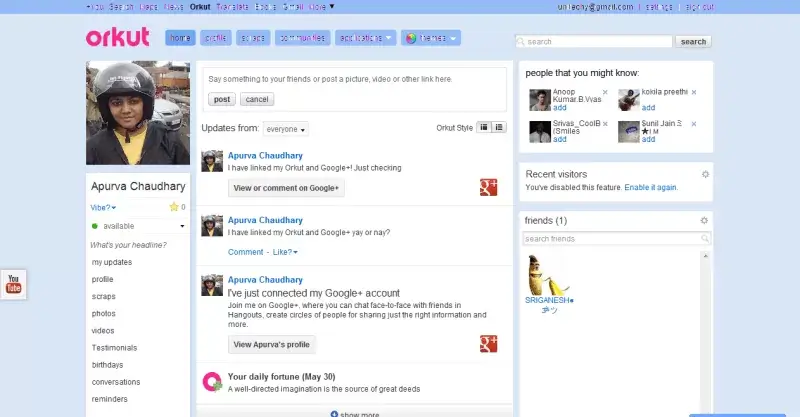
Peak: the most popular social network in Brazil until 2012 and in India until 2010. Killed by: The Network Effect Reversal + corporate neglect. Time of death: September 30, 2014.
Orkut is the social network that almost nobody in the United States ever used. It is also the social network that dominated two of the largest emerging internet markets in the world for the better part of a decade. And it is the social network Google shut down because it could not stop chasing the social network it actually wanted to build.
Orkut launched on January 22, 2004; thirteen days before Mark Zuckerberg launched Facebook. For nearly a decade, Orkut was something Americans struggled to understand; a Google-owned social network that was massively successful abroad and barely visible at home.
At its peak, TechCrunch reported that 50% of Orkut’s traffic came from Brazil, 20% from India, and 18% from the United States.
At its height in Brazil, Brazilian Portuguese added a verb to its vocabulary; orkutar, meaning “to message someone on Orkut.” It is the only platform in this graveyard that produced its own conjugable verb in a major world language.
Orkut did not die suddenly or violently like many of the networks in this graveyard. Instead, Orkut starved to death slowly; a victim of corporate apathy from its owner.
Google never relocated Orkut’s US-based developers to the countries where Orkut actually dominated. Google never seriously invested in a mobile app for it. Google never updated Orkut’s UI in the seven years after launch.
By 2010, Facebook had overtaken Orkut as the number-one social network in India. By 2012, Facebook had overtaken it in Brazil. In June 2011, Google made a halfhearted attempt to migrate Orkut users to Google+, then quietly shut Orkut down for good on September 30, 2014.
The Vibe List’s take: Orkut is the only one of Google’s social ventures that ever achieved real success, and it achieved it in two of the largest emerging internet markets in the world. Google killed it anyway, because Orkut was succeeding in the territory of a different Google product the company wanted to succeed instead. A platform was killed by its own owner’s ambition.
9. Ping ; Steve Jobs’s Two-Year Embarrassment at Apple
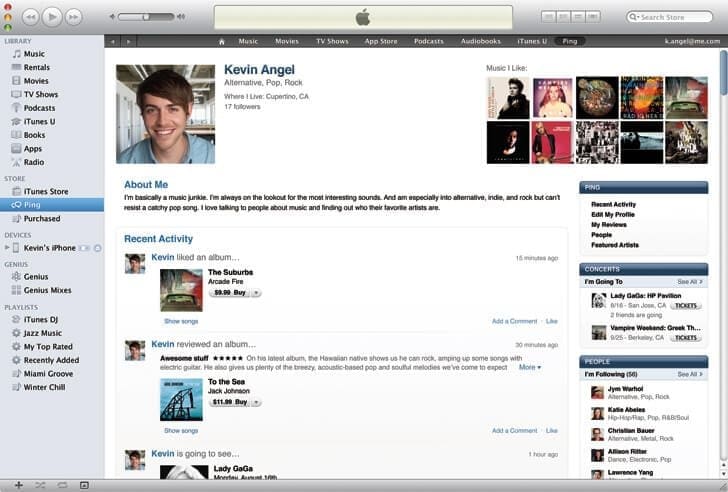
Peak: more than 1 million sign-ups in 48 hours, September 2010. Killed by: The Pivot Catastrophe (born as one). Time of death: September 30, 2012.
Steve Jobs unveiled Ping; a music-focused social network embedded in iTunes; at an Apple media event in September 2010. He described it as “Facebook and Twitter meet iTunes.”
Within 48 hours, more than 1 million people had created Ping accounts; a sign-up rate driven almost entirely by Apple force-prompting every iTunes user on the planet to create one.
However, once created, the platform did nothing.
Ping had a fatal flaw: its entire social mechanic required that the friends you wanted to share music with also bought their music through iTunes. If your friends used Spotify, pirated their music, or listened to terrestrial radio, they were invisible to Ping. Further, according to Wired’s reporting at the time, the recommendation engine; which Steve Jobs himself had pitched onstage as a centerpiece feature; could not recommend any artist who did not sell music through the iTunes Store. Things got worse when Jobs and Mark Zuckerberg could not agree on integration terms with Facebook.
Apple shut Ping down on September 30, 2012, and replaced it with a feature called Apple Music Connect; which was itself killed in 2018.
The Vibe List’s take: for a company famous for shipping products that change consumer behavior, Ping is the rare instance where Apple shipped a product that changed nothing.
10. MSN Messenger ; The 330-Million-User Giant Microsoft Killed in Cold Blood
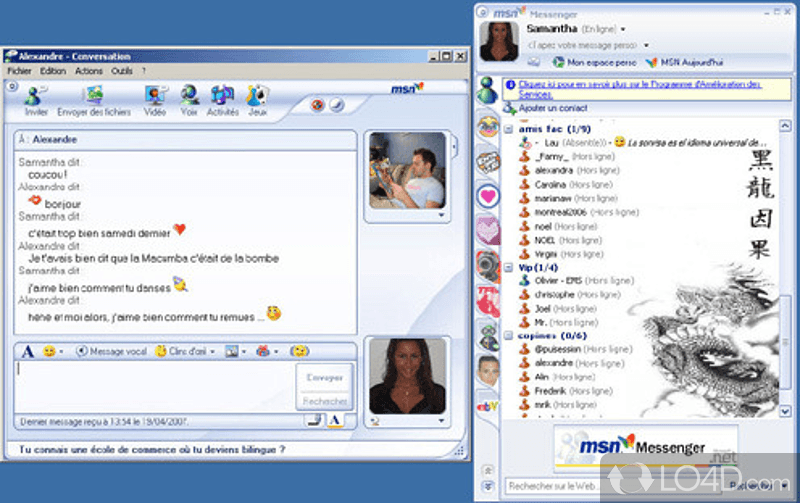
Peak: approximately 330 million monthly active users in 2009. Killed by: Corporate consolidation (a self-inflicted Feature Cannibalization). Time of death: October 31, 2014.
MSN Messenger; later renamed Windows Live Messenger; was the largest platform by user count in this graveyard. With approximately 330 million monthly active users at its peak in 2009, a figure later cited by Microsoft itself, MSN Messenger was the most-used messaging application of its era. An entire generation of internet users; now in their thirties and forties; can still hear the distinct “nudge” tone that played when a friend sent a message.
Microsoft allowed MSN Messenger to expire. Microsoft killed it.
On May 10, 2011, Microsoft announced it was acquiring Skype for $8.5 billion. Eighteen months later, the BBC reported that Microsoft would shut down Windows Live Messenger and migrate all its users to Skype in early 2013. The rationale was clear: Skype had been built for voice and video calling from day one, while Messenger had started as a messaging-only product with calling tacked on later. Maintaining two competing messaging products inside the same company made no operational sense.
The cultural damage of killing Messenger was substantial. Messenger was a messaging app, but it was also much more than that. It was where an entire generation learned to flirt, argue, gossip, and break up with people in writing. The status updates, the drama around away messages, the precision of emoticon use, the practice of appearing “offline” to specific contacts; these were the precursor language of today’s online intimacy.
On April 8, 2013, Microsoft retired Messenger globally. The product’s last stronghold, China, was shut down on October 31, 2014.
The Vibe List’s take: MSN Messenger is unique in this graveyard for dying in good health. It is also a reminder that corporate strategy and user devotion are not the same thing. 330 million people lost a daily ritual because a different product on the same balance sheet was deemed more profitable.
11. Periscope ; The Livestreaming Pioneer Twitter Acquired and Then Forgot About
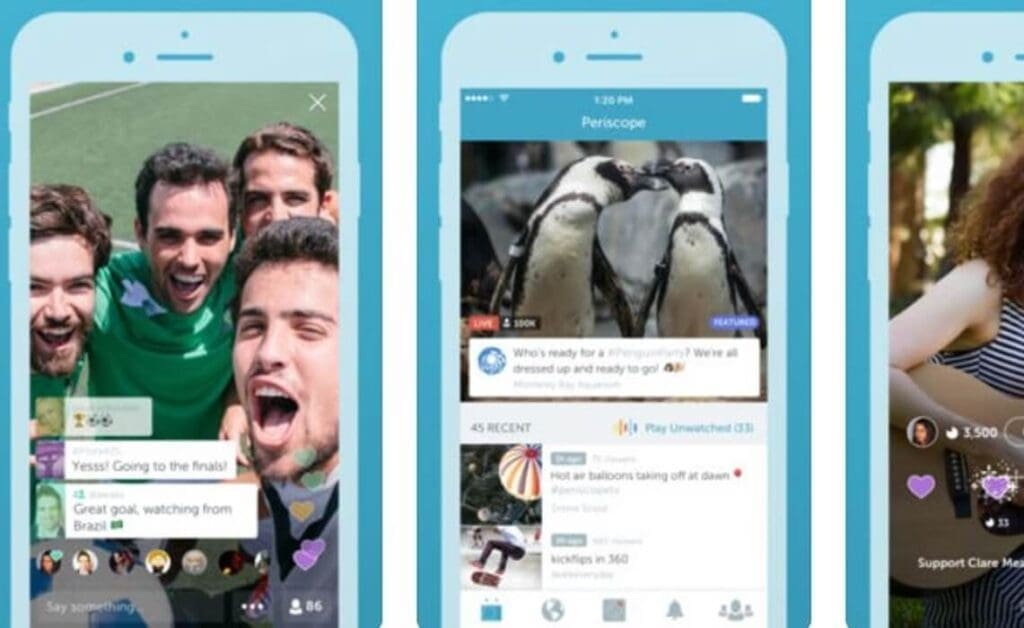
Peak: 10 million users within four months of launch in 2015. Killed by: The Feature Cannibalization + parental neglect (again by Twitter). Time of death: March 31, 2021.
If Vine is the cautionary tale about how Twitter killed a platform by refusing to pay its creators, Periscope is the cautionary tale about how Twitter killed a platform by pretending it didn’t exist.
Twitter acquired Periscope in January 2015 for a reported sum of up to $100 million, before the app had even launched publicly. When Periscope launched in March 2015, it became a phenomenon almost instantly. Within four months of release, Periscope accumulated 10 million users.
Periscope became the go-to platform for livestreaming protests, breaking news, NBA locker rooms, and political rallies. It livestreamed the 2016 RNC convention from the convention floor, covered major music festivals, and normalized the idea of strangers broadcasting raw video from their phones.
Then Facebook launched Facebook Live in April 2016, with native sharing to billions of existing users. Then Instagram followed with its own livestreaming feature. Finally, Twitter folded Periscope’s core functionality directly into the main Twitter app under the name “Twitter Live,” quietly cannibalizing its own subsidiary.
By late summer 2019, the standalone Periscope app was a ghost, kept alive only out of obligation to its existing users. In December 2020, Twitter formally announced that Periscope would be shut down by March 2021, citing in its statement: “The truth is that the Periscope app is in an unsustainable maintenance-mode state, and has been for a while.”
The Variety piece contained one sentence that encapsulates Periscope’s fate: “We probably would have made this decision sooner if it weren’t for all of the projects we reprioritized due to the events of 2020.”
The Vibe List’s take: Periscope did not die. It was forgotten so thoroughly by Twitter’s leadership that the company did not formally announce its closure until nearly two years after it had effectively stopped supporting the app.
12. Path ; The “Anti-Facebook” That Capped Your Friends at 150 and Lost the Bet
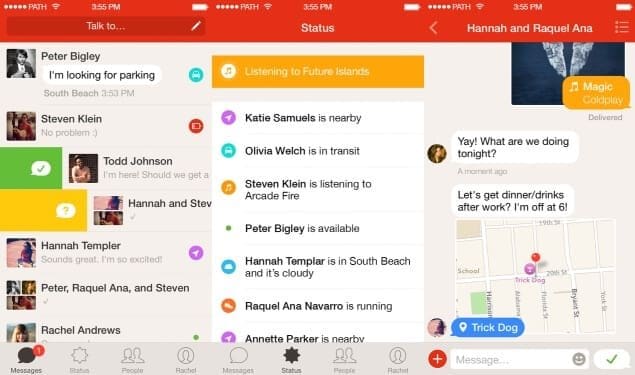
Peak: approximately 50 million users; valued at $500 million in 2013. Killed by: The Trust Collapse + The Network Effect Reversal. Time of death: October 18, 2018.
By the summer of 2010, Path was arguably the most-discussed startup in Silicon Valley, built on a bold hypothesis: most Facebook friends are not actually friends. Path was founded by former Facebook product manager Dave Morin alongside Shawn Fanning and Dustin Mierau, both formerly of Napster. At launch, Path capped each user at 50 close friends. The cap was later raised to 150; the Dunbar number, widely cited as the approximate upper limit on the relationships a single human can meaningfully maintain.
Path was beautiful. It was minimalist. It used typography and motion graphics better than any social product at the time. Google offered to acquire Path for $100 million in the summer of 2011, shortly after launch. Morin declined; the rejection now sits in startup folklore alongside Jonathan Abrams’ $30 million Friendster refusal.
Path suffered two critical setbacks that led to its eventual demise. The first came in February 2012, when Path was discovered silently uploading users’ iPhone contact lists to its servers without consent. Complaints were filed with the Federal Trade Commission and members of Congress, leading to an $800,000 FTC settlement and congressional inquiries that ultimately forced all iOS social apps to require explicit user consent before accessing contact data.
Path was also structurally doomed. By design, every user was capped at 150 friends, which meant the business model had effectively zero viral growth built in. Each user could, at best, recruit 149 other people to the platform.
After burning through hundreds of millions of dollars in venture capital, Path was acquired by Korean messaging giant Kakao in 2015 for an undisclosed price; reportedly driven by Kakao’s desire for regional reach in Southeast Asia, where Path still had four million users in Indonesia. Kakao then ignored Path for three years before shutting it down on October 18, 2018.
The Vibe List’s take: Path correctly identified a real flaw in large-scale performative-friendship platforms like Facebook; that performance at scale erodes intimacy; and built a product whose defining feature, the friend cap, made it structurally impossible to scale as a venture-backed business. Some products get everything right except whether they should be companies.
13. Yahoo! Messenger ; The Instant Messaging Titan That Couldn’t Survive the Phone
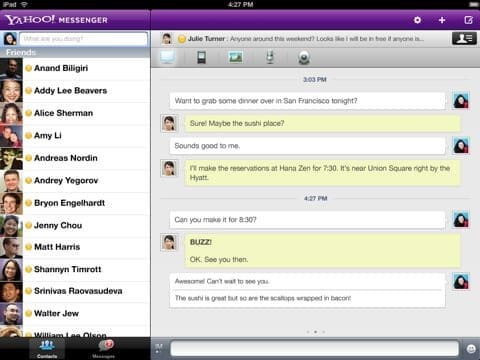
Peak: hundreds of millions of registered users; the second most-used instant messaging client in the U.S. through most of the 2000s. Killed by: The Feature Cannibalization (by smartphones themselves). Time of death: July 17, 2018.
Yahoo! Messenger, originally released in March 1998 as “Yahoo! Pager,” is the longest-lived platform in this graveyard. It survived three contemporaneous competitors (AOL Instant Messenger, MSN Messenger, ICQ), three Yahoo CEOs, a $44 billion acquisition bid by Microsoft, and the collapse of Yahoo’s relevance as a search engine. It also outlived MySpace, Friendster, Bebo, and Google+.
What finally killed Yahoo! Messenger was the smartphone.
In its prime during the mid-2000s, Yahoo! Messenger was the go-to instant messaging client for tens of millions of users globally, especially in Vietnam, the Philippines, and India. These were among the last regions where the platform continued to dominate, even after most Western users had abandoned it for Skype or Facebook Chat. Features like voice and video calls, plus file transfer, kept Yahoo! Messenger competitive with anything Microsoft or AOL offered.
But Yahoo! Messenger was built on a model that assumed users would primarily sit at a desktop computer with a wired internet connection to chat with friends. Smartphones broke that assumption. WhatsApp, Facebook Messenger, iMessage, and WeChat established the expectation of always-connected, mobile, identity-based messaging that did not require explicit login. Yahoo! Messenger went through several iterations attempting to build a mobile experience, including a full redesign in 2015. None of them recaptured the audience the platform had lost. Yahoo! Messenger formally ceased operations on July 17, 2018; more than 20 years after its launch.
The Vibe List’s take: there is no scandal here; no disgruntled creators, no public collapse. Yahoo! Messenger died because the world it was designed to live in no longer existed. It is, in some ways, the most dignified death on this list.
14. Yik Yak ; The Anonymous App That Died From Its Own Honesty
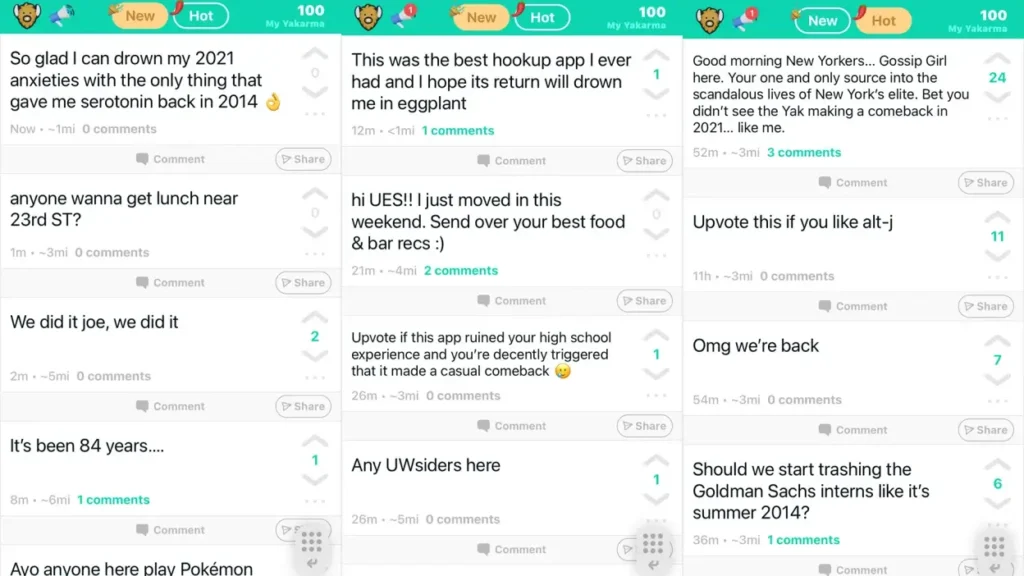
Peak: $400 million valuation in 2014; #3 most-downloaded social app on iOS in late 2014. Killed by: The Trust Collapse. Time of death: May 5, 2017 (original death); resurrected in August 2021; dormant by 2023.
Yik Yak is the only app in this graveyard that died twice.
Yik Yak was founded in 2013 by two recent Furman University alumni, Tyler Droll and Brooks Buffington, with a deceptively simple premise: display every anonymous post from users within a five-mile radius. On college campuses; Yik Yak’s primary user base; this produced a kind of communal honesty no other social platform could replicate. Crushes were named publicly. Complaints about professors flew openly. Fraternity drama exploded in near-real-time. By the end of 2014, Yik Yak was the third most-downloaded social app in the US Apple App Store, and the company was valued at $400 million.
The anonymity that made Yik Yak unique also killed it. Multiple colleges and universities reported organized harassment campaigns targeting specific named students on Yik Yak. Bomb threats directed at university campuses triggered federal investigations and arrests. Colleges and universities blocked Yik Yak on their internal networks. The company’s attempts to add content moderation, including geofencing schools, requiring usernames and passwords, and banning hate speech, alienated the users who had come to Yik Yak precisely for the chaos it produced. The platform’s daily active users (DAU) collapsed by an estimated 76% in 2016. On May 5, 2017, Yik Yak shut down.
In an odd footnote, another company acquired the rights to the name and relaunched the app in August 2021 with stricter community guidelines. Some genuine nostalgia returned, along with a short-lived spike in installs, but the relaunch never recaptured the original cultural moment. By 2023, the second iteration had effectively gone dormant.
The Vibe List’s take: Yik Yak proved that complete anonymity is not a feature; it is a chemistry experiment. The early reactions feel liberating; the later reactions tend to require lawyers.
15. Meerkat ; The SXSW Sensation That Got Cannibalized in Six Months
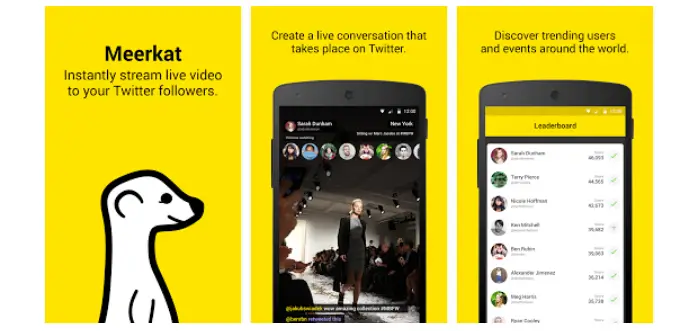
Peak: hottest app at SXSW 2015; more than 1.2 million downloads in six months. Killed by: Feature Cannibalization (first by Periscope, then by Periscope’s parent killing Periscope). Time of death: October 2, 2016.
The shortest entry in this graveyard belongs to Meerkat; a livestreaming app that dominated conversations at South by Southwest in 2015, raised $14 million from Greylock at a $52 million valuation just days after the festival, and was effectively dead within eighteen months.
Meerkat launched on February 27, 2015, with a simple promise: press a button, and immediately start broadcasting live video to your Twitter followers. Following South by Southwest, Meerkat had hundreds of thousands of users. Madonna used it. Jimmy Fallon used it. Investors loved it. Then in March 2015, Twitter suddenly cut Meerkat off from its social graph API, preventing new users from finding their Twitter friends on the app. The reason was obvious; Twitter had acquired Periscope, which was set to launch just three days later.
What followed is arguably the cleanest example of Feature Cannibalization in social media history. Periscope; using the full weight of Twitter’s resources; hit 10 million users in less than four months while Meerkat’s growth stalled completely. After a March 2016 pivot from livestreaming to a video-chat app called Houseparty, Meerkat founder Ben Rubin pulled the original app from the App Store entirely and never looked back. Houseparty itself was sold to Epic Games in June 2019, and shut down by Epic in October 2021.
The Vibe List’s take: there is a brutal irony in the fact that Periscope; the service that killed Meerkat; was itself killed five years later by parental neglect from the same Twitter that had killed Meerkat to save Periscope. Murderer and victim now sit side by side in this graveyard, slain by the same hand.
Quick Comparison: How Each Platform Died
| # | Platform | Peak Year | Peak Metric | Primary Cause of Death | Final Day |
|---|---|---|---|---|---|
| 1 | MySpace | 2008 | 115M monthly visitors | Pivot Catastrophe + Creator Exodus | Effectively 2009 |
| 2 | Vine | 2015 | 200M+ active users | Creator Exodus + Feature Cannibalization | January 17, 2017 |
| 3 | Friendster | 2003 | 115M registered users | Technical Decay + Network Effect Reversal | 2018 (officially) |
| 4 | Google+ | 2012 | Hundreds of millions of accounts | Trust Collapse + Structural Irrelevance | April 2, 2019 |
| 5 | Clubhouse | 2021 | $4B valuation; 14.2M downloads | Feature Cannibalization + Grew Too Fast | April 27, 2023 |
| 6 | Bebo | 2007 | ~40M users in UK/Ireland | Mismanaged Acquisition + Network Effect Reversal | 2013 (bankruptcy) |
| 7 | Tumblr | 2013 | $1.1B acquisition | Pivot Catastrophe + Trust Collapse | December 17, 2018 |
| 8 | Orkut | 2010–12 | #1 in Brazil and India | Network Effect Reversal + Neglect | September 30, 2014 |
| 9 | Ping | 2010 | 1M sign-ups in 48 hours | Pivot Catastrophe (born as one) | September 30, 2012 |
| 10 | MSN Messenger | 2009 | 330M MAU | Corporate Consolidation | October 31, 2014 |
| 11 | Periscope | 2015 | 10M users in 4 months | Feature Cannibalization + Parental Neglect | March 31, 2021 |
| 12 | Path | 2013 | ~50M users; $500M valuation | Trust Collapse + Network Effect Reversal | October 18, 2018 |
| 13 | Yahoo! Messenger | mid-2000s | Hundreds of millions of users | Feature Cannibalization (by smartphones) | July 17, 2018 |
| 14 | Yik Yak | 2014 | $400M valuation; #3 iOS social app | Trust Collapse | May 5, 2017 |
| 15 | Meerkat | 2015 | 1.2M downloads in 6 months | Feature Cannibalization | October 2, 2016 |
Frequently Asked Questions
What is the deadliest cause of social media platform failure?
Based on this analysis of 15 dead social media apps, Feature Cannibalization is the single most common cause of death; directly killing at least five platforms (Clubhouse, Meerkat, Periscope, Yahoo! Messenger, and MSN Messenger). Creator Exodus is arguably the most preventable cause; Vine is the textbook case, showing that a platform can lose 200 million monthly active users in under a year if it refuses to pay its creators. Virtually all deadly platform failures occur when at least two of these five causes act together.
Did Vine die because creators wanted to get paid?
Yes; essentially. According to reporting by Vanity Fair and Mic, in the spring of 2016 about eighteen of Vine’s leading creators met with Twitter executives and asked for contracts paying each creator $1.2 million per year in exchange for guaranteed monthly content. Twitter refused. Many of those creators left Vine for YouTube and Instagram in the months that followed. Twitter formally announced Vine’s closure on October 27, 2016, citing creator exodus and declining engagement, and Vine went dark on January 17, 2017.
Could Clubhouse have survived if Big Tech hadn’t copied it?
Probably not. By the time Twitter Spaces, Facebook Live Audio Rooms, Spotify Greenroom, Discord Stage Channels, and LinkedIn Audio Events had all debuted within nine months of Clubhouse’s $4 billion peak, Clubhouse had still failed to deliver an Android version and had not opened sign-ups beyond invite-only. The deeper problem was that Clubhouse offered a single value proposition; live audio rooms; that people did not want a separate app for. Once pandemic novelty faded, that value collapsed. As CEO Paul Davison told Bloomberg in October 2021, Clubhouse “grew way, way too fast” without a viable monetization strategy underneath it.
Why is MySpace still functionally alive but considered dead?
MySpace is currently owned by Viant Technology and is accessible at MySpace.com but has been functionally an archival repository since early 2022. Music uploads and playbacks have been disabled, and no new editorial content has been added to the site since. A catastrophic server migration in March 2019 erased 50 million songs and 12 years’ worth of user-generated content from MySpace’s servers, permanently. MySpace receives a minuscule fraction of its previous traffic today. The period during which MySpace lost its cultural relevance and commercial viability to Facebook; which surpassed MySpace in US monthly visits in November 2009; is generally agreed to be when MySpace actually died.
What lesson does the social media graveyard teach us about today’s platforms?
Every platform on top today (TikTok, Instagram, YouTube, Snapchat, Discord, and others) exhibits at least one warning sign that killed a predecessor in this graveyard. TikTok has shown how fragile a platform’s regulatory position can be, surviving and being reinstated after the January 2025 US ban. Instagram has repeatedly attempted Pivot Catastrophes; the 2022 video-first push, including the now-walked-back Reels-first feed, was a textbook example the company eventually had to reverse. Discord’s increasing dependence on creator-driven communities echoes Vine’s pre-collapse position, where the platform’s value lived almost entirely with the creators it failed to compensate. And TikTok, even at its current scale, sits one regulatory ruling away from a Trust Collapse on a generational scale.


