


$147 billion from two Game Boy cartridges with four-shade green screens. 183 million copies sold from the mansion that invented survival horror. A 161,600 square-kilometer open world built in 1996 that still dwarfs most RPGs released in 2026. A Quake mod coded in a college dorm that became one of the biggest esports on the planet. A yellow mouse that doesn’t speak, recognized on every continent by people who have never touched a controller. Fifteen games shipped across twelve months. Every genre, engine, and franchise they built is still running thirty years later.
Why 1996 Is the Year That Built Modern Gaming
In 1996, the industry wasn’t just producing great video games. 1996 created the architectural blueprints for the industry that exists today. Consider what arrived across twelve months: the template for three-dimensional character movement. The birth of the survival horror genre in its modern form. The first fully polygonal first-person shooter engine. The most commercially successful media franchise in human history. The action-adventure character who would become gaming’s first genuine celebrity. The action RPG formula that still powers loot-driven games three decades later. And the mascot platformer that gave Sony’s PlayStation a face to rival Nintendo’s plumber.
No single calendar year in gaming history has generated as many active franchises, enduring design philosophies, and profitable commercial ecosystems as 1996. This list ranks the fifteen games turning 30 in 2026 whose impact remains most measurable today; not by how fondly they are remembered, but by the industries they created and the design decisions they embedded into every game released since.
The console landscape in 1996 was a three-front war. Sony’s PlayStation dominated through aggressive third-party partnerships and a CD-based library expanding at a rate Nintendo’s cartridges could not match. Nintendo launched the N64 in mid-1996, leading with what remains one of the most consequential launch titles in platform history. Sega’s Saturn lost ground rapidly in North America, though its Japanese library retained pockets of brilliance. On PCs, id Software and Blizzard were about to redefine multiplayer gaming, while Westwood Studios and MicroProse were shaping real-time and turn-based strategy into genres that would eventually spawn billion-dollar esports ecosystems.
All fifteen games were evaluated not by their 1996 reception alone, but by their cumulative 30-year legacy; measured in franchise revenue, genre creation, design influence, and cultural significance.
How We Ranked This
Each entry was evaluated across six weighted criteria. Commercial legacy covers franchise revenue and unit sales over 30 years (20%). Cultural influence asks whether the game created or redefined a genre, changed consumer behavior, or shifted industry paradigms (25%). Genre creation and innovation measures whether the game pioneered techniques, mechanics, or design philosophies still in use (20%). Franchise longevity assesses whether the franchise remains commercially active and culturally relevant in 2026 (15%). Design philosophy endurance evaluates whether the design decisions made in 1996 remain standard practice (10%). Editorial conviction reflects the Vibe List’s judgment of overall historical significance (10%).
The result is a ranking that respects the data but is ultimately shaped by the Vibe List’s editorial judgment. You won’t find this exact list anywhere else; and that’s the point.
15. NiGHTS into Dreams

Developer: Sonic Team | Publisher: Sega | Platform: Sega Saturn | Release: July 5, 1996 (Japan)
NiGHTS into Dreams was the game the Sega Saturn desperately needed; and the one that couldn’t save it. Directed by Takashi Iizuka and produced by Yuji Naka at Sonic Team, NiGHTS was a flight-based action game that traded Sonic’s platforming precision for freeform acrobatics through surreal dreamscapes. Sonic Team designed levels around rhythm and flow rather than traditional obstacle navigation.
The game shipped with the 3D Control Pad, Sega’s answer to the N64 controller’s analog stick. While NiGHTS was among the first console games to use analog input for fluid, 360-degree movement, its implementation was narrower than what Super Mario 64 achieved on the N64.
NiGHTS never became a commercial blockbuster. Sega’s declining market share in the West limited the game’s audience, and Sega never gave NiGHTS the franchise investment its creative ambition deserved. A Wii sequel arrived in 2007 to lukewarm reviews, and the original received an HD remaster in 2012. The game’s design DNA; movement as expression, scoring through creativity rather than completion; surfaces in modern rhythm games, flow-state platformers, and the trick systems found in skating and surfing games. NiGHTS was Sega at its most artistically ambitious; a reminder that commercial failure does not erase creative influence.
The Vibe List’s take: NiGHTS sits at fifteen because its influence is traceable but indirect. It shaped designers more than it shaped markets. In a year where fourteen other games reshaped both, that distinction matters.
14. Dead or Alive
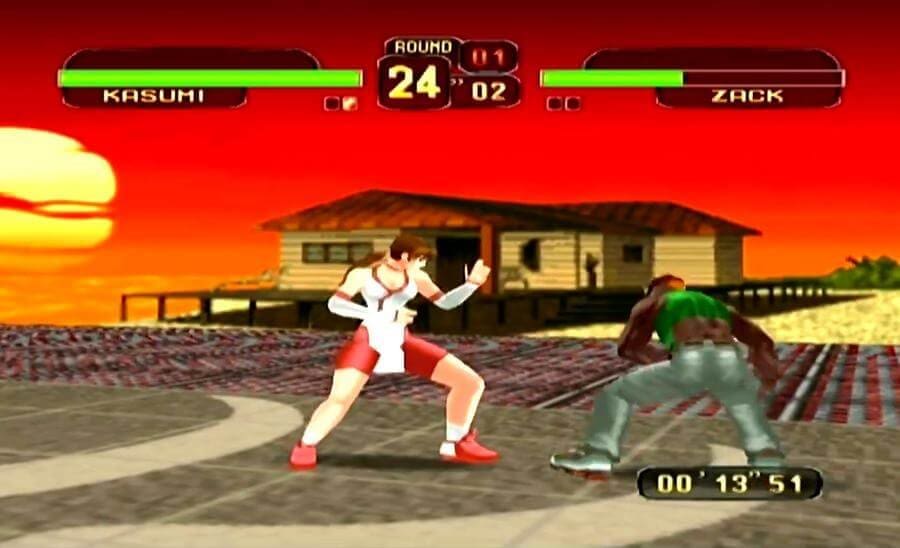
Developer: Team Ninja | Publisher: Tecmo | Platform: Arcade (Sega Model 2) | Release: November 26, 1996 (Arcade, Japan)
Tomonobu Itagaki’s debut fighting game launched in arcades in late 1996 on Sega’s Model 2 hardware, introducing a counter-hold system that rewarded defensive reads with punishing reversals. This system; the “Triangle System” of strikes, throws, and holds; gave Dead or Alive a mechanical identity that separated it from Virtua Fighter’s precision spacing and Tekken’s string-based offense.
The Dead or Alive franchise has remained commercially active for nearly 30 years, spanning six mainline fighting games, the Xtreme sub-series, a 2006 feature film, and consistent fighting game community tournament presence. Dead or Alive 6, released in 2019, was the franchise’s most recent mainline entry.
Dead or Alive’s cultural legacy is complicated. The franchise is inseparable from the controversy surrounding its depiction of female characters; a design choice that generated substantial commercial revenue, particularly in Japan, while drawing sustained criticism from industry observers and advocacy groups. That tension shaped broader conversations about representation in fighting games that still influence character design across the genre.
The Vibe List’s take: Dead or Alive ranks fourteenth because its mechanical innovation was real and its counter system influenced fighting game design for decades. But its franchise trajectory has narrowed rather than expanded over thirty years, and its cultural legacy remains more contested than constructive.
13. Duke Nukem 3D

Developer: 3D Realms | Publisher: GT Interactive | Platform: PC (MS-DOS) | Release: January 29, 1996 (Shareware)
Before Quake made first-person shooters fully polygonal later in 1996, Duke Nukem 3D was the game that broke the FPS out of the abstract corridor. Tom’s Hardware noted that the game’s real-world environments; strip clubs, sushi bars, space stations; and their destructibility and interactivity were what distinguished Duke from mid-90s FPS competitors.
The Build Engine, developed by Ken Silverman, powered Duke Nukem 3D with a 2.5D renderer that was more advanced than Doom’s engine in environmental interactivity. Players could flip light switches, use water fountains for health, and navigate through air ducts and hidden passages. Level design abandoned linearity for exploration, a philosophy that later FPS titles from Half-Life to Dishonored would build upon.
Duke Nukem 3D sold over 3.5 million copies by 2001, making it one of the best-selling PC games of its era. The franchise’s subsequent implosion; Duke Nukem Forever’s catastrophic 15-year development cycle and disastrous 2011 release; remains one of the most cautionary tales in the industry. The original Duke Nukem 3D remains historically significant as a bridge between Doom-era corridor shooters and the fully 3D environments that Quake and Half-Life would establish.
The Vibe List’s take: Duke Nukem 3D ranks thirteenth because it served as a bridge between two eras of FPS design rather than the foundation of a lasting one. Its innovations were real but quickly surpassed, and the franchise destroyed itself before it could build a 30-year legacy.
12. Command & Conquer: Red Alert
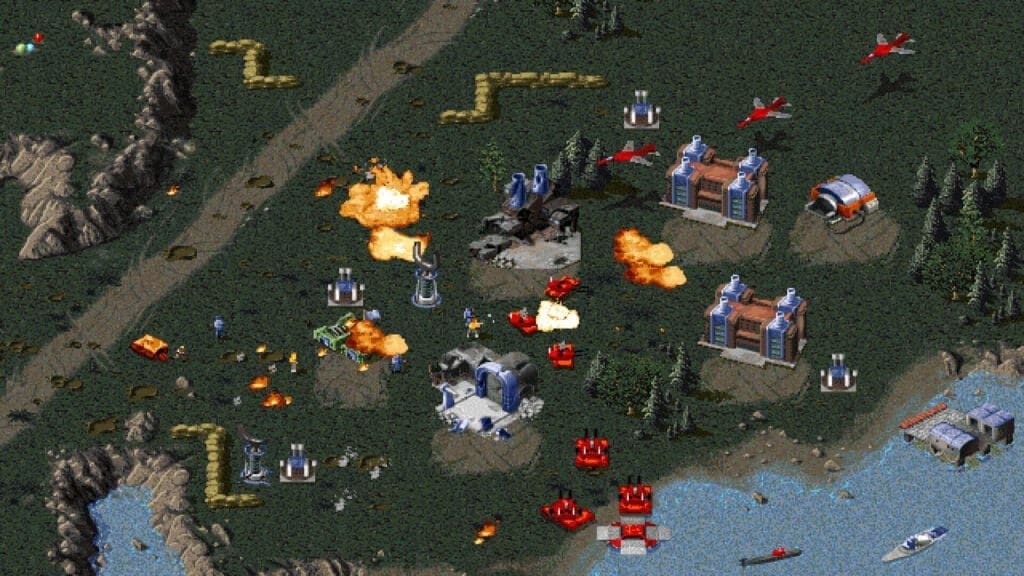
Developer: Westwood Studios | Publisher: Virgin Interactive | Platform: PC | Release: October 31, 1996
Westwood Studios released the prequel to 1995’s Command & Conquer during the golden age of real-time strategy gaming, and Red Alert became one of the genre’s defining commercial successes. The alternate-history premise; Albert Einstein travels back in time to prevent World War II, inadvertently creating a new Cold War; gave Westwood a creative canvas that sustained the Red Alert sub-series through three mainline titles and several expansions.
Red Alert’s contribution to the RTS genre was threefold. Its campaign structure offered two fully playable faction campaigns with divergent storylines. Its full-motion video cutscenes, featuring live actors in increasingly campy Cold War scenarios, established a narrative presentation style that defined the Command & Conquer franchise’s identity for fifteen years. Its multiplayer, powered by Westwood’s online infrastructure, demonstrated that real-time strategy could sustain competitive communities; an insight that StarCraft would expand upon two years later into an esports phenomenon.
The Command & Conquer franchise has faded from commercial prominence since EA acquired Westwood in 2003 and eventually shuttered the studio. A remastered collection of the original games launched in 2020 to positive reception, but the franchise has no announced future titles. Red Alert’s legacy lives in the RTS genre itself; which, while no longer commercially dominant, still sustains passionate communities around Total War, Age of Empires, and StarCraft.
The Vibe List’s take: Red Alert ranks twelfth because it helped define the golden age of a genre that shaped competitive gaming, but corporate acquisition destroyed the franchise before it could sustain a thirty-year legacy.
11. The Elder Scrolls II: Daggerfall
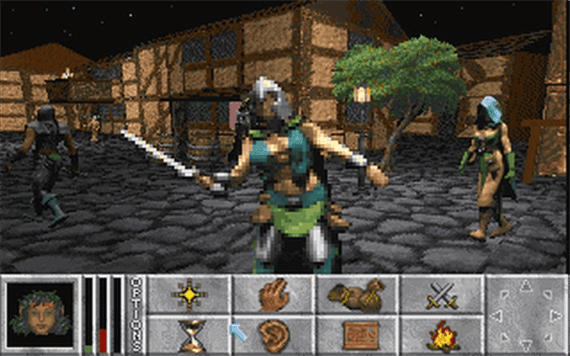
Developer: Bethesda Softworks | Platform: PC (MS-DOS) | Release: September 20, 1996
Daggerfall taught the open-world RPG to think bigger than anyone thought possible; and arguably bigger than anyone should have. Bethesda Softworks built a procedurally generated game world roughly the size of Great Britain; approximately 161,600 square kilometers containing 15,000 towns and 750,000 non-player characters; a scope that still dwarfs most open-world RPGs released in 2026.
The game was ambitious beyond its technical ability to deliver. Daggerfall shipped with significant bugs, and its procedural generation produced environments that often felt repetitive. But the design philosophy it established; a massive open world with player-directed progression, guild systems, faction reputations, and a dynamic calendar; became the template Bethesda would refine through Morrowind, Oblivion, and Skyrim. The Elder Scrolls V: Skyrim has sold over 60 million copies since its 2011 release and remains commercially active on modern platforms in 2026.
Daggerfall also popularized procedural generation as a tool for creating scale in RPGs, a technique that has since driven everything from No Man’s Sky to Minecraft’s world-building engine. Bethesda released Daggerfall for free in 2009 to celebrate the Elder Scrolls franchise’s 15th anniversary, and a fan-driven project called Daggerfall Unity has rebuilt the game in the Unity engine for modern hardware.
The Vibe List’s take: Daggerfall ranks eleventh because its design philosophy produced Skyrim; one of the most commercially successful RPGs ever made; but the original was more proof-of-concept than polished product, and its influence took two generations of sequels to manifest.
10. Civilization II
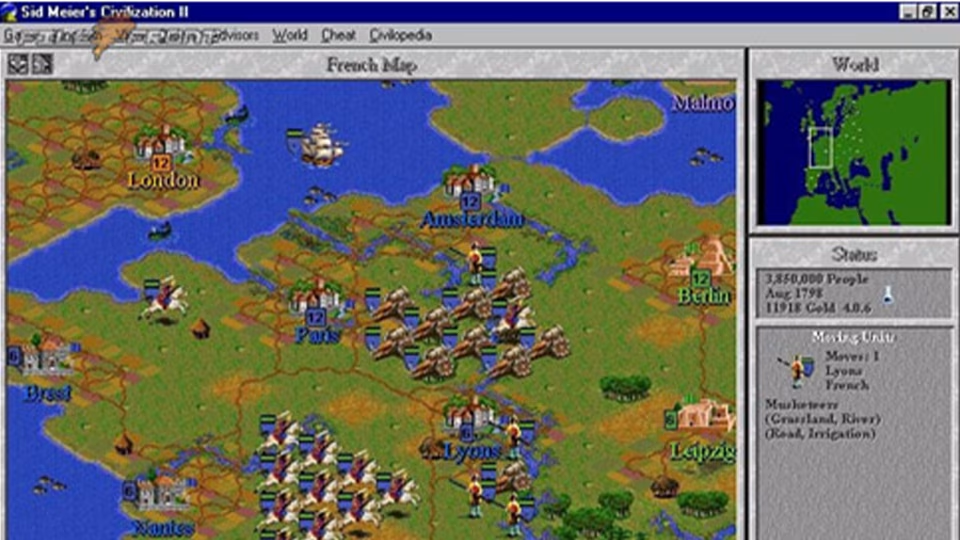
Developer: MicroProse | Platform: PC (Windows, Mac) | Release: February 29, 1996
Sid Meier’s Civilization II was not the first Civilization game, but it was the one that transformed the franchise from a niche PC strategy title into one of the most enduring intellectual properties in gaming. Released in February 1996, Civilization II refined the turn-based 4X formula with an isometric perspective, expanded diplomacy, and a scenario editor that spawned one of the earliest robust modding communities. Its strategic depth kept players engaged for hundreds of hours per campaign.
The Civilization franchise has sold 73 million units globally as of 2025, with Civilization VII launching in February 2026 to strong commercial performance. The “one more turn” phenomenon; a phrase that has entered mainstream gaming vocabulary to describe any compulsive play loop; originated from Civilization II’s ability to make each successive turn feel more consequential than the last.
Civilization II also helped establish Firaxis Games as one of the most important studios in strategy gaming. Sid Meier, Brian Reynolds, and Jeff Briggs founded Firaxis in 1996 after leaving MicroProse, and the studio went on to produce Civilization III through VII as well as the acclaimed XCOM reboots. The founding of Firaxis is itself a 1996 milestone; the studio remains one of the few dedicated strategy specialists operating at scale in 2026.
The Vibe List’s take: Civilization II earns tenth because the franchise it sustained is one of the longest-running and most commercially successful in PC gaming, and the “one more turn” compulsion it popularized has influenced game design well beyond the strategy genre.
9. Tekken 2

Developer: Namco | Publisher: Namco | Platform: Arcade, PlayStation | Release: March 29, 1996 (PlayStation, Japan)
Tekken 2 was the game that turned a promising arcade fighter into a PlayStation-defining franchise. The original Tekken had been a strong launch title for Sony’s console, but Tekken 2 delivered the depth, roster balance, and visual fidelity that made the series a genuine rival to Virtua Fighter in arcades and the dominant fighter on PlayStation.
The PlayStation version sold 5.74 million copies worldwide, making it one of the best-selling fighting games on the original PlayStation. More importantly, Tekken 2 established the narrative and mechanical framework; the Mishima family saga, the King of Iron Fist Tournament structure, and the limb-based combat system; that has sustained the franchise through eight mainline entries spanning 30 years.
Tekken 8, released in January 2024, earned widespread critical acclaim, and the franchise remains a cornerstone of the competitive fighting game scene. Tekken 8 is featured at the Esports World Cup 2026. The Tekken franchise has sold over 61 million copies worldwide as of March 2025, making it one of the best-selling fighting game series in history.
The Vibe List’s take: Tekken 2 ranks ninth because it built a fighting game dynasty that remains competitively and commercially viable 30 years later; a durability that very few 1996 releases can match outside the top five.
8. Crash Bandicoot
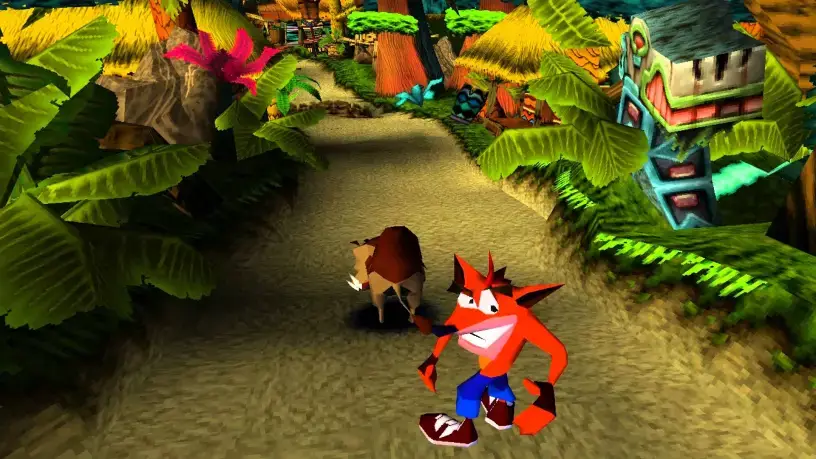
Developer: Naughty Dog | Publisher: Sony Computer Entertainment | Platform: PlayStation | Release: September 9, 1996 (North America)
Crash Bandicoot was Sony’s answer to a problem it didn’t publicly acknowledge; the PlayStation needed a mascot. Nintendo had Mario. Sega had Sonic. Sony had hardware superiority and a diverse third-party library, but no face. Naughty Dog, a small studio that had previously developed Way of the Warrior for 3DO, built Crash under a deal between Sony Computer Entertainment, Naughty Dog, and Universal Interactive Studios.
The original Crash Bandicoot sold 6.82 million copies on the PlayStation. The franchise expanded rapidly through two sequels and the kart racer Crash Team Racing before Naughty Dog moved on to Jak and Daxter, and eventually to Uncharted and The Last of Us. Crash Bandicoot N. Sane Trilogy, the 2017 remaster of the original three games, surpassed 20 million copies sold, proving that nostalgia for the character still converts to sales.
Crash Bandicoot’s deeper significance lies in what Naughty Dog became. The studio that cut its teeth on a cartoon marsupial evolved into the developer behind The Last of Us, one of the most critically acclaimed narrative franchises in gaming, which later became an Emmy-winning HBO series. Every step of Naughty Dog’s evolution traces back to the technical and design lessons learned building Crash.
The Vibe List’s take: Crash ranks eighth because while the character became a nostalgia icon rather than an ongoing cultural force, the studio he launched became one of the most important developers in gaming history; and few 1996 games can claim that lineage.
7. Super Mario RPG: Legend of the Seven Stars

Developer: Square | Publisher: Nintendo | Platform: SNES | Release: March 9, 1996 (Japan)
Super Mario RPG was the last collaboration between Nintendo and Square (now Square Enix) before Square’s departure to PlayStation for Final Fantasy VII, and it produced something neither company had attempted; a fully realized role-playing game starring Nintendo’s flagship mascot. Directed by Yoshihiko Maekawa and produced by Shigeru Miyamoto, the game blended Square’s JRPG expertise with Nintendo’s character design to create an isometric RPG with timed-hit combat, a humor-driven narrative, and original characters; including fan favorites Geno and Mallow; that players have lobbied to see return for three decades.
Super Mario RPG’s commercial success was modest by Mario standards, but its design legacy is enormous. The timed-hit system, where pressing a button at the moment of attack impact delivers bonus damage, became the foundational combat mechanic for two of Nintendo’s most beloved RPG sub-franchises: Paper Mario (launched 2000) and Mario & Luigi (launched 2003). Both series have collectively sold tens of millions of copies, and their core gameplay identity traces directly to Super Mario RPG.
Nintendo released a full remake of Super Mario RPG for the Switch in November 2023, and the remake received strong reviews confirming the game’s design still holds up.
The Vibe List’s take: Super Mario RPG ranks seventh because it founded a design lineage; the timed-hit Mario RPG; that sustained two separate sub-franchises across six console generations, and because it represented the final creative peak of the Nintendo-Square partnership before a split that reshaped the console RPG landscape.
6. Super Mario 64

Developer: Nintendo EAD | Publisher: Nintendo | Platform: Nintendo 64 | Release: June 23, 1996 (Japan)
Super Mario 64 did not simply launch the Nintendo 64. It defined what three-dimensional character movement would feel like for every game that followed. Directed by Shigeru Miyamoto, Super Mario 64 solved problems no game had solved before; how to control a character in 3D space with an analog stick, how to manage a camera through environments with variable geometry, and how to translate the precision of 2D platforming into a 3D world without losing the joy of movement.
The game sold 11.91 million copies worldwide, making it the best-selling Nintendo 64 title. Its design influence extends far beyond its sales. Nearly every 3D platformer, action-adventure game, and open-world title released since 1996 uses movement and camera systems rooted in solutions Miyamoto’s team pioneered in Super Mario 64. GamesRadar argued that the entire landscape of gaming would be different today without Super Mario 64.
The game’s structure; collecting Power Stars scattered across themed worlds accessed through a central hub; has been replicated, iterated upon, and deconstructed by hundreds of games in the three decades since. Princess Peach’s Castle remains one of the most recognizable video game environments ever designed.
The Vibe List’s take: Super Mario 64 ranks sixth rather than first because; despite its colossal design influence; it launched a single hardware platform rather than an independent commercial franchise. The games ranked above it either created entirely new genres or built multi-decade commercial ecosystems that extend far beyond gaming. Super Mario 64 changed how games feel. The entries above it changed what gaming is.
5. Diablo
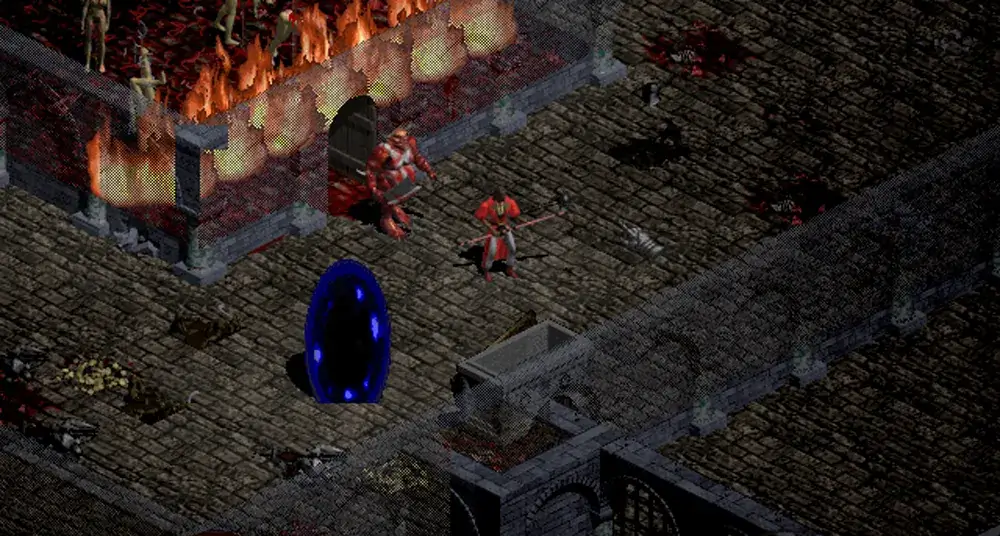
Developer: Blizzard North | Publisher: Blizzard Entertainment | Platform: PC (Windows) | Release: December 31, 1996
David Brevik and Blizzard North shipped Diablo on the final day of 1996, and the action RPG genre has never been the same. The game’s formula; procedurally generated dungeon floors, randomized loot with tiered rarity, a click-to-attack combat loop, and a descending journey toward a climactic boss encounter; became the template for an entire category of games now collectively known as “action RPGs” or, more commonly, “Diablo-likes.”
Diablo needed to sell only 20,000 copies to break even. It sold millions. The Diablo franchise has sold over 30 million units across its mainline entries and expansions, with Diablo IV launching in 2023 to massive commercial success and continuing to receive expansion content in 2026. The franchise’s influence extends well beyond its own sales; Path of Exile, Torchlight, Grim Dawn, Last Epoch, and dozens of other action RPGs exist because Diablo proved the formula works.
Equally important was Diablo’s online infrastructure. Battle.net, Blizzard’s free multiplayer service, was integrated into Diablo from launch and became an early prototype for the always-connected gaming services that now define online play. The concept of logging into a centralized server to play cooperatively with friends; standard practice in 2026; was revolutionary in 1996, and Diablo was the game that made it feel natural. Diablo IV is among the best-selling PC games of its era.
The Vibe List’s take: Diablo ranks fifth because it invented a genre that remains commercially dominant 30 years later, pioneered online multiplayer infrastructure that shaped the entire industry, and spawned a franchise that is still generating expansion content in 2026. The loot system Brevik designed on the last day of 1996 is the same system keeping millions of players grinding today.
4. Quake

Developer: id Software | Publisher: GT Interactive | Platform: PC | Release: June 22, 1996
Quake was the first fully three-dimensional first-person shooter. Every FPS before it; including id Software’s own Doom and Duke Nukem 3D; used 2.5D rendering techniques that faked three-dimensionality through sprite-based enemies and height-mapped environments. Quake rendered its entire world in real-time 3D polygons; enemies, architecture, projectiles, and lighting were all calculated by the Quake engine as true three-dimensional objects. The technical leap was enormous and immediate.
Quake sold over 1.4 million copies by December 1997. But its sales are the least significant measure of its impact. Three of Quake’s contributions to gaming remain foundational in 2026.
The first was the engine itself. John Carmack’s Quake engine was licensed to other developers, spawning a lineage of licensed game engines that runs directly from Quake through Half-Life (built on a modified Quake engine) to the modern era of Unreal Engine and Unity. The concept of a licensable game engine; rather than every studio building its own technology from scratch; is now the default model for the industry, and Quake’s engine was its proof of concept.
The second was modding. id Software released Quake’s source code and actively encouraged the modding community, creating one of the first large-scale ecosystems of user-generated content. Team Fortress, one of the most influential multiplayer mods in history, began as a Quake mod in 1996. The modding culture Quake cultivated led directly to Counter-Strike (a Half-Life mod), which led to one of the biggest esports games in 2026.
The third was competitive multiplayer. Quake helped define organized competitive gaming by popularizing deathmatch tournaments, client-server networking for low-latency play, and spectator features. The first widely recognized esports tournament; the “Red Annihilation” Quake tournament at E3 1997, where Dennis “Thresh” Fong won John Carmack’s Ferrari; is a direct consequence of the competitive infrastructure Quake established.
The Vibe List’s take: Quake ranks fourth because it invented the modern FPS engine, pioneered the modding ecosystem that produced Counter-Strike and Team Fortress, and laid the groundwork for esports. Three separate pillars of modern gaming trace their origin to a single 1996 release; few games in history can claim even one.
3. Tomb Raider

Developer: Core Design | Publisher: Eidos Interactive | Platform: Sega Saturn, PC, PlayStation | Release: October 25, 1996
Lara Croft became gaming’s first genuine celebrity. Not a mascot. Not a brand ambassador. A celebrity; a character who appeared on the covers of non-gaming magazines, was studied in academic papers about gender in media, and became a cultural reference point for people who had never touched a controller. No video game character before Lara Croft had achieved that level of mainstream recognition, and the path she blazed paved the way for every game character who has since built an empire beyond the screen.
The Tomb Raider franchise has officially sold over 100 million games worldwide; a milestone announced by Crystal Dynamics in October 2024. Three live-action films have collectively grossed over $700 million at the global box office. A Netflix animated series, Tomb Raider: The Legend of Lara Croft, launched in 2024. Tomb Raider: Legacy of Atlantis is scheduled for release in 2026, celebrating the franchise’s 30th anniversary. BAFTA honored Lara Croft with a Fellowship in 2024.
Beyond the commercial data, the original 1996 Tomb Raider was one of two landmark 3D games of the year alongside Super Mario 64. Where Mario 64 solved movement in open 3D spaces, Tomb Raider pioneered third-person 3D exploration; traversal puzzles, environmental storytelling through ancient ruin architecture, and a sense of isolation and discovery that influenced everything from Uncharted to Horizon Zero Dawn. GamesRadar identified Tomb Raider as one of two archetypal 1996 titles that established the blueprints for 3D camera and character control.
The Vibe List’s take: Tomb Raider ranks third because it produced gaming’s first mainstream cultural icon, built a 100-million-unit franchise that remains active across games, film, and streaming in 2026, and pioneered third-person 3D exploration design that still drives AAA game development. Three pillars of influence; cultural, commercial, and mechanical; each sustained across 30 years.
2. Resident Evil

Developer: Capcom | Publisher: Capcom | Platform: PlayStation | Release: March 22, 1996 (Japan)
Shinji Mikami did not invent survival horror. Alone in the Dark (1992) and Sweet Home (1989) preceded him. What Mikami did was codify it. Resident Evil established the vocabulary that defined survival horror for every game that followed: limited ammunition creating constant resource-management tension, save systems built on finite consumable items, environmental puzzles interspersed with combat, and claustrophobic dread delivered through fixed camera angles and oppressive sound design.
The franchise that Resident Evil launched is, by any measure, one of the most commercially dominant in gaming history. According to Capcom’s Q3 2026 business report, the Resident Evil series has sold over 183 million units worldwide as of the end of December 2025; making it Capcom’s top franchise and the best-selling horror series in gaming history. Resident Evil: Requiem, released February 27, 2026, sold over 7 million copies within its first months and is among the best-selling PC games of 2026.
Resident Evil’s influence extends beyond its own franchise. The survival horror genre it codified produced Silent Hill, Fatal Frame, Dead Space, Amnesia, Outlast, and dozens of other horror franchises. The genre itself; one that did not meaningfully exist in commercial form before March 1996; has generated billions of dollars in cumulative revenue across all its constituent franchises. Six live-action films, an animated film series, a Netflix series, and multiple novels have expanded the franchise into a multimedia empire.
Capcom’s RE Engine, the proprietary game engine that powers every major Capcom title in 2026, was named after Resident Evil. The technology that drives Resident Evil: Requiem, Monster Hunter Wilds, and Pragmata carries the franchise’s initials in its name. No other 1996 release has a game engine named after it that is still powering AAA releases in 2026.
The Vibe List’s take: Resident Evil ranks second because it created an entire genre that generated billions across dozens of franchises, built a 183-million-unit commercial empire that is still breaking sales records in 2026, and embedded its identity so deeply into its parent company that Capcom’s proprietary engine carries its name. Only one 1996 release built something bigger.
1. Pokémon

Developer: Game Freak | Publisher: Nintendo | Platform: Game Boy | Release: February 27, 1996 (Japan)
On February 27, 1996, Game Freak released two companion Game Boy cartridges in Japan that Nintendo viewed with limited commercial expectations. The games were called Pocket Monsters: Red and Pocket Monsters: Green. They ran on a handheld console that was seven years old, powered by a processor outdated at launch, displaying graphics in four shades of green. Nothing about the hardware suggested a world-changing product. Everything about the design did.
Satoshi Tajiri’s vision; a game where players catch, train, trade, and battle creatures; was built on a social mechanic that no game had used at this scale. Each cartridge contained exclusive creatures, which meant completing the collection required trading with a player who owned the opposite game. This link-cable trading mechanic drove additional hardware sales, built social communities around the game, and created a collecting psychology that would eventually sustain the highest-grossing media franchise in human history.
The numbers in 2026 are staggering. Forbes reported in February 2026 that Pokémon has generated revenues approaching $147 billion, making it the most valuable entertainment franchise in the world. The franchise has produced more than 75 billion trading cards. Close to 500 million video games have sold worldwide. The Pokémon Trading Card Game remains one of the most commercially active collectible card games on the planet, with a single Pikachu Illustrator card selling for a reported $16.49 million.
Pokémon’s 30th anniversary celebrations in 2026 include new trading card sets, merchandise collections, a Natural History Museum partnership in London, and commemorative retail events across Best Buy stores nationwide. Pikachu has become one of the most recognizable fictional characters in the world; a yellow mouse that doesn’t speak, whose image is known to people on every continent who have never played a video game.
What separates Pokémon from every other entry on this list is the breadth of what it created. Pokémon is not merely a franchise. It is a behavioral system; a framework for collecting, caring, trading, and competing that functions identically whether expressed through a Game Boy cartridge, a trading card, a mobile app, an animated series, or a stuffed toy. That system has sustained itself across 30 years, nine console generations, and every demographic boundary the entertainment industry uses to segment its audiences.
The Vibe List’s take: Pokémon ranks first because no other game from any year; not just 1996; has created a commercial, cultural, and behavioral ecosystem of this magnitude. $147 billion from two Game Boy cartridges with green screens. There is no second place that comes close.
Quick Reference: Every 1996 Game at a Glance
| Rank | Game | Developer | Platform | Release Date | 30-Year Legacy Highlight |
|---|---|---|---|---|---|
| 1 | Pokémon Red and Green | Game Freak | Game Boy | Feb 27, 1996 | $147 billion franchise revenue; highest-grossing media property in history; 500M+ games sold; 75B+ trading cards produced |
| 2 | Resident Evil | Capcom | PlayStation | Mar 22, 1996 | 183 million units sold; created the survival horror genre; RE Engine named after the franchise still powers AAA titles in 2026 |
| 3 | Tomb Raider | Core Design | Saturn/PC/PS1 | Oct 25, 1996 | 100 million units sold; gaming’s first mainstream cultural icon; $700M+ film franchise; BAFTA Fellowship 2024 |
| 4 | Quake | id Software | PC | Jun 22, 1996 | Invented the fully 3D FPS engine; pioneered modding culture (Team Fortress, Counter-Strike lineage); laid the groundwork for esports |
| 5 | Diablo | Blizzard North | PC | Dec 31, 1996 | Created the action RPG genre; 30M+ franchise units; pioneered Battle.net online multiplayer; still receiving expansions in 2026 |
| 6 | Super Mario 64 | Nintendo EAD | N64 | Jun 23, 1996 | 11.91M copies sold; defined 3D character movement and camera control for every game that followed |
| 7 | Super Mario RPG: Legend of the Seven Stars | Square / Nintendo | SNES | Mar 9, 1996 | Founded the Paper Mario and Mario & Luigi RPG lineages; final Nintendo-Square collaboration before industry-reshaping split |
| 8 | Crash Bandicoot | Naughty Dog | PlayStation | Sep 9, 1996 | 70M+ franchise sales; N. Sane Trilogy hit 20M units; launched Naughty Dog’s evolution into The Last of Us studio |
| 9 | Tekken 2 | Namco | Arcade/PS1 | Mar 29, 1996 | 61M+ franchise copies sold; Tekken 8 featured at Esports World Cup 2026; 30-year competitive fighting game dynasty |
| 10 | Civilization II | MicroProse | PC | Feb 29, 1996 | 73M franchise units; coined “one more turn”; Civ VII launched Feb 2026; Firaxis founded 1996 |
| 11 | The Elder Scrolls II: Daggerfall | Bethesda Softworks | PC | Sep 20, 1996 | 161,600 km² procedural world; blueprint for Morrowind, Oblivion, and Skyrim (60M+ copies); Daggerfall Unity fan rebuild |
| 12 | Command & Conquer: Red Alert | Westwood Studios | PC | Oct 31, 1996 | Helped define the golden age of RTS gaming; live-action FMV cutscenes set franchise identity; 2020 remaster |
| 13 | Duke Nukem 3D | 3D Realms | PC | Jan 29, 1996 | 3.5M copies sold; Build Engine bridged corridor FPS to interactive environmental design; franchise cautionary tale |
| 14 | Dead or Alive | Team Ninja | Arcade | Nov 26, 1996 | Counter-hold Triangle System influenced fighting game design for decades; six mainline entries over 30 years |
| 15 | NiGHTS into Dreams | Sonic Team | Sega Saturn | Jul 5, 1996 | Pioneered movement-as-expression and flow-state design; shipped with Sega’s first analog controller |
FAQ: Games Turning 30 in 2026
Which games are turning 30 in 2026? Fifteen landmark titles from 1996 are turning 30, including Pokémon Red and Green, Resident Evil, Tomb Raider, Quake, Diablo, Super Mario 64, Crash Bandicoot, Tekken 2, Civilization II, The Elder Scrolls II: Daggerfall, Duke Nukem 3D, Command & Conquer: Red Alert, Super Mario RPG, NiGHTS into Dreams, and Dead or Alive. Together, these games shaped modern gaming across genres, platforms, and business models.
Why is 1996 considered the most important year in gaming history? 1996 produced more enduring franchises, design philosophies, and commercial ecosystems than any other single year in gaming history. It saw the birth of Pokémon (now the highest-grossing media franchise ever), the codification of survival horror through Resident Evil, the invention of the fully 3D FPS engine via Quake, and the template for 3D character movement through Super Mario 64; all within twelve months.
What is the highest-grossing franchise that started in 1996? Pokémon is the highest-grossing media franchise that originated in 1996, with revenues approaching $147 billion as reported by Forbes in February 2026. This makes Pokémon the most valuable entertainment franchise in the world, surpassing Star Wars, Marvel, and all other competitors.
Are any 1996 games still getting new releases in 2026? Yes. Several 1996 franchises have active releases in 2026. Resident Evil: Requiem launched in February 2026 and has sold over 7 million copies. Pokémon is celebrating its 30th anniversary with new trading card sets and merchandise. Tomb Raider: Legacy of Atlantis is scheduled for 2026. Civilization VII launched in February 2026. Tekken 8 remains competitively active at the Esports World Cup 2026.
What was the best-selling game of 1996? In terms of long-term unit sales, Pokémon Red and Green (later re-released internationally as Pokémon Red and Blue) is the best-selling game that originated in 1996, with the combined original Game Boy releases selling over 31 million copies worldwide. Super Mario 64 sold 11.91 million copies, while the original Tomb Raider sold approximately 7 million copies.
Did Diablo come out in 1996 or 1997? The release date of Diablo is disputed. Creator David Brevik has stated that the game was available in stores on December 31, 1996, while official Blizzard scheduling listed it for January 1997. Industry databases list both dates. For the purposes of this ranking, we follow Brevik’s account and classify Diablo as a 1996 release.
This content is for entertainment and informational purposes only. All franchise revenue figures, unit sales data, and release dates come from official publisher reports, verified industry databases, and Tier 1/Tier 2 publications cited throughout the article.


