


Sixteen nominations for a vampire film. Four wins for a filmmaker who waited nearly thirty years. A cinematographer who shattered ninety-eight years of history; the first woman, the first Black person, the first of Filipino ancestry to hold that statuette; then asked every woman in the Dolby Theatre to stand. A tie so improbable that one had occurred only six times before. A Palestinian actor blocked at the border, writing: you can block a passport, you cannot block a voice. 17.86 million watched on television while 181 million impressions exploded across social media. The 98th Academy Awards did not just hand out prizes; they rewrote the record book and proved that a single night can be the Oscars’ most historic and most fractured in modern memory.
This Year’s Oscar Ceremony Wasn’t Just an Award Show – It Wiped Out Entire Chapters of Academy History
16 nominations for a vampire movie set in the Mississippi Delta. No wins (out of 9 nominations) for one of the year’s most nominated dramas. The first woman ever to win Best Cinematography. A tie no one predicted. A Palestinian actor banned from entering the U.S. to attend the ceremony. And the beloved filmmaker who had been so close to winning an Oscar for nearly 30 years finally got his.
The 98th Annual Academy Awards were held on Sunday, March 15, 2026. The ceremony wasn’t just a night for handing out statues. The 98th annual Oscars gave out prizes that will rewrite chapters of Academy history. They also exposed deepening rifts within the Academy’s voting membership. And they featured two evenly matched films that dominated the competition, leaving everything else in the dust.
The Two Titans: One Battle After Another vs. Sinners
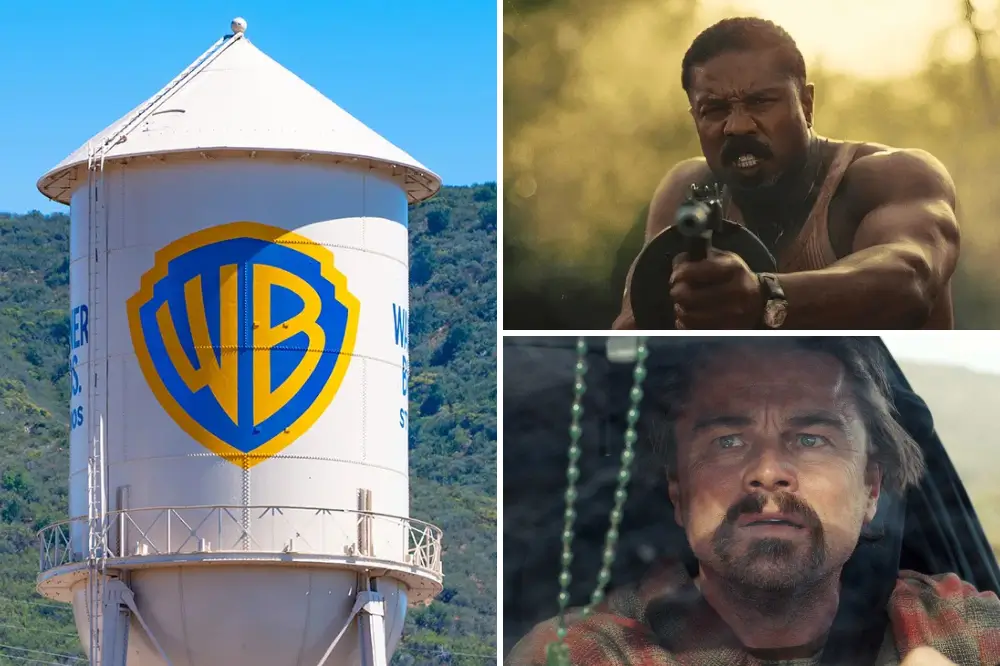
Months before the Oscars, the awards-season discussion centered on a question that precursor analysts couldn’t definitively answer: Would the Academy name Paul Thomas Anderson‘s sprawling, politically-charged epic One Battle After Another the Best Picture, or Ryan Coogler‘s record-breaking vampire epic Sinners the Best Picture? Both films had collected precursor wins that, historically, ensured a Best Picture win. One Battle After Another swept the Critics’ Choice, Golden Globes, BAFTA, Directors Guild, Producers Guild, and Writers Guild for adapted screenplay. It also collected several SAG Awards. No film in Oscar history had ever collected that specific combination of precursor wins and lost Best Picture. Sinners, however, collected the ACE Eddie, the SAG Award for Outstanding Cast Ensemble, and the WGA Award for original screenplay. Every film that had previously won all three of those awards had also taken home the Best Picture award.
Something had to give.
One Battle After Another took home the Best Picture award, and the Best Director award. It also collected the awards for Best Adapted Screenplay, Best Casting, Best Film Editing, and a posthumous producing credit for Adam Somner. Sinners, meanwhile, collected the awards for Best Actor (Michael B. Jordan), Best Original Screenplay (Ryan Coogler), Best Cinematography (Autumn Durald Arkapaw), and Best Original Score (Ludwig Göransson). The evening’s results made Sinners the first film in Academy history to collect the ACE Eddie, SAG Cast Ensemble, and WGA Award, yet still lose Best Picture.
The combined haul for the two Warner Bros. films; 10 wins; contributed to a studio-wide total of 11 when including one additional win from Weapons, also distributed by Warner Bros. That figure tied the record for most Oscar wins by a single studio in one year. Prior to this, only MGM in 1960, Paramount in 1998, and New Line Cinema in 2004 had reached 11 wins; and in each prior case, a single film was responsible for the wins. Warner Bros. therefore became the first studio to achieve 11 wins via multiple titles.
Paul Thomas Anderson Finally Wins His Due

There is an alternate version of film history in which Paul Thomas Anderson leaves the industry as the greatest American filmmaker to never receive an Oscar. He came dangerously close.
Prior to March 15, Anderson had collected 11 Academy Award nominations throughout a career that included Boogie Nights (1997), Magnolia (1999), There Will Be Blood (2007), Phantom Thread (2017), and Licorice Pizza (2021). Zero wins. He watched Daniel Day-Lewis take home an Oscar for a performance in There Will Be Blood. He saw his screenplays receive nominations and fail to win. He experienced the disappointment of There Will Be Blood losing the Best Picture award to No Country for Old Men, and Phantom Thread leaving the 2018 ceremony with just one win (Best Costume Design), despite receiving six nominations; with Anderson himself going home empty-handed once again.
Anderson’s tenth feature film; inspired by Thomas Pynchon‘s 1990 novel Vineland; changed everything in one night. Anderson won Best Director, Best Adapted Screenplay, and shared the Best Picture win with producers Sara Murphy and the late Adam Somner.
One Battle After Another; a sprawling, politically charged narrative about an ex-revolutionary (Leonardo DiCaprio) whose life is turned upside down when his nemesis, a corrupt military officer (played by Sean Penn), resurfaces after sixteen years; is exactly the kind of film Anderson has spent his career making. However, unlike his earlier films, One Battle After Another found success in a cultural climate hungry for stories of rebellion, institutional corruption, and political reckoning.
Anderson honored Somner, who passed away due to anaplastic thyroid cancer on November 27, 2024, at the age of 57, during his acceptance speech. Somner served as first assistant director on numerous Anderson films and was credited as a co-producer on One Battle After Another. The Best Picture win for Somner, posthumously awarded, makes him only the second producer in Oscar history to win the Best Picture award posthumously, following Sam Zimbalist, who received the same honor for Ben-Hur (1959).
“He’s in a really big bar up in the sky right now,” Anderson said from the stage. “He’s having a gin and tonic, and he is so happy.”
Michael B. Jordan, Ryan Coogler, and the Sinners Legacy

Ryan Coogler’s Sinners entered the evening carrying a burden that no film had ever borne: 16 nominations. The previous record of 14 had been shared by All About Eve (1950), Titanic (1997), and La La Land (2016). Sinners crushed it.
Sinners also broke the record for the highest number of Black individuals nominated for a single film; at ten. Warner Bros. earned 30 nominations, matching its own studio record from 2005. Film critics and journalists widely praised the nominations as a historical high point for Black cinema and the horror genre within the Academy’s traditionally conservative voting body.
However, the question on Oscar night was never whether Sinners would receive recognition. It was whether its wins would constitute validation or defeat.
Michael B. Jordan‘s Best Actor win for his double role as twins Smoke and Stack was the emotional core of the evening. Jordan became the first actor to win Best Actor for portraying two characters in 60 years, since Lee Marvin in Cat Ballou (1965). Visibly moved, Jordan expressed gratitude to Coogler, his long-time collaborator. “You’re an amazing, amazing person. I’m so honored to call you a collaborator and a friend. You gave me the opportunity and space for me to be seen,” he said. He then placed himself in the lineage of Black Oscar winners: “I stand here because of the people that came before me. Sidney Poitier, Denzel Washington, Halle Berry, Jamie Foxx, Forest Whitaker, Will Smith.”
Coogler’s win for Best Original Screenplay made him only the second Black filmmaker to win that award; after Jordan Peele for Get Out in 2018. Accepting the award from presenters Robert Downey Jr. and Chris Evans, Coogler addressed the audience: “I want to thank everyone that was involved in this movie. You all are winners in my book.” Colliderwrote that Sinners also became only the second horror film ever to win Best Original Screenplay, further cementing its place in the genre’s award history.
Ludwig Göransson’s win for Best Original Score continued his extraordinary collaboration with Coogler, while Autumn Durald Arkapaw’s win for Best Cinematography was among the most historically significant moments of the evening; and it deserves its own section.
Historic Firsts That Redefined the Record Book

The 98th Academy Awards presented a surprisingly high number of historic milestones. Several of these would have been newsworthy in and of themselves. Collectively, they illustrate an institution in flux.
Autumn Durald Arkapaw became the first woman, the first Black person, and the first person of Filipino ancestry to win Best Cinematography. In 98 years of the category’s existence, no person from any of these groups had previously won. Arkapaw, whose work on Sinners used two different aspect ratios (Ultra Panavision 70andIMAX); a technical first for a commercially released film; was visibly shaken as she spoke. She requested that all the women in the Dolby Theatre rise. “I don’t get here without you guys,” she said. “I really, really, truly mean that.”
Jessie Buckley became the first Irish actress to win Best Actress in a Leading Role for her portrayal of Agnes Shakespeare in Sam Mendes‘ Hamnet. Buckley joins a lineage of Irish nominees including Saoirse Ronan (four nominations) and Ruth Negga (one nomination), none of whom converted a nomination into a win. Buckley, who began her career on the 2008 BBC talent competitionI’d Do Anything, alternated between laughter and tears in her speech. “It’s Mother’s Day in the U.K. today, so I would like to dedicate this to the beautiful chaos of a mother’s heart,” she said.
Sean Penn, winning Best Supporting Actor for One Battle After Another, became the fourth male actor to win three acting Oscars, joining Walter Brennan, Jack Nicholson, and Daniel Day-Lewis. Penn was not in attendance; according to The New York Times, he was in Ukraine, and last year’s winner Kieran Culkin accepted the award on his behalf.
Cassandra Kulukundis became the first recipient of the new competitive category for Best Casting with her win for One Battle After Another. This marked the first addition to the competitive categories since Best Animated Feature was added in 2001. In her speech, Kulukundis acknowledged the decades-long fight by casting directors for recognition. “I have to obviously thank the Academy for even adding this category and for the casting directors that fought tirelessly to make it happen despite everything in their way,” she said.
Joachim Trier‘s Sentimental Value became the first Norwegian film to win Best International Feature Film. Trier is also the only filmmaker to have two Norwegian films nominated in the category, having previously earned a nomination for The Worst Person in the World in 2021.
KPop Demon Hunters won both the Best Animated Feature and Best Original Song (“Golden”) awards, marking the first time South Korean artists took home wins in those categories. During her speech, co-writer Ejae stated, “Growing up, people made fun of me for liking K-pop, but now everyone’s singing our song and all the Korean lyrics. I’m so proud.” She added, “I realize this song is not about success, it’s about resilience.”
The 98th Oscars Delivered Devastating Shutouts for Marty Supreme and Beyond

While two films captured the spotlight, the night’s losses were historically brutal; the scale of the shutouts across the remaining nominees has rarely, if ever, been matched.
Josh Safdie‘s Marty Supreme, the table tennis-themed film starring Timothée Chalamet as the main character, Marty Mauser, a ping pong hustler, entered the night with 9 nominations and left empty-handed. The devastating shutout placed it alongside some of the worst losses in Academy Awards history, including The Turning Point (1977, 11 nominations, 0 wins), The Color Purple (1985, 11 nominations, 0 wins), Gangs of New York (2002, 10 nominations, 0 wins), American Hustle (2013, 10 nominations, 0 wins), and The Irishman (2019, 10 nominations, 0 wins).
Chalamet was hit especially hard by the shutout. He had won the Golden GlobeandCritics’ Choice Award for Best Actor prior to Oscar night. At the time, he looked like the heavy favorite. However, as the awards season progressed, Michael B. Jordan’s performance surged, culminating in Jordan’s SAG Actor Award win. By Oscar night, Chalamet’s momentum had stalled. To date, Chalamet has three Oscar nominations (Call Me by Your Name, A Complete Unknown, Marty Supreme) and no wins.
Marty Supreme was not the only film that suffered this fate. Several other Best Picture nominees were completely shut out of winning any Oscars:
Marty Supreme, Bugonia, Train Dreams, and The Secret Agent combined for 21 nominations and zero wins. The consolidation of votes by the Academy; the tendency of voters to concentrate their support behind two or three frontrunners; ultimately left the remaining contenders empty-handed.
Emma Stone, who won Best Actress for Poor Things (2024) and was nominated again for Bugonia, illustrated the rapid reversal of Oscar momentum. Her fourth film with director Yorgos Lanthimos, however, was unable to recreate the magic of their previous work together.
The Seventh Tie in Oscar History

When presenter Kumail Nanjiani opened the envelope for the Best Live Action Short Film category, he had no idea he was about to deliver one of the most memorable moments of the night. Instead, he announced a tie. The SingersandTwo People Exchanging Saliva were tied for Best Live Action Short Film.
Nanjiani addressed the situation with a great deal of humor. “It’s a tie. I’m not joking. It’s actually a tie. So everyone calm down. We’re gonna get through this,” he said. Then, as the second set of winners came up to receive their award, the microphone began to retract and the lights started to fade. The crowd reacted with boos. Conan O’Brien referenced the awkwardness later in the show.
This marked only the seventh tie in the 98-year history of the Academy Awards. The last tie occurred in 2013 when Zero Dark Thirty and Skyfall were awarded Best Sound Editing. This category no longer exists. The last time a tie occurred in the Best Live Action Short category was at the 67th Academy Awards in 1995.
On stage, The Singers director Sam A. Davis responded to the announcement. “I didn’t know that was a thing, the tie,” he said.
What made this moment so impactful beyond the fact that it was a tie was the sheer improbability. With a preferential ballot system designed to produce a consensus winner, ties are exceedingly rare. The fact that two films received the exact same number of votes in a category where five films competed is a statistical anomaly; one that speaks to just how closely matched the Academy’s preferences were.
Three Controversies Overshadowed the Ceremony

In addition to the awards themselves, three controversies dominated the headlines and defined the story of the 98th Oscars.
The Motaz Malhees Travel Ban
Only two days before the ceremony, Palestinian actor Motaz Malhees, who appeared in the Best International Feature Film nominee The Voice of Hind Rajab, revealed that he could not attend. Malhees stated that U.S. immigration restrictions; signed by President Donald Trump on December 16, 2025, and taking effect January 1, 2026; suspended visas and restricted entry for travelers holding documents from the Palestinian National Authority, prohibiting him from traveling to the United States.
Malhees wrote on Instagram, and the post gained widespread international attention. Malhees wrote, “You can block a passport. You cannot block a voice.” The controversy was widely reported internationally, drawing attention to the broader Israeli-Palestinian conflict.
Although The Voice of Hind Rajab, a Tunisian-directed film, did not take home the Best International Feature Film award (it lost to Sentimental Value), the controversy surrounding Malhees drew more attention to the film than nominees in that category typically receive.
The Exclusion of Best Original Song Performances
During the ceremony, only two of the five Best Original Song nominees were performed. “Golden” from KPop Demon Hunters and “I Lied to You” from Sinners. Diane Warren, the nominated songwriter behind “Dear Me” from the documentary Diane Warren: Relentless, sharply criticized the Academy’s decision. Warren released a public statement: “It is unfair to me and my fellow nominees because you just excluded three songs and chose two. It is my fellow artists who deserve the respect which comes from a nomination. It is all of us or none of us and that is what it should be.”
Warren’s frustration was compounded by losing to “Golden,” thereby extending her record as the most nominated person who has never won a competitive Oscar. Warren now holds 17 nominations and still has not won an Oscar. She is currently at the top of the list for most nominations without a win. Warren surpassed Greg P. Russell, a sound mixer with 16 nominations.
When the “Golden” songwriters took the stage to accept their award, co-writer Yu Han Lee was cut off by the play-off music mid-sentence. The sudden cut-off drew audible boos from the crowd. The interruption of Lee’s acceptance speech was sharply criticized on social media. Walt Disney Television Executive Vice President Rob Mills subsequently told Variety that the incident would lead to changes in how acceptance speeches are handled at future ceremonies.
The Chalamet Opera and Ballet Backlash
Timothée Chalamet’s pre-ceremony comments about ballet and opera created a firestorm in the performing arts community. In a February town hall meeting with Matthew McConaughey for VarietyandCNN, Chalamet stated “no one cares” about ballet and opera. Chalamet implied that neither ballet nor opera is a part of mainstream culture. The backlash against Chalamet was immediate and intense. Figures including Jamie Lee Curtis expressed outrage over Chalamet’s statements.
Within the first five minutes of opening the show, host Conan O’Brien made reference to the controversy. “Security is extremely tight tonight. I’m told there’s concern about attacks from both the opera and ballet communities,” he quipped. As O’Brien delivered the line, the camera panned to Chalamet and his partner Kylie Jenner. The joke earned one of the largest laughs of the evening. Several other presenters referenced the controversy throughout the night. Even one of the winners in the Live Action Short Film category referenced the controversy.
Conan O’Brien, the Host and the Ceremony and the Viewership Problem

Conan O’Brien served as the host of the 98th Oscars for the second consecutive year. O’Brien was widely praised for his job as the host of the 97th ceremony. O’Brien’s opening monologue was a mix of humor and gravitas. After roasting Chalamet and making light of the security threats posed by an FBI warning that Iran might attempt to disrupt the ceremony in California (approximately 1,000 private security personnel were deployed to the Dolby Theatre), O’Brien turned serious:
“If I can be serious for just a moment, everyone watching right now, around the world, is all too aware that these are very chaotic, frightening times. Okay? It’s at moments like these that I believe that the Oscars are particularly resonant. Check it out: 31 countries across six continents are represented this evening. And every film, every film we salute, is the product of thousands of people speaking different languages, working hard to make something of beauty. We pay tribute tonight, not just to film, but to the ideals of global artistry, collaboration, patience, resilience and that rarest of qualities today, optimism.”
The 3-hour-and-44-minute ceremony included an extended In Memoriam segment that honored a wide range of industry figures lost in the past year. Those honored included Robert Redford, Rob Reiner and his wife Michele (the couple died on December 14, 2025), Diane Keaton, Catherine O’Hara, Val Kilmer, Robert Duvall, and dozens of others. Barbra Streisand performed “The Way We Were” in tribute to Redford. Billy Crystal brought together a large group of Reiner’s collaborators; including Meg Ryan, Cary Elwes, Mandy Patinkin, Demi Moore, and numerous others; in a segment that O’Brien had promoted as “one of the strongest parts of the show.”
Despite all of this, the telecast garnered 17.86 million viewers on ABC and Hulu. That represents a 9 percent drop from the previous year’s 19.69 million and is the lowest viewership of the Oscars since the 94th ceremony in 2022. The 18-49 demographic rating fell by 14 percent to 3.92. Despite the drop in viewership, the ceremony generated more than 181 million social media impressions; a 42 percent increase from the 2025 ceremony. The increased social media impressions suggest that the Oscars are becoming a dual-screen experience. While audiences are consuming highlights from the ceremony, they may not be watching the entire broadcast in real time. In an era where cultural visibility translates directly to commercial power, the Oscar telecast’s declining live viewership stands in stark contrast to the growing ability of individual moments to dominate social feeds.
The decline in viewership creates a paradox. The 98th Oscars were arguably one of the most competitive and most compelling Oscar races in recent memory. Two strong frontrunners existed. Multiple films earned significant nomination hauls. Multiple historic firsts occurred. A major scandal was connected to one of the world’s most well-known young actors. A returning host was widely praised. Why wasn’t this combination enough to reverse the trend of declining viewership?
What the 98th Academy Awards Show Us About the Future

A number of trends at the 98th Academy Awards will have significant implications for the Oscars for years to come.
There is no longer any doubt that the Academy is willing to recognize genre films among its nominees. With 16 nominations for Sinners, the 98th Oscars mark the greatest recognition ever afforded the horror film genre by the Academy. In fact, Sinners’ 16 nominations eclipse the previous highest totals for horror films at the Oscars, surpassing both Get Out and Black Swan as well as the Best Picture-winning The Silence of the Lambs. Combine the record-breaking number of nominations for Sinners with Amy Madigan‘s historic Best Supporting Actress win for the horror film Weapons, and we can reasonably conclude that the decades-long exclusion of the horror genre from serious award consideration may finally be coming to an end.
However, there is no reason to believe that the problems associated with the consolidation trend are diminishing. While it is true that the 98th Oscars featured two films that dominated the competition like no other films in recent memory; with a combined total of 29 nominations (16 for Sinners and 13 for One Battle After Another); the impact on the remaining nominees was devastating. The result was that four films nominated for Best Picture received a total of 21 nominations and won exactly zero Oscars. This is not a healthy or sustainable voting environment. Instead, it is evidence that the Academy’s preferential ballot system, combined with increased membership, is creating a ‘winner-takes-all’ dynamic where films with the strongest campaigns are rewarded with all of the available prizes while films with equally strong campaigns walk away empty-handed.
The new Best Casting category also generated significant excitement around the ceremony. How successful the Academy will be in adding additional categories; particularly the oft-discussed Best Stunts category; depends on how the new casting category performs with audiences and within the film community over the next few years.
Finally, the issue of declining television ratings will not disappear. The television audience for the 98th Academy Awards continued a decade-long downward trend; having dropped in seven of the past ten years; even as social media engagement continues to increase. The Academy and ABC will need to determine if the traditional three-plus-hour, live televised version of the ceremony remains the best way to present an awards show that is increasingly defined by its viral moments, as opposed to its beginning-to-end television audience. As audiences increasingly turn to streaming platforms for their entertainment consumption, the challenge facing the traditional live broadcast model only intensifies.
In addition to delivering history, heartbreak, controversy, and surprise, the 98th Academy Awards offered a glimpse of the cultural, political, and institutional forces that will shape the Oscars for years to come. In an era where celebrities are building multi-billion-dollar business ventures off the back of cultural visibility, the divergence between declining television viewership and surging social media engagement raises fundamental questions about the future format of Hollywood’s biggest night.
98th Academy Awards at a Glance: Every Winner, Record, Shutout, and Controversy That Rewrote Oscar History
| # | Item / Award | Winner(s) / Subject | Film | Key Detail |
|---|---|---|---|---|
| Major Award Winners | ||||
| 1 | Best Picture | Adam Somner (posthumous), Sara Murphy & Paul Thomas Anderson | One Battle After Another | Anderson’s first Oscar win after 11 prior nominations; Somner is only the second posthumous Best Picture producer (after Sam Zimbalist for Ben–Hur, 1959) |
| 2 | Best Director | Paul Thomas Anderson | One Battle After Another | First win after nearly 30 years and 11 career nominations across Boogie Nights, Magnolia, There Will Be Blood, Phantom Thread, and Licorice Pizza |
| 3 | Best Actor | Michael B. Jordan | Sinners | Double role as twins Smoke & Stack; first actor to win Best Actor for portraying two characters in 60 years (since Lee Marvin in Cat Ballou, 1965) |
| 4 | Best Actress | Jessie Buckley | Hamnet | First Irish actress to win Best Actress in a Leading Role; began career on BBC’s 2008 talent competition I’d Do Anything |
| 5 | Best Supporting Actor | Sean Penn | One Battle After Another | Fourth male actor to win three acting Oscars (joining Walter Brennan, Jack Nicholson, Daniel Day–Lewis); was in Ukraine — Kieran Culkin accepted on his behalf |
| 6 | Best Supporting Actress | Amy Madigan | Weapons | Historic horror–genre win; 40–year gap between first nomination and first win — the longest in Oscar history |
| 7 | Best Adapted Screenplay | Paul Thomas Anderson | One Battle After Another | Film inspired by Thomas Pynchon’s 1990 novel Vineland |
| 8 | Best Original Screenplay | Ryan Coogler | Sinners | Second Black filmmaker to win the award (after Jordan Peele for Get Out, 2018); also only the second horror film to win this category |
| 9 | Best Cinematography | Autumn Durald Arkapaw | Sinners | First woman, first Black person, and first person of Filipino ancestry to win; shot in Ultra Panavision 70 & IMAX — a technical first for a commercially released film |
| 10 | Best Original Score | Ludwig Göransson | Sinners | Continued Göransson’s extraordinary collaboration with director Ryan Coogler |
| 11 | Best Film Editing | (Winner per ceremony) | One Battle After Another | Part of the film’s six–Oscar haul on the night |
| 12 | Best Casting (Inaugural) | Cassandra Kulukundis | One Battle After Another | First–ever recipient of the new competitive category — the first addition to competitive categories since Best Animated Feature in 2001 |
| 13 | Best International Feature Film | Joachim Trier | Sentimental Value | First Norwegian film to win the category; Trier is also the only filmmaker to direct two Norwegian Oscar–nominated films (preceded by The Worst Person in the World, 2021) |
| 14 | Best Animated Feature | KPop Demon Hunters team | KPop Demon Hunters | First South Korean artists to win in this category |
| 15 | Best Original Song | Ejae, Yu Han Lee & collaborators — “Golden” | KPop Demon Hunters | First South Korean Best Original Song win; Yu Han Lee’s speech was cut off mid–sentence by play–off music, sparking widespread backlash |
| 16 | Best Live Action Short Film (TIE) | The Singers (Sam A. Davis) & Two People Exchanging Saliva (Alexandre Singh) | — | Only the seventh tie in 98 years of Oscar history; last tie in this category occurred at the 67th Academy Awards in 1995; presented by Kumail Nanjiani |
| Records & Milestones | ||||
| 17 | Most Nominations — Single Film (All–Time Record) | Sinners | Sinners | 16 nominations — broke the previous record of 14 shared by All About Eve (1950), Titanic (1997), and La La Land (2016) |
| 18 | Most Black Nominees — Single Film | Sinners | Sinners | 10 Black individuals nominated — an all–time record |
| 19 | Studio Record — Most Wins in One Night (Tied) | Warner Bros. | OBAA, Sinners, Weapons | 11 wins — tied with MGM (1960), Paramount (1998), and New Line Cinema (2004); first studio to achieve it through multiple titles |
| 20 | Studio Nominations Record (Matched) | Warner Bros. | Multiple titles | 30 nominations — matching its own studio record from 2005 |
| 21 | First Film to Win ACE Eddie + SAG Ensemble + WGA Yet Lose Best Picture | Sinners | Sinners | No film in history had previously won all three precursor awards and lost Best Picture |
| 22 | Most Nominations Without a Win (Individual) | Diane Warren | Diane Warren: Relentless — “Dear Me” | 17 nominations, 0 wins — surpassed sound mixer Greg P. Russell (16 nominations) for the all–time record |
| Major Shutouts | ||||
| 23 | Marty Supreme — Complete Shutout | Josh Safdie (director); Timothée Chalamet (star) | Marty Supreme | 9 nominations, 0 wins; joins The Turning Point (1977, 11–0), The Color Purple (1985, 11–0), Gangs of New York (2002, 10–0), American Hustle (2013, 10–0), and The Irishman (2019, 10–0) |
| 24 | Bugonia — Complete Shutout | Emma Stone; Yorgos Lanthimos (director) | Bugonia | Best Picture nominee; part of the combined 21 nominations and 0 wins across four shut–out films |
| 25 | Train Dreams — Complete Shutout | — | Train Dreams | Best Picture nominee; zero wins from all nominations |
| 26 | The Secret Agent — Complete Shutout | — | The Secret Agent | Best Picture nominee; zero wins from all nominations |
| 27 | Timothée Chalamet — Personal Career Record | Timothée Chalamet | Call Me by Your Name, A Complete Unknown, Marty Supreme | 3 career Oscar nominations, 0 wins; won Golden Globe and Critics’ Choice for Marty Supreme but lost momentum after Michael B. Jordan’s SAG Actor win |
| Controversies | ||||
| 28 | Motaz Malhees Travel Ban | Motaz Malhees (Palestinian actor) | The Voice of Hind Rajab | Barred from entering the U.S. due to immigration restrictions signed December 16, 2025 (effective January 1, 2026); wrote on Instagram: “You can block a passport. You cannot block a voice.” |
| 29 | Best Original Song Performances Excluded | Diane Warren; 3 of 5 nominees cut | Multiple | Only 2 of 5 nominated songs performed (“Golden” and “I Lied to You”); Warren publicly criticized the decision; Yu Han Lee cut off mid–speech; Rob Mills (Disney TV EVP) told Variety the incident would lead to protocol changes |
| 30 | Chalamet Ballet & Opera Backlash | Timothée Chalamet | Marty Supreme | Stated “no one cares” about ballet and opera during a February Variety/CNN town hall with Matthew McConaughey; Conan O’Brien opened the show joking about it; Jamie Lee Curtis expressed outrage |
| Ceremony & Viewership | ||||
| 31 | Host | Conan O’Brien | — | Second consecutive year hosting; praised for monologue addressing the Chalamet controversy, FBI/Iran security warning, and global instability |
| 32 | Ceremony Runtime | — | — | 3 hours and 44 minutes |
| 33 | Viewership (TV) | ABC & Hulu | — | 17.86 million viewers — a 9% drop from 2025’s 19.69 million; lowest since the 94th ceremony (2022); 18–49 demographic rating: 3.92 (down 14%) |
| 34 | Social Media Impressions | — | — | 181+ million impressions — a 42% increase from 2025; suggests the Oscars are becoming a “dual–screen” experience |
| In Memoriam Highlights | ||||
| 35 | Robert Redford — Special Tribute | Barbra Streisand performed “The Way We Were” | — | Streisand’s live performance honored her late co–star |
| 36 | Rob Reiner & Michele Reiner | Billy Crystal led a collaborator tribute (Meg Ryan, Cary Elwes, Mandy Patinkin, Demi Moore, and others) | — | The couple died on December 14, 2025; O’Brien called the segment “one of the strongest parts of the show” |
| 37 | Additional In Memoriam Honorees | Diane Keaton, Catherine O’Hara, Val Kilmer, Robert Duvall, and dozens of others | — | Extended In Memoriam segment covering a wide range of losses across the past year |
| Future Implications & Trends | ||||
| 38 | Horror Genre Acceptance | Sinners (16 noms) + Weapons (Amy Madigan win) | Multiple | Sinners’ 16 nominations eclipse Get Out, Black Swan, and The Silence of the Lambs; signals the end of the horror genre’s exclusion from serious award consideration |
| 39 | “Winner Takes All” Consolidation | — | Multiple | 29 combined nominations for the top two films (16 + 13); 4 Best Picture nominees combined for 21 nominations and 0 wins — evidence of a structural voting imbalance |
| 40 | New Categories Momentum | Best Casting (inaugural); Best Stunts (discussed) | — | Success of the new Best Casting category may pave the way for additional categories; depends on buzz and viewer interest over coming years |
| 41 | Declining TV Ratings vs. Rising Social Engagement | — | — | Viewership has dropped in 7 of the past 10 years; the Academy and ABC must reassess whether the 3+ hour live broadcast model remains viable as streaming platforms dominate entertainment consumption |
| Source: Academy of Motion Picture Arts and Sciences (oscars.org); Hollywood Reporter; Variety; Deadline; The New York Times; The Guardian; BBC; Reuters; AP News; Nielsen Media Research. All data reflects the 98th Academy Awards ceremony held March 15, 2026, at the Dolby Theatre, Hollywood. Viewership and social media figures from Nielsen and ABC internal metrics. | ||||
Frequently Asked Questions
What film won Best Picture at the 2026 Oscars? One Battle After Another, directed by Paul Thomas Anderson and inspired by Thomas Pynchon‘s 1990 novel Vineland, took home the top prize at the 98th Academy Awards, which aired on March 15, 2026. The film garnered six total Oscars, including Best Director and Best Adapted Screenplay, making it the most awarded film of the night.
How many Oscar nominations did Sinners receive? Sinners received 16 nominations, the most in the 98-year history of the Academy Awards. The film broke the previous record of 14 nominations shared by All About Eve (1950), Titanic (1997), and La La Land (2016). Ultimately, Sinners earned four Oscars: Best Actor, Best Original Screenplay, Best Cinematography and Best Original Score.
Who hosted the 2026 Oscars? For the second year running, Conan O’Brien served as host for the 98th Academy Awards. O’Brien’s performance was highlighted by his opening monologue addressing the Timothée Chalamet ballet and opera controversy, as well as a segment on global instability. The 3-hour-44-minute ceremony drew 17.86 million viewers, representing a 9% drop compared to the previous year.
What records were broken at the 98th Academy Awards? Several records were broken at the 2026 Oscars. These include: Sinners’ 16 nominations becoming the most for any film in history; Autumn Durald Arkapaw becoming the first woman and first Black cinematographer to take home the Best Cinematography statuette; Jessie Buckley becoming the first Irish actress to win Best Actress; Amy Madigan setting the record for the longest time gap (40 years) between a first nomination and a first win; Sean Penn becoming the fourth male actor to win three acting Oscars; and a tie in Best Live Action Short occurring only for the seventh time in Oscar history.
Why didn’t Marty Supreme win any Oscars? Although Marty Supreme was nominated for nine Academy Awards, the film ultimately left the ceremony without a single win. Marty Supreme joins a very small group of films with nine or more nominations and no wins. Analysts say that the momentum for the film shifted during the latter part of the awards season. Timothée Chalamet had already won the Golden Globe and Critics’ Choice awards, but lost momentum to Michael B. Jordan at the SAG Awards. Additionally, the controversy surrounding Chalamet’s ballet and opera comments likely diverted attention from the film’s campaign in the final weeks leading up to the ceremony. For a deeper look at historic shutouts, see The History of Oscar Snubs; From The Color Purple to Marty Supreme.
What was the 2026 Oscars viewership? According to Nielsenratings, the 98th Academy Awards drew 17.86 million viewers on ABC and Hulu. This represents a 9% decrease from the 2025 ceremony (19.69 million) and marks the lowest Oscars viewership since 2022. However, social media engagement increased by 42%, with over 181 million impressions generated throughout the telecast. For more on the best movies of 2025, check out our definitive ranking.


