


A chocolate bar worth $520 million. A coffee brand in Walmart. A silent shrug valued at nearly a billion dollars. The creator economy didn’t ask permission to become a real business – it just showed the receipts.
A chocolate bar worth more than a quarter-billion dollars per year. A coffee brand sold in Walmart, Target, Whole Foods, and Costco. A silent shrug that was valued at roughly $975 million in an all-stock transaction. The creator economy did not seek permission to become a legitimate business sector; it simply delivered financial results.
There is a common myth among corporate boardrooms that social media influencers who launch businesses are kids riding temporary virality, collecting a few sponsorship payments, and doomed to vanish when the algorithm shifts. This narrative is comforting for those who missed the opportunity. It is also wrong.
Goldman Sachs estimated the total addressable market of the creator economy to be approximately $250 billion in 2023 and projected that the market could nearly double to $480 billion by 2027. Within that market were individuals who did not merely ride trends. They built companies, negotiated equity stakes, manufactured physical products, and established distribution channels in major retail outlets including Walmart, Sephora, and large international chains. They converted followers into emotionally invested customer bases that show up on launch day and, more importantly, on reorder day.
Some of the stories below ended with billionaires. Others ended with shuttered product lines and hard lessons. All of them demonstrate a common truth: attention is temporary, but ownership generates compounding returns over time.
How we selected these creators This article profiles ten creators who translated social media audiences into business ventures with measurable commercial impact. Our selection criteria prioritized the following factors: verifiable revenue or valuation data reported by reputable publications such as Bloomberg, Forbes, or Business Insider; physical or digital product distribution beyond a personal Shopify storefront; relevance to current trends in the creator economy as of early 2026; and a diversity of outcomes including both successes and instructive failures.
We did not limit the list to creators with the largest follower counts or net worths. Instead, we selected cases that illuminate distinct business models; product brands, licensing arrangements, studio infrastructure, and brand-rights monetization. Influential cases that fell outside the scope of this list, including Kylie Jenner’s Kylie Cosmetics and Rihanna’s Fenty Beauty, are addressed in our Honorable Mentions section.
All net worth figures, revenue estimates, and valuations cited in this article are based on third-party reporting and should be treated as estimates unless otherwise noted.
1. MrBeast, the YouTuber Who Created a Consumer Goods Empire
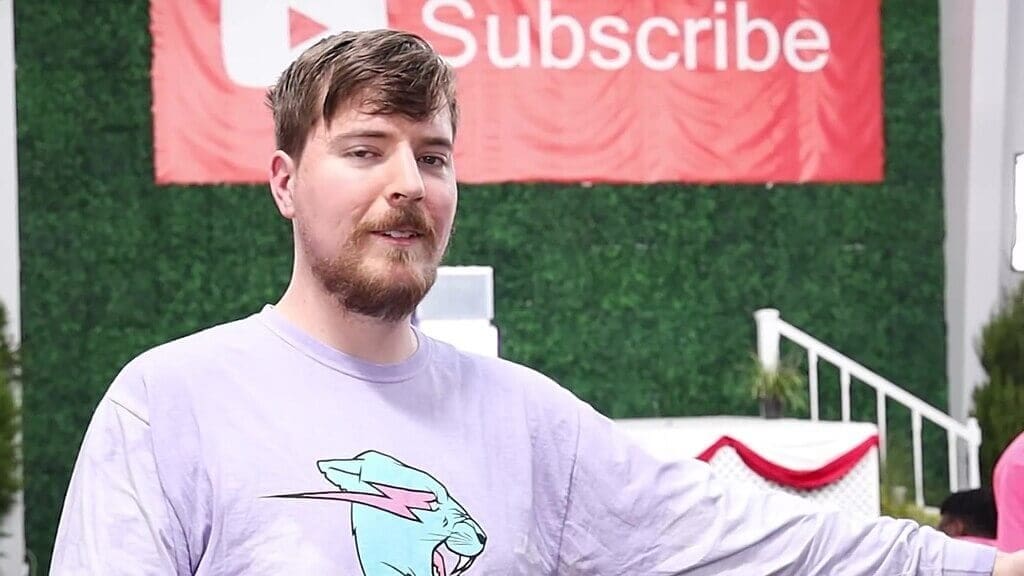
Platform: YouTube | Subscribers: Over 470 million (as of March 2026)
Feastables generated approximately $250 million in sales and more than $20 million in profit in 2024, according to documents obtained by Bloomberg. That figure exceeded MrBeast’s earnings from his YouTube media operation for the first time. The brand forecasts around $520 million in sales for 2025.
Start with those numbers because they explain why Jimmy Donaldson is not simply a YouTuber who happens to sell chocolate. He is the operator of a consumer packaged goods company that competes for shelf space alongside Hershey and Mars at Walmart, Target, and convenience store chains across the United States.
“Money is fuel to grow a business.” Donaldson has said in interviews. That instinct is evident in how he structured his business. Feastables launched in 2022, not as a limited-edition novelty drop, but as a brand engineered from the start for retail distribution. In February 2025, Fortune reported that Beast Industries, the parent company encompassing Feastables and Donaldson’s media operations, was raising $200 million in capital at a roughly $5 billion valuation. By January 2026, Bloomberg reported that Bitmine Immersion Technologies completed a $200 million investment in Beast Industries. Total revenue across the holding company exceeded $400 million.
The business logic is a flywheel. Videos generate awareness. Awareness drives retail velocity. Retail revenue funds increasingly ambitious video production. This cycle repeats. Most creators treat product launches as one-time events. Donaldson built a self-reinforcing loop.
He also launched MrBeast Burger, a virtual restaurant concept operating through ghost kitchens, and Beast Philanthropy, a separate YouTube channel that directs all revenue toward charitable initiatives. The burger concept faced legal disputes and operational challenges, a reminder that not every extension of the flywheel succeeds. But the core insight stands: Donaldson solved the distribution problem that eliminates the vast majority of influencer-led brands. Getting followers to purchase something through an online link is one challenge. Convincing a national retailer to stock your product, reorder it, and keep it on the shelf is an entirely different undertaking.
2. Emma Chamberlain, the Gen Z Creator Who Quietly Built a Coffee Company

Platform: YouTube, Instagram | Estimated Net Worth: Approximately $30 million (Celebrity Net Worth, 2025)
The leaked investor presentation changed the narrative. In March 2025, Business Insider reported on an internal pitch deck revealing that Chamberlain Coffee had generated approximately $22 million in revenue during 2024, up 14 percent from $19 million the previous year, and was forecasting $33 million for 2025; a 53 percent year-over-year increase. The deck also showed the brand had raised between $19.6 million and $22 million in total venture capital funding (per PitchBook and Tracxn, respectively). The company was not yet profitable.
Those are the numbers of a real business with real overhead; not a vanity label with a famous name on the bag.
Emma Chamberlain’s early YouTube content felt spontaneous and unpolished. The jump cuts, the self-deprecation, and the bedroom vlog aesthetic resonated with Gen Z viewers in part because they rejected the glossy, aspirational production style that dominated YouTube at the time. She became a Louis Vuitton ambassador and Vogue’s met gala host, bridging internet culture and luxury fashion in a way no other creator had accomplished.
Then she launched Chamberlain Coffee in December 2019.
“I’ve always been obsessed with coffee as a product. So I had this vision and I was like, ‘Hopefully I’m qualified enough to do it. It’s always been a passion for me since before I started my YouTube… It was just a part of me.” Chamberlain told Forbes in 2024. That personal investment materialized into a Co-CEO title in August 2024, when she stepped into the role alongside Gustav Hossy. Chamberlain Coffee expanded from direct-to-consumer sales into retail, becoming available at Target, Walmart, Whole Foods, and Costco. In January 2025, the brand opened its first permanent cafe at Westfield Century City in Los Angeles.
The leaked deck also revealed the tension facing creator-led consumer brands at this stage: the company had invested heavily in retail expansion and needed to raise additional capital to reach profitability in 2025. Distribution is expensive. Supply chains are complex. Chamberlain Coffee is not a side hustle; it is a venture-backed operation navigating the same challenges facing any consumer packaged goods company that is scaling into national retail.
3. Logan Paul, the Case Study in Explosive Growth and Hard Corrections
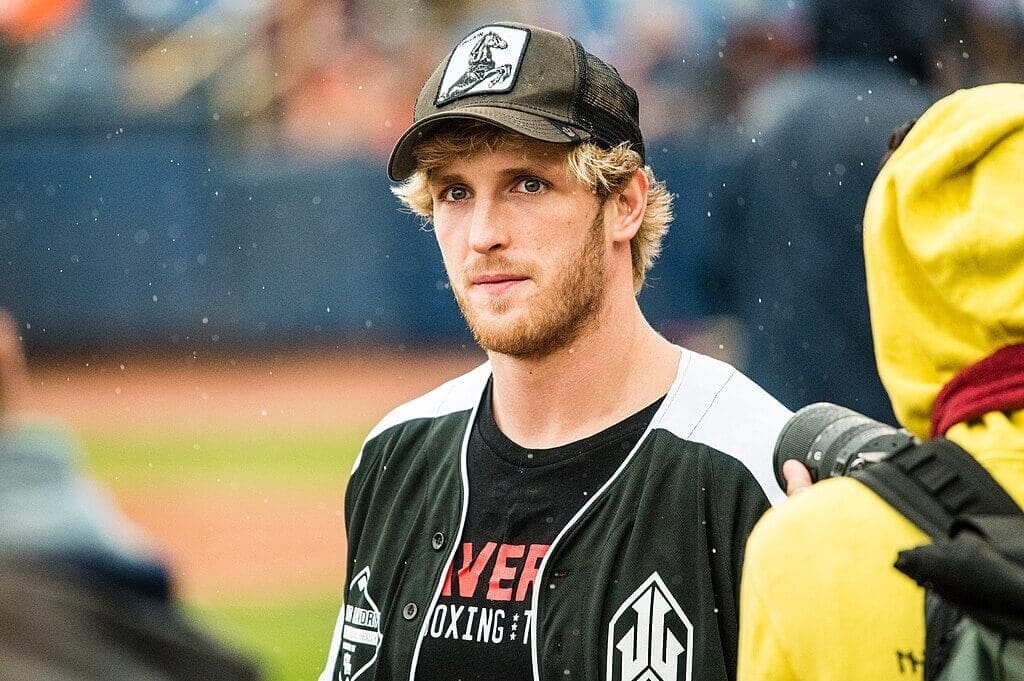
Platform: YouTube, Podcasting | Notable Brand: PRIME Hydration
This entry tells two stories, and both are essential.
Logan Paul co-founded PRIME Hydration with fellow creator KSI in January 2022. The brand’s second year was remarkable. Bloomberg reported in November 2023 that PRIME was set to surpass $1.2 billion in annual sales that year; the fastest ascension for any beverage brand, regardless of whether the founders were influencers or traditional CPG executives. The numbers were driven by scarcity marketing, youth culture appeal, and distribution agreements with major retailers including Walmart, Target, and UK-based chains.
Then the correction arrived.
By mid-2025, PRIME’s UK sales had dropped more than 70 percent, from £112.2 million to £32.8 million, according to filings reported by The Grocer and Business Insider. Sports business reporter Darren Rovell projected that PRIME was on pace for only $300 million in total revenue in 2025; a roughly 76 percent decline from the peak. Excess inventory accumulated on retailer shelves. The novelty that had created frenzied demand in 2022 and 2023 had faded.
The ownership structure adds a layer of complexity. Congo Brands, the CPG company that manufactures and distributes PRIME, owns 60 percent of the business. Logan Paul and KSI each own 20 percent. When you co-develop with an established manufacturing and distribution partner, you trade equity for infrastructure. Whether that trade-off is brilliant or devastating depends entirely on the brand’s long-term trajectory.
The lesson here is precise: hype and demand are not interchangeable terms. Hype creates an initial surge. Demand; the kind driven by habitual consumption, genuine product differentiation, and repeat purchasing behavior; is what keeps a product on retailer shelves over the long term. The brands that endure on this list are the ones that continued to sell after the novelty wore off.
4. Huda Kattan, the Blogger Who Built a Billion-Dollar Cosmetics Brand

Platform: Instagram, YouTube | Estimated Net Worth: Approximately $400 million to $560 million (estimates vary; Forbes listed $400 million in 2023; other 2025 sources cite up to $560 million)
In June 2025, Huda Kattan completed a transaction that most founders dream about but few accomplish. She bought back TSG Consumer Partners’ remaining minority stake in Huda Beauty, making the brand 100 percent founder-owned again after an eight-year partnership with the private equity firm. “Taking back full ownership of Huda Beauty is a deeply very important moment for me,” Kattan said in a statement reported by Business of Fashion.
That moment was the culmination of a long trajectory. Kattan began a beauty blog around 2010 while working in finance, and launched Huda Beauty circa 2013 with a line of false eyelashes. By 2017, TSG Consumer Partners had acquired a minority stake in the company at a valuation of $1.2 billion. Annual revenue had surpassed $200 million during that period and continued to grow significantly. Through August 2024, industry sources told WWD that Huda Beauty had generated more than $300 million in year-to-date sales. Business of Fashion estimated approximately $450 million in annual sales for the full year 2024.
As part of a broader reorganization, Huda Beauty sold its ownership of KAYALI, the fragrance sub-brand co-founded by Huda and her sister Mona Kattan in 2018. In February 2025, KAYALI became an independent company under Mona Kattan’s leadership, backed by private equity firm General Atlantic.
The full picture matters here. Kattan did not simply ride an influencer wave. She built a globally distributed cosmetics operation available through Sephora and other major retailers worldwide, navigated an eight-year institutional investor relationship, restructured her brand portfolio, and ultimately reclaimed complete control. Whether Huda Beauty sustains its peak-era revenue trajectory without outside capital is an open question, but the strategic bet is clear: she is prioritizing long-term brand direction over short-term growth acceleration.
5. Addison Rae, the TikTok Star Who Pivoted (and the Product That Didn’t Survive)

Platform: TikTok | Estimated Net Worth: ~$15–$25 million (Celebrity Net Worth, 2025; Forbes estimates are lower, around $5 million)
Item Beauty had everything a creator-led brand is supposed to need.
It had the audience; Addison Rae was one of TikTok’s most-followed creators in 2020, with hundreds of millions of cross-platform followers. It had the distribution; Sephora agreed to carry the line, which is a premium retail placement that most indie beauty brands spend years trying to secure. It had the category tailwinds; Gen Z beauty spending was increasing rapidly. Item Beauty, launched in partnership with the brand incubator Madeby Collective, appeared positioned for success.
It did not succeed.
In January 2023, Business Insider confirmed that Sephora was pulling Item Beauty from its shelves. The brand was effectively discontinued later that year. Critics pointed to a lack of product differentiation as the core problem. While individual items were priced accessibly between roughly $10 and $22, reviewers felt that there was no distinct reason to buy the products beyond their association with Addison Rae’s name. There was no defined identity for Item Beauty apart from its association with Addison Rae.
This outcome matters because it is the honest counterpoint to the success stories on this list. A famous face is not a business model. If the founder is not deeply embedded in product development, marketing cadence, and community building, the brand becomes indistinguishable from the thousands of other products competing for shelf space. Item Beauty had distribution, audience, and timing on its side. It still failed because the product itself did not earn repeat purchases on its own merits.
Rae pivoted. Her 2024 and 2025 push into music gained more traction than her beauty venture, suggesting that platform crossovers can work when the creator is leveraging genuine talent and personal interest rather than simply licensing a name.
6. Charli D’Amelio, the Most-Followed TikToker and the Licensing Model

Platform: TikTok | Followers: Approximately 156 million | Estimated Net Worth: Approximately $45 million (Celebrity Net Worth, 2025)
Charli D’Amelio became the first person to achieve 100 million followers on TikTok, and currently sits in second place among most followed creators on TikTok, behind Khaby Lame. Along with her family, she created D’Amelio Brands, a parent company which oversees a fragrance line, apparel, a licensing agreement and a Hulu reality series called The D’Amelio Show.
According to Forbes, which featured Charli in a September 2022 article, Charli and her sister Dixie had collectively earned more than $70 million through partnerships with Dunkin’, Prada, Amazon and other brands since 2020.
D’Amelio’s business model is vastly different from MrBeast’s or Huda Kattan’s. While both MrBeast and Huda Kattan develop and operate product brands with inventory, supply chains and retail relationships, D’Amelio chose to pursue a licensing agreement method of generating revenue. A licensing agreement allows a party to earn revenue without the burden of managing warehouse logistics, manufacturing defects or retail negotiations. But D’Amelio does not control a standalone brand that could be sold independently of her name.
Both the ownership model and the licensing model can result in significant revenue generation. Each model compounds differently over time. A licensing agreement provides consistent, low-risk cash flow tied to the creator’s ongoing relevance. A product brand such as Feastables or Chamberlain Coffee contains more risk, but can eventually produce revenue that is unrelated to the founders’ content output.
Neither the ownership model nor the licensing model is inherently better; each represents a different bet on the creator’s long-term trajectory.
7. Marques Brownlee (MKBHD), the Tech Reviewer Who Tested the Product Waters

Platform: YouTube | Subscribers: Approximately 20 million
Start with the failure, as the failure teaches.
Marques Brownlee failed when he launched Panels, a wallpaper application, at $11.99 per month or $49.99 per year. Brownlee has developed arguably the most respected technology review channel on YouTube. Brownlee receives early product releases from Apple and Samsung because a single MKBHD review can shift public perception. His influence on consumer purchasing decisions is extensively documented and considerable.
That level of influence, however, did not translate to a willingness to pay a premium for wallpapers for his phones.
Critics responded to Panels immediately and negatively. Critics argued that paying $50 per year for curated wallpapers far exceeded the value the service provided. Critics were further angered because Brownlee had built his reputation as a trusted consumer advocate; his audience expected his own products to meet the same value standards he applied in his reviews.
Panels ceased operations on December 31, 2025. In December 2025, Brownlee announced that the Panels codebase would be released under the Apache 2.0 license in January 2026, as reported by TechCrunch (Dec 1, 2025). The open-sourcing was completed in January 2026.
The Panels team stated in a blog post announcing the cessation of operations that “Despite our best efforts to bring in collaborators who shared our passion and vision, we weren’t able to find the right fit.”
Although the Panels product failed, the exit was graceful. Refunds were offered, user data deleted, and the codebase released; thus, Brownlee maintained his reputation, although the fundamental misjudgment behind the Panels product remains evident.
Here is the key takeaway from this example: creators should still create products. Instead, the product’s value proposition must match the audience’s expectations of the creator. A tech review audience expects high-quality, well-designed, functional tools. Beautifully curated wallpapers, regardless of how well produced, did not meet that standard.
A vast difference exists between “I trust your review” and “I will pay $50 per year for your wallpapers.”
8. Khaby Lame, the Silent Creator Who Just Signed a Near-Billion-Dollar Deal

Platform: TikTok | Followers: Over 160 million
No language barriers exist in Khaby Lame’s content. No dialogue. No translation required. Only a silent, deadpan response to over-complicated life hacks and an open-hand shrug. That universalism helped make him the most followed person on TikTok and one of the most recognizable faces on the Internet.
In January 2026, Lame entered into a transaction that set a new precedent for scale in the creator economy. He sold Step Distinctive Limited, the company responsible for managing his global branding and commercial activities, to Hong Kong-based Rich Sparkle Holdings in an all-stock transaction with a value of almost $975 million, as reported by Forbes, Bloomberg and The Hollywood Reporter. Prior to the sale, Lame retained a 49% interest in Step Distinctive Limited, as reflected in SEC filings reviewed by Forbes.
What makes the deal historically important are its terms. The purchase grants Rich Sparkle the exclusive right to monetize the global branding of Khaby Lame; including TikTok Shop, live streaming, etc., for a period of 36 months. The contract also permits the use of AI-generated clones of Lame’s content to expand the commercial reach of his brand. Rich Sparkle projects that commercialization of Lame’s branding could generate more than $4 billion in revenue per year during the duration of the agreement.
Regardless of whether the projections become reality, the deal structure is what matters for the broader creator economy. Lame monetized something that most influencers consider an abstraction. He monetized the commercial value of his personal branding as a separate, licensable, and reproducible asset.
If the Rich Sparkle transaction succeeds, it could define how top-tier creators monetize their brands over the next decade. If the Rich Sparkle transaction fails (Business Insider reported in February 2026 that the stock price of the purchasing company had dropped significantly), it will serve as an example of the gap between AI-projected revenue and actual consumer behavior.
9. Rhett McLaughlin & Link Neal, the YouTube Duo Who Built an Actual Studio
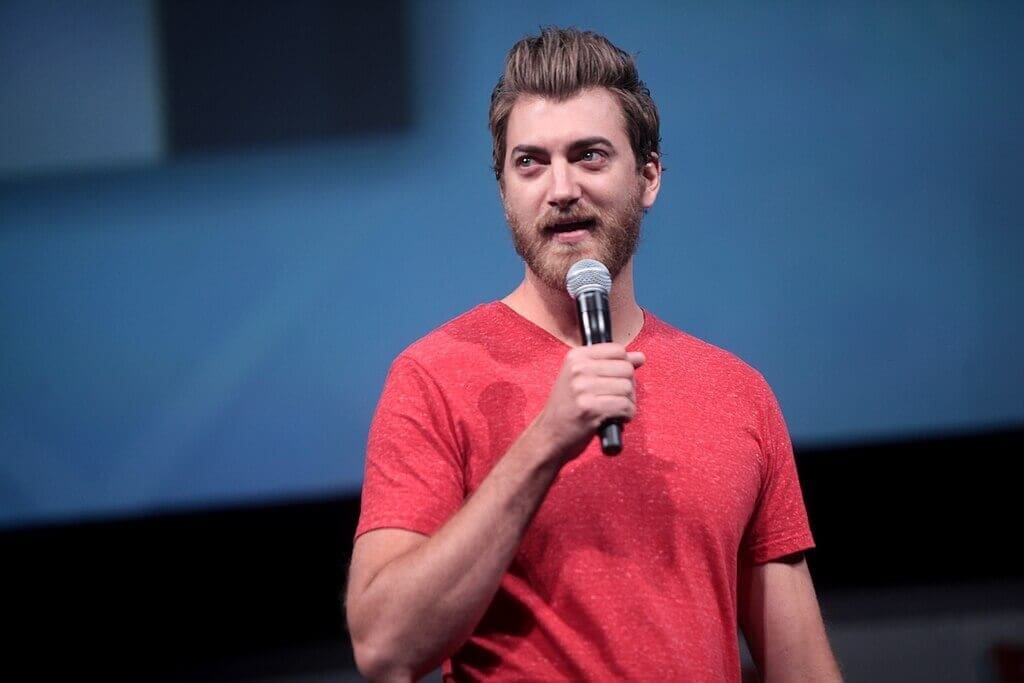
Platform: YouTube | Combined Estimated Net Worth: Approximately $35 million (2025 estimates)
Rhett and Link have hosted Good Mythical Morning since 2012. Fourteen years of daily content. However, the show is not the business. The show is merely one asset in a larger system.
Mythical Entertainment is not a creator brand with a logo on t-shirts. It is a privately held media company that operates multiple YouTube channels, branded merchandise lines, and an acquisition and investment strategy. In 2019, Mythical Entertainment purchased Smosh, the legacy comedy channel, for approximately $10 million, according to The Hollywood Reporter. In 2023, Smosh co-founders Ian Hecox and Anthony Padilla acquired a majority stake in Smosh from Mythical Entertainment, reuniting as co-owners of the brand they had originally created. Mythical Entertainment retained a minority interest in the company.
In 2022, Mythical Entertainment engaged the Raine Group, a merchant bank, to investigate selling an equity position in the business. According to The New York Times, Mythical Entertainment entertained discussions with institutional investors including Spotify, Roku and Candle Media. However, no sale was completed at that time.
The Mythical Entertainment portfolio continues to expand. In late 2024, Mythical Entertainment was part of an investor group that acquired First We Feast from BuzzFeed for $82.5 million, as reported by Hypebeast and The Hollywood Reporter. In December 2025, Mythical Entertainment sold Sporked, its food editorial brand, to Savage Ventures as part of a portfolio rationalization; reducing non-core assets while protecting its core content and distribution infrastructure.
“There’re lots of creators who want to build businesses bigger than themselves and they need to build the kinds of teams and systems that we did in order to accomplish those goals,” said Rhett McLaughlin in an interview with CNBC in 2023. It is worth noting that TIME has ranked Rhett and Link among TIME100 Creators in 2025.
Mythical Entertainment is a privately-owned company; its valuation has not been published. Estimates of the annual revenues of Mythical Entertainment vary widely, ranging from $25 million to $83 million, although none of those estimates have been substantiated. What is known, however, is the model; Rhett and Link did not create a product brand. They created an infrastructure company that acquires, invests in and operates multiple content properties and revenue streams. That infrastructure will retain value regardless of the individual personalities associated with it, which is the true test of whether a creator company can survive beyond the lifespan of the creator.
10. Molly-Mae Hague, the Reality Star Who Bridged Influencer Culture and Fashion Retail

Platform: Instagram, YouTube | Market: UK and Europe
Molly-Mae Hague rose to prominence in 2019 via Love Island (UK) and quickly became one of the most commercially viable influencers in British fashion. In August 2021, she was appointed as the Creative Director of Pretty Little Thing, the fast-fashion brand owned by Boohoo Group. According to reports in UK publications such as the Daily Mail and BBC, Hague was paid £5 million per year to occupy the Creative Director role.
She resigned from the role in June 2023, approximately 22 months after the appointment; stating that she wished to concentrate on her role as a mother. However, Hague continued as a brand ambassador for Pretty Little Thing.
However, Hague had already begun establishing herself as a creator in her own right. In September 2024, Hague launched Maebe, her own fashion label. Maebe was positioned as an “accessible luxury” alternative to the fast-fashion universe she had previously promoted.
There is an inherent tension in this transition. Hague built her commercial reputation promoting fast fashion, and subsequently launched a brand that implicitly criticized the disposability and low-cost production of the fast-fashion universe. The success of Maebe, and whether it can compete with the fast-fashion universe; based on quality of design, materials, and brand identity rather than cost and influencer association; is uncertain. However, the mere fact that the attempt was undertaken is educational.
Pretty Little Thing was a demonstration of the commercial viability of a well-positioned lifestyle influencer in the UK marketplace. And Hague’s transition from representing a third-party brand to building her own represents the progression that every creator on this list has either completed or is currently pursuing.
Honorable Mentions
Kylie Jenner; Kylie Cosmetics. Probably the most frequently referenced influencer-to-brand case study in history. Jenner utilized her social media following to create Kylie Cosmetics, which was ultimately valued at $1.2 billion when Coty Inc. acquired a 51% interest for $600 million (announced November 2019; deal closed in early 2020). Kylie Cosmetics demonstrates the ability of a direct-to-consumer launch model using social media to be successful. However, subsequent downward revisions of Kylie Cosmetics’ revenue raise concerns about the sustainability of cosmetic brands built on a hype-driven business model.
Rihanna; Fenty Beauty. Fenty Beauty was launched in collaboration with LVMH in 2017. Fenty Beauty reportedly generated $570 million in revenue in its first year, and was valued at approximately $2.8 billion. Fenty Beauty is notable because it combined Rihanna’s cultural authority with innovative products; specifically, its 40-shade foundation range, which altered the industry-wide standards for inclusivity. Although Fenty Beauty is technically a celebrity-founded brand rather than a social-media-native creator brand, it undoubtedly influenced the creator economy.
What Actually Separates the Influencers who Develop Brands from Those Who Do Not?
Ten entries into this list, a consistent pattern has emerged. The creators who built lasting businesses share behaviors that distinguish them from those whose ventures did not endure.
They chose ownership over fees. With sponsored content, a creator is paid a fee for the use of their name and for the amount of time they commit to promoting a particular product. While this method provides immediate returns for the entrepreneur, the potential long-term returns are capped. Ownership of a product allows long-term returns to compound. For example, Feastables will continue to generate revenue for MrBeast in ten years, regardless of how often he posts new videos. When a $500,000 branded partnership ends, so does the payment to the creator.
They solved for distribution, not just demand. Chamberlain Coffee is available at Walmart and Target. Feastables are stocked at major national convenience store chains. Huda Beauty is distributed across the world through Sephora. Creating an audience for your products online, although important, is only half the battle. Securing a commitment from retailers to carry, restock and display your products on their shelves is much harder and eliminates most influencer led products.
They weathered the hype cycle. PRIME Hydration’s path; $1.2 billion in its peak year, and projected to be around $300 million for 2025; is a perfect example of the dangers of hype exceeding the products ability to produce habitual demand. The brands that remain on store shelves today are the ones that continued to sell after the first wave of enthusiasm faded away.
They treated their ventures as companies, not as extensions of their personal brand. Mythical Entertainment has a portfolio strategy, a venture fund, and a history of acquiring and selling businesses. Beast Industries raised money at a $5 billion valuation. Chamberlain Coffee has a Co-CEO leadership structure and is going through venture capital fundraising cycles. These are not hobbies with the creator’s name on them. They are actual businesses with employees, suppliers, investors and P&L statements.
Day 1 Action Item
You don’t need 470 million followers to apply the principles outlined above. You need one choice.
Create something you can own. It doesn’t need to be a chocolate company or a billion dollar brand rights transaction. It could be a digital product, a newsletter with paying subscribers or a small physical product sold directly through your channels.
Your goal is to start turning your attention into an asset that earns money regardless of your content schedule. The algorithm will change. New platforms will emerge. Your follower count will fluctuate. But a product that has customers that continually buy it will outlive all of those changes.
You rent attention. You own a brand.
Comparative Overview: Influencer Brand Performance at a Glance
| Creator | Platform(s) | Brand / Venture | Business Model | Revenue / Valuation (Est.) | Ownership Structure | Retail / Distribution | Current Status |
|---|---|---|---|---|---|---|---|
| MrBeast (Jimmy Donaldson) | YouTube | Feastables; Beast Industries | Owned product brand + media holding company | ~$250M revenue (Feastables, 2024); $5B valuation (2025); $520M forecast (2025) | Founder-controlled; $200M raised from Bitmine Immersion Technologies | Walmart, Target, convenience chains (US) | Active; projected $520M sales in 2025 |
| Emma Chamberlain | YouTube, Instagram | Chamberlain Coffee | Owned product brand (venture-backed) | ~$22M revenue (2024); $33M forecast (2025); not yet profitable | Co-CEO / founder; $19.6M–$22M total VC raised | Target, Walmart, Whole Foods, Costco; LA café (Jan 2025) | Active; aiming for profitability in 2025 |
| Logan Paul & KSI | YouTube, Podcasting | PRIME Hydration | Co-developed with CPG manufacturing partner | ~$1.2B peak sales (2023); ~$300M projected (2025) | Congo Brands 60%; Logan Paul 20%; KSI 20% | Walmart, Target, UK retail chains | Active but declining; UK sales down 70%+ |
| Huda Kattan | Instagram, YouTube | Huda Beauty | 100% founder-owned cosmetics brand (post-2025 buyback) | $300M+ YTD sales (through Aug 2024); ~$450M full-year 2024 estimate | 100% founder-owned after TSG Consumer Partners buy-back (June 2025) | Sephora (global) and other international retailers | Active; fully independent; sold KAYALI sub-brand |
| Addison Rae | TikTok | Item Beauty (discontinued) | Co-developed with brand incubator (Madeby Collective) | Revenue not disclosed; brand discontinued 2023 | Partnership with Madeby Collective | Sephora (pulled January 2023) | Discontinued; creator pivoted to music |
| Charli D’Amelio | TikTok | D’Amelio Brands | Licensing and brand partnerships | $70M+ combined family earnings since 2020 (Forbes, Sep 2022) | Family-controlled; royalty / licensing model | Various retail via licensing partners | Active; ongoing brand deals |
| MKBHD (Marques Brownlee) | YouTube | Panels (wallpaper app; shut down) | Subscription digital product | Revenue not disclosed; product failed commercially | Creator-owned; code open-sourced under Apache 2.0 (Jan 2026) | App Store only | Shut down Dec 31, 2025; code open-sourced |
| Khaby Lame | TikTok | Step Distinctive Limited | Brand-rights sale and AI-licensing deal | ~$975M deal valuation (all-stock, Jan 2026); $4B annual revenue projected by Rich Sparkle | 49% pre-sale stake; sold to Rich Sparkle Holdings (Hong Kong) | TikTok Shop, live streaming, AI-commerce | Deal closed; Rich Sparkle stock subsequently declined |
| Rhett McLaughlin & Link Neal | YouTube | Mythical Entertainment | Media infrastructure; acquisitions; venture fund | Valuation undisclosed (private); revenue estimated $25M–$83M/yr | Founder-controlled private company | Digital, merch, content licensing | Active; sold Sporked (Dec 2025); part of First We Feast investor group |
| Molly-Mae Hague | Instagram, YouTube | Maebe (formerly PLT Creative Director) | Owned fashion label; prior salaried creative director role | PLT deal reportedly £5M/yr; Maebe revenue undisclosed | Founder-owned (Maebe) | Online DTC (Maebe); PLT had existing retail footprint | Active; debut collection sold out within minutes of launch |
| Kylie Jenner * | Instagram, TikTok | Kylie Cosmetics | Owned brand; majority stake sold to Coty | Valued at $1.2B by Coty (51% stake; announced Nov 2019, closed Jan 2020) | Jenner retains 49%; Coty owns 51% | Ulta Beauty and global retail | Active; revenue revised downward from peak estimates |
| Rihanna | Instagram, cultural influence | Fenty Beauty | Co-owned with LVMH | ~$570M revenue (first year); ~$2.8B valuation | Partnership with LVMH; Rihanna holds equity stake | Sephora, Harvey Nichols, Boots | Active; among highest-revenue celebrity beauty brands globally |
| Honorable Mention. Sources: Bloomberg, Forbes, Fortune, Business Insider, WWD, TechCrunch, The Hollywood Reporter, BBC. All figures are third-party estimates. Revenue and valuation data reflect the most recent reporting available as of early 2026. | |||||||
Frequently Asked Questions
Who is the wealthiest influencer/entrepreneur?
As per publicly available information, MrBeast (Jimmy Donaldson), is the wealthiest social media native influencer. Beast Industries was reportedly valued at approximately $5 billion in a 2025 fund raise according to reports from Bloomberg and Fortune. Of course, if we consider a broader definition of ‘influencer’, such as any public figure that has a large social following, then Rihanna’s Fenty Beauty and Savage x Fenty, would put her net worth significantly higher.
How do successful influencer-product brands get started?
All successful influencer-led product brands share common traits: the founders are heavily involved in developing the product (as opposed to simply lending their name), the product has a distinct identity separate from the creator, and the product is carried in physical retail stores in addition to being sold directly to consumers online. Chamberlain Coffee, Feastables and Huda Beauty all fit into this category. As an example of an unsuccessful product, Item Beauty had no distinct identity beyond its creator’s name and therefore failed.
What is the main difference between creating a product-brands through a creator and a typical celebrity endorsement?
In a traditional endorsement, a celebrity is paid to associate themselves with a product they may not even own or operate. In contrast, under the creator-brand model described here, the creators own the brand, control its direction, and bear financial risk. MrBeast owns Feastables. Emma Chamberlain is the Co-CEO of Chamberlain Coffee. This makes a huge difference in terms of long-term wealth creation. The equity in a growing company appreciates over time, whereas an endorsement contract is limited to a specific timeframe.
Can the creator-brand model work internationally?
Yes. Huda Kattan developed Huda Beauty in Dubai and has since secured distribution agreements with Sephora and other international retailers. Molly-Mae Hague is a well-known influencer in the UK market. And Khaby Lame, an Italian creator, recently secured a $975 million brand rights deal with a Hong Kong-listed company. Although the US currently represents the largest portion of creator-led consumer brands with substantial retail distribution, the creator economy is a global phenomenon.
What happens when an influencer-led product brand goes under?
As an example of failure, Item Beauty had a strong presence at Sephora, a large audience, and an attractive market environment, however the product was ultimately effectively discontinued in 2023 due to the fact that it was unable to produce repeat purchases of its own merit. Generally, influencer-led product brands fail due to a lack of product differentiation, insufficient creator involvement in product development, over-reliance on the creator’s name rather than the product’s value, or an inability to sustain consumer interest after the initial launch publicity fades.


