


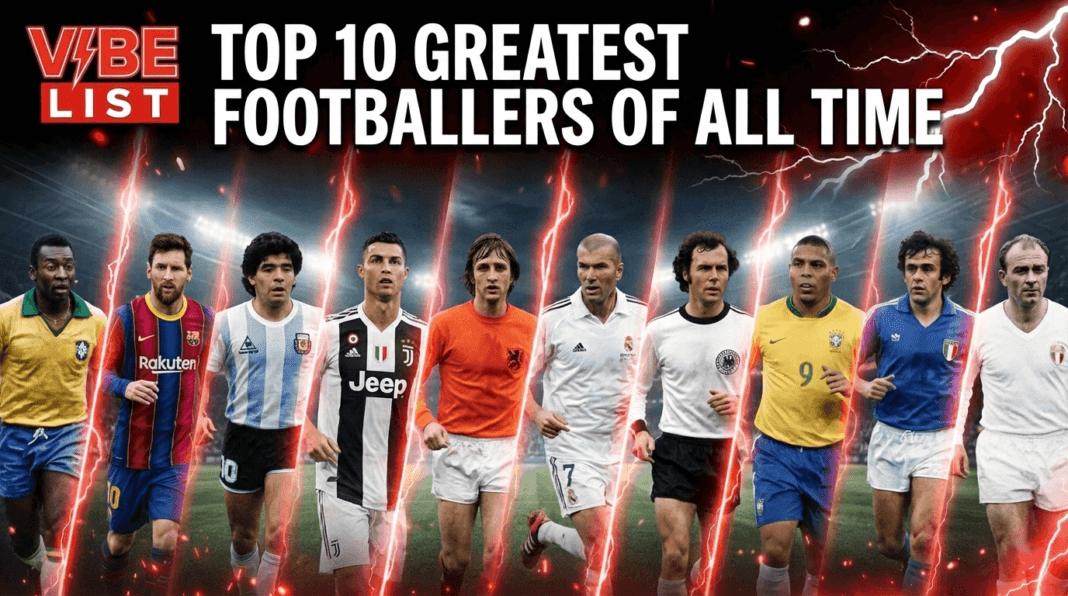
Pelé carried football to continents that had never seen it played at such a level. Cruyff redesigned how it was played. Beckenbauer reinvented what a defender could be. Messi collected every honour the sport could offer. The greatest footballers didn’t just play the game; they each left it a different sport from the one they found.
Football, or soccer as it is called in the Americas, has created many hundreds of the finest athletes in history through well over one hundred years of professional competition. However, if asked to identify the greatest footballers in history; to limit the options to ten names from every generation, every continent, and every type of player; the exercise is likely to produce a discussion that will go on forever. The argument over who the GOAT of football is cannot be solved mathematically. It is an active debate that continues to grow with each new generation, and therefore, it is an argument worthy of continued conversation.
What follows is not a definitive list of the greatest footballers of all time. There does not exist a definitive list. Instead, it represents a case built upon the achievements, influence, and pure greatness of ten players whose work across their respective generations, continents, and styles of play has endured through decades of scrutiny. These are the ten greatest footballers in the history of the sport. These are the footballers whose names come to mind regardless of where you are; whether in a bar in Buenos Aires, a coffee shop in Milan, or a living room in Lagos.
A few of the players listed below set records. Others changed how the sport is viewed. Some did both. Each of the ten players changed, in some way, how the sport is played at the highest levels. And each can withstand the hardest question that can be asked of a football fan: why this player and not another?
Criteria Used to Rank the Greatest Soccer Players of All Time
Ranking the greatest soccer players of all time is a task that requires a framework. Without a framework, “greatest” is nothing more than your own opinion disguised as authority.
The criteria used in this article are multi-faceted. No single criterion carries enough weight to override all others. The framework considers achievements in major international tournaments; specifically, the FIFA World Cup and Continental Championships. It also weighs individual honors, including the Ballon d’Or and the FIFA Best award. Additionally, it considers sustained excellence across seasons and multiple competitions. It also considers measurable statistics; goals, assists, and appearances. Finally, it accounts for the tactical and philosophical influence each player had on how the sport is coached and played. It also considers cultural reach; how far a player’s fame and influence extended beyond the sport itself.
One principle shapes this list above all others. Comparing players across eras demands intellectual honesty about what can and cannot be quantified. The pitches, the fitness expectations, and the tactical requirements of the 1950s were drastically different from those of today. An athlete who excelled in 1960 competed under constraints that would be completely foreign to a modern analyst. As such, this list attempts to assess each player within the context of their respective generation, while acknowledging achievements that have endured and are considered extraordinary by any standard.
1. Pelé: Three World Cups, and the Player Who Took Football Globally
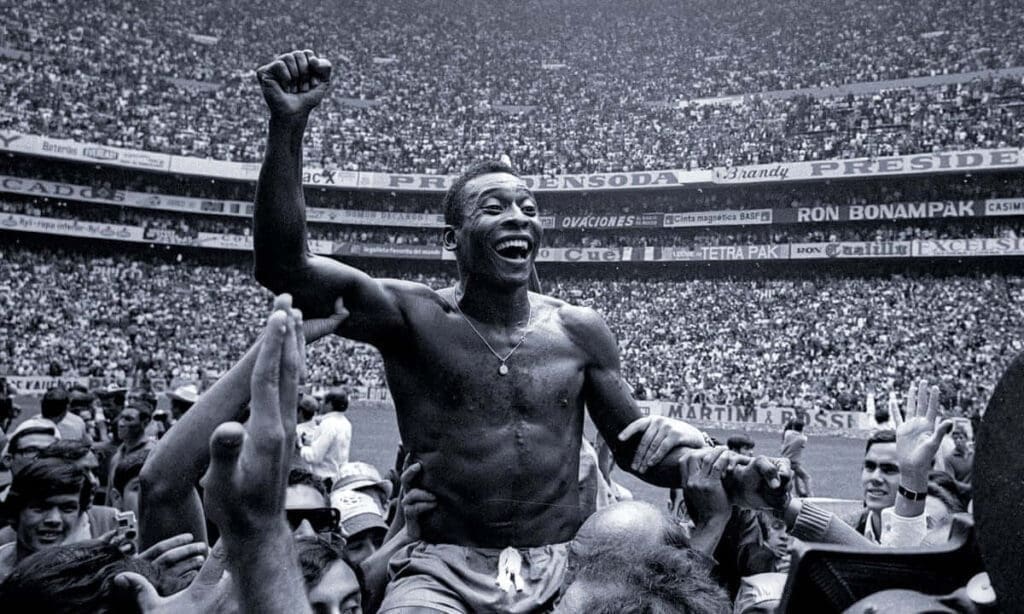
Position: Forward | Nationality: Brazil | Born: 23 Oct. 1940, Três Corações, Brazil | Died: 29 Dec. 2022 (aged 82)
Edson Arantes do Nascimento is the only player in history to have captured three FIFA World Cup trophies. He achieved this over a 12-year period during which Brazilian football transformed from an emerging force into the world standard. This achievement alone guarantees Pelé a place near the top of any serious discussion about the greatest footballers of all time.
Consider the events of the 1958 World Cup. Pelé was 17 years old when he arrived at the World Cup in Sweden. He was the youngest player to score in a World Cup Final. Pelé scored 6 goals in the World Cup. Two of those goals came in the World Cup Final. Pelé was a teenager, and he performed on the largest stage in the sport. He appeared to be more comfortable on that stage than any player on the pitch.
Pelé played in four World Cup tournaments. He accumulated 12 goals in 14 matches. He represented Brazil in 92 international matches. He scored 77 goals; a Brazilian national team record he held for more than 50 years. Neymar tied Pelé’s record in December 2022 and exceeded it in September 2023. Pelé spent the majority of his career at Santos from 1956-74. He scored approximately 680 goals in official matches. Pelé’s total career goals include friendlies, exhibition matches, and tour games. Statisticians argue about the exact number. However, the magnitude of his production has never been questioned.
“I was born for soccer, just as Beethoven was born for music.” It was not boastful. However, it was not false either. In an era before international broadcasting reached Africa, Asia, and the Americas, Pelé became football’s first truly planetary ambassador. He did not merely compete at the highest level. He took the sport to places where it had never been seen as anything more than a curiosity. Millions of people worldwide came to associate his name with the sport itself.
Only one player has captured three World Cup trophies. Only one player combined the highest individual performance in the sport’s history with a cultural ambassadorship on the scale of Pelé’s. He achieved this at a time when the sport needed a figure who could capture global attention.
2. Lionel Messi: 900 Goals, and the Most Complete Career Ever in the History of the Sport
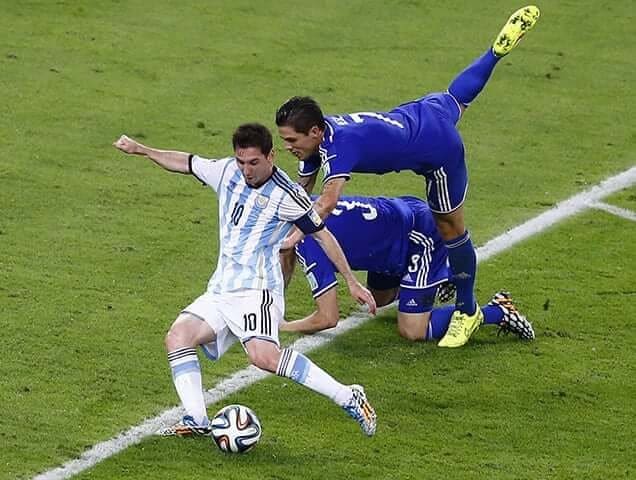
Position: Forward | Nationality: Argentina | Born: 24 Jun. 1987, Rosario, Argentina
Lionel Andrés Messi has accumulated accolades at a level no footballer has ever matched. Eight Ballon d’Or awards. In 2009, 2010, 2011, 2012, 2015, 2019, 2021, and 2023. Four UEFA Champions Leagues with FC Barcelona. In 2005-06, 2008-09, 2010-11, and 2014-15. The 2022 FIFA World Cup with Argentina. The Copa America in 2021 and 2024. Messi is FC Barcelona’s all-time leading scorer. On March 19, 2026, while playing for Inter Miami in the CONCACAF Champions Cup, Messi reached his 900th career goal. He became only the second male player in history, behind Cristiano Ronaldo, to achieve this milestone.
Statistics can only tell part of a player’s story. What differentiated Messi was how he played. His dribbling. How low to the ground he is able to maintain, while shifting directions quickly. The frequency with which he beats elite defenders, leaving them flatfooted and grasping at air. His passing ability. His ability to recognize open space two or three moves in advance of all other players. His finishing. Not just the volume of goals, but the precision and timing with which they arrive.
Pep Guardiola, who coached Messi during Barcelona’s peak, provided the simplest possible evaluation. “Don’t write about him, don’t try to describe him, just watch him.”
Messi’s crowning achievement occurred in the 2022 World Cup Final vs. France; widely acclaimed as the greatest World Cup Final in history. He scored a penalty in the 23rd minute. Then he scored a second goal in the 108th minute. Then, after France’s Kylian Mbappé scored an incredible two goals to tie the match, Messi scored his penalty in the shootout. Argentina defeated France 4-2 in the shootout, after a 3-3 tie. The World Cup had eluded him for nearly two decades. He claimed it in the most dramatic fashion the sport has ever witnessed.
No footballer has combined the same level of individual accolades with the same volume of team honors at both the club and international levels. The sustained excellence across more than 20 years, alongside the numerous team championships at every level, makes Messi’s résumé untouchable.
3. Diego Maradona: When One Man Became an Entire World Cup
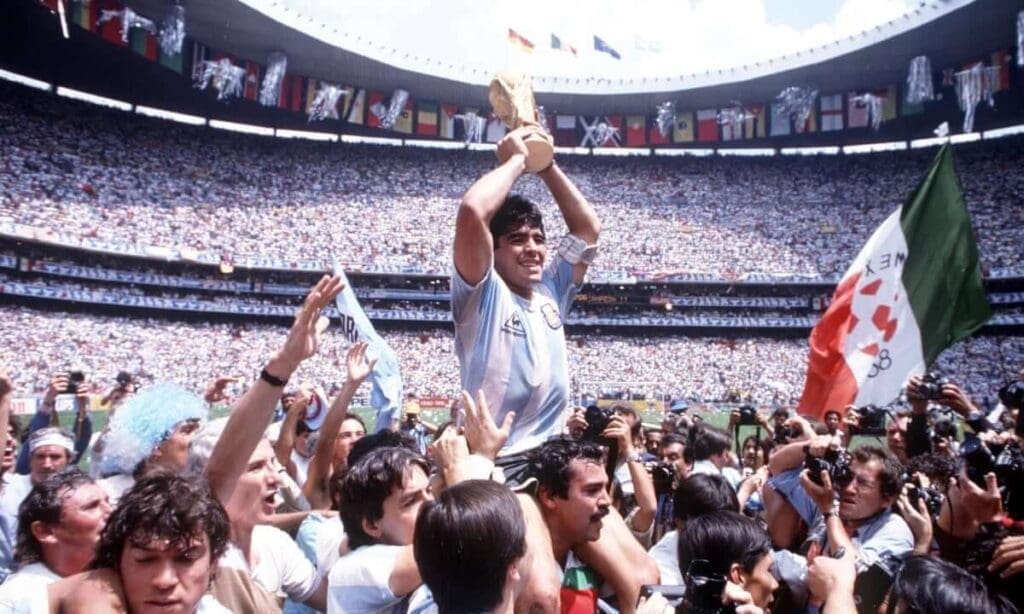
Position: Attacking Midfielder | Nationality: Argentina | Born: 30 Oct. 1960, Lanús, Argentina | Died: 25 Nov. 2020
Diego Armando Maradona‘s 1986 World Cup performance is arguably the greatest individual tournament display in the history of the sport. It may be the single most compelling demonstration of how one individual can bend the sport to his will.
Maradona scored both of Argentina’s goals in the quarterfinal vs. England. The match was played against the intense and highly politicized background of the Falklands War. Maradona’s first goal; the “Hand of God”; was punched past English goalkeeper Peter Shilton with his fist. The second goal; the “Goal of the Century”; was a solo run from his own half, during which he outran five English players and the goalkeeper before finishing. The goals were scored four minutes apart. Cheating and genius side-by-side in the same match. That was Maradona.
“I am Maradona, who makes goals, who makes mistakes. I can take it all, I have shoulders big enough to fight with everybody.”
By the conclusion of the 1986 World Cup, Maradona had accumulated five goals and five assists in seven matches. Directly involved in 10 of Argentina’s 14 goals; 71 percent of their total output, according to FIFA. No player has matched this level of direct involvement in a single tournament since.
At the club level, Maradona joined S.S.C. Napoli in 1984. He achieved what seemed impossible; a Southern Italian club winning a Serie A title during an era when clubs from the industrial North; AC Milan, Juventus, and Inter; dominated all domestic honors. Napoli won two Serie A titles. (1986-87 and 1989-90). They won the UEFA Cup in 1989. In 259 appearances for the club, Maradona scored 115 goals. When Maradona passed away in November 2020, the city of Naples renamed its stadium after him. Stadio Diego Armando Maradona.
On the international stage, Maradona earned 91 caps for Argentina and scored 34 goals across four World Cups. Maradona’s career was marred by off-the-field issues and substance abuse. These struggles limited his peak years. However, Maradona’s case for greatness was never based on longevity or quantity. It was based solely on the sheer brilliance of his prime. The ability to raise his performance above the level of every other player on the pitch. Under the most extreme pressures in the history of the sport.
4. Cristiano Ronaldo: The Unrelenting Machine That Is Pursuing 1000
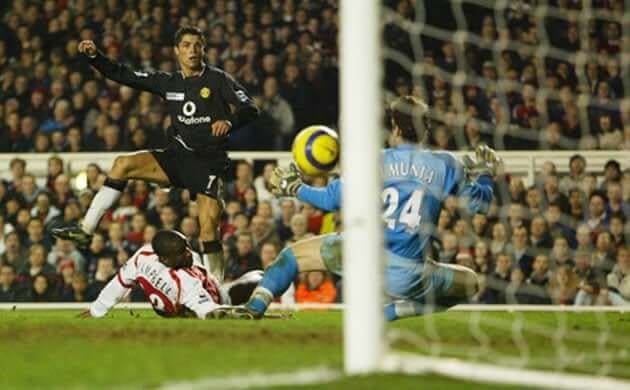
Nationality: Portugal | Position: Forward | Birthdate: 5 February 1985, Funchal, Madeira, Portugal
The sheer volume of goals that Cristiano Ronaldo dos Santos Aveiro has amassed since his emergence as a professional footballer over two decades ago is the most impressive in the history of male football. By the end of March 2026, he will have scored around 965 goals in all competitions, for club and country. While reaching the 1,000-goal mark remains a difficult pursuit, it is not beyond reach. Ronaldo currently holds the records for the most goals in the UEFA Champions League (140) and the most goals in men’s international football (143 in 226 appearances for Portugal).
Ronaldo has won five Champions League titles. He won the Champions League with Manchester United in 2008 and with Real Madrid in 2014, 2016, 2017 and 2018. Additionally, he led Portugal to the 2016 European Championship, their first ever major international championship. Ronaldo also led three of Europe’s top clubs to league championships. He won the Premier League with Manchester United, La Liga with Real Madrid and Serie A with Juventus.
Additionally, he has won five Ballon d’Or awards (2008, 2013, 2014, 2016, and 2017), which is second only to Messi in all-time wins. However, the physical aspect of Ronaldo’s career is the most significant difference between him and his peers. Ronaldo has consistently redesigned his game as he grew older. From being a quick, agile, wide dribbling forward at Manchester United to becoming a strong, aerial, positional striker in his 30s, and eventually a pure penalty box predator with Al-Nassr. “Talent without working hard is nothing,” Ronaldo has said, and the disciplined physical makeover of his career is the clearest example of that principle that the sport has seen.
While Messi’s genius is rooted in aesthetic brilliance, Ronaldo’s is rooted in his ability to produce continuously at maximum levels over a prolonged period. No forward has produced at such high levels, for as long, across as many different leagues and countries. This is what sets Ronaldo apart.
5. Johan Cruyff: The Revolutionary Who Remodelled Football Internally
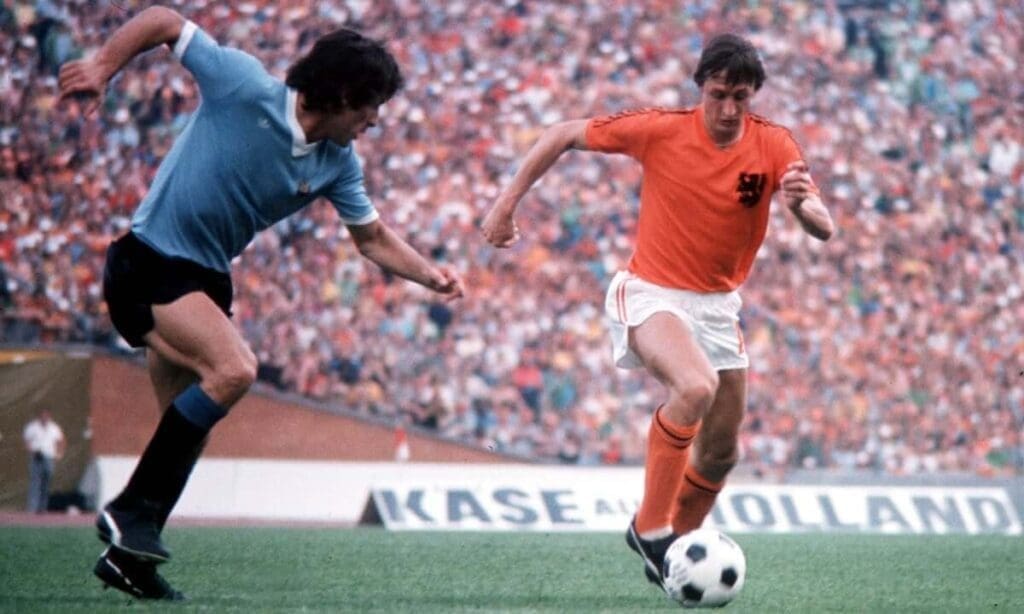
Nationality: Netherlands | Position: Forward | Birthdate: 25 April 1947, Amsterdam, Netherlands | Death: 24 March 2016
All of the other players on this list played the game as they found it and simply played it better than anybody else. Johan Cruyff was different. He remodelled the game itself.
“Playing football is very simple, but playing simple football is the hardest thing there is,” Cruyff said. That statement, deceptively modest, encapsulates his entire philosophy. He won three Ballon d’Or awards (1971, 1973 and 1974); the first player to win three. For Ajax, he led the charge to three consecutive European Cup championships (1971-1973) and won eight Eredivisie titles in two stints at the club. When he moved to Barcelona in 1973, he helped the club win the 1973-74 La Liga championship; ending a 14-year drought.
Cruyff was the driving force behind the Total Football system with the Netherlands national team. The Total Football system allowed the outfield players to switch roles freely, and the shape of the team would shift depending on the situation rather than maintaining a rigid formation. The Netherlands finished as runner-ups in the 1974 World Cup. Although the Netherlands ultimately lost to West Germany, their style of play influenced the future of the game far more than the result of that final. The Cruyff Turn, the signature dribbling maneuver he showcased at the 1974 World Cup, remains part of the technical vocabulary of football.
However, Cruyff’s greatest influence came after he stopped playing. During his tenure as Barcelona manager from 1988 to 1996, he established the tactical and developmental framework that continues to define Barcelona to this day. The framework included possession football, positional play, and developing young players through La Masia. Pep Guardiola, who played under Cruyff at Barcelona, took those concepts and built the Barcelona and Spanish national teams that dominated the late 2000s and early 2010s. The line of influence from Cruyff to Guardiola to the present-day generation of possession football managers is evident and active in the game today. Of all the players on this list, Cruyff’s influence on how football is perceived and taught may prove to be the most enduring.
6. Zinedine Zidane: Composure Under Maximal Pressure
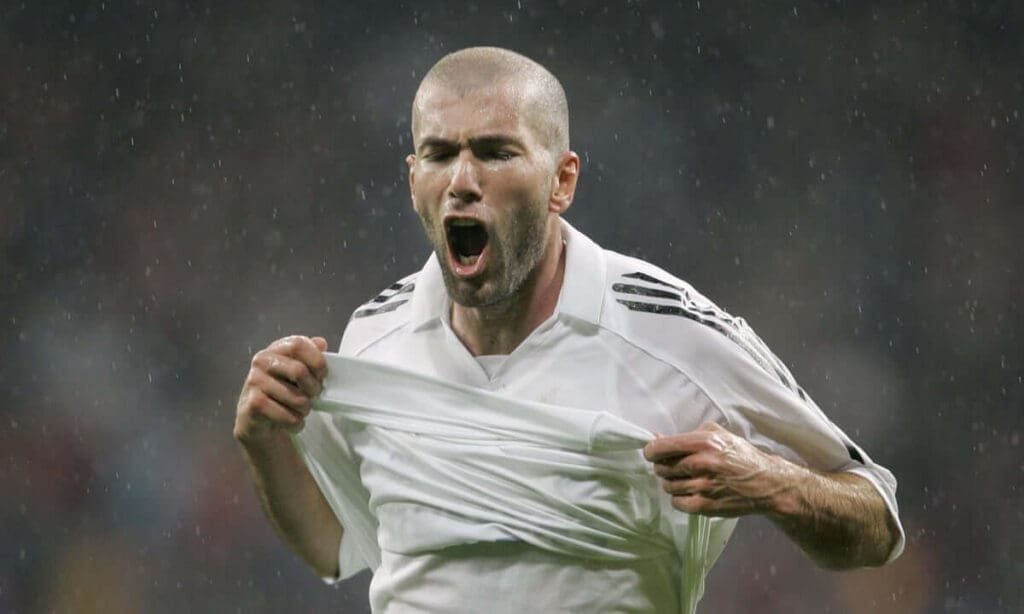
Nationality: France | Position: Midfielder | Birthdate: 23 June 1972, Marseille, France
There have been many great midfielders who have dominated league matches every weekend. What made Zinedine Zidane stand out was when and where his most impressive performances occurred. Most of Zidane’s finest displays were in finals, in big matches, and at times when the pressure was as immense as it gets.
On 12 July 1998, at the Stade de France, the host nation needed to win its first-ever World Cup title, and Zidane provided it in a manner that no one anticipated. He scored two headed goals from corners delivered by Emmanuel Petit and Youri Djorkaeff, and led France to a 3-0 demolition of Brazil.
Headed goals were not typical of Zidane’s play, which made the display even more remarkable. Two years after that, he was named the Best Player at Euro 2000, leading France to the European Championship and making them the first nation to hold the World Cup and European Championship simultaneously.
Zidane won two Serie A titles (1996–97 and 1997–98) with Juventus before joining Real Madrid in 2001 for what was then the highest transfer fee paid for a player. He rewarded the transfer fee almost instantly with a left-footed volley in the 2002 Champions League Final vs. Bayer Leverkusen; a goal so technically stunning that it is still cited as one of the finest ever scored. Real Madrid won 2-1 to secure their 9th European Cup.
His career statistics include 125 goals in 689 club appearances, and 31 goals in 108 international appearances. Zidane’s overall impact extends beyond those numbers. Zidane’s value was never quantifiable. His value lay in the way he controlled a football under extreme pressure, the way he could slow down or speed up the flow of a game with a single touch of the outside of his boot. Awards and recognition followed naturally. He was awarded the Ballon d’Or in 1998 and the FIFA World Player of the Year award in 1998, 2000 and 2003.
His playing career concluded in grand fashion at the 2006 World Cup Final. After scoring the opening goal with a Panenka-style penalty, he received a red card for head-butting Italian defender Marco Materazzi in the chest during extra time. France lost the match in a penalty shootout. It was a fittingly dramatic conclusion to a career that was defined by incredible poise and occasional explosive temper.
And then came the second act. As the manager of Real Madrid from January 2016, Zidane secured three consecutive Champions League Titles (2015–16, 2016–17, 2017–18); the first manager to accomplish the feat in the Champions League era. He also secured two La Liga titles. Zidane now belongs to the small and elite group of individuals who have achieved success as both player and manager.
7. Franz Beckenbauer: The Defender Who Made the Defensive Position Innovative
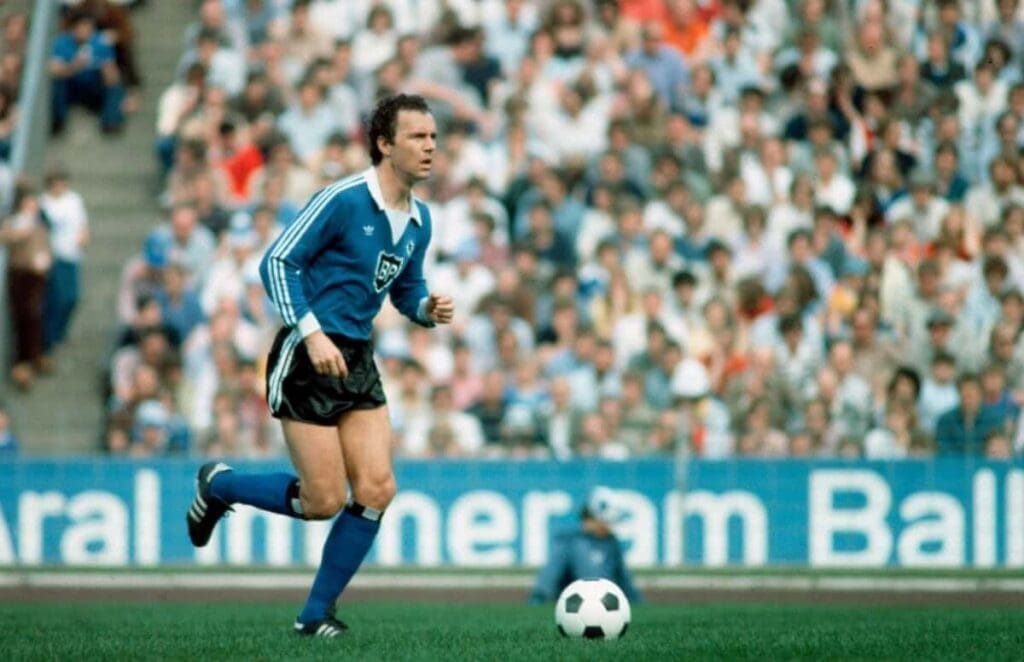
Nationality: Germany | Position: Sweeper/Libero | Birthdate: 11 September 1945, Munich, Germany | Death: 7 January 2024 (age 78)
Prior to Franz Beckenbauer, defenders defended. They halted opposing forwards, cleared danger and remained in their defensive third. Beckenbauer broke this mold so thoroughly that the modern game still operates within the framework he established.
Beckenbauer is credited with creating the modern attacking libero; a sweeper who sits directly behind the back line. The libero controls the tempo of the game, creates attacking opportunities and moves the ball forward with the confidence of a midfielder. Beckenbauer won four Bundesliga titles (1969, 1972, 1973 and 1974) and four DFB-Pokal cups (1966, 1967, 1969 and 1971) with Bayern Munich. He also secured three consecutive European Cups (1974-76) with the club. These titles placed Bayern alongside Real Madrid and Ajax as only the third club to have secured a European Cup hat-trick in the original European Cup format.
Throughout his first 13-year stint with Bayern Munich (1964–1977), Beckenbauer appeared in 584 games and scored 75 goals. This is a phenomenal total for a defender. Beckenbauer was a key member of the 1972 European Championship-winning squad for West Germany and was captain of the West German team that defeated Johan Cruyff’s Netherlands 2-1 in the 1974 World Cup final.
Beckenbauer was the first and only defender to win the Ballon d’Or twice (1972 and 1976).
Following his retirement from playing, Beckenbauer successfully guided West Germany to a 1-0 victory over Argentina in the 1990 World Cup Final. Beckenbauer joined an elite group of individuals who have won the World Cup as both player and manager, alongside Mário Zagallo and Didier Deschamps.
Franz Beckenbauer passed away on January 7, 2024. He was 78 years of age. Bayern Munich retired his legendary number 5 jersey. All of the modern center backs who move the ball out from the back; from Franco Baresi to Virgil van Dijk, owe a debt of gratitude to the template Beckenbauer established. He did not merely play the sweeper position better than everybody else. He transformed what the sweeper position could be.
8. Ronaldo Nazário: The Apex of Football That Will Not Be Forgotten
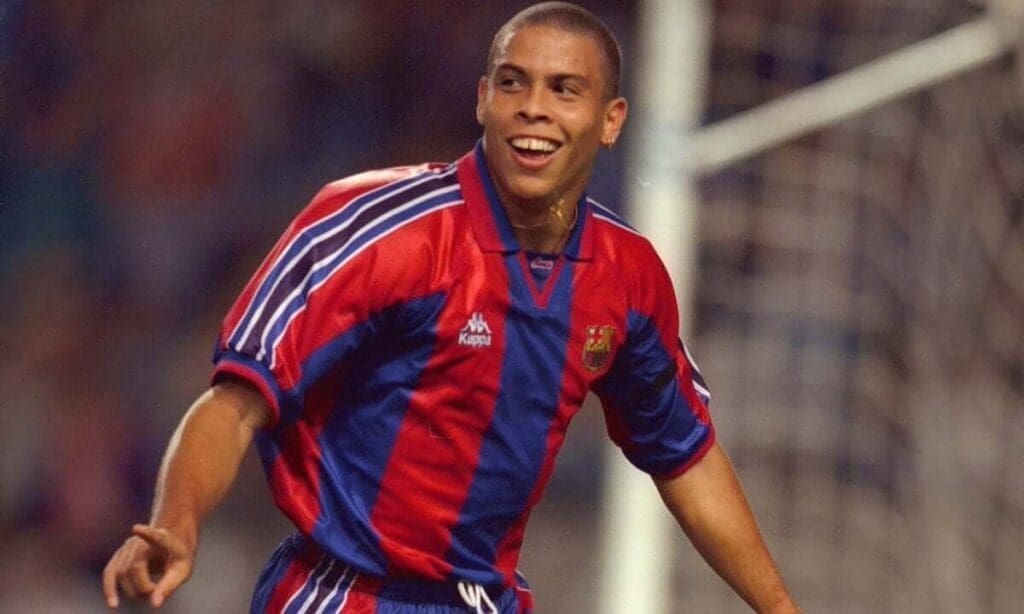
Nationality: Brazil | Position: Forward | Birthdate: 22 September 1976 (registered; actual birth date 18 September 1976)
Some footballers have longer careers, more titles, and better-preserved bodies. None had a peak as spectacular, or as breathtakingly brilliant, as that of Ronaldo Luís Nazário de Lima before chronic knee injuries derailed the latter portion of his career.
Ronaldo scored 47 goals in 49 games during the 1996–97 campaign with Barcelona. This is an outrageous rate that earned him the 1997 Ballon d’Or at just 21 years of age. Ronaldo remains the youngest Ballon d’Or recipient in history; a record that has stood for nearly three decades.
Ronaldo possessed a combination of physical attributes that no single player before him had united. He had a sprinter’s speed, the close control of a dribbler, the strength to hold off defenders at full sprint, and the finishing ability to score from almost anywhere. Opposing defenses had to contend with an array of potential threats that no single player had ever offered.
Ronaldo moved to Inter Milan in 1997. This is when the injuries started. A torn patella tendon in November 1999. A repeat of the same injury in just a few minutes of his attempt to make a comeback in April 2000. Ronaldo missed the greater part of three seasons when he should have been at the absolute height of his physical powers. The damage was not only to Ronaldo personally. Football itself was deprived of what many believe was the best centre-forward alive.
At the age of 17, Ronaldo was named to Brazil’s 1994 World Cup-winning team. He saw no action. In 1998, he reached the World Cup Final, but suffered a mysterious physical episode several hours before kickoff that severely limited his performance. Brazil lost to France 3-0.
Four years later, Ronaldo redeemed himself. He scored eight goals at the 2002 World Cup. He scored both goals in the World Cup Final as Brazil defeated Germany 2-0. Ronaldo was awarded the Golden Boot. He was also awarded his second Ballon d’Or.
Ronaldo’s peak was short-lived compared to the majority of the players listed here. However, the case for Ronaldo has always rested on what was possible. Those few seasons before the knee injuries ravaged his career, when watching him play felt like witnessing something beyond the sport itself, were truly unprecedented.
9. Michel Platini: The Midfielder Who Dominated the 1980s from an Unusual Position
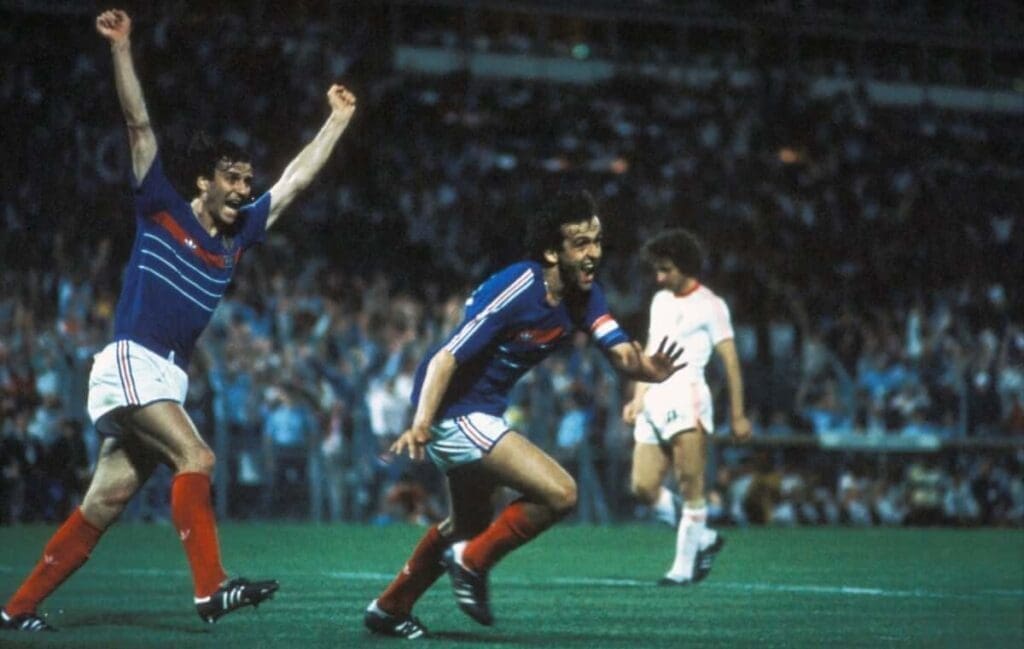
Nationality: French | Position: Attacking Midfielder | Born: June 21, 1955, Jœuf, France
Frenchman Michel François Platini was the first player to win three consecutive Ballon d’Or Awards in 1983, 1984, and 1985. The significance of this feat lay not only in its continuity, but also in the fact that Platini was an attacking midfielder. The fact that he was able to score more often than many strikers while organizing his team’s attack is the defining paradox of his career.
Platini’s display at the 1984 European Championship in France, where he scored nine goals in five games, is probably the most impressive individual performance in the tournament’s history. The record, which has stood for more than 40 years, saw Platini score in each of France’s five matches, including the final against Spain, as the host nation captured their first major international title. “We were the best team in the world: European champions in 1984, we qualified without a hitch and 86 was to be the swan song for a very experienced side.” The numbers bear him out. From 1982 to 1987, at Juventus, Platini was the creative and scoring force behind a team that won two Serie A titles (1983–84 and 1985–86) and the European Cup in 1985. Platini received 72 caps for France and scored 41 goals. This is an incredibly high ratio for a midfielder. Before moving to Italy, he had established himself as a domestic force at AS Nancy (1972–79) and AS Saint-Étienne (1979–82).
Platini’s career as a football administrator ended in scandal and a ban from football activities, which complicates his public image. The player, however, left little doubt. No other player has won three consecutive Ballon d’Or Awards as a midfielder, and given the way the modern game is structured, it is possible that none ever will.
10. Alfredo Di Stéfano: The Architect of the Most Successful Dynasty in Early European Football
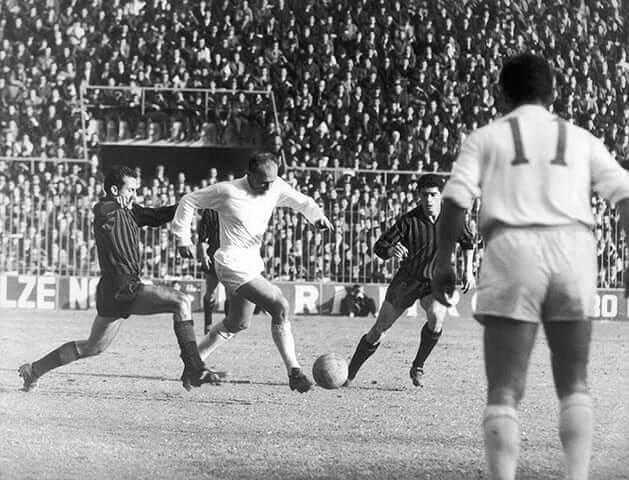
Nationality: Argentine / Spanish | Position: Striker | Born: July 4, 1926, Buenos Aires, Argentina | Died: July 7, 2014
Alfredo Stéfano Di Stéfano Laulhé was the foundation stone of the most successful dynasty in early European football; Real Madrid’s five consecutive European Cup titles from 1956 to 1960. This has never been duplicated. Di Stéfano scored in each of those five European Cup Finals, including a hat-trick in the 1960 final against Eintracht Frankfurt; a 7–3 victory that is still referred to as one of the greatest matches in football history.
He was virtually unique among his contemporaries in his ability to influence all phases of play. He was not a stationary target man waiting to receive the ball. Rather, he dropped into deeper areas to organize the flow of play, defended when necessary, and then suddenly appeared in the box to finish. By the standards of modern football, he pioneered the concept of the complete forward decades before it had a name. According to Real Madrid, Di Stéfano scored 308 goals in 396 official matches during his time with the club from 1953 to 1964. In addition to the two Ballon d’Or Awards (1957 and 1959) he won during this time, France Football awarded him the one-time-only Super Ballon d’Or in 1989; recognizing him as the greatest European footballer of the previous thirty years, selected ahead of Johan Cruyff and Michel Platini.
Di Stéfano’s international career was fragmented due to circumstances beyond his control. He represented Argentina (six caps), Colombia (four caps), and Spain (31 caps), but he never participated in a World Cup. Neither Argentina nor Spain competed in the World Cup during his playing years. This absence is the biggest void in his résumé. It does not reduce the magnitude of his accomplishments at the club level.
Real Madrid’s continued fixation on the Champions League; the institutional belief that European superiority is an entitlement; stems directly from the standard Di Stéfano established. He did not simply help Real Madrid win five consecutive European Cup titles. He was the linchpin on which the entire enterprise was constructed.
Omissions Noteworthy Enough to Be Mentioned, and Why They Were Excluded
Any list of ten names spanning more than a century of world football will inevitably omit talented players. Several notable near-misses warrant mention.
Garrincha (Brazil, 1933–1983) was Pelé’s partner in greatness during the 1958 and 1962 World Cups, and many Brazilian supporters view Garrincha as the more naturally gifted of the two. However, his career was significantly shorter, and his contributions at the club level were considerably less substantial than those of the other nine players, leaving less evidence to support a top-ten case.
Eusébio (Portugal, 1942–2014) was the leading European striker of the 1960s and the winner of a Ballon d’Or Award in 1965. He was the top scorer at the 1966 World Cup with nine goals. Eusébio spent the prime of his professional career with Benfica (1961–1975), though he later played for several clubs in North America and Portugal. The lack of a World Cup title and consistent success outside of Portugal contributed to his exclusion.
George Best (Northern Ireland, 1946–2005) was arguably the most technically gifted player in the world, at least in terms of peak form. He won the Ballon d’Or Award in 1968 and the European Cup with Manchester United in the same year. However, Best’s career rapidly declined throughout his 20s, and his cumulative output at the highest level was insufficient to support a top-ten claim.
Marco van Basten (Netherlands, 1964–) won three Ballon d’Or Awards (1988, 1989, and 1992) and produced arguably the most famous goal in tournament history at the 1988 European Championships. Van Basten suffered a serious ankle injury at age 28 that ended his career. Like Ronaldo Nazário, van Basten’s legacy is haunted by what could have been; but with less overall production than the Brazilian, van Basten fell short.
Ronaldinho (Brazil, 1980–) combined his breathtaking creativity with a joy that infected everyone watching. Ronaldinho won the 2005 Ballon d’Or award, the 2002 World Cup, and the 2006 Champions League with Barcelona. While Ronaldinho’s peak was electrifying, it was extremely brief; his best years were roughly from 2003 to 2006. Ultimately, the inability to produce consistently at the highest level for a longer stretch kept him off this list.
These omissions are not meant to be insulting. They represent the unavoidable costs of limiting the list to ten players.
What Differentiates Ultimate Greatness from Exceptional Ability
Each of the ten players mentioned above share certain characteristics: extraordinary natural talent, titles that span decades, and statistical production that sets records. However, it is the fact that each altered the way the game was conceived, approached, and taught that separates ultimate greatness from exceptional ability.
Pelé popularized the game globally. Cruyff revolutionized the way we think about the game and teach the game. Beckenbauer redefined what a defender could provide. Messi and Cristiano Ronaldo elevated individual output to statistical levels that previous generations would have considered unsustainable. Zidane showed that one individual can dominate the sport as both player and manager. Di Stéfano created the model for what a dominant European super-club looks like.
In football, greatness is not determined solely by a single Saturday. Greatness is determined by the ability to maintain a high level of performance over years, to excel under the highest levels of pressure, and to leave an impression on the sport that endures long after the final whistle. Debates regarding the correct ranking of the ten players listed above will likely continue ad infinitum. That is not a weakness of the process. One of the most distinctive aspects of football’s historical record is the richness of the debate.
Top 10 Greatest Footballers of All Time; Career Stats, Honors, and Defining Achievements Compared
| Rank | Player | Nationality | Position | Born – Died | Ballon d’Or | World Cups Won | CL / European Cup Titles | Intl Caps / Goals | Club Career Goals (Approx.) | Defining Achievement |
|---|---|---|---|---|---|---|---|---|---|---|
| 1 | Pelé | Brazil | Forward | 23 Oct 1940 – 29 Dec 2022 (aged 82) | N/A (pre-dates global eligibility; widely regarded as greatest) | 3 (1958, 1962, 1970) | N/A (played in South America) | 92 caps / 77 goals | ~680 official; ~1,281 including unofficial | Only player to win three World Cups; football’s first global ambassador |
| 2 | Lionel Messi | Argentina | Forward | 24 Jun 1987 – | 8 (2009, 2010, 2011, 2012, 2015, 2019, 2021, 2023) | 1 (2022) | 4 (2005‑06, 2008‑09, 2010‑11, 2014‑15) | 187 caps / 109 goals (as of Mar 2026) | 900 career goals (reached 19 Mar 2026) | Record 8 Ballon d’Ors; 2022 World Cup; Copa América 2021 & 2024 |
| 3 | Diego Maradona | Argentina | Attacking Midfielder | 30 Oct 1960 – 25 Nov 2020 (aged 60) | N/A (won 1986 Golden Ball; pre-dates unified global Ballon d’Or eligibility) | 1 (1986) | 0 | 91 caps / 34 goals | 259 apps / 115 goals (Napoli) | 1986 World Cup: 5 goals, 5 assists, 71% of Argentina’s goals; “Hand of God” & “Goal of the Century” |
| 4 | Cristiano Ronaldo | Portugal | Forward | 5 Feb 1985 – | 5 (2008, 2013, 2014, 2016, 2017) | 0 | 5 (2008, 2014, 2016, 2017, 2018) | 226 caps / 143 goals (as of Mar 2026) | ~965 career goals (as of Mar 2026) | All-time men’s international goal & cap record; record UCL scorer (140); Euro 2016 |
| 5 | Johan Cruyff | Netherlands | Forward | 25 Apr 1947 – 24 Mar 2016 (aged 68) | 3 (1971, 1973, 1974) | 0 (runner-up 1974) | 3 European Cups (1971, 1972, 1973 with Ajax) | 48 caps / 33 goals | 257 goals / 329 apps (Ajax); 59 goals / 173 apps (Barcelona) | Pioneered Total Football; 8 Eredivisie titles; La Liga 1973‑74 (ended 14-year drought); Barcelona managerial legacy |
| 6 | Zinedine Zidane | France | Midfielder | 23 Jun 1972 – | 1 (1998) | 1 (1998) | 1 (2001‑02 with Real Madrid) | 108 caps / 31 goals | 125 goals / 689 club apps | 2 headed goals in 1998 WC Final; 2002 UCL volley; 3 consecutive UCL titles as manager (2016‑18) |
| 7 | Franz Beckenbauer | Germany | Sweeper / Libero | 11 Sep 1945 – 7 Jan 2024 (aged 78) | 2 (1972, 1976) | 1 (1974; also 1990 as manager) | 3 European Cups (1974, 1975, 1976 with Bayern) | 103 caps / 14 goals | 584 apps / 75 goals (Bayern Munich) | Invented modern libero; only defender with 2 Ballon d’Ors; WC winner as player & manager |
| 8 | Ronaldo Nazário | Brazil | Forward | 18 Sep 1976 – | 2 (1997, 2002) | 2 (1994 squad, no minutes; 2002) | 0 | 98 caps / 62 goals | 47 goals / 49 apps (Barcelona 96‑97); career ~352 goals | Youngest Ballon d’Or winner (age 21); 8 goals & Golden Boot at 2002 WC; peak cut short by knee injuries |
| 9 | Michel Platini | France | Attacking Midfielder | 21 Jun 1955 – | 3 (1983, 1984, 1985 — consecutive) | 0 | 1 European Cup (1985 with Juventus) | 72 caps / 41 goals | 224 goals career (club) | 9 goals in 5 games at Euro 1984 (unbroken record); first three consecutive Ballon d’Ors |
| 10 | Alfredo Di Stéfano | Argentina / Spain | Forward | 4 Jul 1926 – 7 Jul 2014 (aged 88) | 2 (1957, 1959) + Super Ballon d’Or (1989) | 0 (never appeared in a World Cup) | 5 European Cups (1956, 1957, 1958, 1959, 1960 with Real Madrid) | 6 caps (ARG) + 4 caps (COL) + 31 caps (ESP) / combined intl goals ~29 | 308 goals / 396 official apps (Real Madrid) | Scored in all 5 consecutive European Cup Finals; hat-trick in 1960 final (7‑3); architect of Real Madrid dynasty |
| — | Garrincha | Brazil | Right Winger | 28 Oct 1933 – 20 Jan 1983 (aged 49) | 0 | 2 (1958, 1962) | 0 | 50 caps / 12 goals | 232 goals (Botafogo) | Pelé’s partner in 1958 & 1962; shorter career and limited club impact vs. top-10 standard |
| — | Eusébio | Portugal | Forward | 25 Jan 1942 – 5 Jan 2014 (aged 71) | 1 (1965) | 0 (3rd place 1966) | 1 European Cup (1962 with Benfica) | 64 caps / 41 goals | 473 goals / 440 apps (Benfica); later played in N. America & Portugal | 9 goals at 1966 WC; prime spent at Benfica (1961‑75); no World Cup title |
| — | George Best | Northern Ireland | Winger | 22 May 1946 – 25 Nov 2005 (aged 59) | 1 (1968) | 0 | 1 European Cup (1968 with Manchester United) | 37 caps / 9 goals | 179 goals / 470 apps (Manchester United) | Extraordinary peak form; career declined in his 20s; insufficient sustained output for top 10 |
| — | Marco van Basten | Netherlands | Forward | 31 Oct 1964 – | 3 (1988, 1989, 1992 — not consecutive) | 0 | 2 European Cups (1989, 1990 with AC Milan) | 58 caps / 24 goals | 277 goals (club career) | Iconic Euro 1988 volley; career ended at 28 by ankle injury; less total production than Ronaldo Nazário |
| — | Ronaldinho | Brazil | Attacking Midfielder / Forward | 21 Mar 1980 – | 1 (2005) | 1 (2002) | 1 (2005‑06 with Barcelona) | 97 caps / 33 goals | ~266 goals (club career) | Electrifying 2003‑06 peak; brevity of elite window precluded top-10 inclusion |
Frequently Asked Questions
Who is the Greatest of All Time (GOAT) in football?
No consensus exists. Pelé, Lionel Messi, and Diego Maradona are generally cited as the top candidates. Pelé’s three World Cup titles are unmatched. Messi has eight Ballon d’Or Awards and a 2022 World Cup title, giving him the most comprehensive body of individual and team achievements. Maradona’s 1986 World Cup was the most incredible individual tournament performance in history. Each of these players meets a different set of criteria. Therefore, the answer depends on the weighting of the criteria: Trophies, Statistics, Individual Brilliance, Cultural Impact, etc.
Messi vs Ronaldo; who is superior?
This is the defining football debate of the 21st Century. Messi has a lead in Ballon d’Or Awards (eight to five) and is typically regarded as the more naturally gifted playmaker. Ronaldo has a higher total number of career goals (approx. 965 to 900, as of March 2026), Champions League goals (140), and International Goals (143). Messi has the 2022 World Cup; Ronaldo has no World Cup titles. Each has a legitimate case, and it is improbable that this question will be answered definitively, since they succeeded in different ways.
What is the Ballon d’Or award?
The Ballon d’Or is an annual association football award, presented since 1956 to the best footballer in the world.
Which player has won the Ballon d’Or award the most?
Messi has won the most Ballon d’Or awards, with a total of eight. He received the award in 2009, 2010, 2011, 2012, 2015, 2019, 2021, and 2023. Ronaldo comes second with five awards, winning in 2008, 2013, 2014, 2016, and 2017.
How many Ballon d’Or awards did Johan Cruyff, Michel Platini and Marco Van Basten win?
All three players won three Ballon d’Or awards.
Which player has won the most World Cups?
Pelé won the most World Cup titles with three (1958, 1962, and 1970) for Brazil. Only Pelé has achieved this feat.
Who has scored the most international goals for men’s football?
As of March 2026, Cristiano Ronaldo has scored 143 goals for Portugal in 226 games. FIFA and UEFA both track international goals.
Why is Ronaldinho not listed?
Ronaldinho was arguably the best player in football from roughly 2003 to 2006. He won the 2002 World Cup, 2005 Ballon d’Or and 2006 Champions League with Barcelona. Ronaldinho’s window of elite performance was incredibly short compared to the players included in this article. Since this article’s criteria place significant weight on sustained excellence, his brief peak was not sufficient for inclusion.