


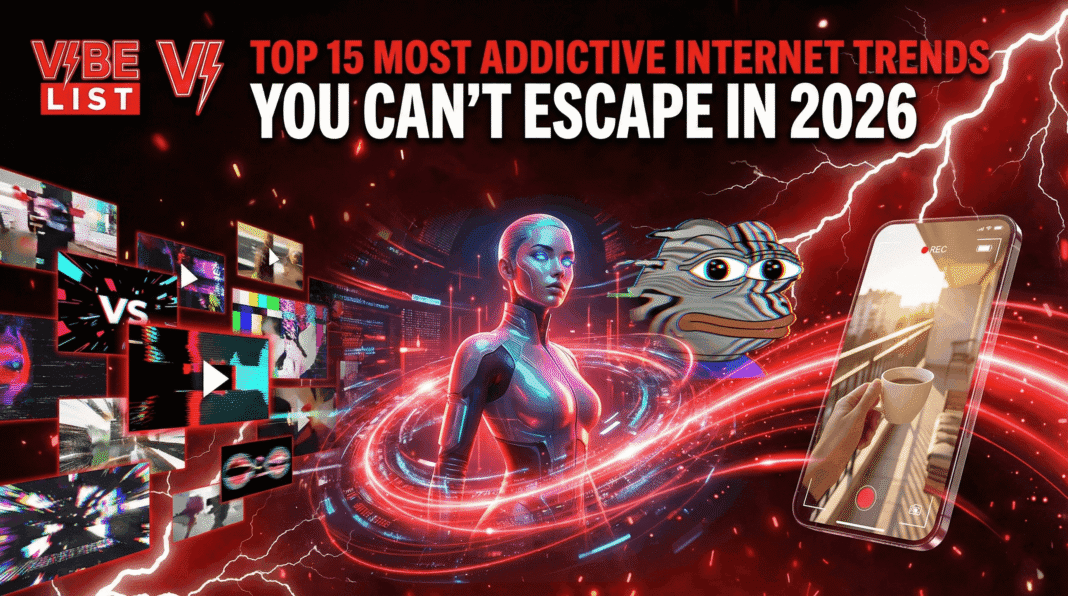
Seven million AI-generated songs a day. Thirty million NPC livestream posts. One thumb doing all the scrolling. Welcome to 2026; where the internet doesn’t just want your attention, it’s engineered to never give it back.
You’re already addicted. You’ve just refused to admit it yet.
We all tell ourselves the comforting lie: I can put my phone down anytime I want to. Sure we can. Yet “Brain Rot,” Oxford University Press’s Word of the Year for 2024, did not slow down in 2025. It accelerated.
According to a systematic review and meta-analysis conducted by researchers at Griffith University in Australia and published in the American Psychological Association’s Psychological Bulletin journal in September 2025, more frequent use of short-form video formats is associated with reduced cognitive function, diminished attention span and weaker impulse control. When Euronews reported on the results of the study in November, the headline was clear and direct: “TikTok scrolling can cause ‘brain rot’ according to new study.”
Writing about the APA study on his widely read Substack, author and performance researcher Brad Stulberg summarized the findings bluntly: “Individuals who regularly consumed short-form videos on infinite scroll apps had dramatically worse cognitive and emotional health across measures such as basic thinking, paying attention, exerting self-control, and the experience of anxiety, depression, and stress.”
Yet, here we are. Scrolling. Watching. Clicking.
None of the 15 most addictive internet trends of 2026 were made by accident. Each and every one of them was designed to keep you inside the application whether you opened it yourself or not; made possible by algorithms, participation loops, and compressed dopamine cycles. Some of the trends listed below are innovative, others are strange, and all of them are sticky in ways that should grab your attention, if only ironically.
Below are the 15 most addictive internet trends of 2026 that have you hooked, either deliberately or incidentally.
1. AI-Generated Influencers Building Real Audiences
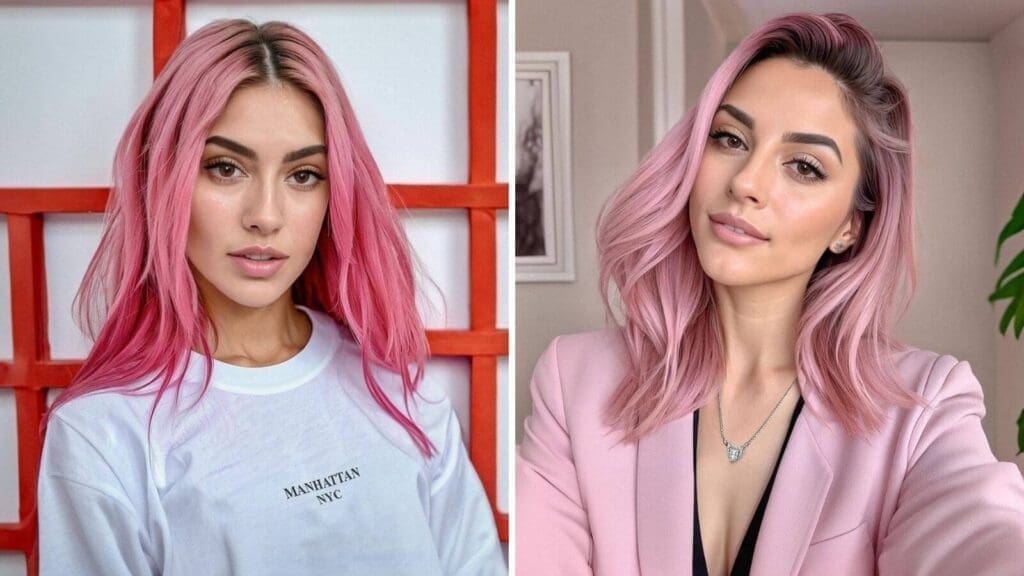
AI-generated influencers have existed since April 2016, when the first AI-generated influencer, Lil Miquela, appeared on Instagram. In 2026, however, they have crossed the threshold from novelty to becoming a mainstream marketing channel with big budgets behind them. Lil Miquela currently has approximately 2.3 million followers on Instagram, and has partnered with such brands as Prada, Calvin Klein, and Samsung, reportedly commanding fees in the low tens of thousands of dollars per sponsored post.
According to Ogilvy’s 2024 Future of Social Report, which cited data from Emplifi, CMOs are expected to spend 30% of influencer marketing budgets on virtual influencers by 2026. Marketing Week reported in February 2026 that the trend is no longer speculative, it is happening.
Newer AI personas, such as Spain’s Aitana Lopez, created by The Clueless agency, have attracted hundreds of thousands of followers while reportedly earning up to €10,000 per month in brand deals, and she does not exist outside of a rendering pipeline.
These artificial personalities do not suffer from fatigue. They cannot create scandals unless their creators engineer one. Their content is optimized for algorithmic engagement from the moment it is created.
However, the true source of addiction is not the artificial personality itself. It is the ambiguity. When you are unable to determine if you are interacting with a real individual or an artificially created personality while scrolling rapidly through content, the distinction between genuine rapport and a manufactured parasocial relationship fades quietly.
According to a study cited by inBeat and originally conducted by AspireIQ, 37% of marketers believe virtual influencers could eventually replace real influencers entirely, yet skepticism about authenticity persists even as follower counts continue to climb.
2. Brain-Rot Video Loops & Absurdism: The Rise of Short-Form Content
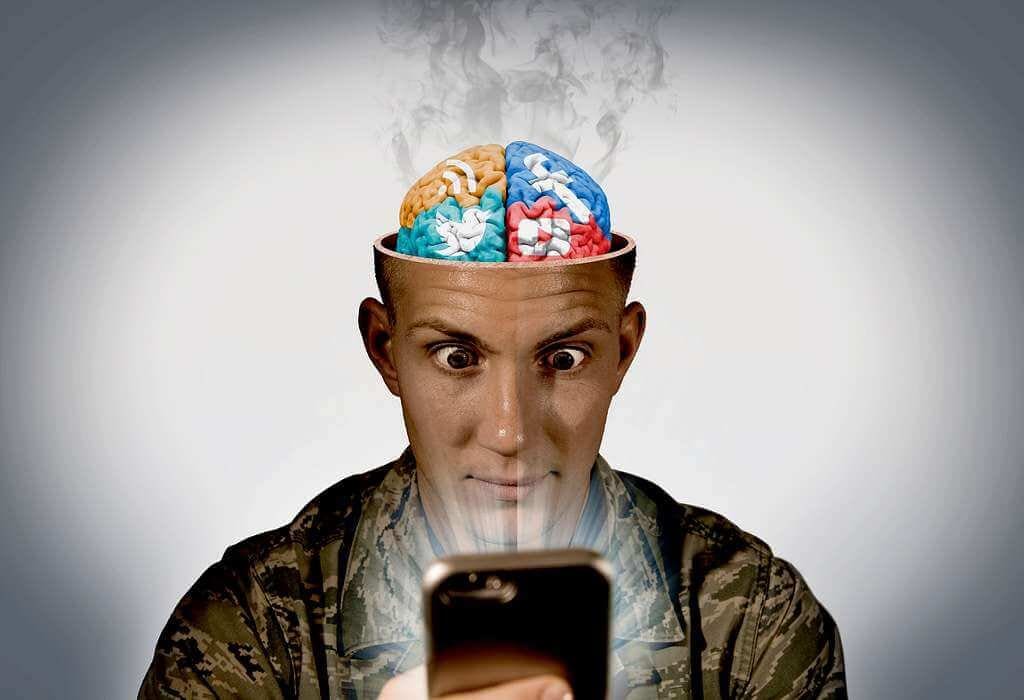
Short-form video is continuing to shrink. The 15-30 second TikTok video is competing with a new form of content: rapid-fire meme clips, absurd loops, distorted audio, surreal punchlines, all designed to loop before the viewer even realizes what happened.
An example of this type of content emerged in January 2026: the Nihilist Penguin, a viral meme that rapidly spread across TikTok and Instagram in a matter of days. The origin of the meme is from Werner Herzog’s 2007 documentary film Encounters at the End of the World. In the film, an Adelie penguin is seen abandoning its colony and walking toward distant Antarctic mountains, toward, as Herzog narrates in his distinctive voice, almost certain death. The footage had circulated among documentary fans for years, but in early 2026 it was rediscovered and reinterpreted by millions of users as an image of digital burn-out, quiet resistance, and a resigned hopelessness that resonates in an era of constant overstimulation.
From a clinical perspective, the short-form video format warrants serious attention. It compresses the stimulation cycle — the interval between a viewer encountering content and receiving a dopamine response — into seconds. Research published by the American Psychological Association found that the frequency of short-form video viewing correlates with both reduced sustained attention and lower life satisfaction.
A longitudinal study published inTranslational Psychiatry in 2025, which drew from the Adolescent Brain Cognitive Development (ABCD) study cohort of 11,878 children and analyzed data from over 10,000 participants at baseline and nearly 8,000 at the two-year follow-up, found that increased screen time — including but not limited to short-form video — correlated with measurable cortical thinning in areas of the brain responsible for memory, planning and impulse control.
The short-form video format is not just addictive; it appears to be structurally changing how we process information. The supply of new content is also virtually limitless due to AI-based editing tools. There is no limit to the feed. That is not a glitch, it is the design.
3. Serialized First-Person Storytelling That Will Keep You Wanting More

First-person POV content originated as simple skits; a creator talking directly to the camera and acting out a situation. By 2026, it has developed into serialized micro-TV. Creators such as Reesa Teesa, whose 50-part series “Who TF Did I Marry” gained millions of followers and was covered by Good Morning America, TIME, and The New York Times, build multi-part episodic stories in which each post builds upon the previous post, comments from the community influence the direction of the story, and audiences come back every day to follow the story as it develops.
TikTok’s algorithm strongly incentivizes this format of storytelling, as it creates two key metrics that TikTok continually optimizes for: repeated visits and extended session times. A creator posting the seventh installment of a twenty-installment thriller will see viewers binge watch the first six episodes to get caught up, creating the exact type of long-term engagement signal that puts the content at the top of the For You page.
What makes serialized first-person storytelling so addictive is not simply algorithmic. It is emotional. When you are following a storyline, wondering whether the fictional roommate is indeed stealing money from you, debating with the community whether the main character should confront their boss, you are moving from passive viewer to invested in the narrative. This is the same mechanism that drives binge-watching Netflix shows, condensed into sixty-second increments with a faster feedback loop than any other medium.
4. AI Voiceovers Are Everywhere You Listen
There was a point (and it is hard to pinpoint exactly) when the synthetic text-to-speech voice became the default narrator of the internet. Explainers. Meme compilations. Readings of Reddit stories. Commentaries on gaming clips. The slightly robotic yet familiar cadence of AI-generated voiceover has become so ubiquitous that human narration often feels unusual in comparison.
The logic driving AI voiceover adoption is pure efficiency, and it has significantly changed how content gets made. As AI voiceover platform Narration Box noted in its 2025 guide for TikTok creators, top creators now use AI voice tools for a large portion of their content because it allows them to cut hours of recording time and publish at two to three times their previous pace. A creator can produce ten AI voiceover videos in the amount of time it previously took to record, edit and mix a single human-narrated video. Speed has a major advantage in algorithmically driven platforms, and AI voice tools provide creators with a huge production advantage.
The psychological aspect of the issue is more complex than just efficiency, however. We are training ourselves to perceive synthesized voices as comfortable and reliable as human voices. That conditioning has implications beyond content consumption; it will shape how we interact with AI assistants, automated customer service systems, and synthetic media for the next decade.
5. The NPC Format: From Robotic Livestreams to the Language of the Internet
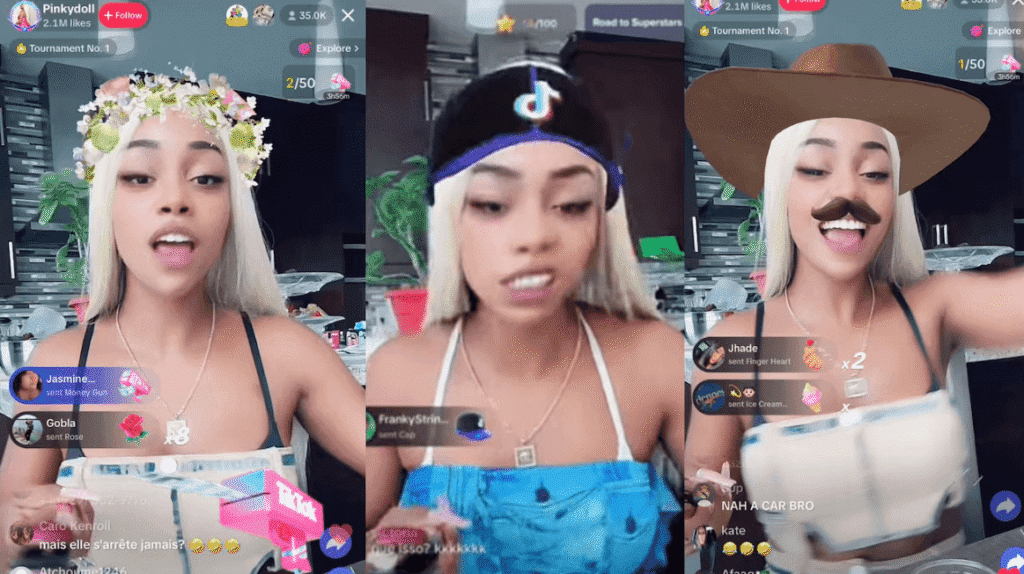
NPC livestreams emerged as a viral trend on TikTok Live in the summer of 2023, although the format had been in existence in smaller pockets of the platform since at least late 2021. However, the summer of 2023 converted a niche-corner novelty into one of the oddest and most profitable content formats TikTok had ever produced.
The concept is surprisingly straightforward. A creator streams live and takes on the role of a video game non-player character, mechanically responding to virtual gifts. When a user spends TikTok Coins on a gift, it triggers a predetermined phrase or exaggerated reaction. Once the creator has completed the reaction, the cycle begins again. Gift, Reaction, Repeat.
Pinky Doll, aka Fedha Sinon, from Montreal, became the face of the trend. She reported earning approximately $7,000 per day from TikTok Live and also maintains presences on Instagram and OnlyFans. The New York Times profiled her in July 2023, noting that her phrases “Gang Gang” and “Ice Cream So Good” had become immediately recognizable symbols of the trend. Coverage soon followed from the BBC, Forbes, CBS News and The Guardian.
The reason the format remains viable is because it operates on a basic behavioral mechanism. By stripping creative expression, skill and substance from the viewer-creator interaction, NPC livestreaming reduces it to a raw exchange based on variable ratio reinforcement, the same reward scheduling that makes slot machines addictive. The variable is not the creator’s response (which is always predictable), but the social spectacle of competing gifts and the live, chaotic nature of the chat.
By mid-January 2026, NPC-related content on TikTok had grown to tens of millions of posts across the platform’s Discovery Page, making what many saw as a temporary fad of Summer 2023 a permanent fixture of the livestreaming space.
However, NPC culture has migrated far beyond the livestream itself. The term NPC has evolved from a gaming term into one of the internet’s most flexible metaphors, used to describe anything that appears to be scripted, predictable, or thoughtless. The term first emerged as internet slang during the 2018 midterm elections, originating on 4chan and spreading via Reddit’s r/The_Donald before entering mainstream media coverage, and by 2024-2025, it had migrated into mainstream language on TikTok, Instagram, and increasingly in office settings.
Office settings proved the term’s most fertile ground. Chicago comedian Lisa Beasley built a massive following around “Corporate Erin”, a relentlessly cheerful and hollow-sounding HR persona who speaks exclusively in corporate buzzwords and motivational platitudes.
Wyoming Public Media featured her alongside creators Nicole Daniels and DeAndre Brown, describing the group as among “the most well-known cubicle comedians on TikTok” whose content resonates far beyond its original audience. Dozens of other creators have followed with their own “Corporate NPC” videos, documenting the employee who repeats the same phrase in every meeting, or the manager who communicates solely in acronyms. These are not literal NPC performances; they are comedic sketches based on observational humor. Yet their power comes from the same fundamental idea: that today’s corporate workplaces teach employees to operate under invisible scripts that nobody wrote consciously.
Both iterations of NPC content; the livestream and the parody; derive from the same root. Both illustrate something that millions of people suspect, but few articulate: that much of daily life occurs on autopilot. The livestream iteration breaks the interaction down to the simplest reward loop. The corporate iteration redirects that same repetitive energy into social commentary. Collectively, they illustrate a spectrum of how the internet trains us to interact with content built on repetition, predictability, and the small neurochemical reward we receive from participating.
6. Micro-Vlogging and the Death of Influencer Polish
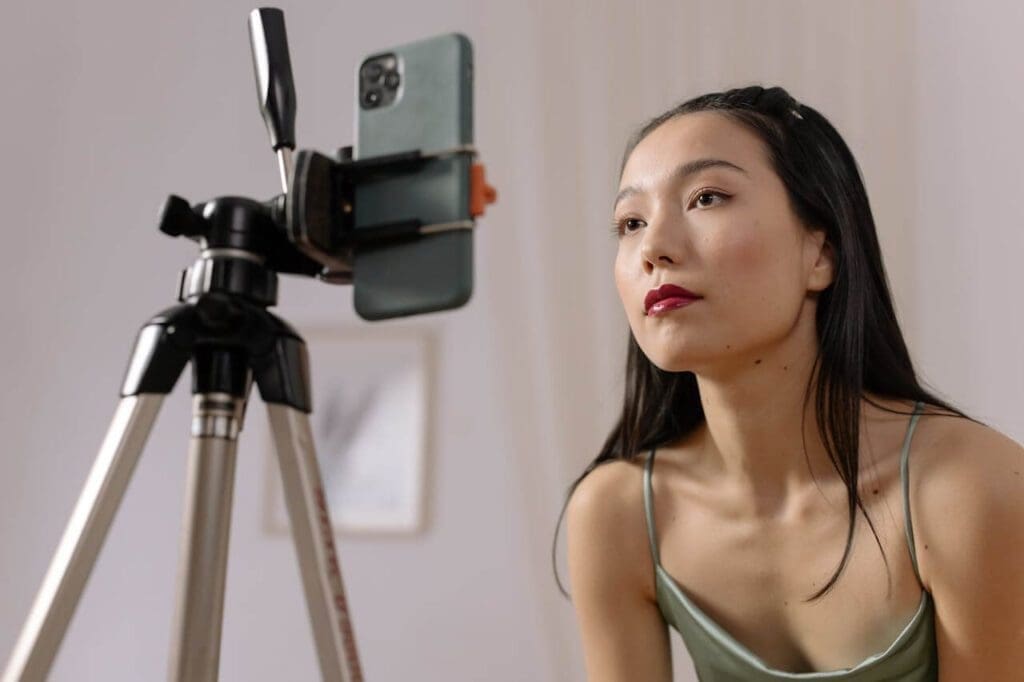
The era of polished influencer content is ending, and creators who haven’t adapted are paying the price. Influencers are documenting their morning coffees, commutes, grocery runs and mundane errands on their phones. And, instead of being polished and high-production, the aesthetic is raw and imperfect; yet somehow meaningful in ways traditional social media videos were not.
Emma Chamberlain pioneered this aesthetic; and by 2026 a whole generation of micro-vloggers (Alix Earle, etc.) had turned the format into a staple of everyday social media content. Industry data consistently supports the shift: authentic, unpolished content generates significantly higher engagement rates than polished promotional material. Multiple platform analyses and creator economy reports have documented substantial engagement premiums for raw, candid creator content on both Instagram Reels and TikTok.
So why does this work? Because micro-vlogs are more rhythmic than informative. You’re not watching someone else’s daily routine to learn anything. You are learning to absorb someone else’s cadence. The familiarity of routine, as expressed in a sixty-second video, creates a parasocial intimacy that polished content can’t replicate; a sense of spending time with someone rather than watching a performance staged for you.
7. “Core” Aesthetic Culture and Identity Packaging

Clean Girl. Cottagecore. Mob Wife. Office Siren. Coquette. Demure. The cycle of internet aesthetics; each labeled with the suffix “core”; is evolving at a breakneck pace across TikTok, Instagram and Pinterest. The acceleration is measurable: as The New York Times reported in January 2026, microtrends now generally last only six to eight weeks before burning out, a dramatic compression from the multi-season trend cycles that dominated as recently as 2022.
Every aesthetic comes with a complete identity kit: a fashion template, a curated playlist, a color palette and a content template all packaged together. Jools Lebron’s “super demure, super mindful” aesthetic from August 2024 serves as a prime example, jumping from a single TikTok post to a full-fledged cultural movement and prompting trademark applications by third parties in under three weeks. This rate of aesthetic turnover has continued to accelerate by 2026.
These micro-aesthetic movements are not driven by algorithmic influence alone, though TikTok’s recommendation engine certainly accelerates them. The deeper driver is far more elemental; in a world where identity is becoming more fluid and self-determined, “core” aesthetics provide a pre-packaged identity structure. Selecting an aesthetic is not simply selecting a wardrobe; it is selecting membership in a visually recognizable tribe with a shared visual vocabulary that immediately conveys who you are, or at least who you want to appear to be on any given day.
8. Comment Farming Designed for Velocity of Engagement

“What do you think?” “Wrong Answers Only.” “Describe this Poorly.” “Hot Take: [deliberately inflammatory statement]”
Do these read like organic conversation starters or calculated engagement prompts? They are the latter, every time. Social Media Consultant Rachel Karten, author of the widely read Substack newsletterLink in Bio, has extensively explored how platform algorithms reward rapid engagement signals; from her deep dives into outbound community management to her 2026 social strategy analyses, her work documents how comment velocity and early engagement metrics influence content distribution across TikTok, Instagram, and YouTube. That dynamic has made comment farming one of the most effective growth mechanics available to creators in 2025 and 2026.
The mechanisms are transparent. TikTok, Instagram, and YouTube all use comment volume and speed as inputs into their content delivery systems. A post that generates a hundred comments in its first ten minutes will be delivered to exponentially more users than one that generates a similar number of comments in twenty-four hours. Naturally, creators have adapted; they design their posts to elicit rapid, minimal-effort responses.
You understand the prompt is contrived. Yet, you participate. Because the barrier to entry for participating in a high-profile conversation is nothing more than a single tap, and the desire to contribute to a visibly unfolding conversation is nearly irresistible, even though you are acutely aware you are feeding an engagement engine rather than contributing to a substantive conversation.
9. Reddit Story Adaptations: Internet Soap Operas

Narrative adaptations of Reddit posts, especially relationship dramas, workplace horror stories and moral dilemmas posted in subreddits such as r/AmItheAsshole and r/TIFU, represent some of the most consistently engaging content formats on TikTok and YouTube Shorts. There are channels, such as Reddit On Wiki, which has gained over 46,000 YouTube subscribers, and produces hundreds of these types of videos every month. The process is straightforward but effective: grab the viewer in the first 3 seconds, build tension throughout the body of the video, present a moral question in the final portion of the video, and ignite a firestorm in the comments.
What keeps this content pipeline perpetually full is the vast amount of free, anonymous first-person story content posted to Reddit daily, with no obligation to compensate or credit the original poster, an issue that has generated considerable debate around digital media ethics.
Psychologically speaking, these videos activate the same cognitive processing associated with gossip and oral storytelling, two of the earliest social technologies humans developed. As media psychologist Dr. Pamela Rutledge has written inPsychology Today, “Stories are how we are wired.” Our brains are built to process imagined experiences the same way they process real ones, which is why the gossip-and-conflict structure of Reddit adaptations is so effective. Short-form video simply delivers that neurological trigger faster than any previous medium.
10. AI-Generated Music Snippets Created for 12-Second Loops
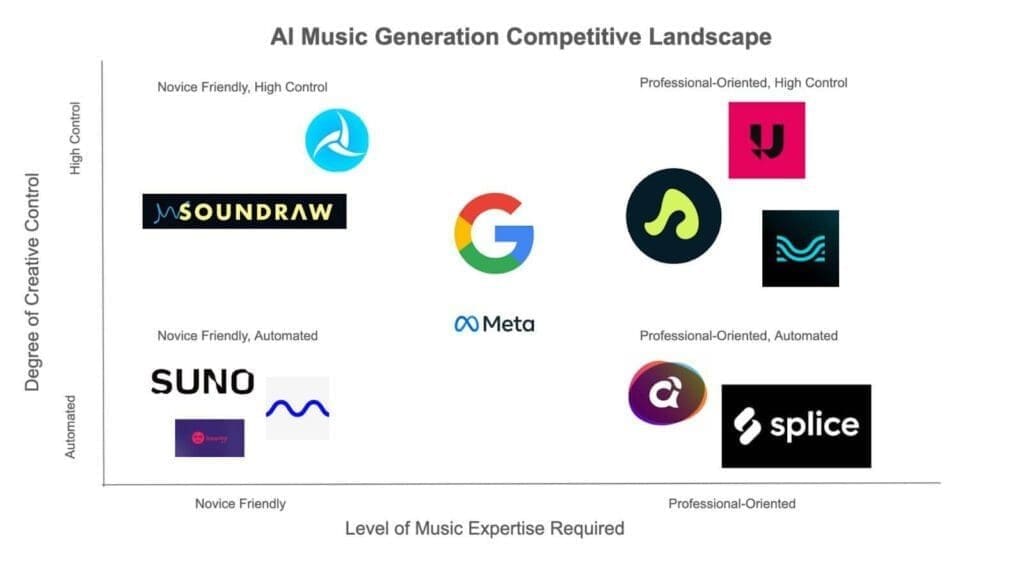
One of the most contentious and addictive trends on the internet in 2026 is the convergence of AI music creation and short-form video. AI-generative music tools like Suno and Udio are generating tens of millions of synthesized tracks per day; according to Billboard, Suno alone generates 7 million songs per day, and a growing percentage of those tracks are ending up on TikTok and Instagram Reels as background audio.
MikeeysMind and Chill77’s 2025 release of an Afro Soul cover of Stromae’s “Papaoutai” generated over 14 million Spotify streams within its first month and became one of the most viral songs of early 2026, but raised serious questions about whether the cover was made using AI.
This wasn’t the first time an AI-created song had gone viral. Ghostwriter, an anonymous artist who has never revealed their real name, created a song called “Heart on My Sleeve” in 2023 that perfectly mimicked the voices of Drake and The Weeknd and rattled the music industry, until the song was removed from streaming platforms. The anonymous artist later gave an exclusive interview to Billboard in October 2023, speaking through a manager. Ghostwriter’s success was followed by a flood of AI music creation software and the inevitable lawsuits.
In June 2024 Universal Music Group, Sony Music Entertainment and Warner Music Group sued Suno and Udio for copyright infringement and sought damages of up to $150,000 per infringed work. Warner Music eventually settled and partnered with Suno in November 2025; however, the remaining cases continue to move forward.
Music consumption is changing at its core. A song doesn’t need a recording studio, a spot on the radio or even a human singer to go viral. Instead, tracks are being designed specifically to be used as background audio for meme parodies, POV videos and other short-form content, and platforms are beginning to respond to this shift. TikTok has introduced new AI-generated content disclosure requirements and Apple Music launched its “Transparency Tags” system in early March 2026, introducing metadata tags that allow distributors to indicate if AI was used in the production of a track’s artwork, vocals, or composition.
AI music creation rewards speed and catchy melodies above all else, and the value placed on these qualities is not lost on the artists being replaced.
11. Hyper-Personalized “For You” Feeds That Learn Faster Than You Scroll
TikTok’s For You feed established the paradigm. Now, every major social platform uses it.
The idea replaces follower-based discovery with algorithmically curated content based on minute-by-minute tracking of everything you do on the platform: what you consume, for how long you consume it, what you choose to skip, what you choose to replay, what you share.
What makes this level of personalized experience so compelling is the complete lack of friction. You rarely see content you don’t enjoy. The feed adapts in real-time, typically faster than you can express your conscious preferences. Psychologists describe this as a “variable reward schedule,” the same mechanism that keeps gamblers pulling slot machine levers. You never know exactly what’s coming next, but you know it’ll likely be something enjoyable. It’s the uncertainty inherent in knowing you’ll get something you like that keeps the thumb scrolling.
As the sophistication of the personalization engines increases; utilizing emotion analysis, audio detection, and even millisecond-level dwell-time tracking; the line between what you want and what the algorithm decides for you becomes nearly invisible. By 2026, many platforms are also testing the inclusion of AI-generated content directly in feeds, further blurring the line between curation and manufactured engagement.
12. Livestream Shopping Combining Entertainment with Impulsive Purchasing

Livestream shopping has been a major e-commerce force in China for years. In 2026, it has exploded in North America. According to eMarketer, TikTok Shop is expected to deliver $23.4 billion in e-commerce sales in the United States alone this year, a 48% annual increase. Over 51% of U.S. social shoppers are also expected to make purchases on TikTok in 2026. Total social commerce in the United States is expected to exceed $100 billion for the first time.
The experience is streamlined by design. A creator shows off a product live. The consumer purchases it using a built-in checkout function, without having to leave the feed. In livestream shopping, discovery, evaluation, and transaction all converge into a single unbroken unit of time.
Because livestream shopping combines entertainment, urgency and social proof all at once, it generates compulsive purchasing. E-commerce generally gives consumers ample time to compare products, deliberate and cancel purchases. However, a TikTok Live with a countdown timer and a scrolling notification that “327 people have purchased this already,” drastically compresses that decision window to mere seconds. The parasocial trust that viewers have in the creator; often someone they feel they have “gotten to know” through months of content; severely reduces the rational deliberation that would normally inhibit impulsive purchasing decisions.
If you are making purchases during a TikTok Live, close the app and look at the product again in twenty-four hours. If you still want it after that, buy it then. This simple delay habit can save consumers hundreds of dollars per month.
13. Reaction Videos Reacting to Reaction Videos (Recursive Content)
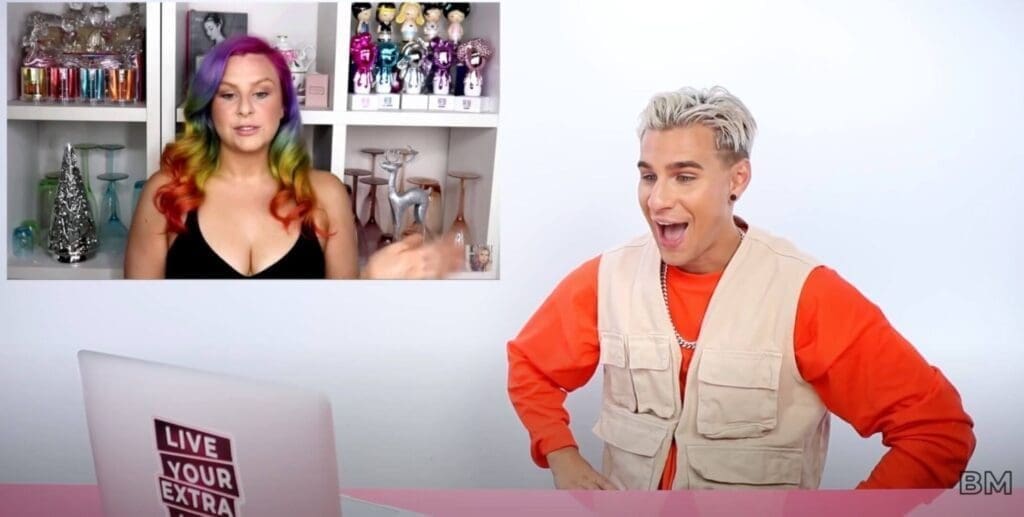
A creator releases a video. A second creator edits a reaction to the video. A third creator dubs a reaction to the reaction. A fourth creator comments on all three. Internet culture reacting to itself, in real time, in layered meta-comments that extend forever outward.
This recursive dynamic has accelerated through 2025 and into 2026, with individual videos regularly spawning dozens of layers of reaction content, each adding new commentary, humor and disagreement. These aggregate chains of reactions can amass hundreds of millions of combined views across all layers.
The dynamic illustrates what media analysts have described as a self-sustaining attention loop: every reaction generates a new audience, and every audience generates new reactions, producing the internet’s equivalent of an infinite mirror.
Recursive content is addictive for one key reason: every layer expands the conversation. Each new reaction adds another reason to revisit the prior ones, thereby establishing an internal feedback loop in which the content sustains itself, and the platforms provide generous incentives for this self-referential loop.
14. Hyper-Niche Private Discord Servers Providing Depth Beyond Public Forums

The most enthusiastically engaged online audiences of 2026 are not primarily engaged on public-facing platforms. They are engaged on private Discord servers, where fans develop intimate communities around creators, cryptocurrency investors unite around trading strategies, gaming collectives unite around game development and collector communities coalesce around collecting rare items.
Discord now has an estimated 656 million registered users and over 19 million active servers. While sheer numbers alone don’t sustain a community, the inverse relationship between community size and member status is what drives extraordinary engagement. Within a server of 500 active users, your comment will be seen. Your participation will be acknowledged. Your absence will be felt. This sense of belonging, of being recognized as a member of a particular community, represents the most powerful type of engagement possible on the internet, and is relatively immune to the effects of algorithmic promotion.
Engagement is deeper, more loyal and more financially rewarding; through subscription models, limited-edition drops and tiered access; in hyper-niche private communities than on any public-facing feed platform. As public social media becomes increasingly performative and algorithmically driven, private communities on Discord offer an increasingly scarce commodity: the feeling that you are part of a specific community.
15. AI-Accelerated Meme Culture Running at Machine Speed

Meme creation was always quick, but now, thanks to AI, it’s instantaneous. AI assisted image generators, automated captioning tools, and AI template remixer tools create dozens of different meme templates on a trending format within minutes of that trending format emerging. This rapid pace compresses the life cycle of trends; a format emerges, AI-assisted versions flood every platform, saturation hits, and the next trend takes over. What once took days now takes minutes.
At the February 2026 Grammys, a moment from the broadcast generated a meme template almost instantly. Within minutes of the live airing, AI-assisted versions were appearing on X, TikTok, and Instagram. By the next morning, the meme had gone through all stages of irony, post-irony, and meta commentary about itself (the original joke) — a process that would have taken days or perhaps weeks to go through in a pre-AI meme culture.
The speed of these memes generates a constant ambient FOMO (Fear of Missing Out). If you are offline for half a day, three meme cycles may have risen and fallen without you. AI-assisted tools generate an endless supply of new material as fast as creators can produce it, keeping the stream perpetually fresh. The scroll never stops.
Beyond the Fifteen: Emerging Trends
Additional factors are currently shaping the 2026 internet in such a way that they will expand upon and may also eventually merit their own entries on lists like this one.
AI chatbot platforms like Character.AI, which attracted 20 million monthly users in 2025, are creating a new genre of addictive interaction. Users develop intense parasocial relationships with AI personalities, and return to them daily for emotional connection and support, combining aspects of social media, gaming, and therapy.
The fragmentation of attention is continuing with the ongoing growth of Bluesky and Threads as alternative platforms to X. With this continued fragmentation of attention among platforms, creators begin to crosspost and audiences split across platforms, ultimately increasing the amount of time users spend managing digital identity across multiple platforms.
AI-generated “slop” is also becoming a defining characteristic of 2026. Slop refers to a vast quantity of low-quality, machine-produced content flooding Facebook feeds, Google search results, and even Amazon product listings. Platforms are now engaged in an arms race to filter AI-generated spam without filtering out legitimate AI-assisted content.
In addition to music, deepfake technology is expanding rapidly. Politically motivated deepfakes, synthetic celebrity endorsements, and fabricated video evidence are growing concerns and have prompted legislation in several countries as well as new detection tools from companies like Microsoft and Google.
Finally, AI-powered search platforms; including Perplexity, Google’s AI Overviews, and others; are quietly changing how people discover content altogether. When an AI summary answers your question before you ever click a link, the entire traffic model that supports creators and publishers shifts under everyone’s feet.
While the above-mentioned trends aren’t disconnected from the 15 trends listed above, they are the infrastructure that enables those trends and that will ultimately decide what appears on next year’s list.
What the 15 Trends Have in Common
All 15 trends listed above have four structural characteristics.
Compression. Smaller formats. Faster rewards. Shorter intervals between wanting and receiving. The space between stimulus and dopamine response continues to shrink, from minutes to seconds to fractions of seconds.
Participation. These trends don’t just ask you to watch; they ask you to comment, duet, stitch, gift, vote, buy, and respond. Passive consumption is being replaced by active loops that demand your contribution, often before you’ve even consciously decided to participate.
Personalization. Your feed adapts to you in real time. The content you see is selected, sequenced, and timed to maximize the probability that you’ll keep scrolling. It isn’t a feed. It’s a behavioral mirror engineered to show you precisely what you want to see next.
Infinite Supply. AI has eliminated production bottlenecks across all content categories: images, videos, music, voiceovers, text. There is always more content. The scroll never ends. That bottomlessness is not a limitation of the design. It is the design.
Your Day 1 Actionable Task: Audit Your Own Scroll
Before bed tonight, open your screen time or digital wellbeing settings. Review how many minutes each app consumed today. Then answer two honest questions.
First: How many of the fifteen trends listed above appeared in your feed today? You will be surprised by the count.
Second: Did you choose to open any of those apps, or was it simply where your thumb went on autopilot?
The goal is not guilt. The goal is awareness. The trends listed here will continue to accelerate. They will become faster. More personalized. And more aggressive with every passing month. The only reliable defense against engineered stickiness is intentional choice, knowing what draws you in and choosing whether to proceed.
That two-minute audit is the most valuable thing you can do tonight. Everything else follows from there.