



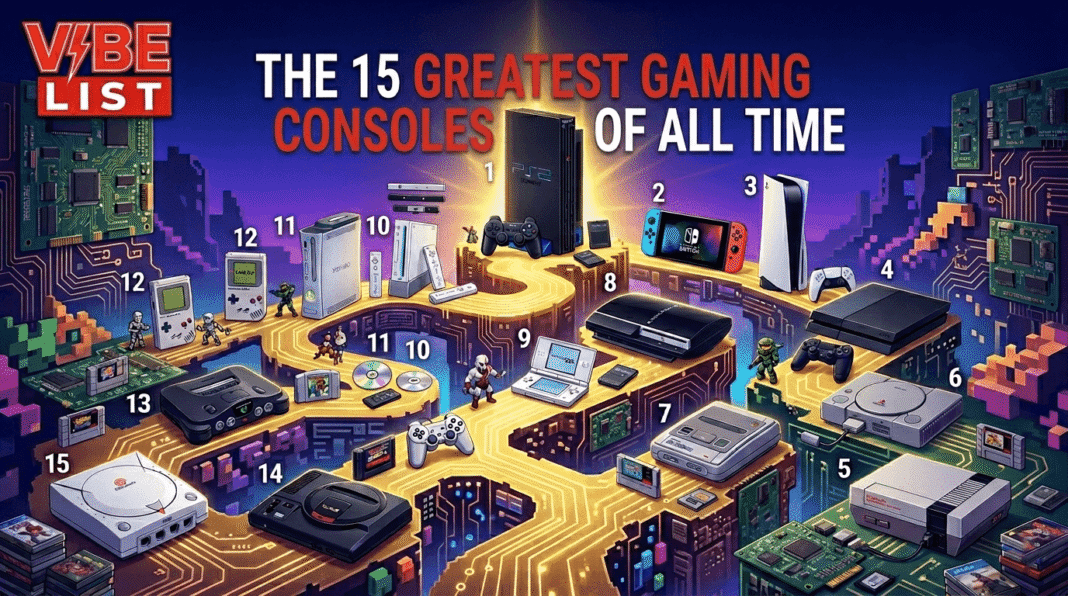
Over 1.3 billion units. That is the approximate total number of consoles sold across all fifteen entries on this list; a figure that, until you see it written down, feels like it should belong to an industry far older than one that nearly died in a New Mexico landfill in 1983. The PlayStation 2 alone accounts for 160 million of those, a number Sony did not officially confirm until November 2024, almost a quarter century after the console launched with a $299 DVD player that happened to also play video games. Nintendo’s Switch, at 155.37 million units as of February 2026, is now closer to the PS2’s throne than any console in history and has already dethroned the DS as Nintendo’s best-selling console of all time. What separates this ranking from every other “best consoles” list published this year is the question it starts from: not which console sold the most units or which one you remember most fondly, but which ones bent the arc of an entire industry; and which gambles, blunders, and acts of corporate revenge made that possible.
Why We Ranked the Top 15 Gaming Consoles Today
We ranked the top 15 consoles today; not because they are the best-selling or even the best collections of games. Commercial success and great game libraries matter. What mattered here is which consoles changed how gaming worked, who it worked for, and where it worked.
Every console on this list matters because many of the most highly anticipated 2026 video games will run on systems that are direct descendants of those listed below. How we ranked this list: we looked at each console through multiple lenses; commercial success, library quality, cultural impact, innovative technologies, and overall longevity. We weighed these factors against the totality of each console’s legacy. Thus, this list honors the numbers but is ultimately driven by our editorial perspectives.
15. Sega Dreamcast
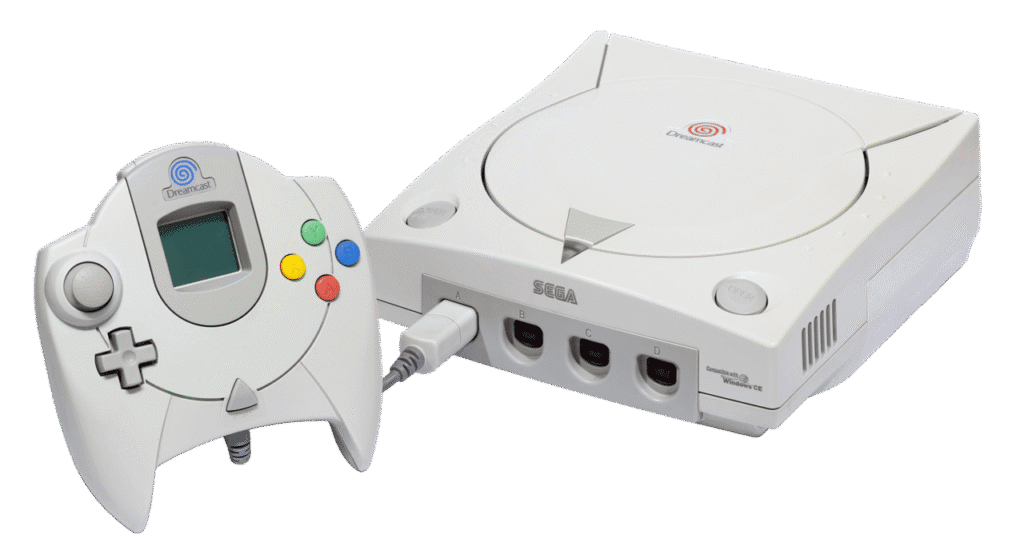
Manufacturer: Sega | Launched: 1998 (Japan); 1999 (North America) | Lifetime Units Sold: 9.13 million | Key Games: Shenmue, Sonic Adventure, Jet Set Radio, SoulCalibur, Crazy Taxi
The Dreamcast went on sale in North America on September 9, 1999. The console generated $98.4 million in combined hardware and software sales on its first day in the United States, a record for an entertainment product at the time. The Dreamcast hardware was truly innovative. It included a built-in 56K modem to enable online connectivity; a first for a major home console, arriving two years before competitors offered similar functionality. Additionally, the console featured a Visual Memory Unit (VMU) that served as both a memory card and a small portable handheld game device. Its graphical capabilities were among the best available, outperforming competitors for roughly a year after release.
One of the most influential titles released for the Dreamcast was Shenmue. Directed by Yu Suzuki, Shenmue cost an estimated $47–70 million to develop (a figure that also covered portions of Shenmue II’s development); making it the most expensive game production of its era. It pioneered open-world gameplay concepts that Grand Theft Auto III would expand upon two years later. SoulCalibur received a 10/10 rating from IGN and a perfect 40/40 from Famitsu; one of only two games in history to achieve the latter distinction at that time. Jet Set Radio was among the first games to employ cel-shading, a 3D rendering technique that emphasized clean lines and vibrant colors.
Commercially, however, the Dreamcast fell short with only 9.13 million units sold worldwide. Although it was arguably one of the most technologically innovative consoles of its time, it failed due to several factors: the massive marketing push behind Sony’s PS2 upon its launch in 2000; Sega’s heavy financial losses from the failure of the Saturn; and the absence of a DVD player. Its inclusion at #15 reflects the reality that although the Dreamcast failed commercially, its influence was enormous. It ushered in online gaming on consoles and demonstrated that high-quality arcade-style experiences could thrive in the living room. Most importantly, the Dreamcast illustrated what happens when excellent hardware meets poor business planning.
14. Sega Genesis / Mega Drive
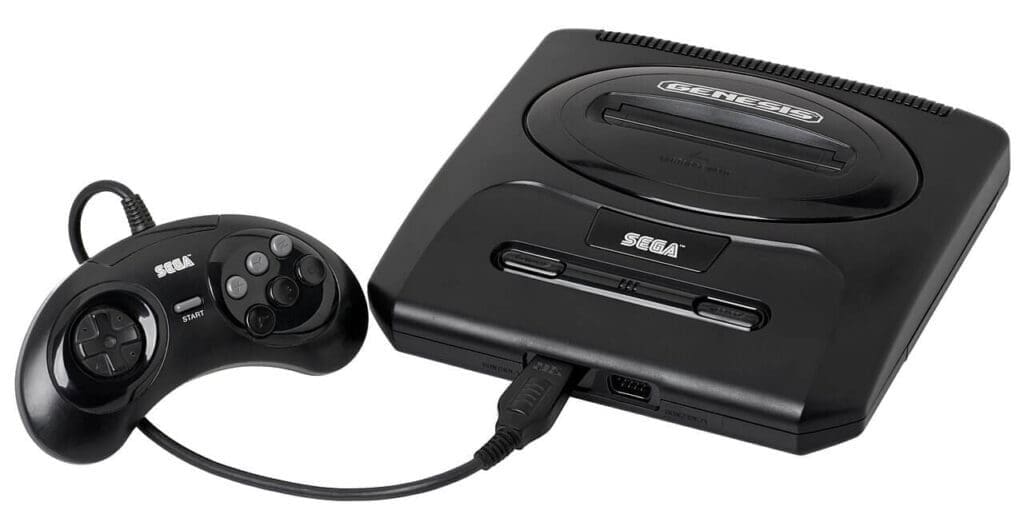
Manufacturer: Sega | Released: 1988 (Japan); 1989 (North America) | Lifetime Units Sold: 30.75 million (Sega official estimate) | Key Games: Sonic the Hedgehog, Streets of Rage II, Phantasy Star IV, Gunstar Heroes
At the time of its release in North America in 1989; two years before Nintendo’s SNES hit store shelves; Sega positioned itself as the challenger brand with bold marketing campaigns touting “Genesis does what Nintendon’t.” The phrase was intentionally blunt, but it was also devastatingly effective. At the time, Nintendo dominated virtually all of North America’s console market share; holding roughly 90% with the NES.
By January 1992, Sega controlled 65% of North America’s 16-bit console market; the first time Nintendo had not been the market leader since 1985. Much of Sega’s early success stemmed from partnerships with Electronic Arts. Through EA, Sega gained access to sports franchises such as Madden NFL and NHL Hockey; titles that attracted non-traditional gamers Nintendo had largely ignored. According to Sega’s official figures, the Genesis sold 30.75 million units worldwide, though combining third-party variants and clones pushes estimated totals closer to 34 million per VGChartz.
Although the Genesis ultimately lost to Nintendo in overall global sales, its success disrupted the entire industry. Sony engineers who studied Sega’s aggressive market approach while developing the original PlayStation likely drew significant lessons from Sega’s playbook. Sega’s peripherals; the Sega CD and 32X add-on devices; failed financially, but they demonstrated the concept of modular, expandable hardware that would resurface in some form every subsequent generation. Ultimately, the Genesis proved that an incumbent could be dethroned and that overreach can destroy a hard-won victory.
13. Nintendo 64
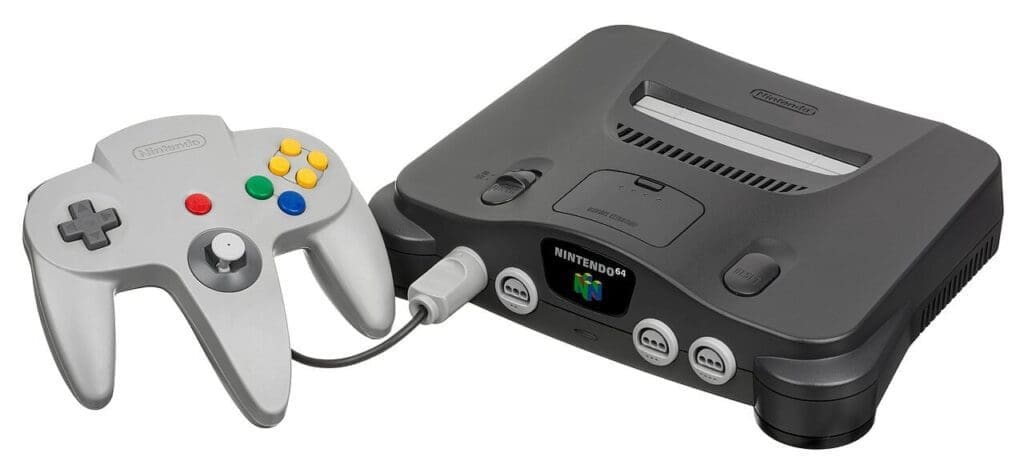
Manufacturer: Nintendo | Released: 1996 | Lifetime Units Sold: 32.93 million | Key Games: Super Mario 64, The Legend of Zelda: Ocarina of Time, GoldenEye 007, Mario Kart 64
The Nintendo 64 revolutionized what three-dimensional gaming felt like. Super Mario 64‘s innovations in analog-stick-driven, open-world-style movement and camera control influenced nearly every subsequent 3D action game.
The N64’s analog stick became the foundation for the dual-analog controllers now ubiquitous in modern gaming. The Legend of Zelda: Ocarina of Time holds a Metacritic score of 99; tied for the highest score on the platform. GoldenEye 007 successfully brought first-person shooters to consoles and popularized split-screen multiplayer for an entire generation.
Worldwide, the N64 sold around 32.93 million units; significantly fewer than previous Nintendo platforms. A major reason was Nintendo’s decision to use cartridges instead of the CD-ROMs that competitors adopted. Nintendo president Hiroshi Yamauchi believed cartridges offered faster load times and were less susceptible to piracy than optical discs. Both arguments held merit, but cartridge manufacturing costs were far higher, making development prohibitively expensive for many third-party studios. That cost imbalance is why Square moved Final Fantasy VII to Sony’s PlayStation; a decision that shifted the industry’s center of gravity.
The N64 had a relatively limited library; 387 titles released in North America; but its four controller ports built directly into the console made it one of the greatest couch-multiplayer machines of the decade. The countless hours spent playing split-screen GoldenEye and Super Smash Bros. on couches with friends represent a defining experience for a generation of gamers now entering their thirties and forties.
12. Game Boy
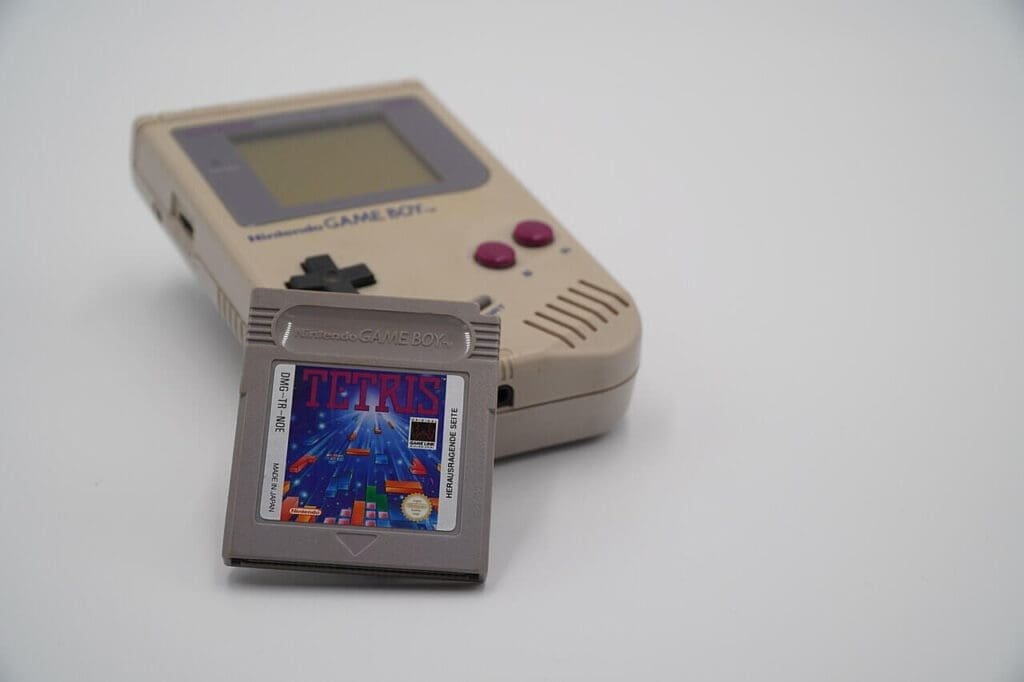
Manufacturer: Nintendo | Released: 1989 | Lifetime Units Sold: 118.69 million (Game Boy + Game Boy Color combined) | Key Games: Tetris, Pokémon Red and Blue, The Legend of Zelda: Link’s Awakening, Super Mario Land 2
Gunpei Yokoi, the Game Boy’s creator, designed the handheld around a philosophy he called “Lateral Thinking with Withered Technology”; essentially, using low-cost, proven components in novel ways to create an entirely new category of product. The result was a handheld with a green-tinted monochrome display, a processor that was outdated by launch-day standards, and a rugged build quality that ran on four AA batteries for roughly 30 hours.
The Sega Game Gear had a backlit color screen. The Atari Lynx had superior specifications. Neither came close to the Game Boy’s mass-market appeal. Nintendo sold a combined 118.69 million Game Boy and Game Boy Color units worldwide.
The decision to bundle Tetris with the Game Boy was one of the most consequential packaging choices in gaming history. The simplicity and accessibility of Tetris appealed to consumers who had never picked up a controller before; commuting adults, casual players, and demographics that the industry had never targeted. The Game Boy did not merely sell to gamers; it created new ones.
Then came Pokémon. Introduced in Japan in February 1996 and North America in September 1998, Pokémon Red and Blue revitalized Game Boy sales seven years into the hardware’s lifespan. One reason for this resurgence was the link-cable trading mechanic, which required two Game Boy units; an unorthodox but socially brilliant way to drive additional hardware sales. The Pokémon franchise has generated more than $100 billion in cumulative lifetime revenue; making it the highest-grossing media franchise of all time. Every dollar traces back to a handheld with a green screen.
11. Xbox 360
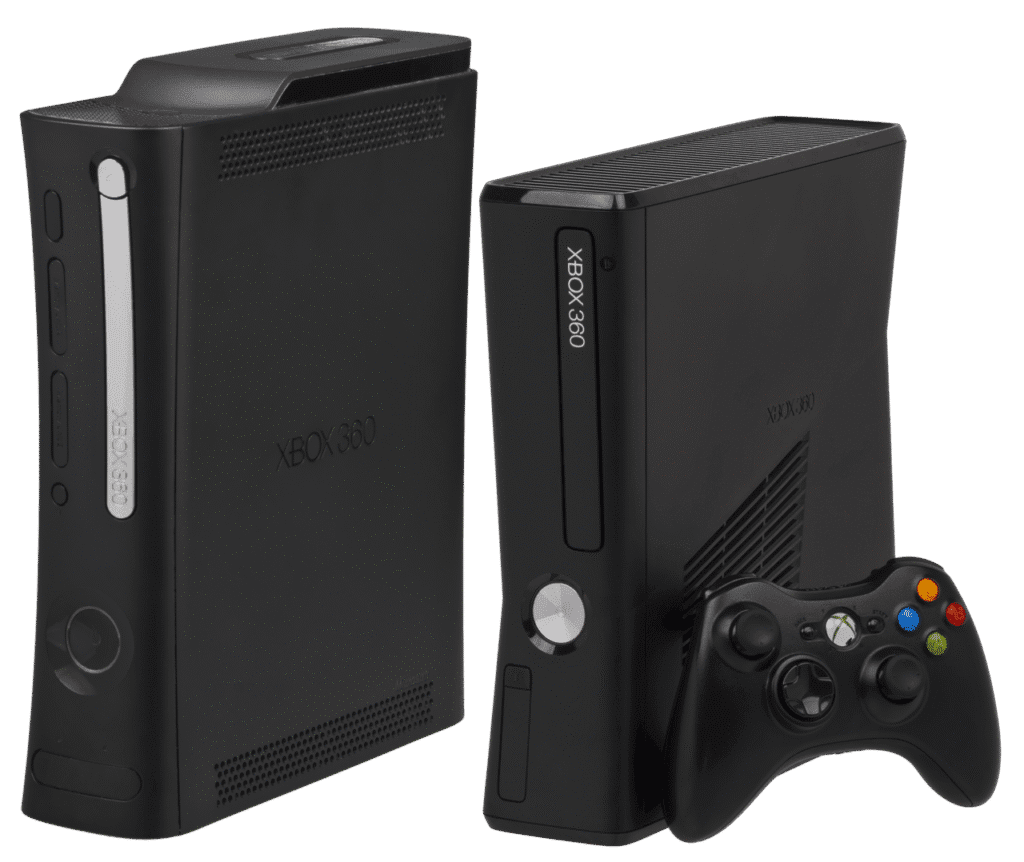
Manufacturer: Microsoft | Released: 2005 | Lifetime Units Sold: ~84 million | Key Games: Halo 3, Gears of War, Mass Effect, Red Dead Redemption, The Elder Scrolls V: Skyrim
Online console gaming was initially treated as an optional feature by manufacturers; until Microsoft built Xbox Live into the core identity of the Xbox 360. Friend lists, achievement systems, party chat, and digital storefronts became standard expectations for console users worldwide within months of the Xbox 360’s launch.
Sony and Nintendo followed suit and replicated many of Microsoft’s online innovations on their own platforms.
The Xbox 360 sold approximately 84 million units worldwide, finishing second to Nintendo’s Wii in its generation. In North America alone, Circana estimated sales at over 42.7 million units.
Halo 3 debuted with $170 million in first-day North American sales; crushing records established by other entertainment launches at the time.
Xbox Live Arcade also created opportunities for independent developers to reach console audiences long before the indie gaming movement achieved mainstream prominence. Titles like Braid and Limbo might never have found their audience without Microsoft’s pioneering digital distribution model.
Microsoft also faced one of the worst hardware failures in gaming history with the Red Ring of Death (RRoD). To mitigate the fallout, Microsoft extended warranties for affected consoles to three years and dedicated over $1 billion toward repair efforts. That such a catastrophic defect occurred and Microsoft still managed to finish second in North American sales only to Nintendo demonstrates the remarkable resilience of its ecosystem.
10. Nintendo Wii
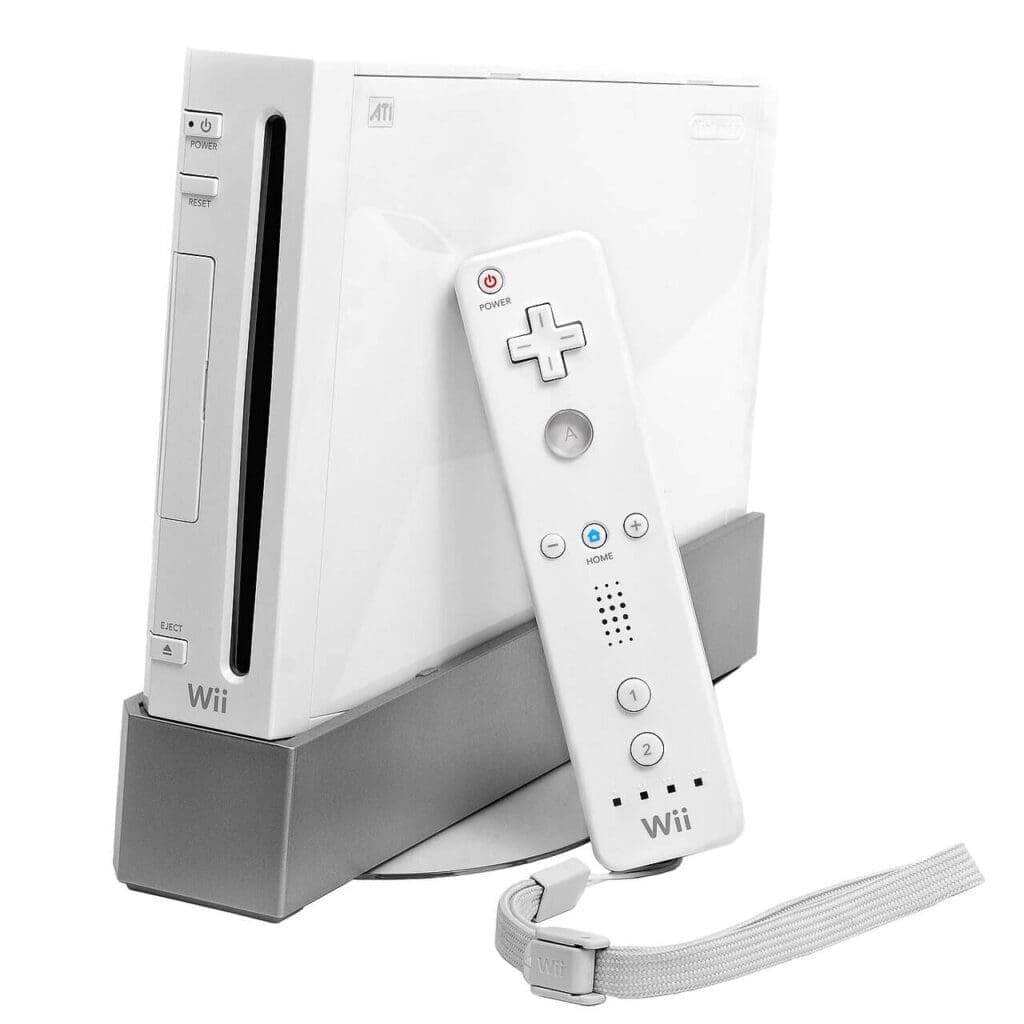
Manufacturer: Nintendo | Released: 2006 | Lifetime Units Sold: 101.63 million | Key Games: Wii Sports, Super Mario Galaxy, The Legend of Zelda: Twilight Princess, Mario Kart Wii
When planning its next-generation strategy, Nintendo avoided direct competition with Sony and Microsoft on raw processing power, focusing instead on delivering motion-control capabilities that anyone could master within seconds.
Wii Sports demonstrated this vision immediately through its bundled inclusion with every console sold. The result: Nintendo moved an astounding 101.63 million Wii consoles worldwide.
Wii bowling tournaments sprang up in retirement communities. Physical therapy offices began employing Wii Fit for rehabilitation. Morning news anchors unfamiliar with game controllers were demonstrating the Wii on live television. Nintendo had made gaming accessible to demographics that had never self-identified as gamers.
Super Mario Galaxy earned a Metacritic score of 97. Mario Kart Wii sold over 37 million copies worldwide.
However, third-party software support remained sporadic. The Wii’s limited processing power meant that multi-platform titles frequently skipped the console entirely, diminishing potential revenue for publishers. The motion-control novelty also wore off quickly for dedicated gamers. Despite having innovated brilliantly and captured an entire generation of new players, Nintendo failed to retain that audience with the Wii U; which sold only 13.56 million units worldwide.
9. Nintendo DS
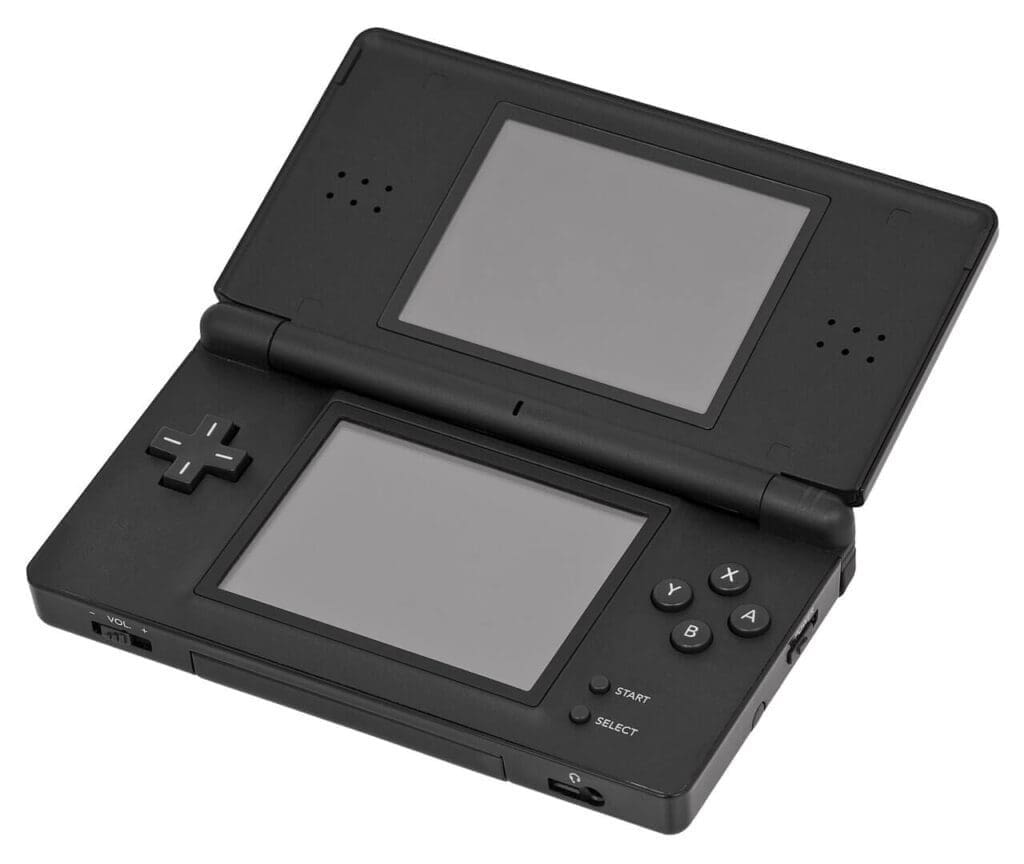
Manufacturer: Nintendo | Launched: 2004 | Lifetime Units Sold: 154.02 million | Key Games: New Super Mario Bros., Pokémon Diamond & Pearl, Brain Age, Mario Kart DS, Animal Crossing: Wild World
Until the Nintendo Switch surpassed it in February 2026, the DS held the record as the best-selling console in Nintendo’s history. It had two screens; the bottom one a touchscreen; and a clamshell design inherited from the Game Boy Advance SP. In 2004, people doubted it would be anything more than a novelty. By 2006, it was outselling every other gaming device on the market.
Brain Age sold more than 19 million copies. Nintendogs moved more than 23 million units. Unlike Sony’s PSP, the DS reached demographics Sony had never attempted to court. New Super Mario Bros. surpassed 30 million units sold, proving that 2D Mario was far from obsolete.
The Nintendo DS has sold 154.02 million units. That places it behind only the PS2 and the Switch in lifetime sales. The dual-screen concept; once dismissed as a gimmick; eventually influenced the Wii U’s GamePad design and, arguably, the Switch’s hybrid docked/handheld approach. The DS also introduced handheld Wi-Fi gaming to the masses through Mario Kart DS, giving tens of millions of players their first experience with portable online multiplayer.
8. PlayStation 3
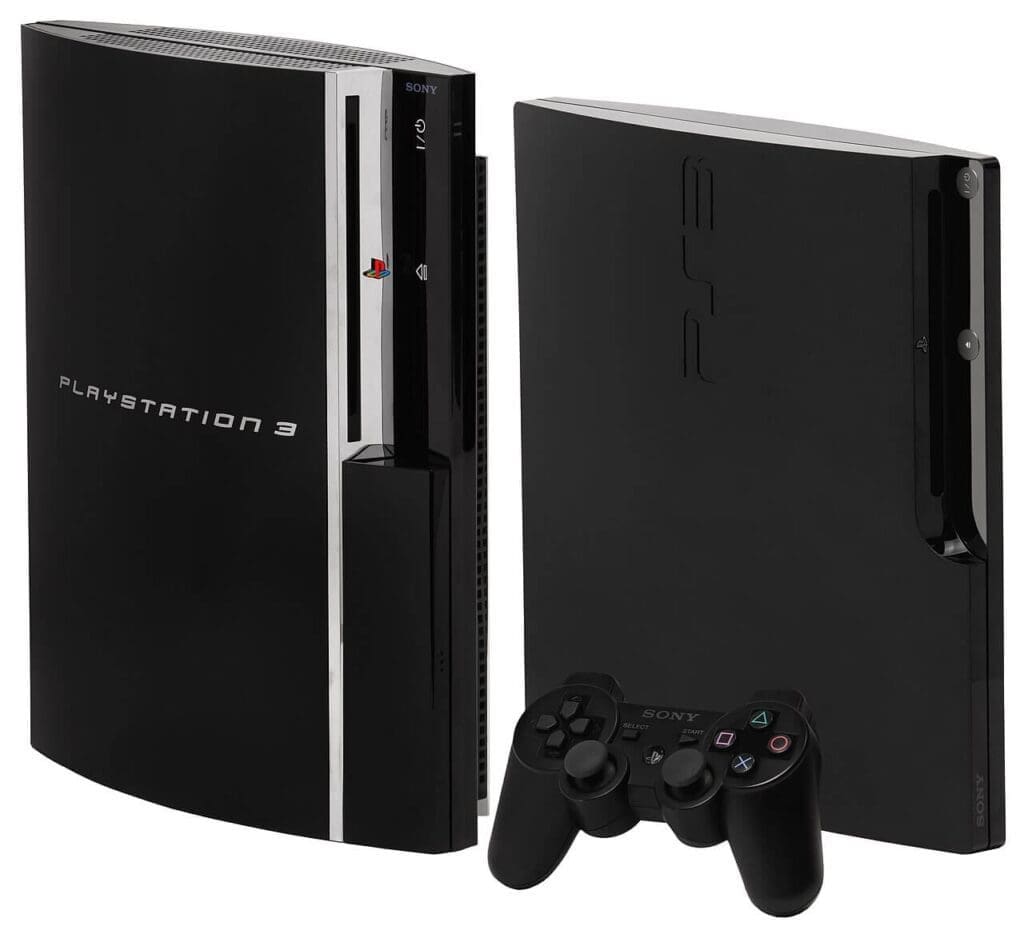
Manufacturer: Sony | Released: 2006 | Lifetime Units Sold: 87.4 million | Key Games: The Last of Us, Uncharted 2, Demon’s Souls, Journey, Metal Gear Solid 4
The PS3 launch was one of the biggest stumbles in modern console history. Sony priced the console at $599; a figure revealed to audible gasps at E3 2006. It was the highest entry fee for a major home console at that time. The Cell processor, co-developed with IBM and Toshiba, was notoriously difficult for developers to work with. For years after launch, most third-party studios shipped inferior PS3 versions of multiplatform titles compared to the Xbox 360 and PC. By any reasonable expectation, the PS3 should have been Sony’s last console.
Sony fought back through first-party exclusives that established a new benchmark for narrative-driven gaming. The Last of Us is regarded as one of the finest interactive narratives ever produced, later adapted into an award-winning HBO series. Demon’s Souls is credited with creating the “Souls-like” genre that spawned both Dark Souls and Elden Ring. Journey became the first video game to have its soundtrack nominated for a Grammy Award. The PS3 shipped 87.4 million units according to Sony’s official figures, and its built-in Blu-ray player was instrumental in Sony winning the format war against HD DVD.
The PS3’s legacy is one of redemption. Sony entered the generation with hubris, nearly destroyed its console business through poor strategic decisions, and then rebuilt through the sheer quality of its first-party studios. That recovery forged the first-party development culture that defines PlayStation in 2026.
7. Super Nintendo Entertainment System (SNES)
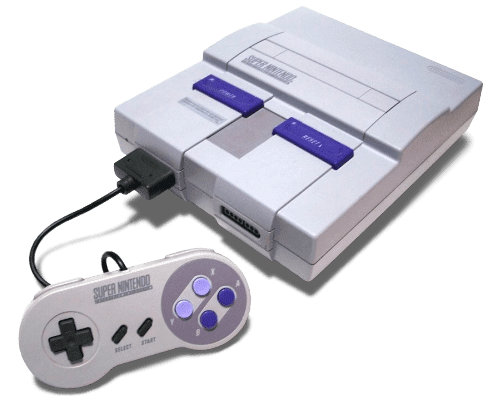
Manufacturer: Nintendo | Released: 1990 (Japan) / 1991 (North America) | Lifetime Units Sold: 49.10 million | Key Games: Super Mario World, The Legend of Zelda: A Link to the Past, Super Metroid, Chrono Trigger, Final Fantasy VI
Few would dispute that the SNES possesses one of the finest game libraries ever assembled on a single platform. Super Mario World. A Link to the Past. Super Metroid. Chrono Trigger. Final Fantasy VI. EarthBound. Street Fighter II. Donkey Kong Country. Any one of these titles alone would be sufficient to define a console’s legacy.
Nintendo sold 49.10 million SNES units worldwide. The Super FX chip inside Star Fox was a pioneering graphics coprocessor placed inside a consumer video game cartridge, enabling real-time 3D polygon rendering on 16-bit hardware. Mode 7 scaling and rotation allowed developers to produce visual effects that pushed well beyond what any competing technology could achieve.
The console wars of this period; Nintendo versus Sega; remain the most iconic rivalry between console manufacturers in history and continue to serve as a template for competitive marketing campaigns today.
Because it sold roughly half the number of units of consoles ranked above it on this list, the SNES sits at #7. But the impact the SNES had on game design is impossible to overstate. The foundational genres it defined and refined; the 2D platformer, the JRPG, the fighting game, and the action-adventure; remain the pillars of interactive entertainment more than three decades later.
6. PlayStation
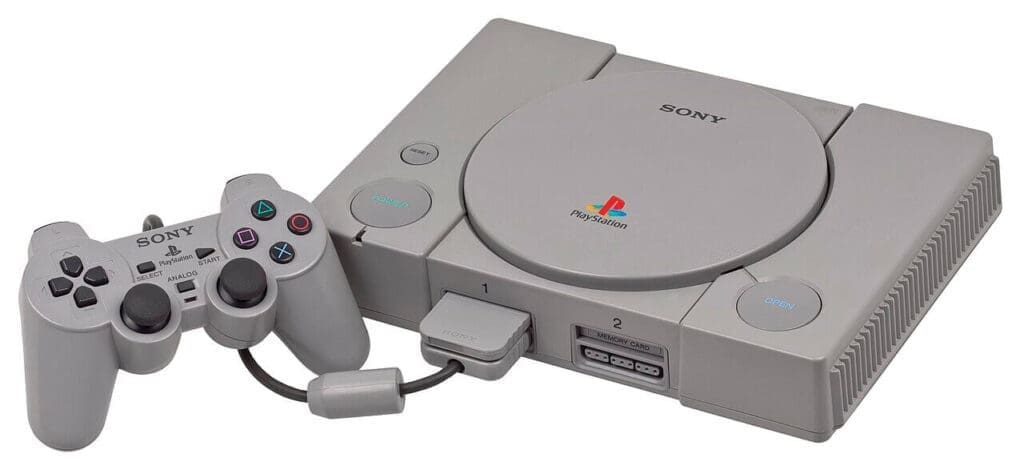
Manufacturer: Sony | Released: 1994 (Japan) / 1995 (North America) | Lifetime Units Sold: 102.49 million | Key Games: Final Fantasy VII, Metal Gear Solid, Resident Evil, Crash Bandicoot, Gran Turismo
Before launching the PlayStation in 1994, Sony had never produced a video game console. The idea originated when Sony partnered with Nintendo to develop a CD-ROM expansion for the SNES. When Nintendo publicly humiliated Sony at CES 1991 by announcing a competing partnership with Philips, Sony’s president Norio Ohga reportedly directed his engineers to build a standalone console to challenge Nintendo directly.
Sony succeeded by using CDs instead of cartridges, aggressively courting third-party developers, and marketing the console as a lifestyle product rather than a children’s toy. Final Fantasy VII generated unprecedented hardware-selling hype. Metal Gear Solid proved games could deliver movie-caliber storytelling. Gran Turismo sold over 10.85 million copies and essentially created the simulation racing genre.
Sony shattered gaming’s perceived age ceiling. Its marketing positioned the PlayStation as something a 25-year-old could proudly display in a living room without embarrassment. For over a decade, Nintendo had marketed gaming as a family-friendly activity. Sony made it a cultural identity marker.
5. Nintendo Entertainment System (NES)
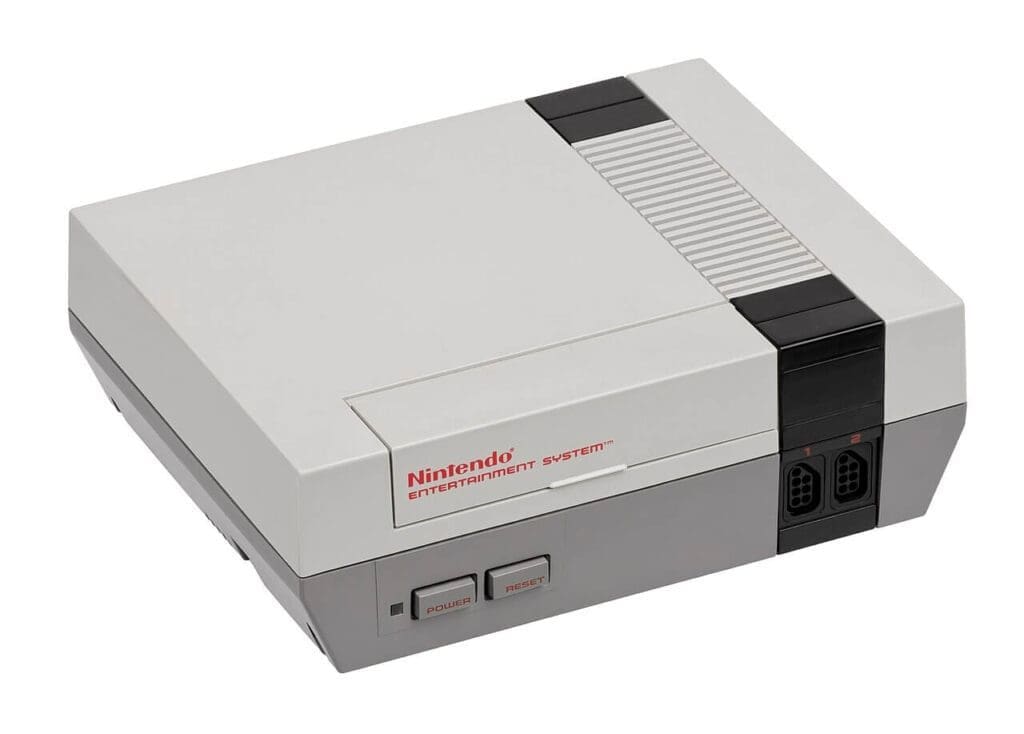
Manufacturer: Nintendo | Released: 1983 as Famicom (Japan) / 1985 (North America) | Lifetime Units Sold: 61.91 million | Key Games: Super Mario Bros., The Legend of Zelda, Metroid, Mega Man 2, Contra
The NES rescued the North American video game industry from the collapse triggered by Atari’s flooding of the market with low-quality titles in 1983; a disaster symbolized by the literal burial of millions of unsold E.T. cartridges in a New Mexico landfill. American retailers refused to stock video games until Nintendo rebranded its hardware, packaged the NES with R.O.B. (Robotic Operating Buddy), and secured shelf space in toy aisles.
Super Mario Bros., designed by Shigeru Miyamoto, is arguably the most influential game release in history, with over 40 million copies sold. The NES sold 61.91 million units globally. More significantly, the NES established the licensing model that all modern console manufacturers still follow: requiring publishers to meet quality standards before releasing products on the platform, effectively preventing another Atari-style market collapse.
The NES introduced innovations that continue to shape gaming today: battery-backed save data in The Legend of Zelda, exploration-driven action in Metroid, and the framework for genres; the platformer, the action-adventure; that remain dominant. If there were no NES, none of the consoles above it on this list would exist in their current form.
4. PlayStation 4
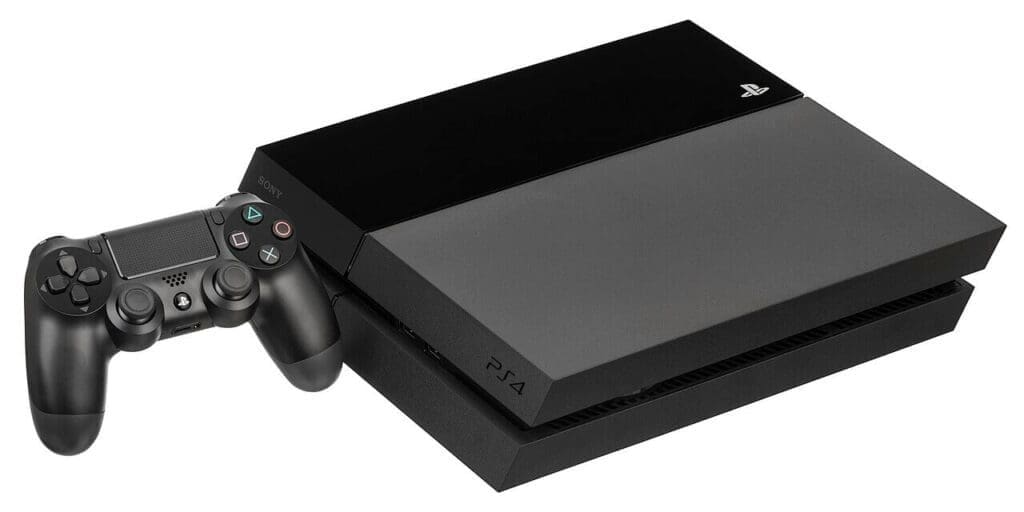
Manufacturer: Sony | Released: 2013 | Lifetime Units Sold: 117.2 million (as of March 2022) | Key Games: God of War (2018), Bloodborne, Horizon Zero Dawn, Marvel’s Spider-Man, The Last of Us Part II
Before the PS4 even launched, Sony had already won its generation. On May 21, 2013, Microsoft revealed the Xbox One with an emphasis on television integration and restrictions on used-game sales. The backlash was instantaneous. At E3 2013, Sony confirmed the PS4 would support used games without restriction and retail at $399; $100 less than the Xbox One. The contrast dominated social media and set the tone for the entire generation.
According to Sony’s official reports, the PS4 shipped 117.2 million units worldwide as of March 2022, making it the fourth-best-selling home console of all time. During this generation, Sony’s first-party development teams delivered an extraordinary run of critically acclaimed exclusives. God of War (2018) won Game of the Year at The Game Awards. Bloodborne generated a devoted cult following. Marvel’s Spider-Man sold more than 20 million copies worldwide. The Last of Us Part II sparked one of the most divisive debates about narrative ambition in gaming history.
With its deep and highly praised exclusive library, the success of PlayStation Plus, aggressive pricing, and strong third-party relationships, Sony demonstrated that a company can win a console generation by committing to first-party excellence.
3. PlayStation 5
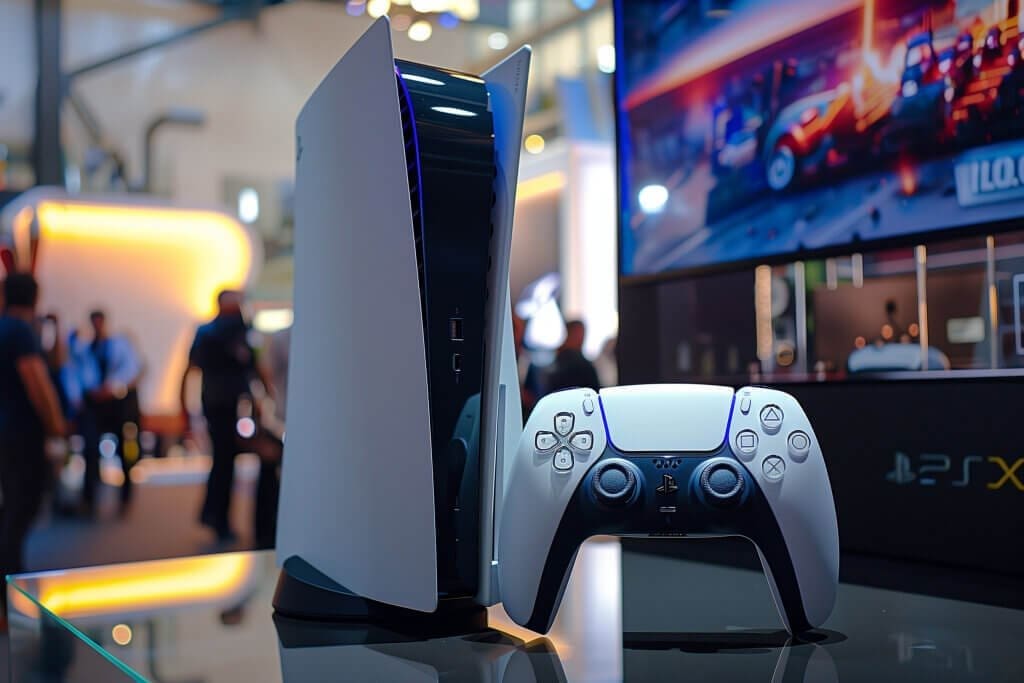
Manufacturer: Sony | Launched: 2020 | Units Sold: 92.2 million (as of Dec. 31, 2025) | Key Games: Astro Bot, God of War Ragnarök, Marvel’s Spider-Man 2, Returnal, Demon’s Souls (Remake)
Sony confirmed that the PS5 reached 92.2 million units sold worldwide as of December 31, 2025; a total achieved despite the worst global semiconductor shortage in decades. Despite launching during a pandemic and facing unprecedented supply constraints, the PS5 has tracked as one of the fastest-selling consoles in history. The PS5 Pro; launched November 7, 2024; introduced PlayStation Spectral Super Resolution (PSSR) upscaling, pushing the console’s graphical output closer to high-end PC performance.
The DualSense controller represents the most meaningful innovation in controller design since the introduction of the analog stick. Its haptic feedback and adaptive trigger system allow developers to create distinct tactile sensations for different in-game actions; a rainstorm feels different from a bowstring, a car crash registers differently from footsteps on gravel.
The PS5’s AAA exclusive lineup has been formidable. God of War Ragnarök sold 5.1 million copies in its launch week and surpassed 15 million units within its first year on the market. Marvel’s Spider-Man 2 topped 10 million copies in under four months and surpassed 11 million within six months. Astro Bot won Game of the Year at The Game Awards 2024. The PS5 earns its #3 ranking because it represents the current pinnacle of console technology; and this generation is still relatively young.
2. Nintendo Switch
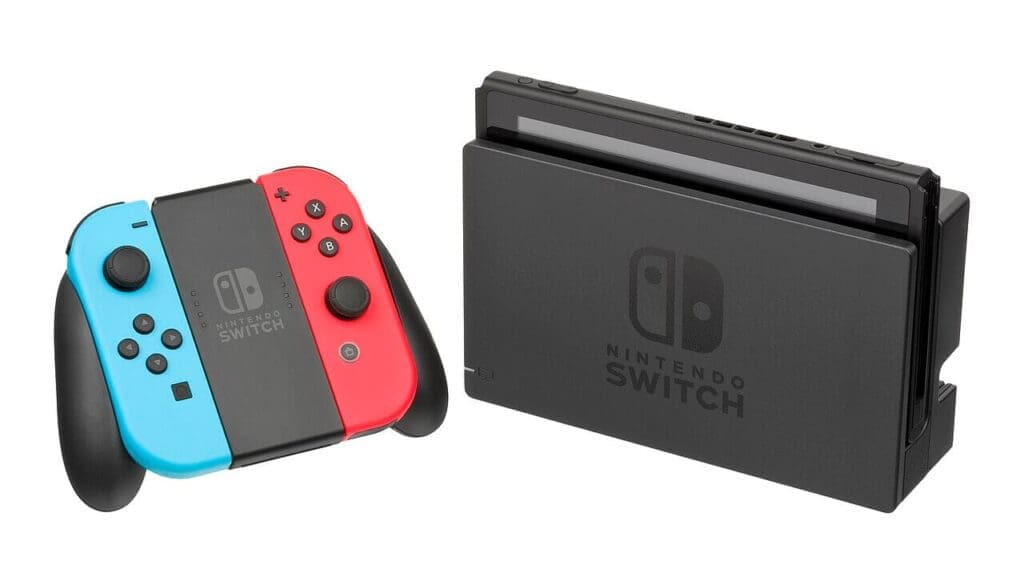
Manufacturer: Nintendo | Released: 2017 | Units Sold: 155.37 million (as of Feb. 2026) | Key Games: The Legend of Zelda: Breath of the Wild, Animal Crossing: New Horizons, Super Smash Bros. Ultimate, Mario Kart 8 Deluxe
Nintendo answered a question few people were asking: “Can I play a home console on my TV and then take it with me on the go?” The answer was the Switch; a hybrid device with detachable Joy-Con controllers, a tabletop mode, and a dock for television output. What resulted was the most versatile gaming product ever built. According to Nintendo’s February 2026 financial report, as reported by CNBC and BBC, 155.37 million Switch units have been sold; placing it behind only the PS2 in lifetime console sales and making it Nintendo’s best-selling console of all time.
Animal Crossing: New Horizons, released on March 20, 2020; just as COVID-19 lockdowns began spreading across the globe; became one of the top-selling games in history with over 44 million copies moved. It transcended gaming entirely, becoming a social phenomenon that attracted hundreds of thousands of non-gamers seeking connection during isolation. Mario Kart 8 Deluxe has sold over 70 million copies as of December 31, 2025, making it the best-selling title on any single Nintendo platform in history.
The Switch proved that hybrid designs are not compromises; they are an evolution. All subsequent portable PC gaming devices (Steam Deck, ROG Ally, and others) exist in part because Nintendo demonstrated that consumers want a portable experience with near-home-console quality. The Switch 2, which has sold 17.37 million units since its June 5, 2025 launch, confirms that the Switch was not an isolated experiment but the beginning of a template.
1. PlayStation 2
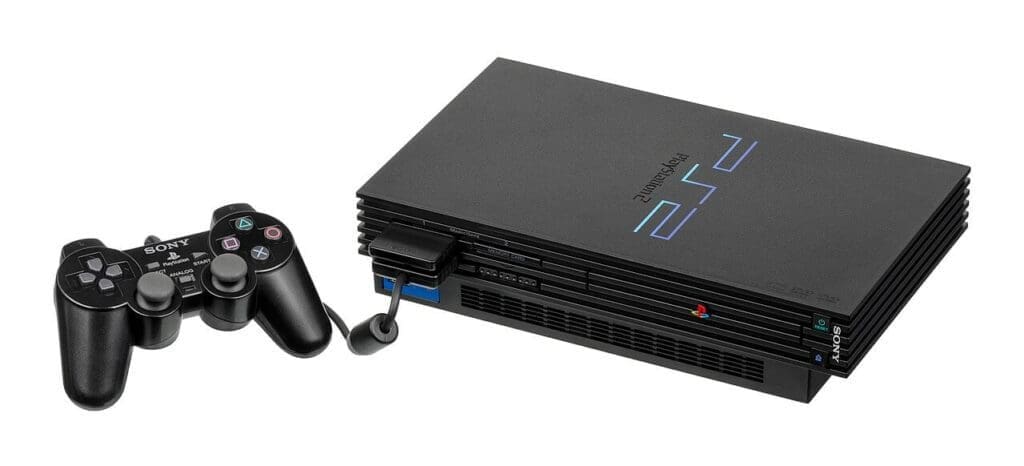
Manufacturer: Sony | Released: 2000 | Units Sold: 160 million+ | Key Games: Grand Theft Auto: San Andreas, Shadow of the Colossus, Metal Gear Solid 3: Snake Eater, Final Fantasy X, God of War, Kingdom Hearts
The PlayStation 2 is the best-selling video game console ever produced. Sony confirmed over 160 million units sold worldwide as part of its November 2024 PlayStation 30th anniversary disclosure, as reported by IGN, Eurogamer, and VGChartz.
To understand why the PS2 dominated, consider what it offered beyond games. When it shipped in Japan in March 2000 (and North America in October 2000), it was priced at $299. At that time, standalone DVD players cost between $300 and $500. The PS2 doubled as the most affordable DVD player on the market. Millions of consumers purchased a PS2 primarily for DVD playback and subsequently discovered gaming as a secondary benefit.
The PS2’s game library was enormous; over 4,000 unique titles. Grand Theft Auto: San Andreas sold over 17.33 million copies on the PS2 alone, making it the platform’s best-selling game. Shadow of the Colossus showed that games could function as artistic statements. Metal Gear Solid 3: Snake Eater delivered one of the greatest narratives in gaming history. Final Fantasy X revolutionized cinematic storytelling in role-playing games. God of War established Sony’s most iconic franchise. Kingdom Hearts bridged Disney and Square Enix in a collaboration many had considered impossible.
Through backward compatibility, PS2 owners gained instant access to the entire PlayStation 1 library; approximately 4,000 additional titles; at launch, with no additional cost or accessories required.
Sony manufactured the PS2 until January 4, 2013; nearly thirteen years after its initial launch; making it one of the longest-manufactured consoles in history.
While Sony’s attempt at establishing online console gaming through the PS2’s network adapter fell short compared to Xbox Live’s execution, it was through that adapter that millions of console owners first experienced online gameplay.
No console on this list matches the PS2 in commercial dominance, library breadth, cultural significance, and long-term durability. It is the greatest console ever made.
The 15 Greatest Gaming Consoles of All Time — Ranked
| Rank | Console | Manufacturer | Launch Year | Lifetime Units Sold | Key Games | Legacy Highlight |
|---|---|---|---|---|---|---|
| 1 | PlayStation 2 | Sony | 2000 | 160 million+ | GTA: San Andreas, Shadow of the Colossus, MGS 3, FFX, God of War, Kingdom Hearts | Best-selling console of all time; doubled as most affordable DVD player at launch |
| 2 | Nintendo Switch | Nintendo | 2017 | 155.37 million | Zelda: BotW, Animal Crossing: New Horizons, Smash Bros. Ultimate, Mario Kart 8 Deluxe | Pioneered the hybrid console format; Nintendo’s best-selling console ever |
| 3 | PlayStation 5 | Sony | 2020 | 92.2 million | Astro Bot, God of War Ragnarök, Spider-Man 2, Returnal, Demon’s Souls Remake | DualSense redefined controller design; fastest-selling console amid chip shortage |
| 4 | PlayStation 4 | Sony | 2013 | 117.2 million | God of War (2018), Bloodborne, Horizon Zero Dawn, Spider-Man, TLOU Part II | Won its generation through first-party excellence and aggressive pricing |
| 5 | NES | Nintendo | 1985 | 61.91 million | Super Mario Bros., The Legend of Zelda, Metroid, Mega Man 2, Contra | Rescued the North American game industry after the 1983 crash |
| 6 | PlayStation | Sony | 1994 | 102.49 million | FFVII, Metal Gear Solid, Resident Evil, Crash Bandicoot, Gran Turismo | Sony’s debut console shattered gaming’s age ceiling and redefined the market |
| 7 | SNES | Nintendo | 1990 | 49.10 million | Super Mario World, Zelda: A Link to the Past, Super Metroid, Chrono Trigger, FFVI | One of the finest game libraries ever assembled; defined foundational genres |
| 8 | PlayStation 3 | Sony | 2006 | 87.4 million | The Last of Us, Uncharted 2, Demon’s Souls, Journey, MGS4 | Redemption arc: rebuilt through first-party quality after a disastrous launch |
| 9 | Nintendo DS | Nintendo | 2004 | 154.02 million | New Super Mario Bros., Pokémon Diamond & Pearl, Brain Age, Mario Kart DS | Dual-screen innovation reached demographics no other handheld had courted |
| 10 | Nintendo Wii | Nintendo | 2006 | 101.63 million | Wii Sports, Super Mario Galaxy, Zelda: Twilight Princess, Mario Kart Wii | Motion controls made gaming accessible to retirement communities and morning TV |
| 11 | Xbox 360 | Microsoft | 2005 | ~84 million | Halo 3, Gears of War, Mass Effect, Red Dead Redemption, Skyrim | Xbox Live defined modern online console infrastructure |
| 12 | Game Boy | Nintendo | 1989 | 118.69 million | Tetris, Pokémon Red & Blue, Zelda: Link’s Awakening, Super Mario Land 2 | Created new gamers; launched the $100B+ Pokémon franchise |
| 13 | Nintendo 64 | Nintendo | 1996 | 32.93 million | Super Mario 64, Zelda: Ocarina of Time, GoldenEye 007, Mario Kart 64 | Defined 3D gaming; Ocarina of Time holds a 99 on Metacritic |
| 14 | Sega Genesis / Mega Drive | Sega | 1988 | 30.75 million | Sonic the Hedgehog, Streets of Rage II, Phantasy Star IV, Gunstar Heroes | First console to dethrone Nintendo in North America |
| 15 | Sega Dreamcast | Sega | 1998 | 9.13 million | Shenmue, Sonic Adventure, Jet Set Radio, SoulCalibur, Crazy Taxi | Pioneered online console gaming; commercially failed but culturally enormous |
Most Frequently Asked Gaming Console Questions
Which console is currently the best-selling gaming system of all time? Sony confirms that the PlayStation 2 (PS2) remains the all-time leader, having sold over 160 million units worldwide as of November 2024. The Nintendo Switch sits in second place with 155.37 million units sold as of February 2026.
Did the Nintendo Switch outsell the Nintendo DS? Yes. According to Nintendo’s February 2026 financial report, the Switch has sold 155.37 million units, surpassing the DS’s 154.02 million. The Nintendo Switch is now Nintendo’s best-selling console of all time and the second-best-selling console overall, behind the PS2.
How many PS5 units have been sold? Sony reports that over 92.2 million PS5 units were sold through December 31, 2025. The PS5 also led U.S. console sales in both January and February 2026, according to Circana tracking data.
What contributed to the success of the PS2? The PS2 offered consumers the least expensive DVD player on the market at launch, full backward compatibility with every original PlayStation game, and a library of over 4,000 titles that attracted both gamers and non-gamers. It was manufactured for nearly thirteen years and faced limited competition during its early years.
Why is the Nintendo Switch 2 not listed here? The Switch 2 launched on June 5, 2025 and has sold an estimated 17.37 million units in its first nine months. While this represents an extremely promising debut, we believe it is premature to include the console in an all-time ranking until its library, cultural impact, and long-term trajectory become clearer. We expect to revisit this decision in a future update.
Where does the Xbox Series X/S fall on the overall sales chart? As of late 2025, the Xbox Series X/S has sold approximately 34.2 million units. Despite strong hardware quality and the value proposition of Game Pass, its lower-than-expected sales; combined with Microsoft’s strategic pivot toward multiplatform game distribution; place it outside our top fifteen.