



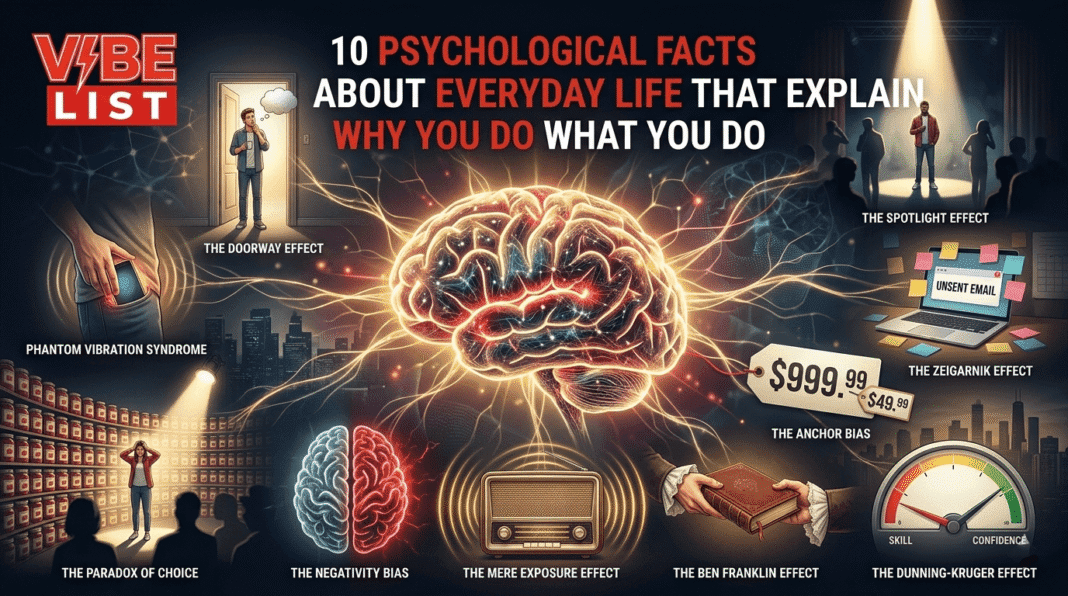
Sixty-eight percent of doctors feel their phone buzz when it hasn’t. Fifty percent of people think an entire room noticed their embarrassing shirt; only twenty-five percent actually did. A display of twenty-four jams attracts crowds but sells to just three percent of them. A Soviet psychologist watching a waiter forget a paid order in a Vienna café in 1927. Bottom-quartile performers scoring at the twelfth percentile but rating themselves near the sixty-second. None of these are glitches in your personality; they’re features of a brain that was never designed for the world it built.
This content is for informational purposes only and does not constitute professional medical or psychological advice. Consult a qualified professional for personalized guidance.
Behavioral science and your life; the reasons behind your habits
You walk into the kitchen and forget why you came there. You feel your phone buzz in your pocket. You pull it out. Nothing is on it. You spend 45 minutes picking a movie on Netflix but watch nothing at all. You rehearse conversations in the shower that will never actually take place. You play back an embarrassing moment from 2014 for the 800th time. One critical comment from your boss ruins a day that was otherwise going perfectly well.
All of these behaviors have been studied. They have names. Researchers who have spent decades studying human cognition have published findings on every one of them. Most people never encounter behavioral science because they assume they just think differently, or just get distracted, or just can’t make decisions.
This list is different from those vague “psychology facts” posts floating around social media. Each entry here is based on a specific named study or body of research. Each claim is traceable. Each item connects directly to a moment you will recognize from your own life. That is what makes behavioral science so useful; these patterns are not unique to you. They are wired into the species.
1. The Doorway Effect: Why You Forget What You Came For {#doorway-effect}
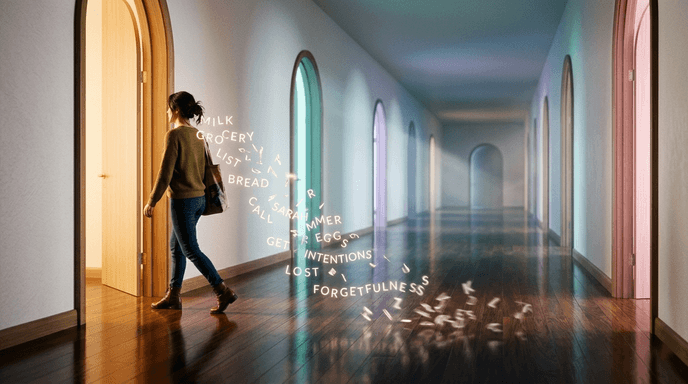
You stand up from the couch with a specific goal in mind. You walk ten steps. You cross the threshold into the hallway. And suddenly the thought is gone. You stand there staring, trying to retrace what you were doing thirty seconds ago.
This is the Doorway Effect, and research at the University of Notre Dame showed it has nothing to do with a weak memory. Psychology professor Gabriel Radvansky designed a series of experiments (published in the Quarterly Journal of Experimental Psychology) to test if crossing a doorway actually causes forgetting. In both virtual and real environments, participants navigated rooms containing tables with objects, picking items up as they moved. All three experiments found that participants forgot information more often after crossing a doorway than after walking the same distance within a single room.
According to Radvansky, his findings relate to event boundaries; a concept cognitive scientists use to explain how we organize experiences into discrete episodes and store them in memory. Crossing a doorway represents the end of one episode and the beginning of another. The idea you had in the living room belonged to that room’s episode. When you enter the kitchen, your brain files away that episode and starts a new one. That idea is still in memory, but retrieving it now means reaching across an event boundary, which is harder than recalling something within the same episode.
Radvansky’s most surprising finding came from an additional experiment. He had participants walk back and forth through several doorways and then return to the room where the thought first occurred. If memory depended solely on the environment where you first encountered the thought, returning to the original room should restore memory. However, no matter how many times participants went back and forth through doorways, returning to the original room did not restore memory. Once you’ve crossed a doorway, you create an event boundary. The compartmentalization happens the moment you cross the threshold.
Scientific American explained that Radvansky’s findings indicate that remembering goes far beyond what you pay attention to or how hard you try. Instead, it depends on the physical layout of the spaces you move through.
The Vibe List’s take: So the next time you can’t recall why you walked into a room, instead of blaming yourself, blame the door. Your memory is functioning as intended; it’s treating every doorway as a bookend separating chapters in your mental library.
2. Phantom Vibration Syndrome: Why You Feel Like Your Phone Is Buzzing Even Though It Isn’t {#phantom-vibration}

You clearly sense a vibration coming from your phone in your pocket. You pull your phone out and check it. There are no messages, no missed calls, no notifications of any kind. Yet the feeling was strong enough that you’re certain it happened.
This phenomenon is known as Phantom Vibration Syndrome, and it is remarkably common. According to a cross-sectional study published in the British Medical Journal, close to 68% of doctors and nurses surveyed reported experiencing it. Younger adults are more likely to experience phantom vibrations than older adults; researcher Michelle Drouin at Indiana University–Purdue University Fort Wayne found that almost 90% of students she sampled reported experiencing them.
There is no consensus on why Phantom Vibration Syndrome occurs, but researchers believe it may be explained by signal detection theory. Your brain is constantly filtering sensory stimuli and making split-second decisions about which ones might require action. Since most people spend hours each day carrying phones in vibration mode, your brain adapts by lowering your threshold for noticing vibrations. Any slight movement of fabric against your skin, or even a change in air pressure, becomes enough to trigger a false positive; your brain registers a vibration that never happened.
Phantom vibrations have been linked to how often you use your phone and whether you keep it on vibration mode. They have also been correlated with higher perceived stress levels; as you become more anxious, your brain grows more vigilant and produces more false alerts.
Reassuringly, phantom vibration syndrome does not indicate a psychological disorder; it simply reflects how deeply smartphones have embedded themselves in our sensory experience. Your brain expects vibrations and sometimes anticipates them incorrectly.
The Vibe List’s take: Your phone is not possessed by spirits. Your nervous system is just better at its job than you’d think.
3. The Spotlight Effect: Why You Think Everyone Saw Your Embarrassment {#spotlight-effect}

You spill coffee on your shirt before a big meeting. You slip slightly on a sidewalk crack. You pronounce a word wrong during a presentation. Throughout the entire day, you are certain everyone saw you make a mess of things, everyone remembers it, and everyone is talking about it.
They aren’t.
Psychologists Thomas Gilovich, Victoria Medvec, and Kenneth Savitsky identified what they called “the Spotlight Effect” to describe how people overestimate how much others notice them. This overestimation extends beyond embarrassment; people also exaggerate how much others notice their positive contributions and their mistakes. In a 2000 study published in the Journal of Personality and Social Psychology, researchers asked participants to wear embarrassingly large photographs of Barry Manilow on their shirts and walk into a room full of strangers. The wearers estimated that approximately 50% of the people in the room would notice the shirt. In reality, only around 25% were aware.
Gilovich et al. attributed this overestimation to two factors: anchoring and insufficient adjustment. Initially, you anchor on your own internal experience (e.g., “oh man, I am really embarrassed right now”). Then you try to adjust for the fact that others aren’t paying as much attention. Unfortunately, this correction is usually under-calibrated; you never quite escape your own perspective.
Two subsequent studies in the same article examined group discussions. Participants consistently overestimated how much others noticed their comments, whether positive or negative. Regardless of whether you said something profound or foolish, you assumed it made a greater impact than it actually did.
The Spotlight Effect has direct implications for social anxiety. Many fears people experience before giving speeches, attending parties, or entering crowds stem from the belief that they are being intensely scrutinized and judged. As the research shows, this assumption is exaggerated; other people are typically focused on their own spotlights and rarely notice yours.
The Vibe List’s take: The next time you know without a doubt that everyone noticed your blunder, remember: they were too busy worrying about theirs.
4. The Paradox of Choice: How Too Many Options Lead to Choosing Nothing at All {#paradox-of-choice}

Sheena Iyengar (of Columbia University), along with psychology researcher Mark Lepper (from Stanford), began studying consumer choices in an experiment at a gourmet food store in Menlo Park, California. Iyengar and Lepper placed sampling stations near entrances for gourmet jams. Each station contained either six or twenty-four types of jam for customers to taste. The larger selection generated more foot traffic (60%) than the smaller selection (40%). However, purchase rates told a different story. Only 3% of shoppers who encountered the 24-jam display actually bought jam, compared with 30% of those who saw the 6-jar display.
Published in the Journal of Personality and Social Psychology (2000) as “When Choice Is Demotivating,” this study introduced what psychologist Barry Schwartz would later call “the paradox of choice”: while having more options seems like more freedom, it generally leads to decision paralysis, dissatisfaction, and regret.
Researchers attribute this phenomenon to “choice overload.” When confronted with many options, you spend more mental energy assessing and comparing each one; the more you evaluate, the more drained you become. As the Decision Lab pointed out, the anticipation of regret when selecting among many options often pushes people to avoid choosing altogether.
You’ve experienced this every time you opened a streaming app, scrolled for forty minutes looking for something to watch, and shut down the app with nothing selected. You’ve also experienced this when studying a menu for longer than it takes to eat the meal. The problem was never a lack of good options; it was having too many of them.
Columbia Business School highlighted that Iyengar’s research has influenced product design, retail strategy, and user interface design across technology, hospitality, and other industries. The takeaway is counterintuitive but consistent: sometimes designers help users by removing choices. Reducing complexity increases speed and lowers regret.
The Vibe List’s take: If you’ve ever spent longer choosing a movie than watching one; you’re not indecisive; you’re overwhelmed. Fewer options, faster decisions, less regret. The jam study proved it.
5. The Negativity Bias: Why One Insult Outweighs Ten Compliments {#negativity-bias}

One insult can ruin an entire day filled with compliments. That’s not a character flaw; it’s how your brain is wired.
Researchers Tiffany Ito, Jeff Larsen, Kyle Smith, and John Cacioppo demonstrated this in a 1998 study published in the Journal of Personality and Social Psychology. Using event-related brain potentials (ERPs), they measured how the brain responds to positive, negative, and neutral images. The result: negative stimuli produced significantly larger brain responses than positive stimuli of equal intensity and arousal.
This is the Negativity Bias; your brain is built to treat bad news as more urgent and more important than good news. From an evolutionary perspective, this makes sense. Noticing a threat faster than a reward kept your ancestors alive. But in modern life, it means a single critical comment in a performance review can overshadow ten pieces of praise.
The bias doesn’t stop at emotions. Research suggests it shapes how we process news headlines, how we form first impressions, and even how we vote. Negative political ads, for example, tend to be more memorable than positive ones; not because they’re better made, but because your brain assigns them more weight automatically.
The Vibe List’s take: Your brain has a built-in negativity filter. Knowing it exists won’t turn it off, but it might stop you from letting one bad moment define an entire day.
6. The Zeigarnik Effect; How Unfinished Tasks Ruin Your Day {#zeigarnik-effect}
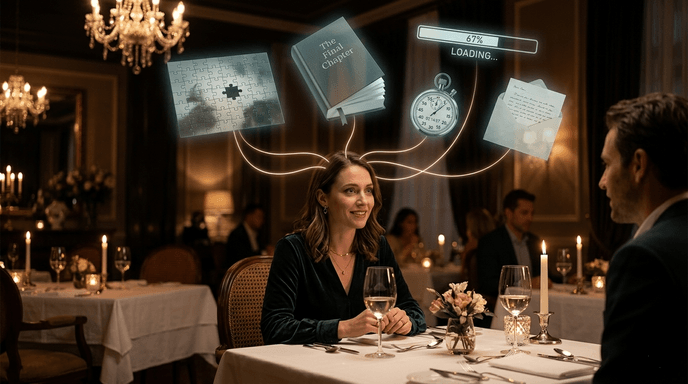
There’s the email you drafted but never sent. There’s the project you started last Tuesday and abandoned halfway through. And then there’s the conversation you cut short without saying what you meant. They’re just sitting out there. They haunt you. They pop into your head at odd hours when you aren’t thinking of them and pull your focus away from whatever you should be doing.
In 1927, Soviet psychologist Bluma Zeigarnik identified this phenomenon while working under the well-known psychologist Kurt Lewin. Lewin had noticed something peculiar about the waiters at a Vienna restaurant. Waiters could recall every detail of unpaid orders, but once payment was received and the food was served, those details vanished. Lewin called this “completion” of a transaction. For many years, researchers believed this was linked to memory consolidation during sleep. But it now appears to happen when we complete a task or achieve closure, which eliminates the need to keep that task in active memory.
Zeigarnik ran several studies to test the observation. Participants received tasks and were either allowed to finish them or interrupted midway. One hour later, participants were tested for recall of the assignment. As reported by Verywell Mind, participants recalled the interrupted tasks far better than the completed ones. Zeigarnik called this “cognitive tension.” Cognitive tension holds an incomplete item in active memory, creating mental unease until the task is resolved.
Recent research has built upon Zeigarnik’s findings. Research reported in the Harvard Business Review found that unmet goals lead to intrusive thoughts that distract us from other tasks. However, the same research identified a simple way to reduce these distractions: write down a specific plan for completing the task. This may seem trivial, but research shows that simply making a plan is often enough to quiet the mental nagging; and this works even before the task itself is finished. Creating a plan signals to your brain that you are in control, allowing your mind to let go of the incomplete task.
The Vibe List’s take: The nagging feeling you get late at night about sending that draft email is not evidence that you are irresponsible. It is your brain telling you it still has a pending tab open. Create a plan to send the email. Close the tab.
7. The Mere Exposure Effect; Why You Prefer Familiar Things {#mere-exposure}

You didn’t care about that new song when you first heard it. By the fourth time you heard it, you were probably tapping your foot to the beat. And after hearing it ten times, it landed on your favorite playlist. Nothing about the song changed. Only your experience with it changed.
Robert Zajonc identified the mere-exposure effect in 1968. Zajonc was a psychologist at the University of Michigan. He wanted to determine whether people naturally developed preferences based solely on familiarity. In one experiment, he presented participants with Chinese characters, Turkish words, and photographs of faces (all selected because participants were unfamiliar with them). Zajonc displayed some of the items only one time. Others were displayed anywhere from one to twenty-five times. Afterward, Zajonc asked participants how much they liked each item. The results were clear: the more frequently an item was shown, the more positively participants rated it. None of these effects appeared to be driven by reason or persuasion. Merely seeing something repeatedly caused participants to develop a preference for it.
The mere exposure effect operates below conscious awareness. As originally reported in the Journal of Personality and Social Psychology, Zajonc proposed that repeated exposure alone is sufficient to increase liking. We don’t even need to be aware of something to start preferring it. Subsequent studies have shown that our preference for something can actually increase when we don’t realize we’ve seen it before.
We see this phenomenon in nearly every aspect of modern life. This principle helps explain why radio stations repeat popular songs repeatedly to build listener loyalty. Initially, listeners dislike certain songs they hear on Monday afternoon. Those same songs are tolerated by Wednesday evening and eventually enjoyed by Friday morning. This principle also explains why advertising builds brand recognition regardless of whether viewers remember anything about a particular ad campaign. This principle also helps explain why coworkers, neighbors, and schoolmates you encounter regularly become your closest social connections, despite having little in common personality-wise.
The Vibe List’s take: Often, we like something simply because we’ve encountered it before. That might sound shallow, but it’s neuroscience.
8. The Ben Franklin Effect; Why Asking for a Favor Makes People Like You {#ben-franklin}

Common sense suggests that if you want someone to like you, help them out. Benjamin Franklin proved that wrong. If you want someone to like you, ask them to help you.
In his autobiography, Franklin writes about a political opponent who spoke negatively about him in front of the Pennsylvania Legislature. Instead of confronting him directly, Franklin wrote him a letter asking to borrow a very rare book from his collection. The opponent agreed and lent him the book. From that moment forward, Franklin reported that he was treated with great respect and kindness by his former opponent; they became friends.
Psychologists Jon Jecker and David Landy tested a similar idea experimentally in 1969. Their study employed a technique inspired by the principle Franklin had described centuries earlier. First, participants played a trivia game where they earned money. In one condition, the researcher personally asked participants to return their winnings as a favor. In a second, a secretary made the same request. In a third, no one asked for the money back. Later in the study, participants rated how much they liked the researcher; and those who gave him back his money as a favor rated him much higher than those who didn’t.
Jecker and Landy explained this result through cognitive dissonance theory. Cognitive dissonance theory holds that when people behave inconsistently with their attitudes or values, they feel discomfort, which motivates them to change either their behavior or their attitude to restore consistency. Here’s how it works: when you help someone, your mind generates a conflict: “I helped this person” versus “I don’t think I especially like this person.” These two opposing views cause cognitive discomfort. So your brain changes the easier view: since helping someone is already done and cannot be reversed, changing your perception of them is the simpler adjustment. So your brain concludes that you must like them; otherwise, why would you have helped?
9. The Anchor Bias: How the First Number You See Shapes Every Estimate After It {#anchor-bias}

Amos Tversky and Daniel Kahneman’s 1974 article in Science changed the way we think about human behavior. For example, imagine you’re shown a wheel of chance. The wheel is rigged to land on either 10 or 65. After spinning the wheel, you’re asked what percentage of African countries are members of the United Nations. Both groups got the exact same amount of information to answer this question; nothing. The only difference between the two groups was the number they saw immediately before answering the question. Those who saw 65 said that approximately 45% of African nations belonged to the UN. Those who saw 10 said 25%. An arbitrary, clearly meaningless number influenced every participant’s estimate. This is known as the anchor bias. It occurs almost anywhere numbers are used to estimate something. The first number you see in a negotiation, during a conversation about salaries, on a property listing, or in an advertisement will act as the anchor. All further opinions will relate back to it. As Simply Psychology noted, even when people are fully aware of the bias and try to counteract it, the anchor still exerts residual influence. You move away from the anchor but never completely free yourself from it.
The implications extend far beyond the laboratory. When retailers list a “was” price (like $200) next to a current price ($99), they create an anchor. The $200 figure creates a perception of value, causing consumers to see $99 as a better deal than it actually is; regardless of whether the product was ever truly worth $200.
Restaurants place high-priced items at the top of menus so those prices look outrageous. It doesn’t matter whether customers order them; what matters is that they make everything else on the menu look reasonable.
The Vibe List’s take: The first number always wins. Next time someone opens a negotiation with a number you didn’t expect, recognize what just happened; they set an anchor, and your mind is now circling around it.
10. The Dunning-Kruger Effect: How Ignorance Creates Overconfidence {#dunning-kruger}

In 1999, Cornell University researchers Justin Kruger and David Dunning conducted a study titled “Unskilled and Unaware of It” in the Journal of Personality and Social Psychology. Across four experiments measuring humor, grammar, and logical reasoning, Kruger and Dunning identified a pattern that has since made their paper one of the most frequently cited in modern psychology. Participants who scored in the bottom quartile, roughly the 12th percentile; estimated their own performance at around the 62nd percentile. The gap was large. Not small.
Kruger and Dunning argued that this miscalibration was self-reinforcing. The skills you need to perform well in a subject are the same skills you need to recognize when you’re performing poorly. If you lack skill in a subject, you also lack the ability to recognize that you lack skill. As Verywell Mind put it, people who lack competence don’t just produce wrong answers; they can’t tell their answers are wrong.
The inverse pattern is equally impressive. Researchers discovered that participants who ranked in the top quartile consistently underestimated their performance. Since high performers found the task simple, they assumed everyone else would find it simple too.
Highly competent people anchor on their own experience and assume everyone else shares their ability; a kind of reverse blind spot driven by expertise.
McGill University’s Office for Science and Society has published a critique suggesting that the Dunning-Kruger effect may be partially attributable to statistical artifacts inherent in self-assessment data. The debate continues. However, the core finding has been replicated across cultures, disciplines, and study designs: people with less knowledge tend to overestimate their understanding, while experts tend to underestimate theirs.
The Vibe List’s take: Sometimes the loudest voice in the room is the least informed. And if you’ve ever walked away from something thinking, “I’m not sure I know what I’m doing,” that uncertainty might be the best sign that you do.
10 Psychology Facts That Shape Your Daily Behavior; Quick Reference Guide
| # | Phenomenon | Researcher(s) | Year | Core Finding | Everyday Example |
|---|---|---|---|---|---|
| 1 | Doorway Effect | Gabriel Radvansky | 2011 | Walking through doorways causes memory lapses by creating event boundaries in the brain | Forgetting why you entered a room the moment you walk through the door |
| 2 | Phantom Vibration Syndrome | Rothberg et al.; Drouin et al. | 2010; 2012 | 68–90% of phone users experience false buzzing sensations from devices that aren’t vibrating | Checking your phone for nonexistent notifications after feeling a phantom buzz in your pocket |
| 3 | Spotlight Effect | Gilovich, Medvec, Savitsky | 2000 | People overestimate how much others notice their appearance and actions; 50% estimated vs. 25% actual | Worrying all day about a stain on your shirt that almost nobody noticed |
| 4 | Paradox of Choice | Iyengar & Lepper | 2000 | More options reduce the likelihood of choosing; 30% purchase rate with 6 options vs. 3% with 24 | Scrolling endlessly through streaming options and watching nothing |
| 5 | Negativity Bias | Ito, Larsen, Smith, Cacioppo | 1998 | Negative stimuli produce significantly larger brain responses than equally intense positive stimuli | One insult from your boss overshadowing ten compliments from colleagues |
| 6 | Zeigarnik Effect | Bluma Zeigarnik | 1927 | Unfinished tasks are remembered better than completed ones due to cognitive tension | That nagging feeling about an unsent email that keeps you up at night |
| 7 | Mere Exposure Effect | Robert Zajonc | 1968 | Repeated exposure to a stimulus increases liking, even without conscious awareness | Hating a song on Monday, then humming it by Friday |
| 8 | Ben Franklin Effect | Jecker & Landy | 1969 | Doing someone a favor increases your liking for them through cognitive dissonance resolution | Feeling warmer toward a colleague after they asked to borrow your notes |
| 9 | Anchor Bias | Tversky & Kahneman | 1974 | The first number you see disproportionately shapes all subsequent estimates; 45% vs. 25% in wheel study | A “was $200, now $99” price tag making $99 feel like a steal |
| 10 | Dunning-Kruger Effect | Kruger & Dunning | 1999 | Bottom-quartile performers (~12th percentile) estimated their ability at the 62nd percentile | The loudest voice in the meeting confidently presenting the weakest argument |
Frequently Asked Questions {#faqs}
Why do I keep forgetting things when I walk into another room?
This is called the Doorway Effect; first studied by Gabriel Radvansky at the University of Notre Dame. Your brain treats doorways as event boundaries; they create mental partitions between what you were thinking in one room and what you think about in the next. The memories aren’t lost, just separated; retrieval across that boundary becomes more difficult. Going back to the original room may help; however, researchers show that it’s far from guaranteed.
Are phantom vibrations symptoms of psychological disorders?
No. Research shows that phantom vibrations result from frequent mobile device usage and are not indicative of any psychological or neurological disorder. Approximately 60–90% of people who regularly check their phones report experiencing phantom vibrations; more frequent phone checking and higher stress levels are both linked with higher occurrence rates.
What can I do to counteract my negativity bias?
Awareness is key. Psychologists suggest intentionally savoring positive experiences; taking time to mentally replay them; to counterbalance your brain’s natural lean toward negativity. Techniques such as cognitive reframing and challenging negative automatic thoughts through cognitive behavioral therapy are evidence-based approaches that can help reduce the bias over time.
Does the Dunning-Kruger effect mean confidence is always a bad sign?
Absolutely not. The Dunning-Kruger effect refers to a particular situation; when people with little skill in a subject area are most likely to overestimate their ability within that same subject area. Confidence can be well-calibrated; professionals who have invested thousands of hours in their craft can be both confident and accurate. The problem the Dunning-Kruger effect highlights is confidence without competence.
How does the Mere Exposure Effect influence relationships?
Robert Zajonc’s research showed that repeated exposure to anything, including other people, generates more favorable attitudes; regardless of shared interests or personality similarities. Familiarity grows through proximity, and that familiarity breeds affection. This helps explain why coworkers and classmates so often develop close friendships; proximity breeds familiarity, and familiarity breeds affection.
Can I apply the Paradox of Choice to my day-to-day decisions?
Yes. Research by Iyengar and Lepper shows that limiting choices in any domain; from what to eat for dinner to which subscription plan to pick; reduces decision fatigue and increases satisfaction with whatever you ultimately choose. Practical strategies include setting a time limit for each decision, narrowing your options before evaluating them, and accepting “good enough” instead of chasing the perfect answer for every choice.